

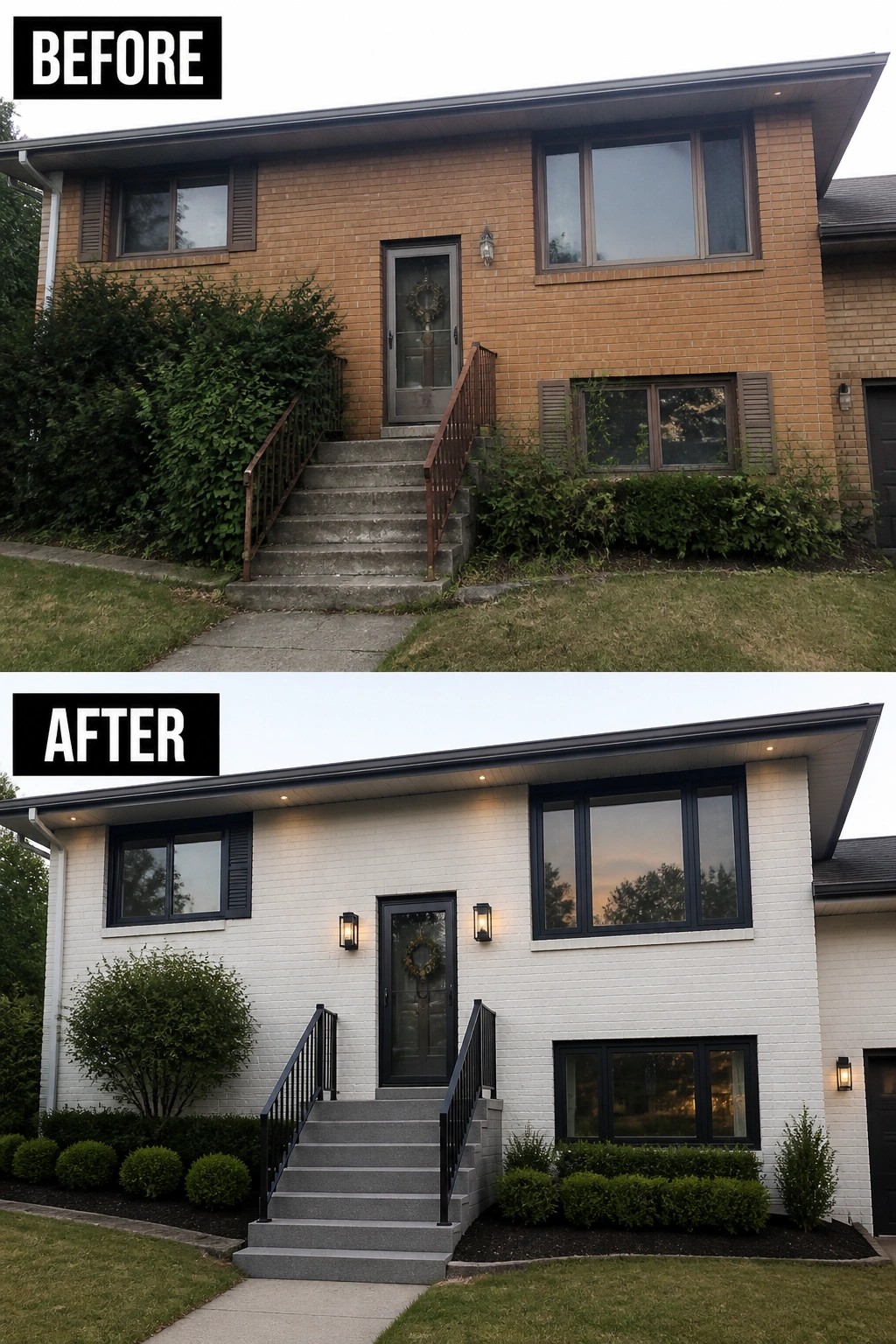
As someone who’s worked on older split-levels, I know how a dated brick facade can make a home feel stuck in the past and mute its curb appeal.
You don’t always need a full rebuild to change that impression, and modest updates like new siding accents, refreshed trim, improved entry details, and better porch lighting can lift the whole look.
Small moves go a long way.
I usually try one or two modest tests, maybe a new paint palette on the trim or a planted bed by the steps, to see how scale and color work with low roofs and split-level geometry before spending more.
Saving a few practical ideas to try or adapt on your own house pays off, and it’s quietly satisfying to watch a tired brick face read as cared-for and current without a huge budget.
Update A Dated Brick Facade With Paint And Trim
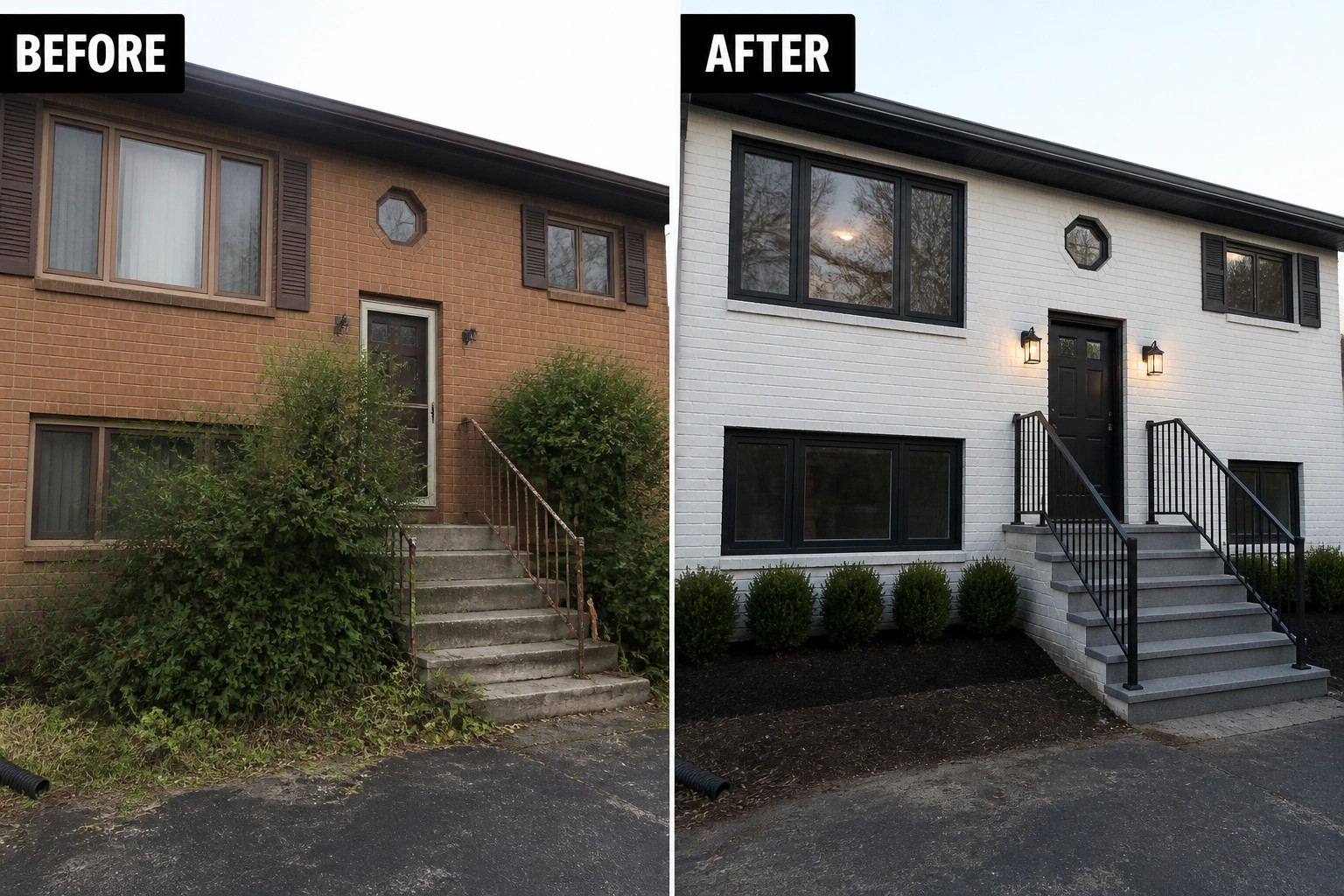
A fresh coat of paint on old brick plus simple contrasting trim is one of the fastest ways to modernize a 1970s split-level. In this example the original brown brick and rusty railings give way to painted white brick, black window trim, new railings, and clean lighting, which instantly simplifies the look and makes the front door feel intentional. The limited palette draws the eye to openings instead of busy brickwork.
To try this at home, start by power-washing and repairing mortar (clean first). Test a small swatch of masonry paint and pick one strong trim color to repeat on windows, door, and railings for cohesion. Swap out dated fixtures for straightforward sconces and tidy the planting beds so the new finishes can read clearly. This approach works best on midcentury brick homes that need a visual reset rather than a full rebuild.
Give Dated Brick A Cleaner, Modern Look
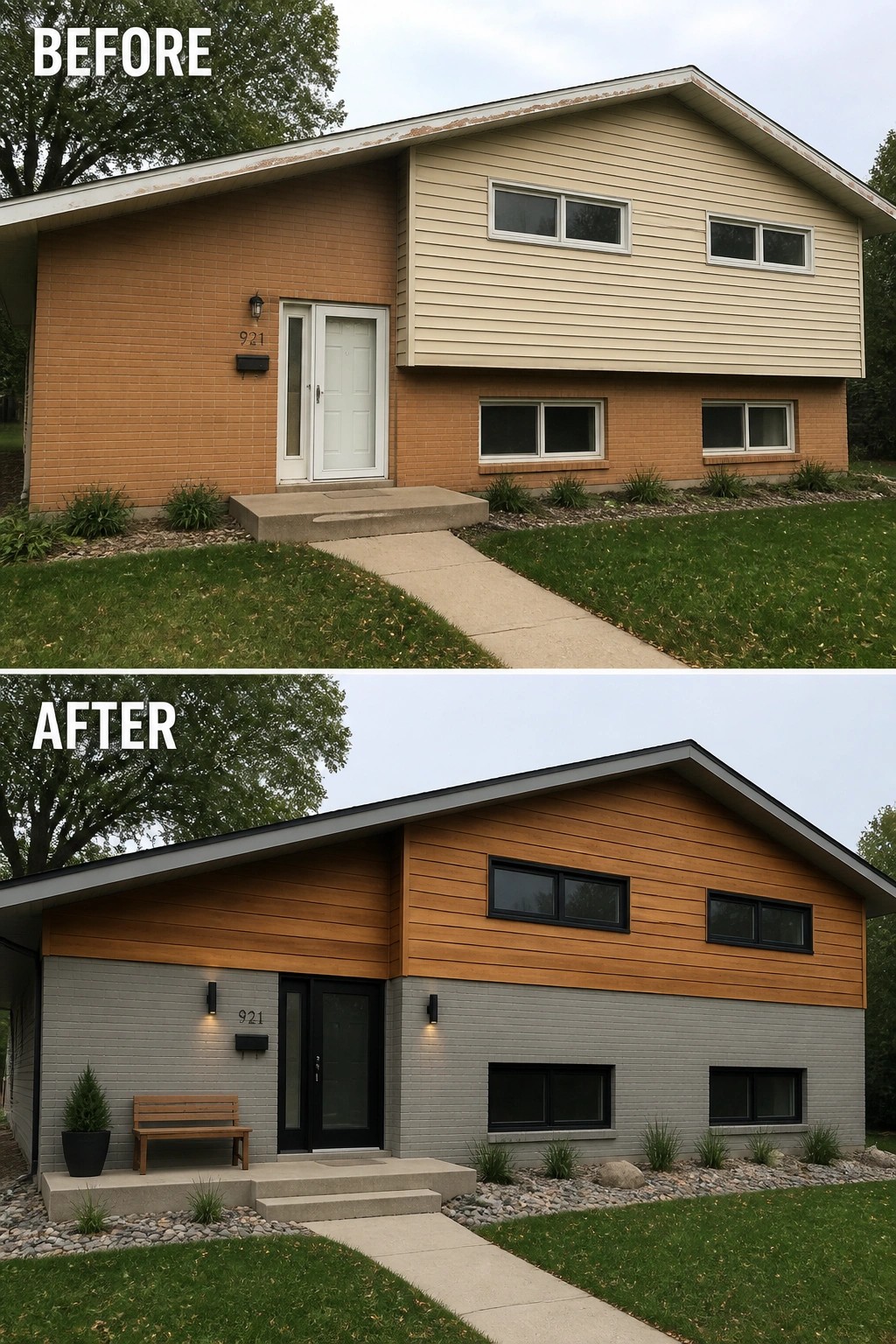
A simple way to modernize a 70s split level is to pair painted masonry on the lower half with a contrasting horizontal cladding above. In this example the old orange brick is painted a soft gray and the upper level receives warm, horizontal siding, which together streamline the facade and erase the dated color that makes the house look stuck in a decade.
To try this yourself, start small: clean the brick and test a masonry paint so you know how it will look in different light and how it performs on your wall. Keep the new cladding material and the painted brick in a limited palette, then tie them together with dark trim, a modern front door, and simple plantings so the house reads as one cohesive design; painting brick is fairly permanent, so consider professional advice on moisture and compatibility before you commit.
Make A Plain Facade Feel More Welcoming
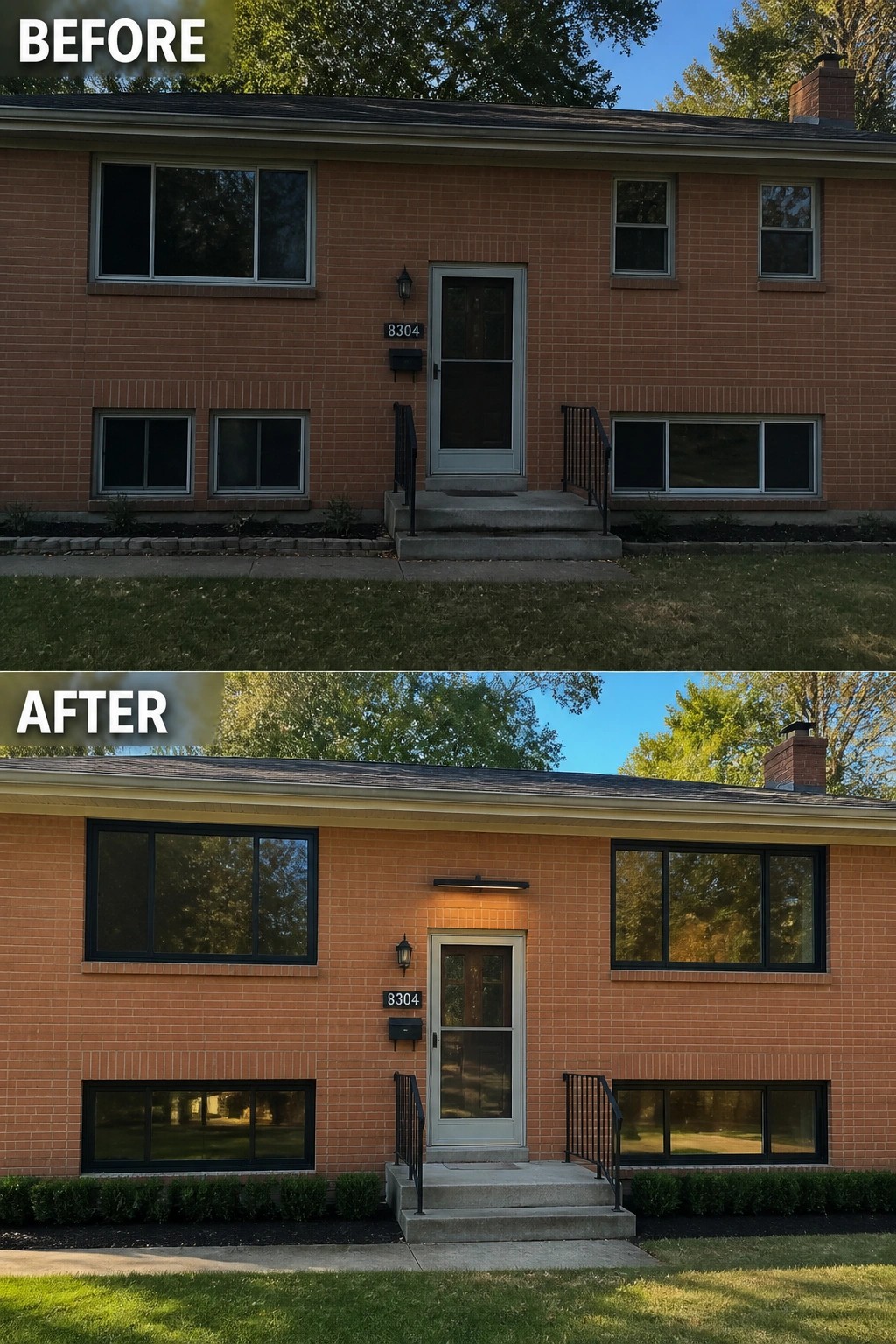
A simple way to modernize a dated brick house is to pick one visible element and make it bolder. In this example the windows and entry get darker trim and a slim, horizontal light above the door, which immediately reads as more intentional and finished than the original plain openings. Pairing that with a neat row of low hedges keeps the look tidy without changing the structure.
Try this on a midcentury split level or any brick front where you want a quick curb appeal update. Start by either replacing or painting window frames and the door surround in a single dark color so those elements read together. Add a modest, well-scaled fixture over the entry and a clear house number, then finish with low-maintenance planting along the foundation. It’s an easy set of changes that won’t overwhelm the facade and won’t need major construction.
Upgrade A Dated Foundation With Stone Veneer And Low Lighting
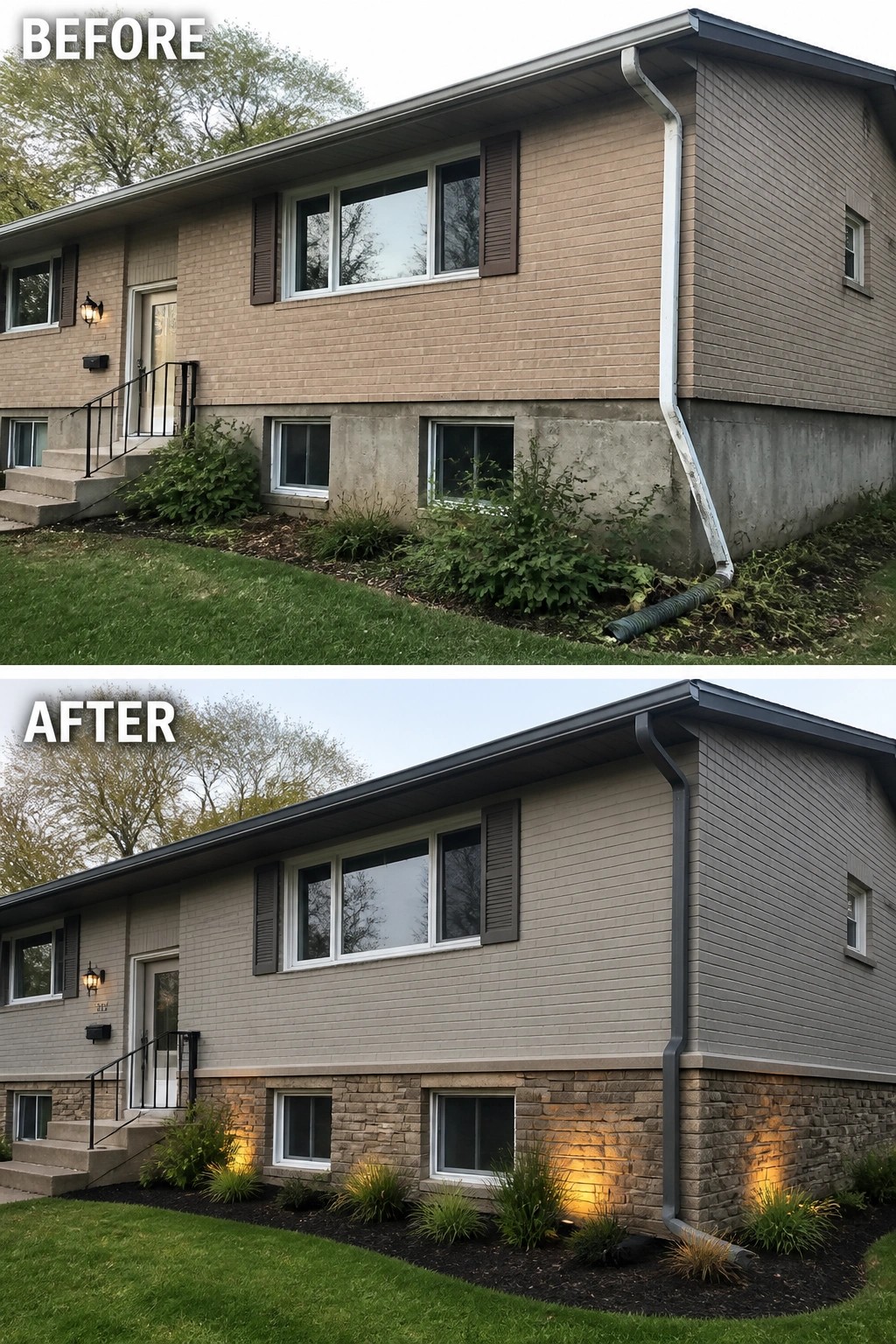
Giving the exposed concrete foundation a face-lift is one of the quickest ways to modernize a 70s split level. In this example the plain lower wall is covered with a stacked stone veneer, then framed with a tidy mulch bed and a few clumping grasses plus warm uplighting. The result reads like a deliberate base for the house rather than an afterthought, and it makes the brick above feel fresher at once.
This approach works well on homes with an obvious concrete skirt or raised basement. For a clean result, start by checking for moisture or damage and add proper flashing before installing manufactured stone panels or thin veneer (a contractor helps here). Keep plantings low so the stone remains visible, use mulch to define the bed, and add a few LED up-lights aimed at the stone and plants to give evening curb appeal. Small choices—matching darker gutters or downspouts and spacing lights where they won’t glare into windows—keep the look intentional and maintenance simple.
Give A Bare Porch A Clear Purpose
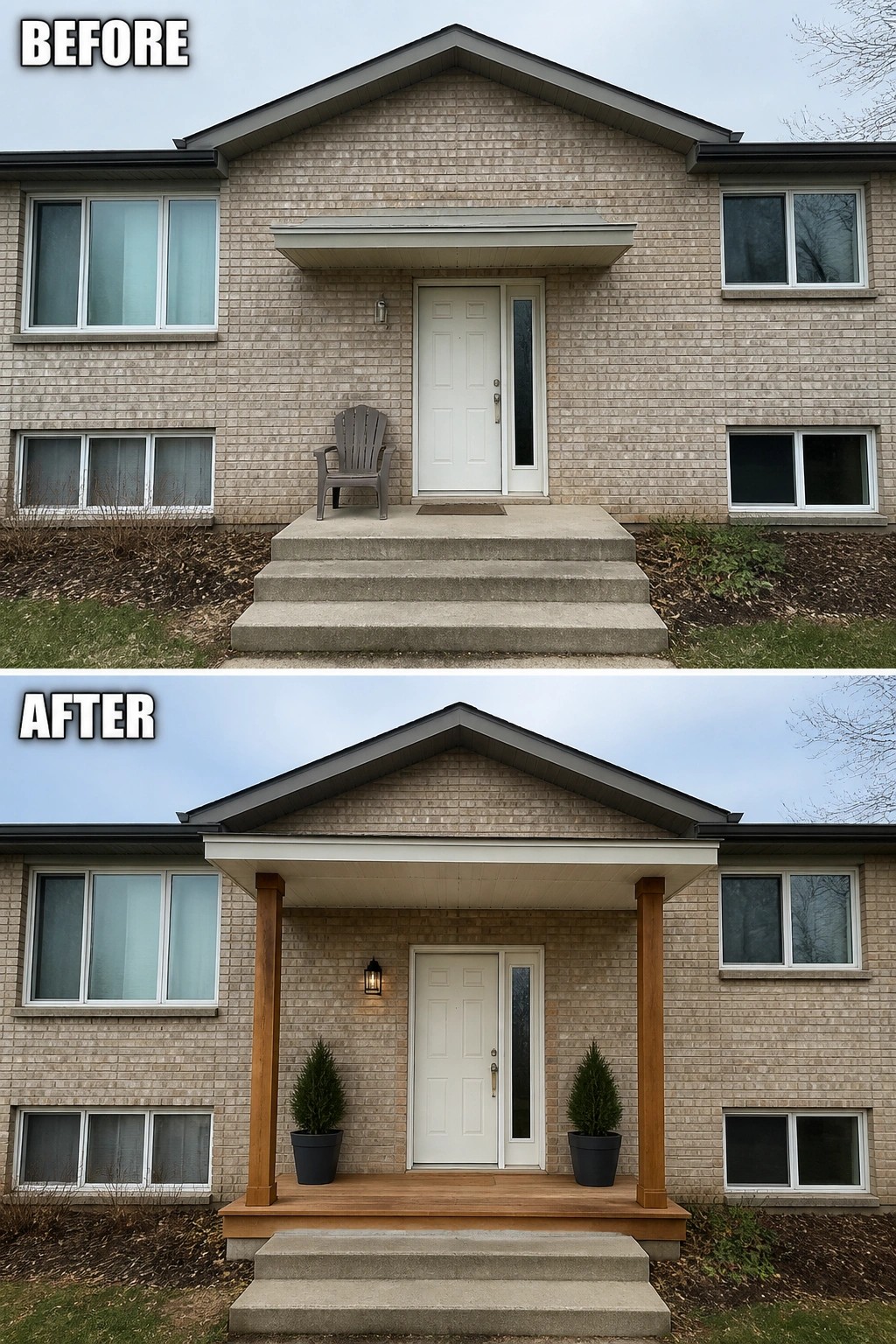
A small, covered porch can change how a house reads from the street. Replacing a bare concrete stoop with a simple wood-clad platform and two sturdy posts, then adding a wall lantern and matching planters, turns an anonymous entry into a focused front porch that feels intentional and practical.
To copy this idea, start by sizing the roof and platform so they comfortably cover the doorway and allow room on either side for planters or a bench. Use rot-resistant materials or composite decking for low maintenance, keep the roofline and post proportions in scale with the house, and add a single hardwired light for safety and evening curb appeal. Small, symmetrical details go a long way on split-level homes.
Use A Two-Tone Façade And Dark Trim To Modernize Dated Brick
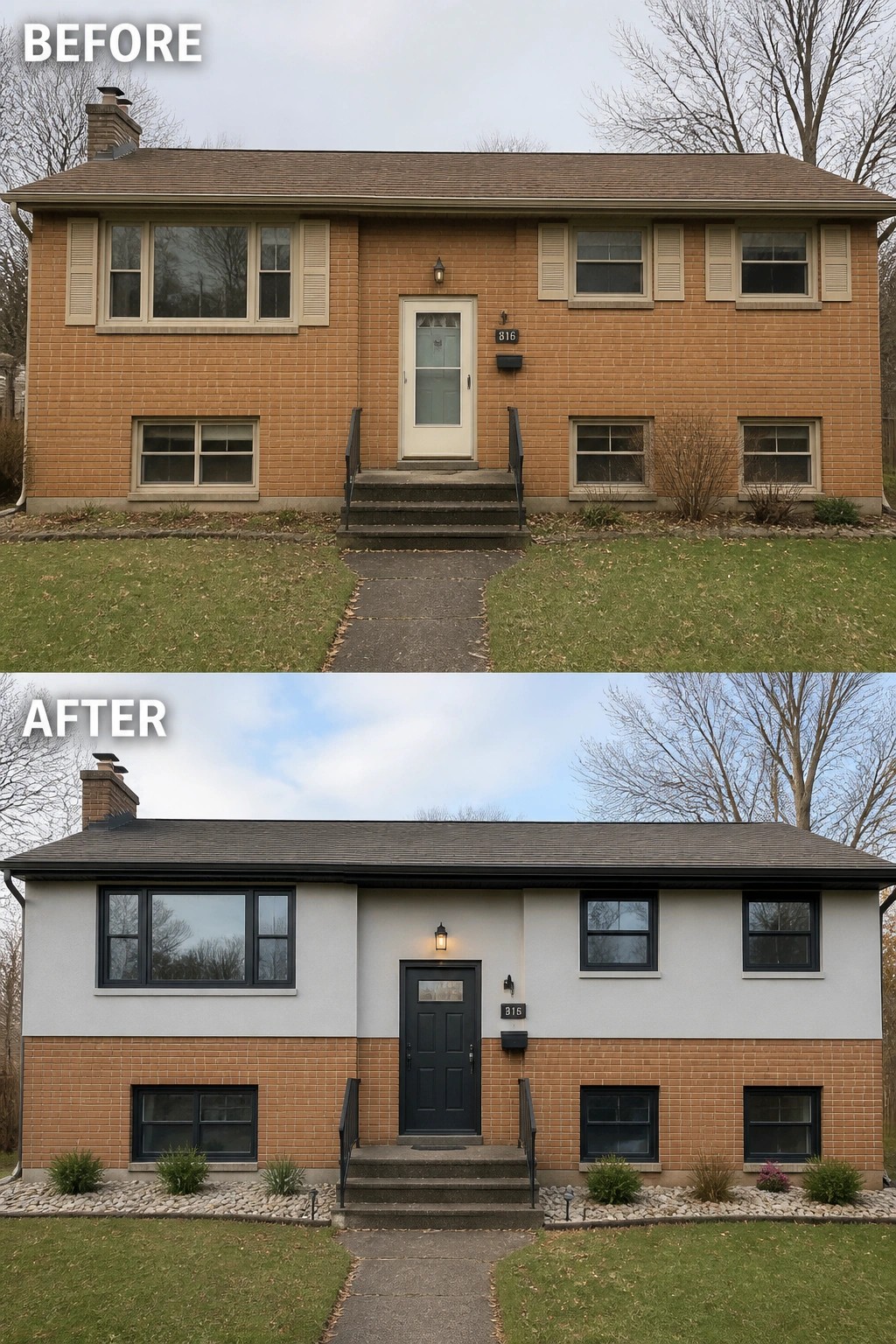
A simple two-tone treatment—keeping the original lower brick but adding a smooth, light-colored render or paint above—instantly updates a 70s split-level without a full reclad. Pairing that lighter band with painted dark windows, door, and trim creates crisp contrast and makes the whole face read as intentional and current rather than just old brick painted over. In this example the upper facade was softened with pale render while the door and window frames were switched to a deep, matte color for a cohesive, modern look.
To copy this idea, start by cleaning and repairing the existing brick so the new finish sits well next to it. Choose a neutral light tone for the new upper surface and one darker, low-sheen color for doors and trim to hide dirt and highlight architectural lines. This approach works especially well on split-levels and homes with a clear horizontal division between materials, and it’s an affordable way to refresh curb appeal without removing the original masonry—just be sure the new render is installed with proper flashing and moisture control.
Add A Wood-Clad Porch Overhang To Define The Entry
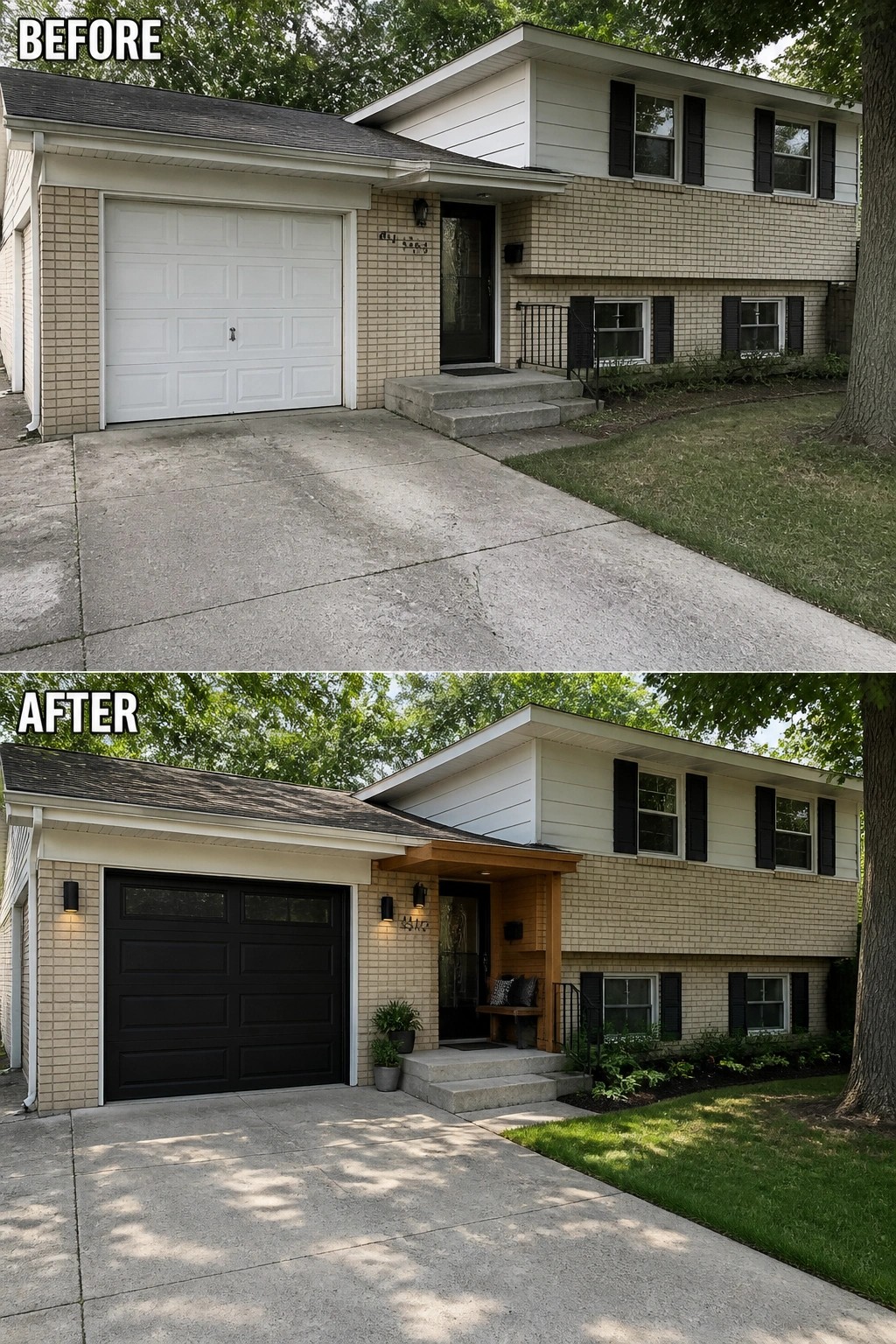
A small, purposeful porch can completely change how a dated brick facade reads. Here the addition of a modest wood-clad overhang with wall lights and a simple bench defines the front entry, while a darker garage door and coordinated fixtures help the whole front feel intentional instead of incidental.
You don’t need a full renovation to get this look. Add a compact covered overhang or a slatted wood surround, pick one accent color for the door and lighting, and anchor the steps with just one or two planters or a bench. Keep the scale right for a narrow split-level entry and choose weatherproof materials so the new porch stays low maintenance.
Create A Cozy Entry With A Slatted Screen And Bench
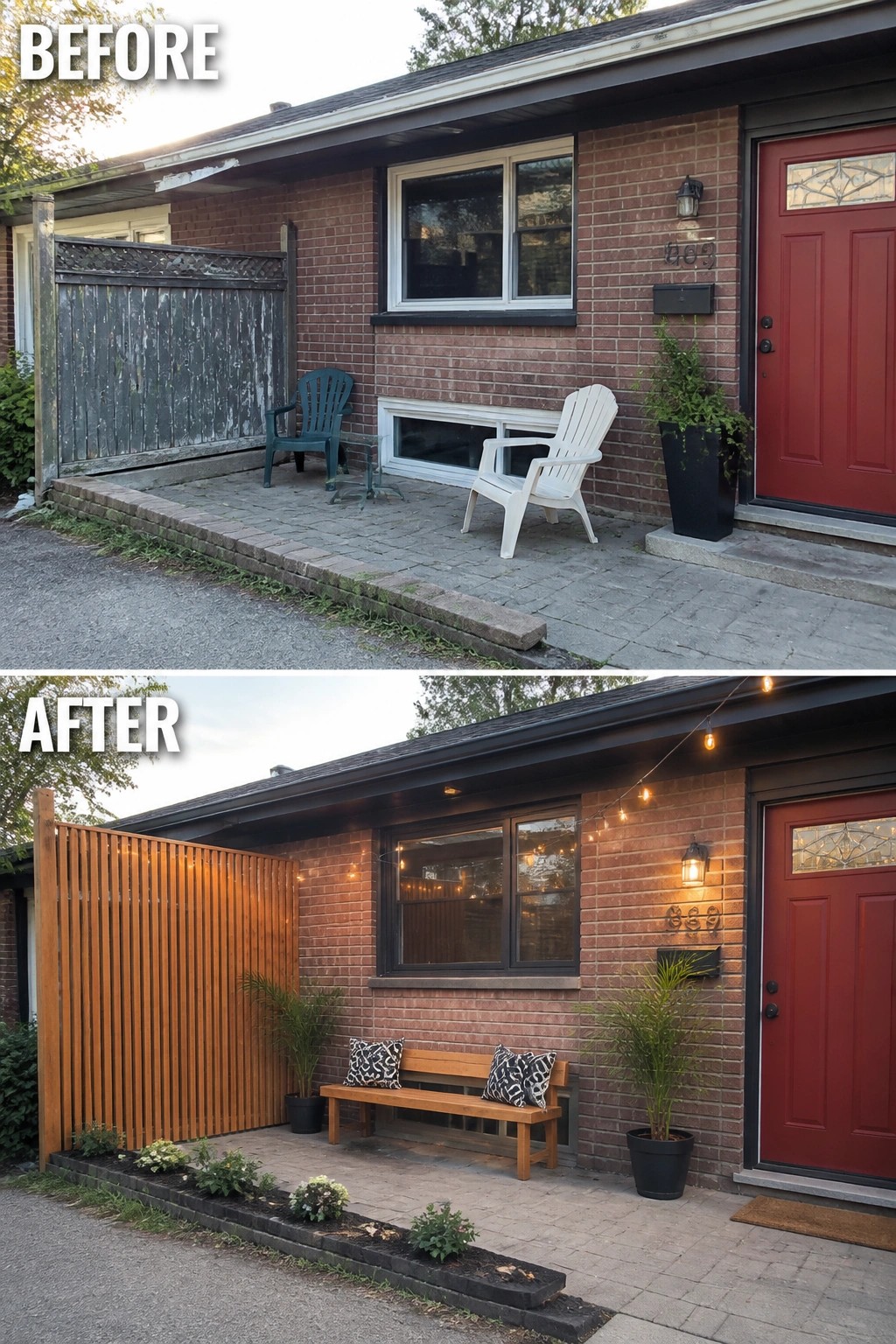
A narrow entry or concrete landing doesn’t have to stay empty. Adding a vertical slatted screen and a compact bench instantly defines a place to sit and relax, and a couple of planters plus string lights help break up the brick and hard paving so the area feels intentional rather than leftover space.
Keep it simple when you try this yourself: measure first so the bench leaves a clear path, choose rot-resistant wood or a prefinished panel for the screen, and use pots instead of large planting beds if space is tight. Pick outdoor-friendly cushions and low-maintenance plants, hang lights over the seating where they’ll be seen, and avoid overcrowding so the entry stays usable from day to night.
Modernize A Dated Brick Facade With Two-Tone Paint And Black Trim
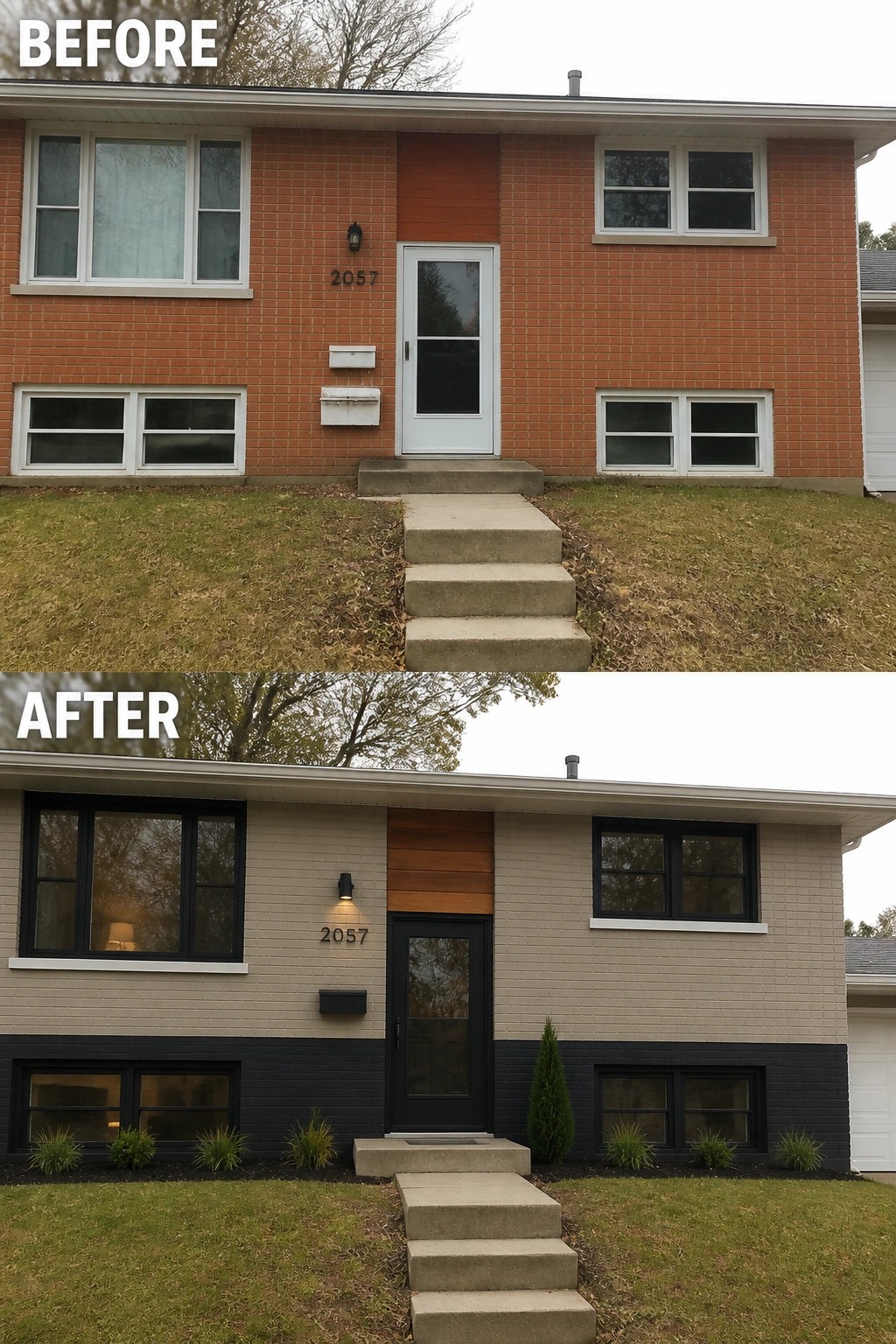
A quick and inexpensive way to update a 70s split-level is to repaint the brick and pick one strong trim color for doors and windows. In this example the orange brick is lightened with a neutral top coat while the lower band and window frames are painted a deep black, and the entry gets a black door, new light, and a simple mailbox—the result reads cleaner and more intentional without rebuilding anything.
To try this at home, start with a pressure wash and a masonry primer so the paint will adhere, then test your two-tone idea on a small section. Use a darker color low on the facade to hide dirt and emphasize the foundation line, keep one natural wood or warm accent to prevent the look from feeling flat, and finish with low-maintenance plantings and a single sconce for curb appeal. Simple, durable changes.
Modernize A Brick Split Level With Shutters And Foundation Planting
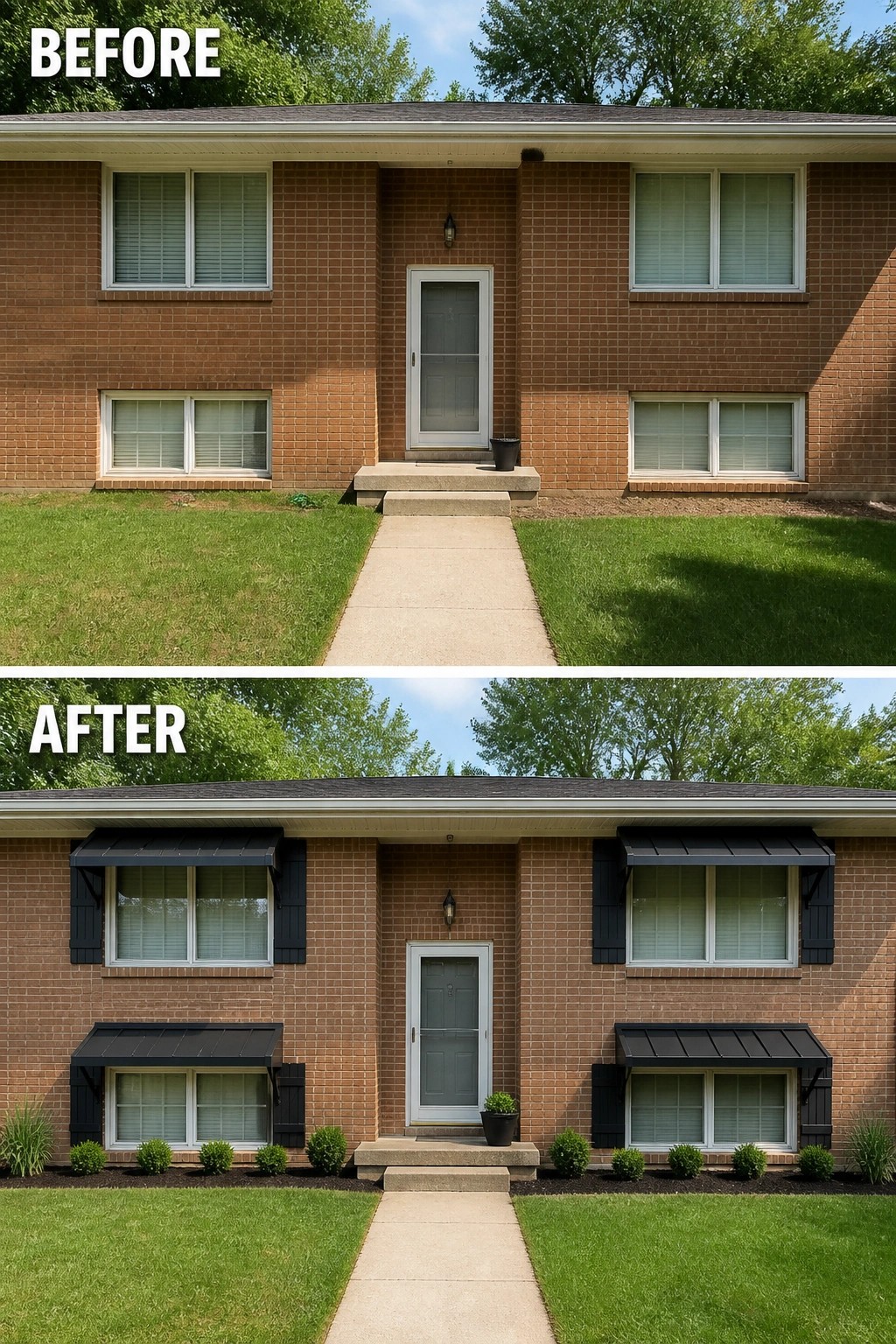
A quick way to break up a wide, dated brick facade is to add a repeated architectural accent and a tidy planting bed. In this example, dark shutters and matching metal awnings give the windows clear edges and visual rhythm, while a narrow mulch bed with small, clipped shrubs and a single potted plant anchors the entry. The contrast and repetition make the front read as intentional instead of plain.
To copy this on your own home, pick one strong color for shutters and awnings and repeat it across all windows for cohesion. Keep the planting simple: low, evergreen shrubs spaced evenly and a shallow mulch strip so lawn care stays easy. Make sure shutter size suits the windows and that awnings are installed to allow window operation and drainage. Small, repeated moves like these are an inexpensive way to make an older brick house feel updated without major reconstruction.
Refresh A Dated Brick Facade With New Siding And Trim
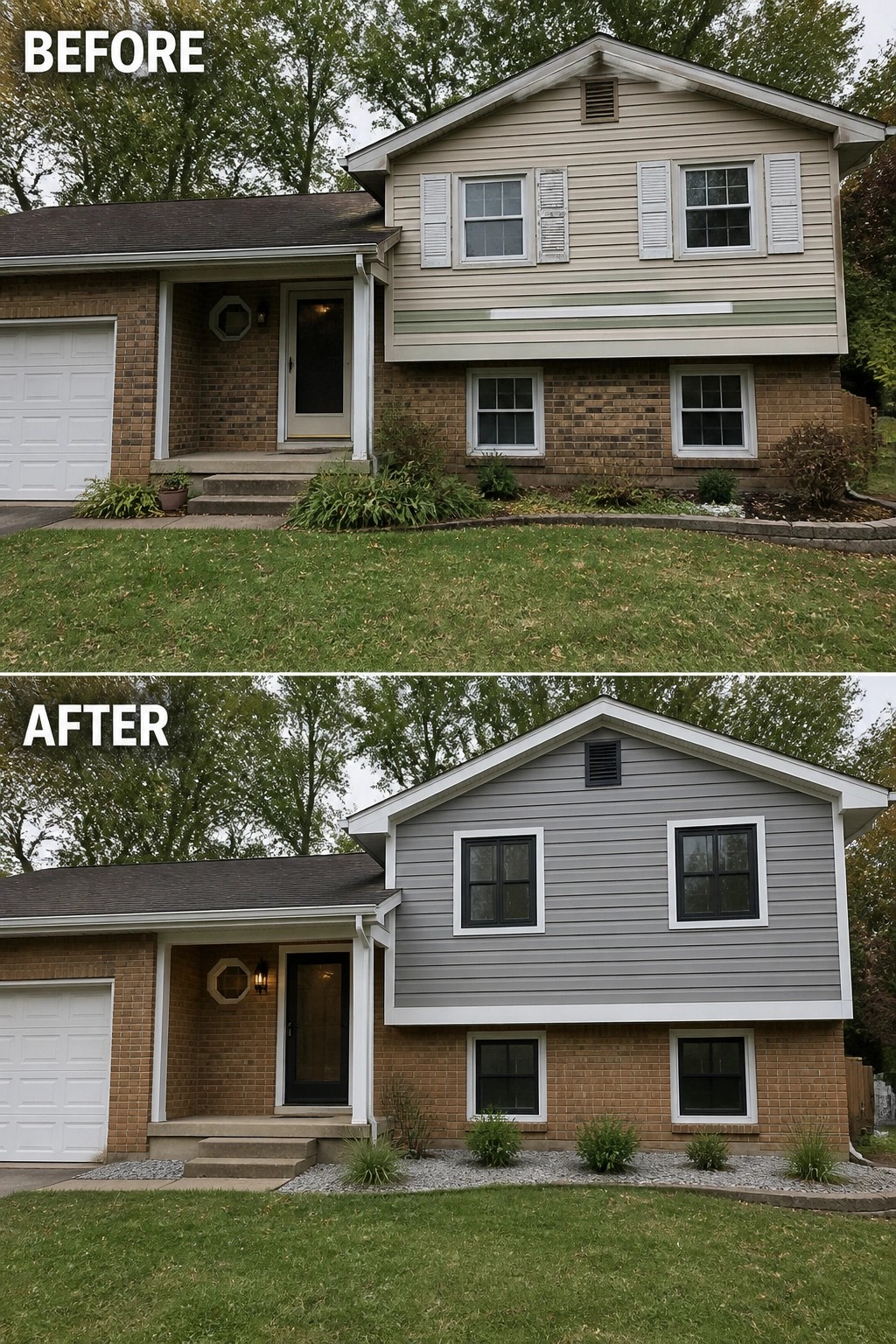
Swapping the tired beige upper siding for a mid-tone gray and installing crisp white trim with dark window frames instantly modernizes a split-level without touching the brick. The simple color change clarifies the house’s lines and lets the existing masonry read as a stable base while the new cladding gives the front a cleaner, updated look.
This is an easy, focused project for mixed brick-and-siding homes: leave the brick alone, replace or paint the upper siding, and choose one contrasting trim/window color to tie everything together. Keep extra details minimal, pick durable materials and finishes, and pair the update with a narrow, low-maintenance planting or gravel bed so the new geometry stays visible and tidy.
Paint Old Brick To Instantly Modernize The Facade
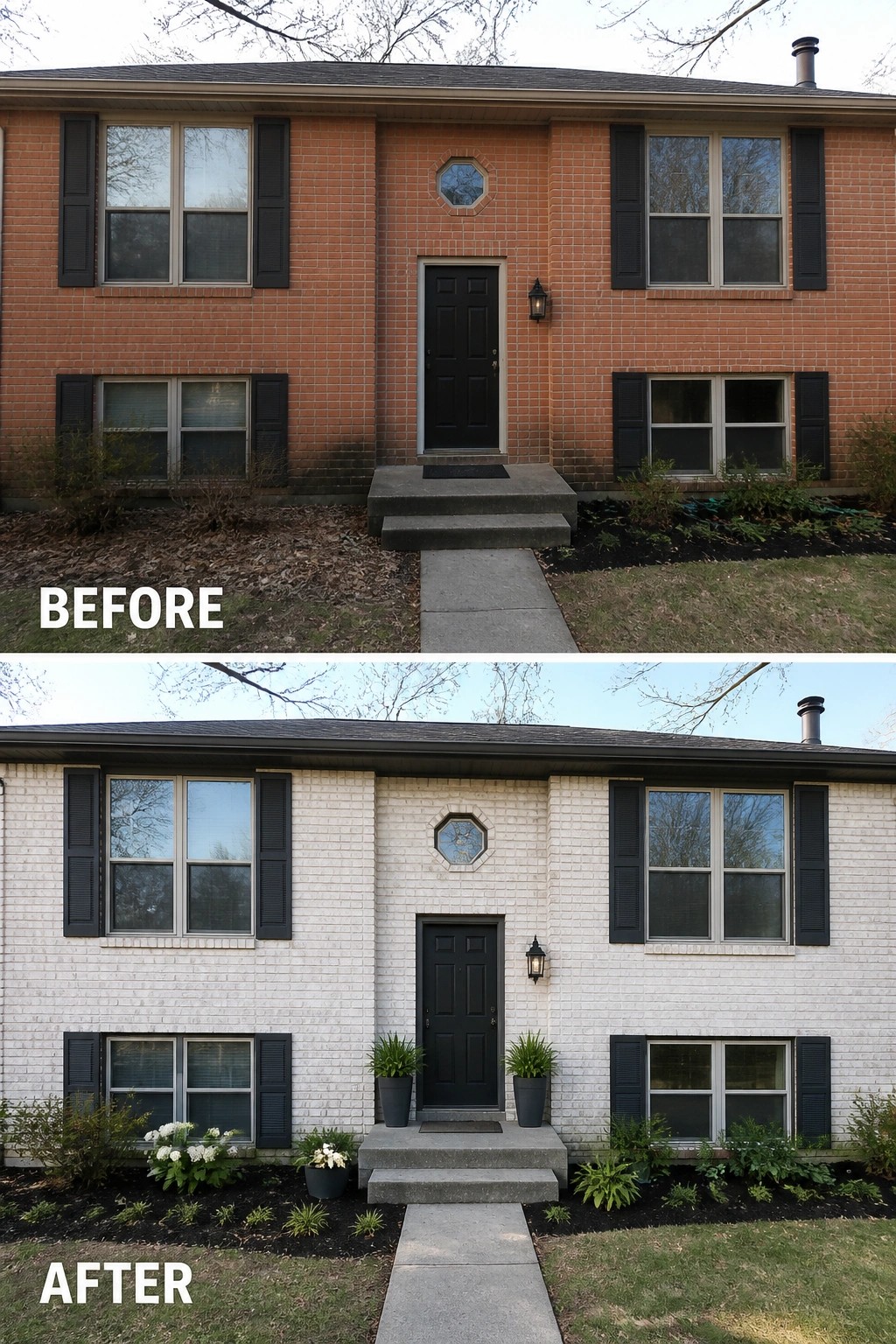
A coat of paint is one of the quickest ways to take a 1970s brick split level out of the past and make it feel current. In this example the orange brick is painted a soft white and the entry is simply dressed with dark accents and a couple of planters, which immediately lightens the whole face of the house and makes the door feel intentional.
If you try this at home start by power washing and repairing any mortar, then do a small test patch to see how the color reads in different light. Use a masonry primer and a breathable exterior masonry paint, pick a contrasting trim or door color to keep the look crisp, and finish with low-maintenance plantings or paired pots to frame the entry. This works especially well on older suburban homes where the original brick color feels dated, but check for moisture issues first so the new paint lasts.
Refresh Crumbling Entry Steps With Tile And Planters
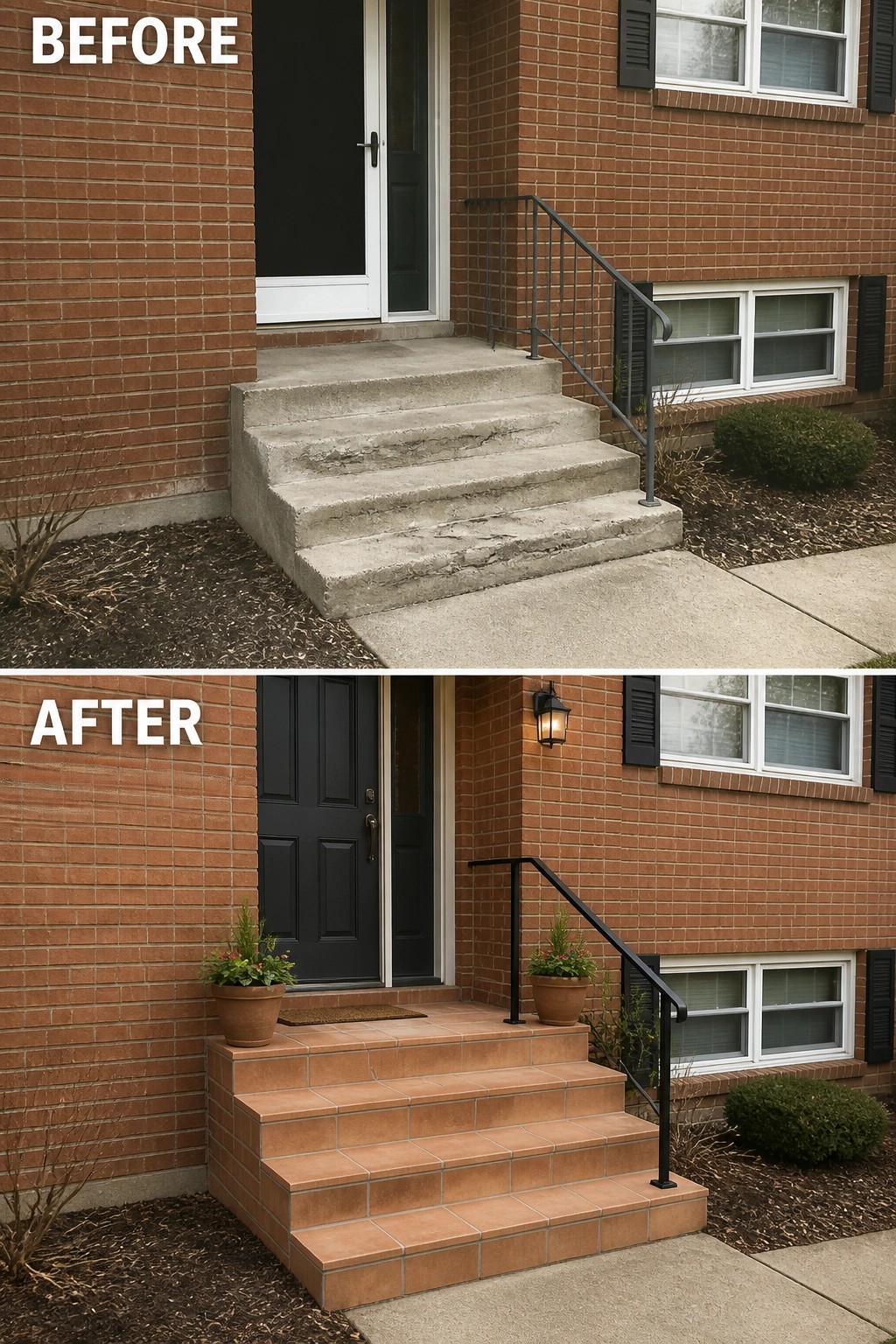
Replacing rough, crumbling steps with a simple finished landing turns an unloved entry into a purposeful front porch. In this example the concrete was wrapped in outdoor tile and paired with a neat handrail and matching planters, which immediately reads as an intentional approach rather than a leftover of the original build.
Start by repairing the structure, then pick a durable surface like frost-proof tile or natural stone that complements the brick (match grout to the brick tone). Keep the new landing compact so it doesn’t crowd the walkway, add a slim metal handrail for safety, and finish with two matching planters and a mat to signal the entry. Watch for slip resistance and runoff so the upgrade stays safe and long lasting.
Update Your Front Entry With A New Door
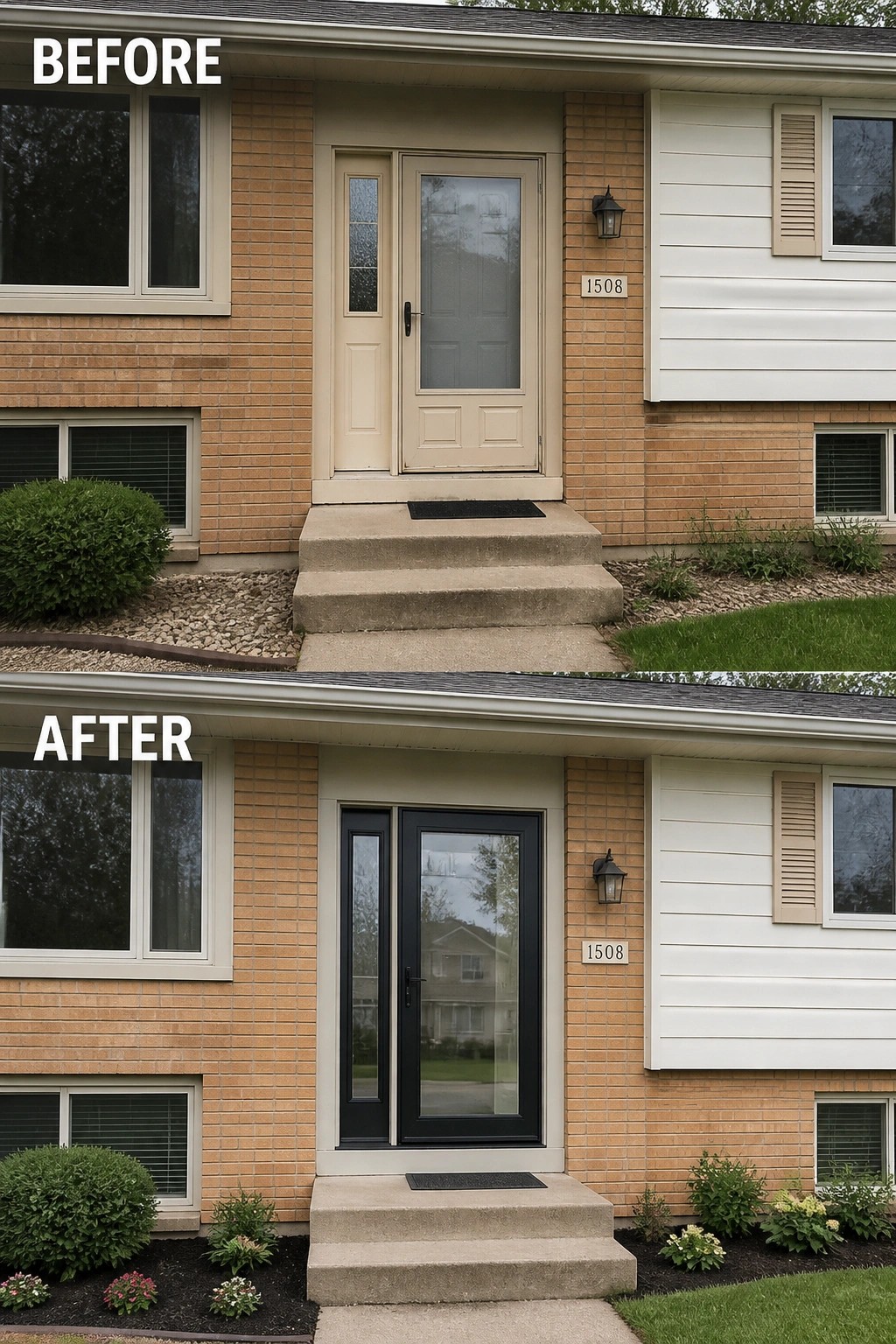
Replacing an old, pale storm door with a single, modern entry door is a quick way to lift a dated brick facade. A dark, slim-frame door creates contrast against the brick and immediately gives the house a more intentional, updated look; pairing it with simple low plantings and fresh mulch tightens the whole composition without a big renovation.
To try this at home, pick one strong color for the door that contrasts with your brick, and choose a full-view or slim-glass option to keep light in the entry. Match the door hardware and the porch light for a cohesive look, tidy the steps, and add a couple of small foundation plants or a narrow planting bed to frame the approach. It’s an affordable update that works well on split-levels and other homes with limited porch space.
Use Trim And Color To Modernize A Plain Brick Entry
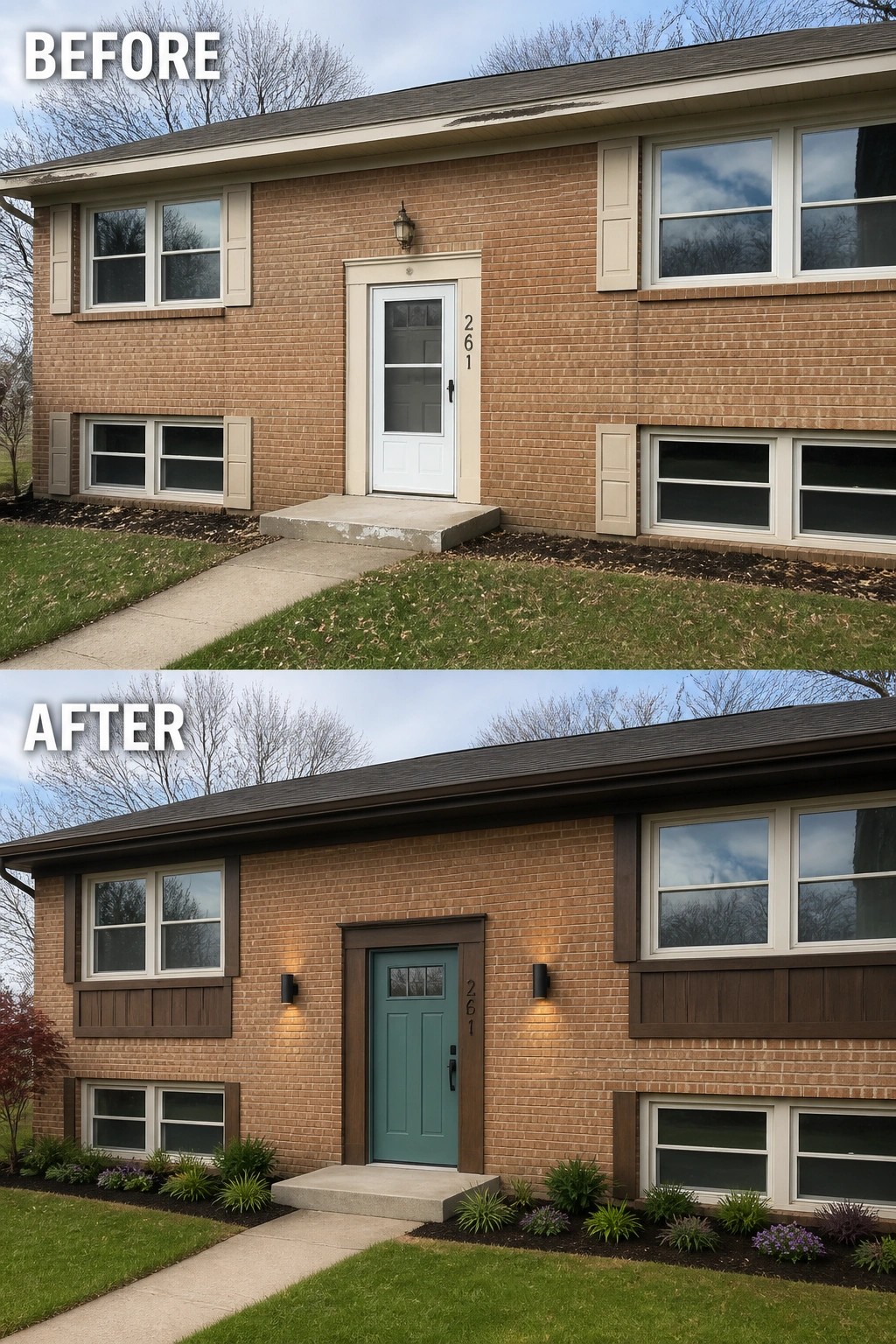
A fresh front door color and new trim can update a dated brick facade without a major renovation. In this example a painted door and dark, framed trim replace the plain beige surround, while two wall sconces and a narrow planting bed give the stoop purpose and balance the composition.
To copy this, pick one strong door color that plays well with your brick (teal, navy, or deep green are good starters) and pair it with darker trim or simple board-and-batten panels to add architectural lines. Add flanking lights at eye level and a small, low-maintenance planting strip to anchor the entrance; these moves work well on split-levels or any modest brick house and are relatively inexpensive to install.
Define A Narrow Side Yard With Pavers And Raised Beds
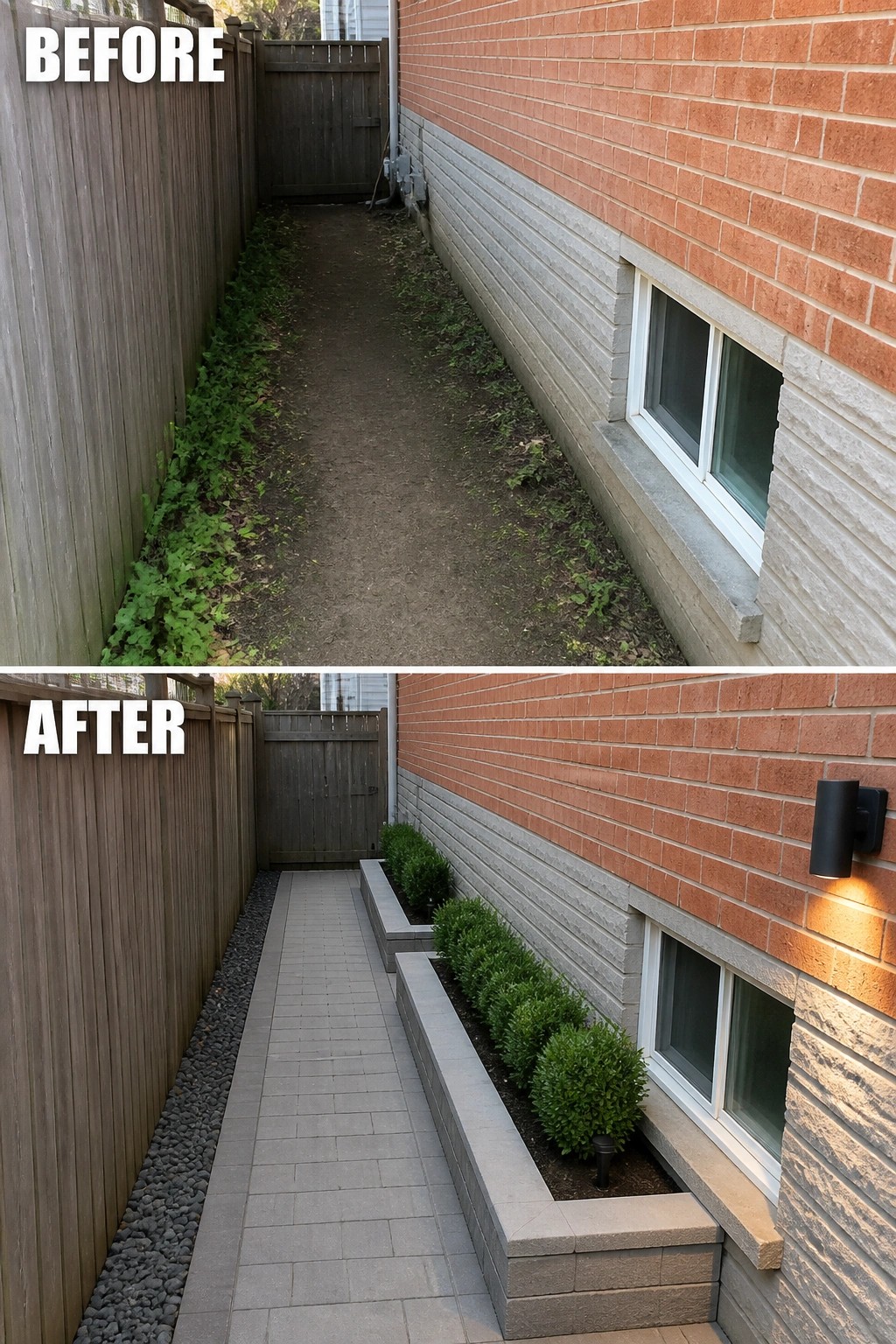
Turning an overgrown, muddy side strip into a tidy service path is often just a matter of adding a simple paved walkway and a low raised bed. Swapping the dirt track for clean pavers and running a continuous stone planter along the house gives the space clear edges and a purpose while still leaving room to pass.
To copy it, start by clearing vegetation and fixing drainage so water runs away from the foundation. Lay narrow pavers that fit the corridor scale and flank them with gravel for maintenance, then build a low planter low enough to keep window access and fill it with compact evergreens or clipped shrubs for year-round structure. Add a few low lights for safety and you’ve turned an awkward gap into a polished, practical side yard.
Add A Horizontal Trim Band To Modernize Dated Brick
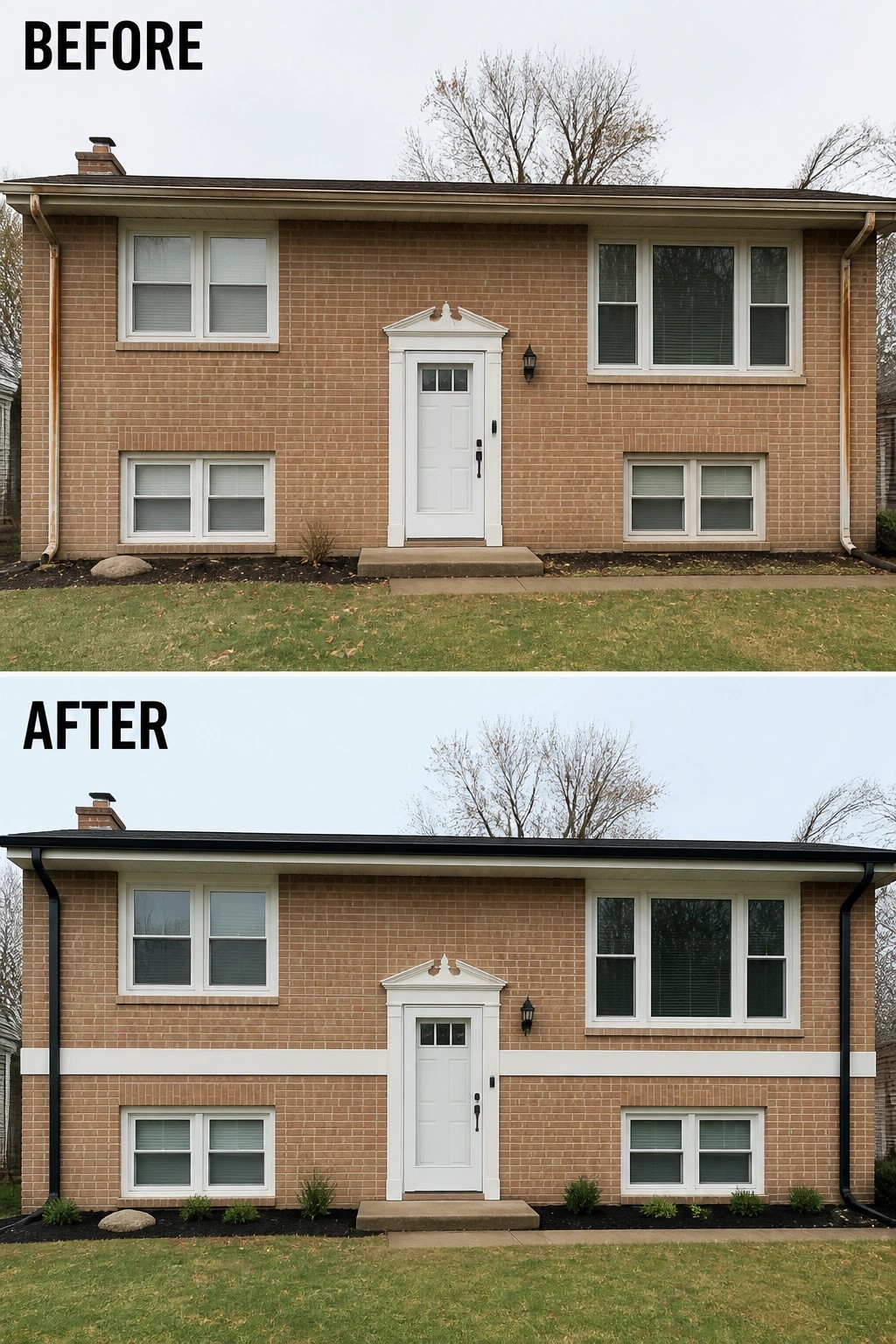
A single horizontal trim band across the facade is an easy way to break up an expanse of old brick and give a split-level a cleaner, updated look. In this example the plain brick is interrupted by a crisp white band and a few low foundation shrubs, which together read like intentional styling rather than patchwork.
To try this on your own home, pick a clear datum line—usually the midpoint between floors or the bottom of upper windows—and run a simple trim board or composite band across the front. Use a durable material and a contrasting color to make the brick feel fresher, and tie the look together by echoing that color in gutters or soffits and adding a neat mulch bed with low plantings at the base. Simple, measured changes go a long way.
Refresh A Dated Brick Facade With Paint And Simple Trim
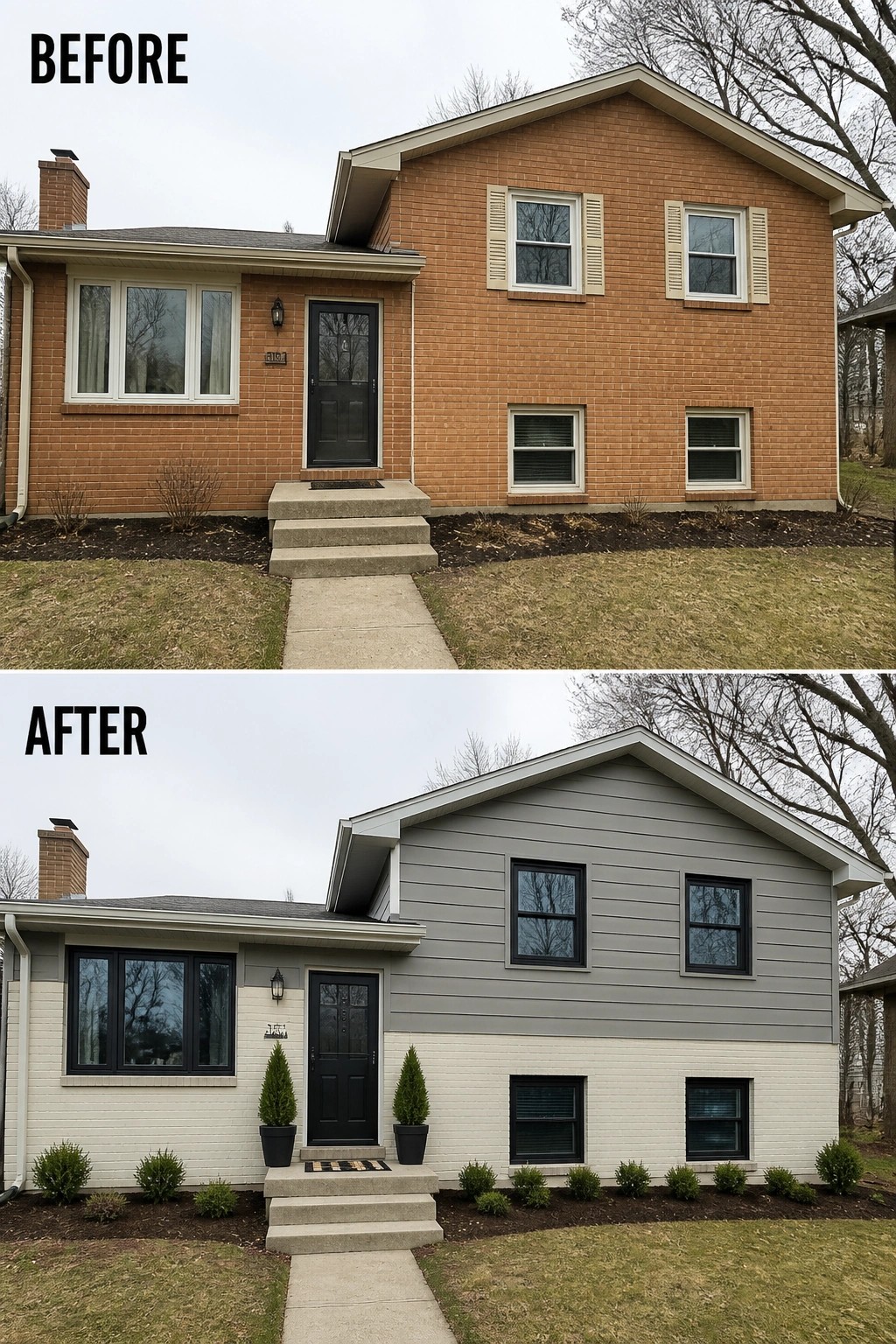
A fresh coat of paint and a bit of siding can modernize a 1970s brick front without a full rebuild. In this example the lower brick was lightened and the upper gable covered in horizontal siding, while darker window and door trim and two matching planters give the entry something to sit beside. The narrower palette and stronger contrast immediately read as intentional, making the whole house feel newer and more pulled together.
To copy this idea, start small: power wash the brick, test a masonry primer, and pick two neutral tones—one for the brick, one for any new siding or trim—and one dark accent for windows and the door. Keep the entry symmetrical with a pair of simple planters and low, neat shrubs so the finish reads as an upgrade rather than a facelift. This approach suits split levels and other midcentury homes, but check brick condition and local paint recommendations first so moisture and warranty issues don’t surprise you.
Replace A Patchy Lawn With Low-Maintenance Xeriscaping
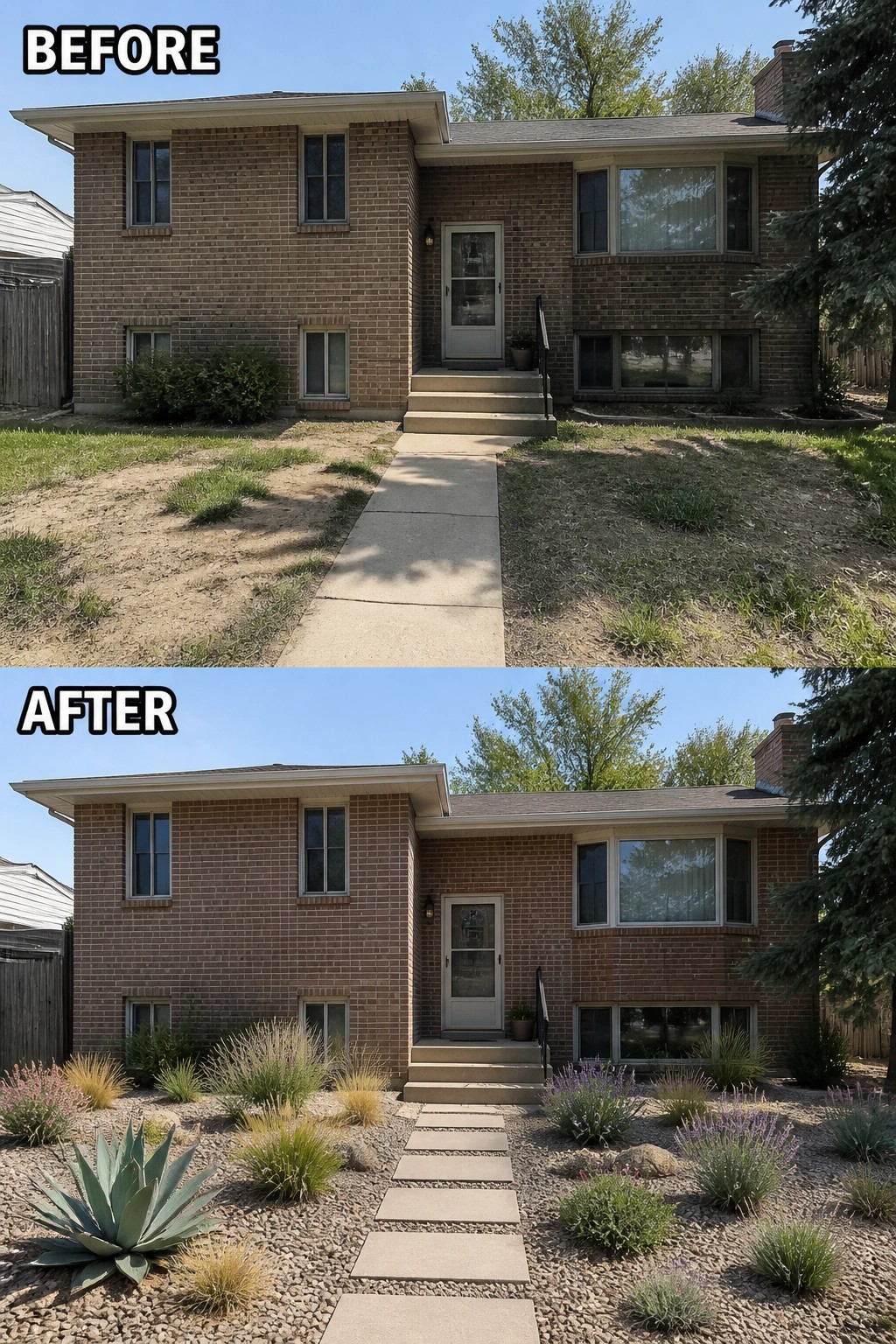
Swap tired grass for a simple gravel bed and a straight stepping-stone path to give a dated front yard instant structure and curb appeal. The change works because the pavers create a clear route to the door while repeated clumps of grasses and a lone agave provide rhythm and a focal point without crowding the small space.
Start by removing the patchy turf and laying a weed barrier, then set large pavers at comfortable walking intervals and fill the beds with pea gravel or decomposed granite. Choose three or four hardy plants and repeat them across the bed for an organized look, add a drip irrigation line to cut maintenance, and keep the path wide enough for easy access. Less mowing.
Frequently Asked Questions
Q: Can I just paint my 70s brick to modernize it, or will it look worse?
A: Painting brick is a fast way to refresh a facade if the mortar and brick are in good shape; use a breathable masonry paint and prep the surface well. Test a small section first so you can see how color and texture read on your house. Remember painted brick needs occasional touchups, but it can totally change the curb appeal.
Q: Will adding siding to a split-level ruin the midcentury character?
A: Not at all—siding can actually highlight the split-level rooflines when used thoughtfully (you don’t have to cover every square inch). Use siding on secondary planes or the upper half of the facade and pick a color and trim that play nicely with the remaining brick. That approach keeps character while updating the look.
Q: How big of a project is changing the main entry or the short staircase on a split-level?
A: Small cosmetic changes like a new door, updated railing, or a simple overhang are usually quick and budget-friendly. Moving the stair or reworking the landing is more of a structural job and will need a contractor and permit, so plan for higher cost and more time if you go that route.
Q: What’s one budget-friendly update that makes a dated brick facade feel high-end?
A: Swap out old lighting, update the front door hardware, and refresh trim paint for a surprisingly upscale effect. Those are inexpensive moves that draw the eye and lift the whole facade without a major remodel.