

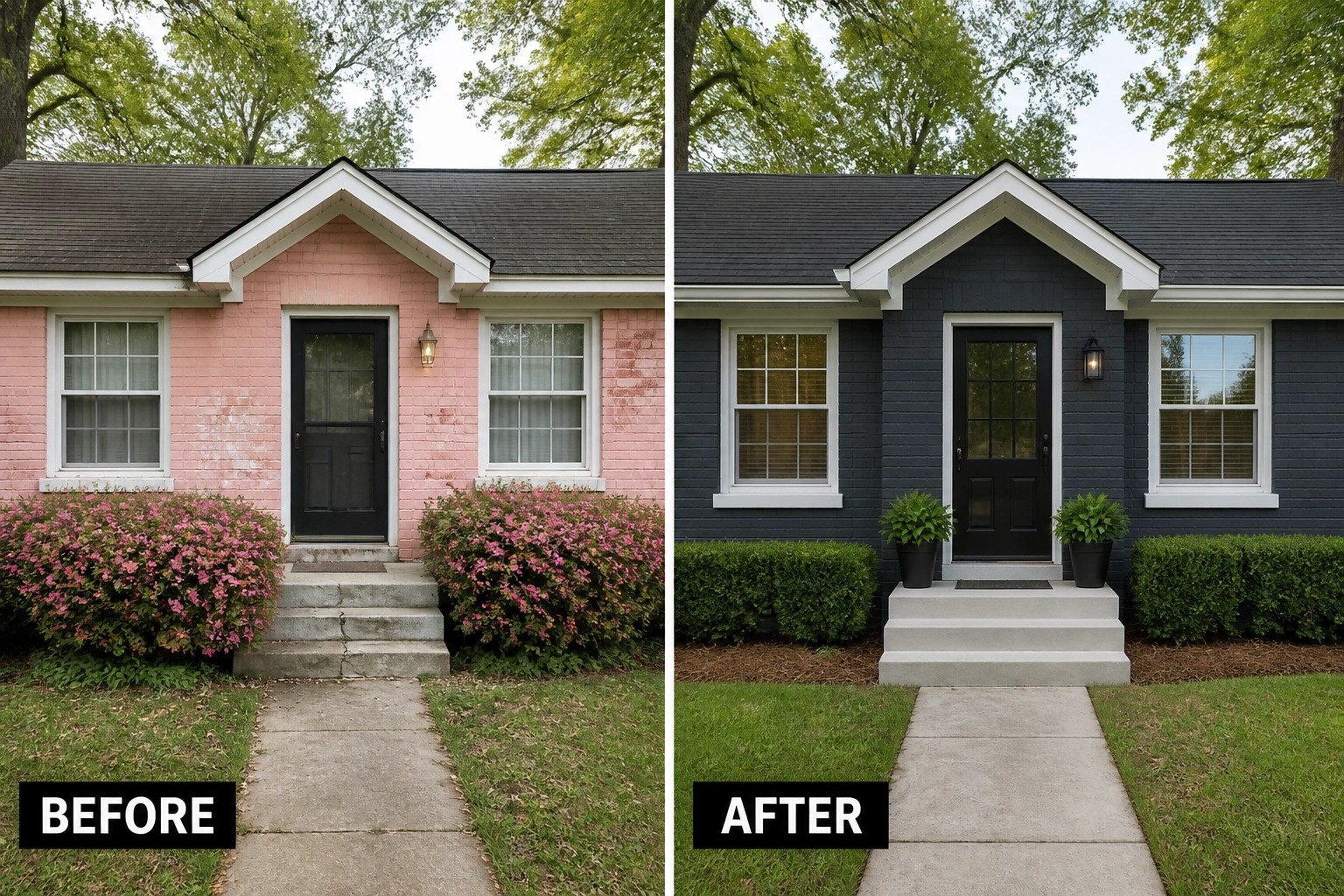
I find that when a brick facade feels stuck in an era that no longer suits the house, a fresh coat of paint and a few thoughtful accents can do more than hide dated color, and they can bring clarity to the whole exterior palette while helping porches, trim, and landscaping read as a coordinated composition.
In my experience, subtle shifts such as lightening mortar visually, painting the entry to tie into roof tones, or choosing a contrasting trim color often make the house feel more intentional without a major renovation.
I usually test one small area first because seeing a sample on a real wall helps me know whether to carry a color across the whole facade.
Small changes add up.
There are options here worth saving and adapting, from bold single-color updates to soft neutral washes and trim tweaks that are easy to try and quietly satisfying.
Use Paint And Trim To Update A Dated Brick Facade
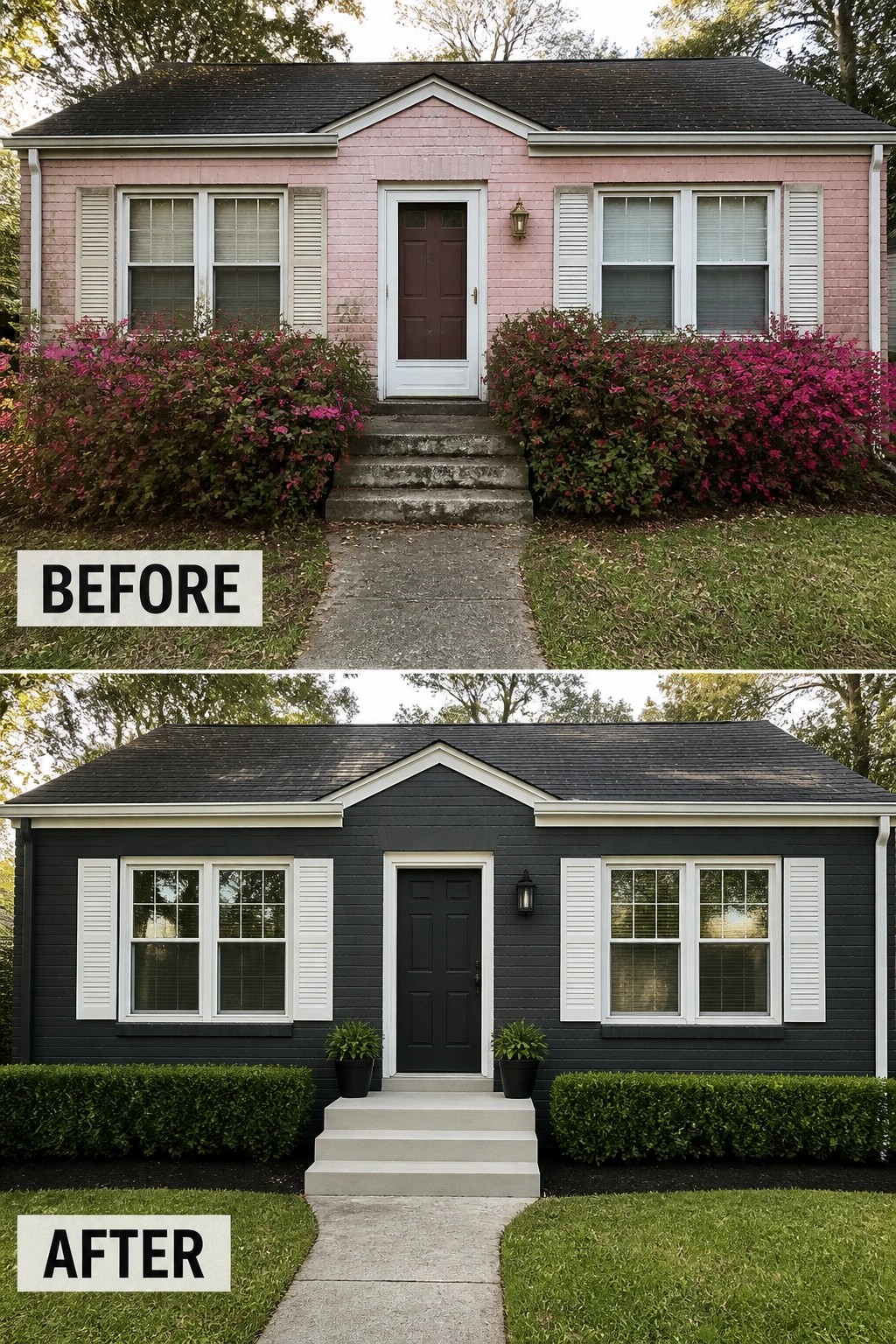
A fresh coat of paint is one of the easiest ways to modernize an older brick house. Replacing the faded pink with a deep charcoal and repainting the trim and shutters in crisp white instantly clarifies the architecture, while a pair of simple planters by the door gives the entry a finished, intentional look.
To try this at home, start with a thorough cleaning and any necessary mortar or brick repairs, then test masonry paint samples on different walls before committing. Keep the palette tight—one bold field color plus a contrasting trim color—and use small, symmetrical accents like potted plants or clipped hedges so the paint can do the heavy lifting. This approach suits small bungalows and cottages where color can simplify details; avoid dark colors on highly textured or very ornate brick unless you want those details to recede.
Refresh Faded Brick With Paint And Dark Trim
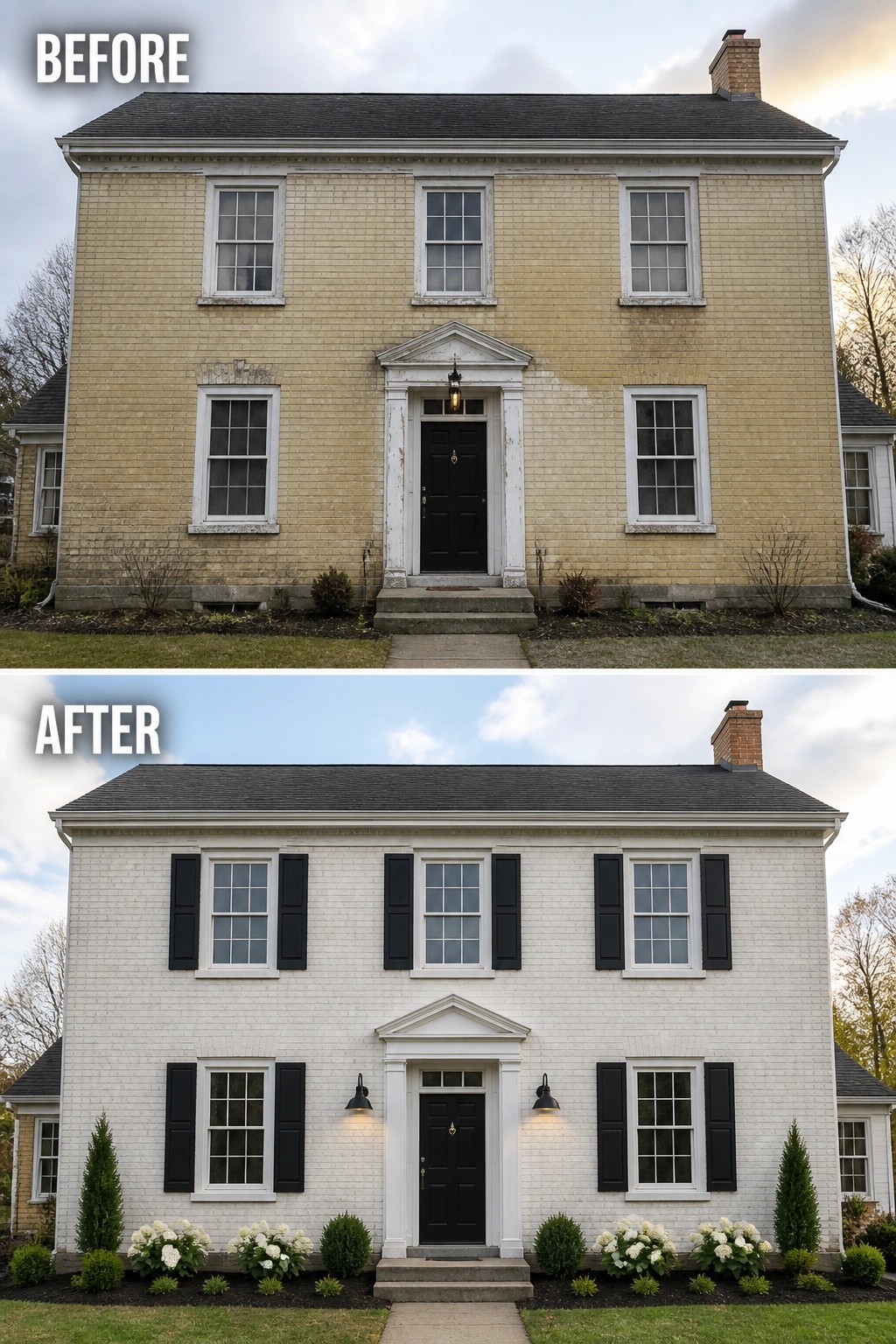
A coat of paint on tired brick is one of the quickest ways to modernize an older facade. In this example the yellowed brick is painted a clean white and paired with black shutters, door, and wall lights to create crisp contrast and visible structure around the windows and entry. The result looks intentional rather than patchy because the trim and fixtures were chosen to repeat a single dark accent color.
To try this at home, start by power-washing and repairing any damaged mortar, then use a breathable masonry primer and exterior paint made for brick. Pick one strong contrast
Refresh Curb Appeal By Painting Brick And Trim
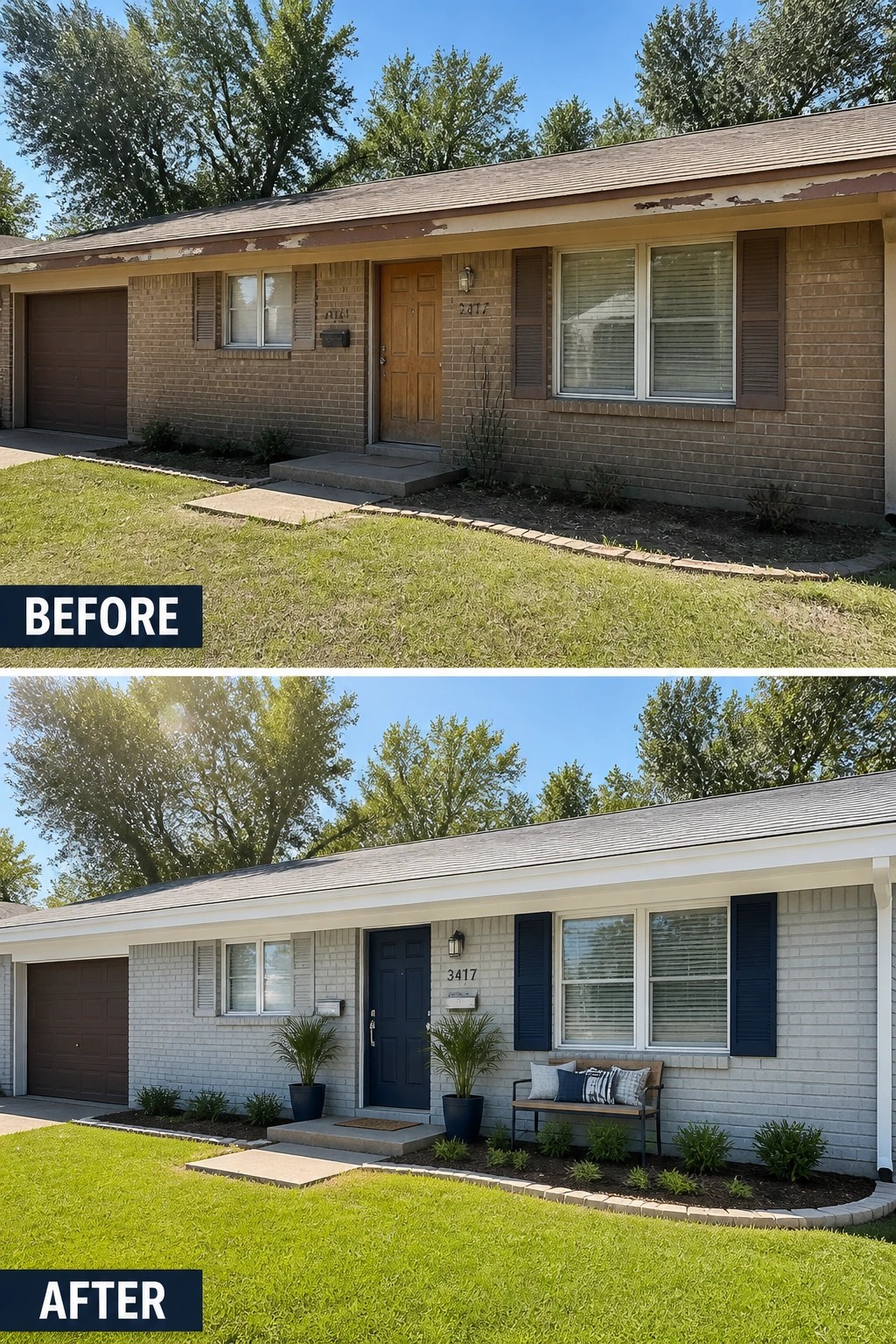
Painting brick and picking a bold front-door color is an easy, high-impact way to modernize an aging facade. In the example here the original brown brick was lightened and the door and shutters were painted a deep blue, which brightened the whole front and created a clear focal point without heavy construction.
To copy this, start with a good clean and any minor tuckpointing, then prime and use quality masonry paint. Choose one strong accent color for the door and repeat it in small doses on shutters or planters (deep navy works well). Add two simple flanking planters or a small bench to make the entry feel finished, but keep planting low so the paint change stays the star. This approach suits single-story or ranch-style homes and is a fast way to lift curb appeal on a budget.
Give Old Brick New Life With Paint
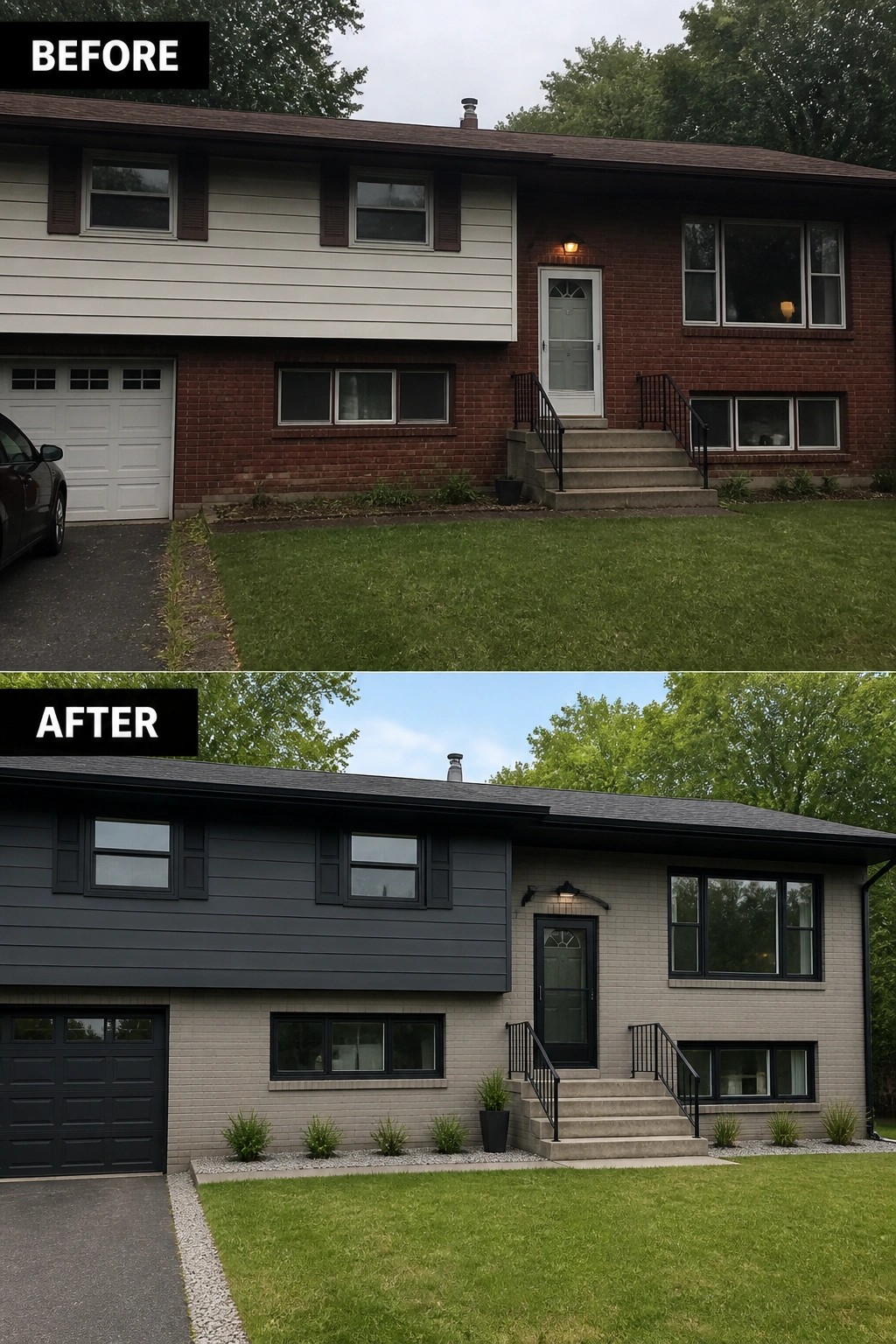
Painting the brick and picking a contrasting trim color is a quick way to modernize an aging facade without a full rebuild. Swapping a red brick and beige upper for a soft neutral brick and a dark charcoal upper with black trim simplifies the palette and makes the whole house read cleaner and more intentional.
Try a light, neutral masonry paint for the brick and a darker accent for siding, windows, and the door to create contrast and hide tired details. Prep matters—clean, repair, and prime masonry first (test a small area) and pick breathable masonry paint so moisture can escape. This approach suits split-levels and older suburban homes and gives big curb appeal for relatively little cost, but remember painting brick is a long-term choice.
Make A Plain Facade Feel More Welcoming
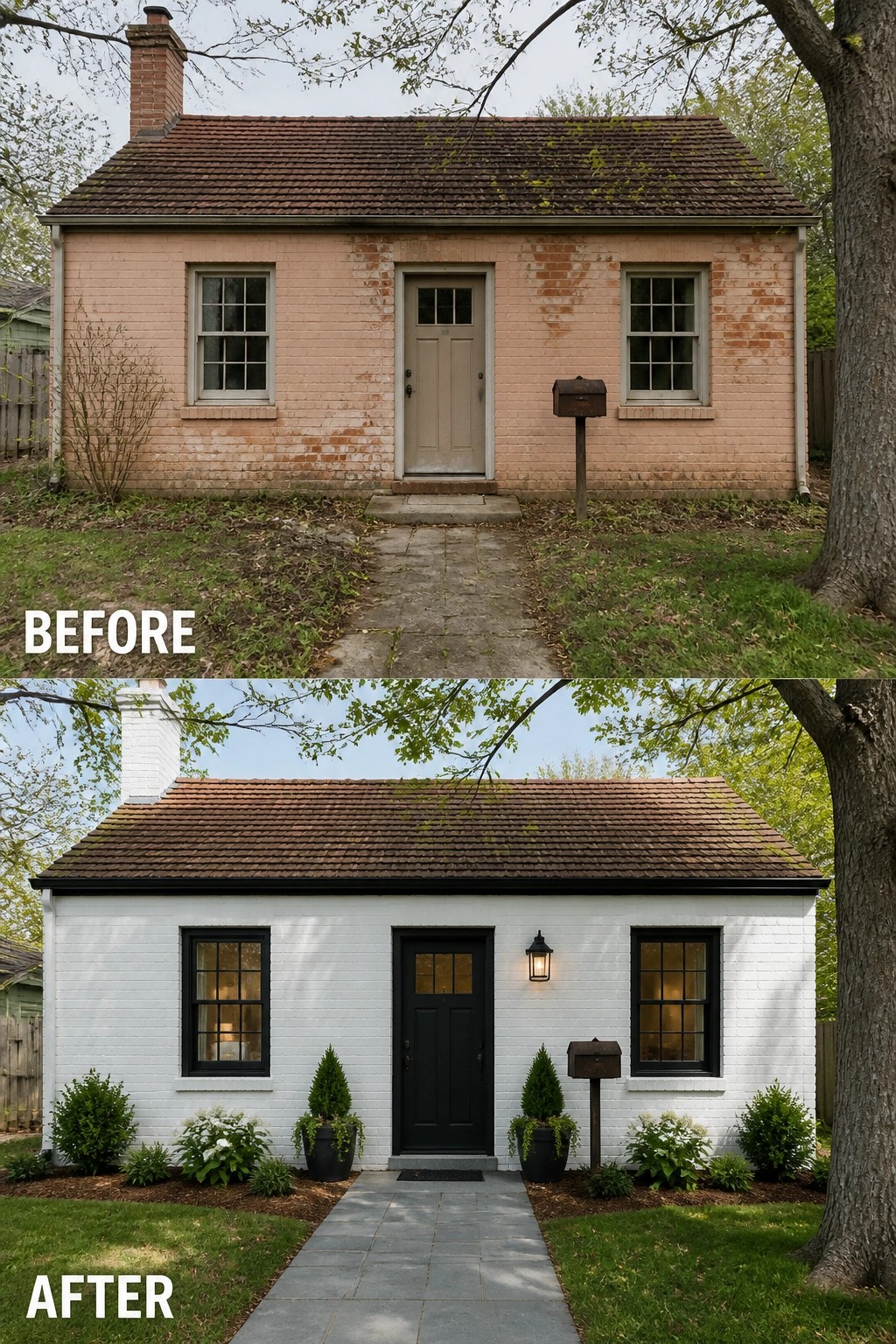
Painting tired brick a single, neutral color and choosing a contrasting trim and door is one of the simplest curb-appeal fixes you can do. In this example the faded pink brick is refreshed with white paint while the door and window trim go black, and a single porch lantern plus paired planters finish the look. That limited, high-contrast palette tidyies the facade and gives the entry a purposeful, modern look without adding square footage.
Do the prep work first: power-wash, repair mortar, and use a breathable masonry paint so moisture can escape. Pick a
Modernize The Facade With Painted Brick And Coordinated Trim
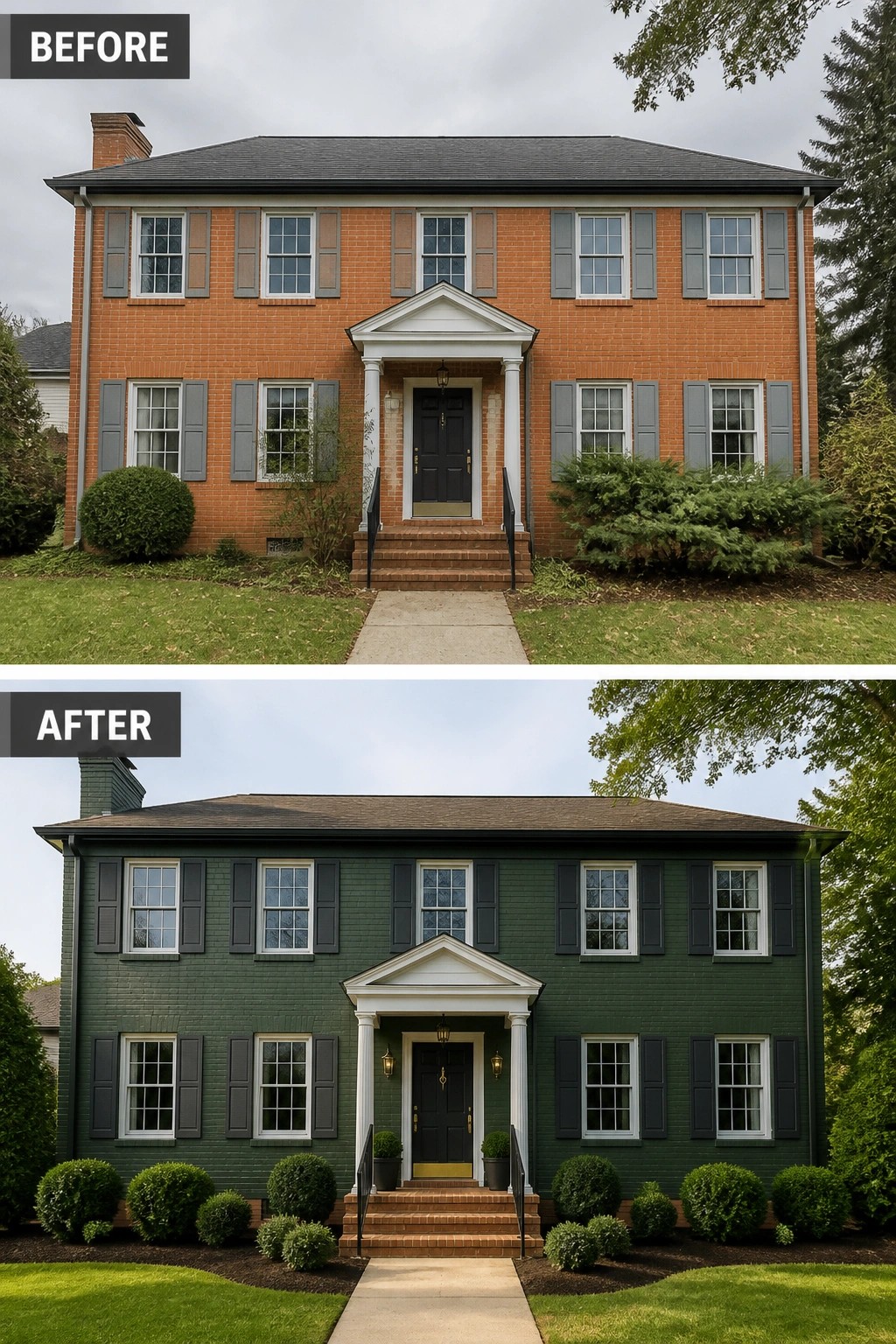
A fresh coat of masonry paint in a contemporary color can update an older brick house without tearing anything down. In this example the orange brick is painted a deep green and paired with darker shutters and a black door, while the white portico and simple planters keep the entry feeling tidy and intentional.
To try it at home, test large paint samples on the brick and view them at different times of day to make sure the tone works with your roof and landscaping (natural light changes everything). Keep trim and architectural details a lighter neutral so the shape of the house still reads clearly, repeat the accent color on shutters or hardware for cohesion, and finish with low-maintenance, symmetrical plantings so the whole look feels deliberate and easy to maintain.
Paint Step Risers To Brighten And Define Your Entry
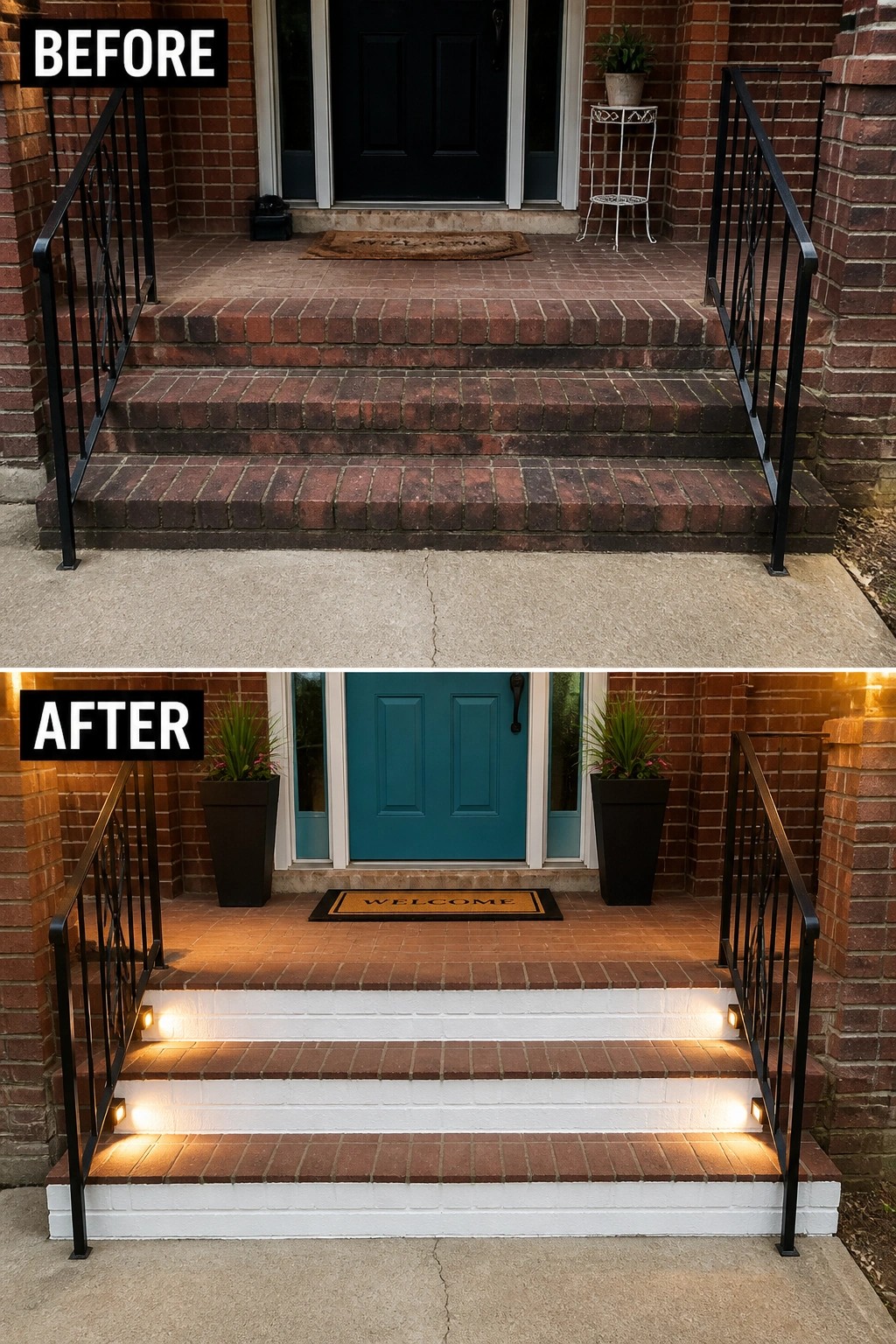
Painting the vertical faces of worn brick steps is an easy way to refresh a tired porch and make the entry read as intentional. In the example, dark, weathered brick risers are painted white and paired with small recessed step lights and simple planters to create a cleaner, more finished look. Low cost, high impact.
To try this yourself, clean and repair the brick first, then use a masonry primer and a quality exterior paint made for brick. Keep the treads natural or add a clear, slip-resistant sealer so you don’t hide the brick texture where people step. Match the riser color to existing trim or the door for cohesion, and consider adding low-voltage step lighting for safety and evening curb appeal — especially useful on older, shadowed porches.
Modernize Old Brick With A Fresh Painted Base
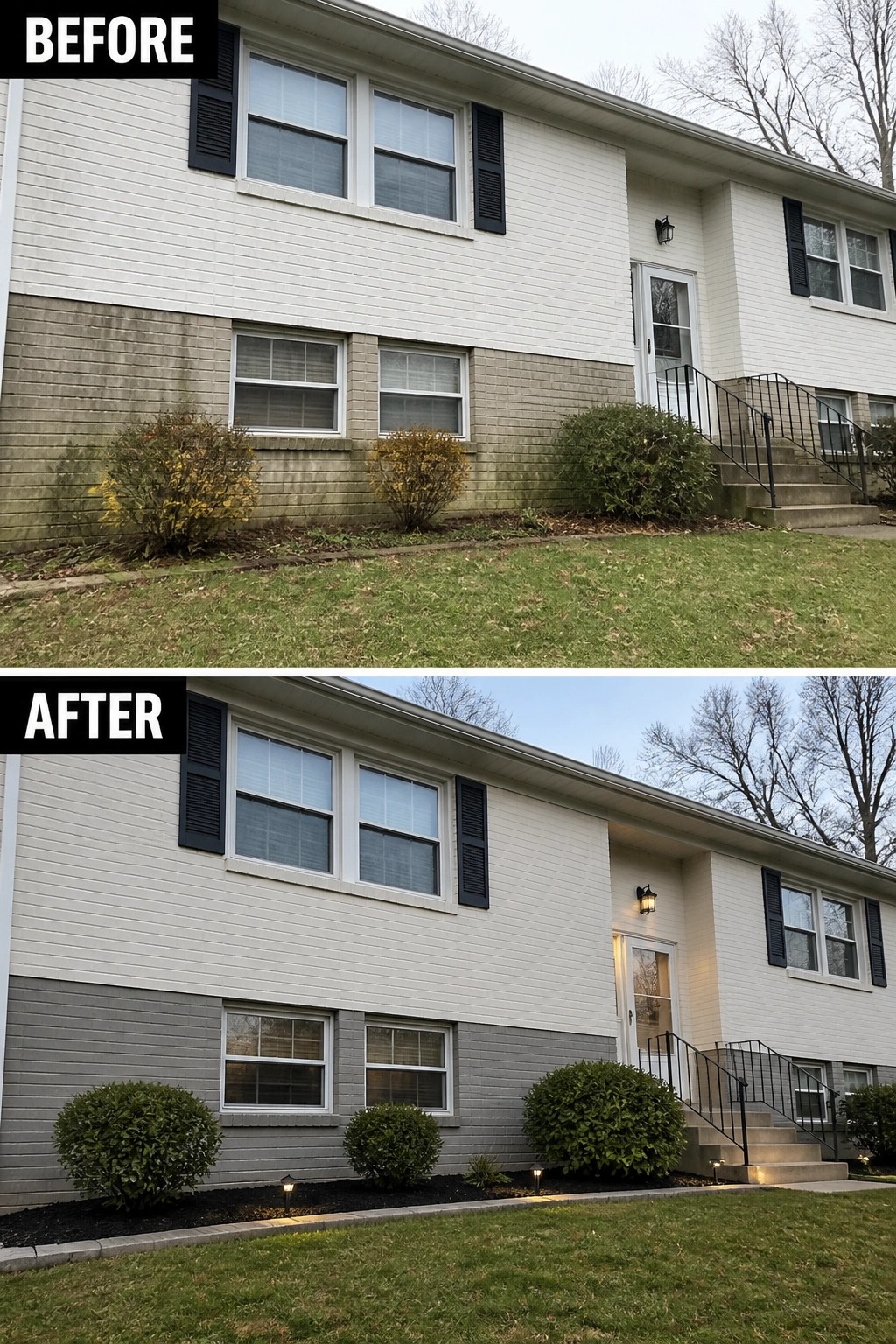
A simple way to update a dated facade is to paint the brick that shows the most wear. Painting the lower band of brick a clean, neutral gray while keeping the upper brick light makes the whole front look sharper and hides years of staining without a full rebuild. That single change gives the house a more intentional, contemporary profile.
To copy the idea, start by power washing and repairing the brick so the paint adheres well. Use a masonry primer and a breathable exterior masonry paint, and test a small area to be sure the gray reads the way you want against your trim. Pair the new base color with tidy mulch, a few trimmed shrubs, and low path lighting for an easy, low-cost curb appeal upgrade.
Paint Brick To Modernize Your Facade
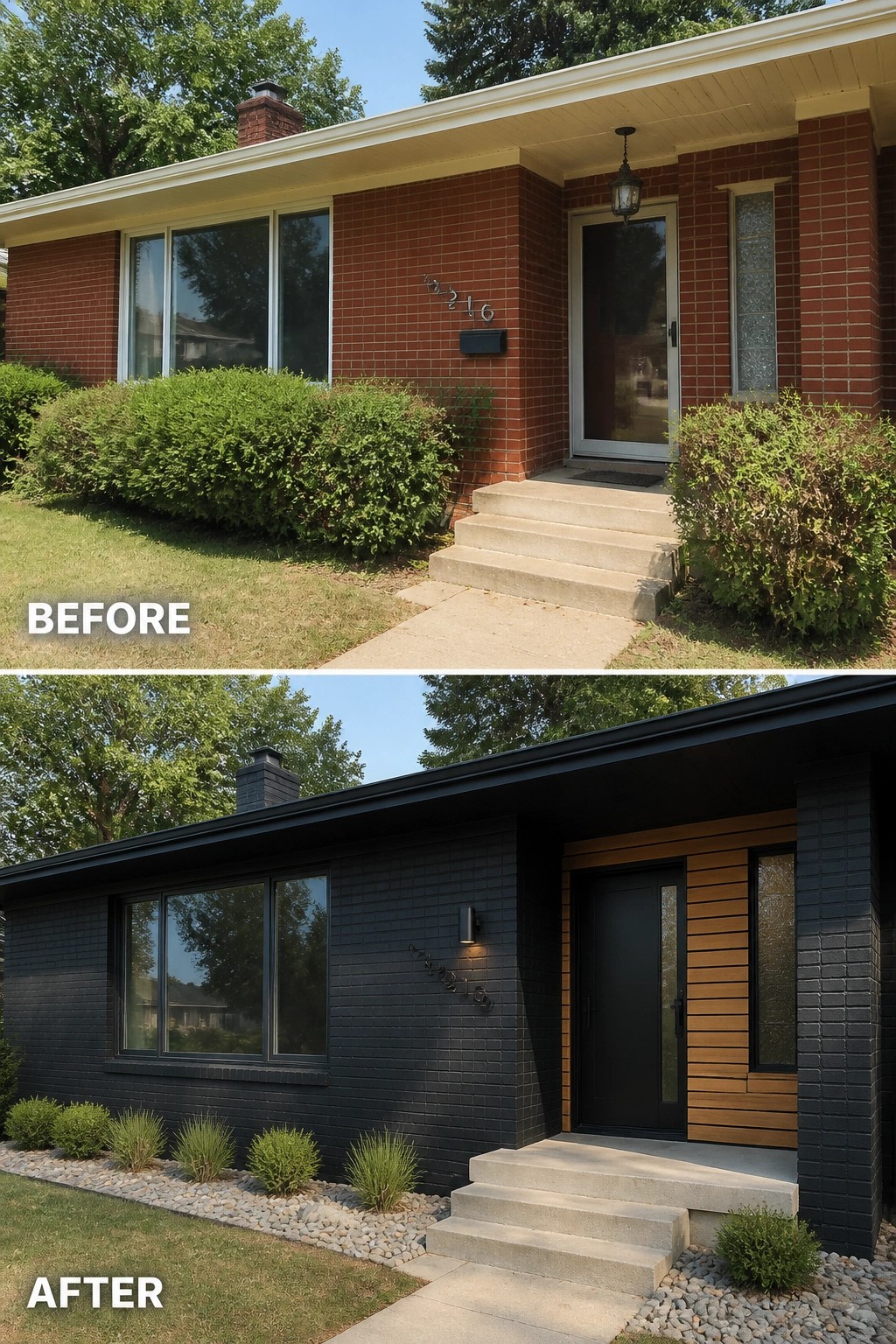
A fresh coat of paint on old brick is one of the quickest ways to update a dated exterior without a full rebuild. Switching to a deep, matte color instantly simplifies the look and makes added details—like a warm wood door surround and a modern porch light—read as intentional design rather than afterthoughts. The change unifies the facade and gives a small entryway more presence.
To try this at home, start with a good cleaning and masonry primer so the paint bonds properly, then choose a color that fits your home’s style — dark tones for a contemporary look, soft neutrals for a more classic feel. Keep one contrasting material, such as wood or metal, around the door to add warmth and interest, and simplify the planting at the base so the new brick color can stand out. Start with a small area or sample board if you are unsure; paint is reversible but prep matters.
Make A Plain Facade Feel Welcoming
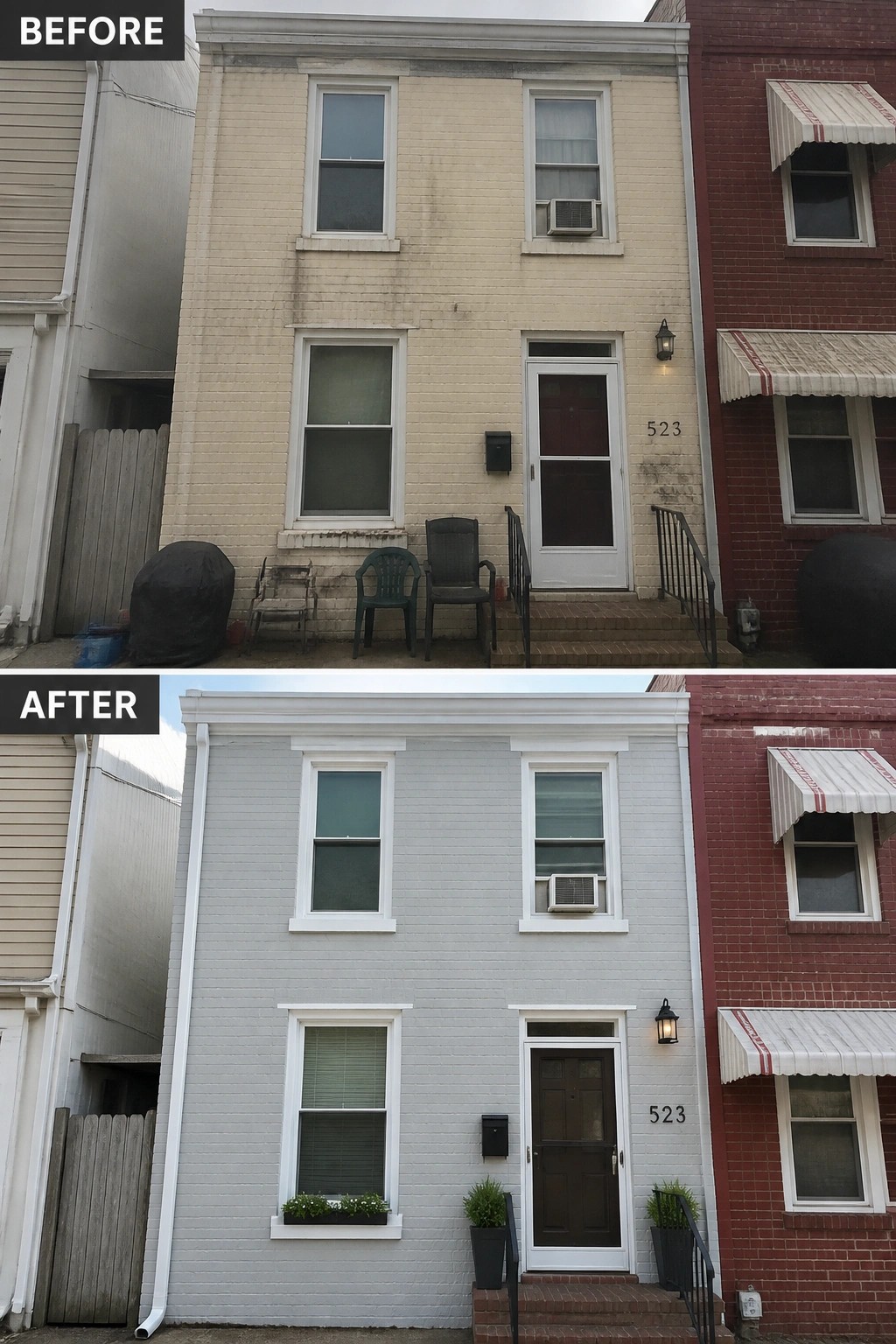
A fresh coat of paint plus crisp trim is one of the simplest ways to lift a weary brick front. In this example the dull beige brick is repainted a soft gray with bright white trim, and a few small touches — a darker door, a new porch light and paired planters — give the entry instant polish without a big renovation.
To copy this idea, start by cleaning and repairing the brick, then test paint swatches on a small area so you can see tones next to neighboring houses. Use a lighter trim color to frame windows and doors, pick a contrasting door shade for personality, and add two matching planters to flank the steps (keeps things symmetrical and scale-appropriate). Works especially well on narrow rowhomes where a few focused updates make the whole block look fresher.
Refresh Dated Brick With A Simple Paint Scheme
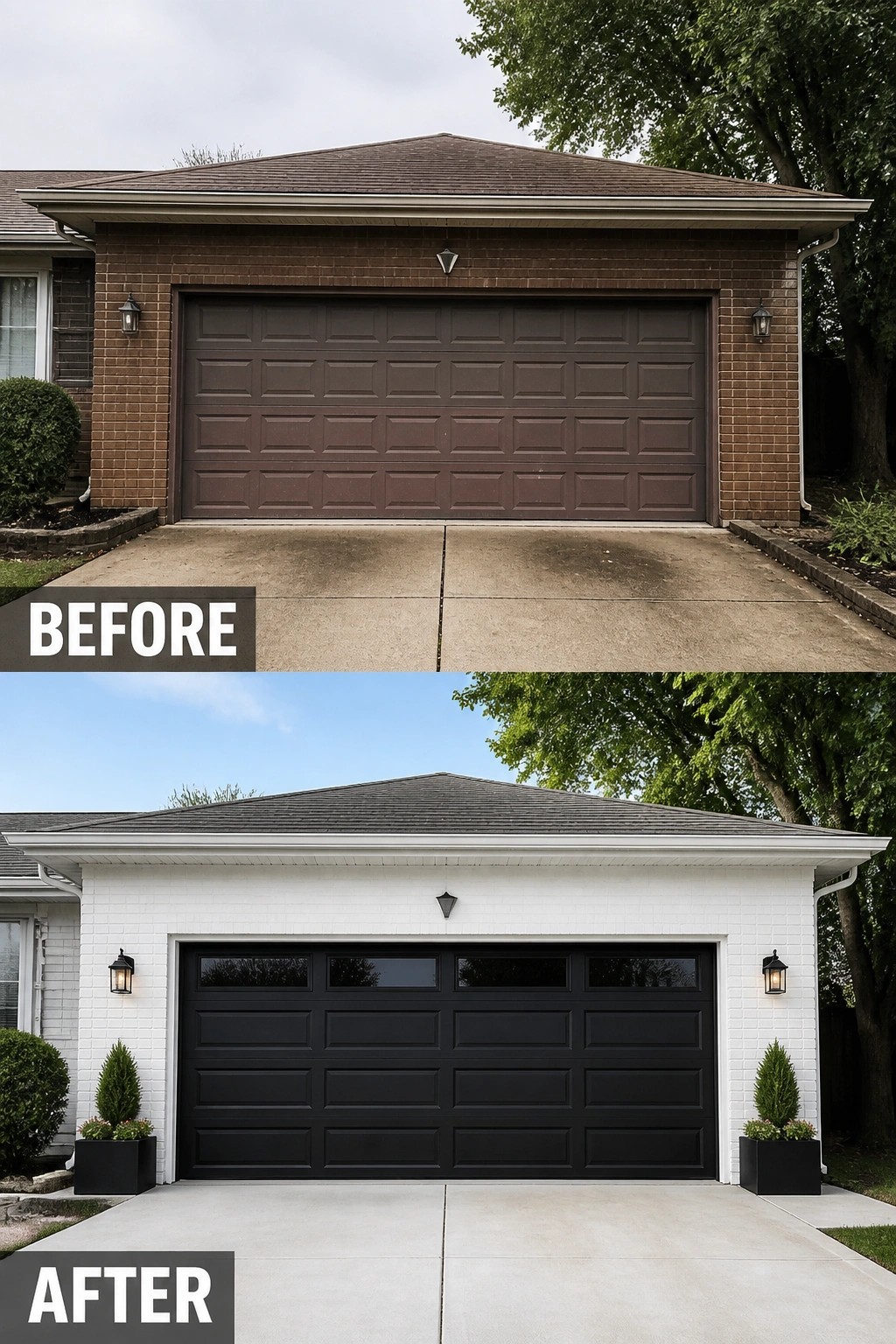
Painting existing brick and picking a bold, contrasting door color is an easy way to modernize a tired facade without a major renovation. In this example the brown brick was painted white and the garage door was switched to a deep black, which immediately reads cleaner and more intentional. A few well-placed lanterns and matching planters finish the look without much fuss.
To try this at home, start with a thorough cleaning and any mortar repairs, then use a masonry primer and breathable exterior paint made for brick. Paint the whole visible wall rather than patching spots so the finish looks uniform, and pick a dark trim or door color that repeats elsewhere on the house for cohesion. Small accents like black light fixtures and simple potted evergreens make the update feel complete and scale-appropriate.
Update A Tired Brick Entry With Paint And Simple Styling
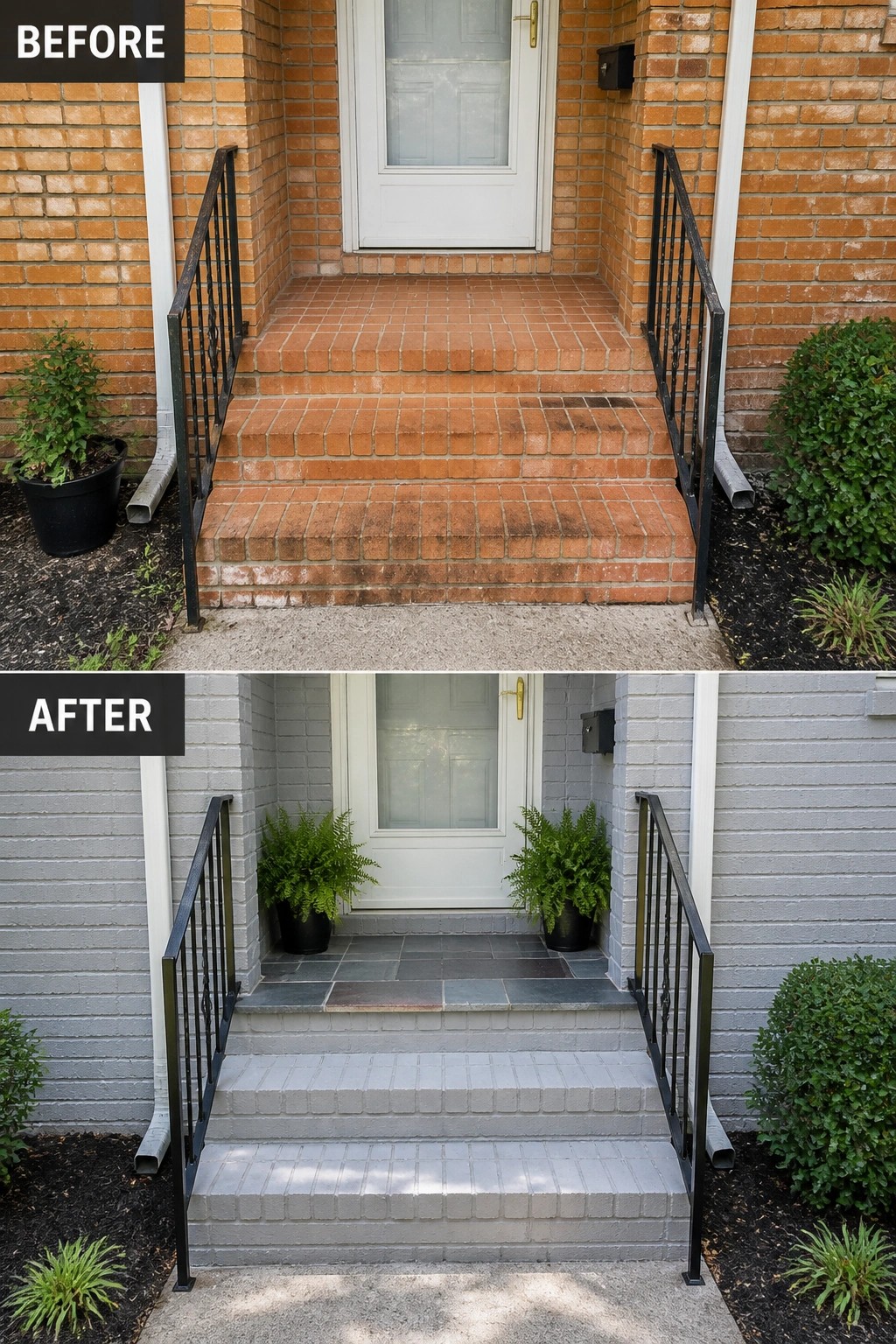
A fresh coat of paint on brick plus a new landing surface is an easy way to modernize an old front entry. In this example the orange-red steps were painted a soft gray and the top landing was retiled in dark slate, then framed with matching black rails and a pair of potted ferns to finish the look. The result is cleaner, more intentional, and gives the doorway a contemporary curb appeal without a full rebuild.
Start by cleaning the brick and scraping any loose mortar or staining, then use a masonry primer and an exterior brick paint that allows the wall to breathe. Choose a neutral gray or warm white to brighten the entry and contrast it with darker railings or tile so the details read clearly. Add two simple planters or a pair of low-maintenance shrubs to frame the door, and if you retile the landing pick a slip-resistant option and keep the step heights the same so the entry stays safe.
Paint Old Brick To Modernize The Facade
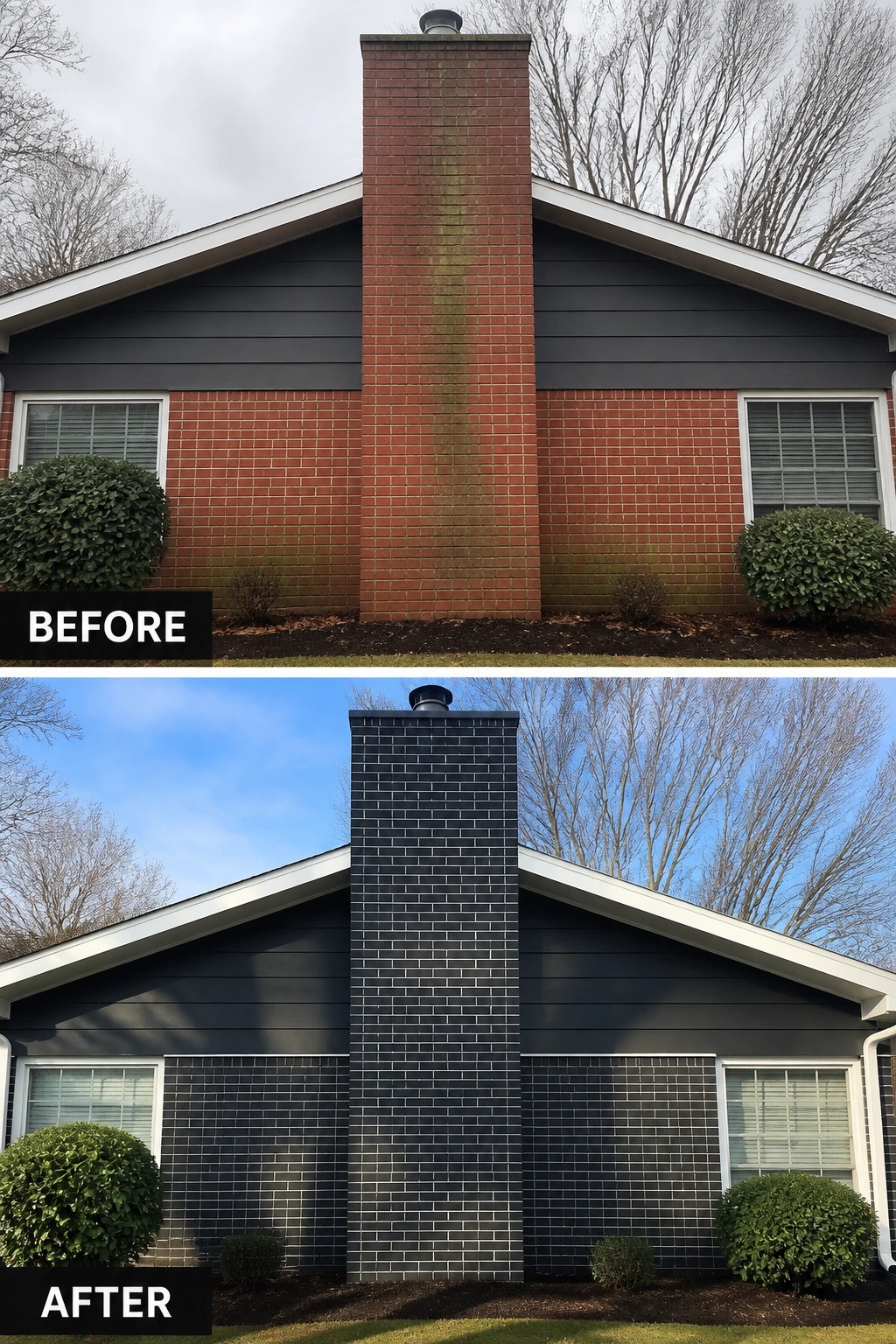
A fresh coat of masonry paint is one of the fastest ways to update tired red brick and hide stains without a full rebuild. In this example the stained red chimney and lower brick were painted a deep charcoal, which instantly reads cleaner and more contemporary against the existing siding. The result feels intentional rather than patchy because the whole brick area was unified with one color.
To try this yourself, start with a thorough power wash and repair any loose mortar, then use a high-quality primer and paint made for masonry. Test a small area and pick a color that ties to your trim or roof so the look reads cohesive. This approach suits one-story and midcentury homes where you want a simple, low-effort curb appeal update—but remember painted brick is hard to reverse, so choose the shade with care.
Use Paint To Modernize Old Brick
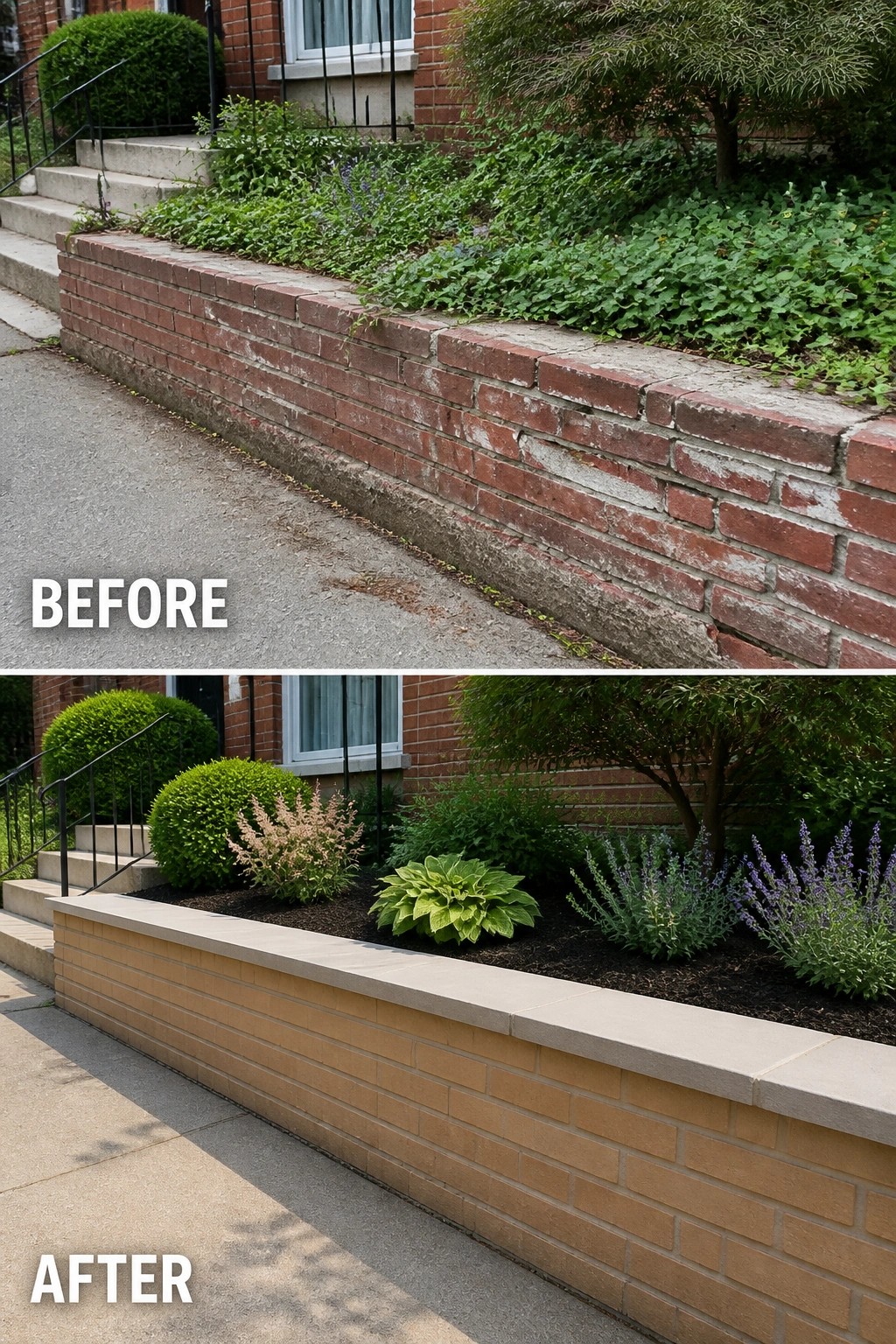
A fresh, light coat of masonry paint (and a neat cap) can instantly update tired red brick and make the whole front look cared for. In this example the rough, weathered wall is changed to a smooth, neutral face and the bed in front is edged with fresh mulch and simple plantings—just one or two visible changes that lift curb appeal without a full rebuild.
To copy this idea, start by cleaning and repairing loose mortar so the finish will last. Choose a breathable masonry paint or mineral stain and try a small test patch first (do a test patch first). Pick a neutral tone that ties to your trim, add a stone or concrete cap for a finished edge, and refresh the planting bed with dark mulch to make the new brick color pop. Avoid painting if the brick has active moisture problems or major structural damage; fix those first.
Update A Dated Brick Entry With Paint And Simple Styling
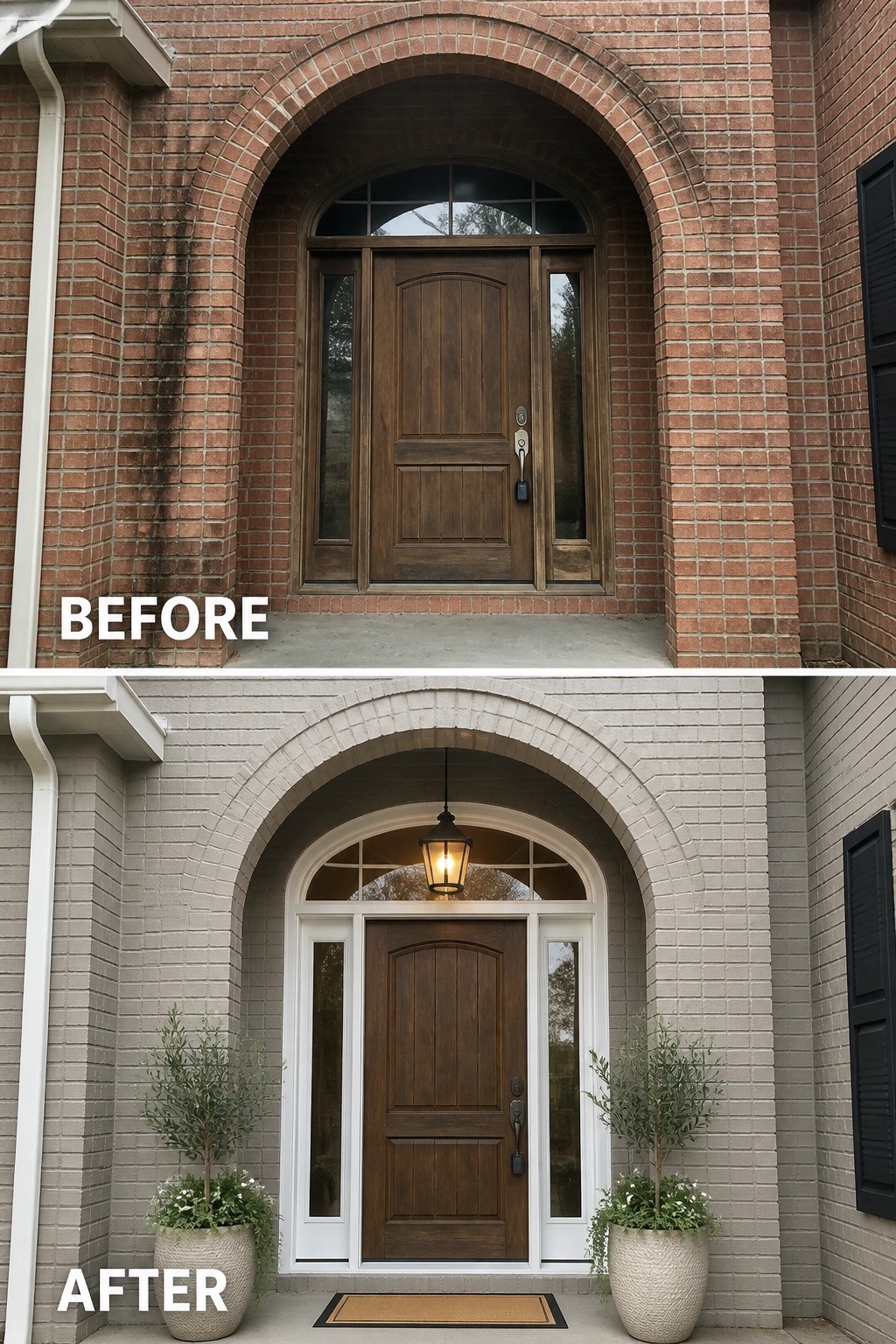
A fresh coat of masonry paint and a few well-chosen accents can modernize a heavy red-brick entry without replacing anything. Painting the brick a soft neutral instantly lightens the porch and makes existing features like the wood door and transom feel intentional. Add one outdoor lantern and matching planters to give the space a clear purpose and a welcoming focal point.
To copy this idea, test paint colors on a small area first and use a breathable masonry primer and paint so the brick can release moisture. Keep the door or hardware as a contrasting element so the entry does not look flat, and choose planters scaled to the arch for balance. This approach works best on traditional brick homes where the architecture is sound but the color feels dated.
Brighten A Narrow Side Alley With Whitewashed Brick
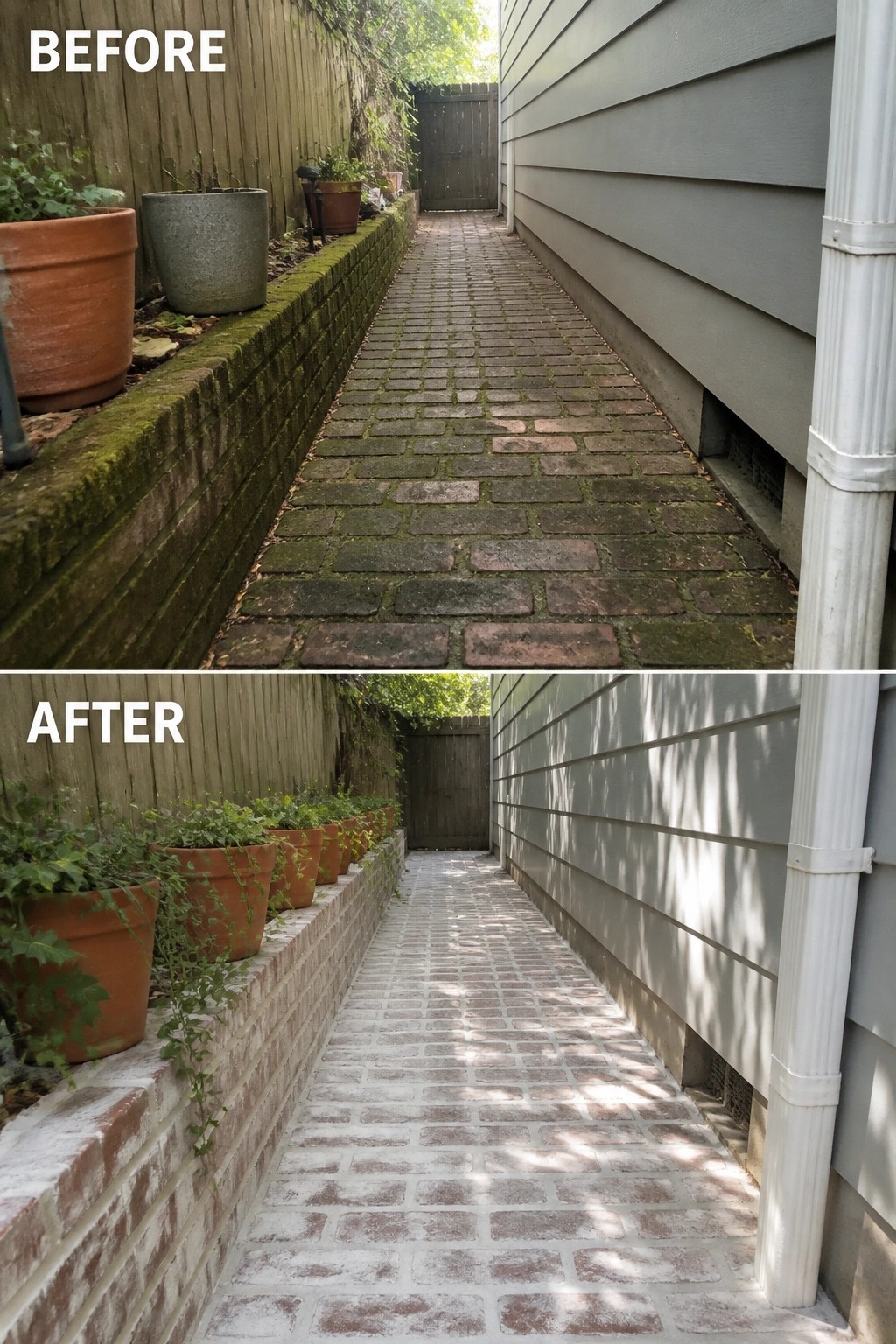
A quick way to rescue a dark, mossy side path is to lighten the bricks with a whitewash or pale masonry paint. In the photo a dingy, green-tinted walkway becomes noticeably brighter after the bricks and mortar get a pale wash, and the lighter surface reflects more daylight into the tight space so it feels cleaner and less gloomy.
Start with a thorough cleaning: scrape moss, pressure-wash, and repoint any loose mortar. Use a breathable limewash or masonry paint (test a small area first) and apply thin coats so the brick texture still reads. For narrow, shaded passages this works especially well — it visually widens the path and makes plant pots and simple styling pop — but avoid sealing over damp bricks and add a non-slip additive if the surface will stay wet.
Give A Bare Porch A Clear Purpose
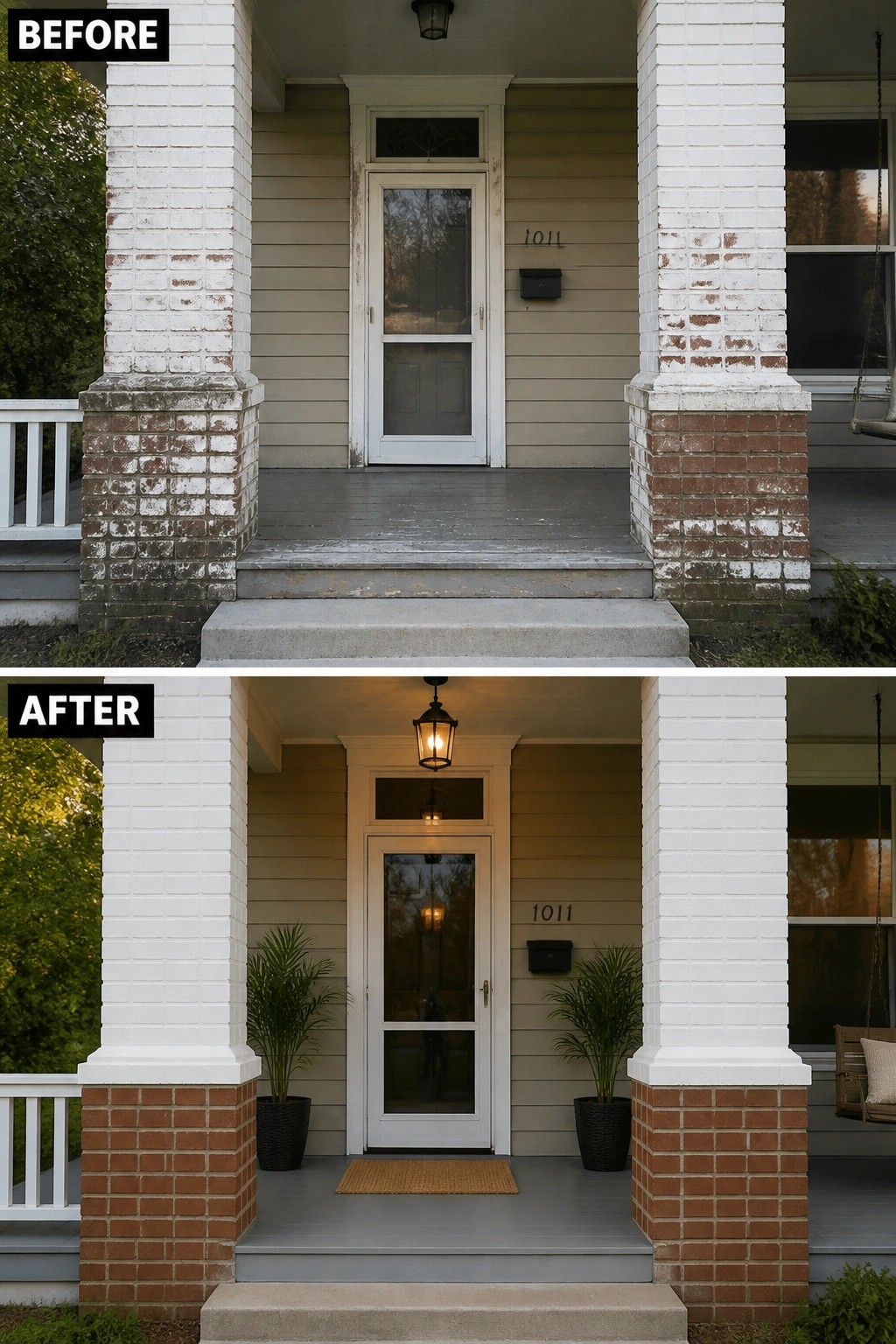
A fresh coat of paint on brick and a couple of simple accessories can turn a neglected entry into a welcoming front porch. In this example the columns and lower brick were cleaned up and painted, then framed with twin potted plants and a small doormat to make the doorway feel intentional instead of leftover space. That small investment of paint plus a few well-placed pieces instantly reads as a proper entry.
To try this at home, start by cleaning and repairing the masonry, then test your paint on a small patch (test a small section first). Use exterior masonry paint and pick one or two accent elements to repeat for cohesion — matching planters, a single hanging light, and a neutral mat work well. Keep items scaled to the porch so you still have clear access, and choose weatherproof finishes so the look lasts.
Use Paint And Trim To Refresh An Old Brick Facade
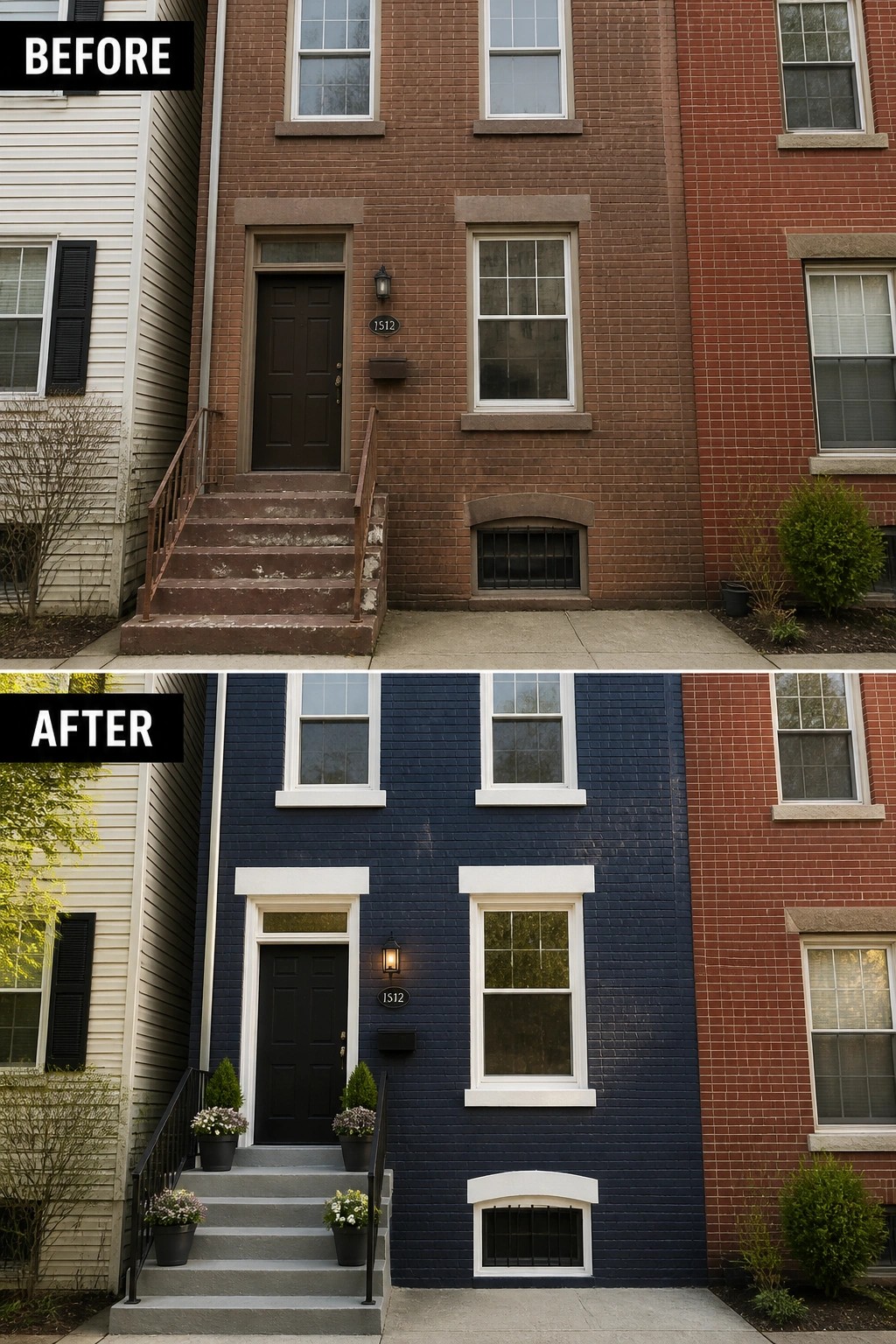
A coat of paint and a few crisp trim details can make a dated brick exterior read as intentional rather than tired. In this example the brown brick and worn steps become a navy facade with white window and door trim, a repainted stoop, and simple planters, which together give the entry a clear focal point and a more polished feel. Simple but effective.
If you want this look, start with basic prep: power wash, repair any loose mortar, and test a small patch with a breathable masonry paint. Pick one contrasting trim color to highlight window sills and the doorway, keep railings and hardware dark for balance, and use a couple of scaled planters or a new light and house number to finish the stoop (start small). This approach works especially well on townhouses and row homes where a defined entry instantly improves curb appeal.
Refresh A Brick Facade With Paint And A New Front Door
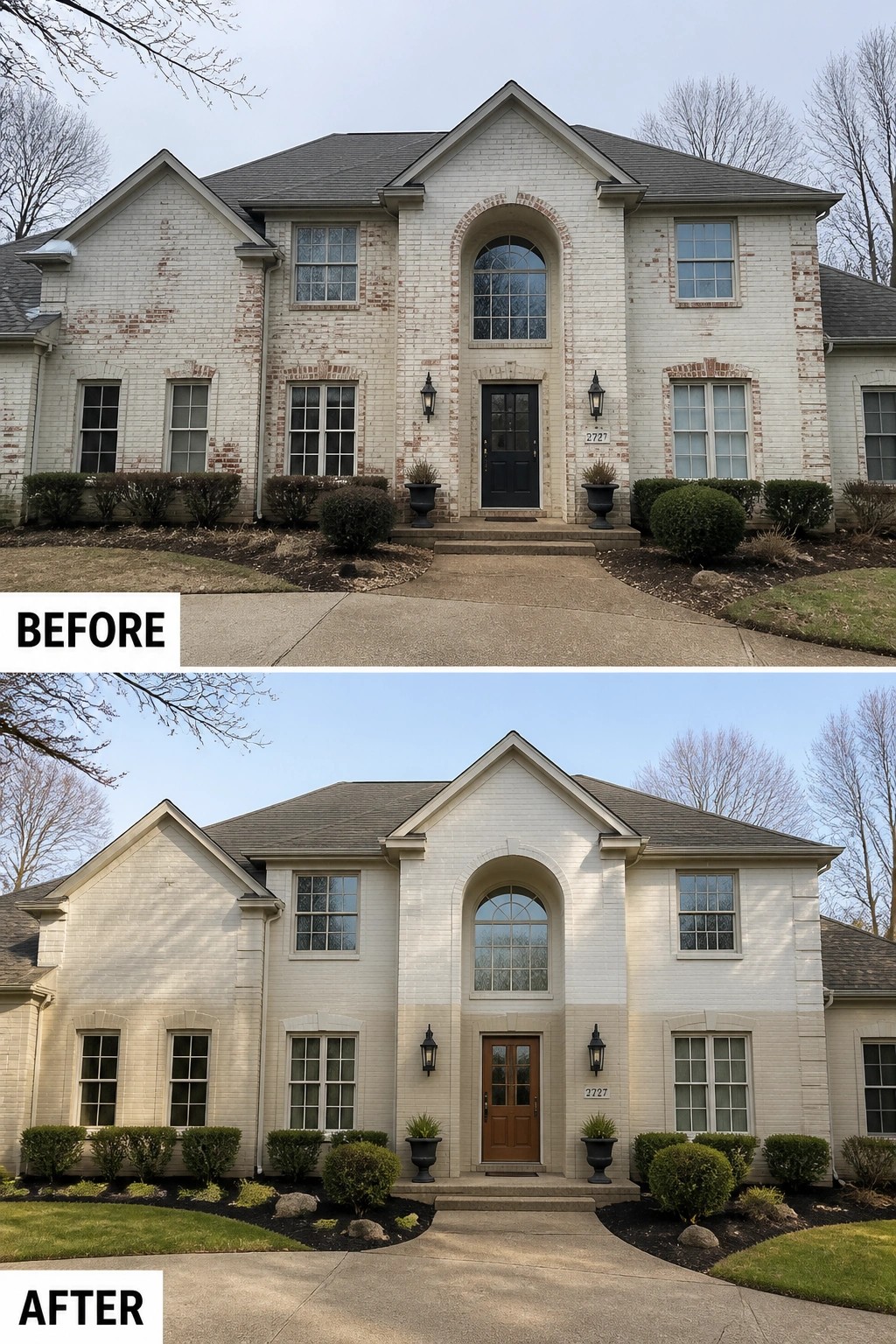
A fresh coat of masonry paint can unify tired, patchy brick and give an older house a lighter, more cohesive look. Pairing that with a new front door in a warmer wood tone (and a couple of simple planters and updated lanterns) creates a clear focal point that makes the entry feel cared for and current.
Start by power-washing and repairing any damaged mortar, then use a breathable masonry primer and paint made for brick. Choose a soft, even neutral for the brick so architectural details still read, and pick a contrasting door color or stain for warmth. Finish with two matching planters and updated wall lights to tie the look together—works best on traditional brick homes but avoid sealing wet or compromised masonry.
Update A Tired Porch Foundation With Paint And Planters
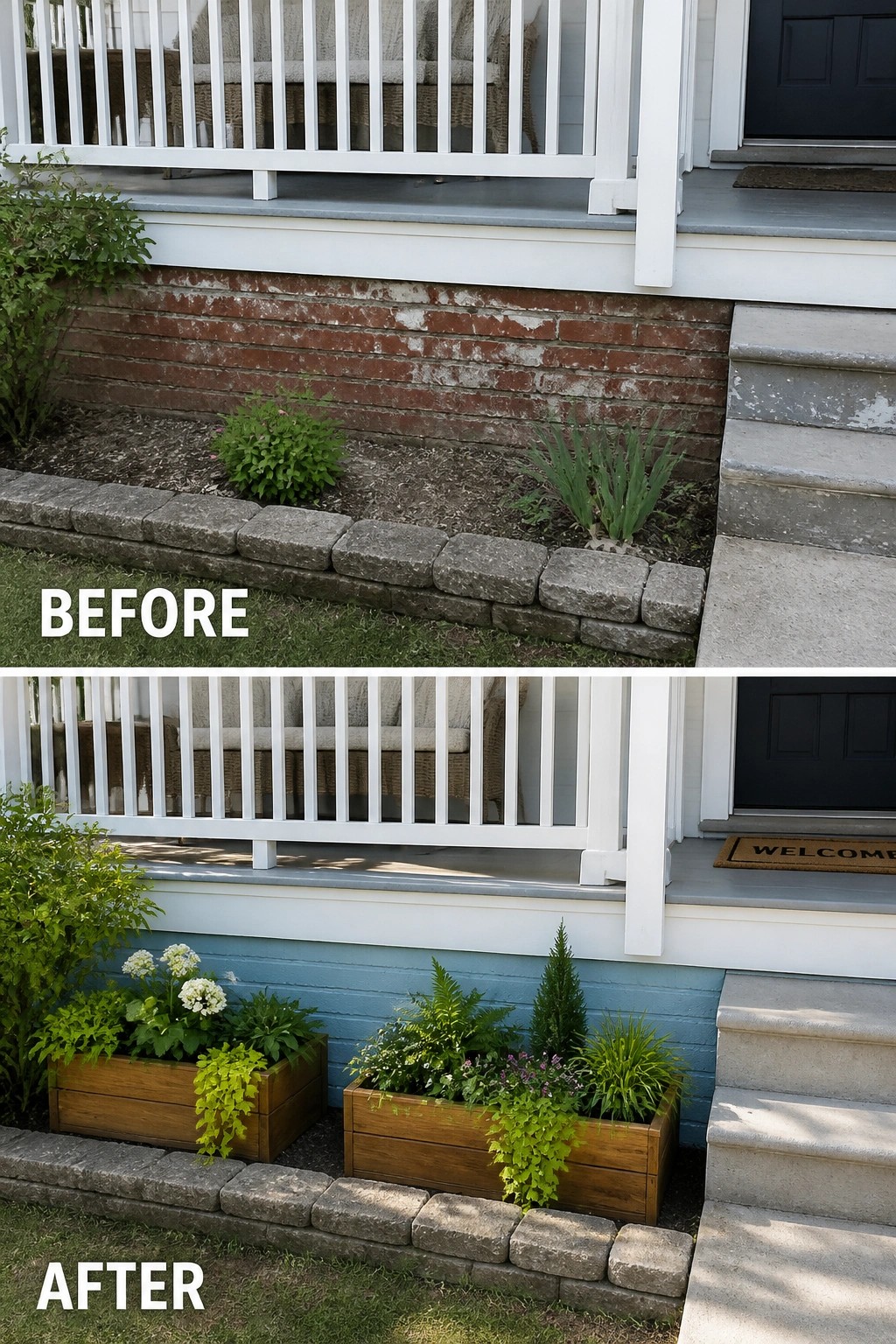
A quick way to make an old porch feel cared for is to paint the exposed brick foundation and add low wooden planters. In the example the worn red brick was painted a soft blue and two rectangular wooden boxes were placed below the railing, which immediately brightens the entry and hides surface damage without a big renovation.
Do this by cleaning the brick, treating any efflorescence, and using a quality masonry primer and exterior paint (start with a small patch test). Choose planter boxes that match the scale of the porch, use rot-resistant wood or composite, provide drainage, and plant a mix of evergreen structure plus a few seasonal blooms so the area looks good year-round. This approach works especially well on older homes with low porch skirts and on tight front beds where you want impact without changing hardscape.
Refresh The Façade By Painting The Brick
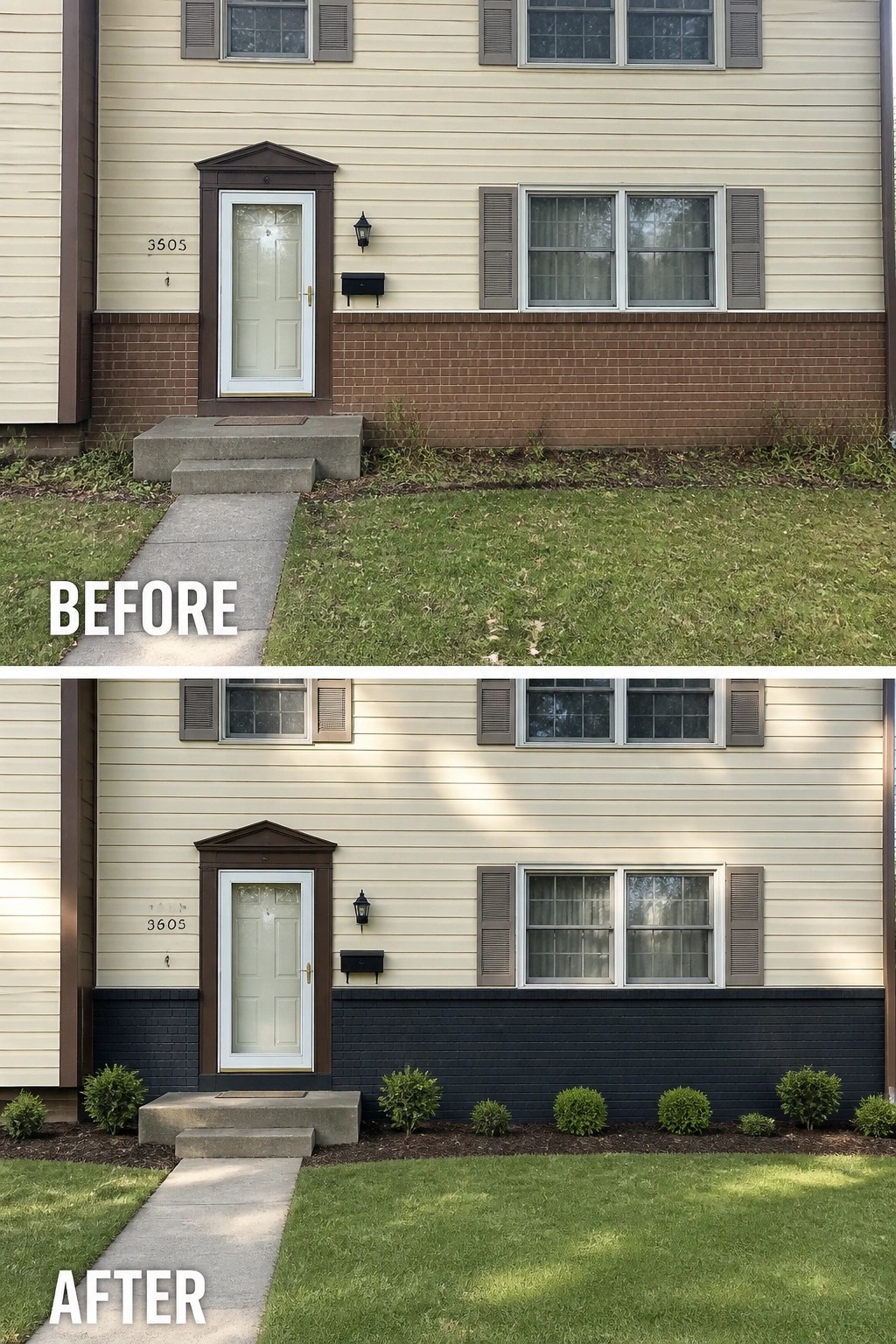
A fresh coat of paint on a partial brick skirt is one of the quickest ways to modernize an older front elevation. Painting the lower brick a deep charcoal here creates clean contrast with the light siding and immediately sharpens the entry without a full renovation.
This works best when the brick forms a clear horizontal band around the house. Prep the masonry well, use a breathable masonry paint, and test a small swatch first. Finish the look with a low row of evergreen shrubs and fresh mulch to anchor the painted band and keep the walkway feeling open.
Refresh Old Brick With Neutral Paint
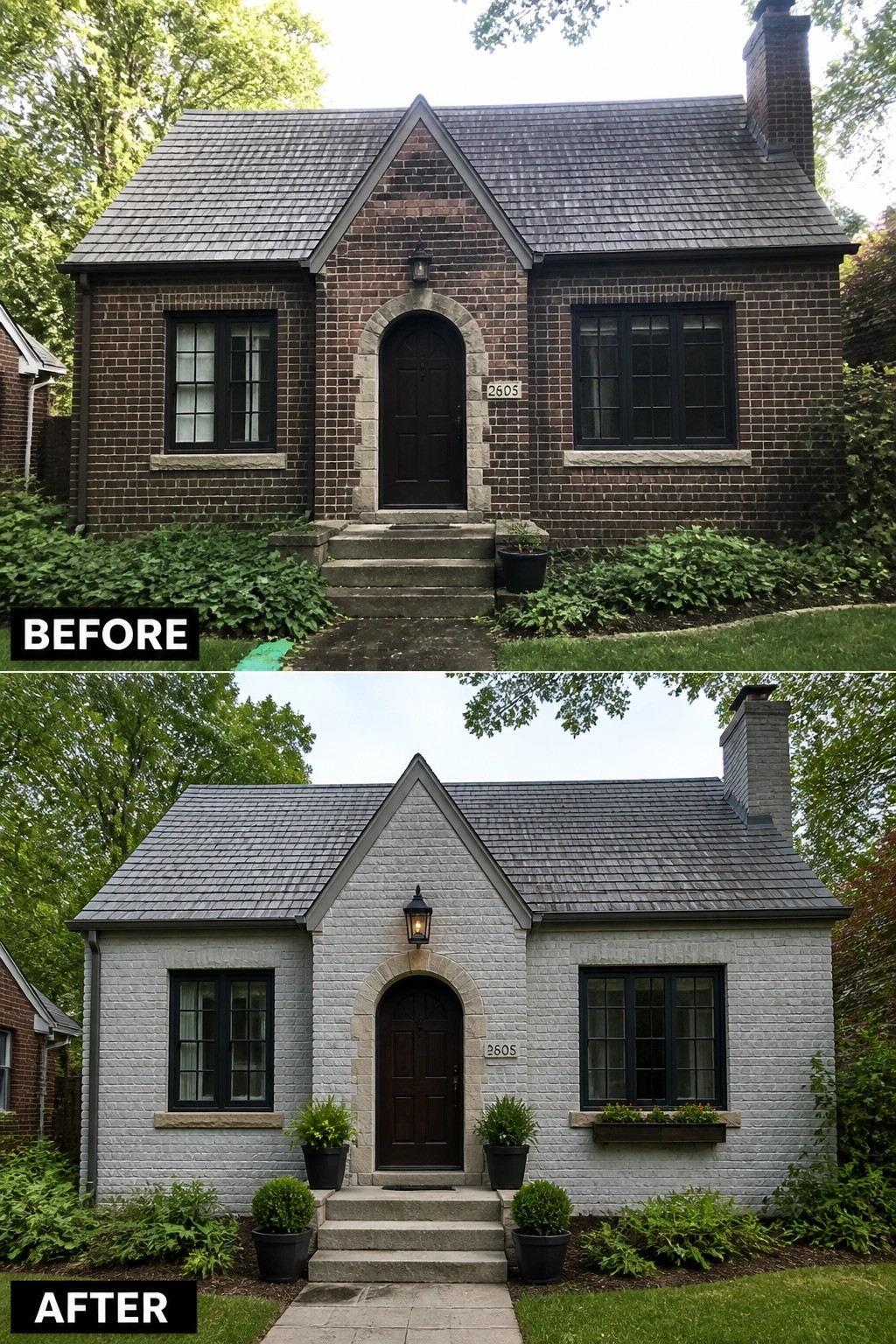
Painting existing brick a soft neutral is one of the quickest ways to modernize an older facade without changing structure. In the photo the dark brown brick was lightened to a pale gray, which immediately brightens the house and lets the stone arch and dark door read as intentional accents rather than leftovers. A pair of matching planters and a simple lantern finish the look and make the entry feel cared for.
If you want to try this, start small: clean the brick, test a swatch, and choose a breathable masonry paint in a neutral that complements your roof and stonework. This approach works well on small cottages and brick bungalows where you want a lighter, cleaner curb appeal; add a couple of symmetrical planters and a lantern to complete the effect. Be cautious with very old or historic brick—check for moisture issues or consult a pro before sealing over original mortar.
Update Dated Brick With A Fresh Neutral Paint
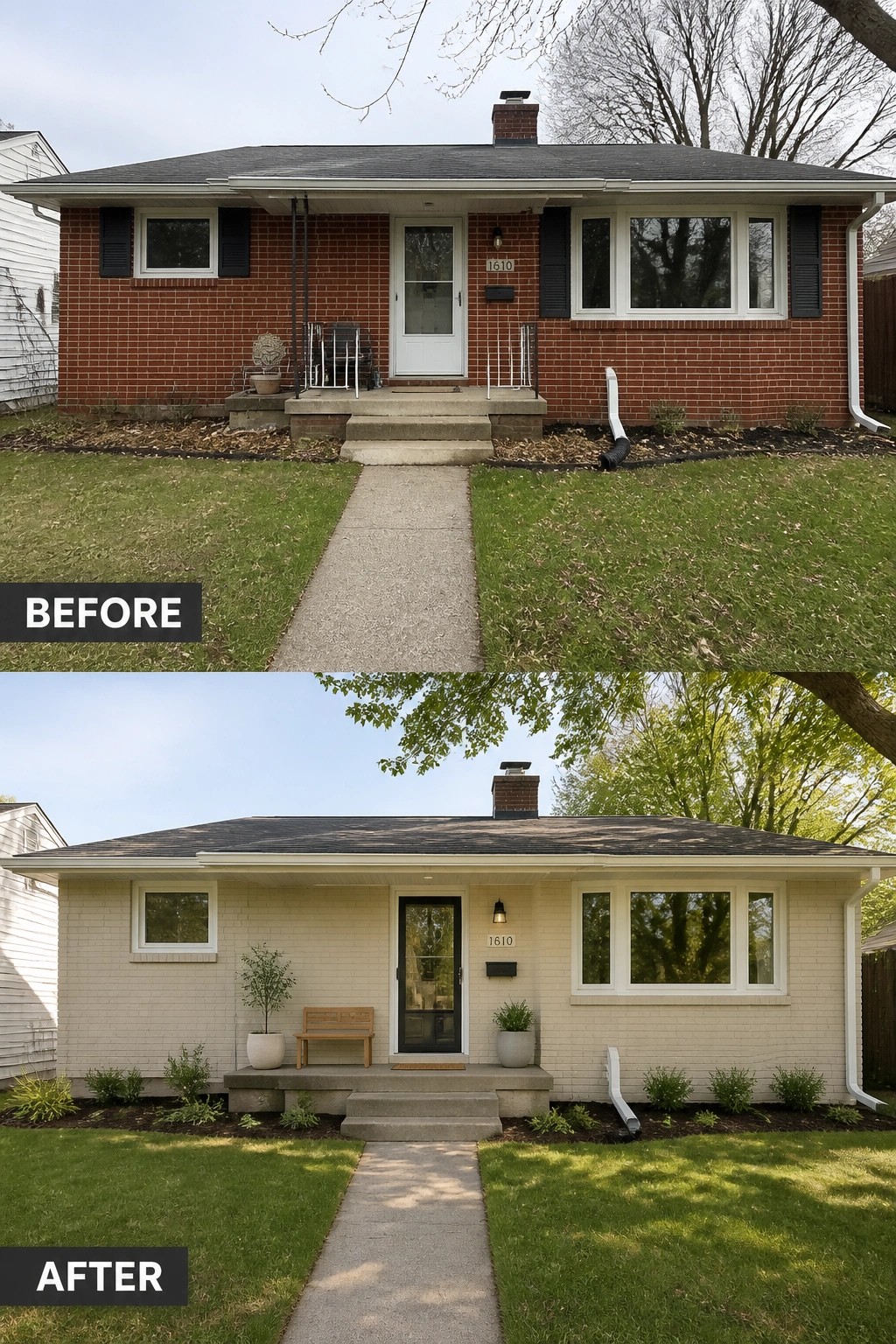
A simple paint job can modernize an old brick facade and make the porch feel intentional. Painting the red brick a soft, light neutral instantly brightens the front and lets a dark front door, a single bench, and matching planters read as purposeful accents rather than afterthoughts.
Pick a masonry paint and try a small patch first to check the color in different light. Keep the palette limited: one neutral for
Modernize A Brick Entry With Paint And Lighting
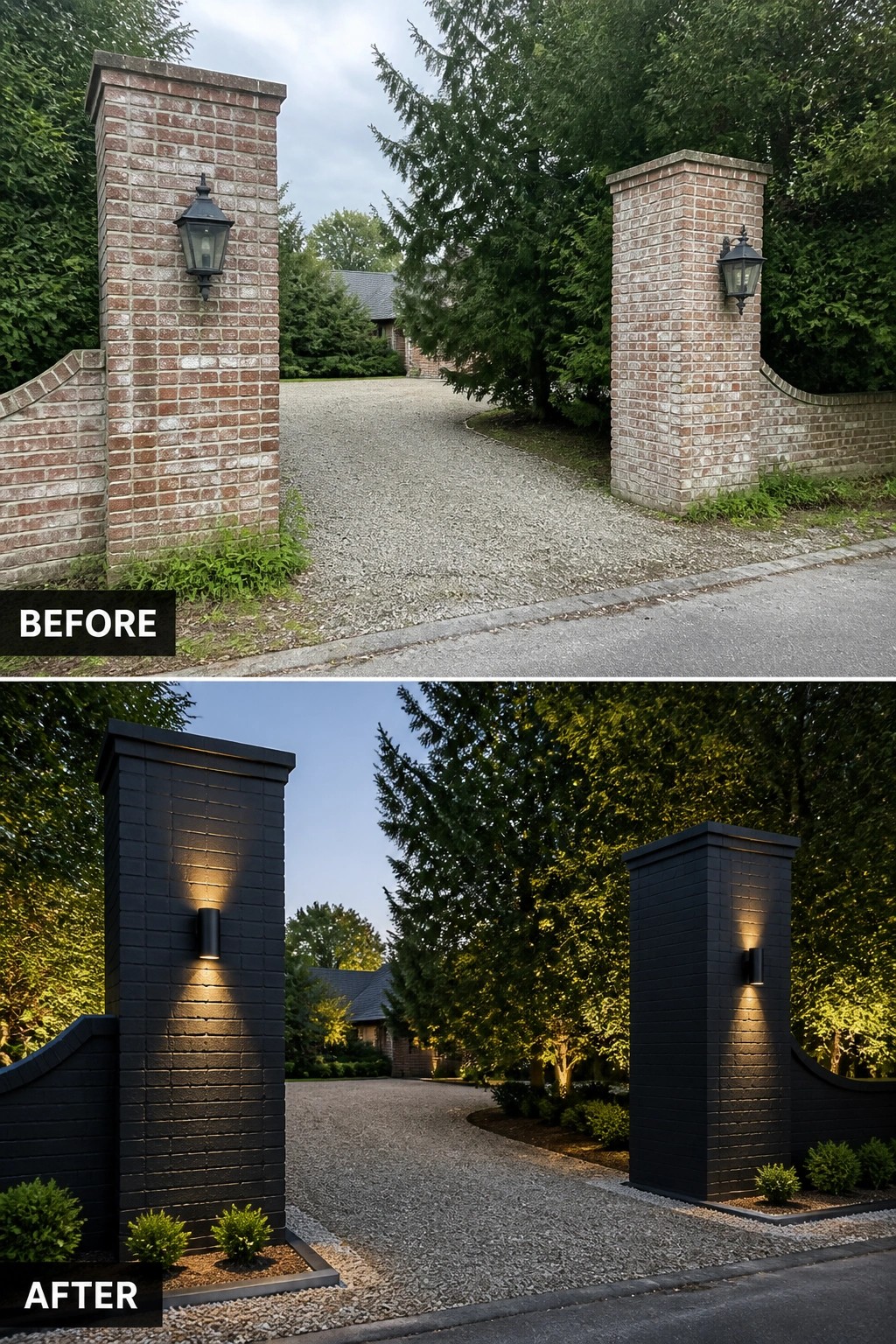
A coat of paint on old brick plus a simple lighting update is one of the quickest ways to refresh curb appeal. Painting the columns a deep charcoal unifies mismatched brick and mortar, while swapping dated lanterns for sleek wall sconces turns the pillars into a clear architectural feature that reads well day and night.
Start small and plan for durability. Test a few colors on an inconspicuous area, use a masonry primer and breathable exterior paint, and choose fixtures sized to the pillar height and rated for outdoors. Keep plantings low and neat so the painted brick and light wash remain the focal point — practical, modern, and low fuss.
Refresh Your Entry With Painted Brick Patterns
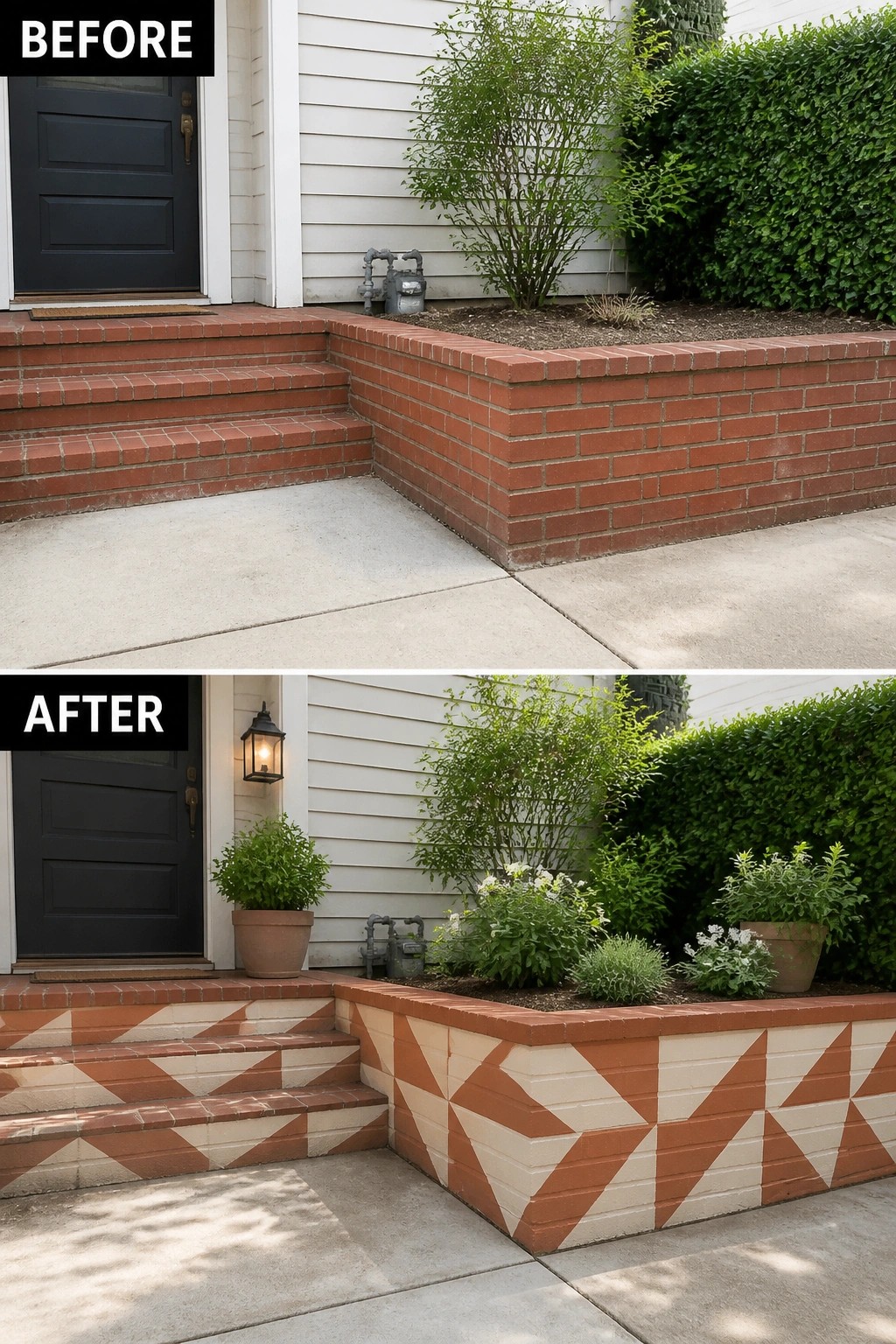
A painted geometric pattern is an easy way to modernize an old brick planter and steps without a major renovation. In this example the plain red brick gets a two-tone, angular motif and a couple of simple pots and a lantern to finish the look, turning an overlooked entry element into a purposeful front-door detail.
To try it yourself, clean the masonry, prime with a product made for brick, and use exterior masonry paint and crisp tape lines for the shapes (start small). Pick two colors that echo your door or trim so the design feels intentional, keep the pattern scale appropriate to the brick size, and seal the top edge for weather protection. This works best on low walls and steps at a front entry where you want curb appeal without changing the structure.
Frequently Asked Questions
Q: How should I prep my brick before painting so the new color lasts?
A: Start by scrubbing or pressure-washing to remove dirt, mildew, and loose paint, then let the wall dry fully for a few days. Patch any cracked mortar and rinse away efflorescence with a stiff brush and water. Finish with a masonry primer so the paint sticks evenly and covers the old color.
Q: Will painting brick trap moisture and cause problems later?
A: Modern masonry paints breathe enough to let moisture escape, but you must fix active leaks or rising damp first. If water is seeping through the brick, painting will hide the problem and make it worse, so address the source before you paint. If you’re unsure, have a pro check for water issues.
Q: How long can I expect a painted brick exterior to look good?
A: With solid prep and quality exterior masonry paint, expect 8 to 15 years before major repainting, though high-sun or wet climates may shorten that. Do small touch-ups when you see chips or heavy chalking to keep the finish tidy. Repaint fully when the color fades unevenly or flaking spreads.
Q: Can I just paint the front of the house for a quick curb-appeal update?
A: Absolutely — painting the front facade, porch, or chimney can modernize your curb appeal without doing the whole exterior (try a small area first to check how the color reads in daylight). Match the new brick color to trim and roof tones so the change looks intentional.