

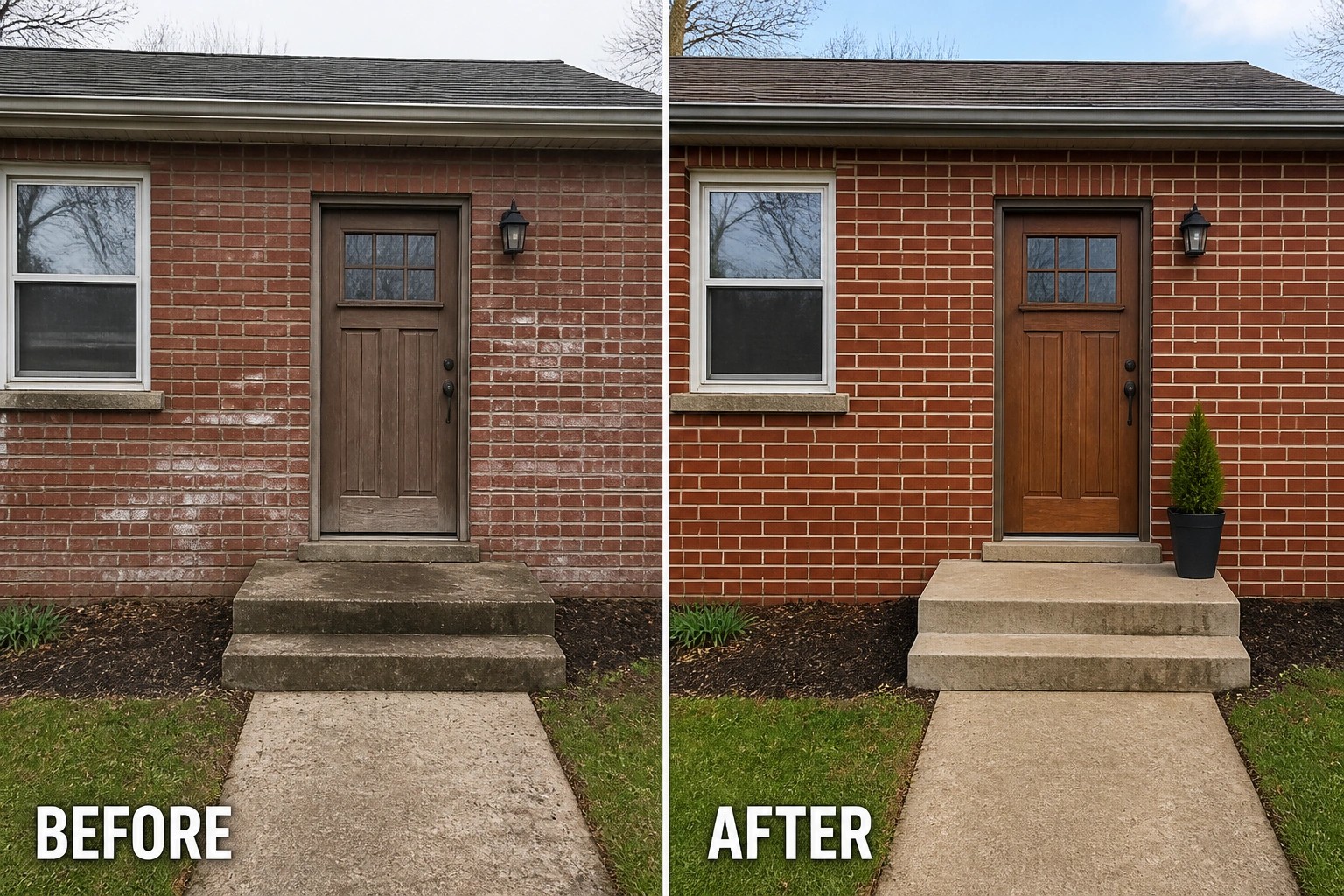
Red brick exteriors can start to feel dated or neglected when entry hardware, lighting, and landscaping lag behind, but a few thoughtful updates can give the facade more polish without painting the brick.
I often begin with practical moves like cleaning and repairing mortar, swapping outdated sconces, adding a purposeful porch rug and potted plants, and defining the walkway so the whole front reads as intentional.
Small changes can go a long way.
There is a quiet satisfaction in seeing a door feel welcoming again or a porch that looks cared for rather than overlooked.
Save a few ideas, try the ones that fit your budget and style, and tweak them so the result feels like smart upkeep rather than a big overhaul.
Give A Bare Porch A Clear Purpose
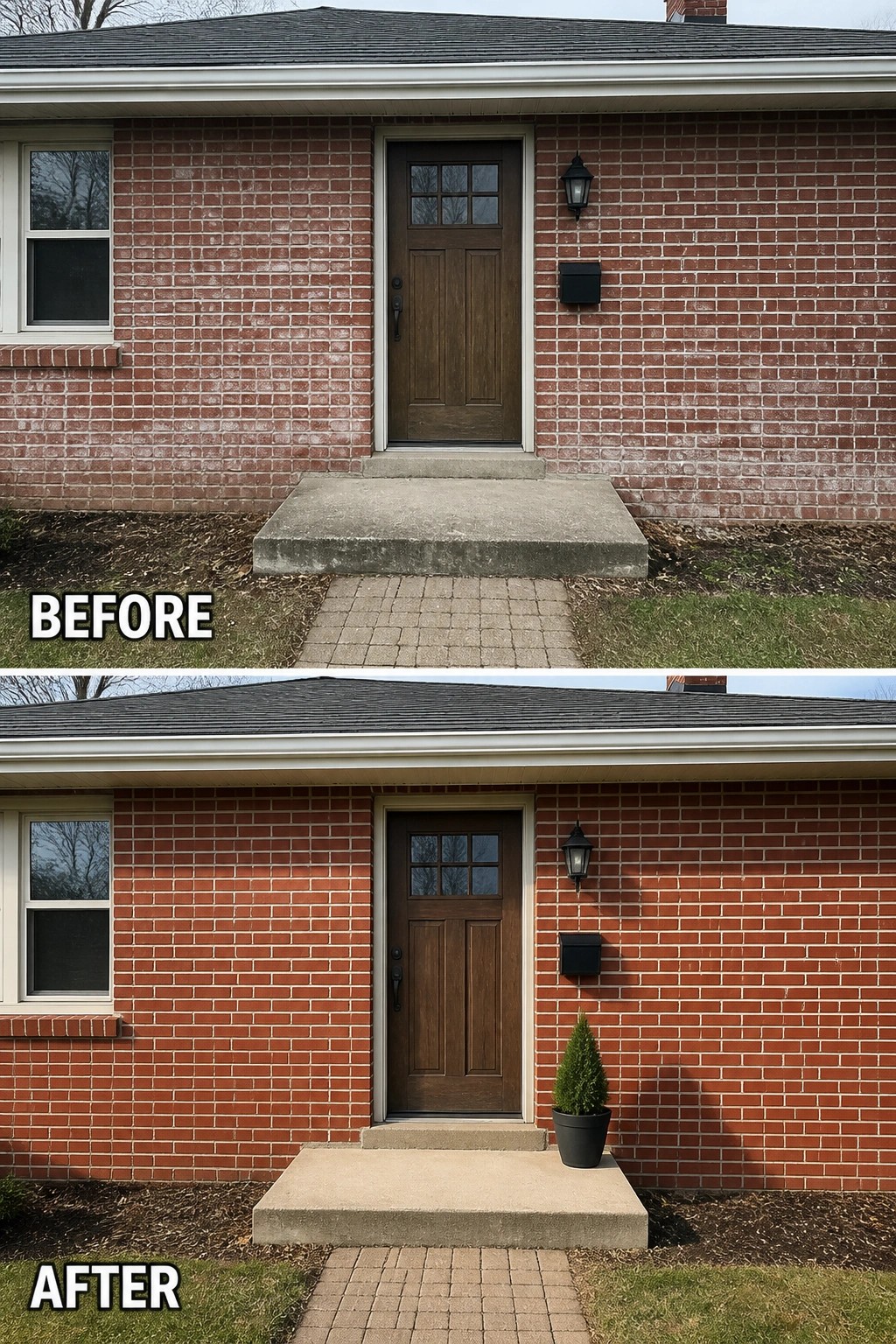
A single, well-chosen element can make a plain stoop feel intentional. In this update a quick cleanup and one tall potted plant beside the door turn an anonymous concrete step into a simple, usable entry that reads as cared-for instead of neglected.
To copy the look, pick a planter that fits the scale of your step—tall and narrow for tight spaces, wider for bigger porches—and choose a low-maintenance plant you like (evergreen for year-round interest). Use a weatherproof pot, place it slightly off-center so the door stays functional, and resist adding too many
Refresh The Front Door With Color And Hardware
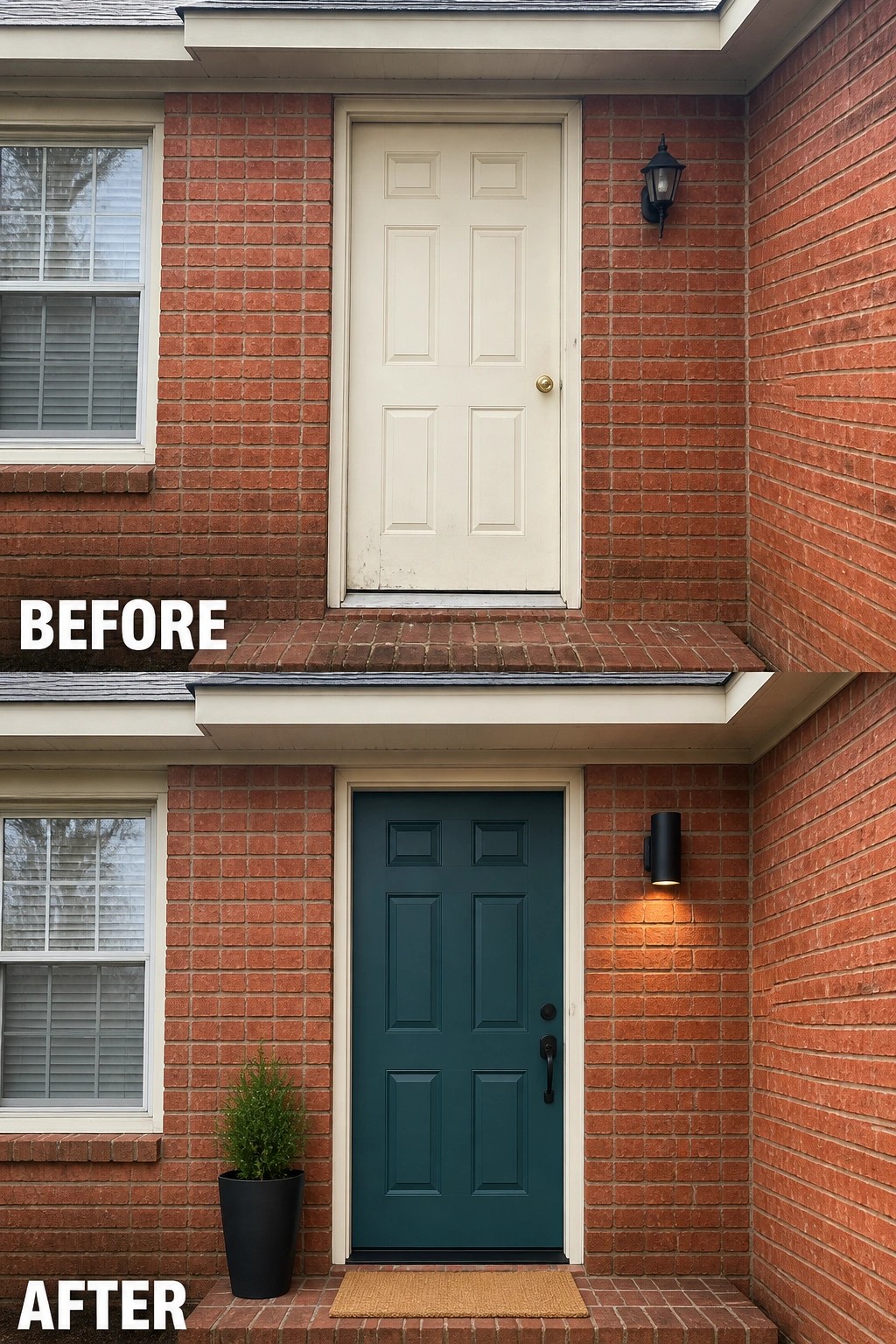
A simple, focused update can turn a forgotten entry into a proper front door. In this example the plain pale door is painted a rich teal and paired with new dark hardware and a modern wall light, which immediately makes the doorway read as the home’s focal point instead of a leftover step.
Pick one main change—usually the door color—then add two small, useful accents like a matching handle set, a compact wall sconce, and a single planter. This approach works well on brick or neutral facades and on small porches where you need one clear focal point; just keep accessory scale modest so the step stays easy to use and maintain.
Frame Windows With Shutters And Planters
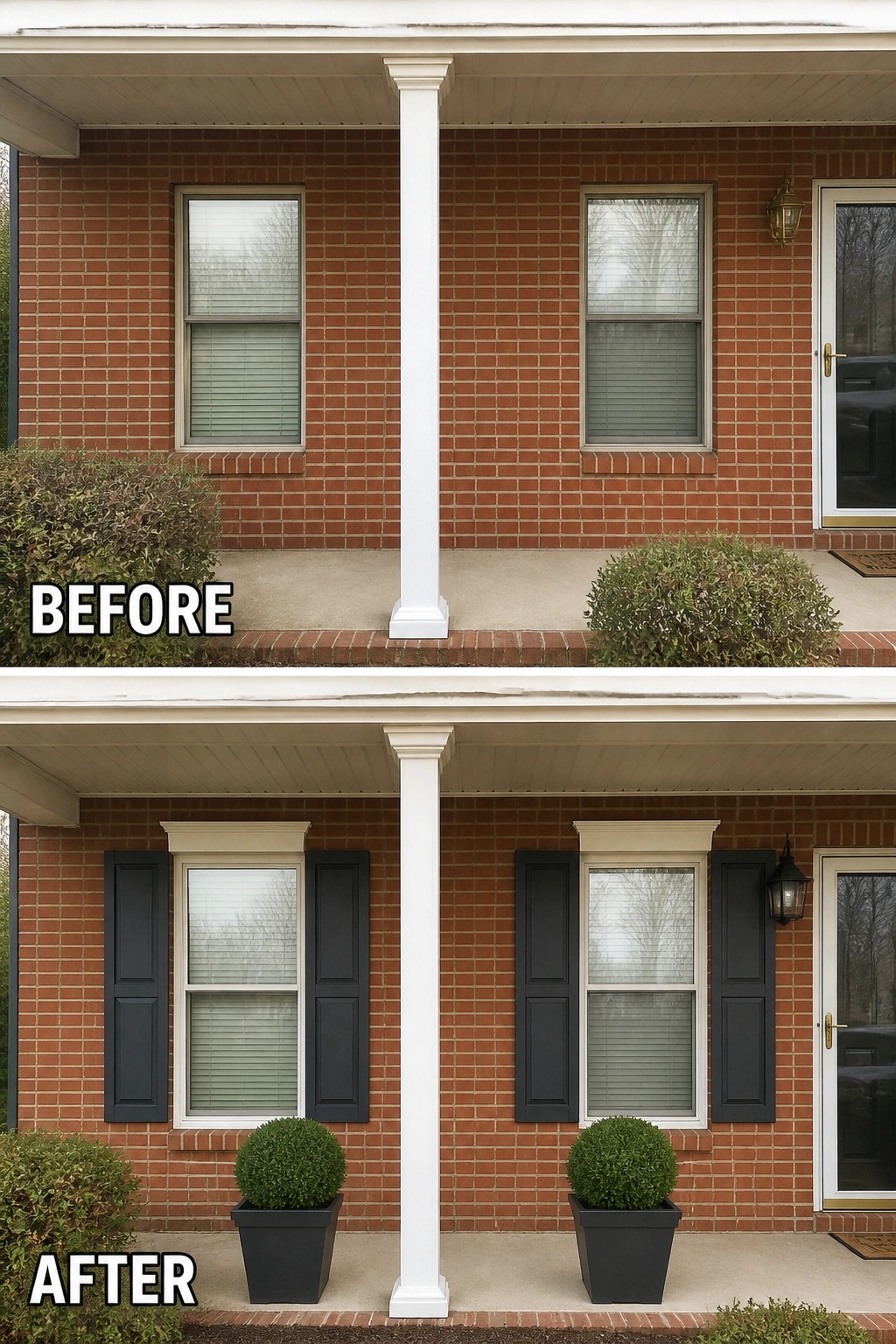
A few well-chosen accents can turn a plain porch into a purposeful entry without touching the brick. In this before-and-after the homeowners added dark window shutters and matching square planters with clipped boxwoods, which frame the windows and give the porch a simple, finished look.
To copy this, pick one or two repeat elements and keep them proportional to the house—shutters sized to the window and planters scaled to the stoop. Use weatherproof planters and low-maintenance plants (or faux boxwoods) for year-round impact, place them symmetrically so the entry reads as intentional, and leave enough room for foot traffic.
Create A Defined Entry With Pavers And Border Plantings
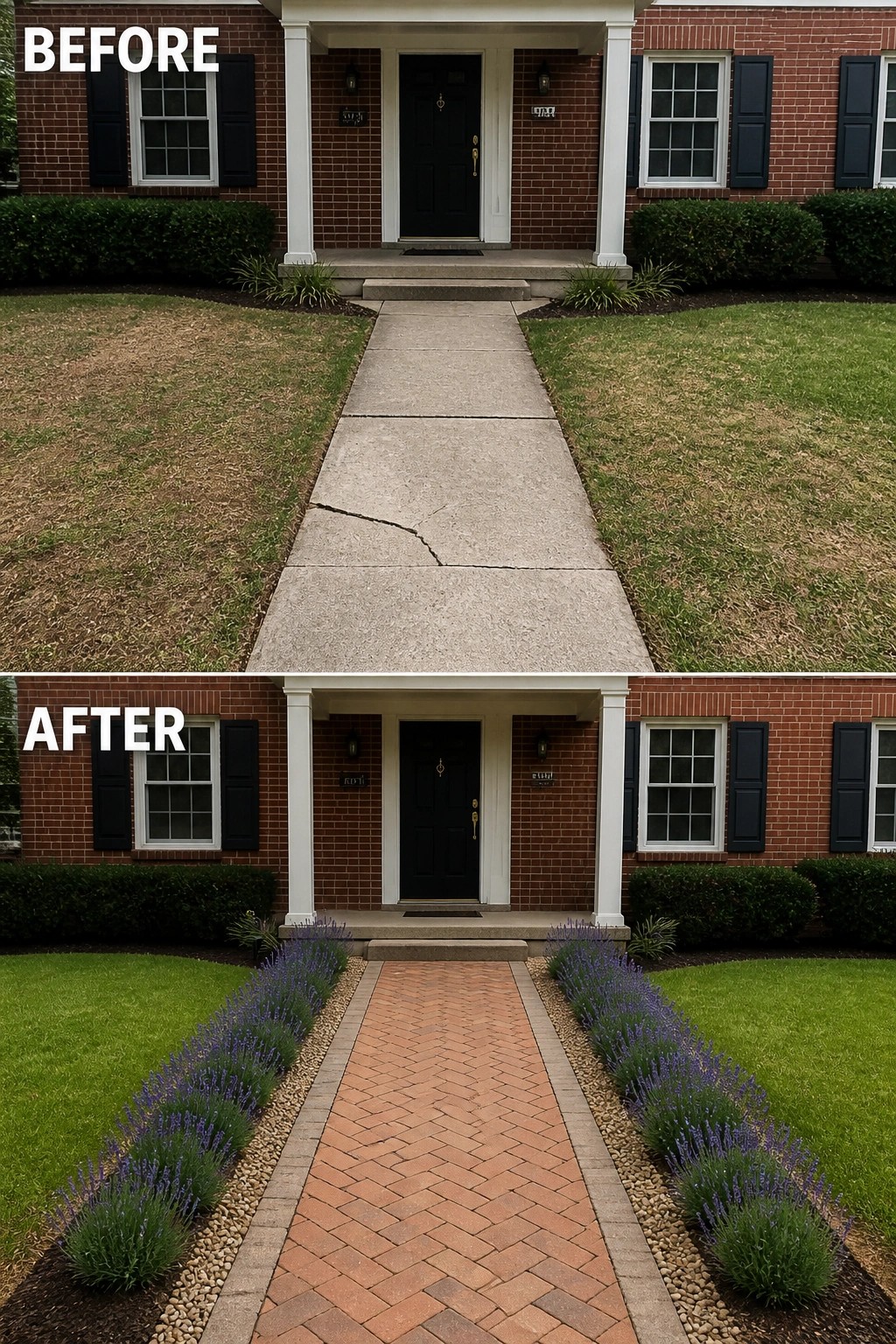
A cracked concrete path drags down curb appeal, but a simple swap to brick pavers and matching border planting gives the front a clear, finished look. Replacing the slab with a patterned paver strip and edging it with gravel and low, repeating plants (like lavender) defines the walkway, adds texture, and creates a welcoming route to the door without touching the brick facade.
Keep the idea doable: pick a paver color and pattern that complement your house, compact a proper base for long life, and use narrow gravel edges to help with drainage and weed control. Choose low-maintenance, evenly spaced plants that won’t outgrow the path, and leave enough room for foot traffic and lawn care. Start small. It works well on traditional homes where you want structure and repeating elements rather than more planting chaos.
Add Window Boxes To Brighten A Plain Brick Facade
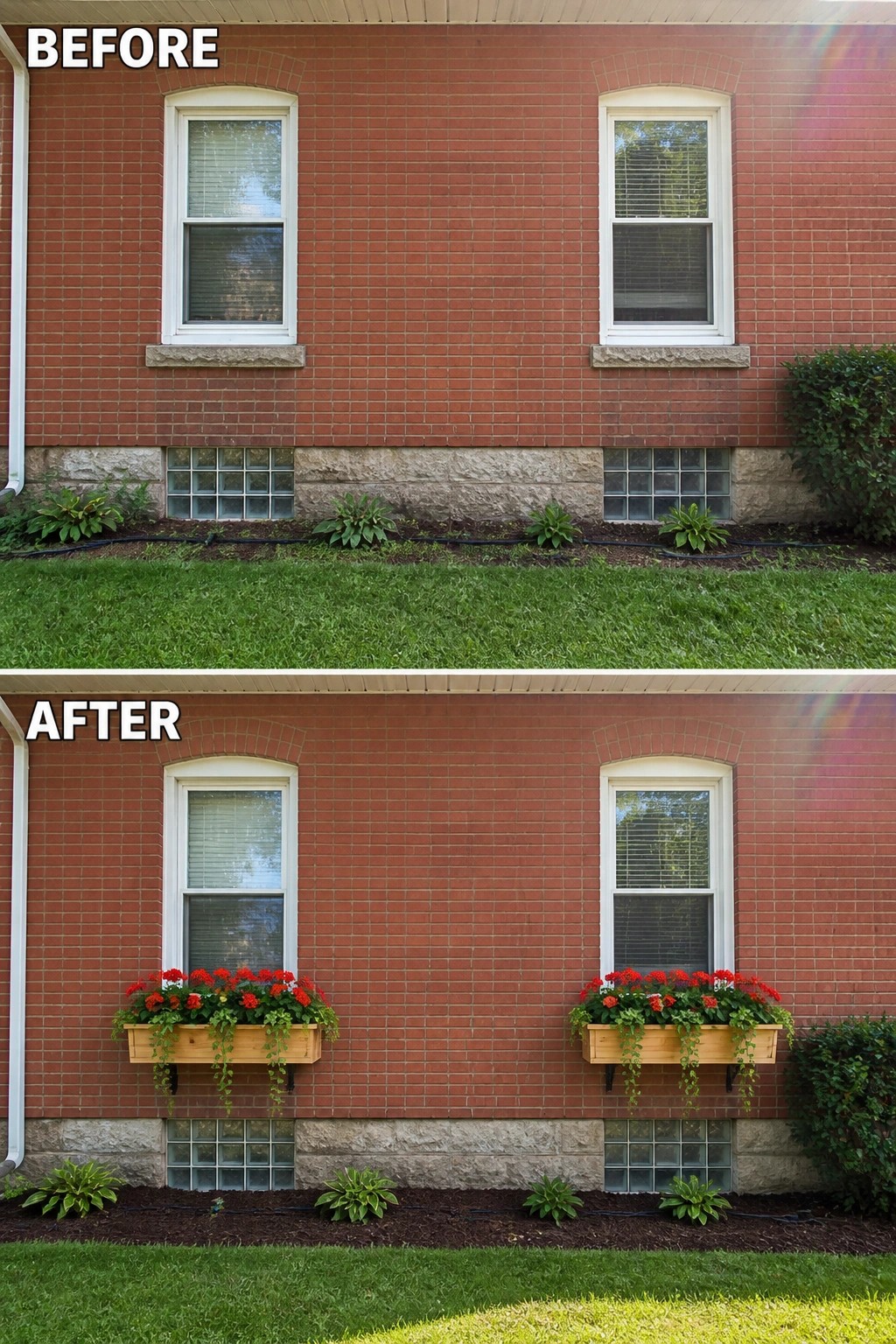
Window boxes are one of the simplest ways to update a brick exterior without touching the masonry. In the example, plain windows gain shallow wooden boxes filled with bright red blooms and trailing greenery, which adds instant color, softens the long stretch of brick, and creates a readable focal point without permanent changes.
Choose boxes that match the scale of your windows and mount them with proper masonry anchors or through-bolt brackets so they stay safe and level. Use cedar or composite boxes with liners or self-watering inserts, pick plants suited to the light at each window, and plan for watering and seasonal swaps. Works best on low to mid-height windows you can reach easily—think curb appeal that stays low-cost and reversible.
Add A Stone Wainscot And Simple Planting To Ground A Brick Front
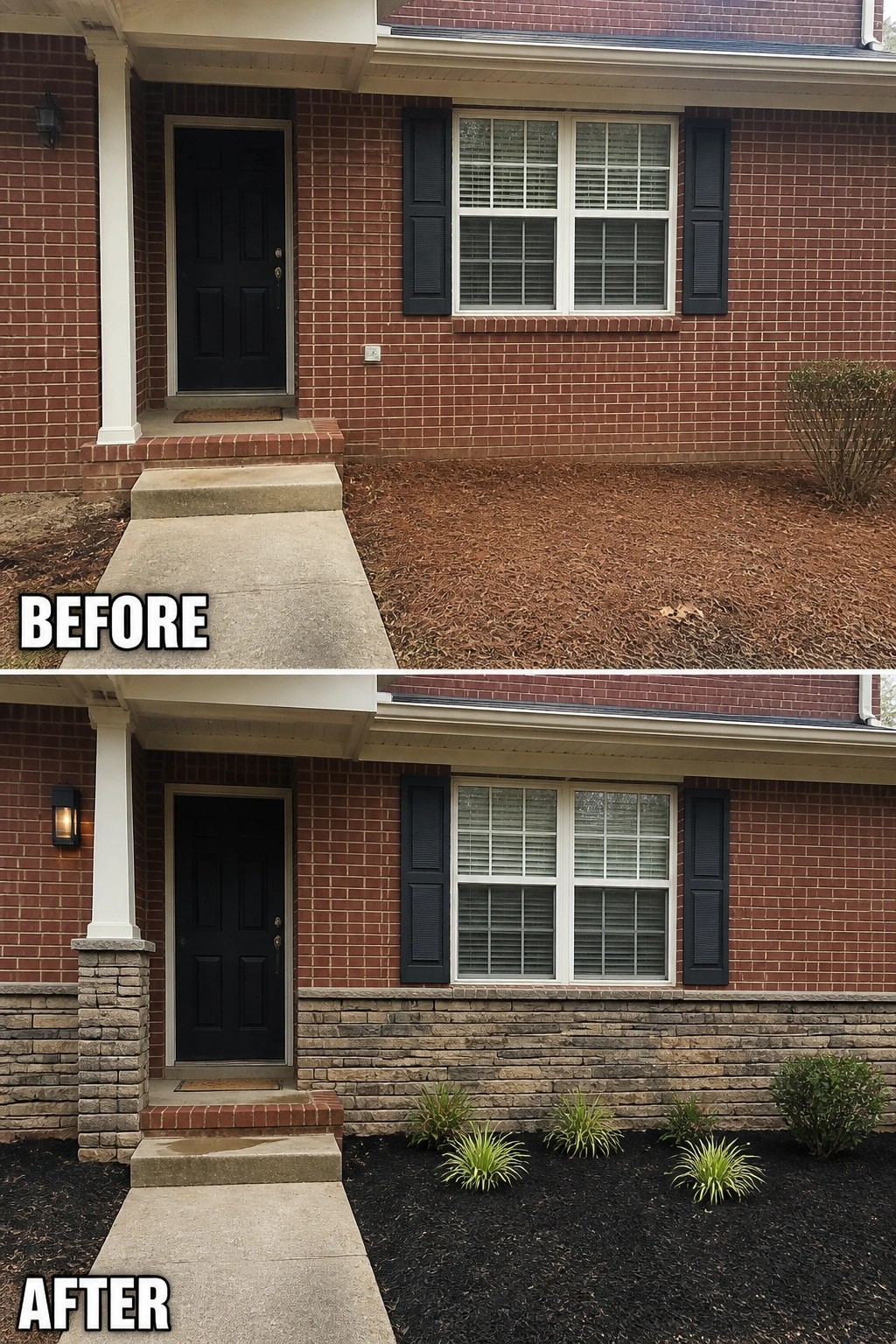
A low stone wainscot plus a neat planting bed instantly gives a plain brick façade a finished base. In the before photo the wall sat bare above mulch; in the after it reads as a complete entry because a horizontal band of stone and a few low plants create scale and visual interest without touching the brick. The change is simple, but it makes the house feel deliberate rather than incomplete.
To copy this, run the stone only up the lower third of the wall (knee-height is usually enough) so you don’t overwhelm the brick. Choose stone and mortar colors that nod to the brick’s tones, then plant a small repeating group of low perennials or shrubs and cover the bed in dark mulch for contrast. Add one light near the door and keep the walkway clear—small, well-chosen elements will do most of the work.
Use Layered Exterior Lighting To Make Red Brick More Welcoming
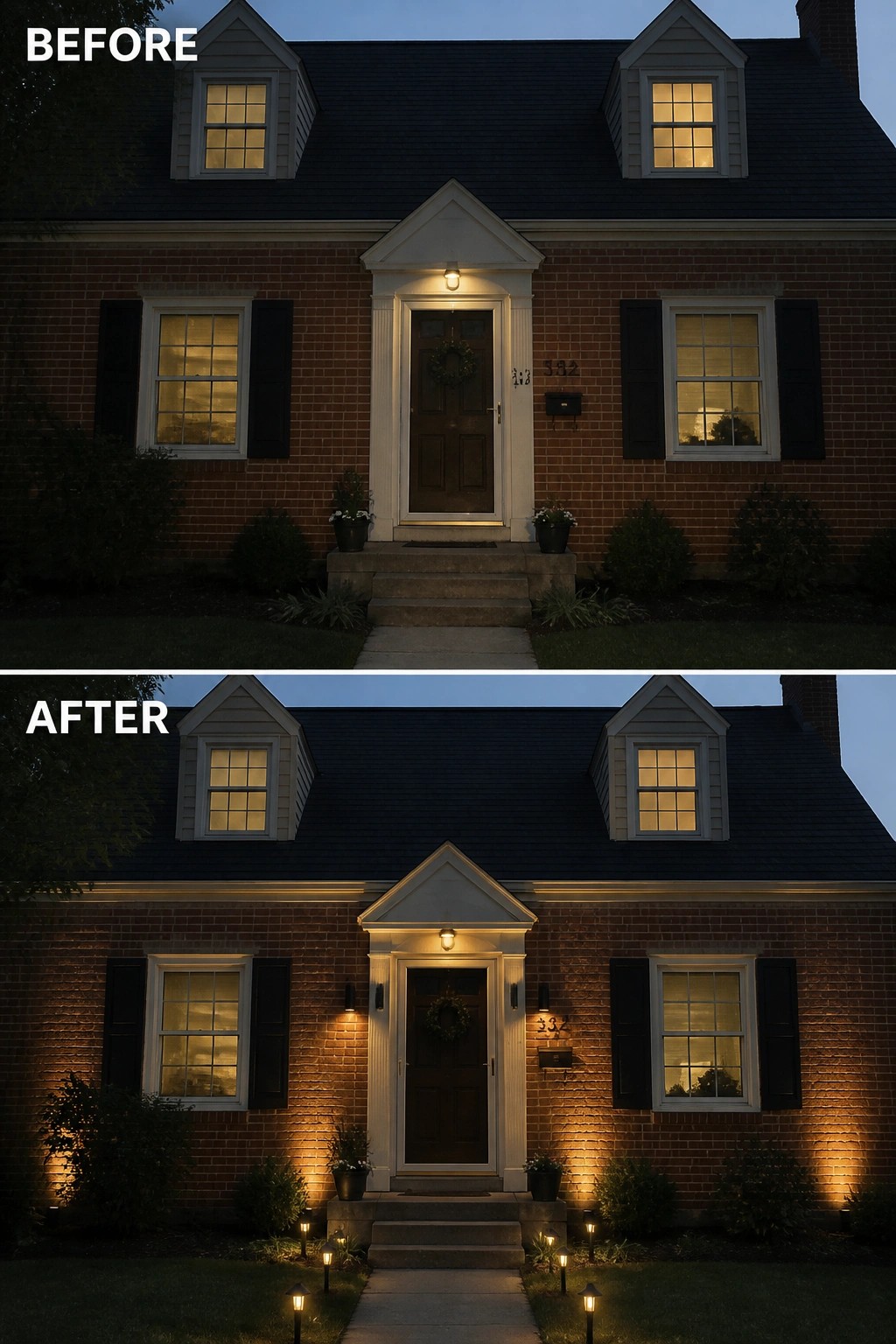
A few well-placed lights can change a hard, flat brick front into a friendly evening entry. In the after image the addition of ground uplights on the brick, wall sconces beside the door, and small path lanterns gives the facade depth and a clear focal point without touching the brickwork.
Try a simple plan: use low-voltage uplights to wash the brick and highlight the porch columns, add matching sconces at eye level, and space path lights to guide visitors to the door. Pick warm-colored LEDs (about 2700–3000K), choose fixtures that fit the house scale, and test placements at night before burying wires. Start small and layer more lights as needed so you get a balanced look, not a series of isolated spots.
Turn A Bare Porch Into A Seating Area
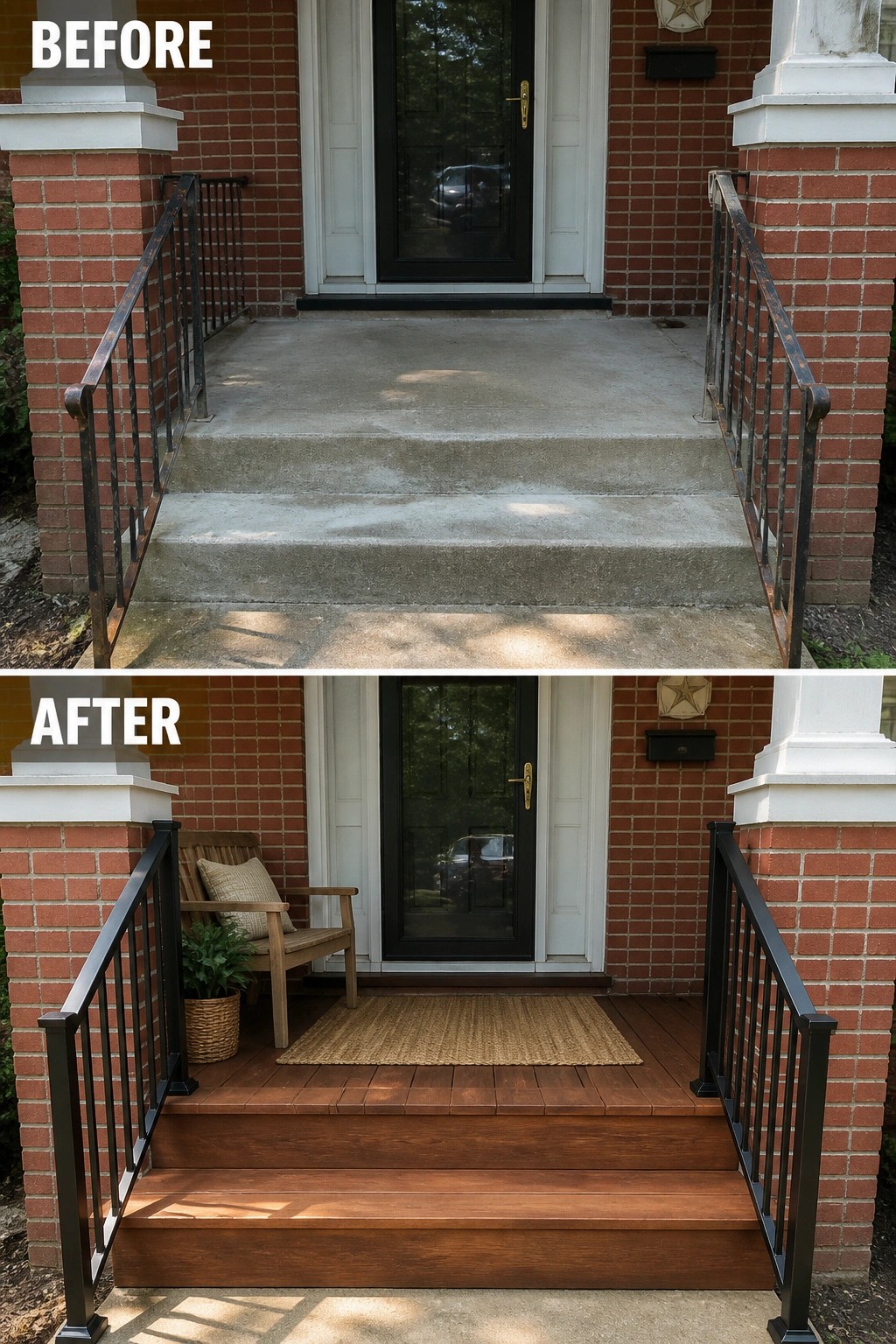
A small front porch can feel useful instead of forlorn by giving it a clear purpose: a simple wood deck and a single chair with a rug instantly read as a place to sit and wait or relax for a minute. Replacing exposed concrete with warm decking (and keeping railings neat) conceals worn steps and makes the entry feel finished without touching the brick.
How to copy it: pick low-maintenance decking or porch tiles sized to your stoop, add one scaled chair and an outdoor rug to define the spot, and leave enough room to open the door easily. Use weatherproof materials and a couple of planters or a basket plant for a soft touch, and keep the layout simple so a small porch still feels roomy.
Frame The Entry With A Pergola And Planters
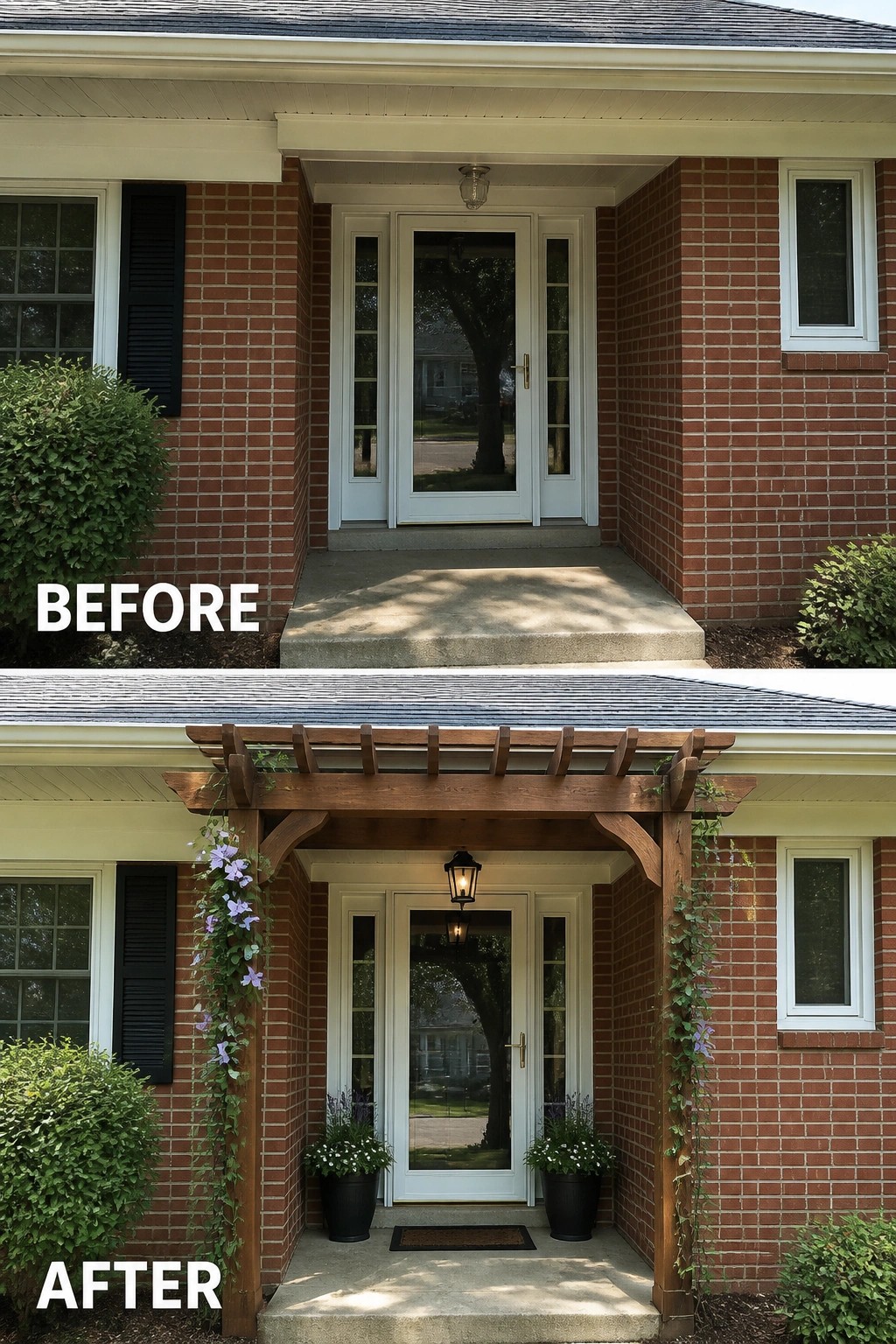
A simple overhead frame, a proper outdoor light, and a pair of matching planters can turn a recessed entry from anonymous to intentional. The wooden pergola and hanging lantern in the after photo create a visual frame for the door while the tall pots and climbing vines add height and a soft edge against the brick, so the porch reads as a welcoming spot instead of just a step.
Keep the approach small and practical: size the pergola to the width and height of your stoop so it feels proportional, use weatherproof hardware and a damp-rated pendant or lantern, and place two planters to balance the doorway without blocking access. Train a climbing plant on each post or use seasonal flowers for color, and pick planter finishes that complement the brick so the update looks like it belongs with the house. Small changes, big impact.
Upgrade Your Garage Door To Boost Curb Appeal
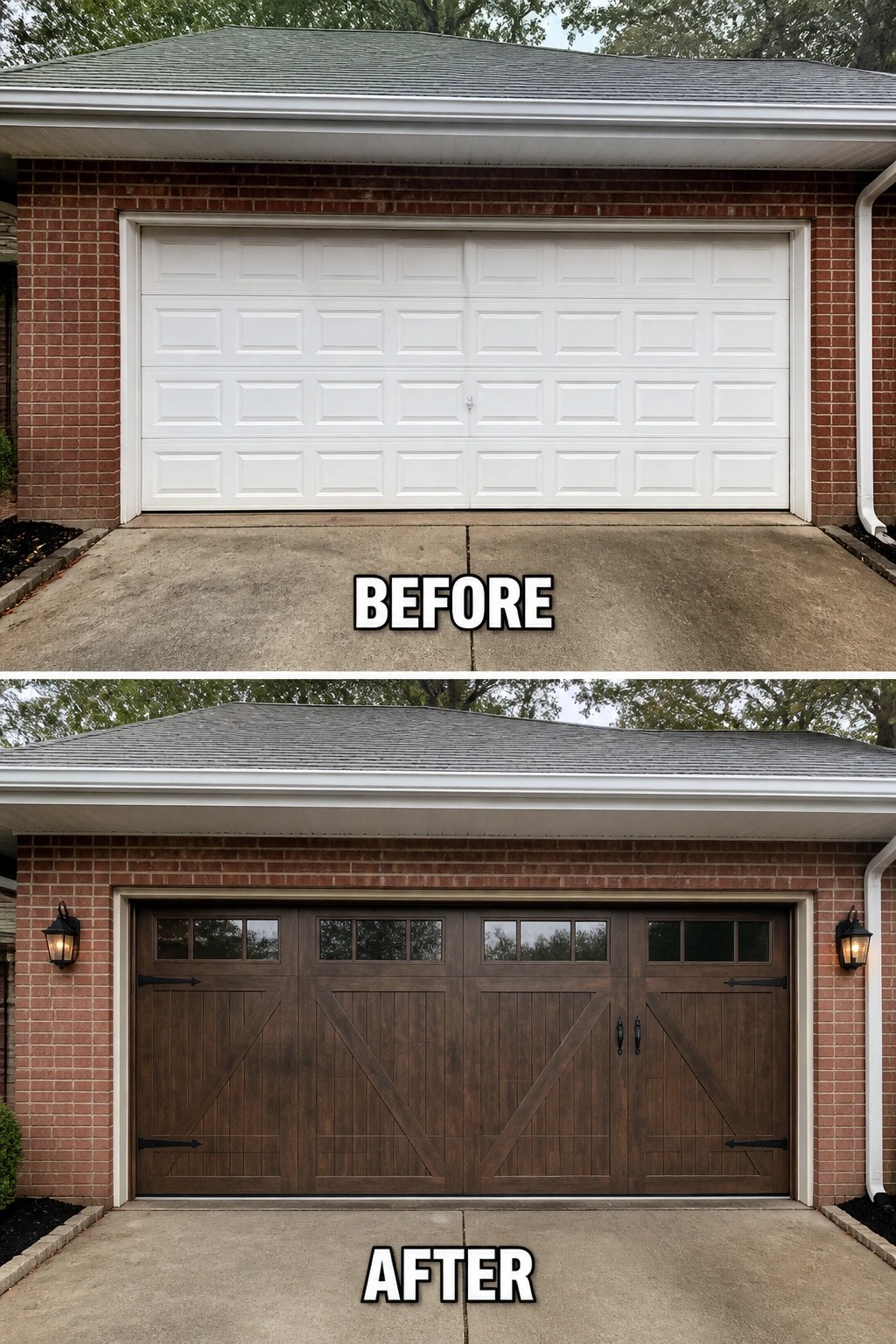
Swapping a plain white sectional for a carriage-style, wood-look garage door with upper windows and simple decorative hardware instantly gives a red brick facade more character and scale. It becomes a clear focal point without touching the brick (no painting required) and makes the whole front feel more finished.
To copy this idea, pick a finish that complements your brick—deep brown or walnut tones work well—and consider low-maintenance materials like composite or insulated steel with a woodgrain surface. Add one or two exterior lanterns or subtle strap hinges to reinforce the style, and double-check opener compatibility and window placement for light and privacy. This approach suits traditional and ranch-style brick homes and is an easy way to lift curb appeal without a major remodel.
Create A Defined Garden Bed With Repeating Plants
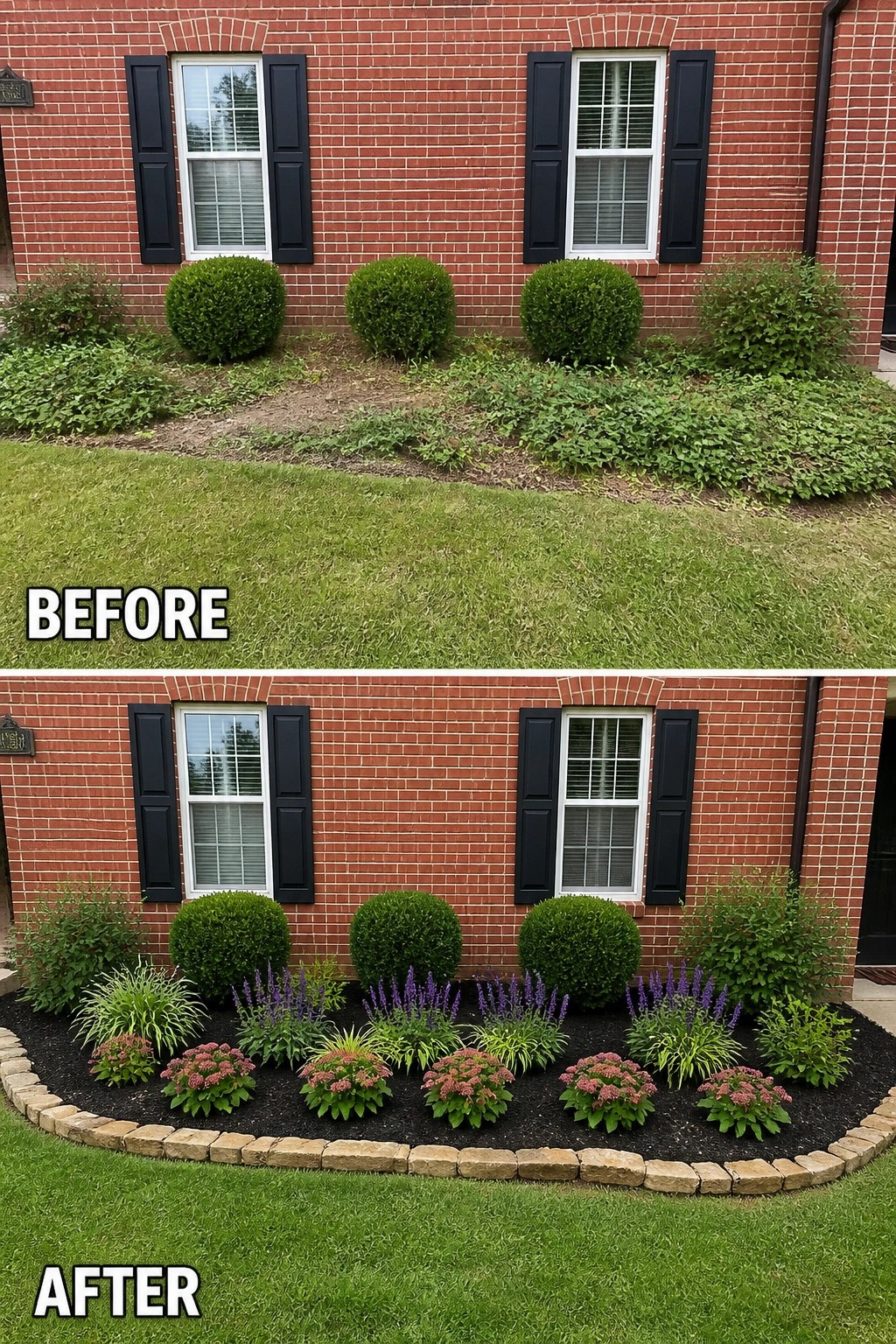
Clearing an overgrown strip and giving it a clear edge is one of the easiest ways to tidy a red brick facade. Installing a low stone border, laying dark mulch, and planting a few repeating perennials in rows instantly reads as intentional; the result looks neat without changing the brick at all.
Start by removing weeds and mowing the bed edge, then add a simple stone or paver border and 2–3 inches of mulch. Pick two or three plant types and repeat them across the bed so you get rhythm and easy maintenance (low in front, taller behind). This approach suits narrow beds along single-story brick walls and is friendly to renters or homeowners who want a quick, low-cost
Upgrade Gutters And Downspouts To Lift A Brick Facade
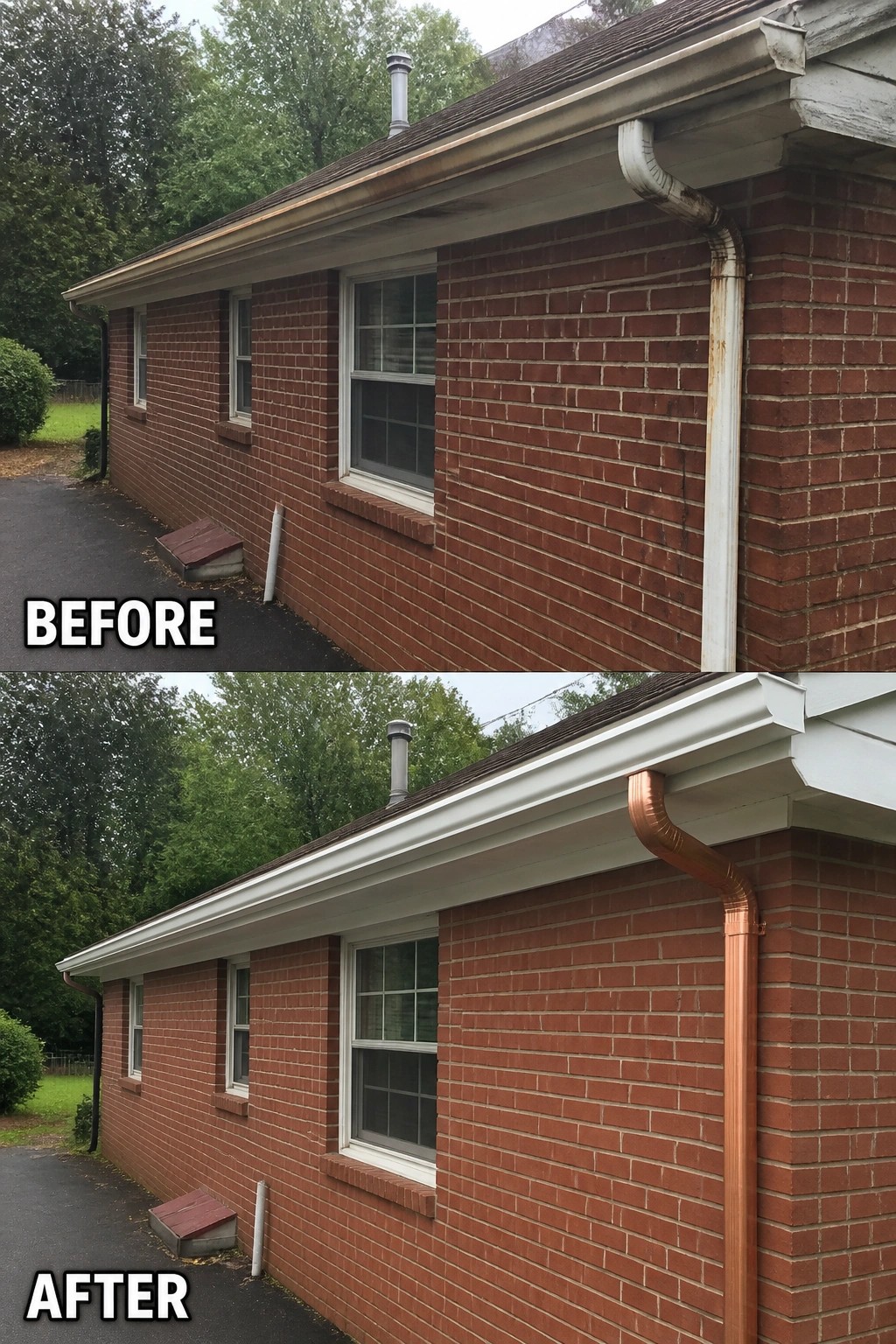
Swapping tired, stained gutters and downspouts for new metal ones is an easy exterior update that doesn’t touch the brick. In this example a dingy white downspout is replaced with a bright copper run and the trim is refreshed, and the whole wall suddenly reads cleaner and more intentional. A single material change like that makes the facade look maintained rather than neglected.
If you want to try this at home, start by cleaning and repairing the existing gutters so you know what actually needs replacing. For visible runs choose a finish that complements your roof and trim—copper gives instant character (and will patina over time), painted aluminum is budget friendly, and steel is very durable. Replace or re-anchor sections in front of windows and the street-facing side first to get the biggest curb appeal boost for the least cost. If you’re unsure about slope, seams, or soldering copper, hire a pro; otherwise simple snap-fit systems can be a good DIY option.
Add A Low Retaining Wall And Defined Planting Beds
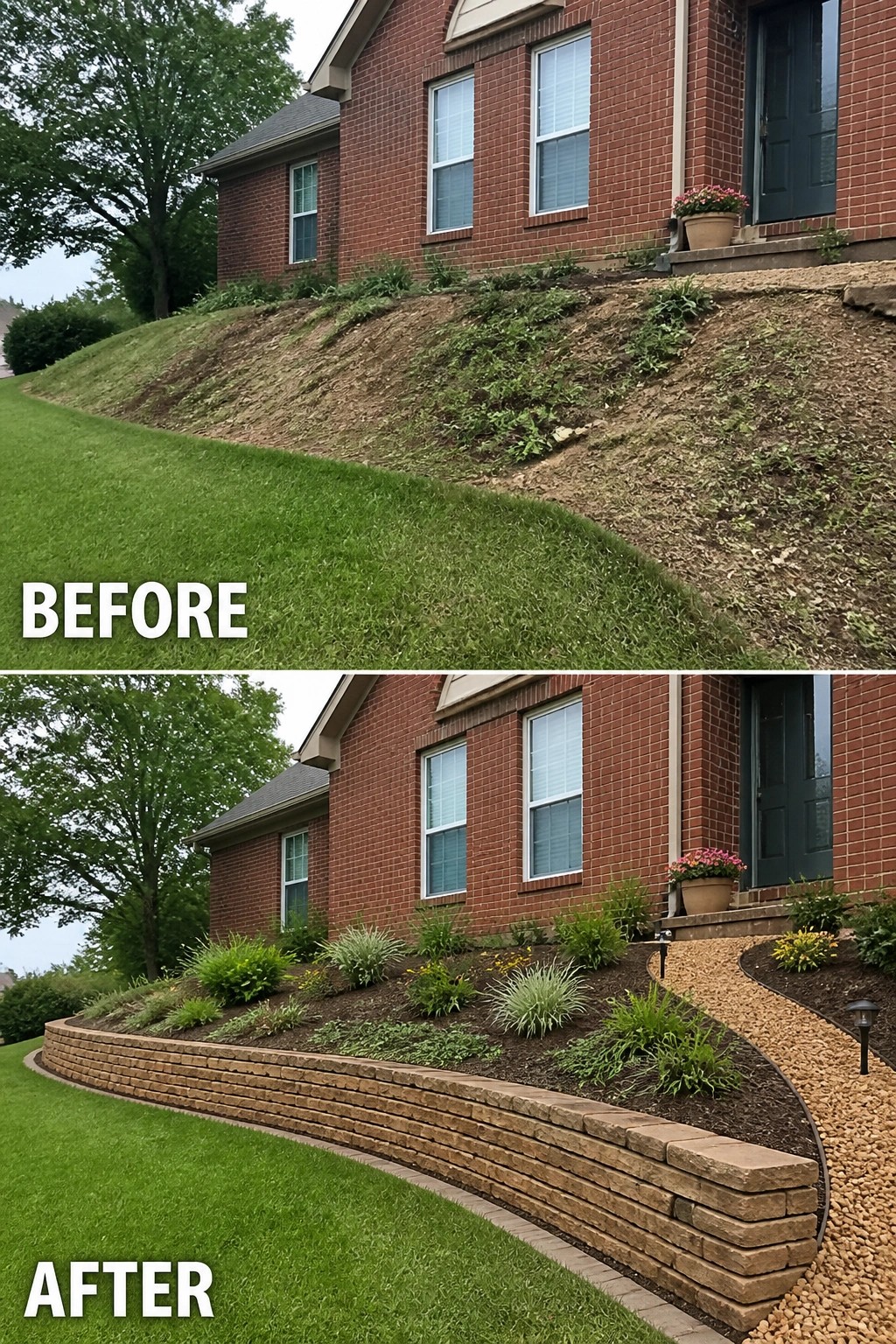
A simple stacked stone wall and clean planting beds can rescue an ugly, eroding slope and give your red brick facade a finished edge. Instead of a bare bank, install a low retaining wall to create level soil pockets, add fresh topsoil and mulch, and plant a few clumps of hardy perennials and ornamental grasses for instant structure and year-round interest.
Start by clearing the slope and checking drainage, then set a compacted base and stack modular or interlocking blocks for a small curved wall that follows the yard line. Keep plant choices low-maintenance, space them in groups, and use mulch and a narrow gravel path to define movement and reduce upkeep—works especially well on modest front-yard slopes where you want curb appeal without heavy construction.
Add An Awning And Layered Entry Accents
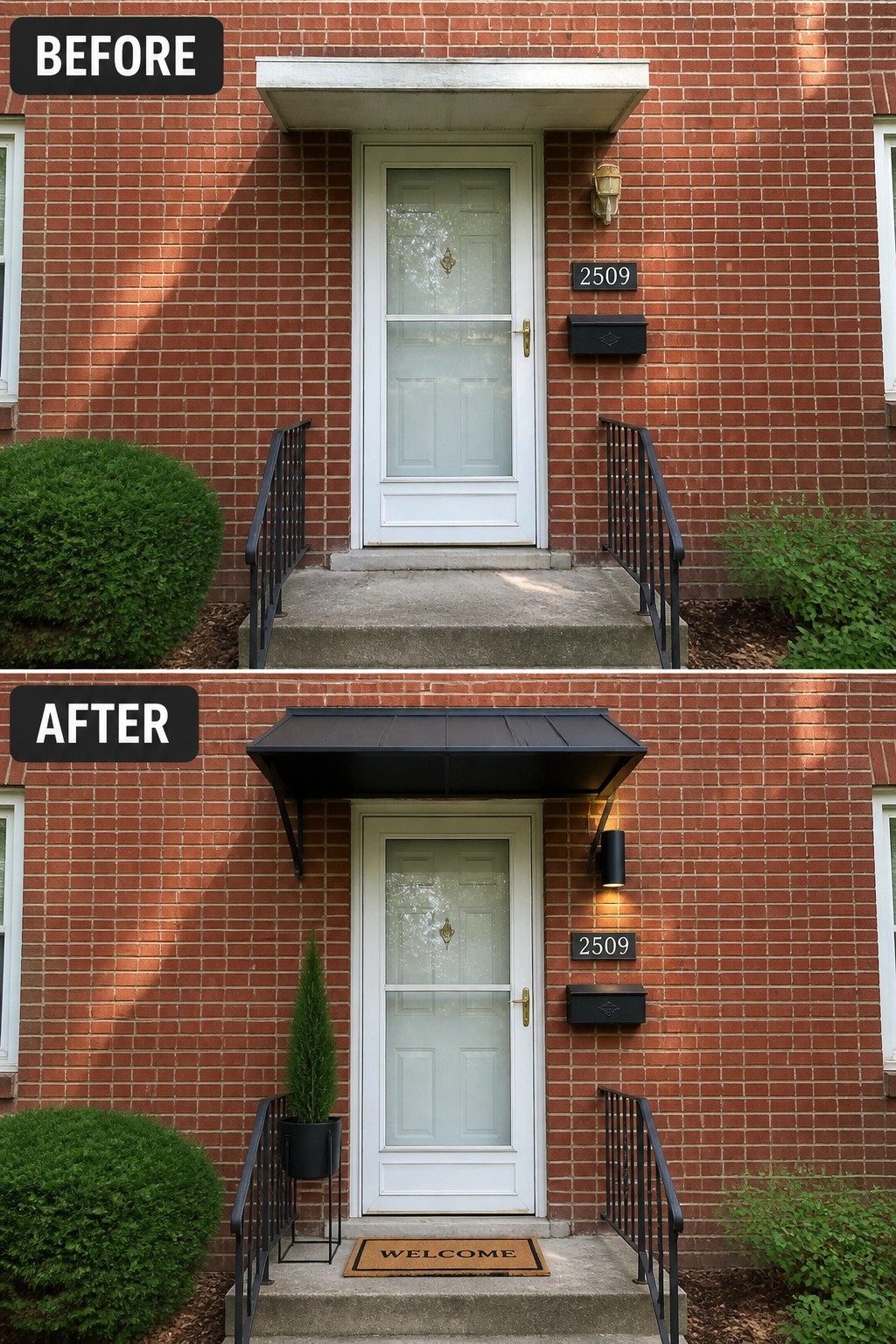
A small, unloved entry can feel finished with just a few purposeful additions. In this example a simple metal awning plus a vertical planter and a welcome mat turn a plain stoop into an intentional entry point, while an outdoor sconce and visible house numbers make the approach feel used and looked-after.
Try this on any modest front porch: pick one architectural upgrade (an awning, canopy, or bold light) and then style around it with weatherproof accents that don’t crowd the walk path. Use one tall planter or a pair of low pots, a durable mat, and a single mounted light to create a sense of arrival; keep the scale small so the door still opens freely and choose low-maintenance plants for easy upkeep.
Add A Low Brick Planter Bed To Define The Foundation
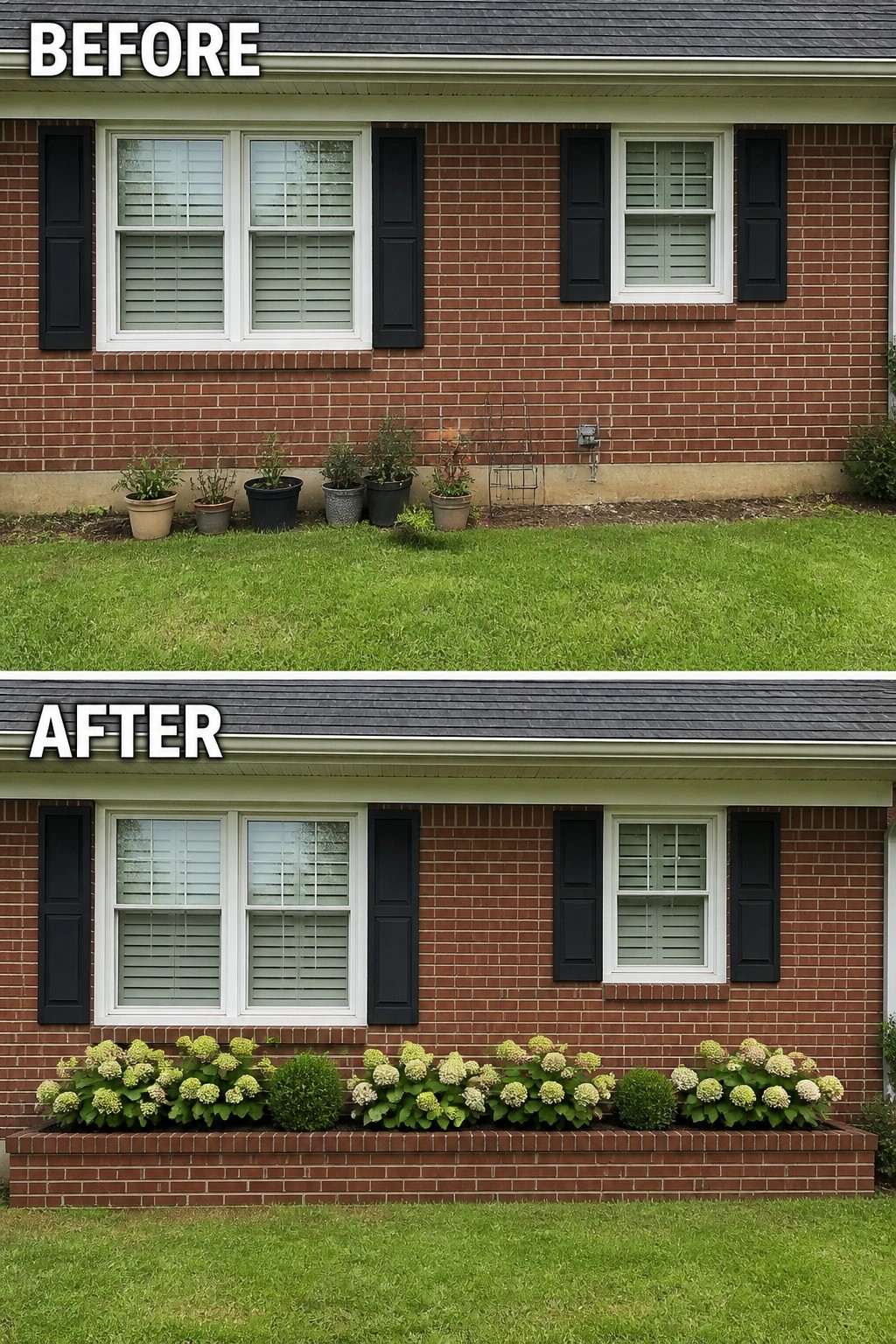
A narrow, low brick planter under the windows turns an awkward strip of dirt into a neat, intentional border that complements the house instead of competing with it. In this example the scattered pots were replaced by a continuous brick bed planted with repeating hydrangeas and a couple clipped shrubs, which ties the planting into the facade and gives the front a finished, planted look without touching the brick itself.
Build the bed at a low height so it stays proportional to the window sills, and use matching or complementary brick for a cohesive result. Pick plants with the right mature height for under-window planting and space them evenly for a simple, repeatable rhythm. Prepare good soil and drainage, add mulch, and leave a narrow strip for mowing—this approach works especially well on single-story, midcentury, or ranch-style brick homes. Big impact, small effort.
Make Your Front Steps A Feature
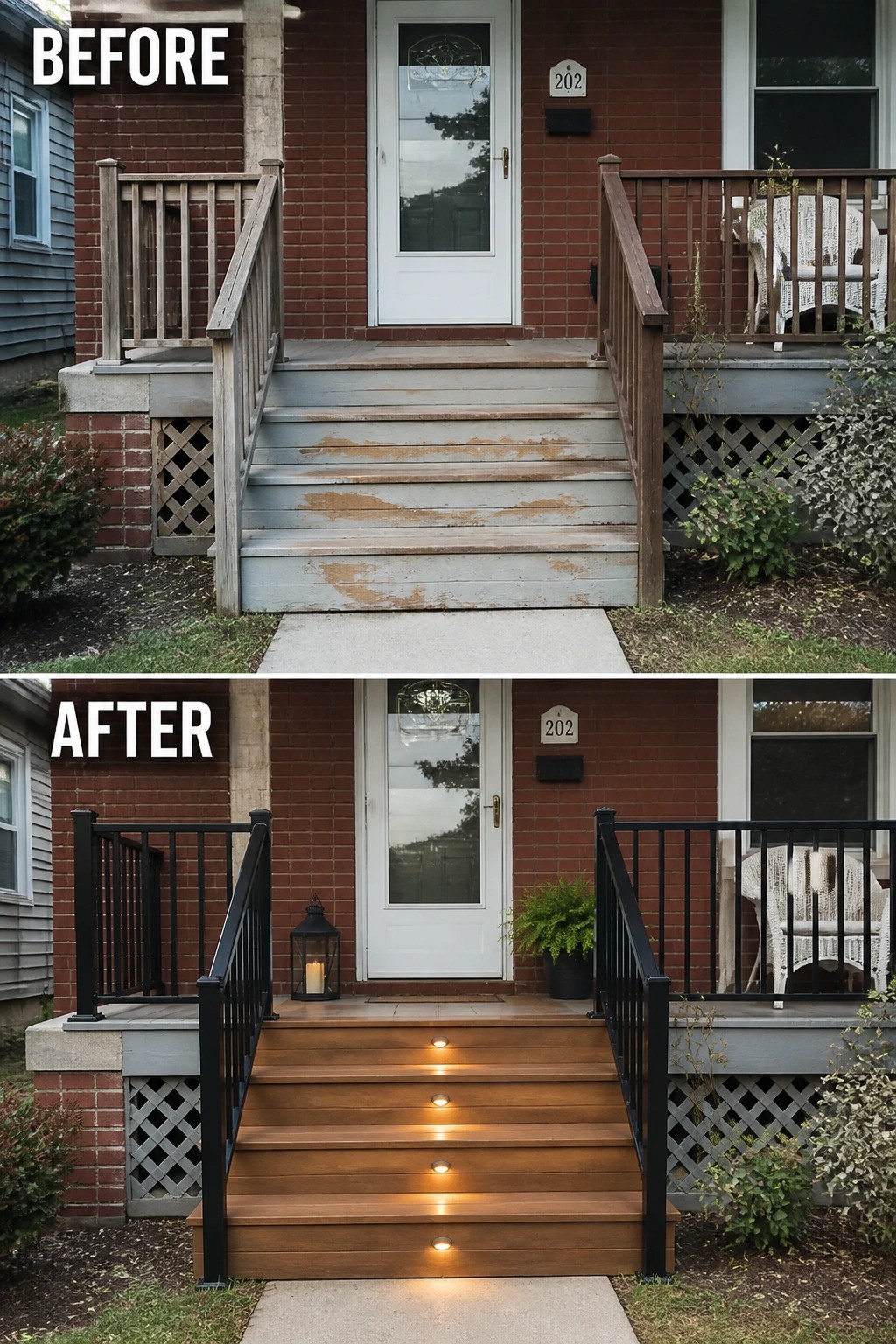
A tired set of peeling stairs can make even good brick look neglected, and you do not have to paint the brick to fix it. Replacing old treads with new wood, swapping the spindly railings for simple black metal, and adding low-profile recessed lights on the risers gives the entry instant purpose and presence while keeping the brick intact.
This approach works well on older homes where you want to preserve masonry. Choose rot-resistant stair material, pick a railing finish that complements the brick and trim, and place lights so they improve safety without being flashy. Keep the scale and number of changes modest so the steps stay functional and easy to maintain.
Soften A Blank Brick Wall With Trellises And Planting
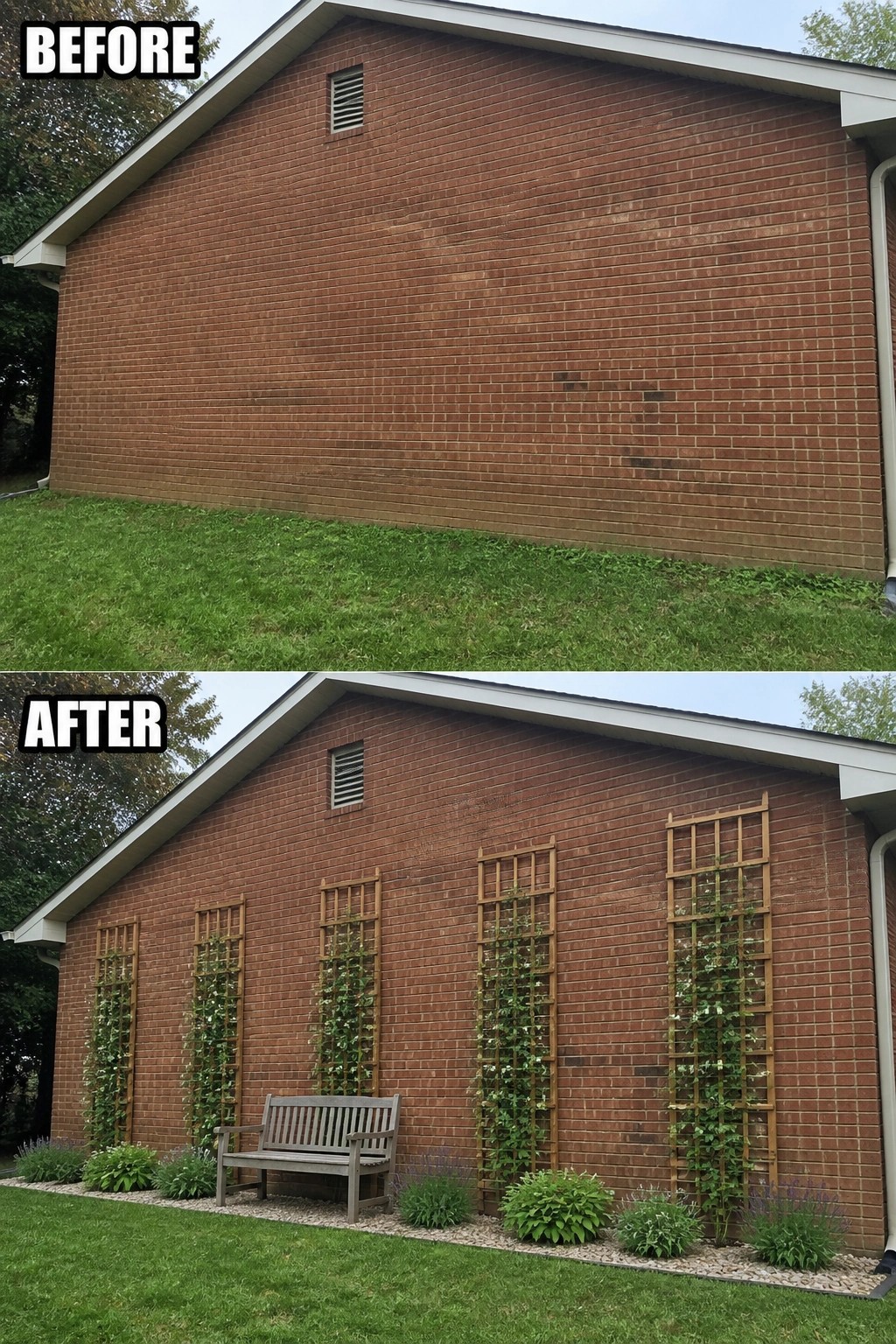
A long, plain brick wall can feel heavy and uninviting. Adding a row of narrow trellises with climbing plants and a simple planted bed (plus a bench or single focal seat) breaks the expanse into human scale and gives the facade instant curb appeal without painting the brick.
Place trellises evenly to create rhythm, choose reliable climbers that suit your climate like clematis or climbing hydrangea, and plant a low border of perennials or hostas to hide the base. Use proper anchors for the trellises and weatherproof materials so the installation is light on the wall but long lasting. This approach works especially well on long side walls or garage gables where you want interest without major renovation.
Refresh Worn Steps With Stone Treads And Lighting
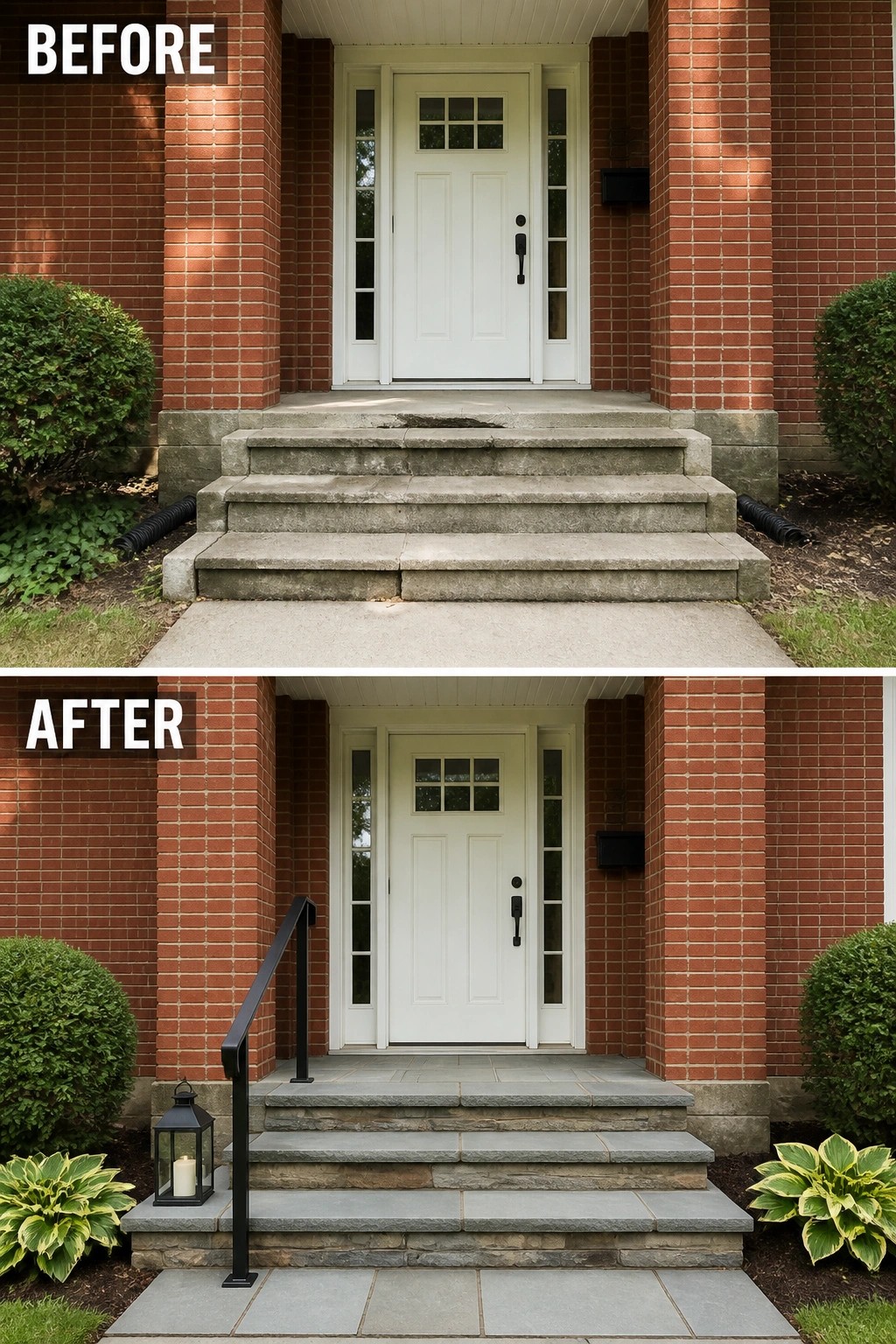
Updating worn steps and adding a few purposeful details is one of the easiest ways to make a front entry feel finished. In this example the cracked concrete was swapped for layered stone treads and a simple black handrail, with a single lantern and low plantings to soften the edges. Those small changes define the entry, help visitors know where to step, and make the whole facade read as intentional instead of neglected.
Start small. Choose a slip-resistant stone or paver that complements your brick and keep the handrail low-profile so it feels like an addition, not a replacement, of the porch. Anchor any railings correctly into the foundation, place a single hardwired or battery lantern where it lights steps rather than glare, and use compact, easy-care plants to frame the approach without crowding the walkway.
Create A Clean Gravel Path With Simple Planting
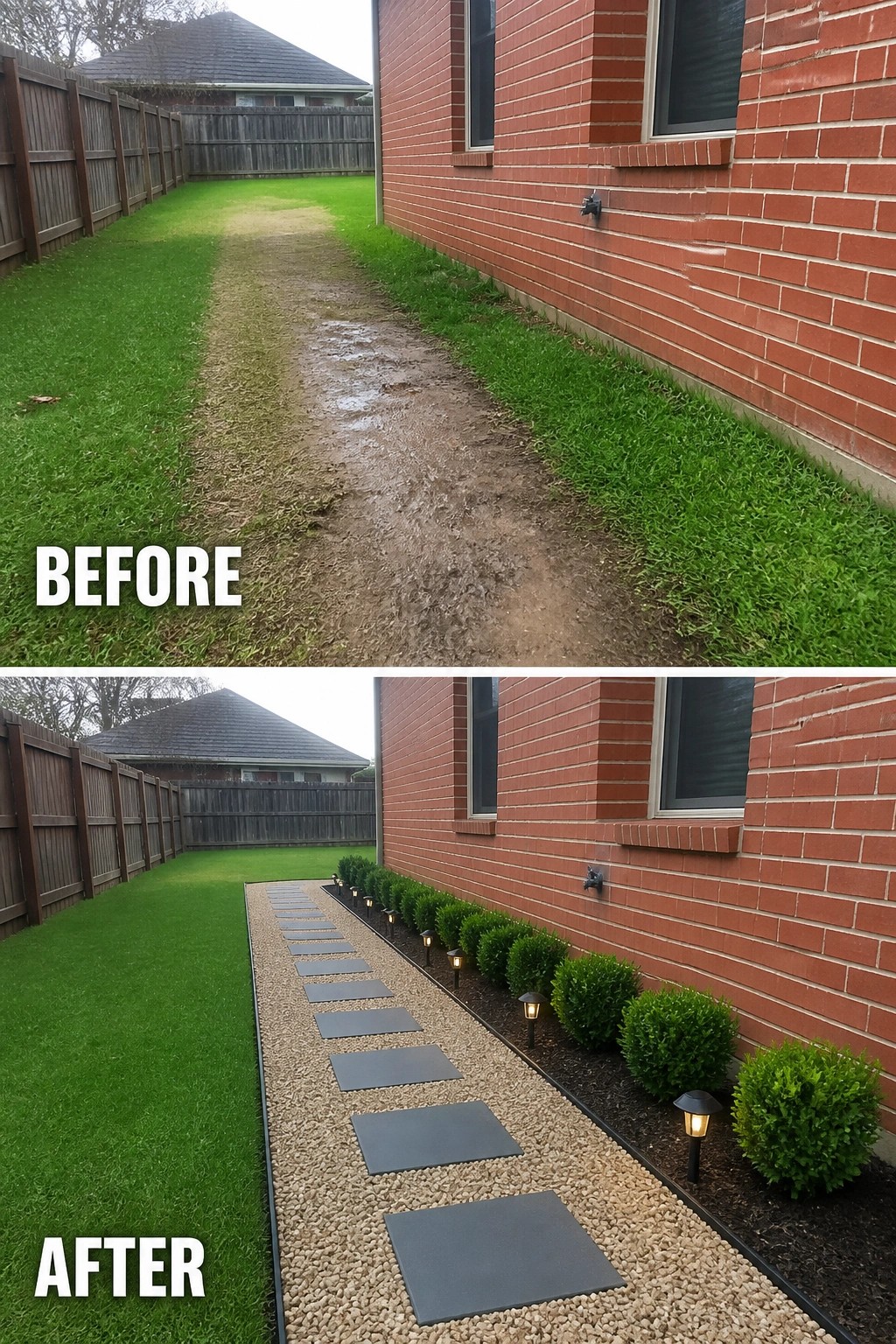
Turning a muddy trample strip into a proper walkway is one of the easiest, most practical updates for a red brick exterior. Laying a compacted gravel bed with flat stepping stones makes the route usable in wet weather, and a narrow planted border of low shrubs plus small path lights gives the side yard a finished edge that reads intentional instead of neglected.
To try this, clear and level the track, add landscape fabric and a crushed-stone base, then set pavers on top and edge the run so gravel stays put. Choose small, low-maintenance shrubs (boxwood or similar) spaced evenly and add mulch to keep weeds down; place lights where you or guests will step. This approach works well on tight side yards beside brick walls and keeps the job affordable and low fuss.
Frequently Asked Questions
Q: Will sealing my red brick change its color or make it look shiny?
A: Most clear, breathable sealers dry with a matte or low-sheen finish that keeps the brick looking natural. If you want to avoid any darkening, test a small, hidden area first so you can see the finished look before doing the whole house.
Q: Can swapping out lighting, house numbers, and the mailbox really make a noticeable difference?
A: Yes — updating metal finishes and styles draws the eye away from aging mortar and ties the whole facade together. Pick fixtures that contrast the brick tone and keep the scale in mind so nothing looks too small or overpowering.
Q: How should I fix crumbling mortar without painting the brick?
A: Repointing, where you remove the old mortar and replace it with new, stabilizes the wall and is usually the right move for crumbling joints. Small cracks can be filled with a matching mortar repair product, but larger areas are worth a pro’s attention to avoid trapping moisture.
Q: Will adding climbing plants or window boxes damage the brick over time?
A: Climbing vines with adhesive pads can harm the surface, so use trellises or planters placed a few inches from the wall to keep roots and sticky pads off the brick. Window boxes and potted plants are low-risk and give instant softness to the facade with minimal maintenance.