

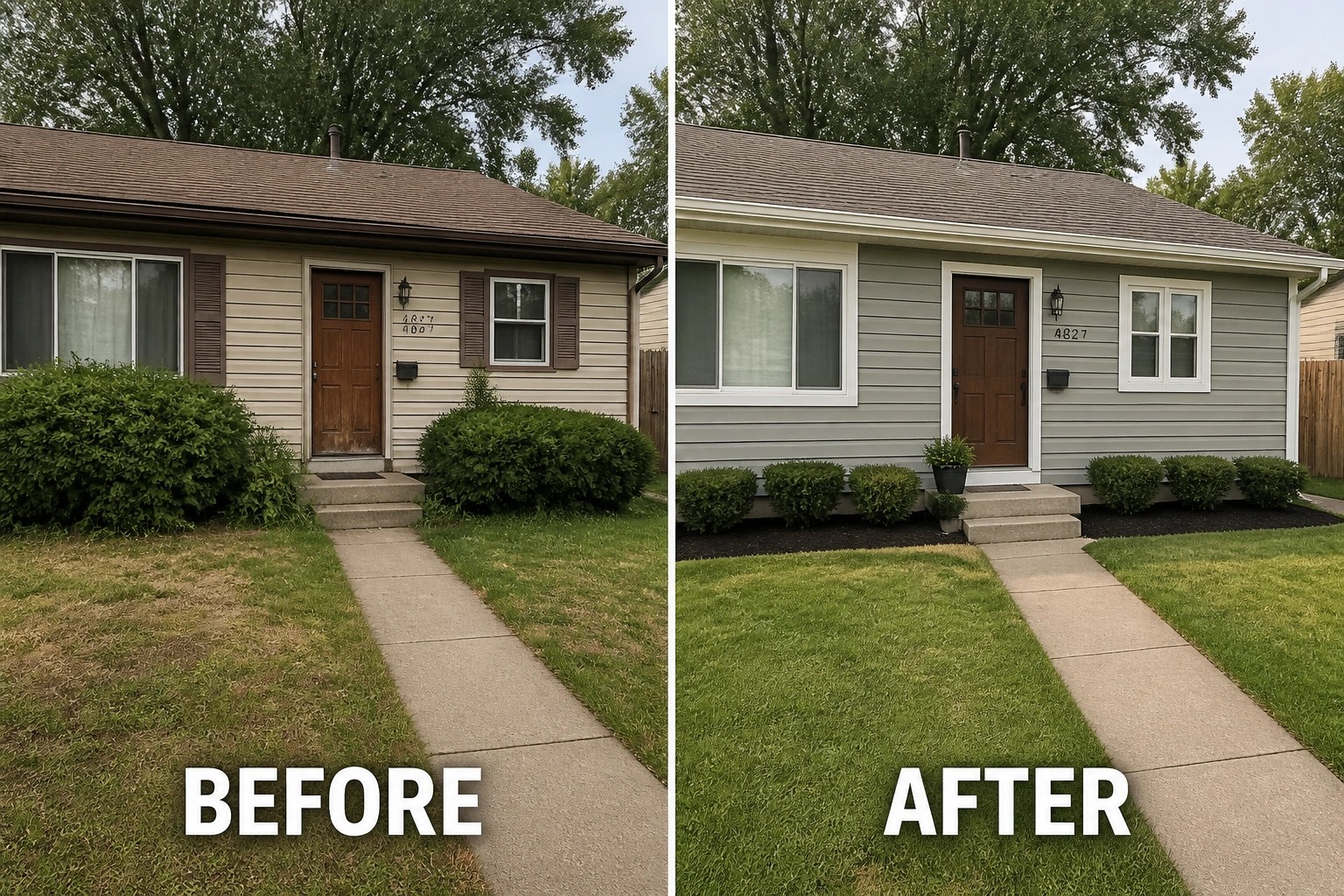
Ranch houses often look underwhelming because their original facades can feel flat, dated, or neglected, and small choices like paint color, porch hardware, or entry lighting make a surprising difference.
I find that starting with one visible change, like a new front door color, a simple railing, or swapped-out house numbers, helps the whole exterior read as cared for without needing major construction.
Small fixes add up.
Landscaping refreshes, cleaned-up trim, updated light fixtures, and a thoughtful paint palette often do more to raise curb appeal than gutting a porch.
Save the ideas that suit your budget and test them on a single elevation first, trying one change at a time to see what really improves the feel and adapt the rest accordingly.
Use Paint And Trim To Modernize A Ranch Exterior
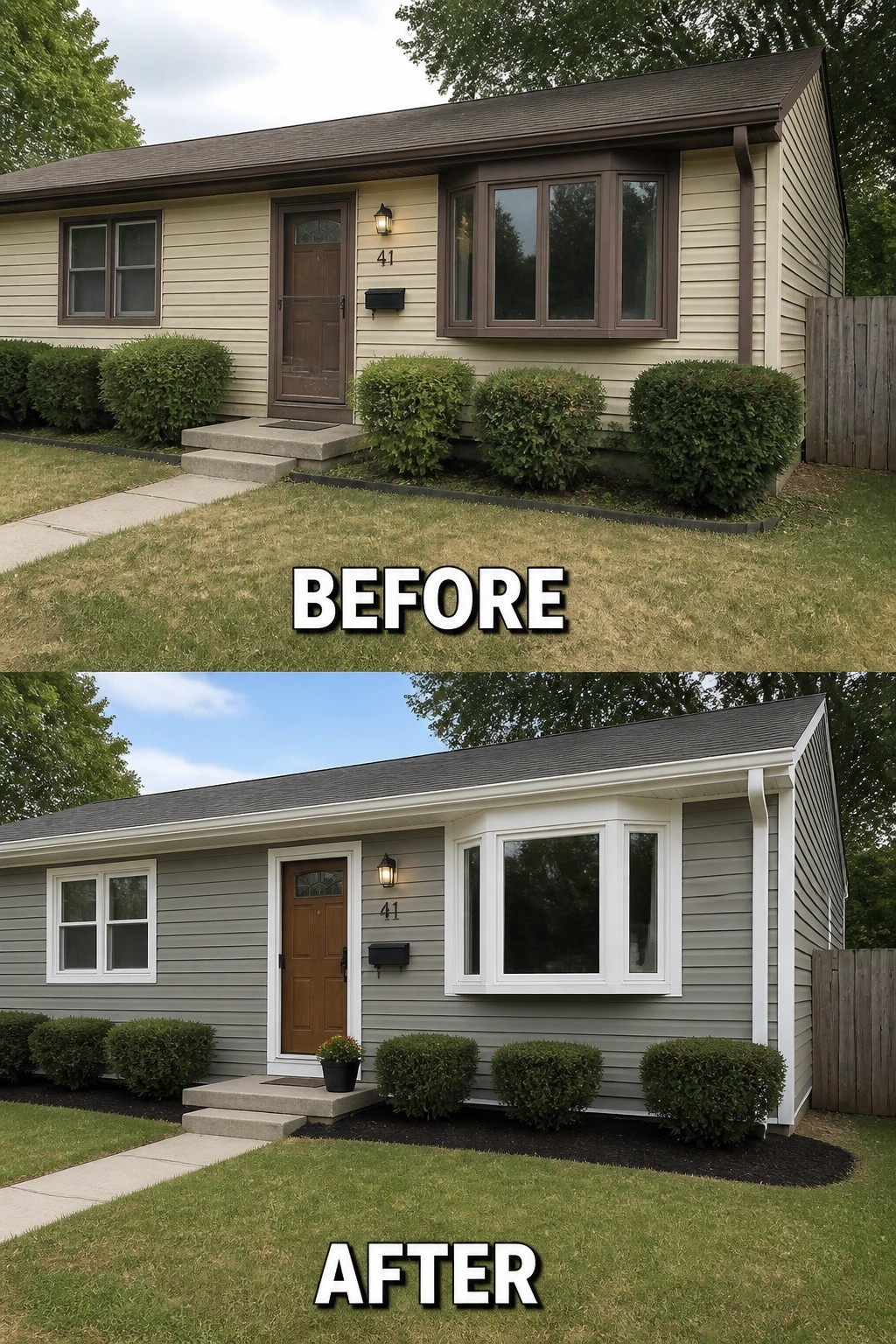
A fresh paint scheme and brighter trim will change the whole feel of a low, simple ranch without moving a single wall. In this example the house goes from dull beige and brown to a cooler gray with crisp white trim around the windows and bay, plus a refreshed front door and light—small changes that read as intentional and updated.
To copy this, pick a two-tone palette: a mid-tone for the siding and a lighter, clean white for trim and window surrounds. Paint or replace the front door in a complementary wood or accent color, update the porch light and mailbox, then finish with a tidy planting bed or fresh mulch to frame the work. Start by power-washing and repairing trim so the paint lasts, test color samples in different light, and keep the scheme simple—this suits most ranch houses and gives big curb appeal for relatively little cost.
Paint Brick And Use A Dark Door For Instant Curb Appeal
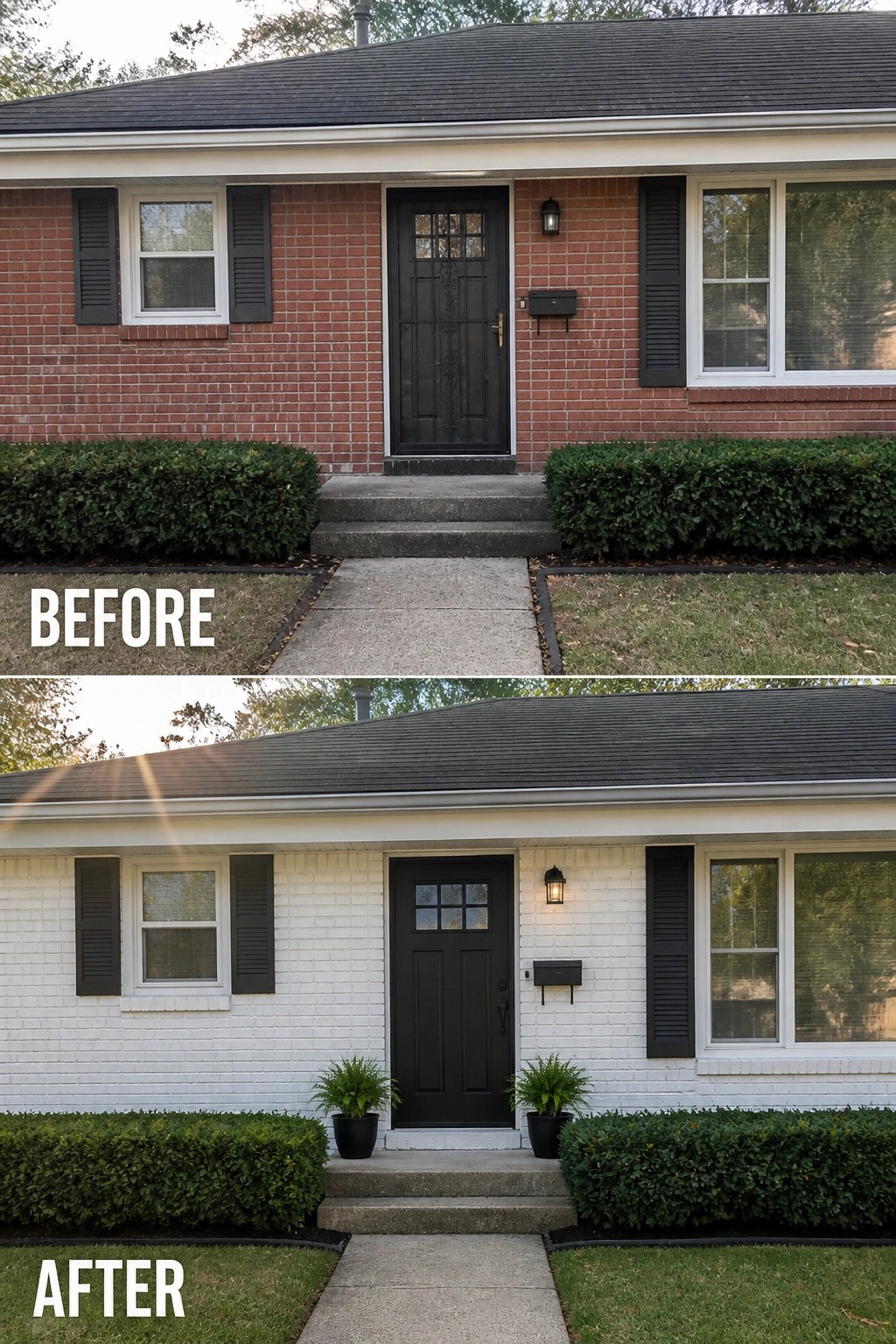
A coat of paint on tired masonry plus a strong, dark front door is an easy way to make a simple ranch feel updated and purposeful. In this example the red brick is painted white and the door and shutters are darkened, then a pair of matching planters and a new light finish the look; the result reads cleaner and more intentional without changing the roofline or steps.
If you try this, start with a thorough cleaning and any necessary mortar repairs, then use a masonry or breathable exterior paint made for brick (test a small patch first). Pick a contrasting door color and repeat it on shutters or hardware so the eye has a clear focal point, and frame the entry with two small planters instead of cluttering the stoop. Works best on single-story homes with simple lines; avoid painting historic brick unless you are ready for a mostly permanent change.
Give A Bare Porch A Clear Purpose
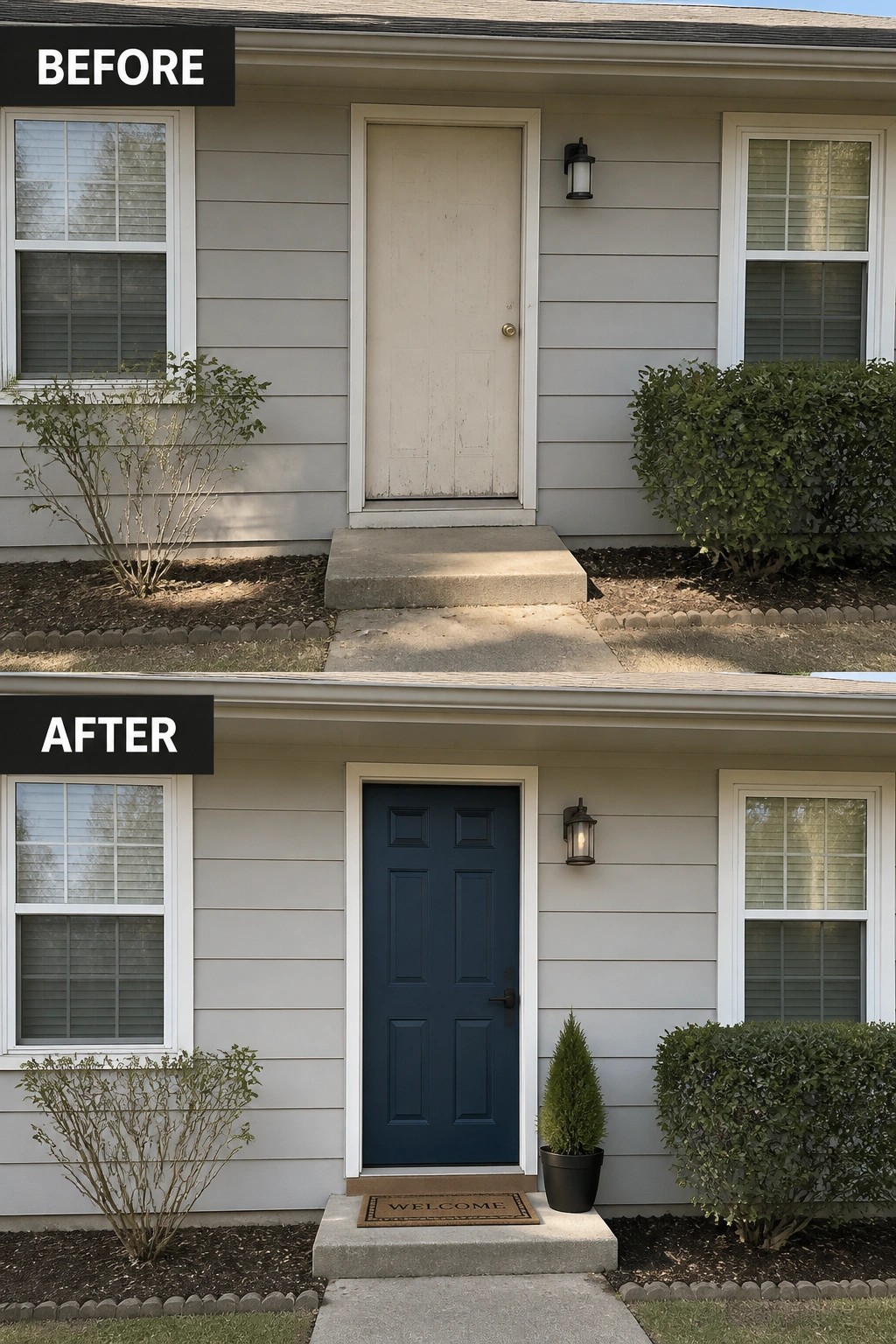
A simple way to lift a tired ranch exterior is to treat the entry as a small room you’re styling. Swap a worn slab door for a painted paneled door, add fresh hardware and a new wall lantern, then anchor the step with a welcome mat and a single potted plant — just those few moves make the front feel intentional rather than forgotten.
Start with repair and a good cleaning, then pick one strong door color that contrasts the siding and repeat that color or a neutral in the hardware and accessories. Keep plantings and décor to one or two pieces so the step stays usable and easy to maintain, and choose weatherproof finishes so the look lasts. Small changes make a big difference.
Update Your Garage Door To Boost Curb Appeal
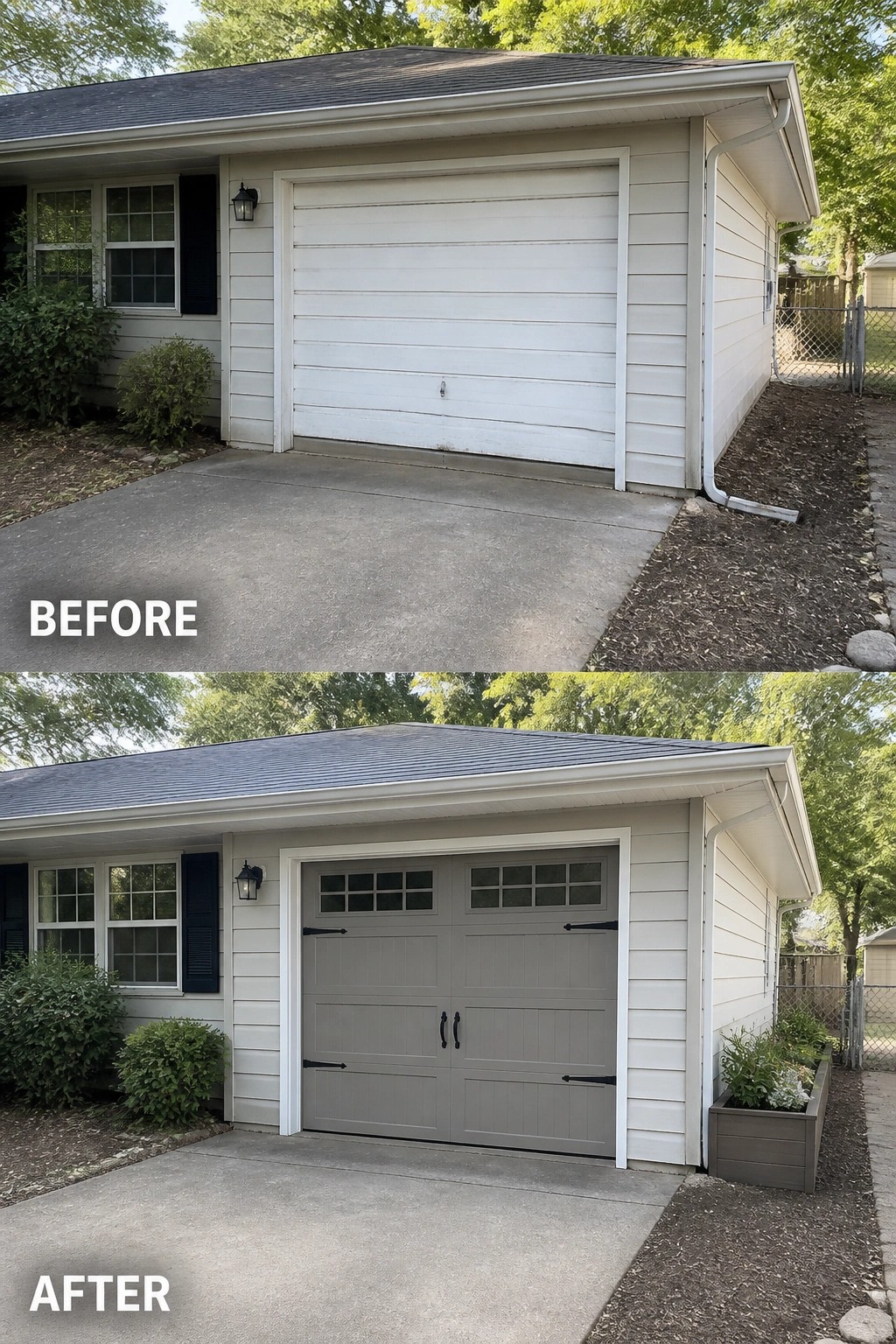
A new garage door is one of the simplest exterior updates that actually shows. Replacing a plain roll-up door with a paneled, carriage-style door that includes top windows and decorative hardware immediately gives a ranch house more character and a finished look without touching the roof or siding.
If you want the same effect, pick a door style that echoes your home’s windows and keep the color within the same neutral family so it feels cohesive. For a lower-cost route, swap the face, add divided-lite inserts or trim and change the hardware; for a bigger investment, install a full replacement with insulated panels and factory-installed windows. Finish the look with one planter or a small lantern so the upgrade reads purposeful, not fussy.
Add Shutters And Defined Planting Beds
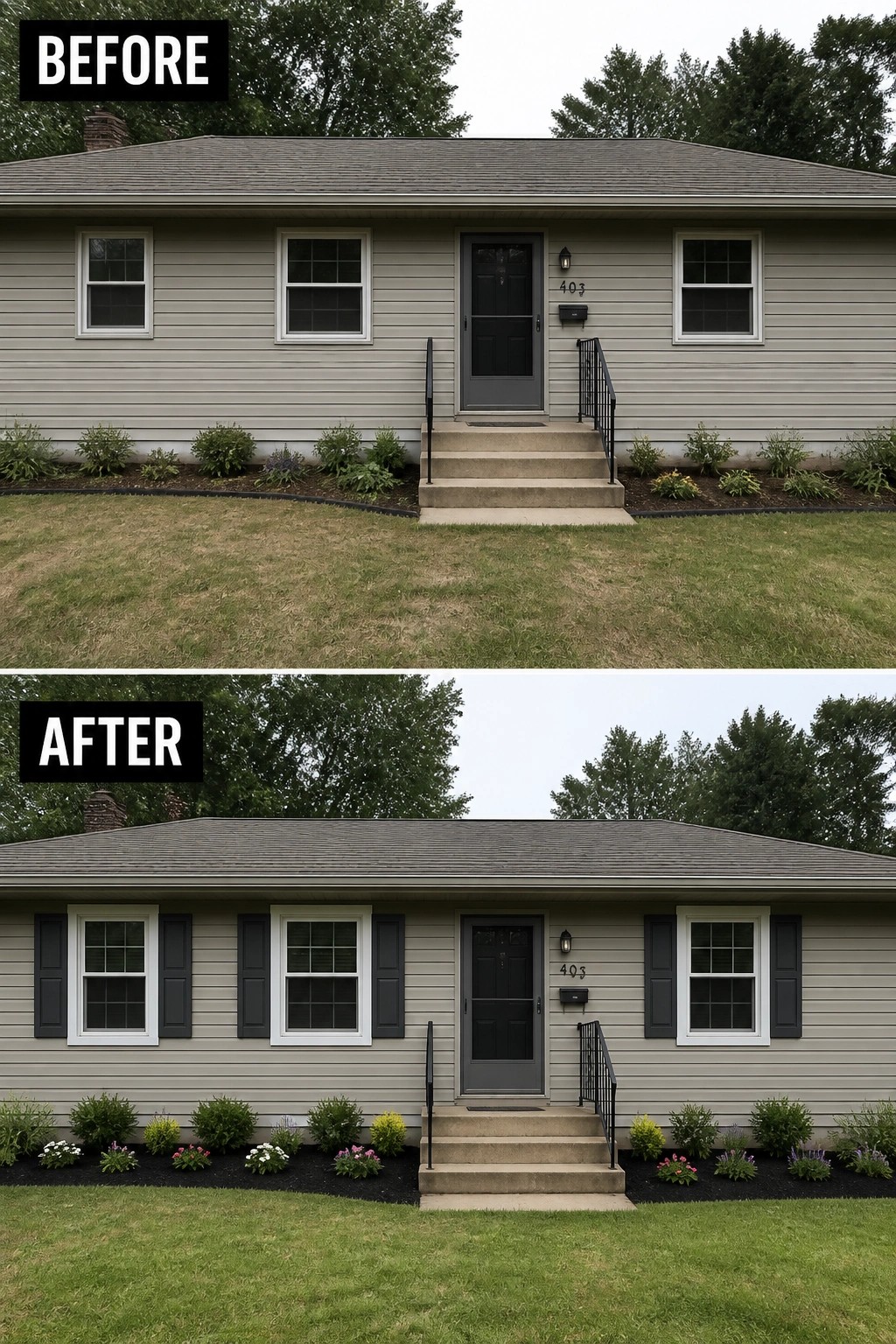
A few well-chosen exterior details can make a plain ranch facade feel finished without changing the structure. In this example the addition of simple, dark shutters and a clean, mulched planting bed with small shrubs and seasonal flowers breaks up the flat siding, frames the windows, and gives the entry more presence.
To copy the idea, start by measuring your windows so shutters are proportionate, and pick a low-maintenance material and paint color that ties to your door or trim. Next, edge and refresh the bed, add a row of small evergreens or shrubs for year-round shape, and plant a few perennials or annuals for seasonal color. Keep plant spacing reasonable and use dark mulch to make the foliage pop—small changes go a long way.
Frame The Entry With Coordinated Lighting And Planters
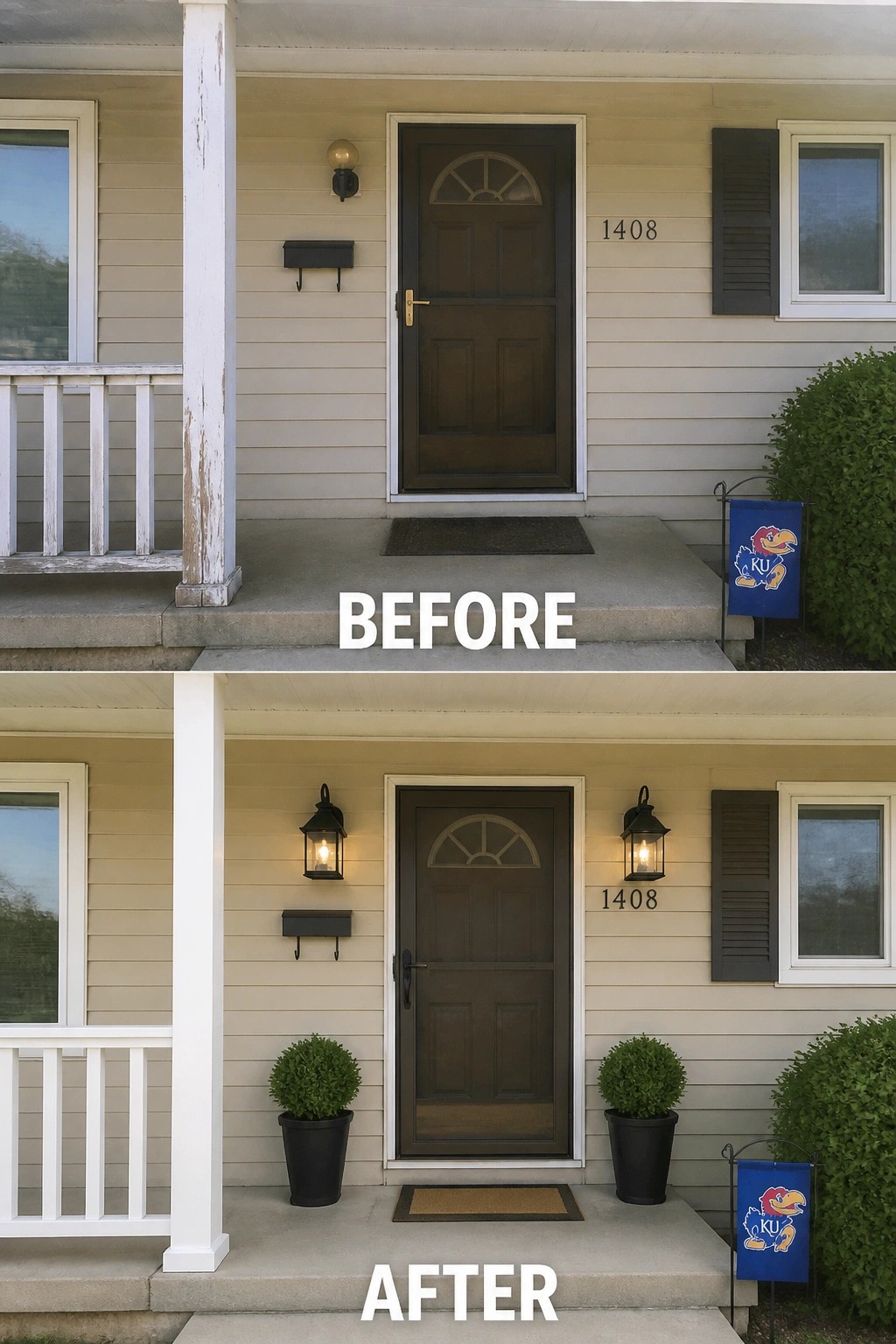
A plain porch often reads as leftover space. Give it a purpose by treating the entry as a small outdoor room: here, matching wall lanterns and a pair of potted shrubs frame the door and instantly make the approach feel intentional and cared for.
Start small. Frame the door with one or two light fixtures, choose a couple of weatherproof planters in a size that leaves a clear path, and repeat a finish or color (
Anchor A Ranch Facade With A Low Stone Base
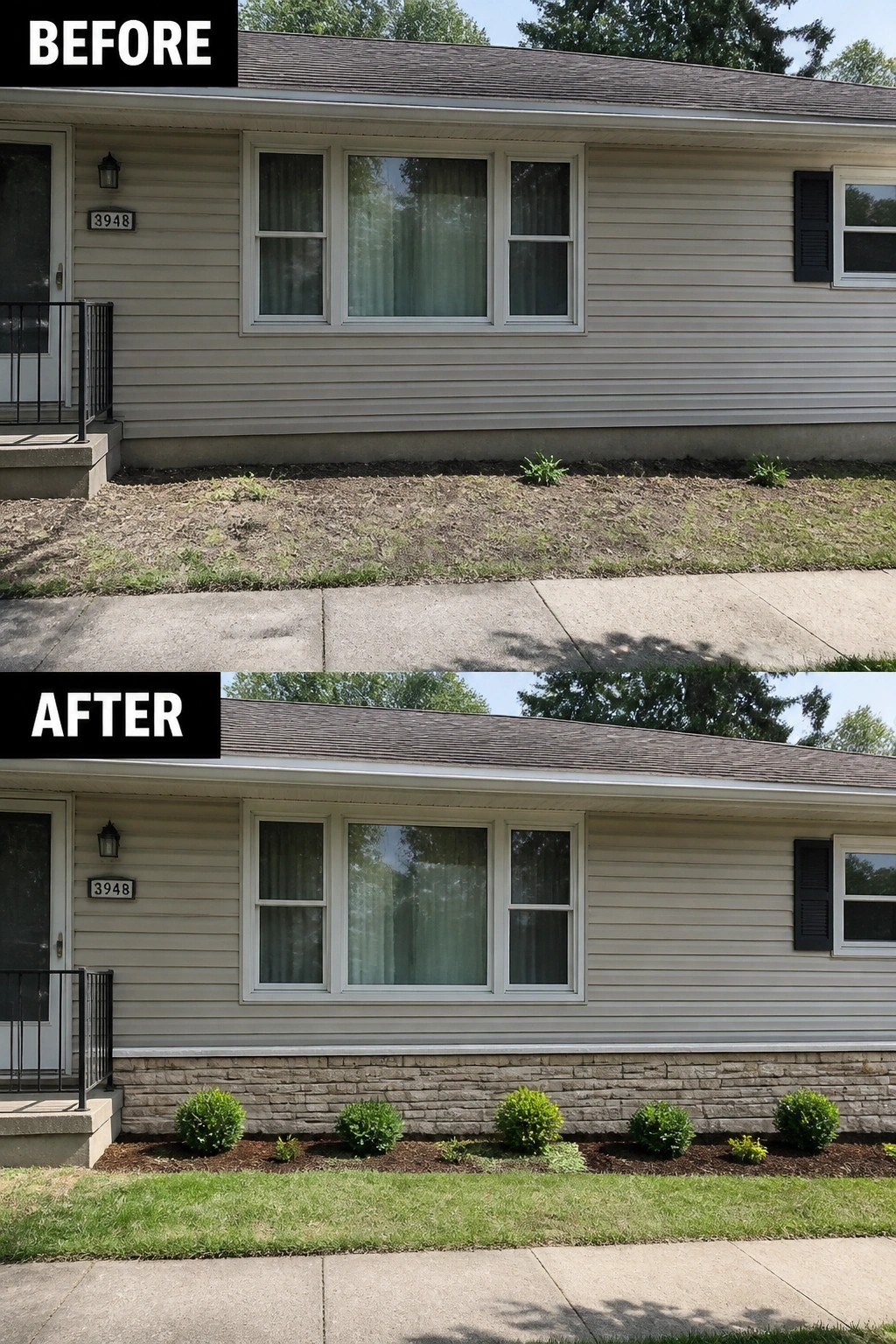
A short band of stone at the base of a ranch house can do a lot of heavy lifting visually. Replacing a bare dirt strip with a low stone skirt, a neat layer of mulch, and a repeated line of small shrubs breaks up plain siding, adds texture, and makes the whole front read as intentional rather than unfinished.
To copy this, run a thin veneer or manufactured ledgestone along the lower third of the wall at a modest height, then plant a single, low-maintenance shrub repeated at regular intervals (boxwoods or dwarf hollies work well). Keep the planting simple, leave room for growth, and use mulch to keep the bed tidy. It suits single-story homes especially—adds weight at eye level without major work, and it’s an easy project to phase in or reverse later (manufactured stone is lighter and often cheaper). Low maintenance, too.
Add A Defined Paver Path To Frame Your Entry
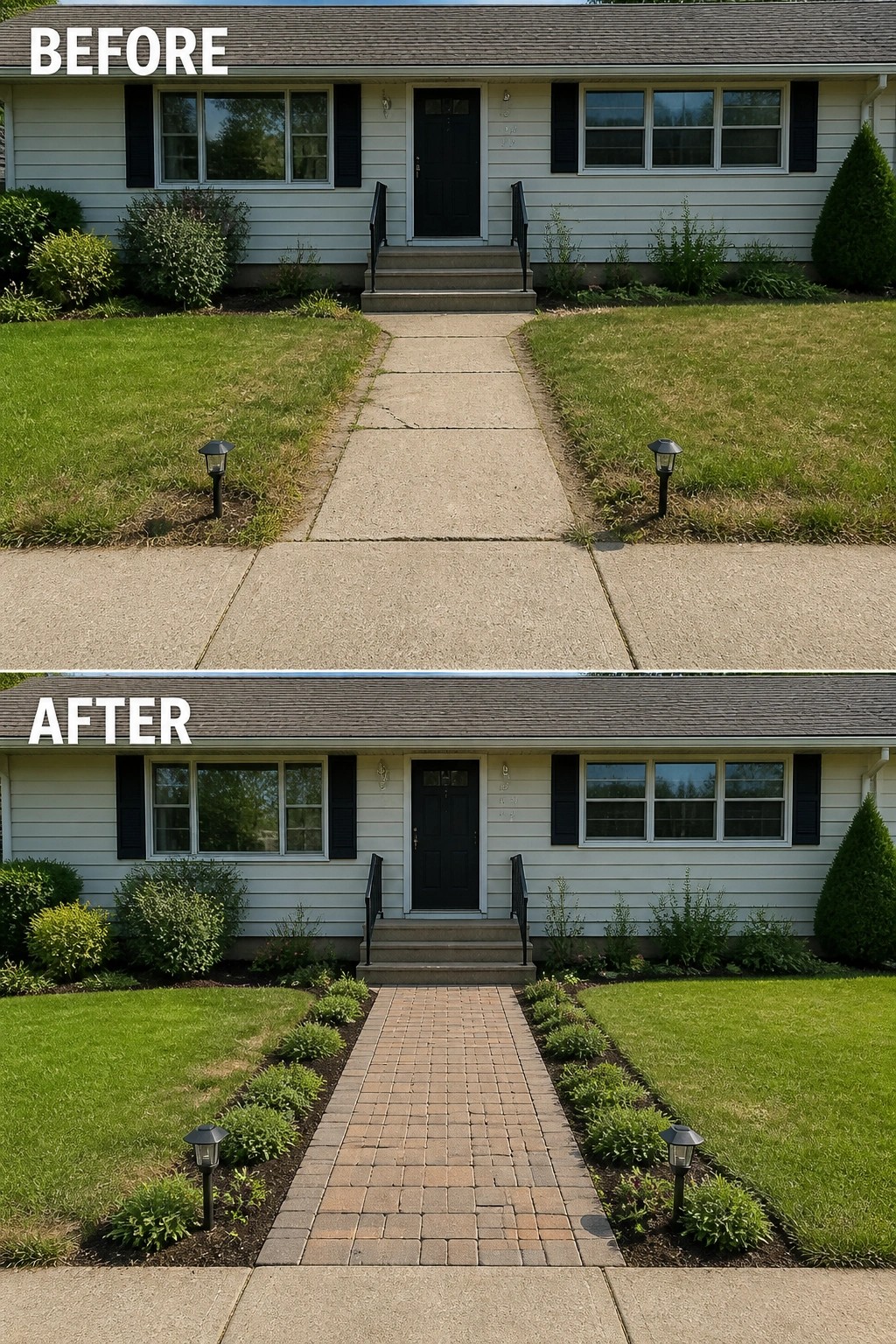
Replacing a plain, cracked concrete walkway with a narrow paver path and low planted borders is an easy way to give a ranch house a pulled-together look. The pavers add texture and a clear route to the door, while repeating small shrubs and fresh mulch create a tidy, intentional edge (plus a couple of path lights make evening arrivals nicer). Simple but effective.
Do the work in small steps: clear and level the existing path, pick pavers that match your home’s tones, and keep the walk about 3 to 4 feet wide so it feels balanced but not oversized. Use one or two easy-care shrubs repeated on each side for rhythm, add mulch to keep weeds down, and place low lights where they actually help you see the steps. Watch drainage and leave a little lawn on either side so maintenance stays simple.
Refresh A Small Porch With Painted Surfaces And Simple Accents
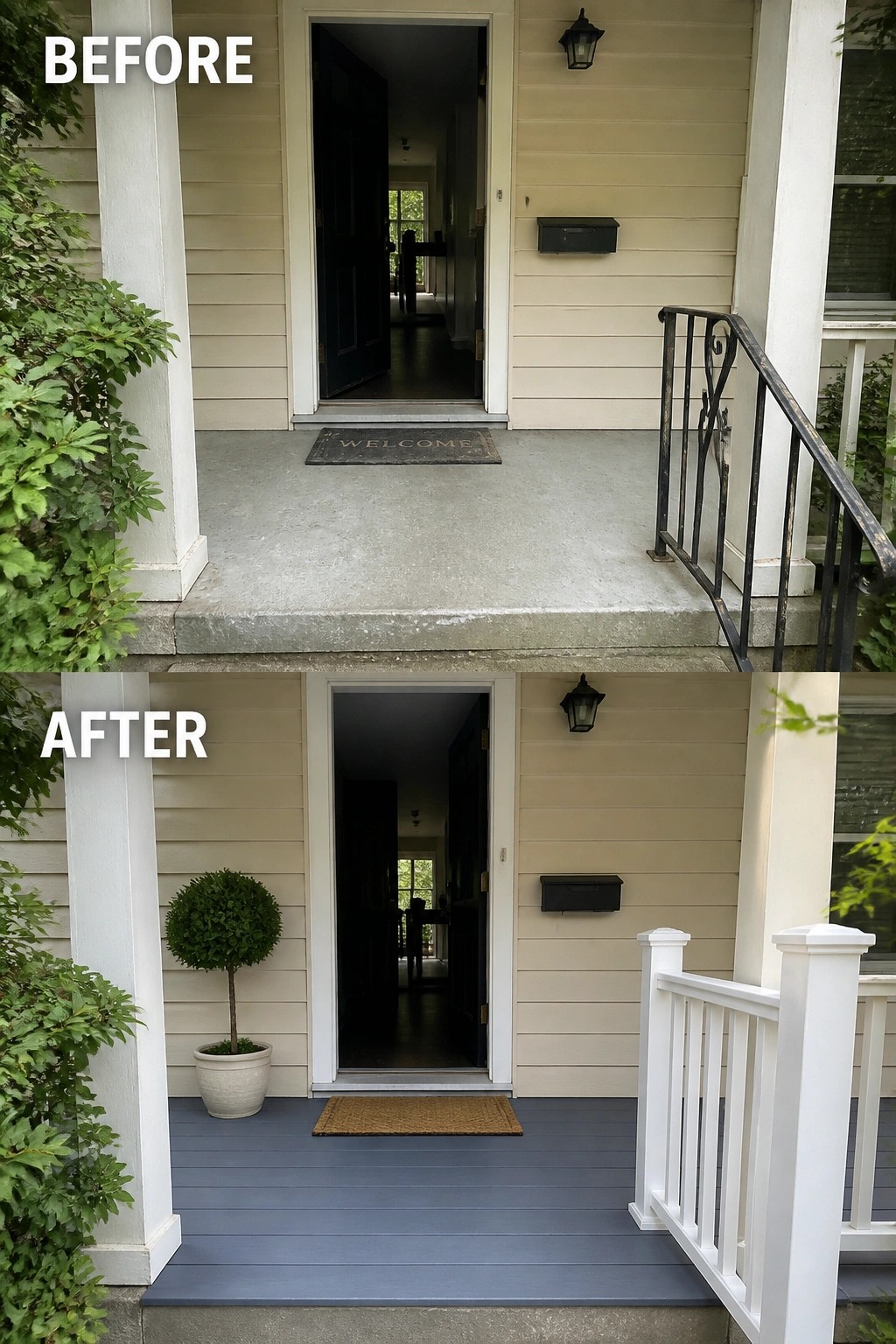
A small porch can stop feeling like an afterthought once you define it as an entry zone. In this update the dull concrete was covered with painted decking and a new white railing, then anchored with a simple doormat and a single potted topiary. The color and rail create a frame, while the planter and mat give the space one clear function: a tidy, welcoming front step.
To copy the idea, start with surface prep—clean, repair cracks, and use a durable exterior paint or composite boards for a cleaner finish. Pick one or two focal pieces rather than crowding the space: a weatherproof planter and an outdoor mat are enough. Light-colored trim or a fresh railing will brighten the edges and make the porch read as part of the house. Keep scale small, choose materials that stand up to the weather, and leave room to open the door easily.
Give Your Entry A New Awning
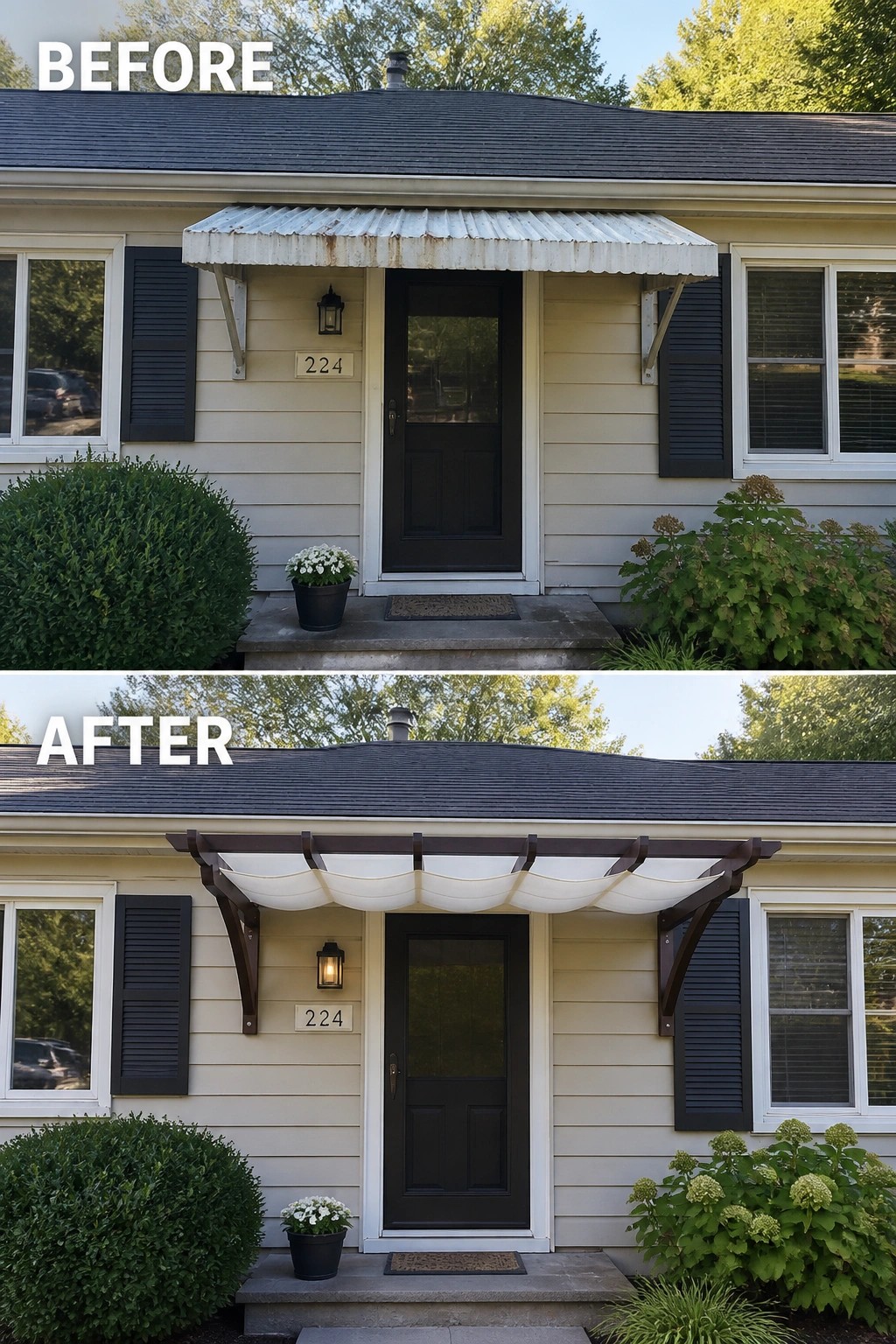
A small overhead change can reset the whole front entry. Replacing a dated corrugated metal awning with a narrow timber pergola and a soft fabric canopy makes the doorway look intentional and refreshed, and it pairs well with a new light and a couple of planters for a finished feel.
This approach works especially well on simple ranch facades where you do not want a full porch. Use modest proportions so the cover does not overpower the house,
Create A Clean, Low-Maintenance Mailbox Bed
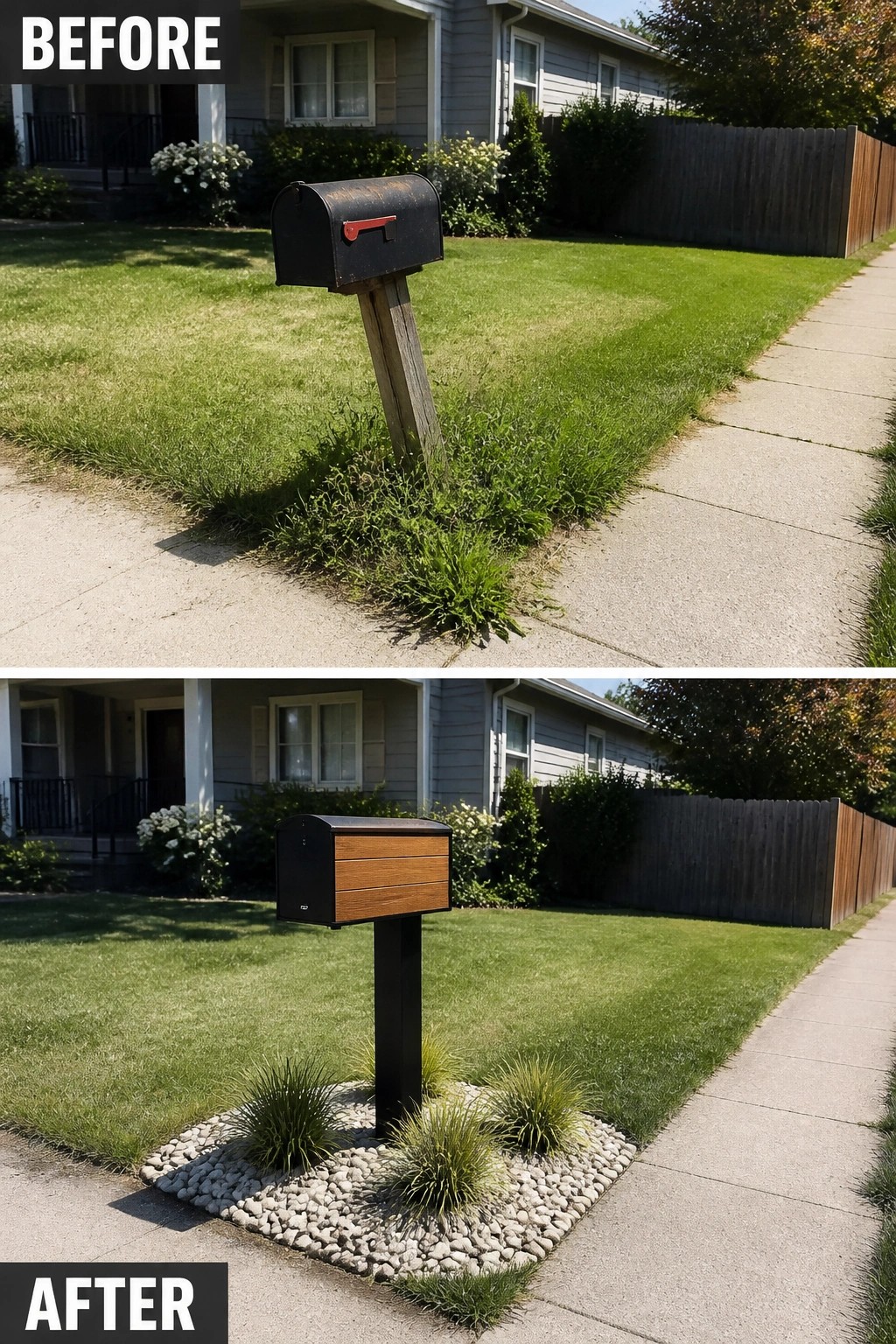
A tidy mailbox planting bed is a small change that boosts curb appeal and makes the entry feel purposeful. In this example the leaning wooden post and overgrown weeds were cleared and replaced with a squared-off gravel bed, a solid post-mounted mailbox, and a few clumps of ornamental grass to keep the scale simple and low-maintenance. Simple, but effective.
To copy it, start by removing the weeds and sketching a neat bed that keeps the sidewalk clear. Use landscape fabric under river rock to cut maintenance, choose 2–4 drought-tolerant clumps (spacing them for balance), and set a sturdy post in concrete so the mailbox stays straight. Pick materials and a mailbox size that match your house so the small upgrade reads intentional, not fussy.
Add Window Boxes And Simple Planting
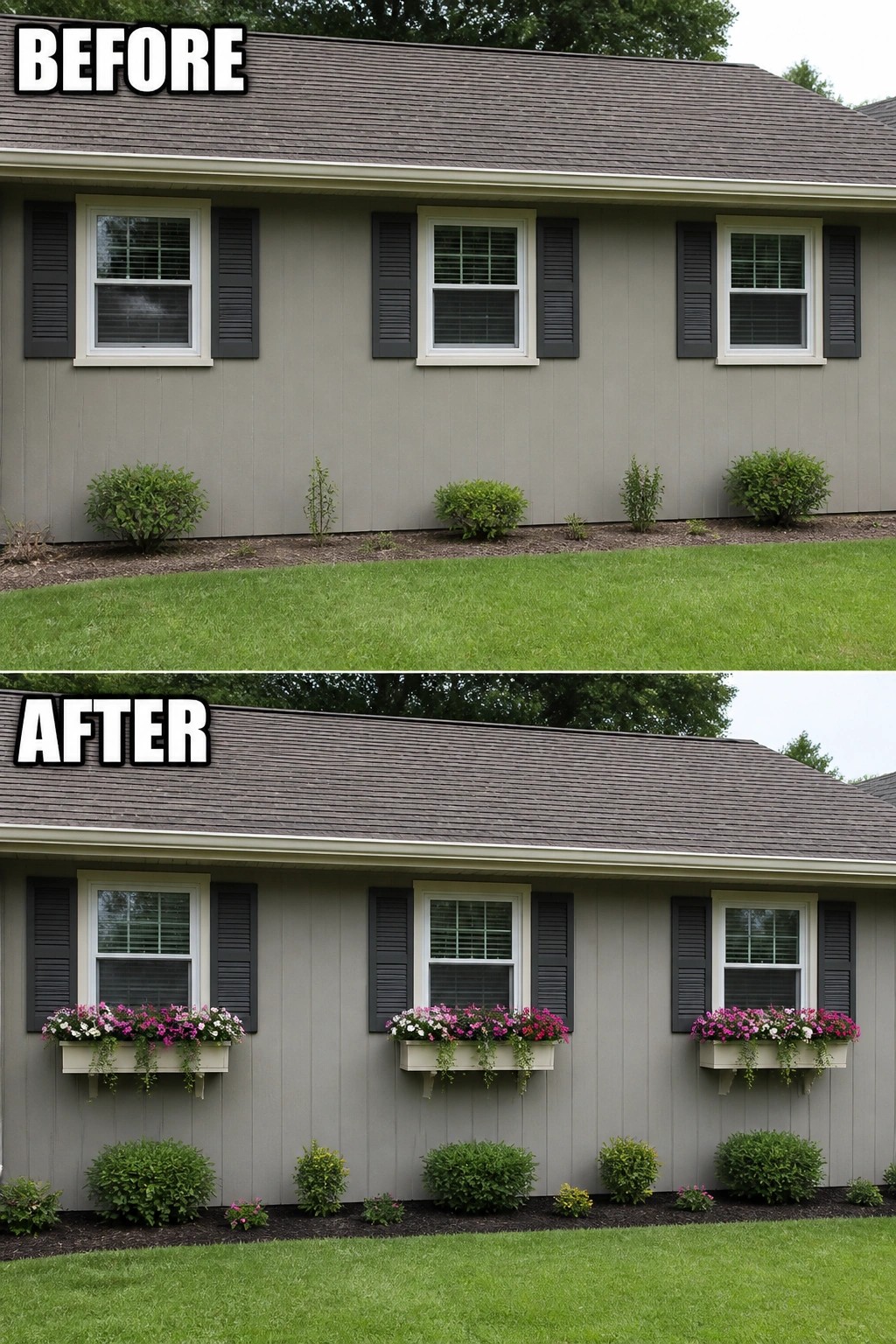
A row of coordinated window boxes is an easy way to make a flat ranch facade feel friendlier. In this example the plain wall is left alone but three flower boxes plus a cleaned-up planting bed and a few low shrubs give the elevation instant personality without any structural work.
To copy it, pick boxes that match the width of your windows and keep the scale low so they do not overwhelm the trim. Plant a mix of compact shrubs and colorful annuals or trailing plants for season-long interest, use a good lightweight potting mix with drainage, and finish the bed with fresh mulch. This approach works best on single-story houses where you want a quick curb-appeal boost that’s low-cost and low-impact.
Refresh A Weathered Fence With Stain And Simple Edging
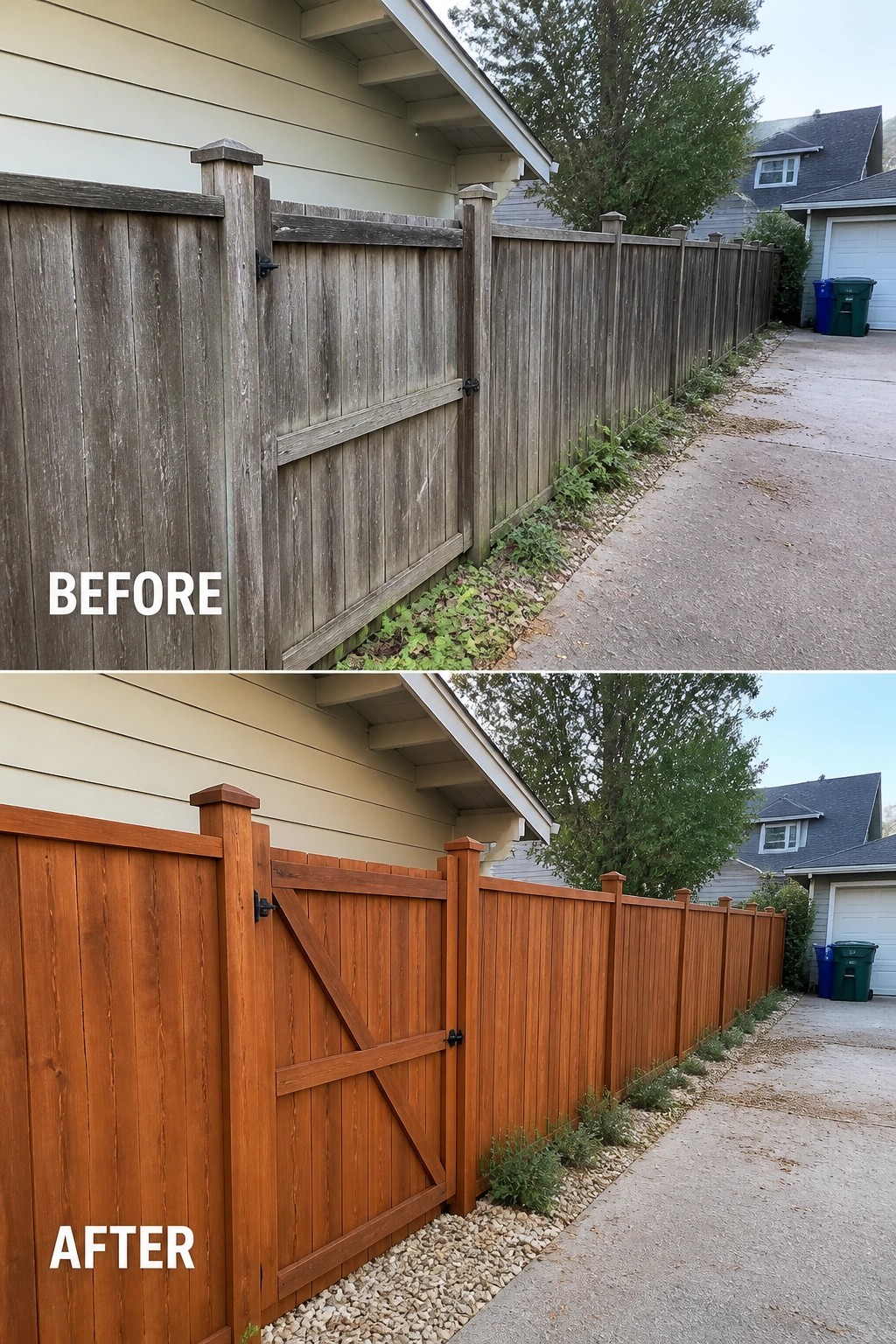
A tired, gray fence is an easy place to boost curb appeal without major work. Cleaning and staining the boards gives the whole side yard a pulled-together look, and adding a narrow gravel strip with low plantings at the base keeps things tidy and low-maintenance.
Do the basics first: pressure-wash, replace any rotten boards, then stain with a semi-transparent product that protects while showing the wood grain. Add landscape fabric and pea gravel along the fence line to cut weeds, and plant small, drought-tolerant shrubs or herbs spaced for easy maintenance. Simple, fast, durable.
Use Outdoor Lighting To Make A Plain Facade Feel Welcoming
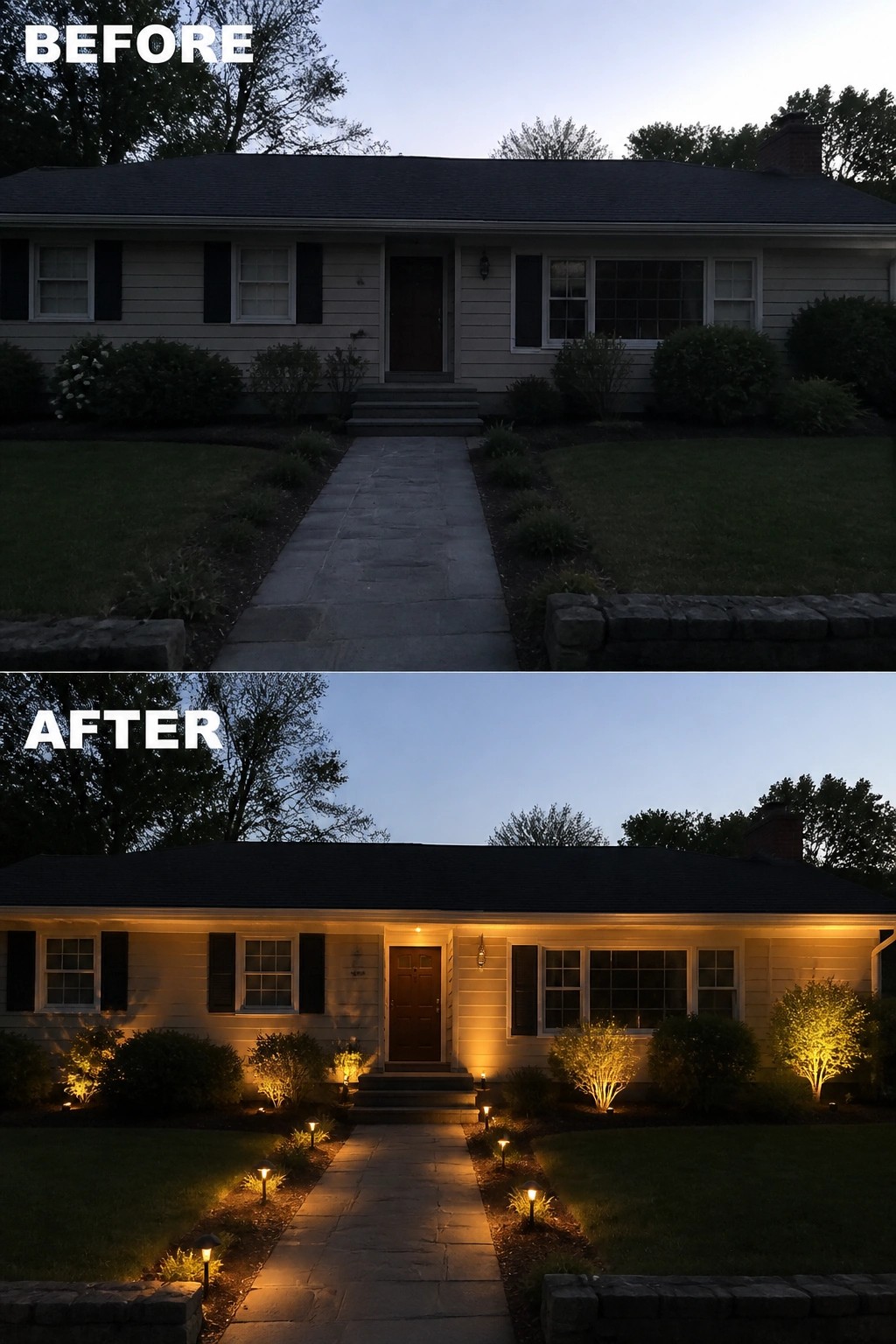
A few well-placed lights can completely change how a simple ranch-style front looks at night. In the after photo the homeowner added low-level path lights, a porch lamp, and uplights aimed at foundation shrubs. The result is a warm, safe approach to the door and a house face that reads as intentional instead of dark and closed up.
Try a modest plan you can install over a weekend. Put path lights along the walk to mark the route and step locations, then add 1 or 2 small uplights at the base of larger shrubs to give the facade some depth. Use warm LED bulbs (2700–3000K), keep fixtures low and aimed to avoid glare, and run lights on a timer or smart switch so they come on automatically. This suits single-story ranch houses with shallow beds—start small and add only as needed so the effect stays subtle and practical.
Add A Defined Driveway Border With Pavers And Gravel
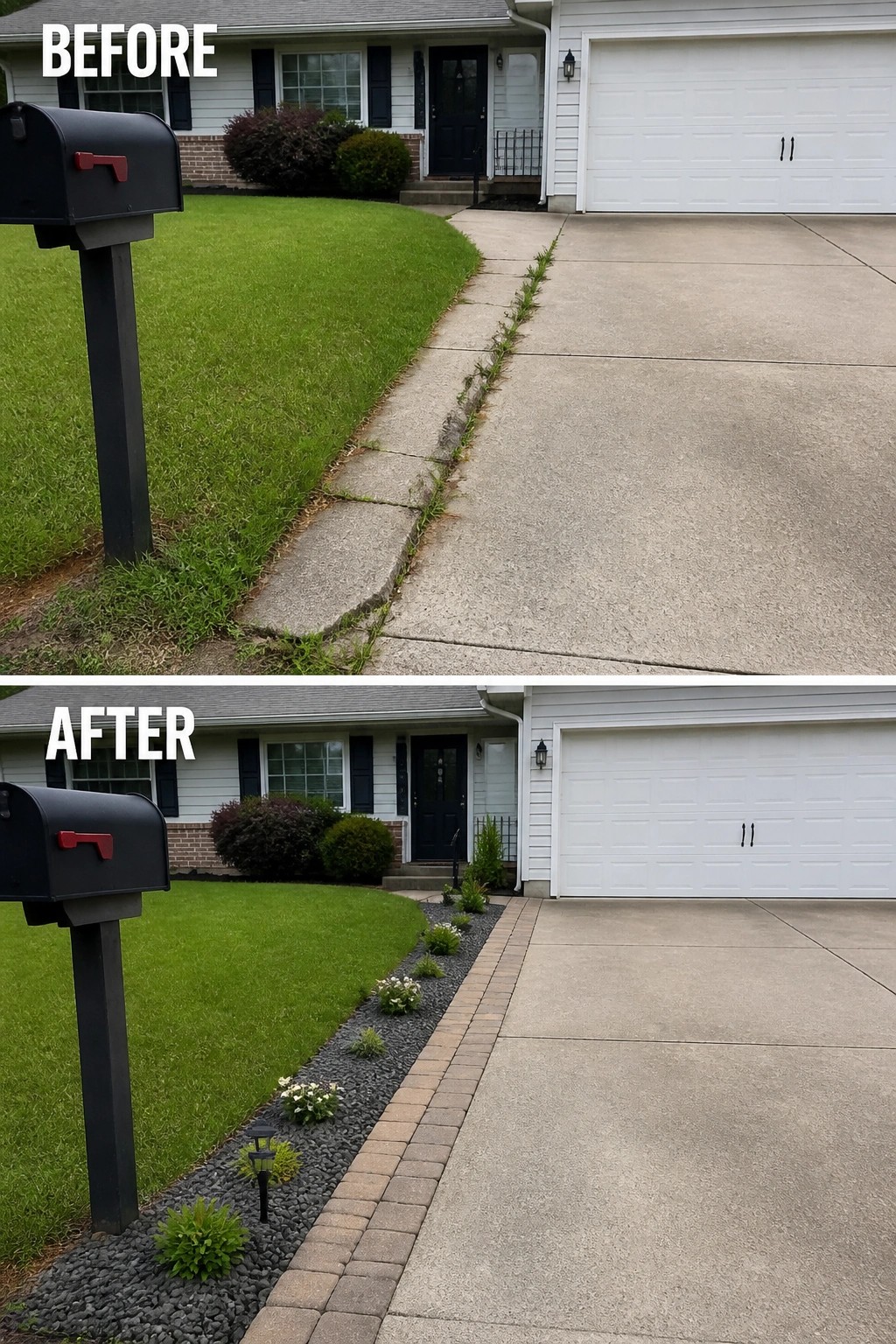
A simple, narrow planted bed between lawn and concrete instantly tidies a tired driveway. Replacing ragged concrete edging and weedy cracks with a row of pavers and a strip of dark gravel plus small, spaced plants cleans the line and gives the house a finished feel without major work. It’s a small change that reads as intentional and low-maintenance.
To copy it, start by pulling weeds and leveling the edge, then lay a compacted base and set the pavers flush with the driveway. Use landscape fabric, a top layer of decorative gravel, and plant a few low-maintenance perennials (lavender or dwarf ornamental grasses work well) spaced for growth. Add a couple of small solar lights, keep the bed narrow so mowing stays easy, and pick a paver color that complements your house for the best effect.
Create Defined Garden Beds For Instant Curb Appeal
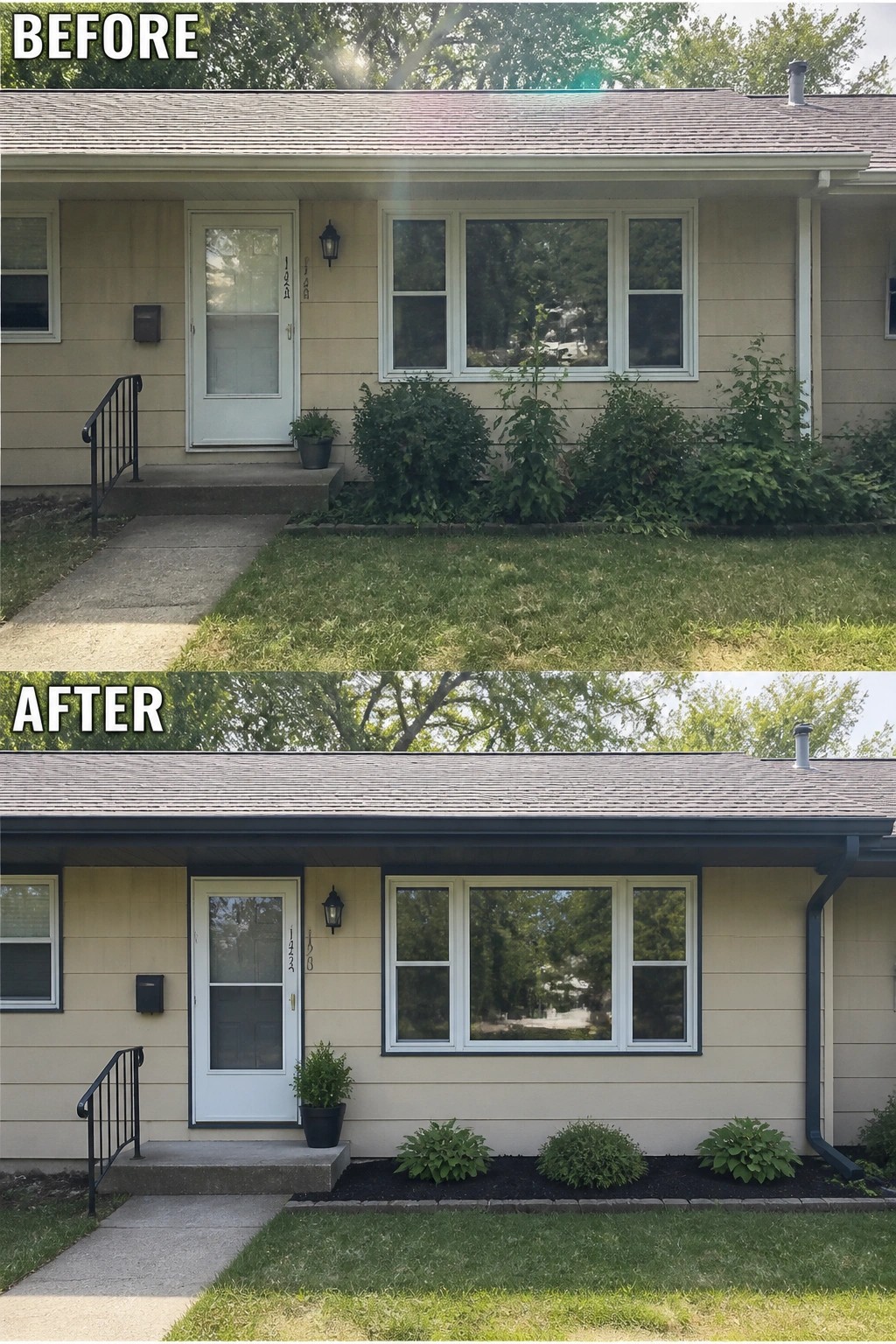
Clearing an overgrown foundation bed and replacing it with a simple, edged planting bed and fresh mulch makes an older ranch feel cared for without major work. In the photo the wild shrubs were removed and replaced with three low, evenly spaced perennials and a dark mulch strip, which immediately tidies the facade and shows the house’s lines again.
Do this by starting small: pull out big volunteers, cut a clean edge, top with a few inches of good soil where needed, and plant three to five low-maintenance perennials that match the house scale (hostas, boxwoods, dwarf shrubs). Finish with a neat mulch layer and leave room for a walkway and future growth—this approach works best on single-story homes and keeps maintenance easy while boosting curb appeal.
Refresh A Ranch Exterior With Sage Siding And Bright Trim
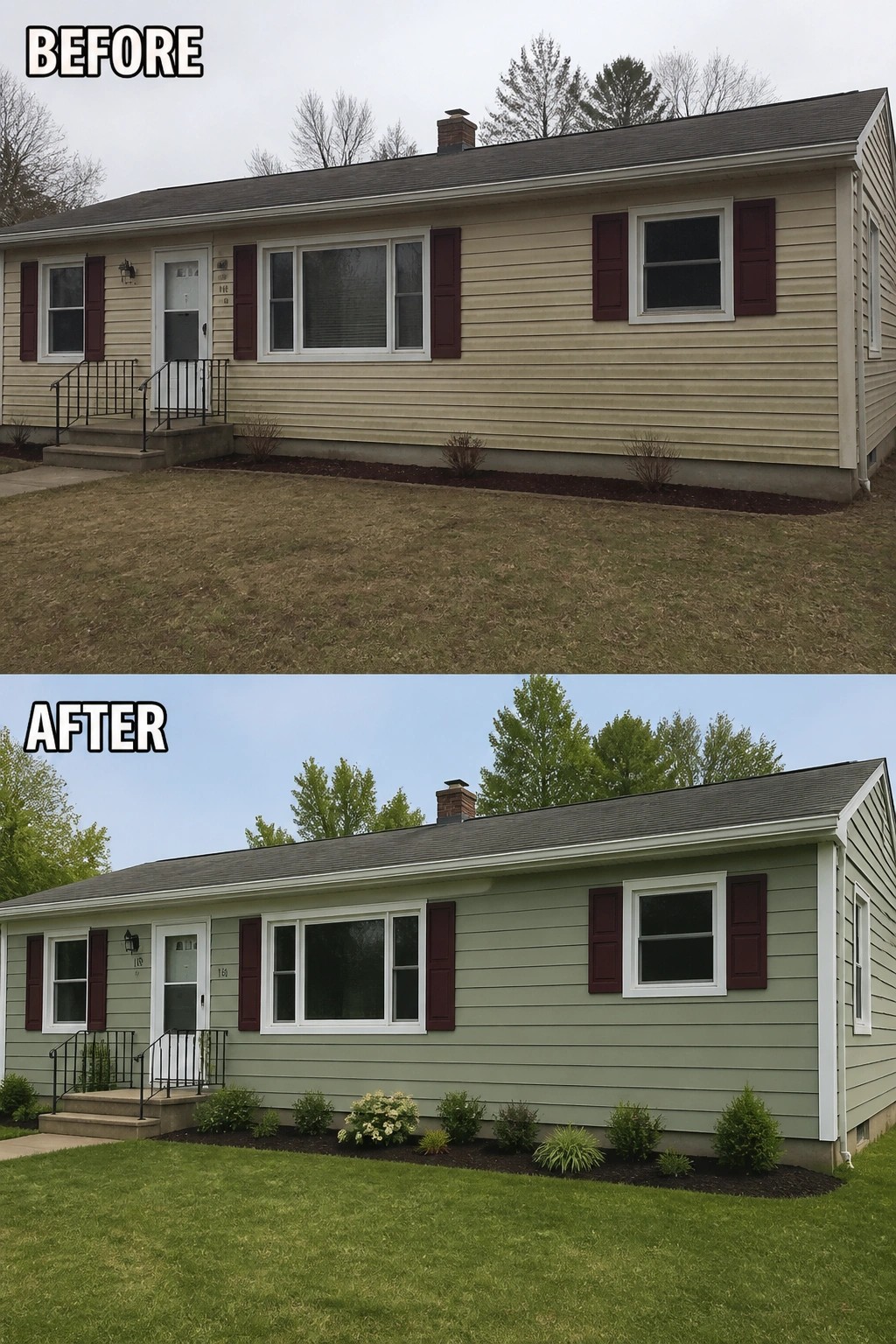
A fresh coat of paint on the siding and trim is one of the simplest ways to change the whole look of a ranch house without touching the structure. In this example the faded beige was swapped for a soft sage and the trim was brightened, which immediately feels cleaner and more intentional—especially paired with a few neat planting beds and dark mulch to anchor the base of the house.
You can do this on a weekend with a small crew or a contractor: test a few large swatches in sunlight, pick a trim white that reads crisp next to your roof and shutters, and commit to proper surface prep (clean, scrape, prime). Add low-maintenance shrubs and a thin mulch ring along the foundation to finish the look and hide any remaining staining on the concrete. Works well on single-story homes where color and trim become the main visual story.
Turn A Covered Ranch Porch Into A Simple Seating Zone
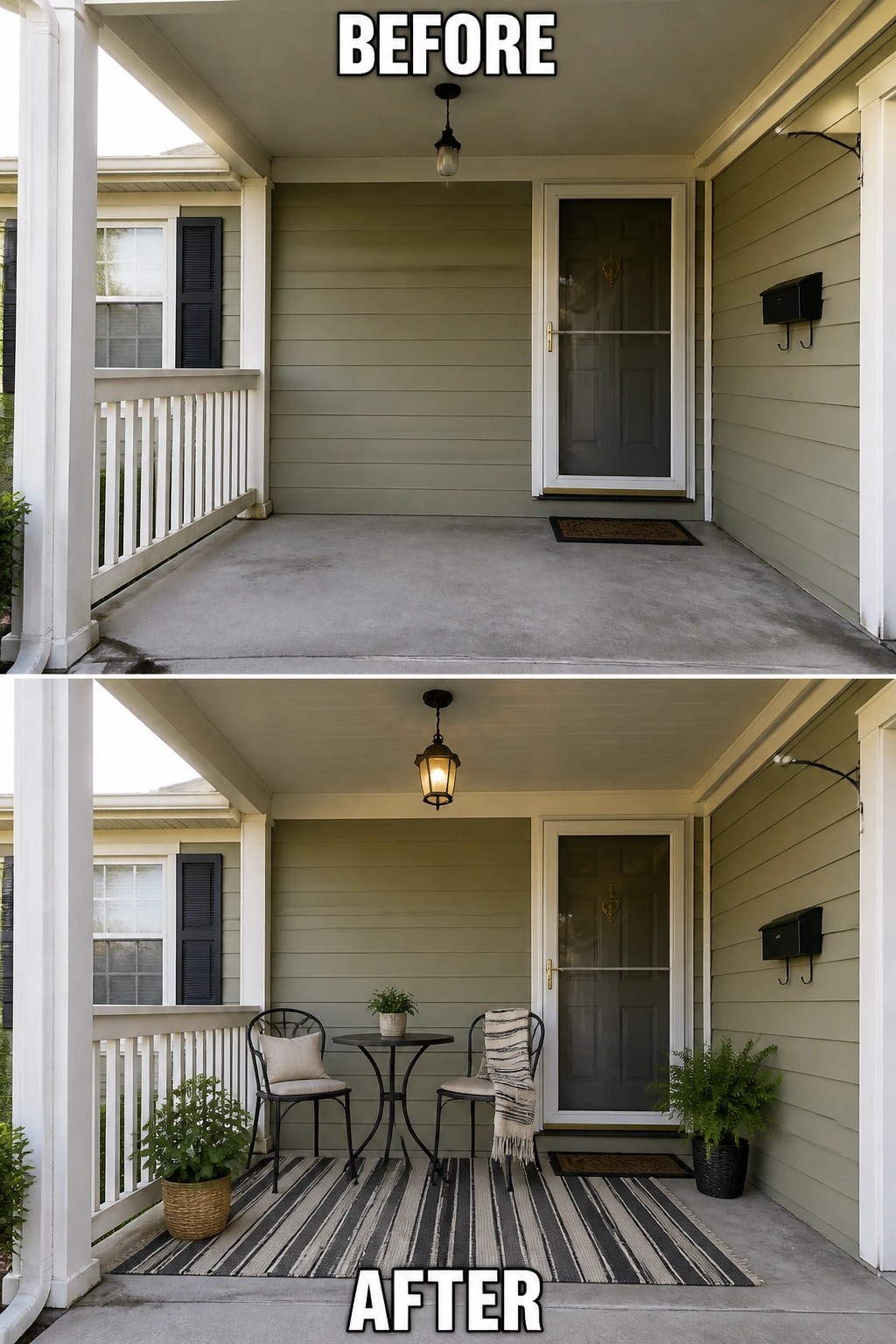
A small covered porch can stop feeling like wasted space with one clear decision: make it a seating zone. In this before-and-after someone anchored the spot with an outdoor rug, added a compact bistro set, a hanging lantern, and a couple of potted plants to create a simple, usable entry that doesn’t require structural work. The rug and chairs define the area so it reads as a place to pause, not just a path to the door.
To copy the idea, start by measuring the porch and choosing narrow-scale furniture that leaves a clear path to the door (folding or slim chairs work well). Use a weatherproof rug to visually anchor the set and pick outdoor-grade cushions for comfort. Add one overhead light or lantern and a pair of planters to frame the space, but avoid overcrowding—keep movement and delivery access in mind so the porch stays both pretty and practical.
Use Trim To Update A Plain Facade
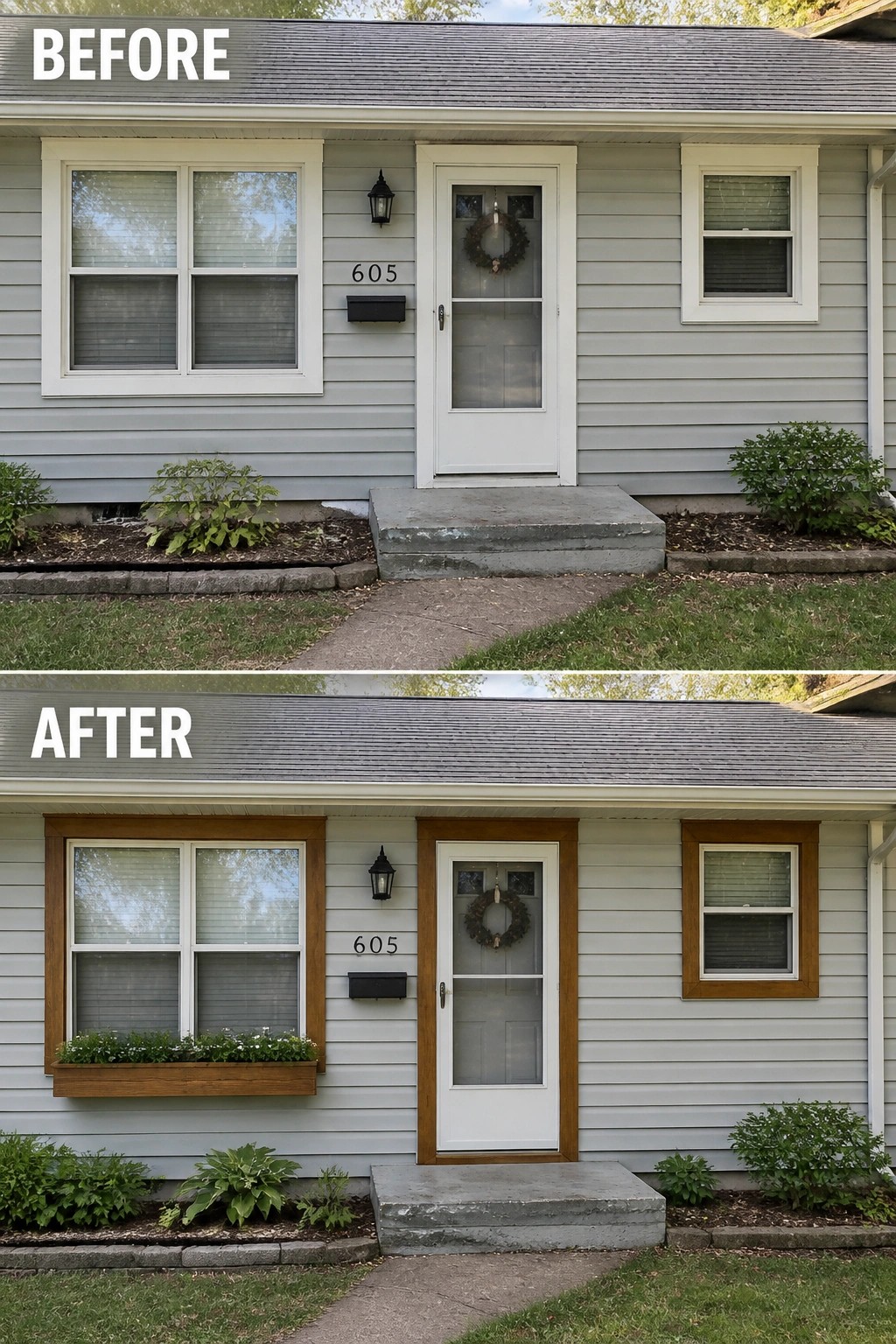
A quick, low-cost way to lift a flat ranch house is to give the windows and door defined frames. In this example, adding stained wood trim around the windows and door plus a shallow window box turns an ordinary exterior into a more intentional, balanced entry with almost no structural work.
To try this at home, pick one trim material and repeat it around one or two openings so the change reads cohesive rather than scattered. Use a rot-resistant wood or exterior composite, pre-finish the pieces before installation, and size the boards so they are visible but not overpowering. Finish the look with a shallow planter under a larger window for seasonal color and a couple of low-maintenance perennials at the foundation. Simple, inexpensive, effective.
Create Clean, Defined Foundation Beds
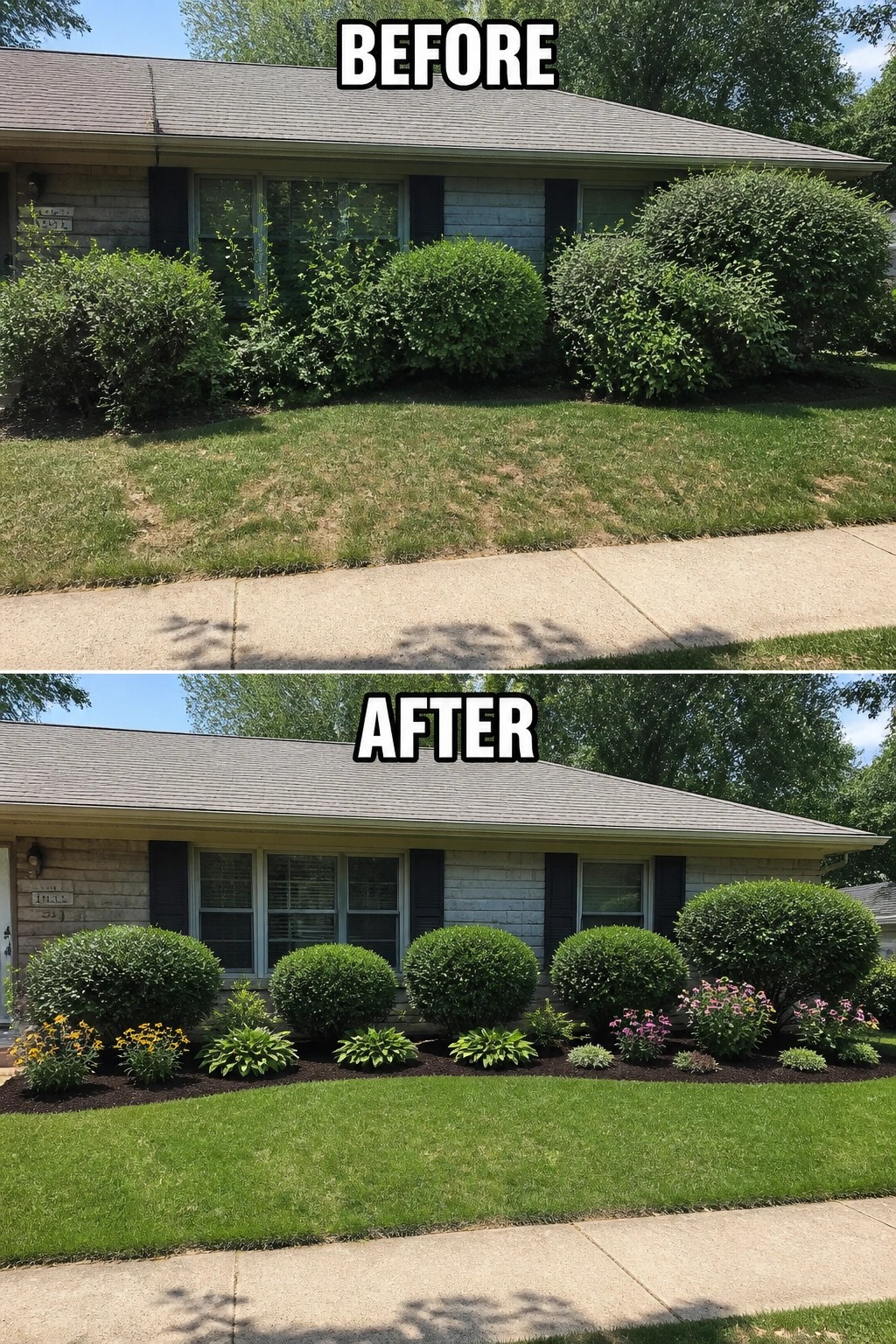
A simple cure for a messy front yard is to clear, shape, and define the planting strip along the house. In this example the overgrown foundation shrubs were pared back into neat round forms and a dark, mulched bed with a few repeated perennials was added, which makes the whole facade read cleaner and more intentional.
Do the work in three steps: prune or remove unruly growth, cut a crisp bed edge, and lay fresh mulch to unite the plants. Pick two or three low-maintenance perennials and repeat them across the bed for rhythm, and keep shrub size proportional to windows so nothing overwhelms the facade. Small effort, big curb appeal.
Update Your Entry With Color And Simple Styling
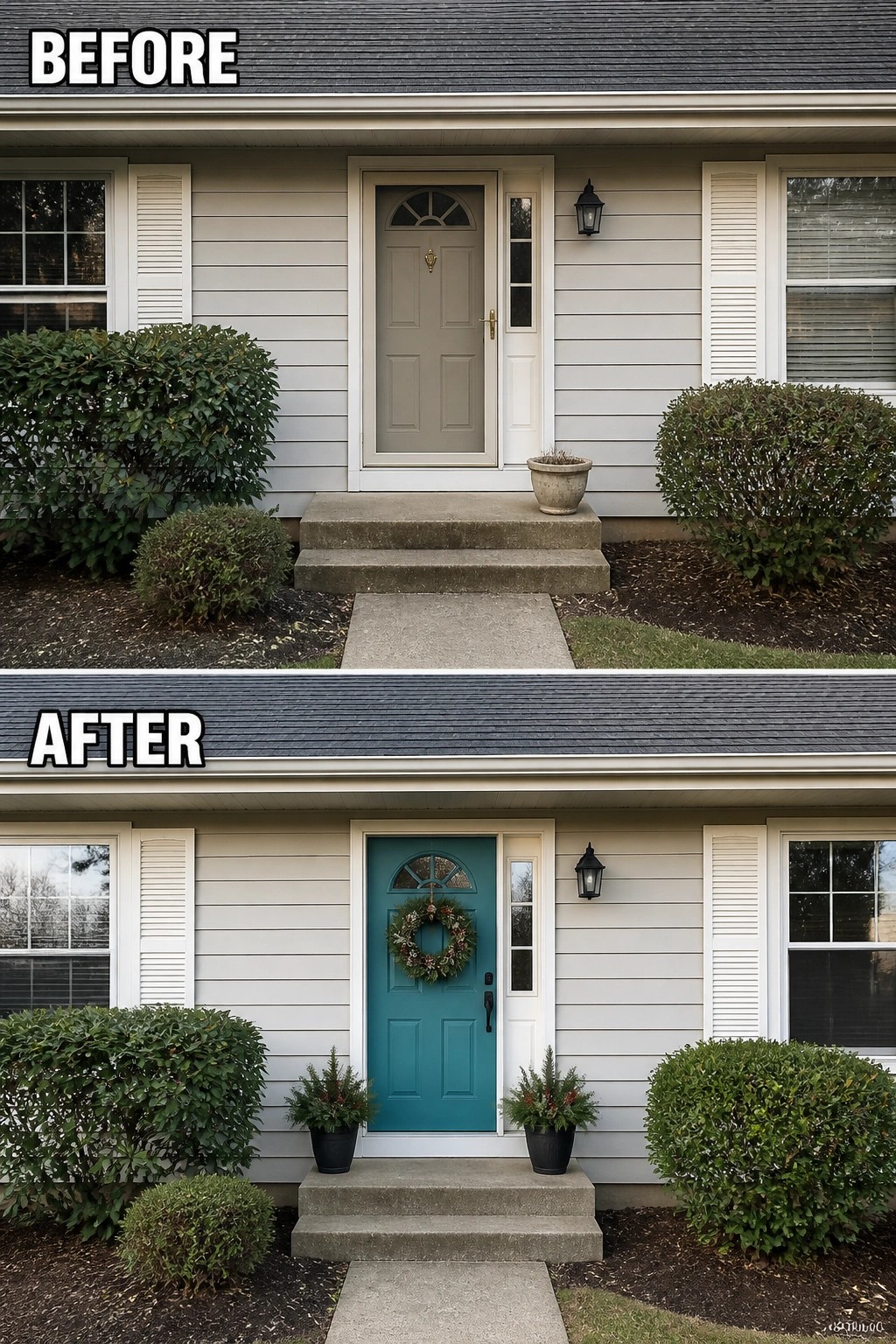
A fresh front door color and a few well-placed accessories can give a plain ranch entry an instant purpose. In this example the neutral door is switched to a teal tone and flanked with matching potted evergreens plus a wreath, which turns a generic stoop into a clear focal point and makes the house feel cared for without construction.
To copy this, pick a door shade that complements your siding and test a swatch first (paint a small section and view it at different times of day). Use exterior-grade paint and contrast hardware for a polished look, then add symmetrical planters sized to the step depth so traffic flow stays easy. Choose low-maintenance plants or seasonal containers you can refresh, and keep the rest of the porch simple so the door remains the star.
Frequently Asked Questions
Q: What paint colors work best on a ranch house without making it feel dated?
A: Start by looking at permanent elements like your roof, brick, or stone, then pick a neutral body color and a slightly darker or lighter trim for contrast. Test large swatches on different sides of the house so you see how sunlight changes them. Keep it to two main tones so the look stays clean and timeless.
Q: What’s the quickest way to boost curb appeal on a tight budget for a ranch-style home?
A: Focus on a few high-impact, low-cost changes: freshen the front door with paint, swap old hardware, update a porch light, and tidy the planting beds with clean edges and mulch. Those moves are inexpensive but make the whole house read as cared-for and intentional.
Q: Can I update windows and doors without replacing them?
A: Yes — you can make existing windows and doors look fresh by repainting frames, adding new trim or shutters, and installing a storm or screen door for extra polish. Swap out dated locks and handles for modern hardware and add window boxes for charm. New caulking and weatherstripping will tighten the look and help with drafts.
Q: How should I decide which exterior refresh to do first?
A: Start with what people notice most: the front entry, porch lighting, and the path leading to your door. Next, tackle easy maintenance like cleaning gutters, repainting trim, or repairing siding so small problems don’t get bigger. Save bigger changes, like new siding or major landscaping, for when you have the budget and time.