

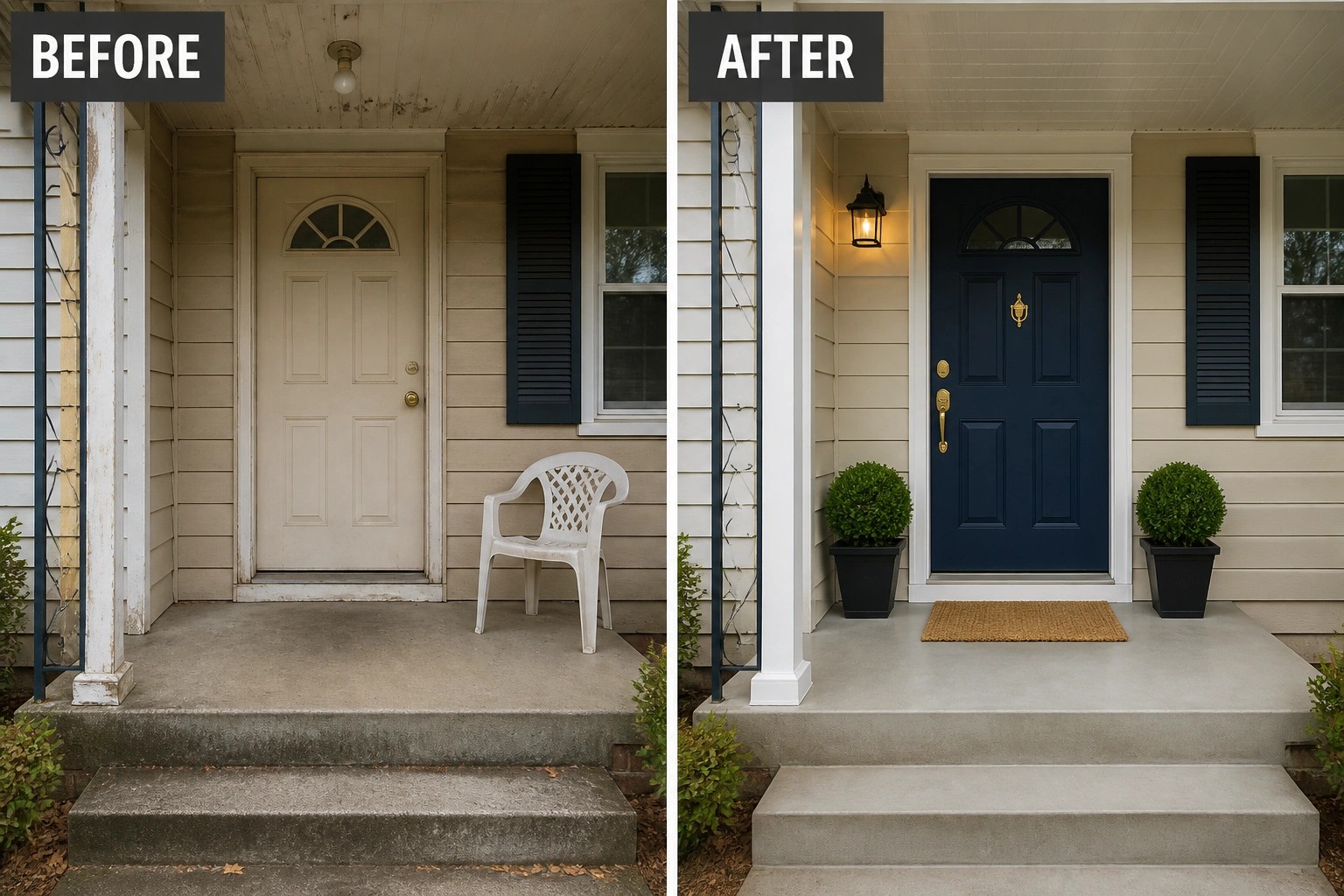
I’ve noticed ranch entries and small covered porches often feel neglected when paint fades, hardware looks dated, or there is no clear place for shoes and packages.
A few targeted changes like a fresh door color, better lighting, a purposeful mat, and sturdy planters can make the facade look cared for without a major renovation.
Small moves add up.
Because covered porches are tight by nature, I tend to test one anchor piece first, usually a new light fixture or a bench, so the rest follows more thoughtfully.
I suggest saving a handful of ideas to adapt to your house’s style and enjoy the quiet satisfaction of a clearly improved entry without having to overhaul the whole exterior.
Create a Defined Ranch Entry with Paint and Matching Planters
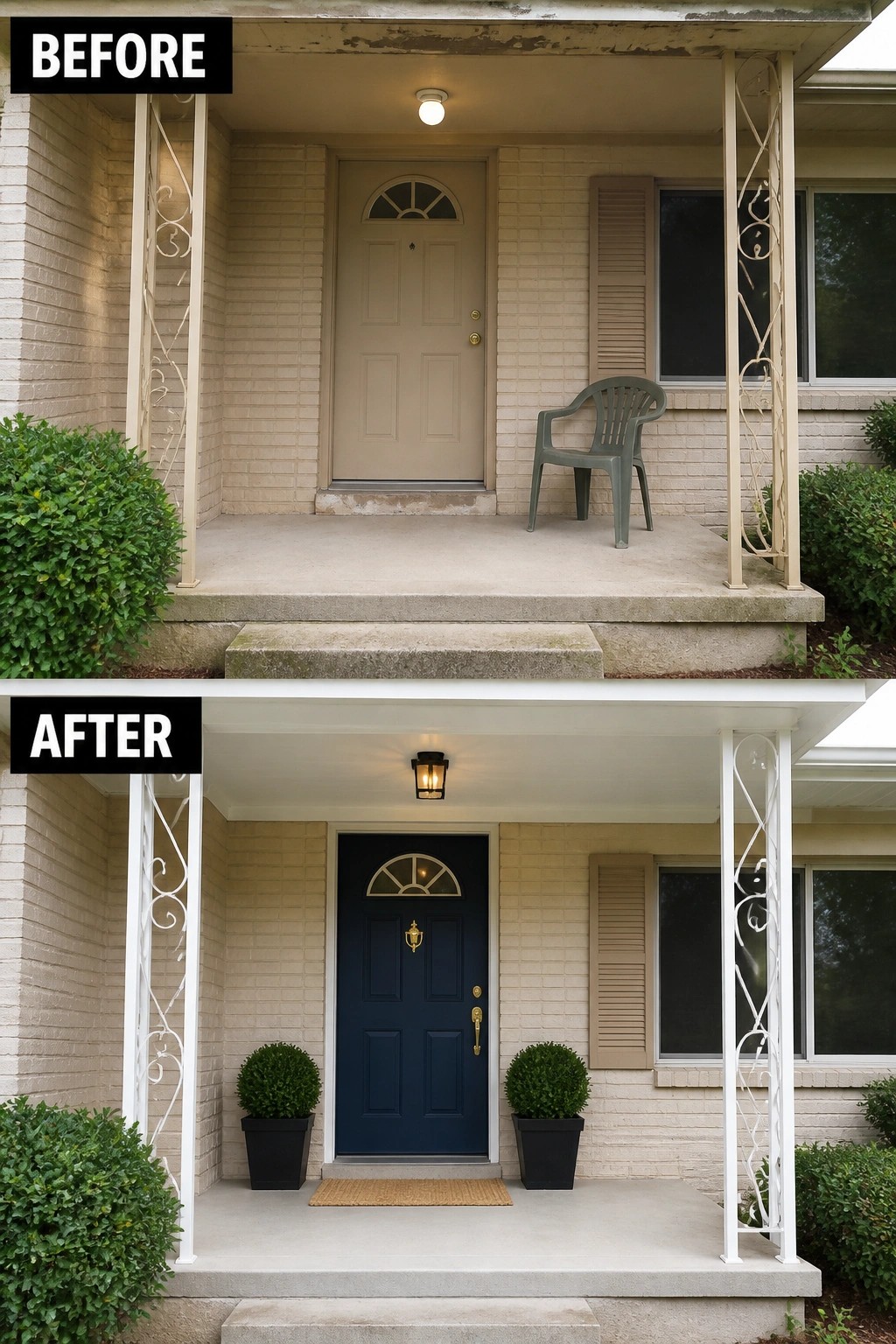
A small covered porch becomes useful when you pick one clear focal move and support it with a few durable accents. In this example the plain door was painted a strong color and updated hardware and lighting were added, then the entry was framed with matching potted shrubs and a simple mat to make the doorway feel intentional instead of neglected.
Do the same by choosing one main change for your porch—paint the door, replace the light, or add symmetry with planters—and keep the rest minimal. Use weatherproof materials, scale pieces so the step and walkway stay clear, and repeat one or two finishes (metal tones or pot color) so the look feels pulled together without crowding a small covered space.
Add Practical Seating and Storage to a Narrow Covered Porch
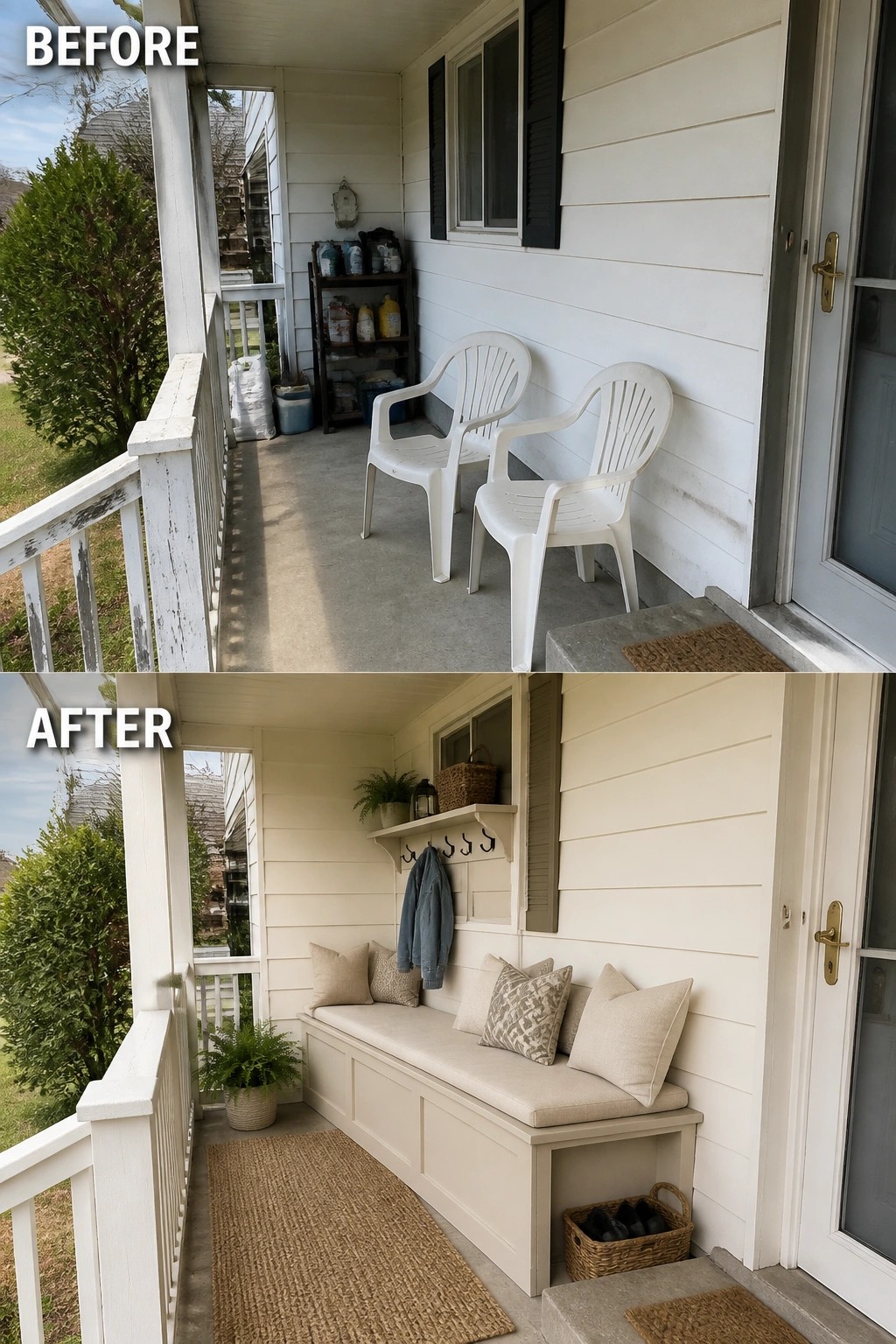
A narrow covered porch goes from awkward to useful when you give it one clear function: a place to sit and stash things. Swapping mismatched plastic chairs for a long storage bench creates instant seating, a drop zone for shoes, and a surface to style with cushions and a small rug. A single hook rail or shelf above the bench adds function without clutter.
To copy this on a small ranch entry, choose a slim bench with internal storage so you keep the walkway open. Use weather-resistant cushions and a low-profile outdoor rug to define the spot, and add a basket or cubby for shoes. This approach works well on covered porches where you need practical seating and quick organization without big construction.
Define the Entry with Patterned Tile and Simple Planters
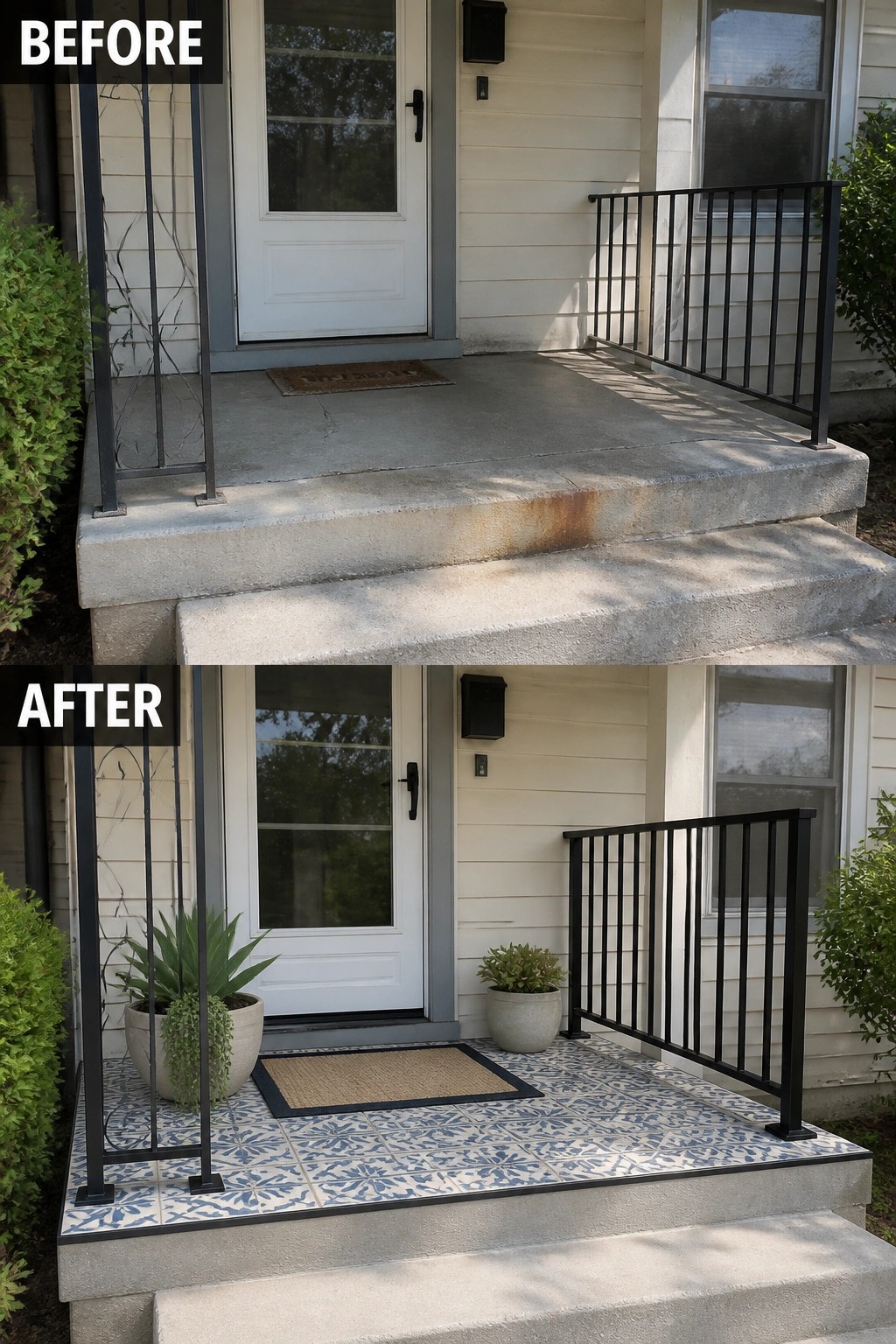
Turning plain concrete into a defined entry is one of the easiest ways to make a small covered porch feel useful. In this example a plain slab becomes a purposeful doorway by laying patterned tile (and simply adding a doormat and a couple of planters). That single change gives the porch personality, hides stains, and signals that this is a place to pause—not just a set of steps.
You can copy the idea on a tight budget: pick outdoor-rated tiles or adhesive outdoor tile mats that suit your scale, add a slim metal or rubber edge to finish the step, and tuck in two low-maintenance pots for greenery. Keep the layout uncluttered so the door swing and path stay clear, and choose a pattern and color that echo your house trim to make the entry feel intentional.
Build a Cozy Seating Spot Around a Hanging Bench
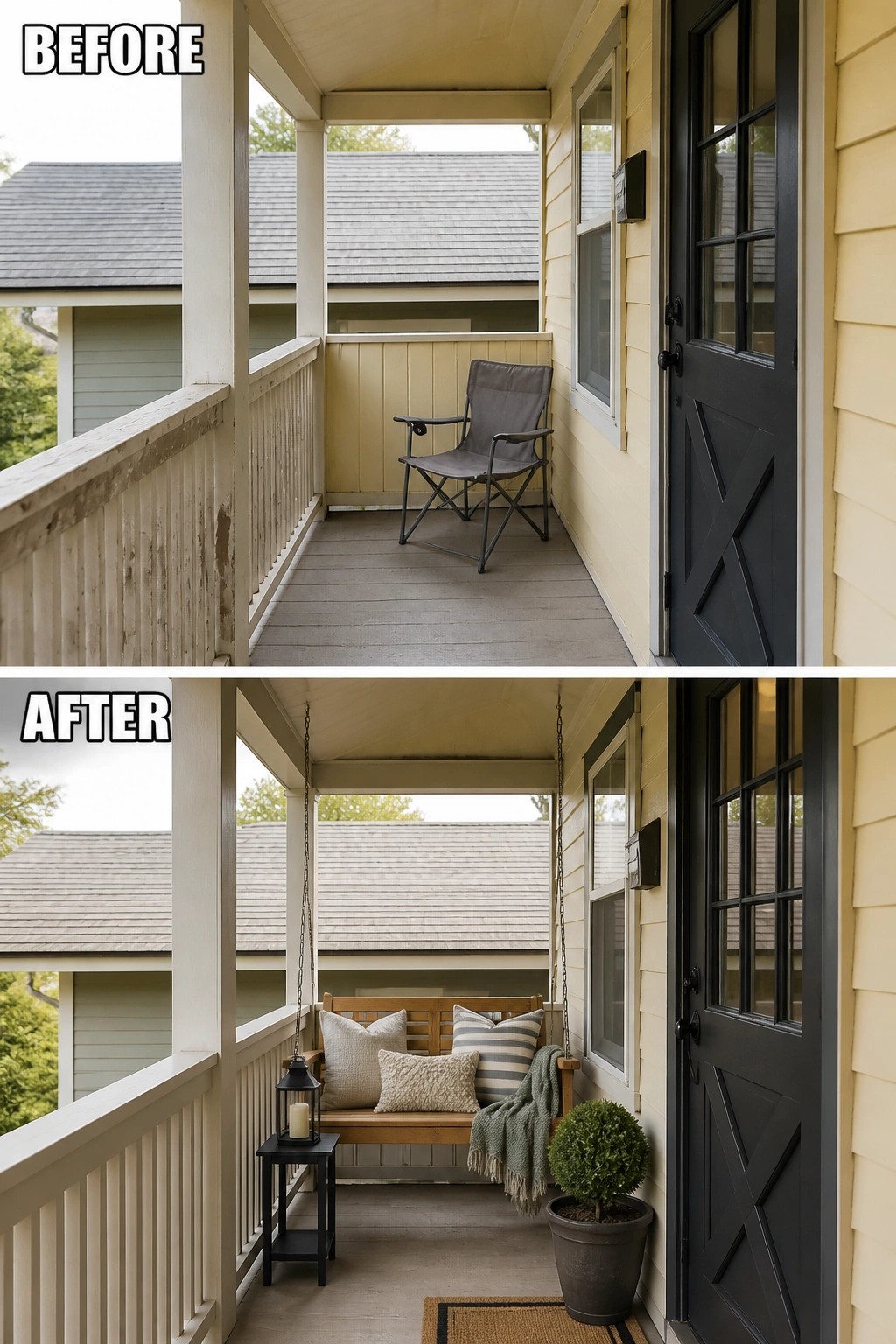
A small covered porch stops feeling like wasted space when you give it one clear use: a cozy seating spot for sitting, putting on shoes, or greeting guests. In this before-and-after the empty step becomes a defined entry with a hanging bench, a simple rug, a lantern, and a single potted plant—those few pieces anchor the area and make the porch feel intentional instead of just leftover space.
To copy this, choose one main piece of furniture that fits the width of your porch (a narrow bench or hanging swing works well) and build around it with a rug and one or two accessories. Keep scale realistic so the door can open and people can pass, pick weatherproof textiles, and add a light source near the seat for evening use. Works for small covered porches and ranch entries—start with cleanup, pick one focal piece, and keep the rest simple.
Highlight the Doorway with a Contrasting Door Surround
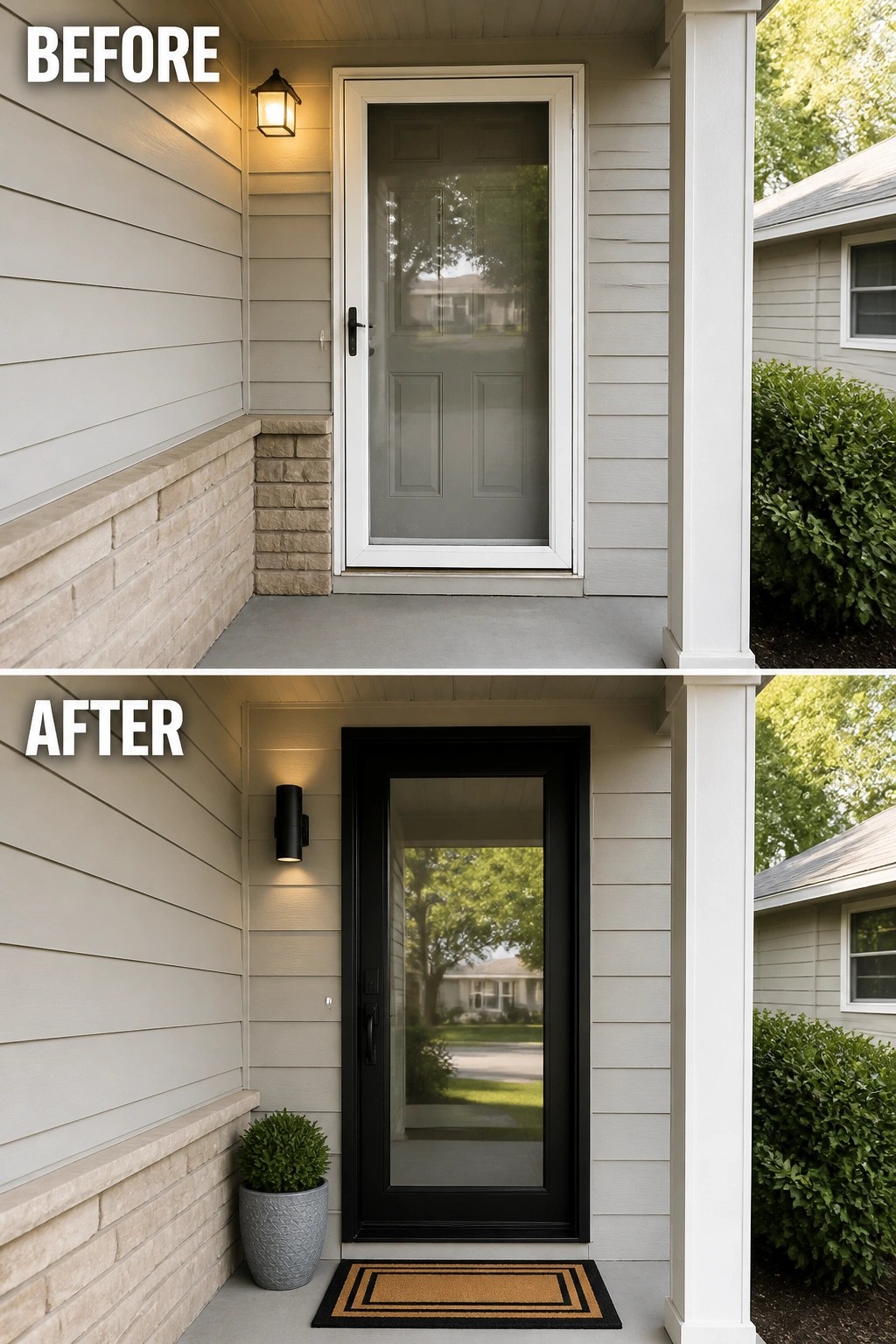
A quick way to stop an entry from feeling like dead space is to give it a clear purpose: a framed doorway people actually want to walk through. In this example a dark-painted door surround acts as the anchor while a single potted plant adds scale and a human touch, turning a plain stoop into a purposeful entry you notice.
To copy this, pick one bold, low-effort focal change first—paint the door or trim in a contrasting color or swap the light fixture—and then add one or two durable accessories like a small planter and a weatherproof doormat. Keep the pieces small so the porch still feels roomy, choose materials made for sun and rain, and make sure there’s enough clearance for the door to open.
Frame the Entry with a Low Built-In Raised Planter
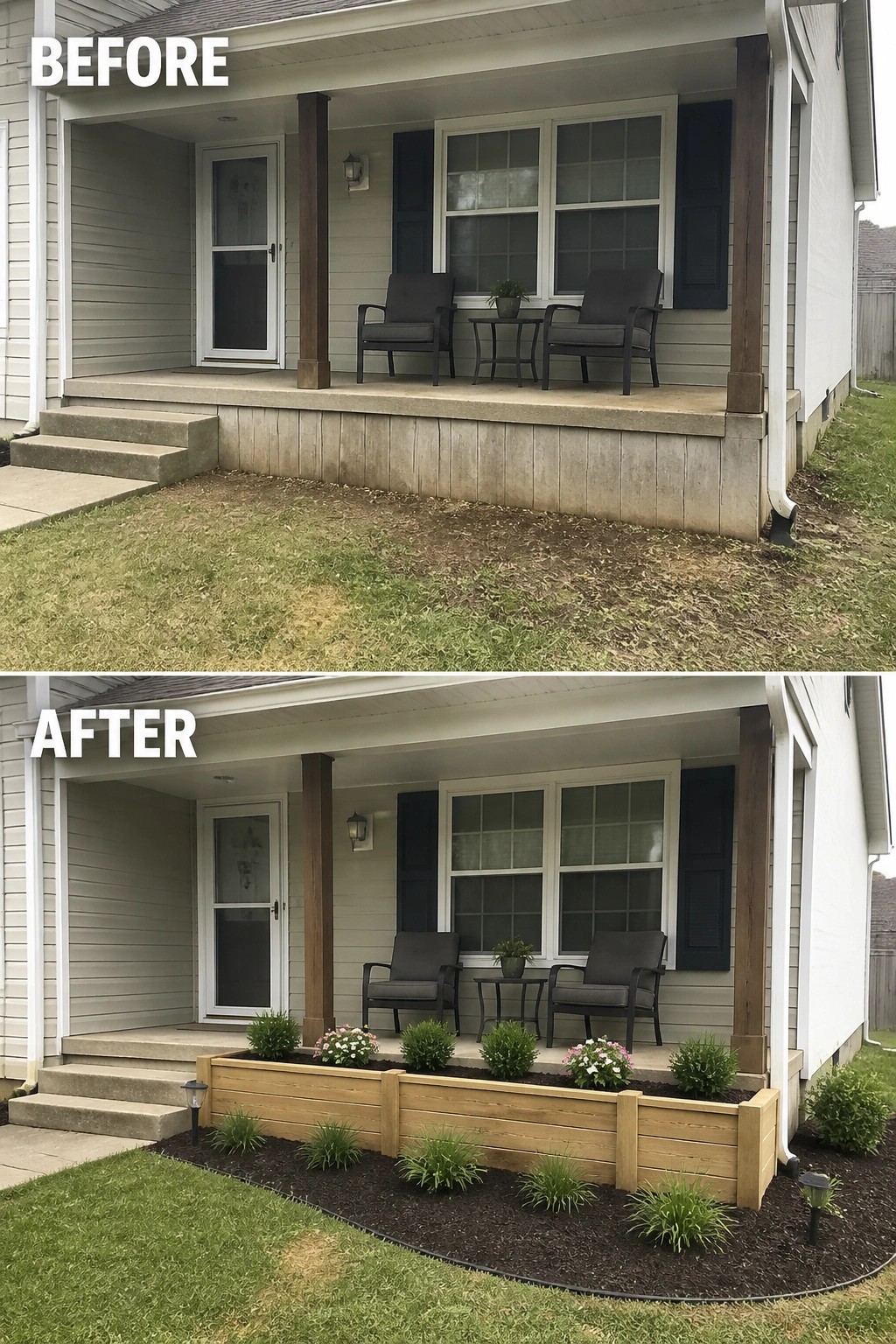
A low, built-in planter is an easy way to stop a small covered porch from feeling like a leftover slab. Replacing the plain skirt with a simple wooden raised bed frames the entry, brings in color and texture, and makes the seating area read as a usable spot instead of wasted space.
To copy the idea, keep the planter low and in scale with your steps so sightlines and door access stay open. Use rot-resistant wood or composite, fill with well-draining soil, plant a mix of small evergreens and seasonal flowers, and finish with dark mulch and a couple of pathway lights for evening use. It works particularly well on modest ranch porches where you want a tidy, low-effort upgrade that improves curb appeal and actually gets used.
Add Shelter and Privacy with a Slim Screened Enclosure

Framing a small covered porch with a slim screen or glass enclosure and adding a simple bench turns a limp entry into a useful, usable space. Swapping the open railing for a dark, low-profile frame gives the porch a defined edge and a clear function — a place to sit, drop packages, or remove muddy shoes before you step inside.
This works best on ranch-style homes with an existing roofed landing where you want a bit more shelter and privacy but not a full remodel. Keep furniture small and weatherproof, choose a narrow frame so you do not lose light, and leave enough room for the door to open comfortably; a single focal seating piece and a mat are all you really need to make the porch pull double duty.
Upgrade the Porch with Wood Railings and Matching Treads
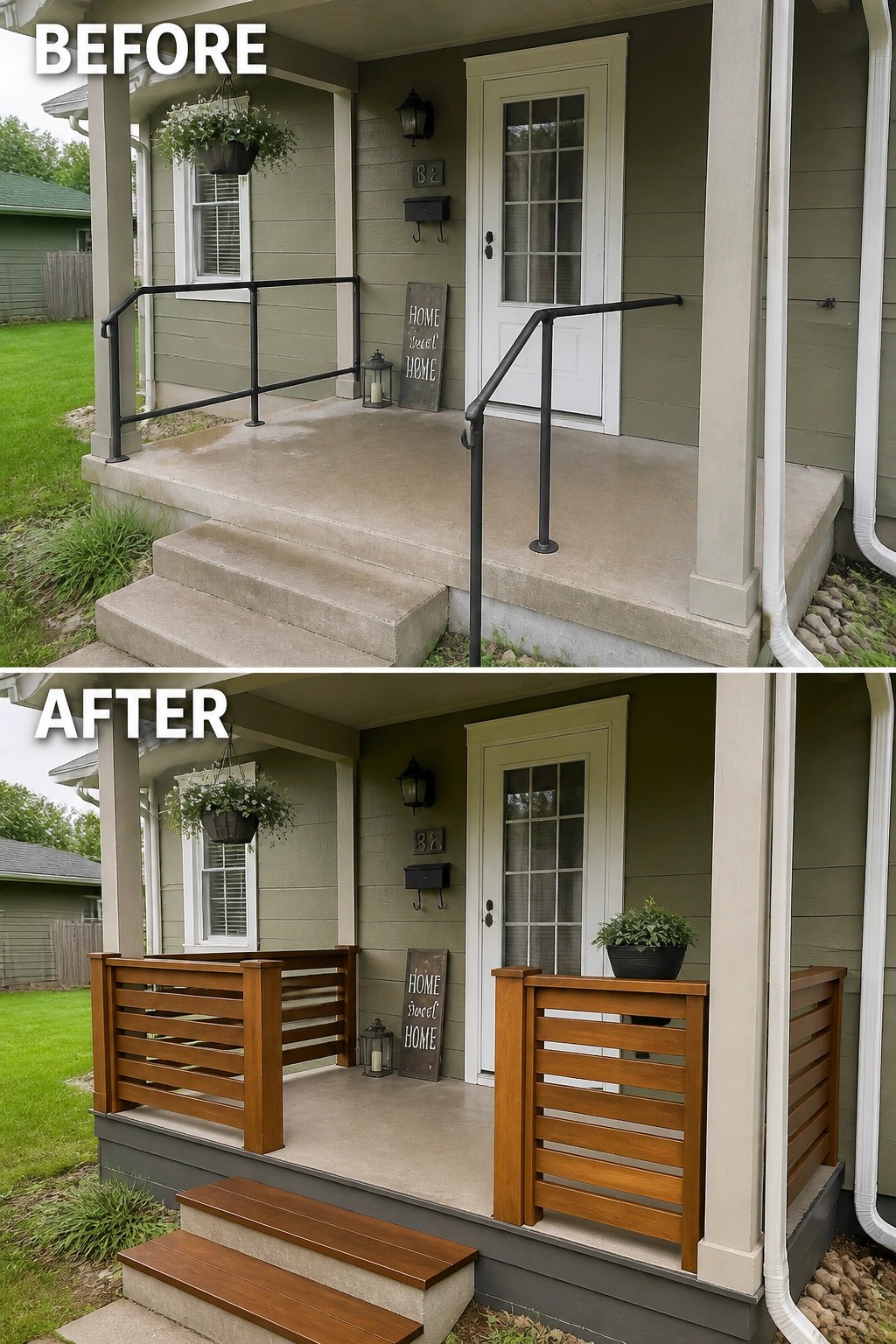
Swap out flimsy metal rails and plain concrete steps for a simple, solid railing and new treads to turn a bare porch into a defined entry you’ll actually use. Replacing the thin black bars with horizontal wooden rails and adding matching wood treads frames the landing, provides a sense of enclosure, and makes the small covered porch read as a purposeful outdoor room rather than just a walk-through.
This works well on ranch-style homes and any small covered porch where scale matters. Match the railing height to the porch depth, anchor posts into the concrete for safety, and choose rot-resistant wood or a durable composite (or stain fresh wood to protect it). Keep the layout uncluttered so the entry stays easy to pass and add one or two planters to finish the look. Simple, durable, and easy to replicate.
Use a Wall Sconce and Large Planter to Define the Doorway
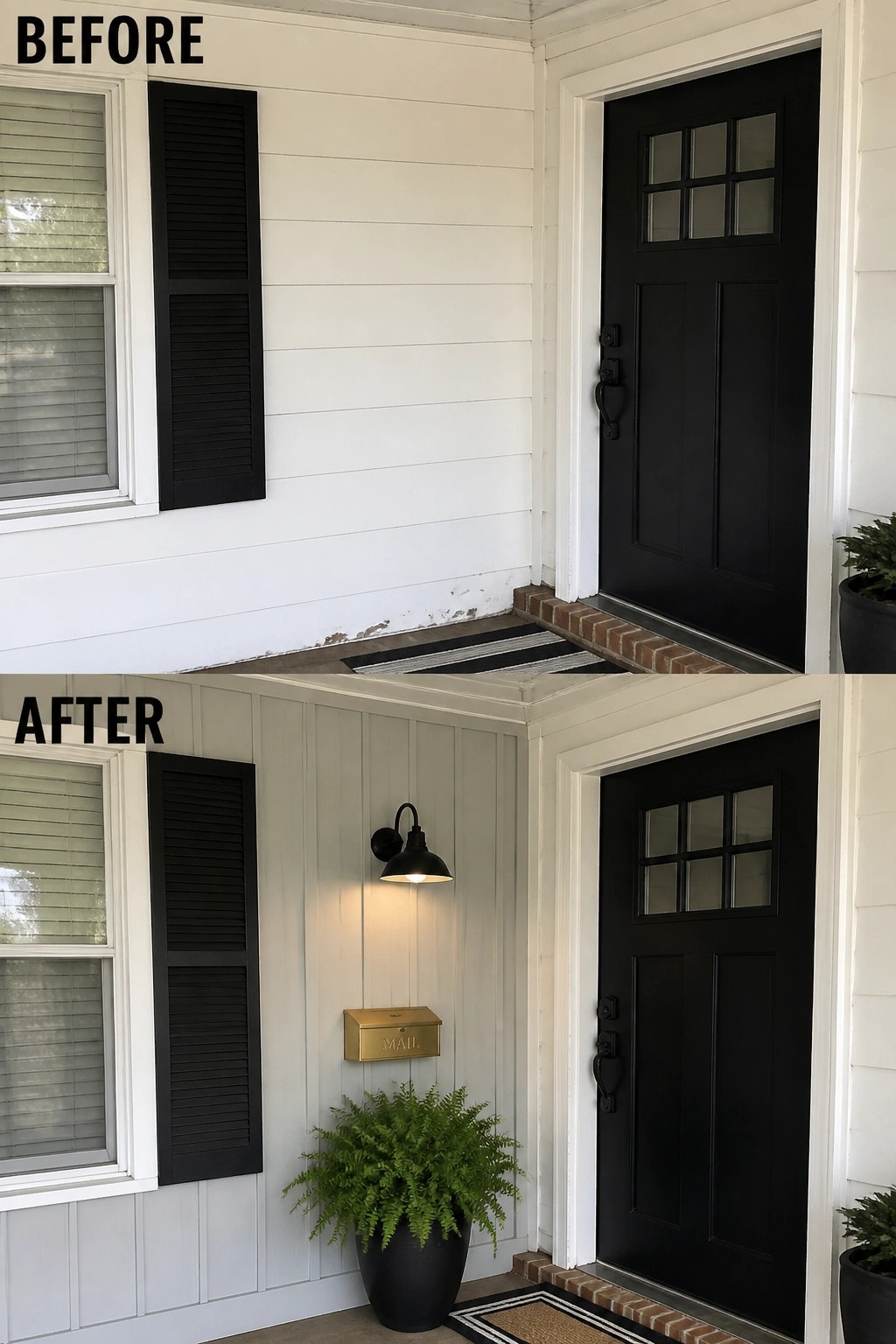
A small covered entry can go from forgotten to deliberate with one clear goal and a couple of functional accents. In this example the homeowner defined the doorway by adding a wall sconce and a large planter, which immediately signals where visitors should stand and makes the step feel used instead of empty.
To copy this, pick one focal improvement first — usually lighting or a mailbox — then add a single accessory like a planter and a rug to support it. Keep everything to scale for a narrow porch, choose weatherproof finishes, and leave the approach clear so the entry is easy to use. Less is better.
Refresh Concrete Steps with Painted Treads and Patterned Risers
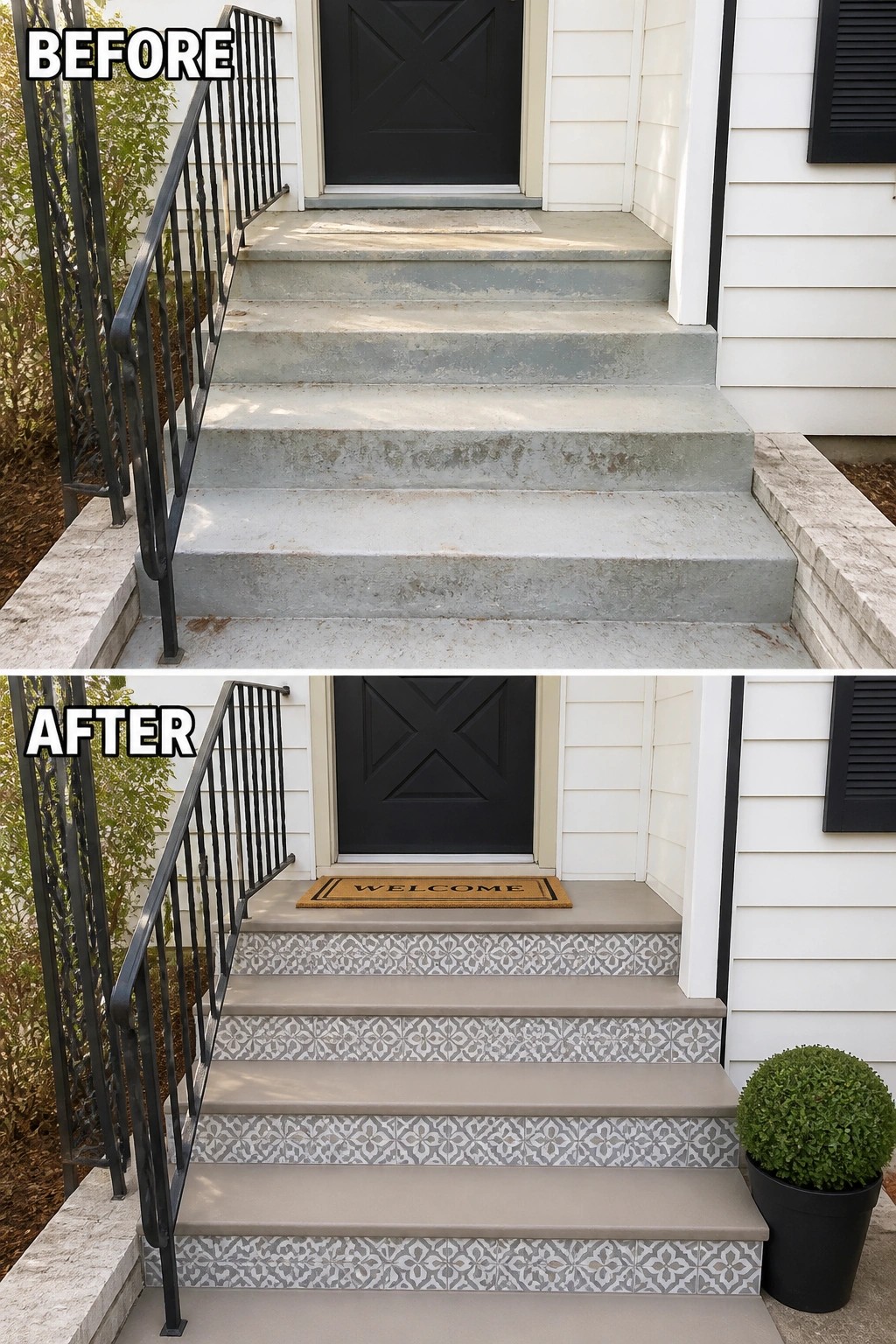
A few simple finishes can turn an anonymous concrete stoop into a proper front entry. Repainting the treads in a neutral tone and adding patterned risers (with a stencil, peel-and-stick tile, or paint) creates an intentional look and makes the small covered porch read as a usable, welcoming spot rather than leftover steps. A welcome mat and a single planter complete the idea without clutter.
To copy this, start with a good clean and use porch-grade paint plus a non-slip additive on the walking surfaces. Pick one repeatable pattern and colors that match the house so the change feels cohesive. If you want a low-effort route, try adhesive tile decals; for longer wear, use a stencil and exterior paint. Keep accessories minimal so the steps stay safe and easy to use.
Turn An Empty Porch Into A Usable Seating Area
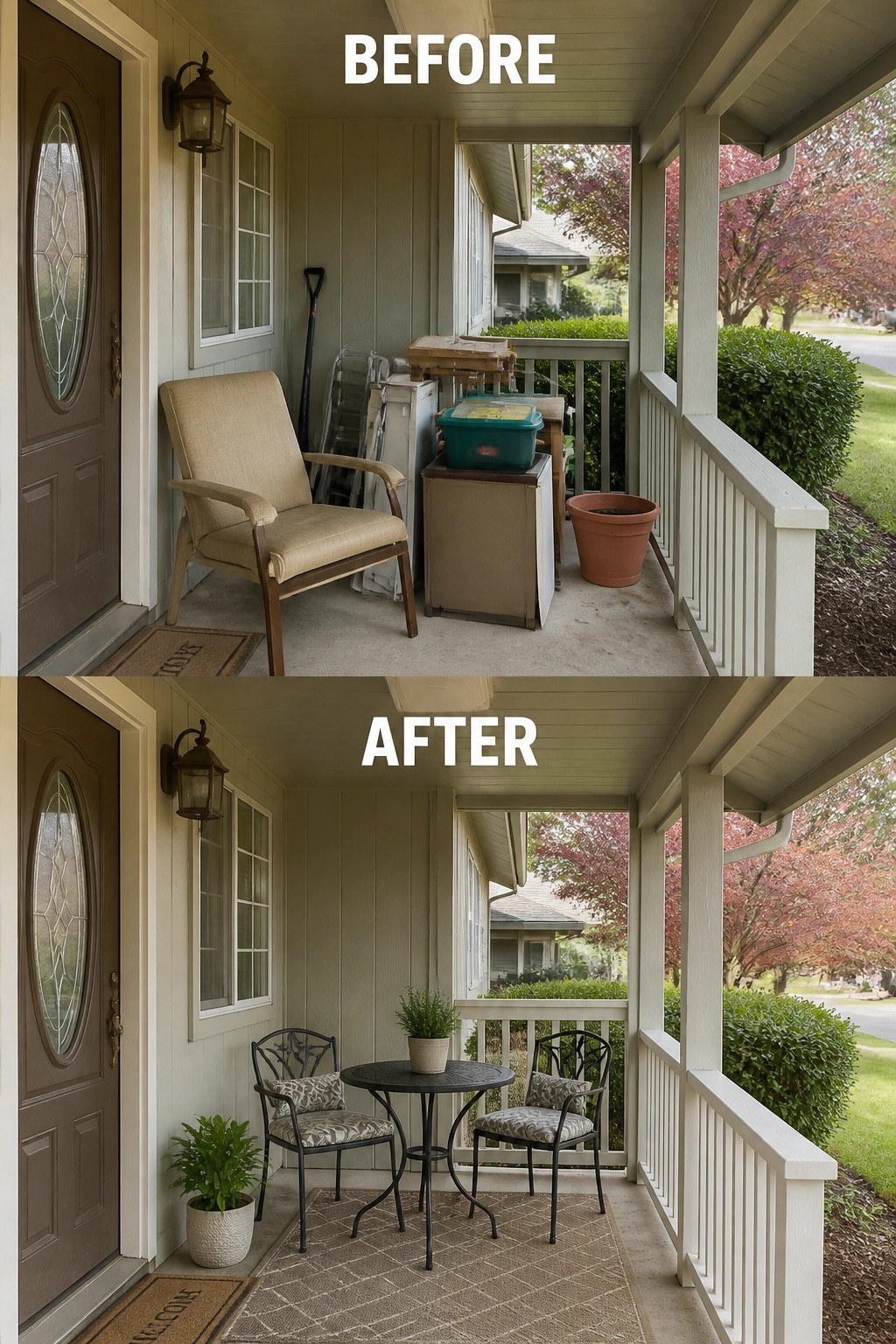
A small covered porch can go from cluttered to welcoming by clearing out storage and choosing compact, purposeful furniture. In this before-and-after the homeowner removed boxes and added a bistro table, two chairs, a simple outdoor rug, and a couple of potted plants to define a cozy seating nook that still leaves the entry usable.
To copy this at home, start with a clean sweep (get rid of what you don’t need or move it to storage). Pick furniture that matches the porch scale—a round bistro or small table and slim chairs work well—and add an all-weather rug to anchor the spot. Finish with one or two planters for greenery, and make sure there’s a clear path to the door so the space feels intentional, not crowded.
Turn An Empty Porch Into A Seating Area
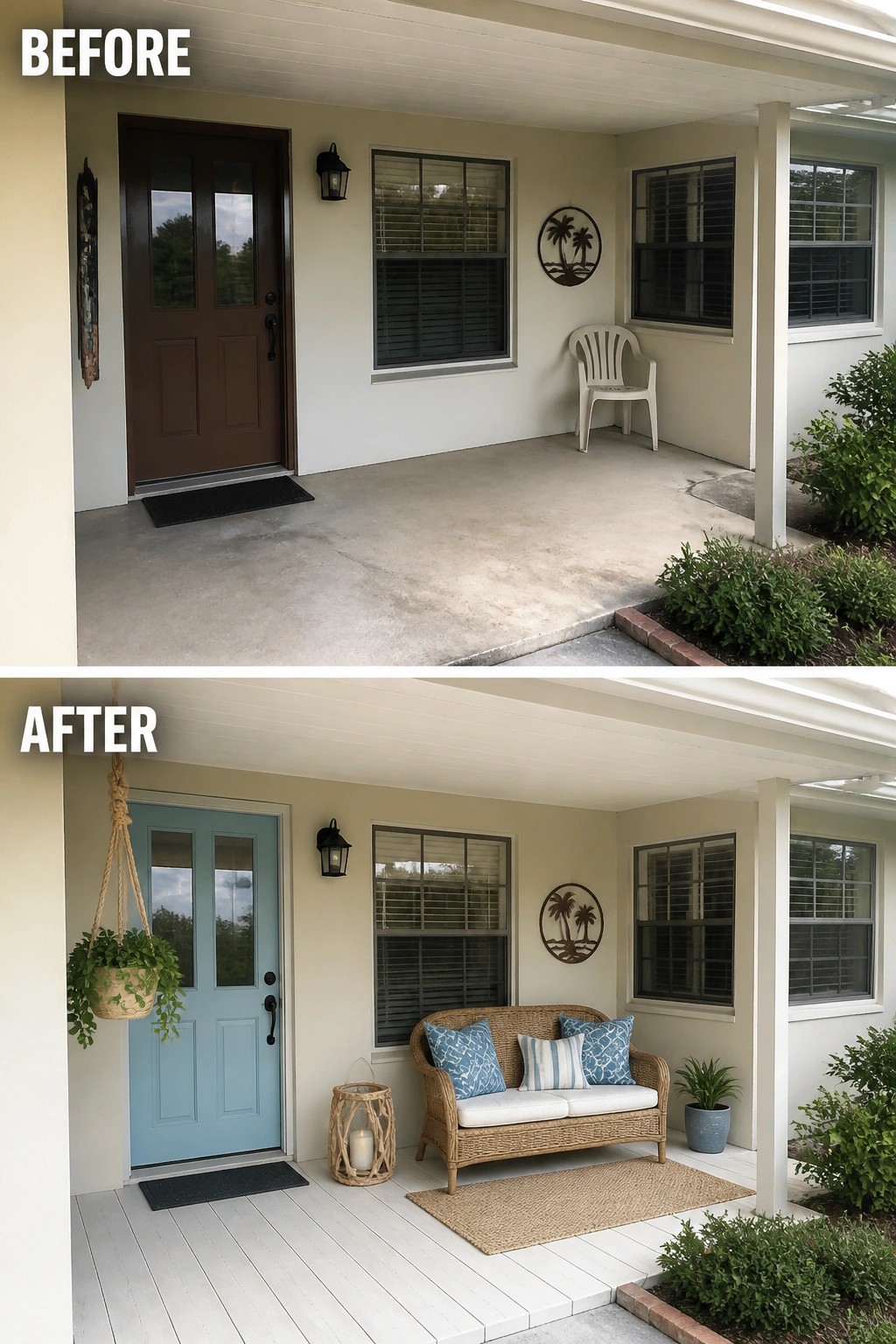
A small covered porch doesn’t need a big budget to become useful. Paint the door and the porch floor to give the space a fresh backdrop, then anchor a compact two-seat sofa with an outdoor rug so the entry reads as a deliberate sitting zone instead of leftover concrete. Just one piece of furniture and a rug change how the porch feels and how you use it.
Keep proportions small and materials durable. Pick a narrow loveseat or bench, choose weather-resistant cushions, and repeat one color from the door in pillows or a planter to tie things together. Add a hanging plant or a lantern for vertical interest but leave a clear path to the door (leave room to move). Simple, practical choices make a porch feel welcoming without crowding it.
Hide Utility Clutter with a Slatted Screen and Wall Planters
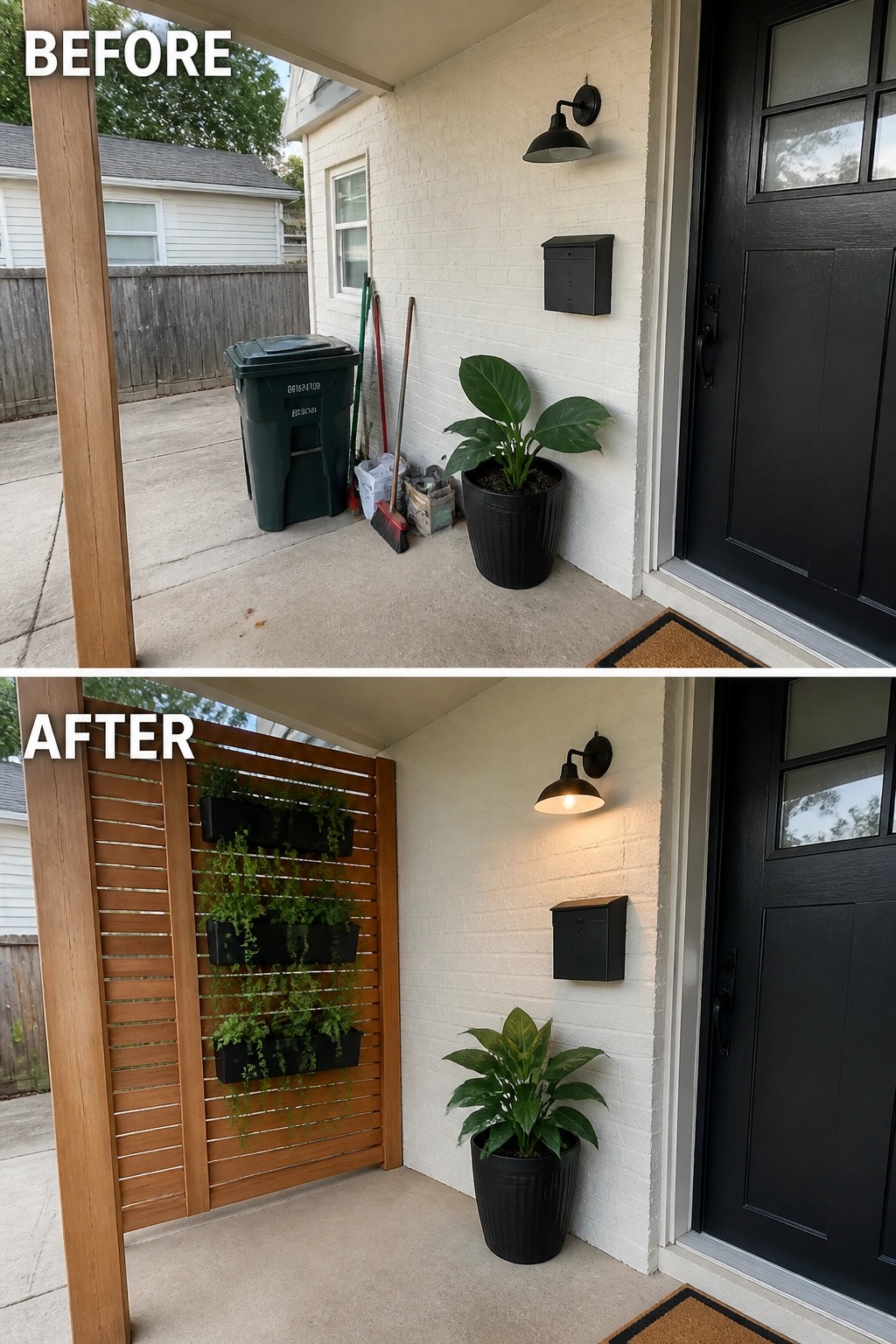
A narrow slatted screen and a few wall planters can turn an undefined entry into a purposeful little porch. In this example a wood slat divider was added and the trash and tools were cleared away, which immediately defines the doorway, hides utility clutter, and gives a spot for greenery that reads like intentional design rather than random storage.
Use this trick on any small covered porch where you need privacy or to hide functional items. Build a slim freestanding or anchored slatted panel that leaves room to pass, pick rot-resistant wood or composite, and add shallow wall planters or trailing plants so you get green without taking floor space. Keep one larger planter by the door as an anchor, make sure planters drain where water won’t splash the entry, and avoid crowding the path to the door.
Coordinate Painted Trim and Columns with a Statement Sconce
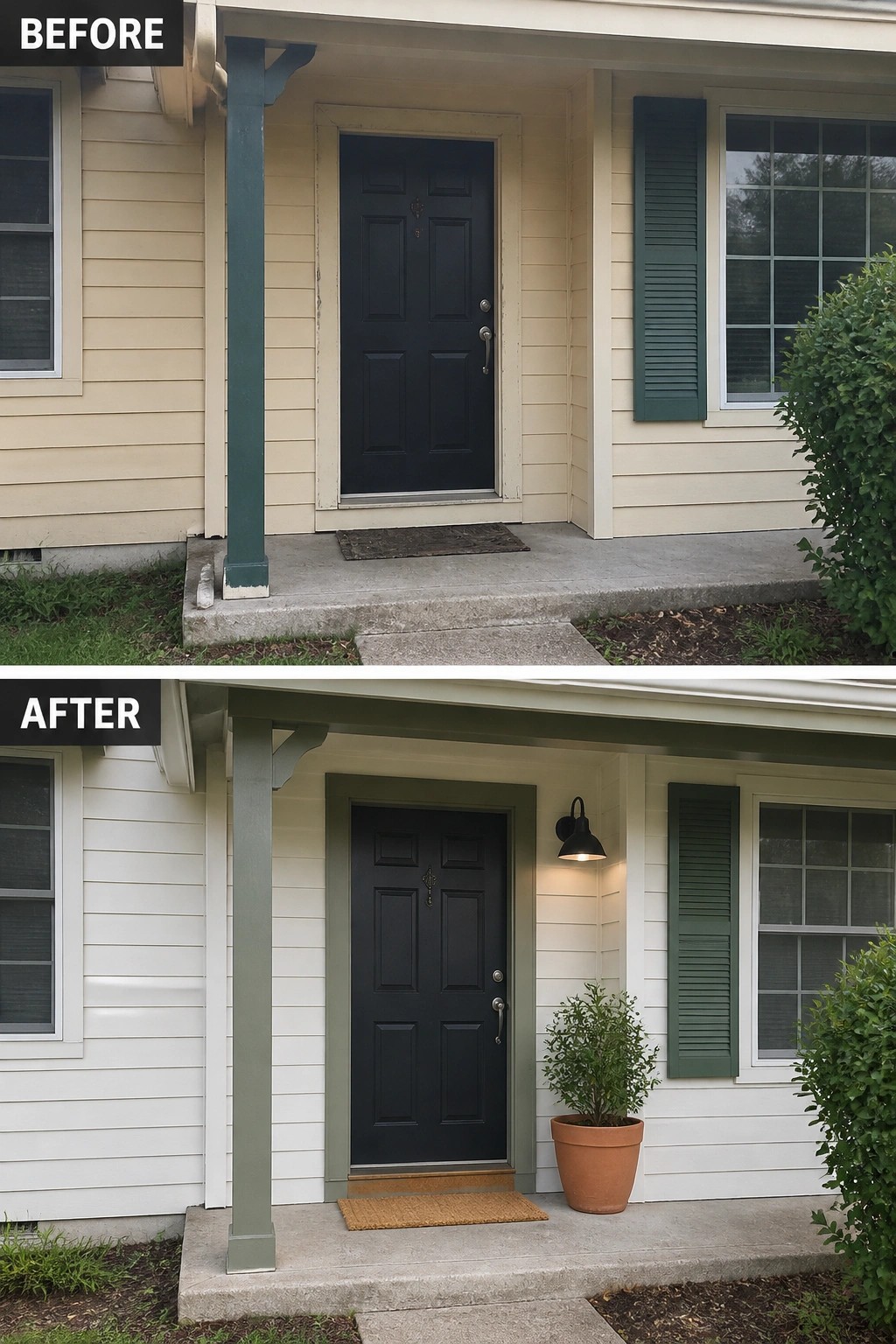
A small covered porch doesn’t need a lot to feel finished. In this example the entry gets a quick boost with painted trim and column plus a simple wall sconce and a single large planter. Those few, well-chosen moves turn a plain concrete step into a purposeful landing that looks cared for rather than neglected.
To copy the idea, start with paint: pick one coordinating color for the door trim and porch post to make the entry read as a single element. Add one weatherproof light at eye level and one planter or basket on the side instead of many small items. Keep pieces scaled to the porch so the door can still open and you have room to step, and choose low-maintenance plants for an easy, year-round look.
Upgrade Ranch Entry Steps with Stone Facing and Wood Treads
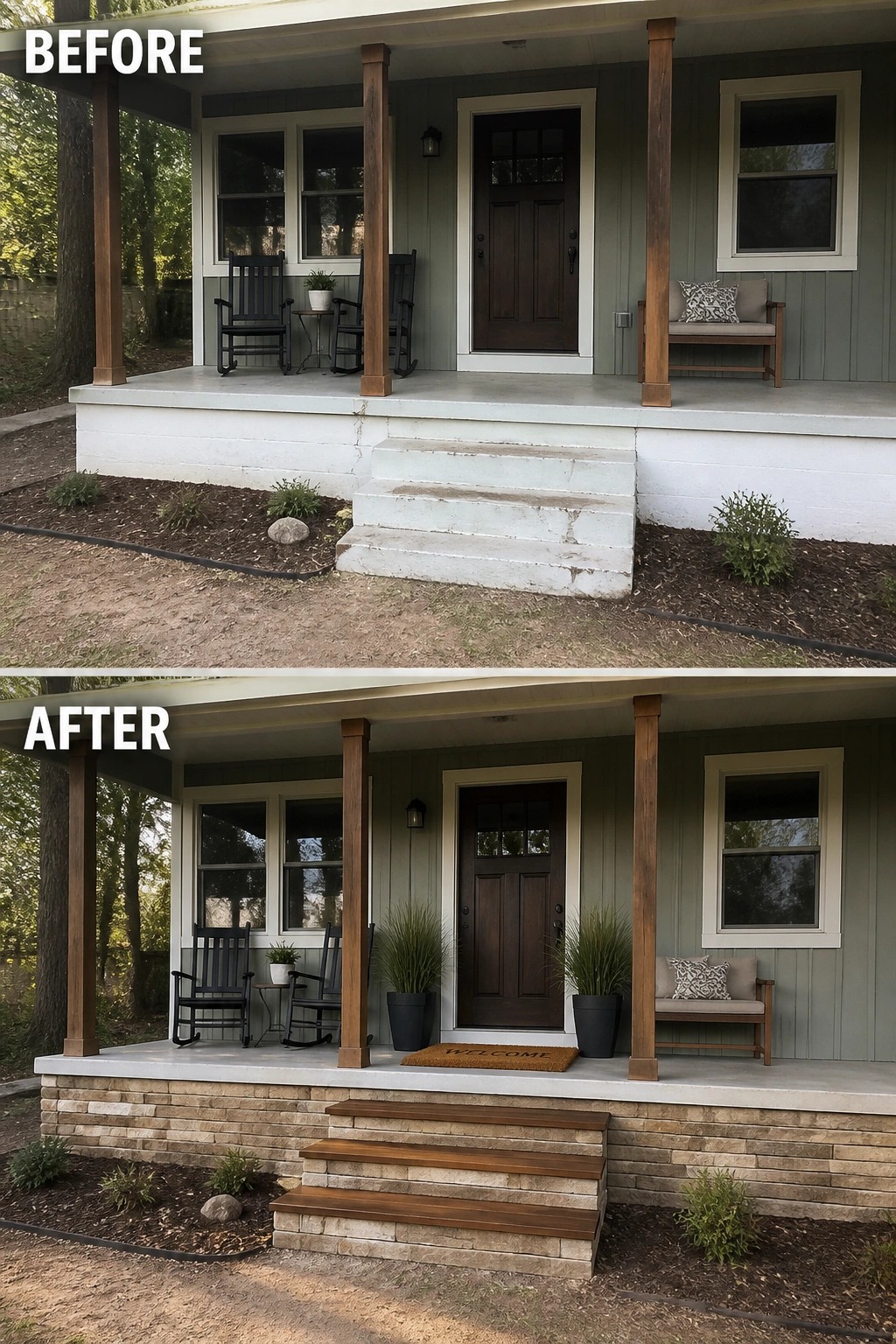
A simple porch can feel useful the minute you give it purpose: a defined entry with real steps, a pair of planters, and a small rug turns a blank slab into a welcoming spot. In this example the plain concrete risers were faced with stacked stone and the worn steps were replaced with trimmed wood treads, then flanked with matching planters and a welcome mat to make the door feel like the focal point.
To do this at home, pick one durable change as your anchor — stone or brick facing, nicer treads, or a pair of tall planters — and keep the rest restrained so the porch stays easy to maintain. Use materials that match your house, size the steps for comfortable movement, and leave room for people to pass. Small covered porches, ranch entries, and older homes all benefit from one clear upgrade that signals “this is an entrance.”
Frequently Asked Questions
Q: What’s the easiest way to choose seating for a tiny covered ranch porch?
A: Measure your width first and pick narrow-profile pieces — a slim bench or a two-person bistro set fits better than bulky chairs. Look for multi-use items with storage (like a bench that hides cushions) so you get seating and function without crowding the space.
Q: Which plants will actually thrive on a covered porch?
A: Go with shade-tolerant, low-water plants like ferns, snake plants, or pothos if sunlight is limited. Use hanging baskets and tall pots to add greenery without taking up floor space, and choose sauced planters to protect the porch surface from drips.
Q: How can I add better lighting without hiring an electrician?
A: String solar or battery-operated lights, use plug-in lanterns if you have an outlet, or mount stick-on battery LED puck lights to the ceiling for soft overhead glow. Warm-toned bulbs and layered light sources make the porch feel cozy and welcoming at night.
Q: I want a quick, cheap makeover—what should I do first?
A: Swap out the doormat, add a fresh coat of paint to the door, and trade old cushions for bright, weatherproof ones to change the whole vibe. Those small swaps make a big difference without a big budget.