

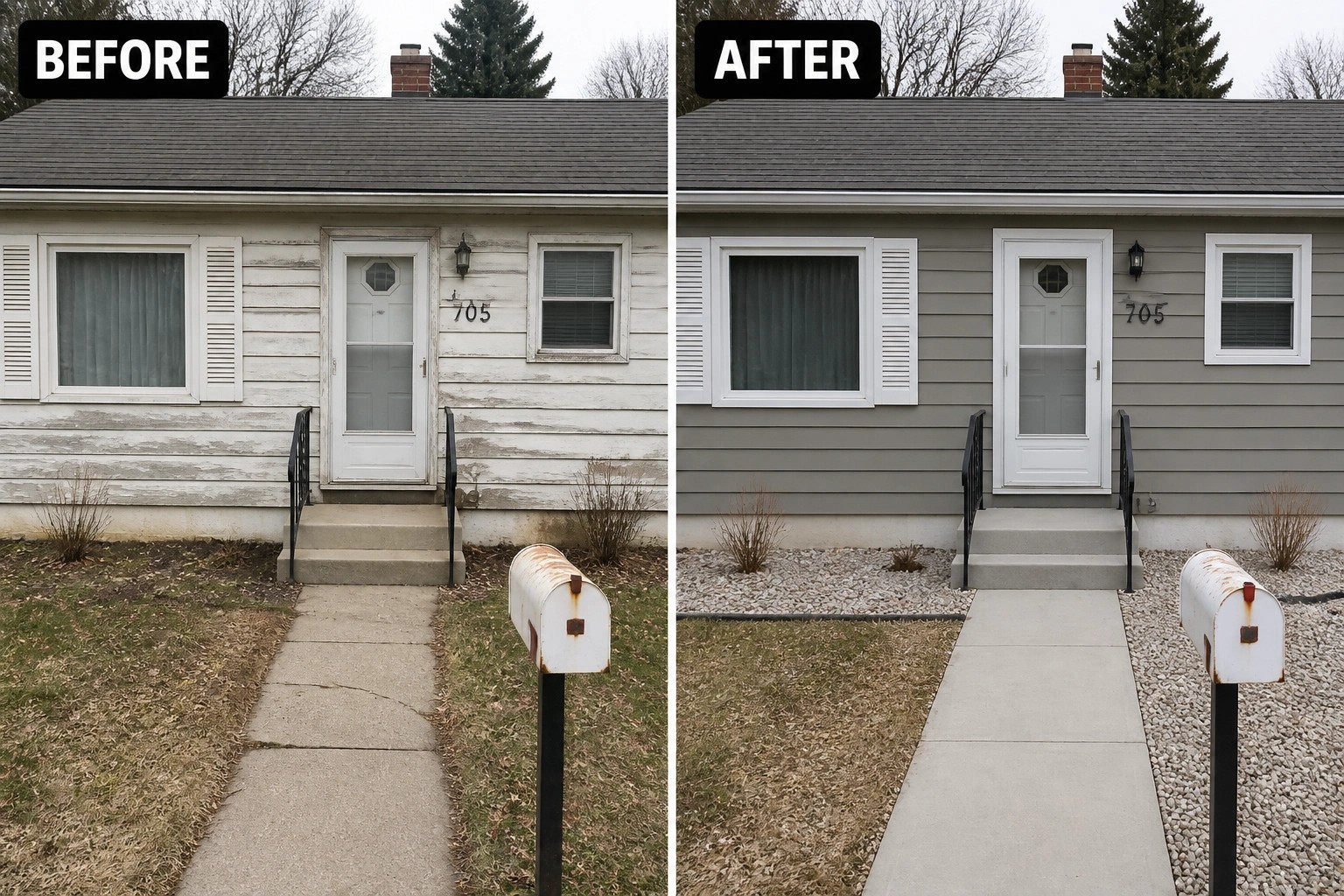
Ranch-style homes have calm, horizontal lines that can start to look weary if paint peels, gutters clog, or porch details are neglected, so I focus on exterior updates that boost curb appeal and cut down on ongoing chores.
Simple choices like durable siding, a low-maintenance front porch surface, weatherproof trim, and efficient gutters often change how a facade reads without requiring a full renovation.
I usually test one modest change first, such as a new front door color, a longer-lasting porch light, or slightly regraded plant beds, because those fixes tell me whether the house will stay easier to care for.
Less upkeep, more practicality.
These ideas are meant to be saved, adapted, and tested so you can get the quiet satisfaction of a clearly cared-for exterior without the stress of big projects.
Replace A Water-Hungry Lawn With Turf And Gravel Beds
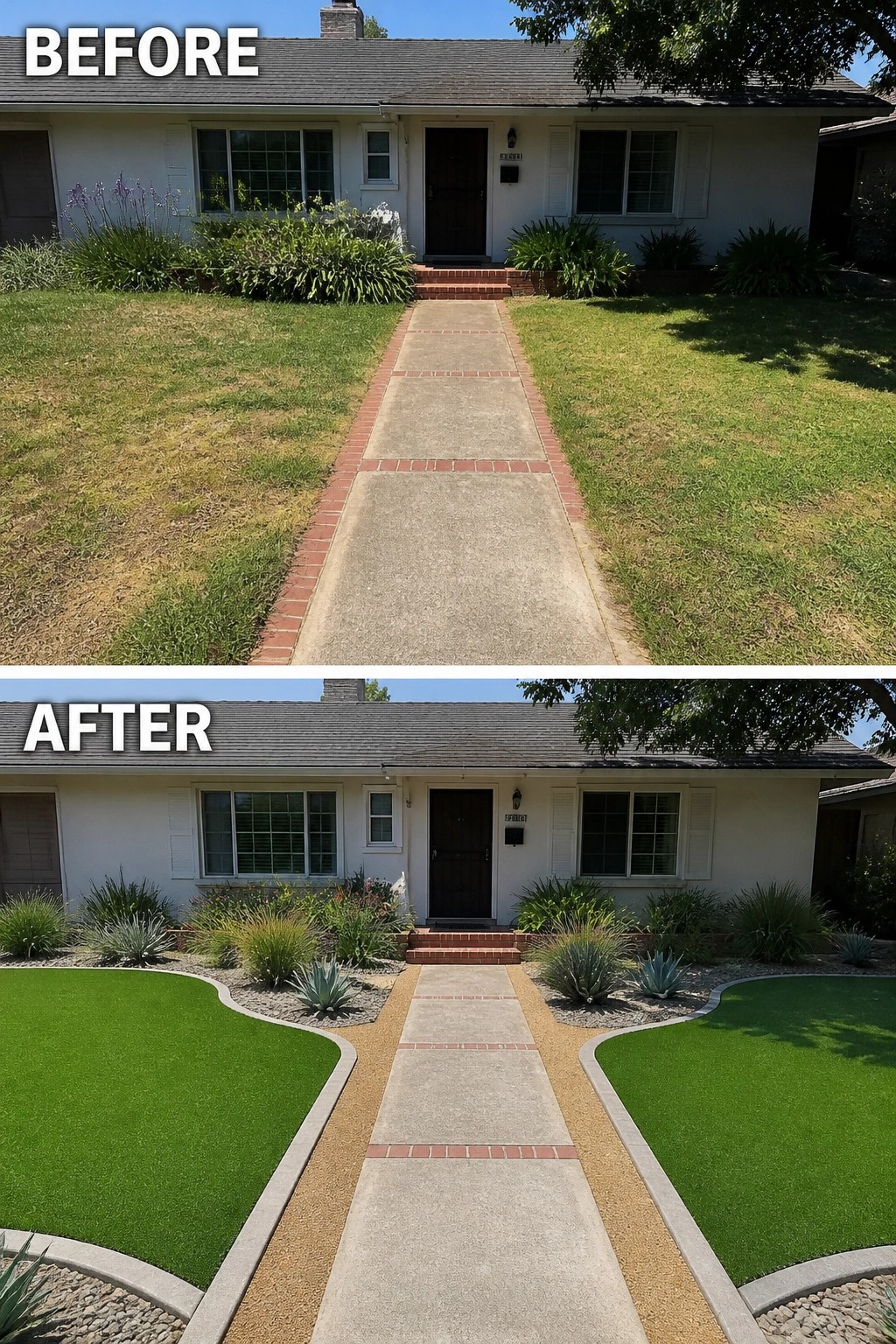
Swap an uneven, thirsty lawn for low-maintenance artificial turf framed by gravel planting beds and crisp edging. Replacing patchy grass with synthetic turf and a strip of decomposed granite or pea gravel around the walk makes the front yard look intentional and keeps routine chores like mowing and heavy watering off your to-do list.
This approach works well for sunny, smaller ranch lots where you want clean curb appeal without constant upkeep. Focus on proper base prep for the turf, install durable edging to separate gravel from turf, and choose a few drought-tolerant shrubs or succulents to add texture—then plan for light upkeep only (occasional rinsing and trimming) rather than weekly lawn care.
Add A Low-Maintenance Planting Strip Along The Driveway
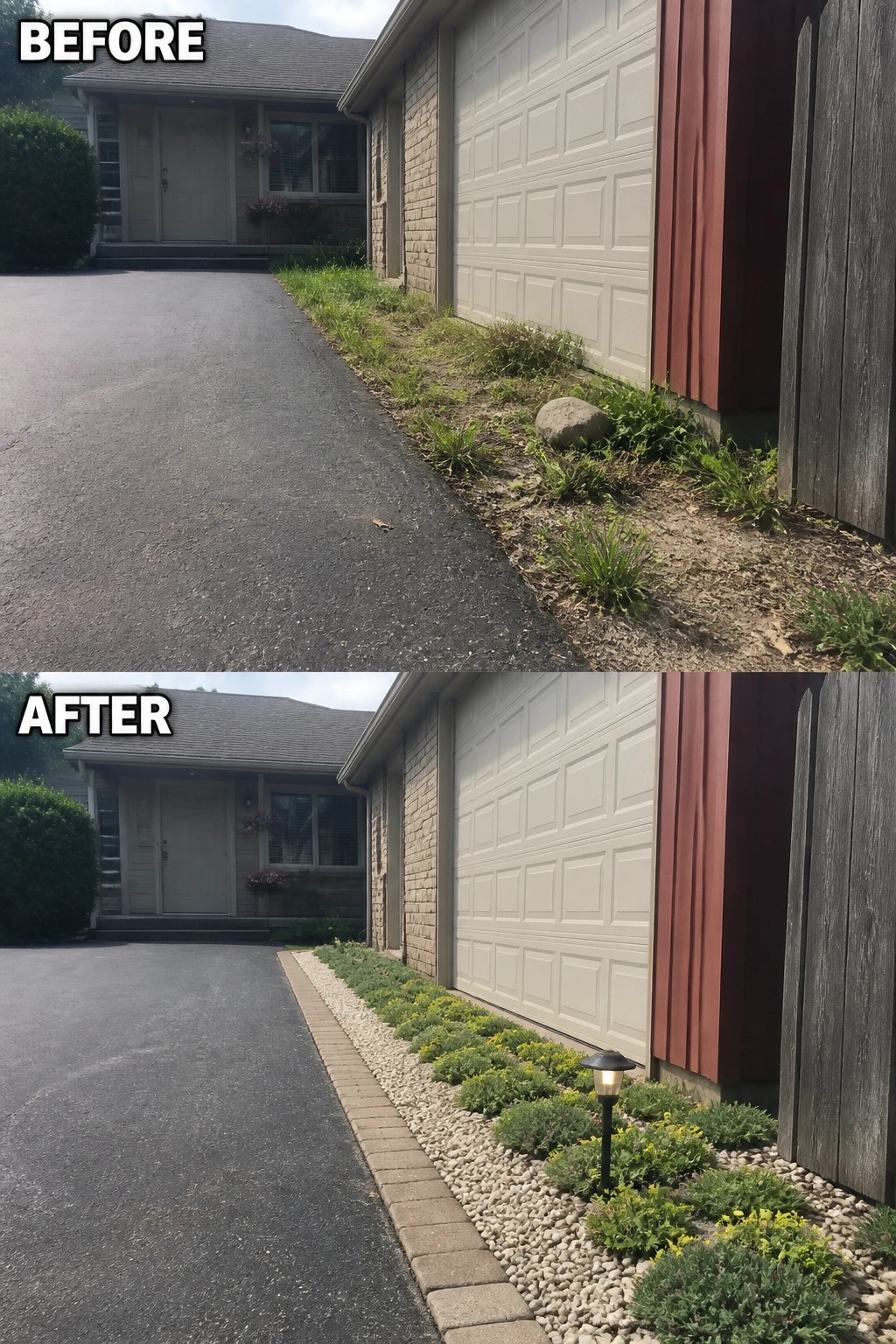
Turn a weedy, narrow strip into a tidy, low-upkeep border that frames the driveway and hides bare soil. In the after photo the messy grass was replaced with a row of paver edging and a gravel bed planted with low-growing groundcover—simple, neat, and easy to maintain. That clean edge keeps mower and weed growth off the pavement and gives the house a finished look without daily care.
To copy this, start by removing weeds and laying a crisp paver or brick edge to define the bed. Add landscape fabric, then a layer of pea gravel or small river rock, and plant drought-tolerant, low mounding groundcovers spaced for their mature size (use plants suited to your zone). Keep the bed narrow so it stays manageable, and consider a few solar stake lights if you want nighttime visibility. (Watch drainage and leave access for garage and gutter work.)
Install A Low-Maintenance Privacy Fence
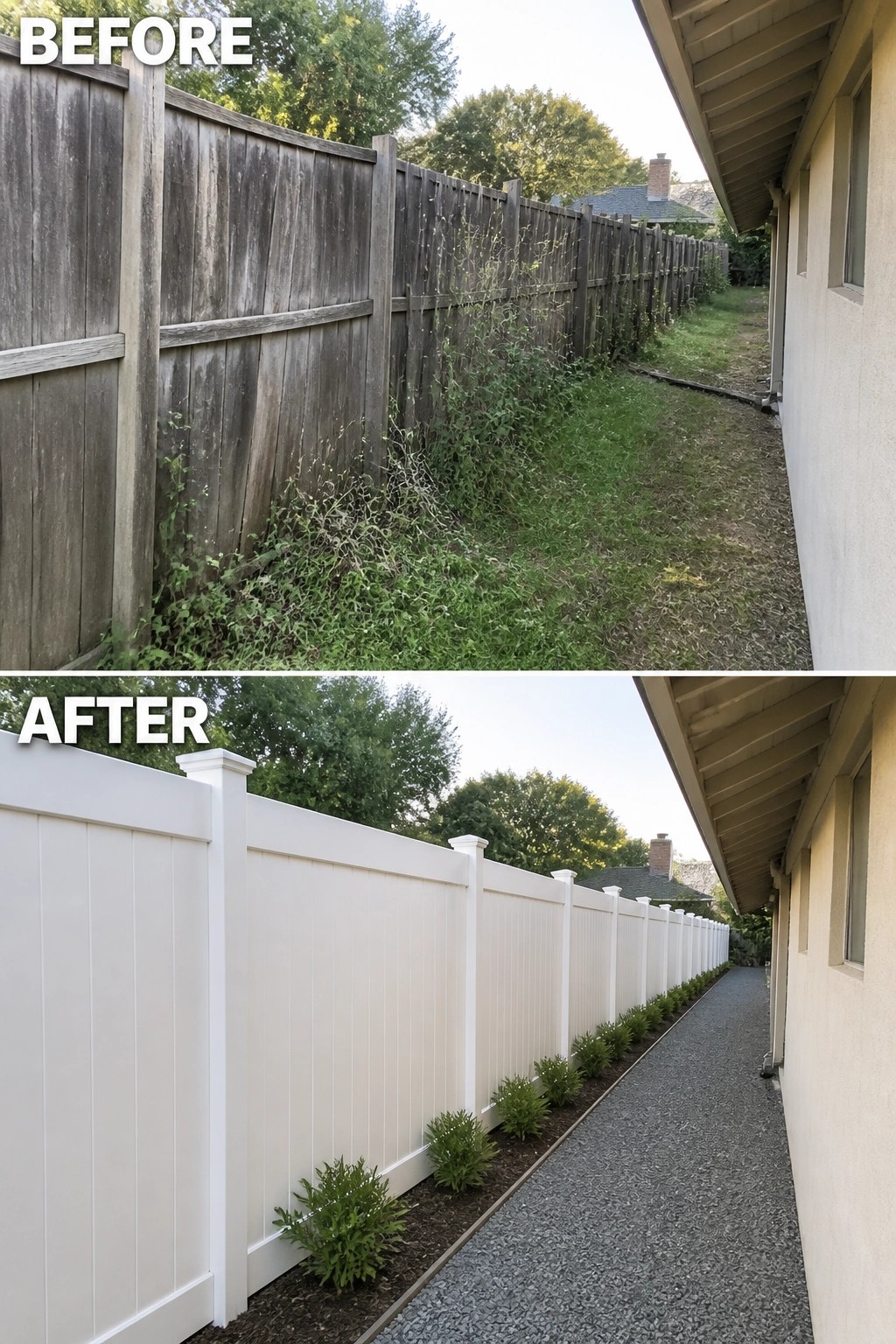
Swapping a weathered wood fence for a vinyl privacy fence is one of the easiest ways to cut upkeep around a ranch. A solid-panel fence stops vines and rot, removes the need for annual staining, and immediately makes a skinny side yard feel tidy and intentional—especially when paired with a narrow gravel path and a simple planted border.
When planning this upgrade, pick durable PVC or composite panels and posts sized for your local wind and soil conditions. Keep the planting simple: a mulch or gravel strip and low shrubs that don’t need frequent trimming will reduce mowing and watering. A light-colored fence will brighten tight runs beside the house, and a gravel access path makes maintenance painless.
Update Window Trim With Low Maintenance Materials
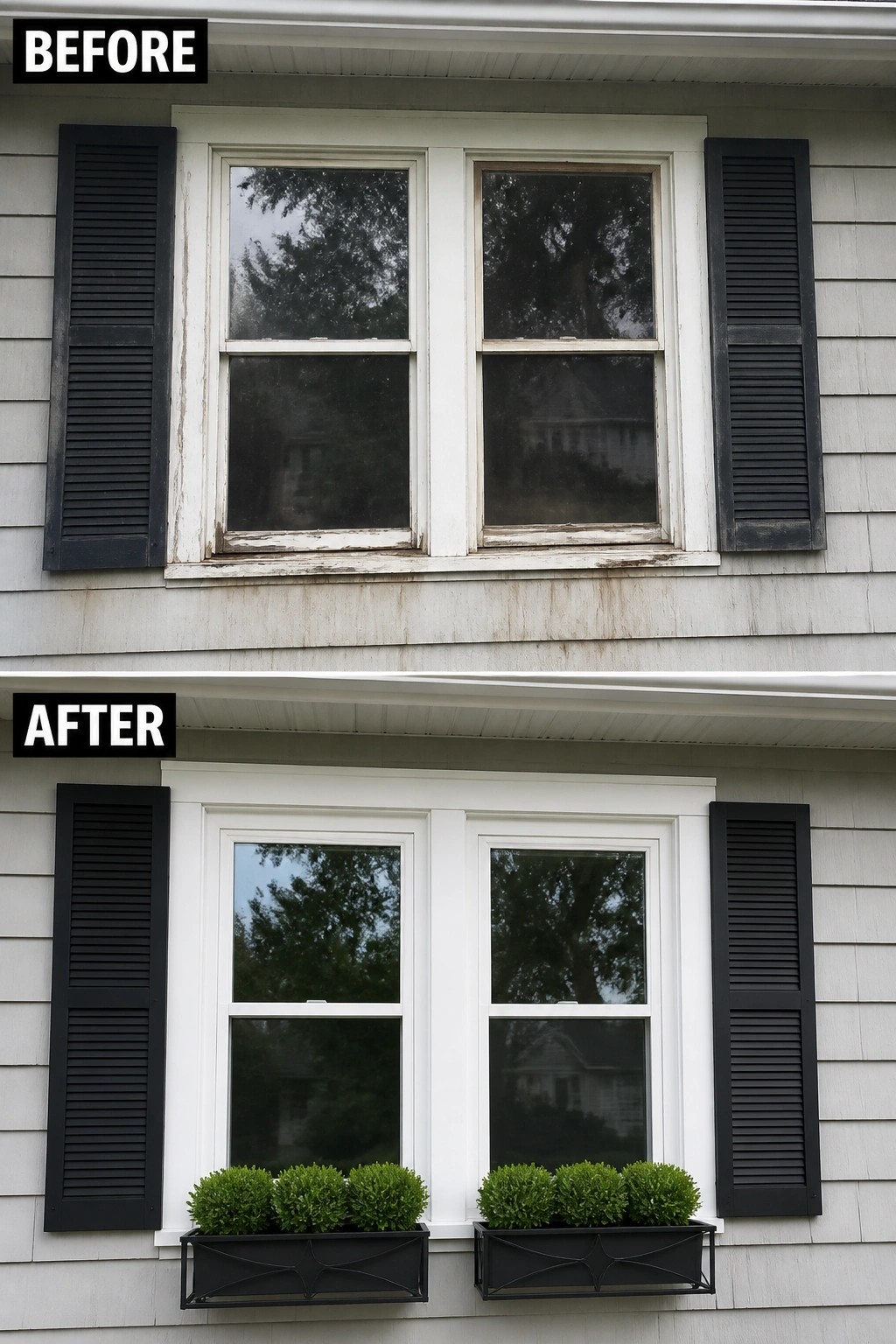
Swapping old, rotted wood trim for clean, low-maintenance trim instantly refreshes a ranch facade and cuts future upkeep. In this example the tired, peeling window surround was replaced with crisp white, prefinished trim and paired with simple shutters and window boxes for a neat, finished look without fussy detailing.
Do the work once and make it easier later: choose PVC, cellular PVC, or fiber-cement trim that resists rot and needs little repainting, and make sure flashing and caulking are done correctly so water stays out. Add removable metal or plastic window boxes and stick-to-seasonal plantings (or evergreen boxwoods) so you get curb appeal without constant gardening—great for older ranch homes where a few focused updates go a long way.
Make A Bare Porch Low-Maintenance
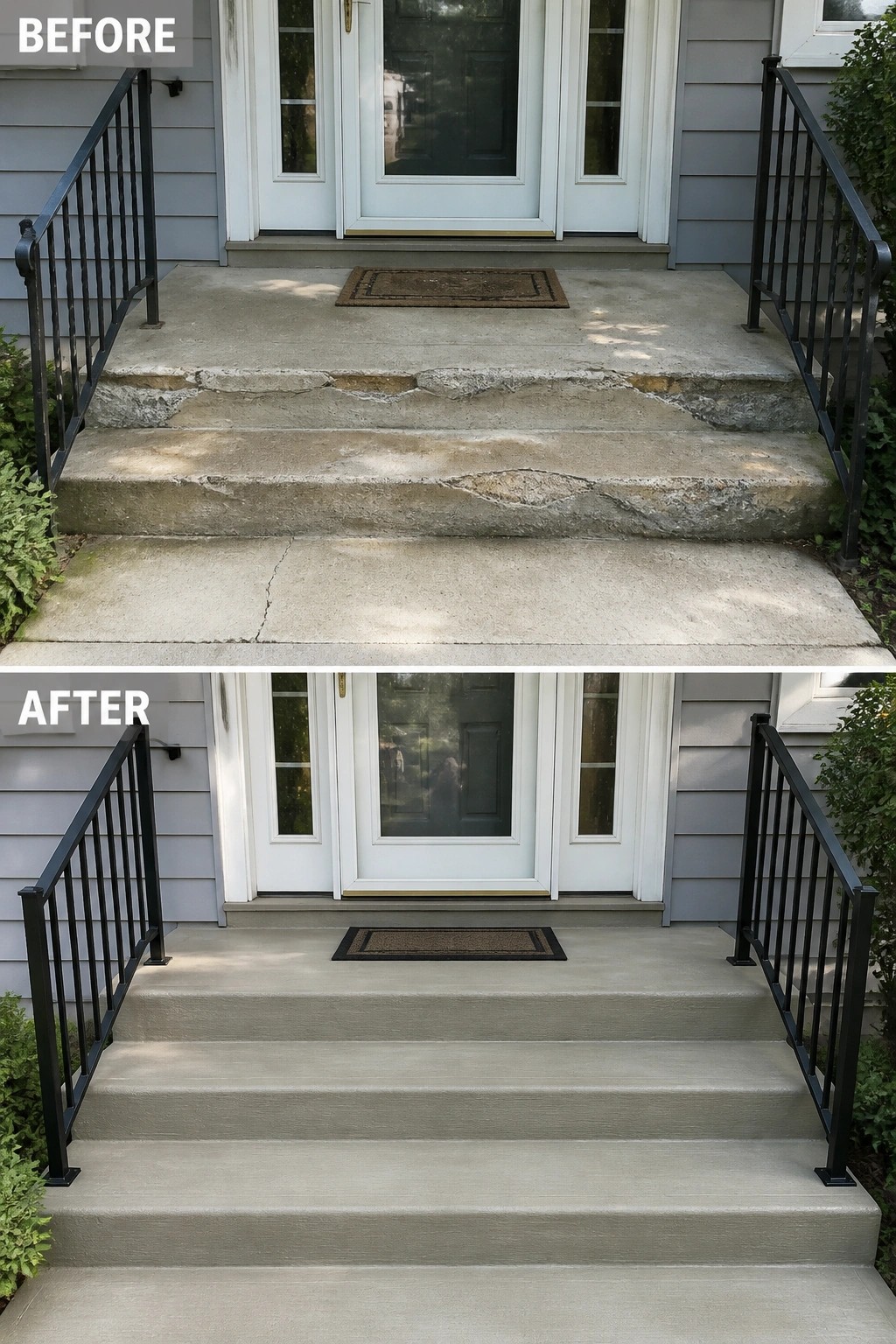
A crumbling concrete stoop makes maintenance feel endless. Repairing and resurfacing the steps into a smooth, sealed surface (and freshening the metal railings) gives the entry a tidy, durable finish that only needs occasional sweeping and resealing instead of constant patching.
Start by addressing any deep cracks or loose pieces, then use a concrete resurfacer or microtopping in a neutral tone, with a non-slip additive on tread edges. This approach suits simple ranch entries with exposed concrete—keep styling minimal (one mat, a clean railing) and plan to reseal every few years so the low-maintenance benefit lasts.
Refresh The Lower Facade With Stone Veneer
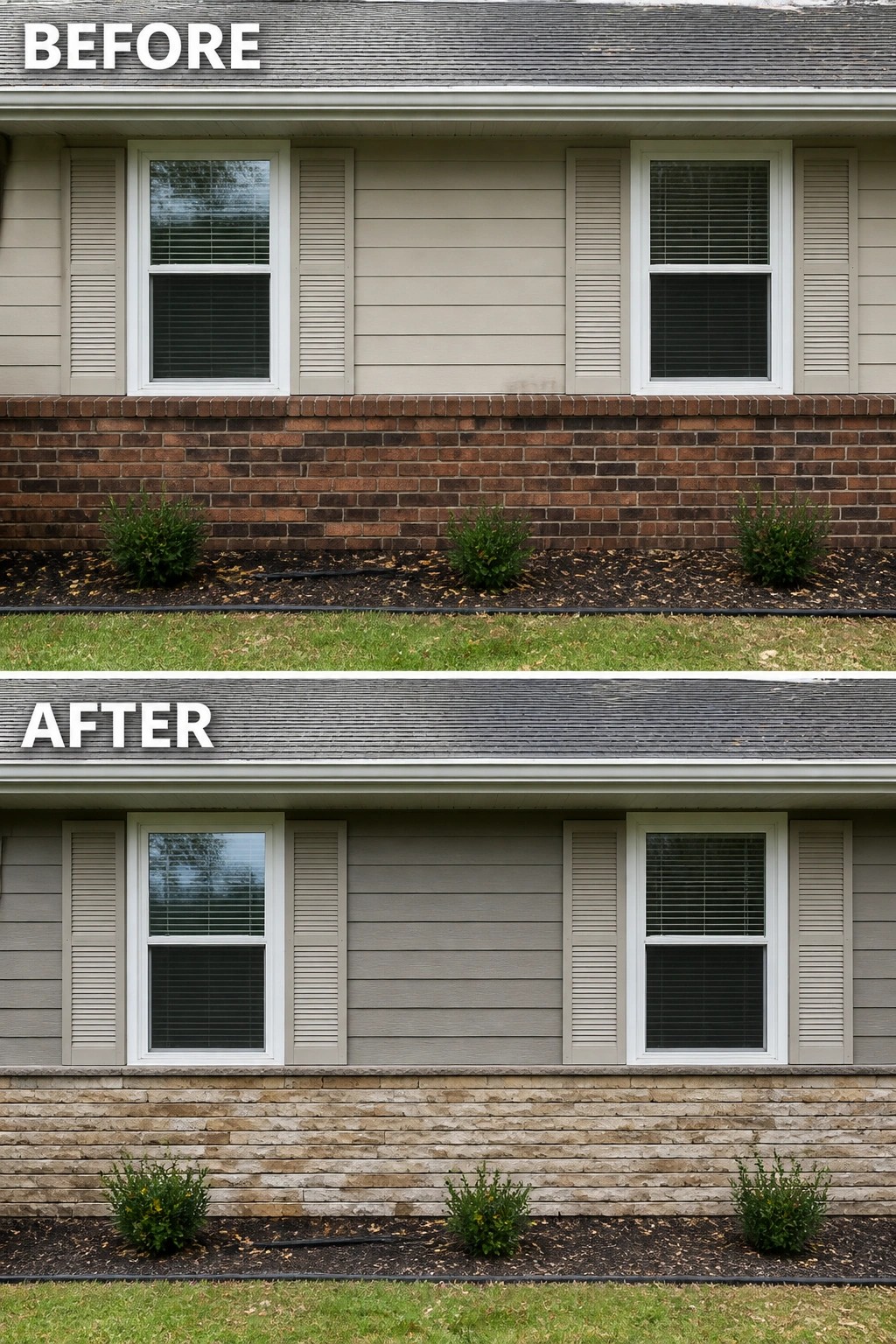
Swapping a heavy brick skirt for a light, stacked stone veneer is a simple way to update a ranch exterior without a full remodel. In this example the dark brick was replaced with a low-profile stone and the siding tone was nudged cooler, giving the house a more modern, cleaner look while using durable materials that need little upkeep.
This works best on single-story homes where the base of the wall is visible from the street. Choose a manufactured stone veneer for lower weight and consistent color, insist on proper flashing and a moisture barrier, and match the mortar tone to the siding so the change reads cohesive rather than patchy. Keep plantings low and set back a few inches from the wall so you’re not constantly trimming or trapping moisture.
Update The Garage Door For Instant Curb Appeal
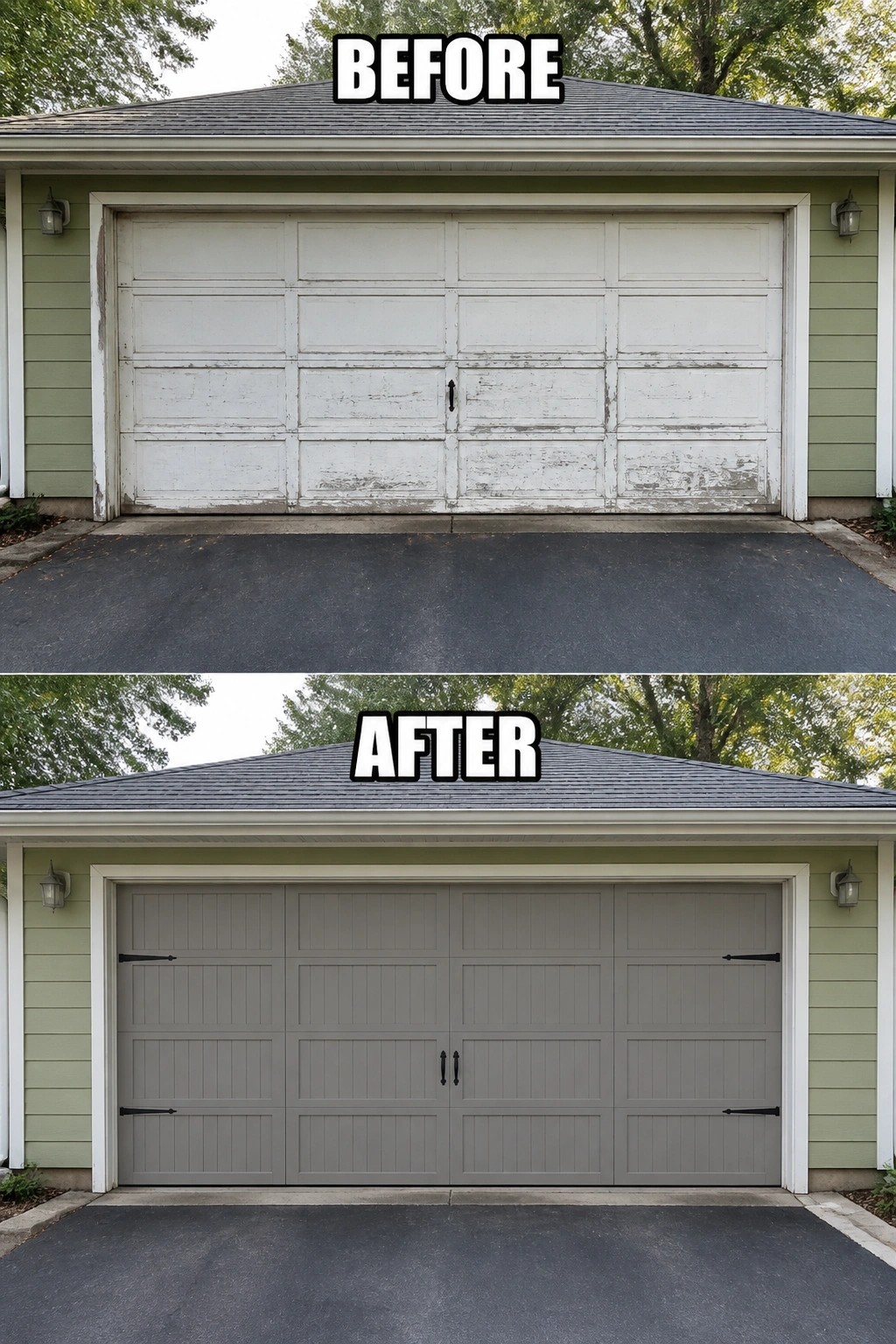
Replacing a tired, peeling garage door is one of the easiest ways to refresh a ranch-style exterior and reduce ongoing upkeep. Swapping flaking wood or old paint for a low-maintenance paneled door in a mid-tone neutral (and adding simple black hardware) immediately looks cleaner and saves you from constant scraping and repainting.
When planning this update pick durable materials like steel, fiberglass, or composite with a baked-on or powder-coated finish and consider an insulated model for energy savings. Keep the design simple so it fits a single-story ranch, choose a color that hides road grime, and add modest hardware for character—simple, practical.
Replace Overgrown Shrubs With A Low-Maintenance Rock Bed
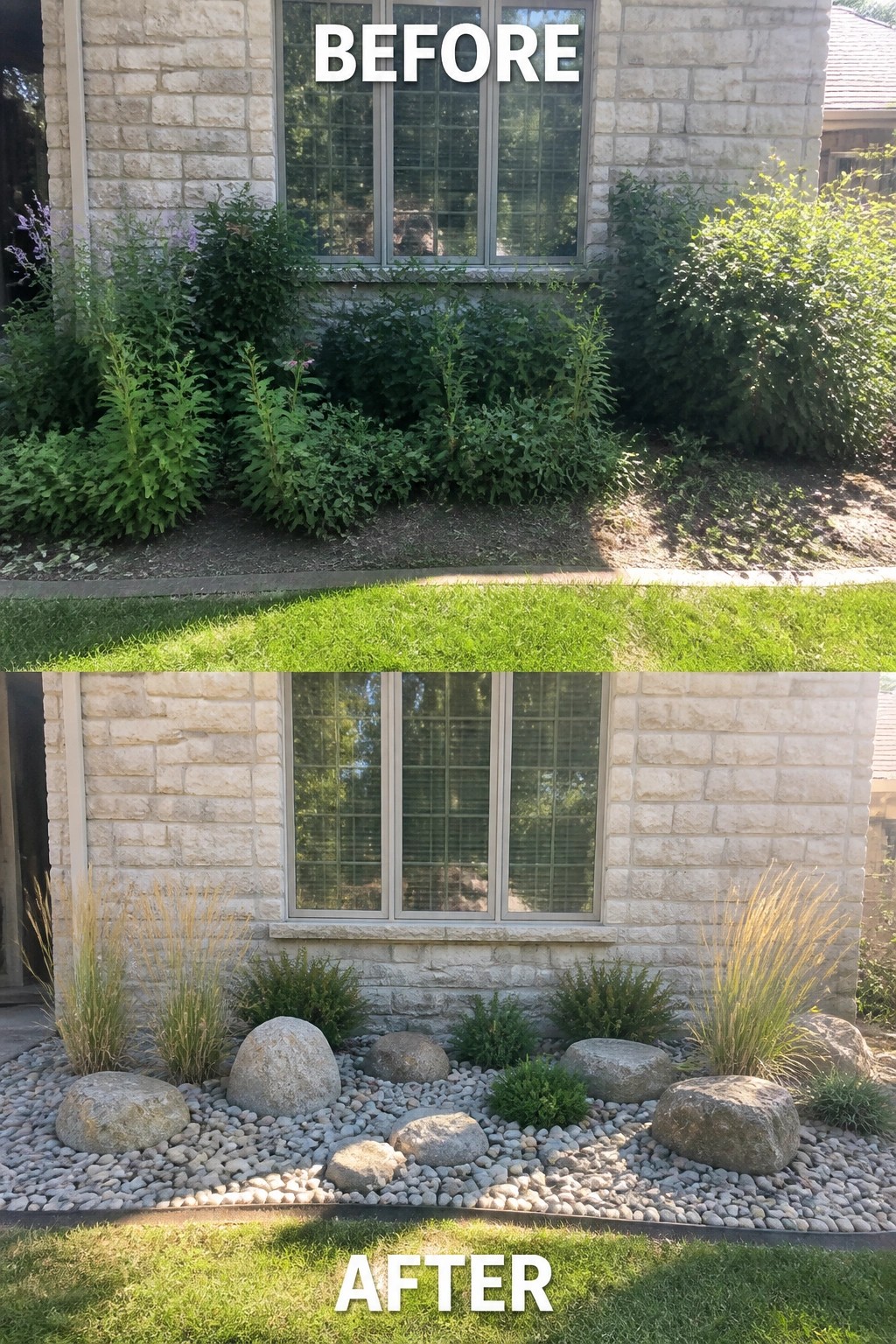
Clearing a crowded foundation bed and installing a simple rock garden instantly reduces upkeep and sharpens curb appeal. In the example here, tall, overgrown perennials were removed and replaced with a spread of river rock, a few large boulders, and a small number of ornamental grasses and compact shrubs to keep the look tidy without constant pruning.
To copy this on your own home, start by removing roots and adding an edge to define the bed, then lay a weed barrier if you want, place large stones first to set scale, and fill in with gravel. Pick drought-tolerant, low-growing plants and space them so you get a clean rhythm rather than clutter; maintenance will mostly be a yearly grass trim and occasional weed checks, which is ideal for a ranch that needs easy upkeep.
Create Defined Garden Beds With A Simple Paved Path
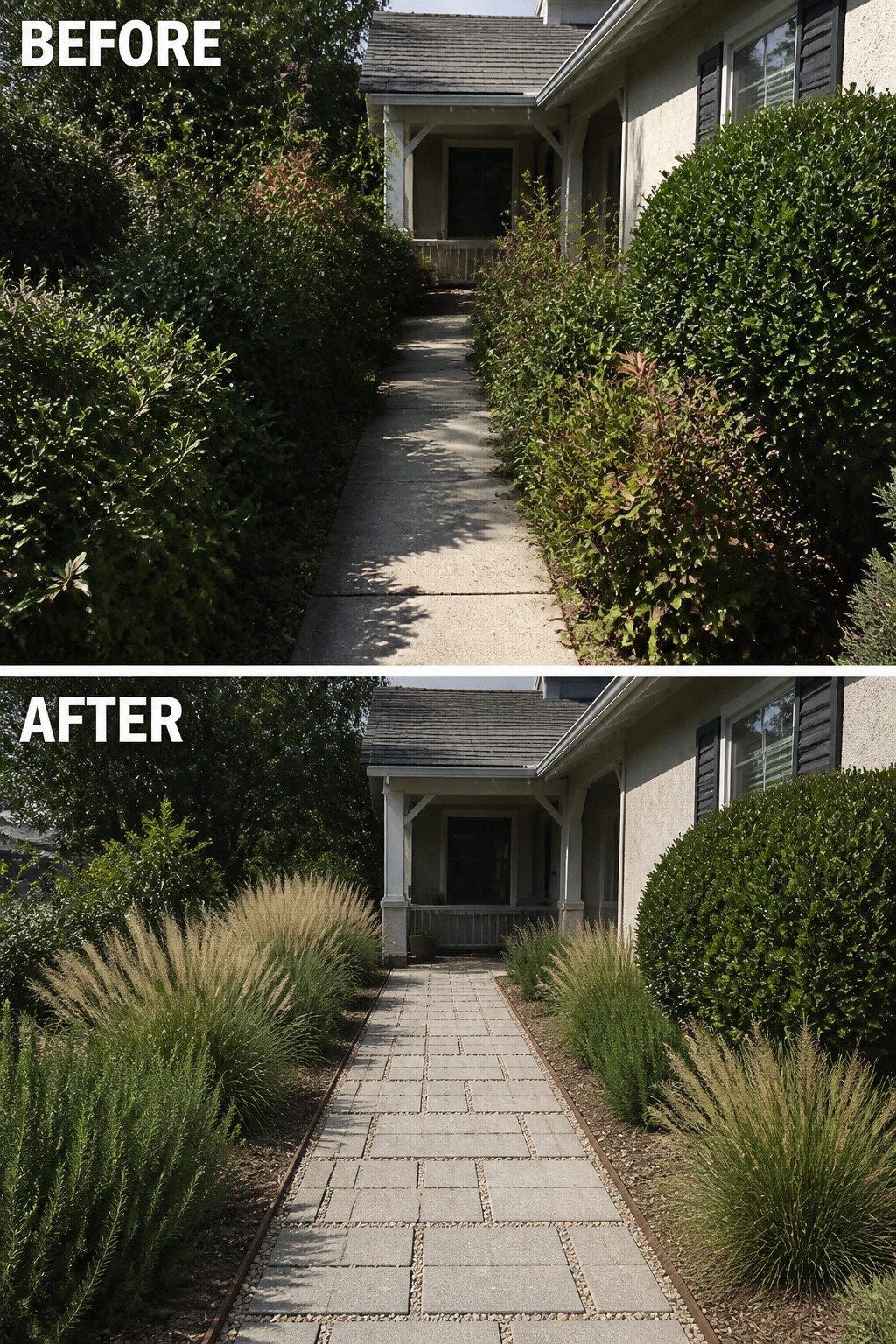
A narrow, overgrown approach can feel tight and high‑maintenance. Replacing the old concrete strip with a laid paver path and clearly edged planting beds instantly tidies the entry and reduces upkeep. In this example the dense shrub curtain was opened up and replaced with a regular paver pattern and low, airy ornamental grasses that need far less pruning than hedges.
To copy the idea, start by removing or severely cutting back overgrown shrubs and install a solid edge to separate mulch or bark from the path. Choose pavers set with small gravel joints for easier weed control and select drought‑tolerant, clumping plants like ornamental grasses, lavender, or rosemary for the beds. Keep the walkway wide enough for two people and avoid overcrowding plants so you minimize future trimming and keep the entrance feeling open.
Swap Old Shingles For A Low-Maintenance Metal Roof
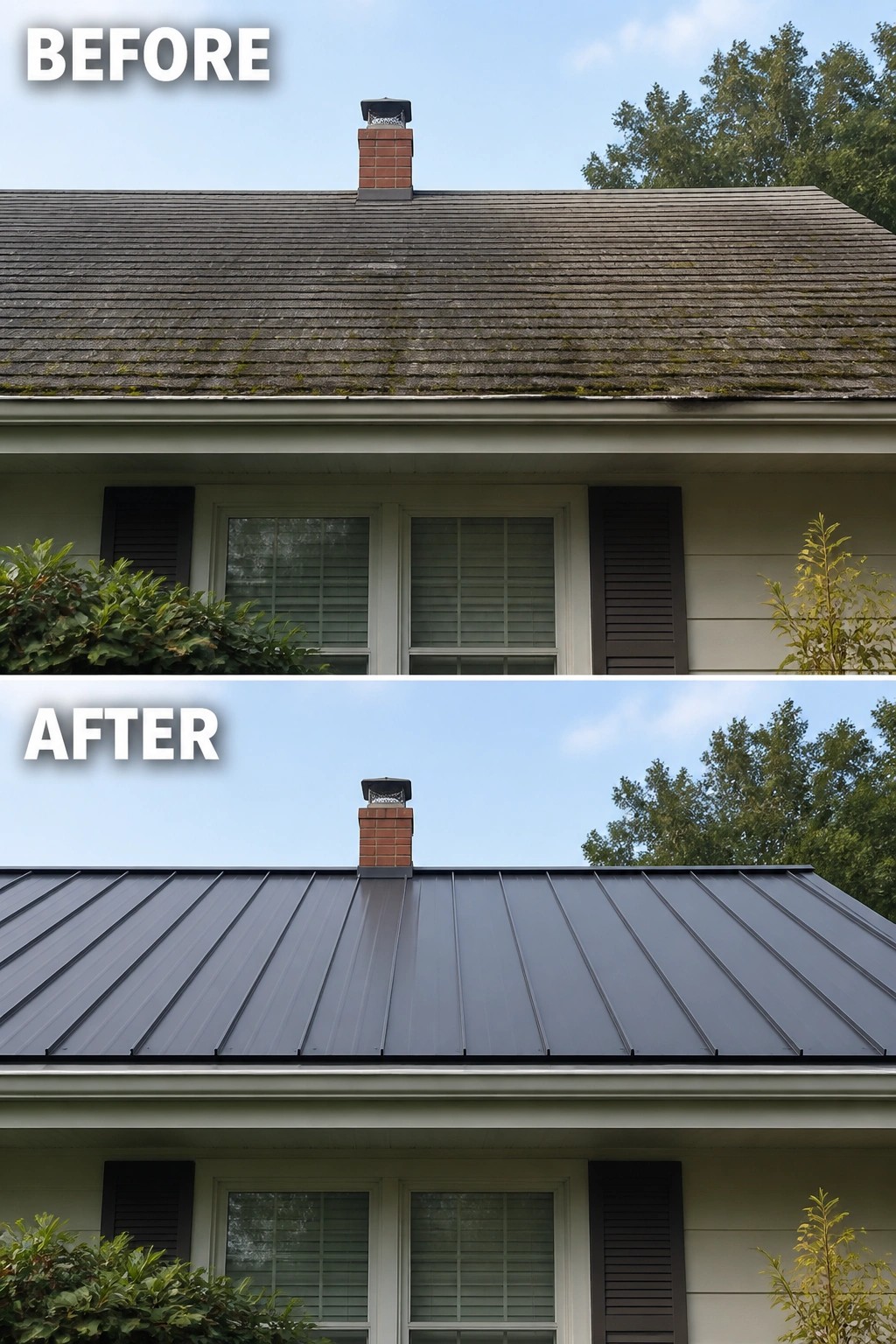
Replacing worn, mossy asphalt shingles with a standing-seam metal roof is a straightforward way to cut long-term upkeep. In the image you can see the old roof with dark streaks and moss replaced by smooth metal panels that shed water and resist biological growth, which reduces the need for frequent cleanings and repairs while giving the facade a cleaner look.
This works best on simple, single-story rooflines like ranch houses where panel runs are continuous. Choose a coated metal finish rated for weather and corrosion, and make sure flashing and chimney details are done by a pro so you avoid leaks. Expect higher upfront cost but far lower maintenance over the years, and pick a color that complements your siding so the upgrade improves curb appeal without extra work.
Add a Raised Low-Maintenance Planter Bed to Your Entry
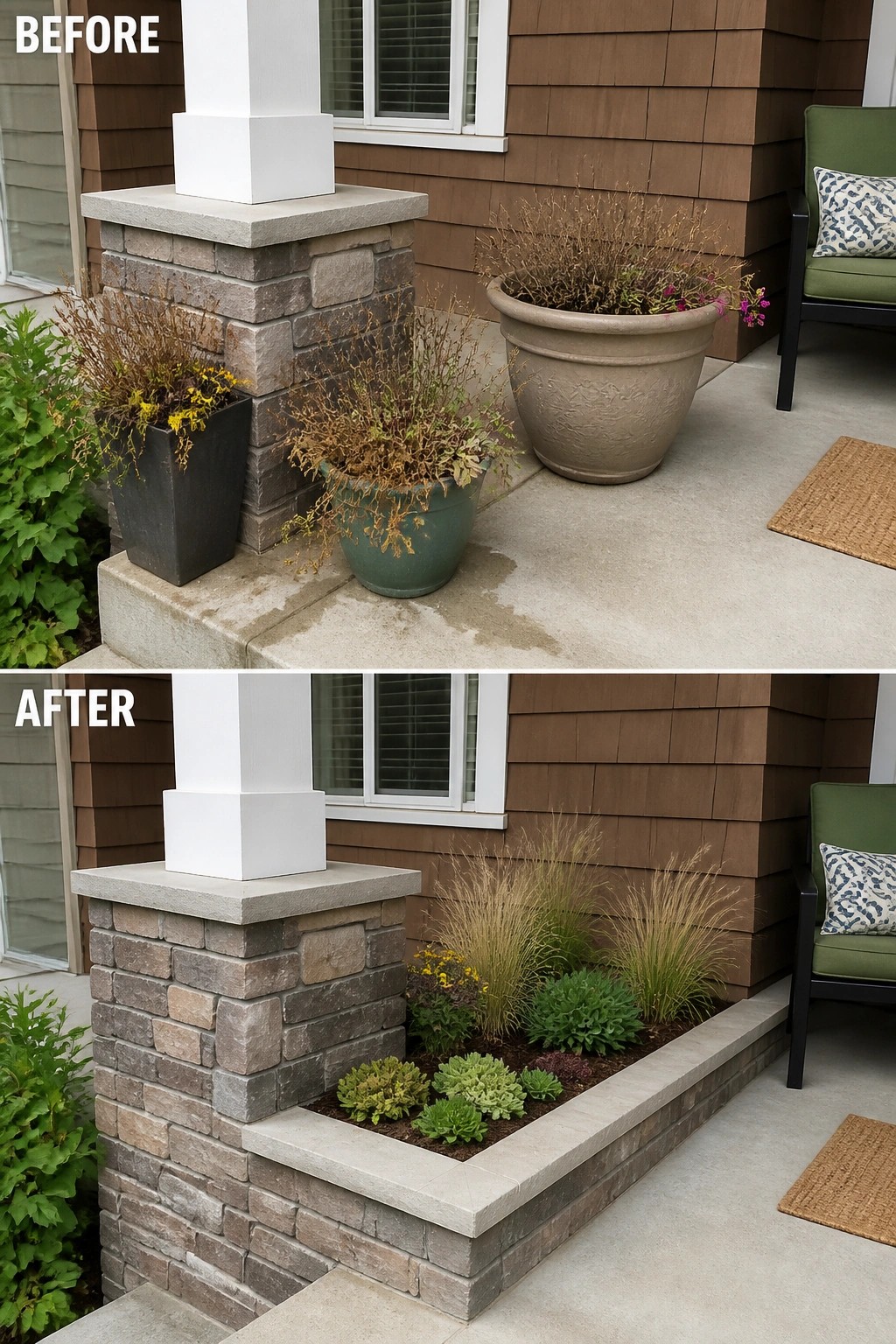
Swapping loose pots for a built-in raised planter gives a porch instant structure and far less work. In the photo the mismatched, tired containers were replaced by a stone-edged bed planted with ornamental grasses and low-growing succulents, which keeps the area tidy and reduces the need for weekly watering and replanting.
To copy this, size the bed so it fits alongside your entry without blocking traffic, and pick hardy perennials and drought-tolerant groundcovers for year-round form. Use a layer of mulch and a simple drip line or soaker hose for easy watering, leave breathing room between plants, and avoid overcrowding so the bed stays low-maintenance as the plants fill in.
Replace Peeling Shutters With Low‑Maintenance Shutters And A Simple Window Box
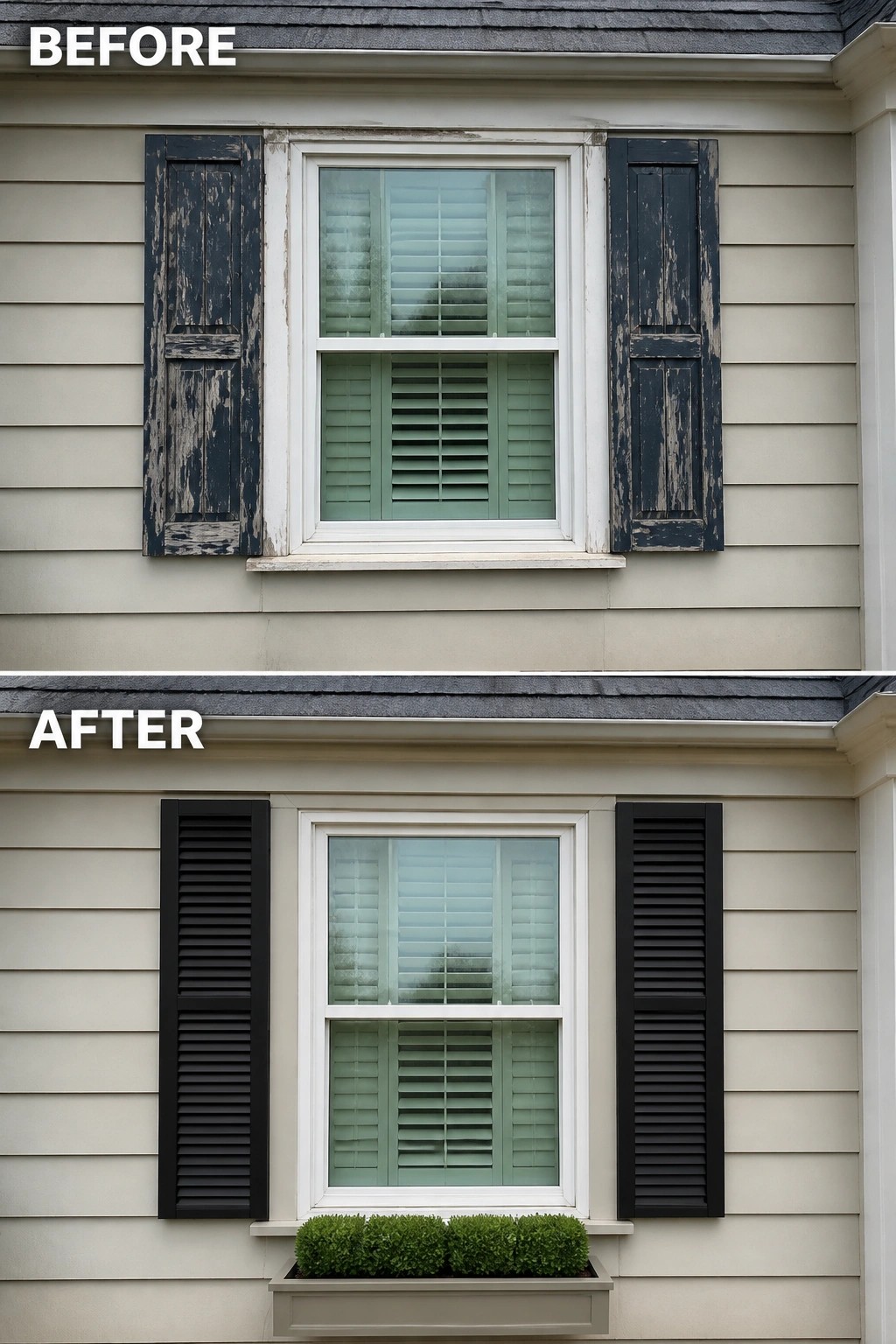
Replacing old, flaking shutters with durable, louvered shutters and adding a small window box is an easy way to tidy the facade and lift curb appeal without a big project. In this example the worn painted shutters were swapped for clean, dark louvered shutters and a neat planter of low-growing shrubs, which makes the window read as a finished, cared-for detail rather than an eyesore.
Choose materials built for weather—cellular PVC, composite, or aluminum shutters need almost no repainting and resist rot. Match shutter width to the window so proportions look intentional, mount with proper hardware, and pick a shallow window box with evergreen or faux plants (or a self-watering insert) to keep upkeep minimal. Simple but effective.
Give Your Porch Purpose With Built-In Seating
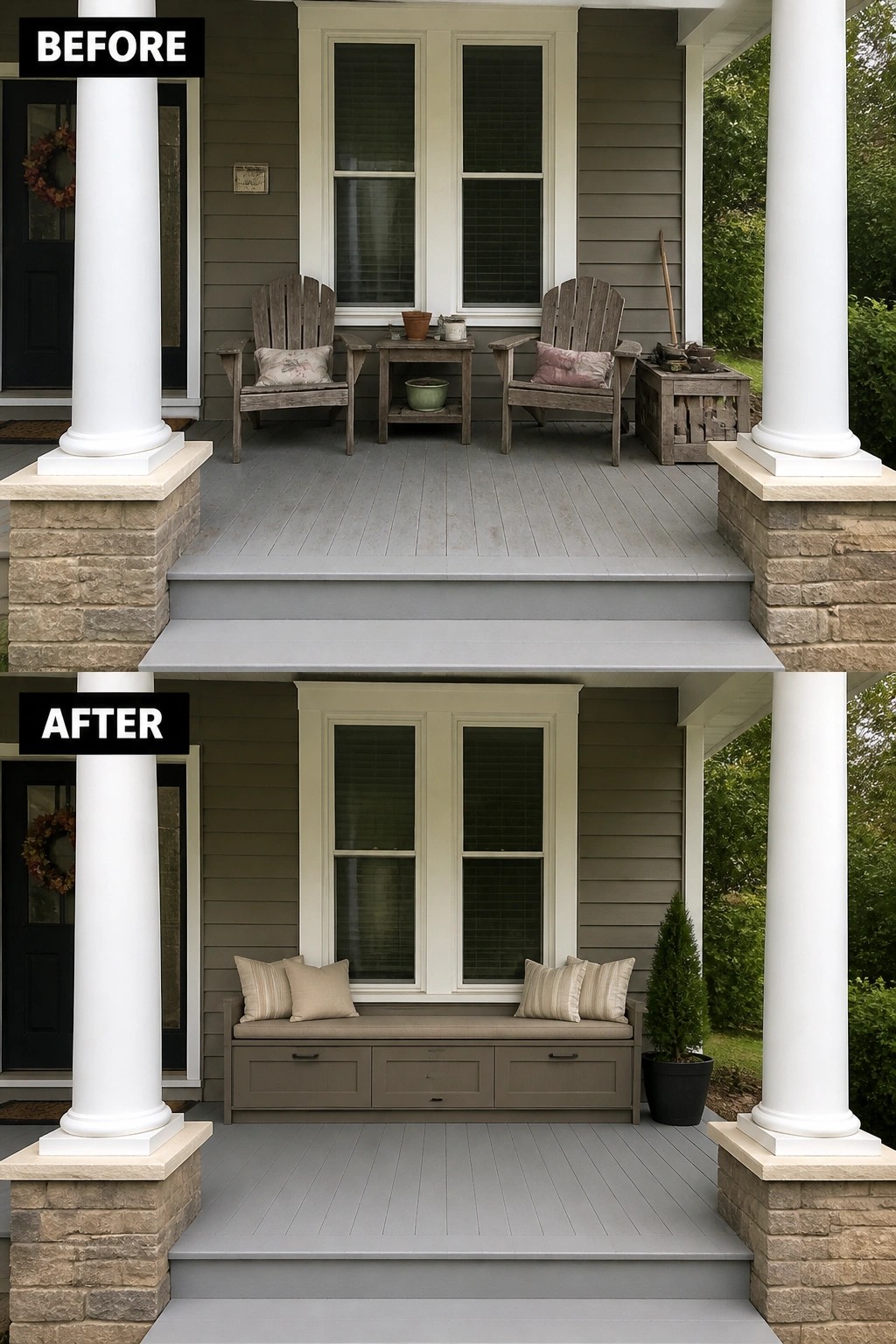
Replace a pair of loose chairs with a low-profile built-in bench to make a porch feel purposeful and easier to maintain. Swapping freestanding furniture for a bench with drawers or cubbies creates one tidy focal point, hides clutter like cushions and shoes, and makes sweeping or power-washing the floor quicker since there are fewer small pieces to move.
This works best on narrow, covered porches where you need seating but not a full conversation set. Choose weather-resistant materials or a prefinished paint, shallow storage drawers for easy access, and a couple of neutral, removable cushion covers so washing is simple. Keep the bench proportionate to the entry so the door still opens freely, and add one evergreen in a pot for year-round low-maintenance green.
Replace A Lawn With Defined Planting Beds
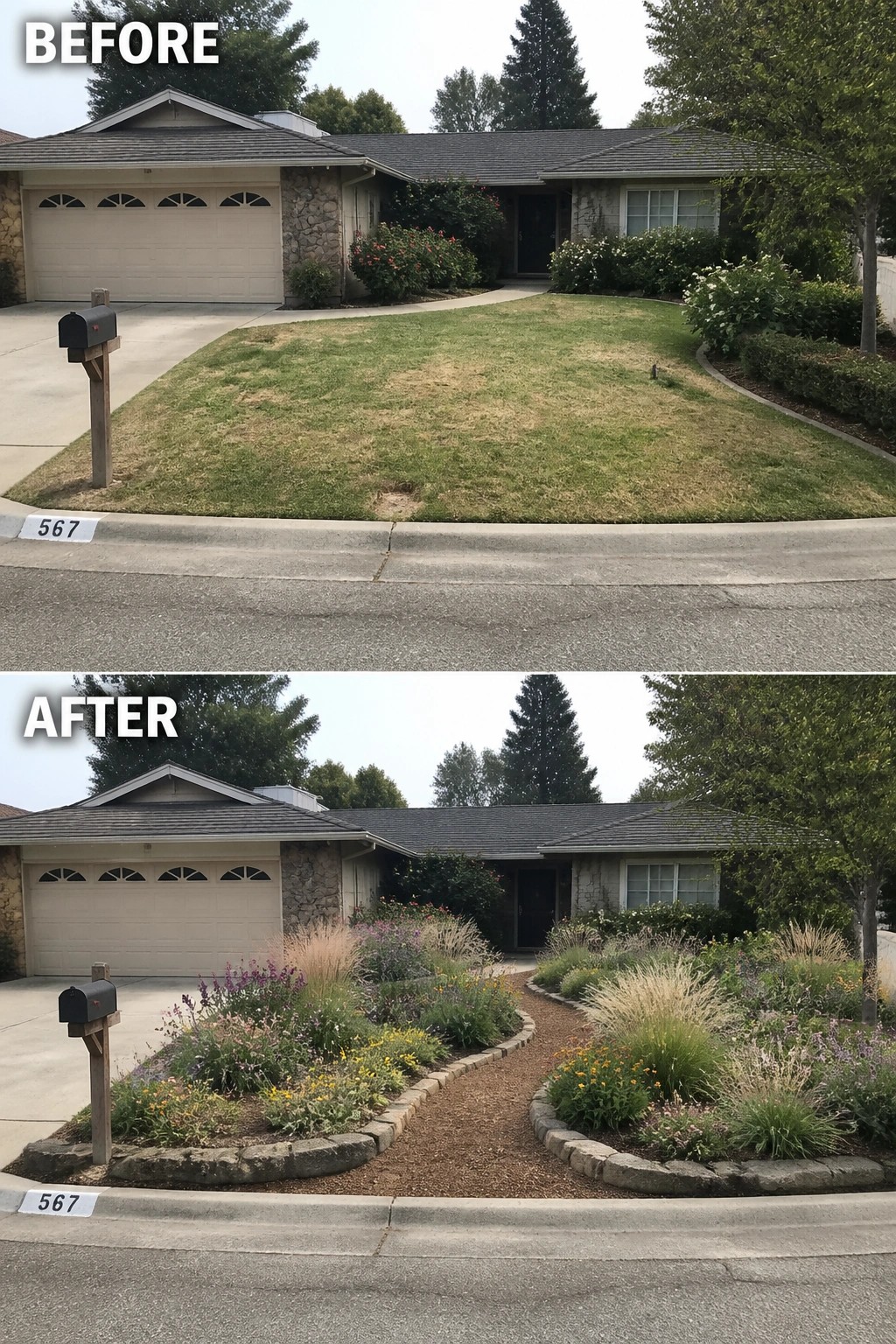
Turning a thirsty, flat lawn into curved, stone-edged beds and a simple gravel path is one of the easiest ways to cut upkeep while boosting curb appeal. Swapping turf for clusters of ornamental grasses and drought-tolerant perennials reduces mowing and watering, and the clean stone edging plus a single walking path keeps the layout tidy and easy to maintain.
To copy this, map out a few wide, flowing beds so you still have room to move and mow around the edges. Edge with local stone or pavers, fill beds with low-care grasses and long-blooming perennials, and cover soil with mulch or decomposed granite for fewer weeds. Add a basic drip irrigation line on a timer (optional) and leave a central path for access—works especially well for single-story ranch homes and small front yards.
Replace Weathered Wooden Railings With Metal Balusters
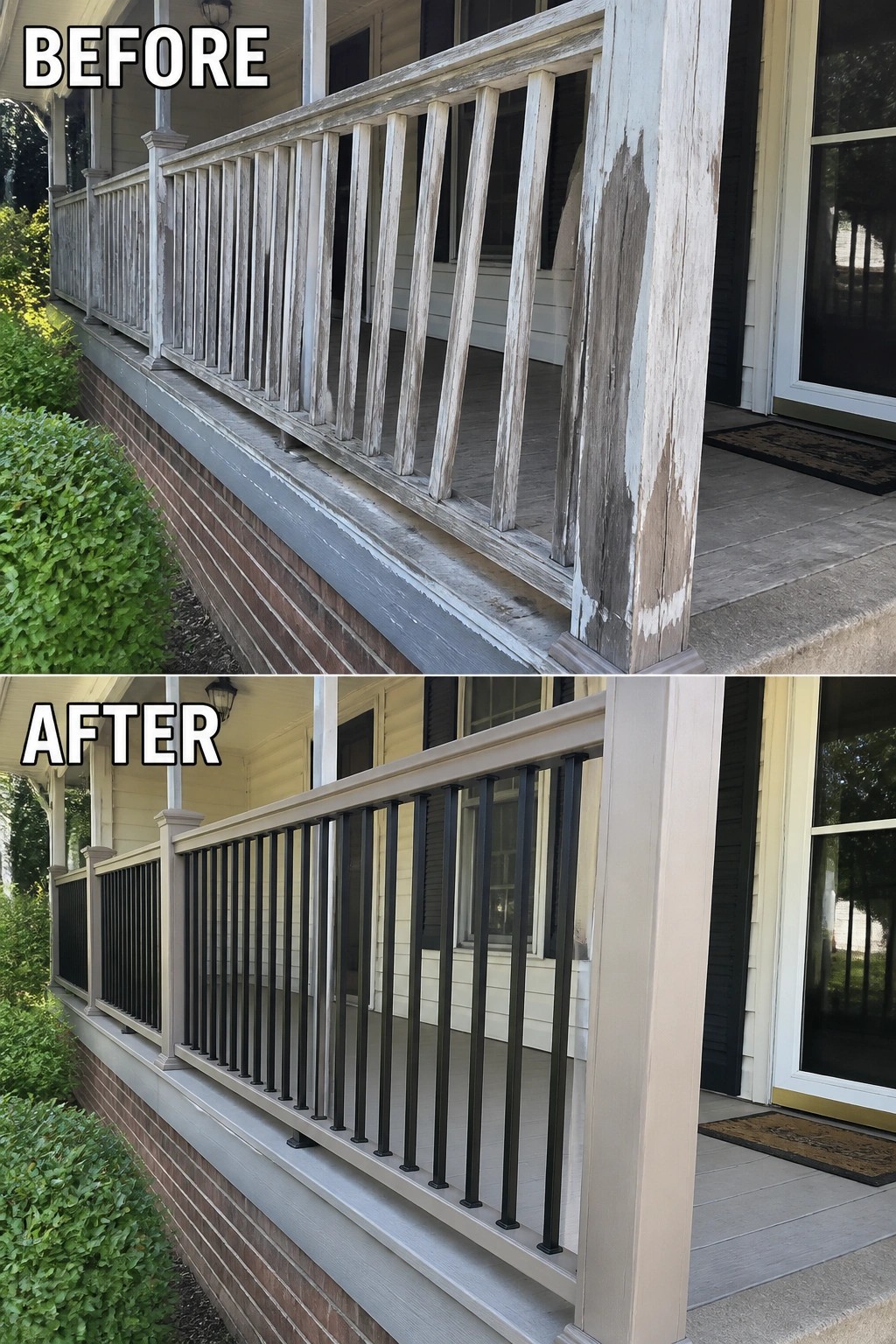
If your porch railing is peeling, splintering, or demanding constant scraping, swapping the slim wooden spindles for metal balusters gives you a cleaner, lower‑maintenance look with very little fuss. In this example the old, flaking paint and worn wood were left behind for freshly painted posts and slim black metal balusters, which resist rot and need far less sanding and yearly repainting.
This works well on covered porches and ranch‑style facades where you want to keep the same proportions but cut maintenance. Choose powder‑coated aluminum or galvanized steel for rust resistance, replace or encase any rotten posts before installing the new balusters, and use stainless fasteners. Pick a neutral frame color and darker spindles to hide dirt, and check local railing height and spacing rules — you can get prefab kits that make the swap straightforward for a DIY weekend.
Clean Up Overgrown Foundation Plantings
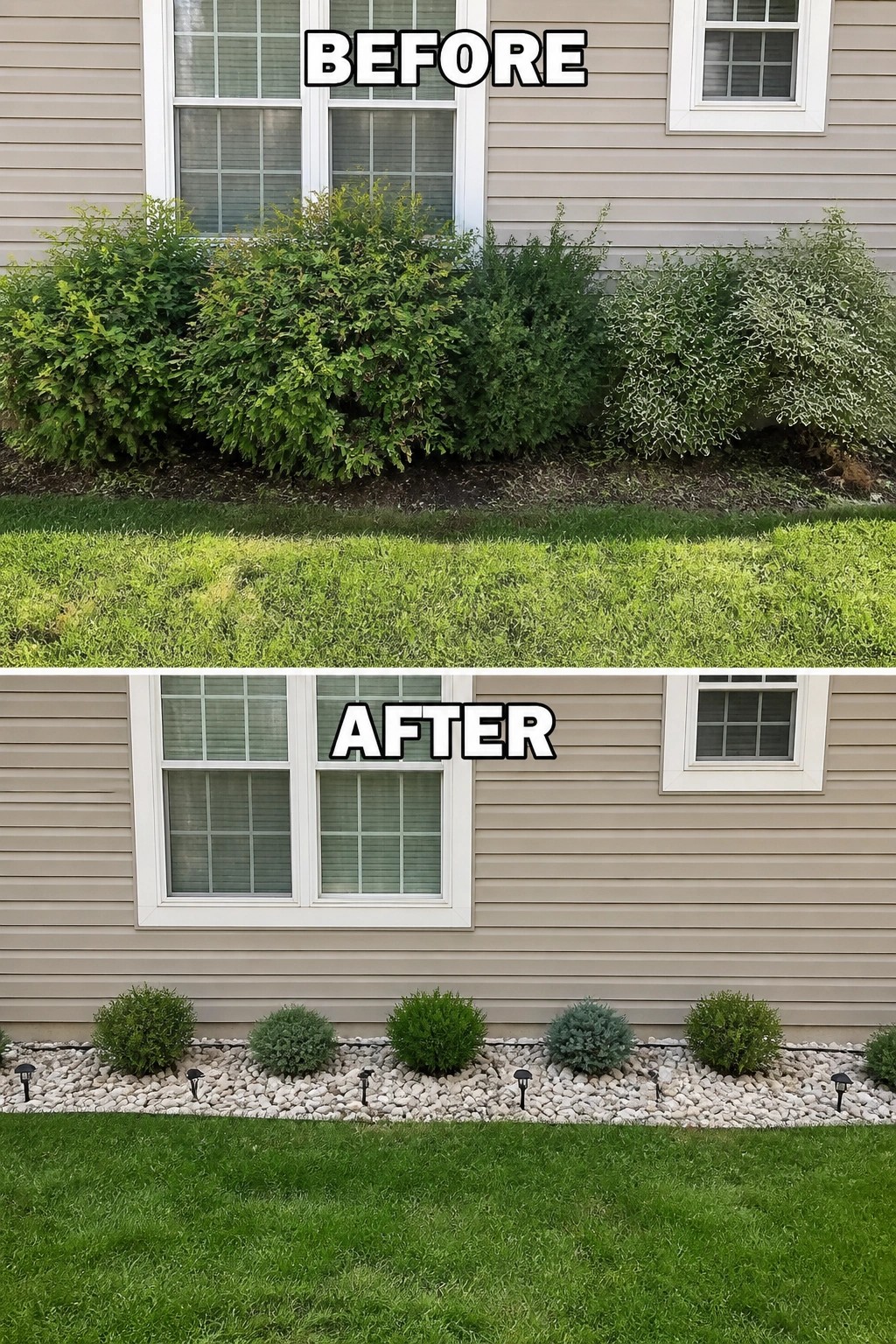
Clearing out a crowded row of foundation shrubs and replacing them with a simple, low-maintenance bed instantly tidies a home’s exterior. In this approach, large overgrown bushes were removed and swapped for evenly spaced dwarf shrubs set in a light-colored rock bed with small pathway lights, which reduces pruning and gives the facade a cleaner line.
To copy it, start by removing old growth and roughing in a defined edge for the bed, then improve drainage and lay landscape fabric if you like. Plant slow-growing, compact evergreens or drought-tolerant shrubs with plenty of space between them so they won’t need frequent trimming, top with decorative rock or mulch for less weeding, and add a few low-vol lights for scale and safety; keep plants off the siding and leave room to access windows for maintenance.
Make Your Front Entry Low-Maintenance With Durable Surfaces
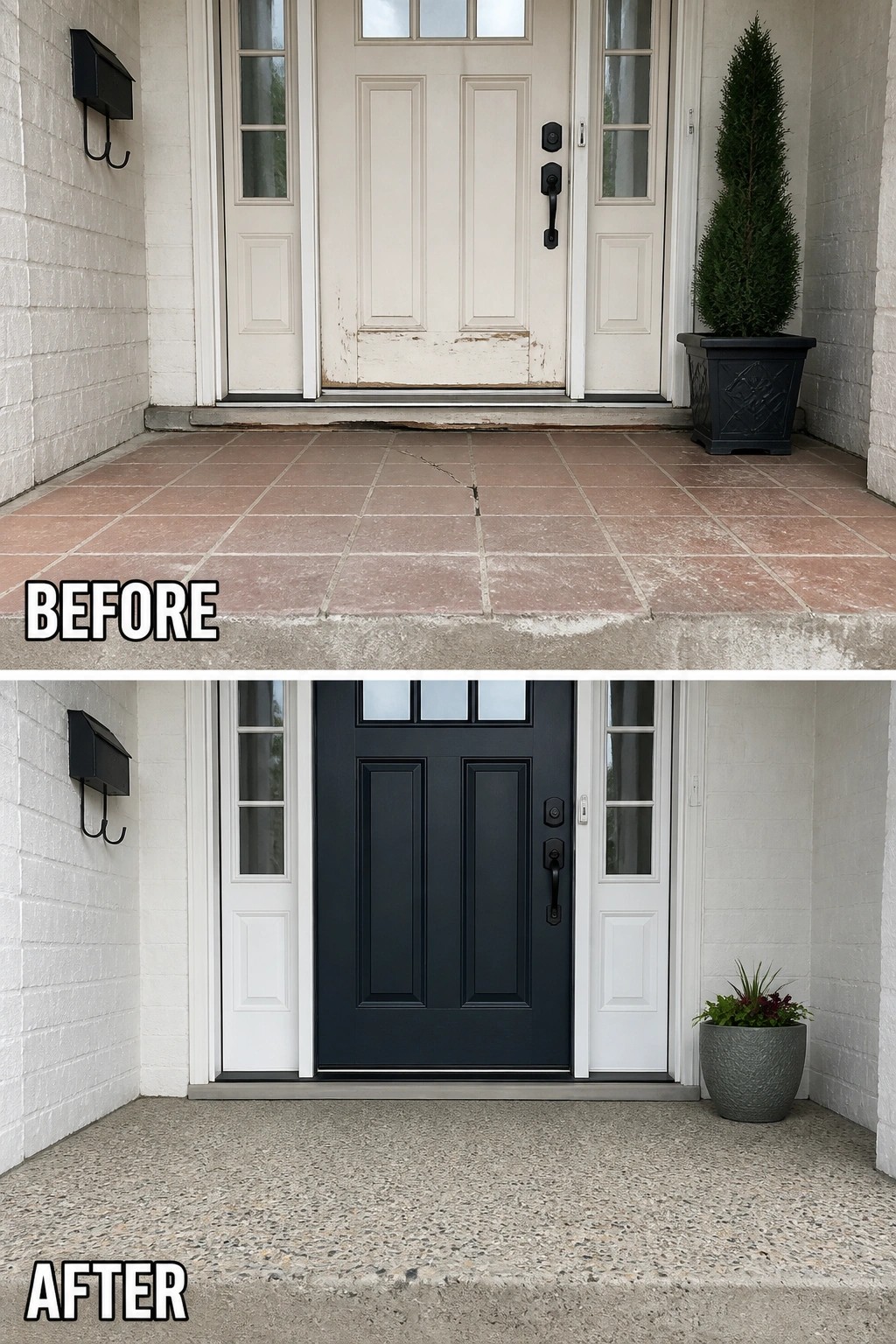
Swapping fragile tile and a fussy finish for a durable porch surface and a weatherproof door instantly reduces upkeep and looks cleaner over time. A pebble or exposed-aggregate finish hides chips and stains better than small grout-lined tiles, and a properly sealed or metal door cut down on repainting and sanding. In the photo you can spot a cracked tiled landing replaced by an aggregate surface and a freshly painted dark door with a single simple planter to complete the look.
Use this idea on ranch-style homes with modest porches where function matters more than ornament. Resurface the slab with an overlay or pour a broom-finish concrete that matches your climate (no grout to worry about), pick a tough exterior door finish or a steel door, and keep accessories minimal and weatherproof. Also check slope and flashing during the update so water won’t pool and create new problems.
Add A Clean Gravel Border And Simple Evergreen Planting
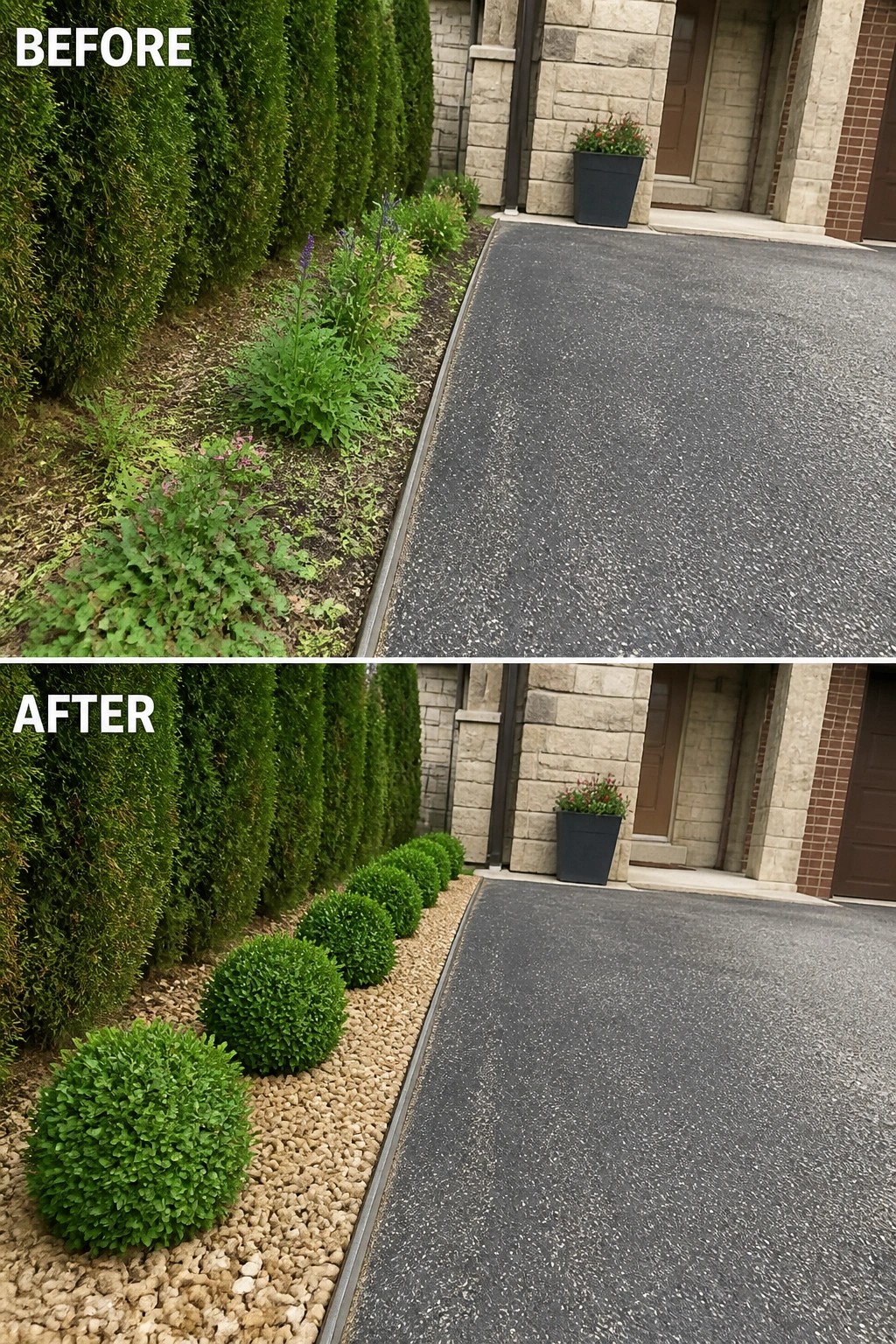
A narrow, tidy gravel bed planted with evenly spaced low-growing evergreens instantly replaces a weedy, high-maintenance strip and gives the driveway edge a finished look. Replacing messy annuals and bare soil with small round shrubs and crushed stone reduces mowing and watering needs while keeping the line between lawn and pavement crisp.
This works best along driveways and tight front-yard edges where you want a clean, structured look without constant upkeep. Lay landscape fabric, add a few inches of decorative gravel, and plant dwarf boxwoods or other compact evergreens at regular intervals (leave room for growth). Water well until established, then prune lightly once a year and enjoy an easy, long-lasting border.
Use Vertical Siding To Cut Exterior Upkeep
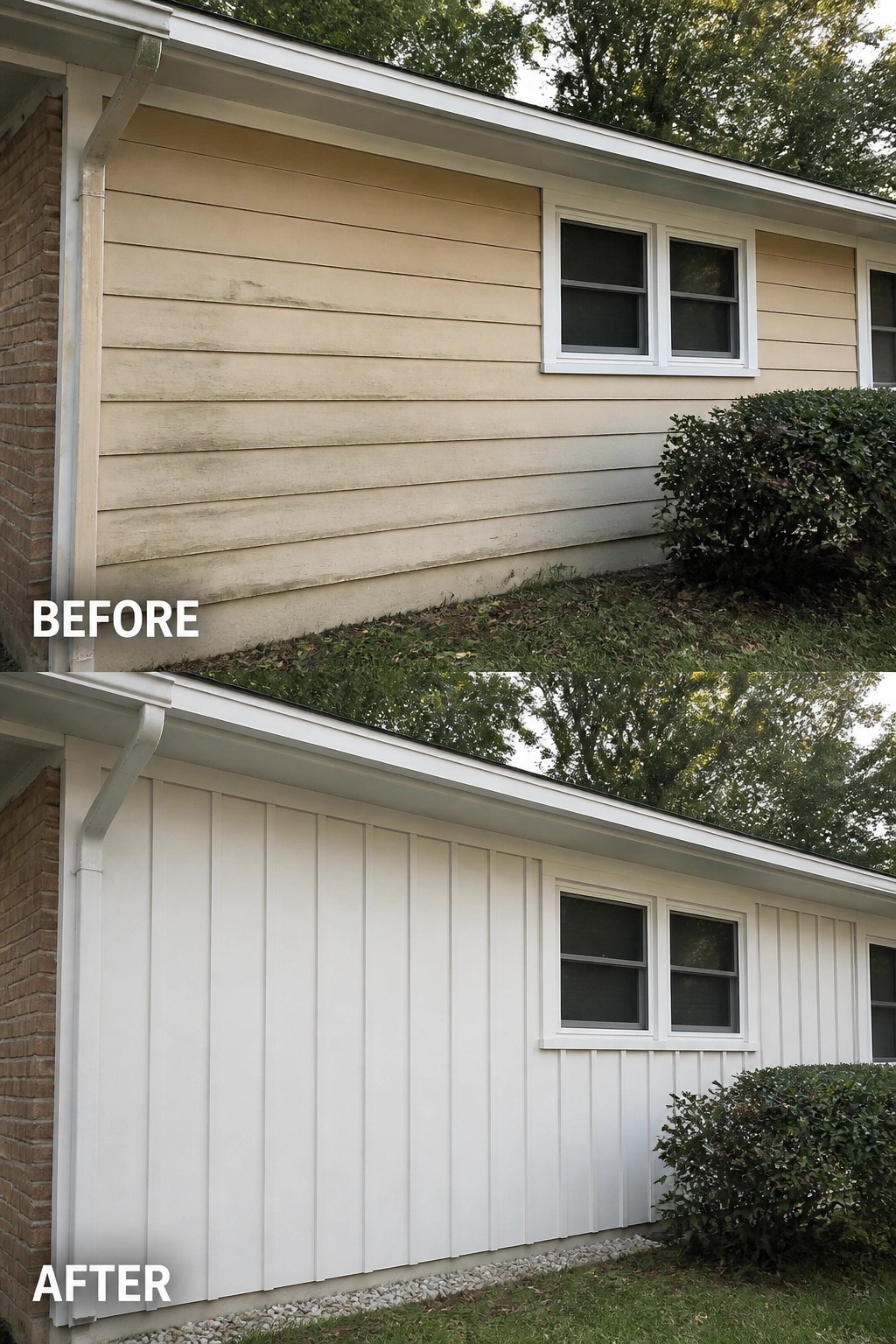
Switching out tired horizontal lap siding for a vertical board-and-batten style gives a ranch home a cleaner look and makes maintenance simpler. In this example, the dirty, hard-to-clean horizontal boards were replaced with smooth, light-colored vertical panels that resist staining and are easier to rinse off, so the facade stays fresher between cleanings.
For an easy-living exterior choose low-maintenance materials such as fiber cement, engineered wood, or rigid PVC in a light finish, and keep window trim simple so there are fewer joints to caulk and repaint. Add a narrow gravel or stone strip at the foundation to limit splashback, and plan for an annual rinse and quick caulk check — small efforts that pay off when you want less upkeep long term.
Create Low Maintenance Beds With Rock And Evergreens
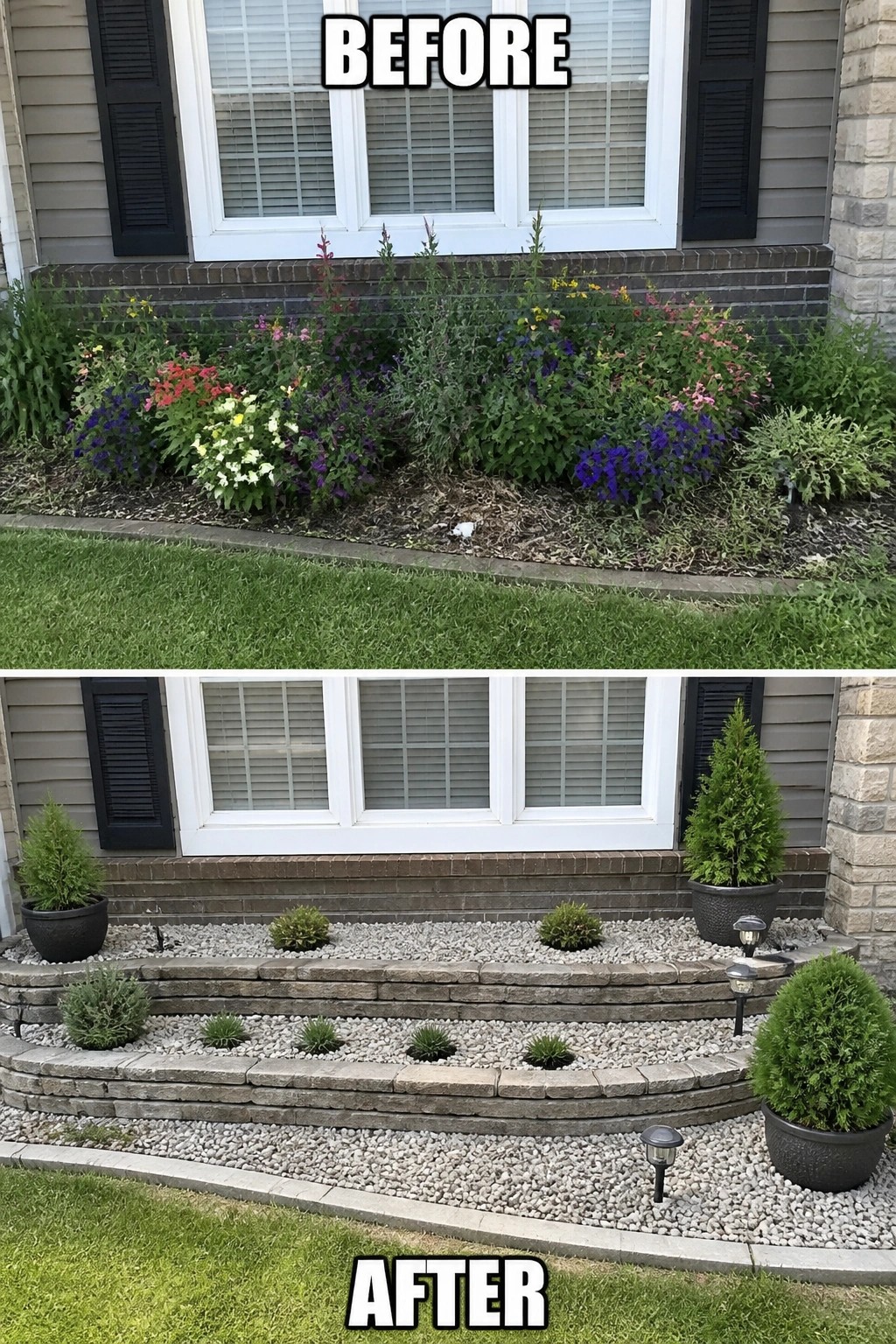
Swap fussy annuals for a simple hardscape bed and a few evergreen accents to cut upkeep. Here a crowded, mixed flower border becomes low, tiered stone walls filled with gravel, small shrubs, and potted evergreens with a couple of solar lights, giving cleaner lines and far less watering, deadheading, and pruning.
Start by clearing the old plantings and installing a defined edge or low retaining wall, then lay landscape fabric and a bed of coarse gravel to reduce weeds. Choose slow‑growing evergreens or ornamental grasses for long-term structure, use a couple of pots for height, and add solar lights where you actually walk—small upfront work for much easier maintenance later.
Make A Narrow Side Yard Low-Maintenance
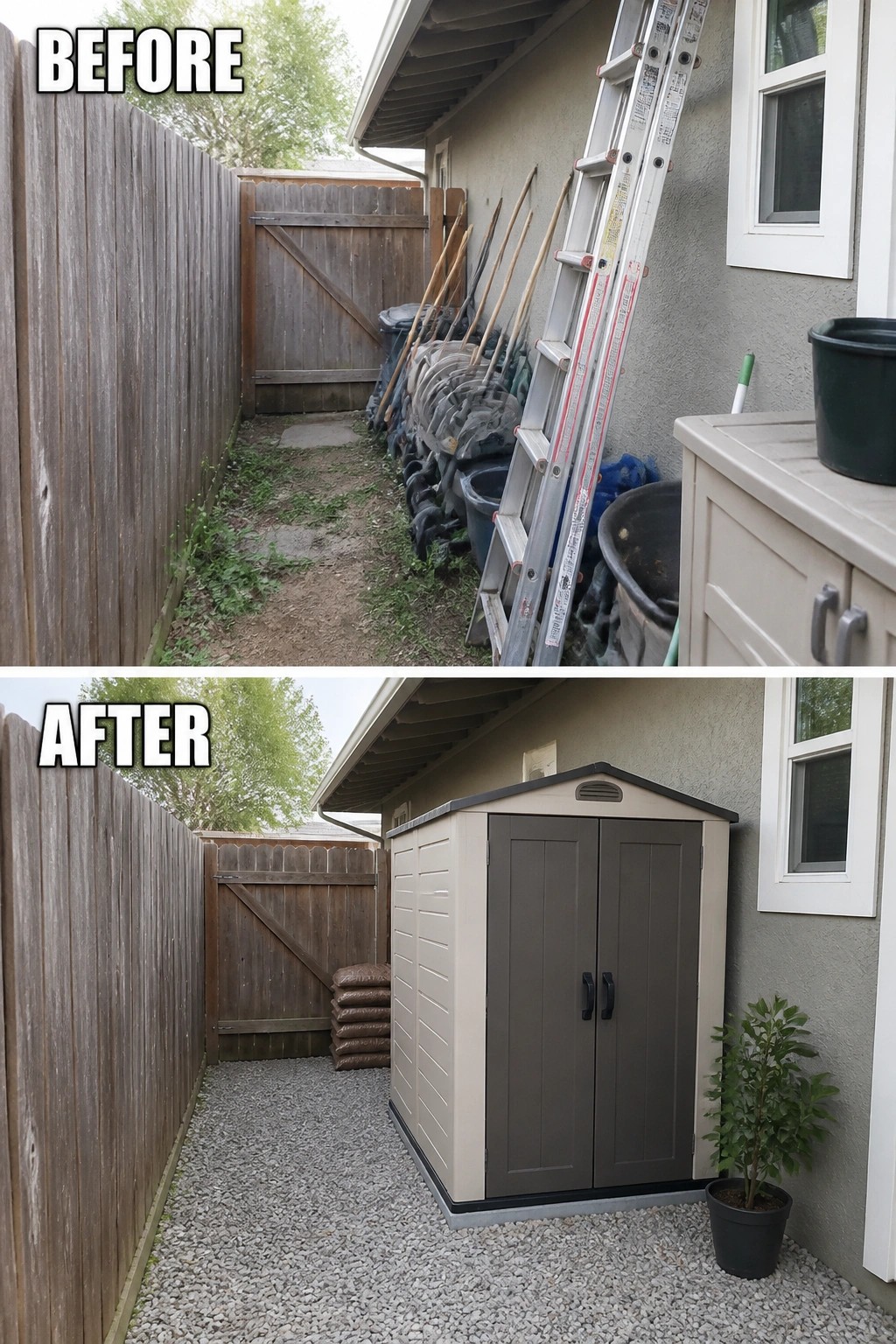
Clearing a cluttered side alley and turning it into a tidy storage zone is one of the easiest ways to cut upkeep. In this example, loose tools and overgrown patches are replaced with a compact storage shed and a gravel surface, which keeps things organized, limits weeds, and removes the need for mowing or constant edging.
To copy this, start by removing items and leveling the ground, then install a weed barrier and a simple gravel base (2–3 inches of crushed stone) for low maintenance and good drainage. Pick a shed sized to fit the space with enough room for the gate to open, set it on a stable pad, and add one small potted plant or two to soften the look—practical, durable, and easy to maintain.
Frequently Asked Questions
Q: What’s the easiest siding choice if I want a low-maintenance ranch exterior that still looks good?
A: Pick a siding material that doesn’t need frequent painting, like fiber-cement or durable vinyl, and choose a neutral color that hides dust and sun fade. Add simple trim and a good finish so you won’t be repainting trim every few years. That small up-front choice saves a lot of time later.
Q: Can I make the front yard low-maintenance without turning it into a sterile landscape?
A: Yes—use native, drought-tolerant plants mixed with mulch and a few structural elements like boulders or a single flowering shrub to add interest. Native plants need less water and pruning, so the yard stays alive-looking with minimal work. Keep planting beds larger and simpler so you avoid tiny islands that always need weeding.
Q: How do I cut down on roof and gutter chores for a single-story ranch?
A: Choose a durable roofing material and install gutter guards to keep leaves out; that combination dramatically reduces how often you need to climb a ladder. Also simplify rooflines where you can so water runs cleanly off the house. A quick roof check once a season catches problems before they get messy.
Q: What’s a low-fuss option for a driveway that won’t keep needing resealing or endless repairs?
A: Go with permeable pavers or well-compacted gravel with solid edging; they handle water better and are easy to refresh when needed. Honestly, avoid plain concrete if you hate visible stains and big repair jobs down the road.