

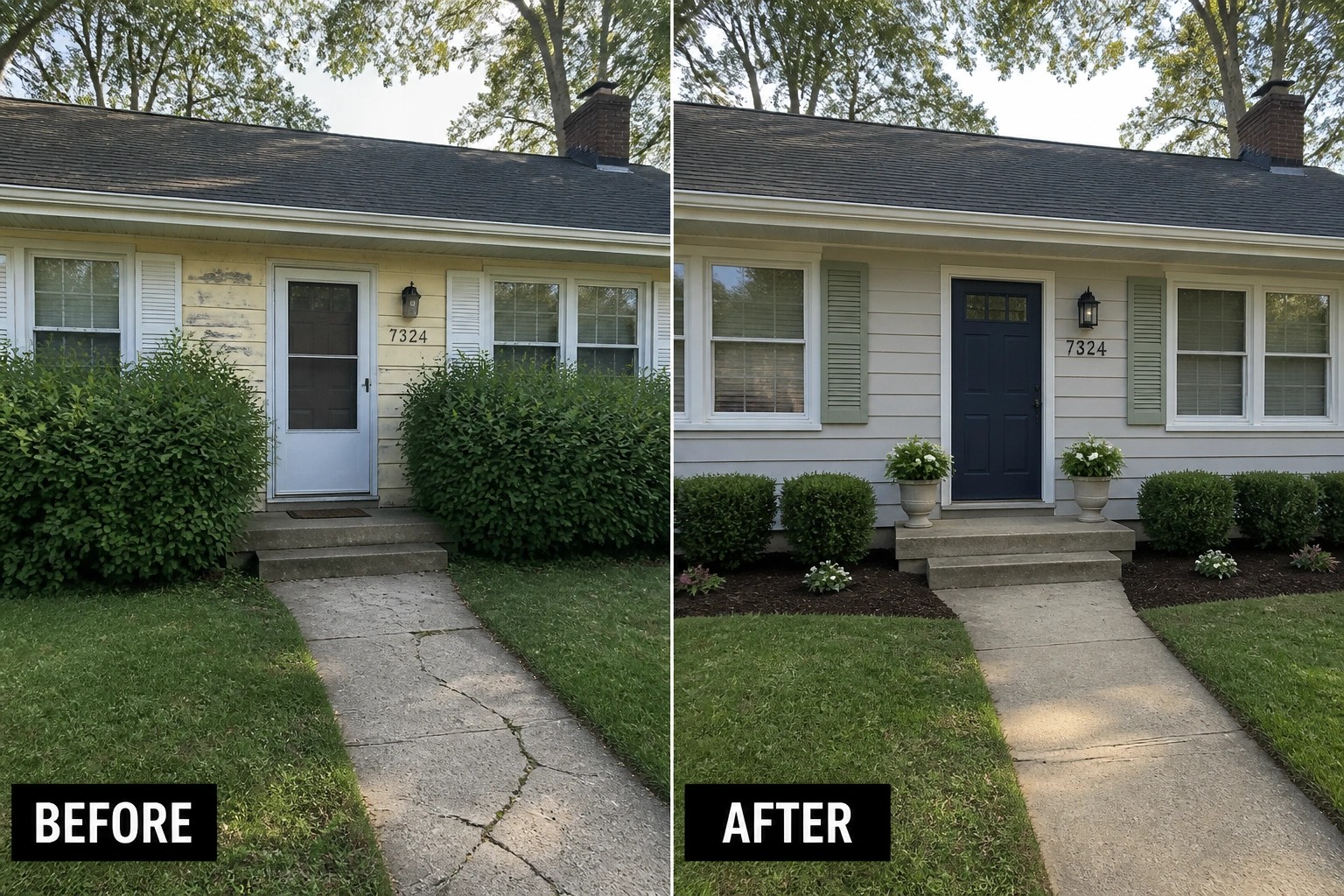
I love how a cohesive soft-traditional palette can calm the mismatched elements of a 1950s ranch and make the whole house read like a single, cared-for home.
Low ceilings, odd room shapes, sun-faded siding, and dated trim often leave these houses feeling a little tired and undecided, and thoughtful color choices help those quirks settle into a clearer, more intentional look.
Small shifts go a long way.
I’ve learned to test paint on full walls, try softened white for trim, and warm greige on large surfaces before committing, because color placement matters more than a favorite hue on a swatch.
You can save and adapt ideas for your porch, living room, or siding and enjoy the quiet satisfaction of a house that finally feels like it belongs to its era and your life.
Make A Plain Facade Welcoming With Paint And Entry Accents
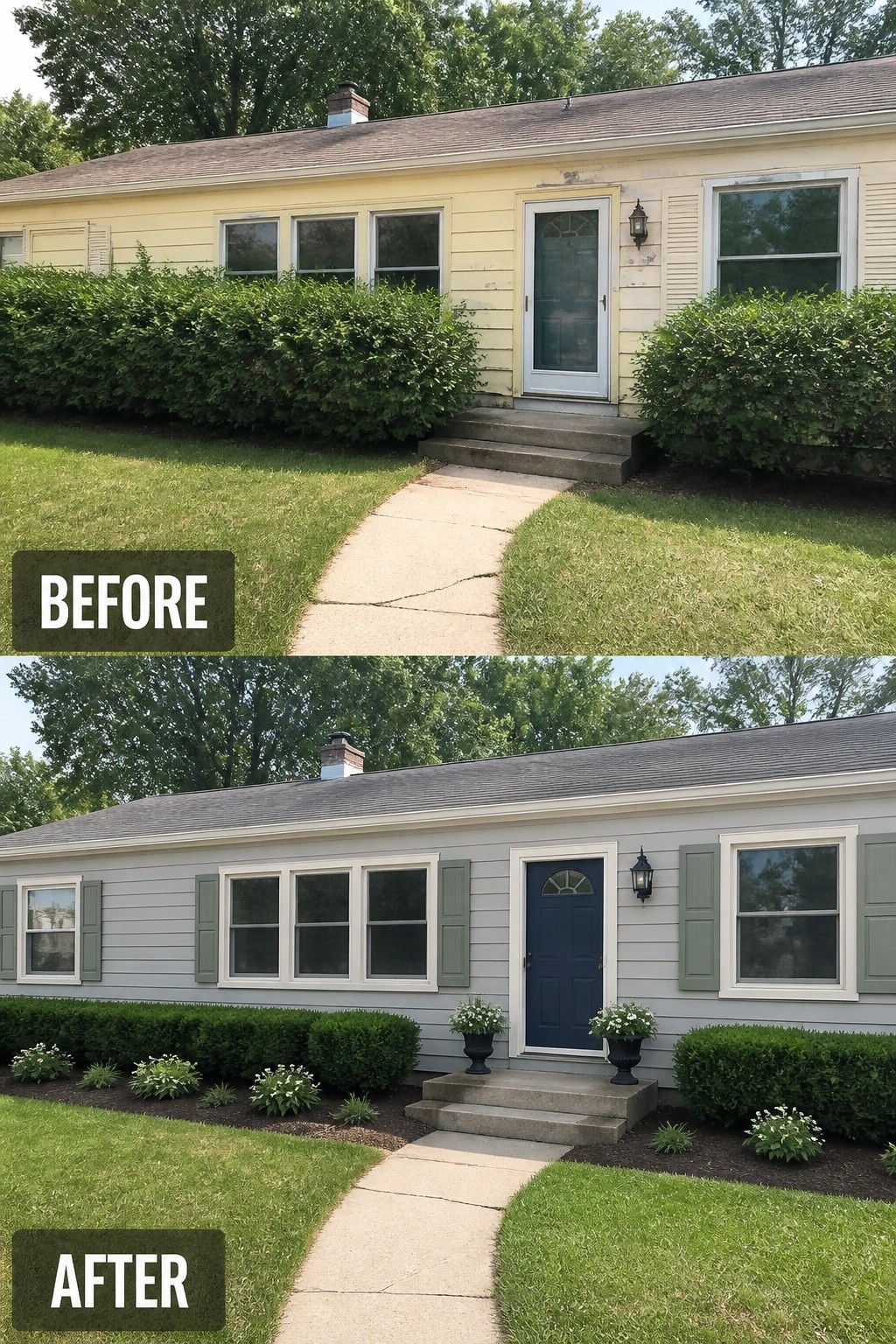
A fresh, muted paint palette and a focused entry update can do most of the heavy lifting for an older ranch. In this example, swapping tired yellow siding for a soft gray, painting the front door a deeper color, and adding shutters and matching planters instantly give the facade a clearer purpose and more polish.
Use two or three coordinated colors—main, trim, and door—to keep the look cohesive, then add a pair of scaled planters and simple window shutters to create symmetry. Trim or reduce oversized hedges first so the new details read clearly, and keep mulch beds low and neat so the house itself stays the focal point. Start small.
Give A Bare Porch A Clear Purpose
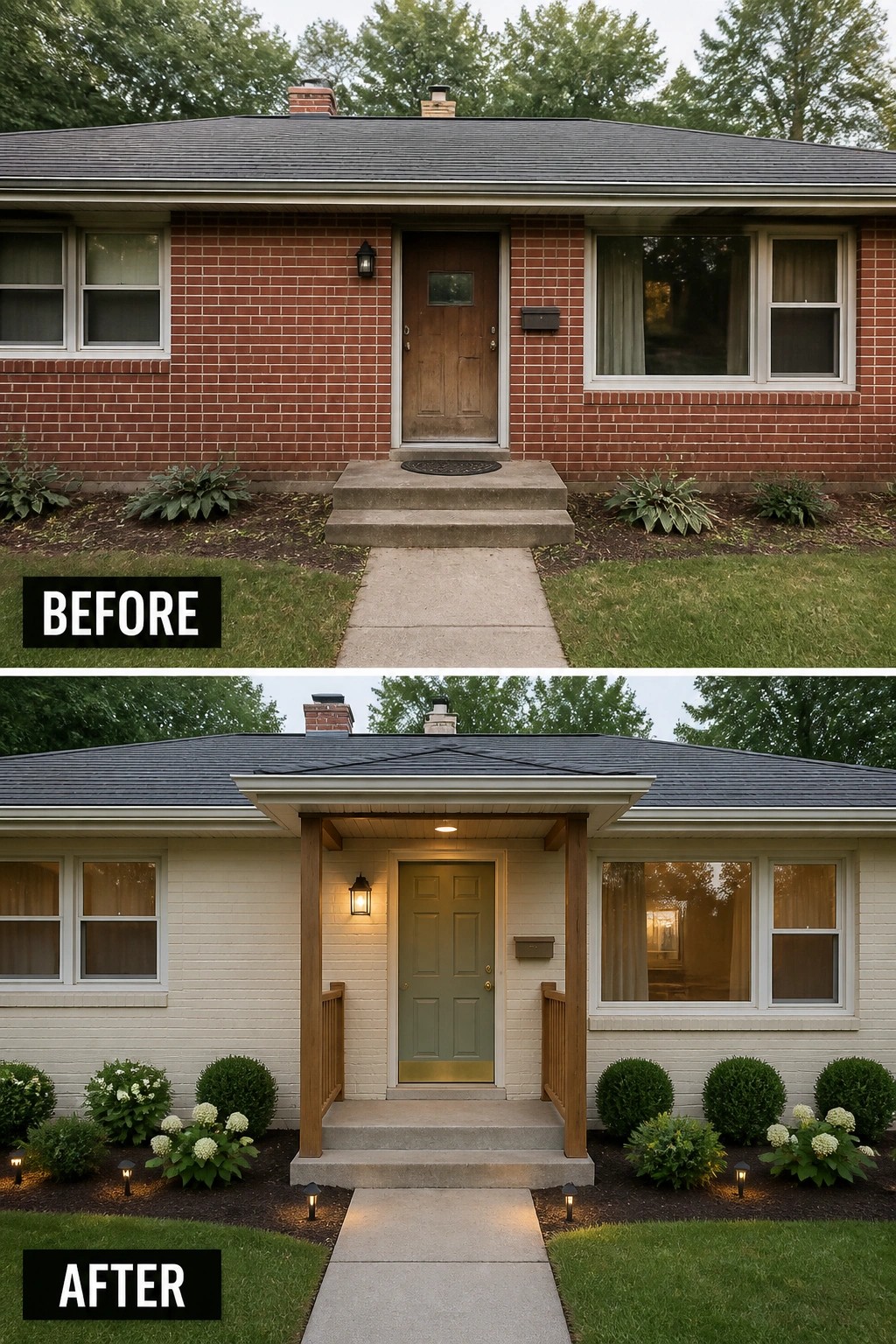
Adding a small covered porch and a clear entry point instantly changes how a house reads from the street. In this example a modest roof with wood posts and a fresh front door color turns an anonymous stoop into a proper entrance, while a single porch light and low plantings make the approach feel intentional rather than accidental.
You can do this on almost any ranch house by keeping the addition modest and in scale with the roofline. Focus on three practical moves: shelter the door with a simple overhang, pick one door color or material to be the focal point, and add basic lighting and low-maintenance shrubs to frame the steps. It’s an affordable way to give an old facade purpose and curb appeal without overbuilding.
A Welcoming Ranch Entry With A Small Raised Stoop
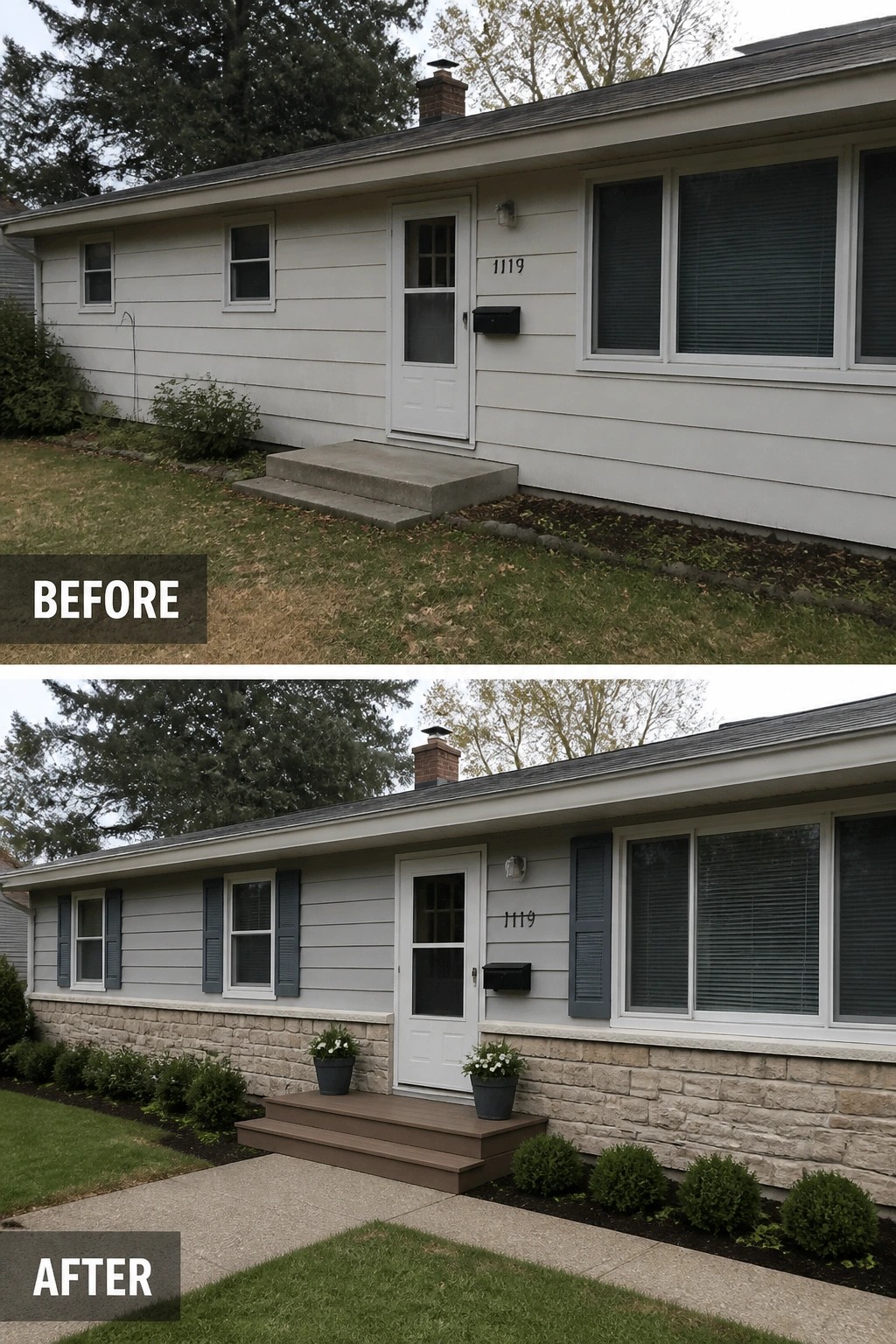
A tiny, intentional stoop and a couple of well-placed plants can turn a nondescript entry into a real front door. In this makeover the old concrete step is replaced by a modest raised platform and paired planters that frame the door, which immediately reads as an entrance instead of just a utilitarian step. That small change gives the house a focal point without rebuilding the whole facade.
This approach works best on low-slung ranches where scale is simple and you don’t want to overwhelm the front. Keep the new stoop low and wide enough to step on comfortably, choose weatherproof decking or composite, and use two matching pots with evergreen anchors plus seasonal flowers for color. Leave plenty of room for the path and mailbox so the entry stays easy to use—practical, tidy, and welcoming.
Refresh A Plain Garage Door To Improve Curb Appeal
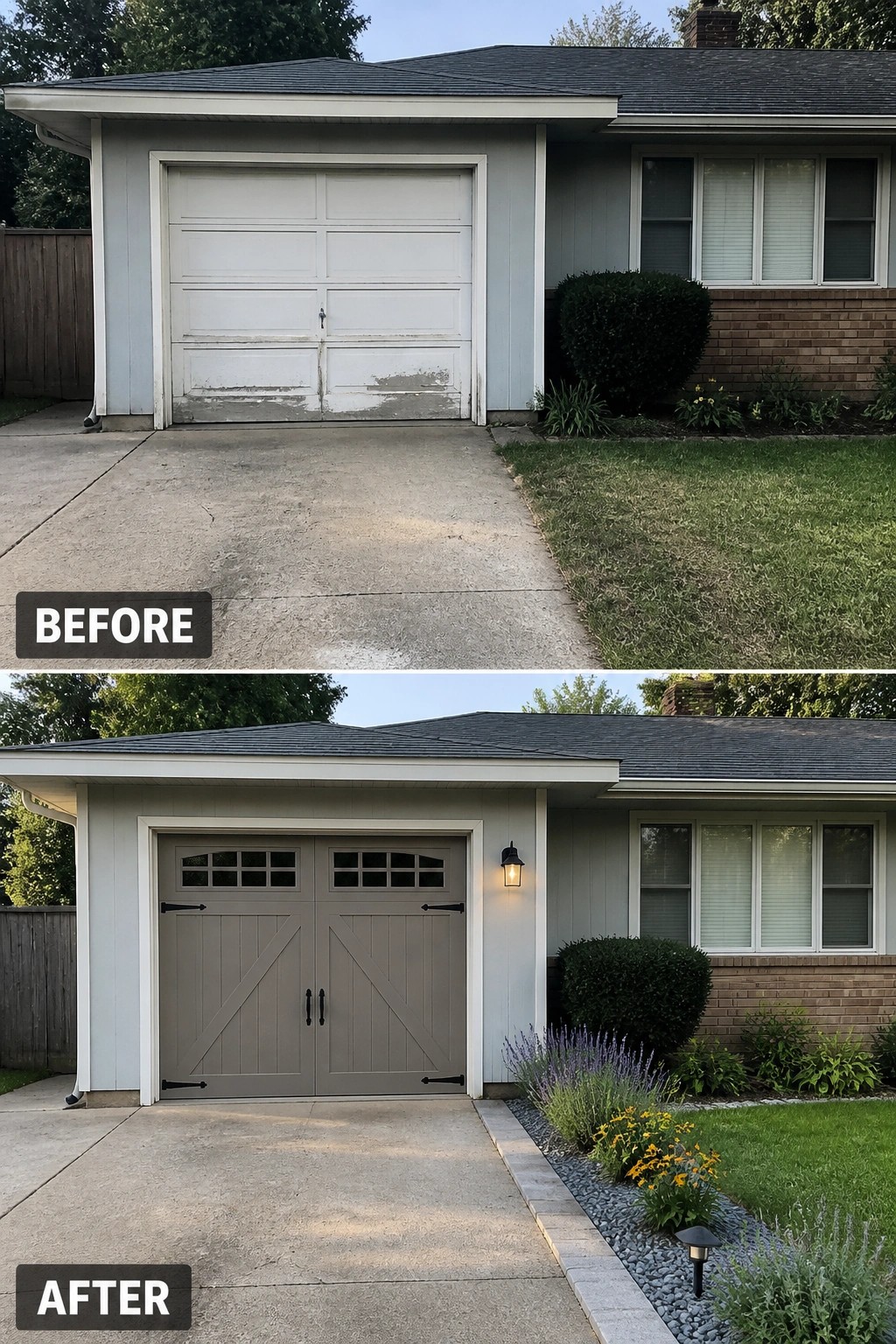
A battered, plain garage door is an easy target when you want to lift a 1950s ranch facade. Swapping in a carriage-style door (or painting and adding simple faux hardware) immediately gives the front of the house character, and a single exterior sconce beside the door finishes the look and makes the entry read as intentional. You only need one clear change to shift the whole face of the house.
This works well on modest ranches where the garage dominates the front. Choose a door color and hardware that tie to existing brick or trim, keep the scale simple so it does not overwhelm, and add one practical light for evening curb appeal. If a full replacement is too much, start with a fresh coat of paint and a couple of applied hinges and handles — small steps go a long way.
Make The Front Entry Feel Inviting
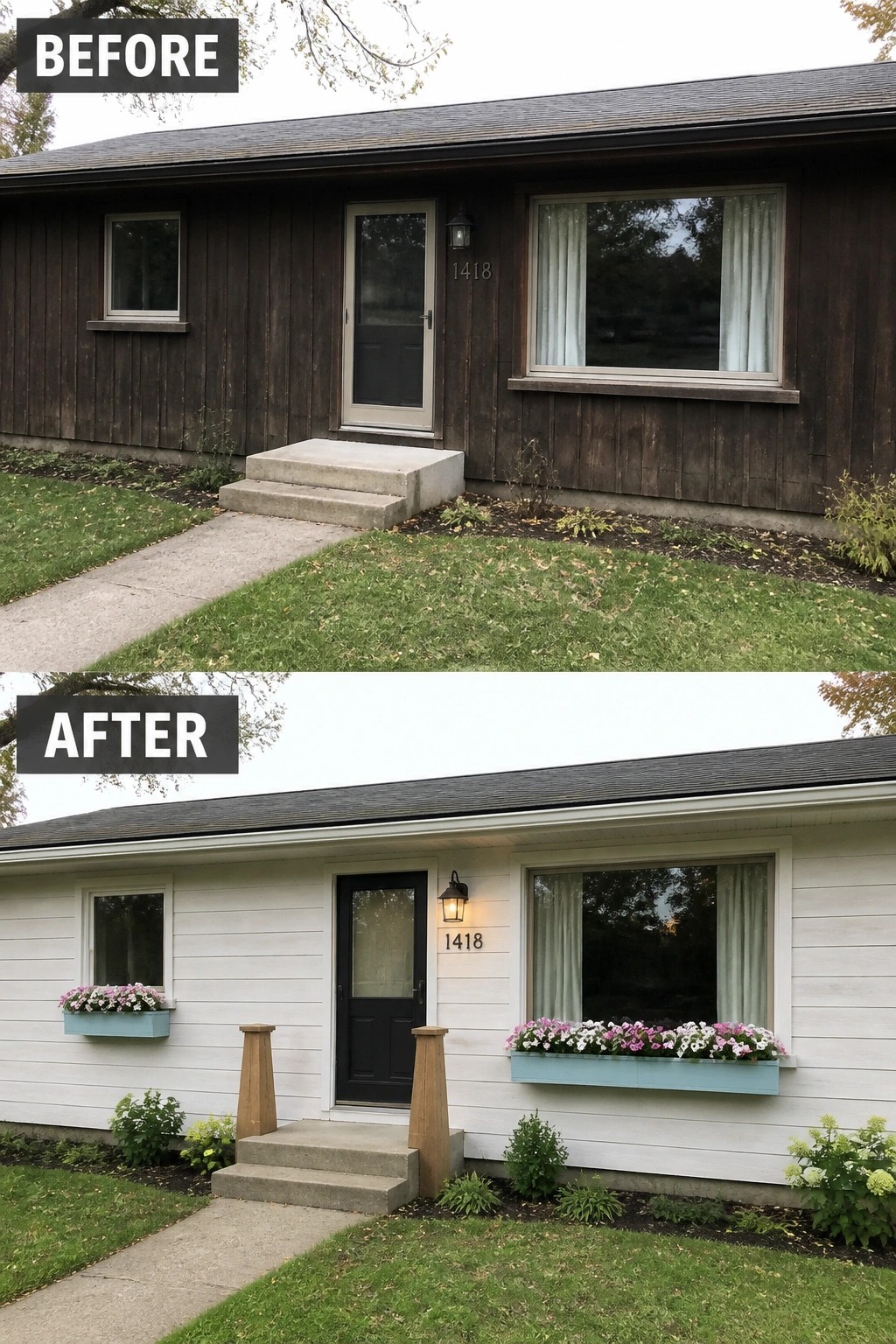
A quick, high-impact way to refresh a simple ranch is to treat the front entry as the focal point. In this example the dull, dark siding was lightened and the door, wall lantern, and window boxes were given contrasting colors—just those few changes make the porch read as intentional and cared for. It’s a small edit that changes the whole face of the house.
To copy it, start with a good clean and a fresh coat of paint on the siding so new details actually stand out. Pick one strong contrast color for the door and repeat it in a couple of accents like planter boxes or trim, add a single outdoor lantern and clear house numbers, and keep railings or posts simple so the path to the door stays obvious. This works especially well on midcentury ranches and modest homes where scale is small and a few focused updates go a long way.
Create Clean, Curved Garden Beds To Frame A Ranch Entry
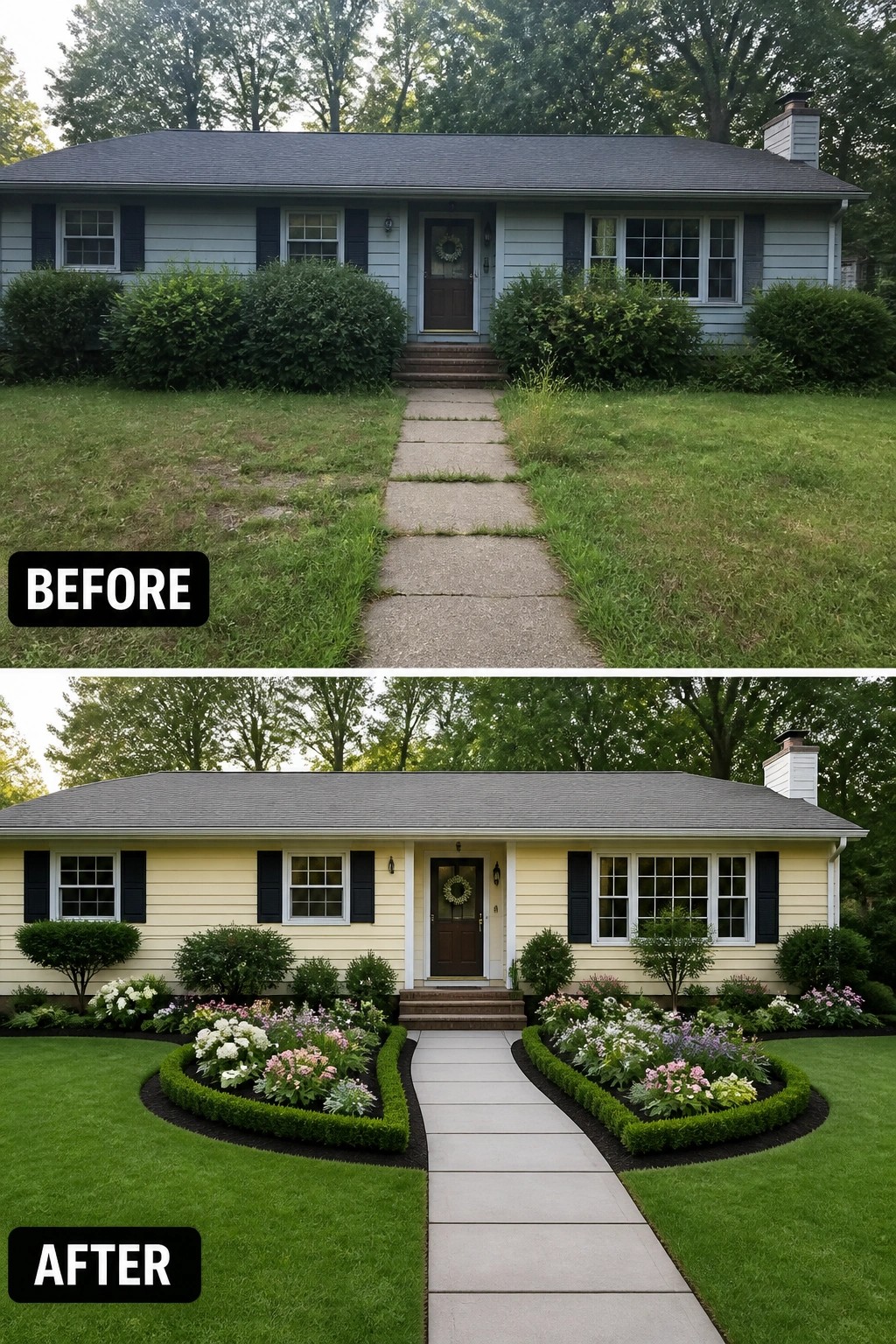
Turning a ragged row of overgrown shrubs into neat, curved planting beds instantly organizes the front yard and gives a small ranch house a softer, more intentional look. In this example the dense hedges were replaced with low boxwood edging, layered perennials, and dark mulch that highlight the walkway and the front door without hiding the house itself.
To try this at home, start by clearing and pruning the big, overgrown masses so you can see the house proportions. Lay out simple curved bed lines that echo the path, install a physical edge (stone, steel, or tightly clipped hedge), and plant one or two repeated shrubs with seasonal perennials in front for variety. Keep heights low so windows and trim stay visible, add fresh mulch for contrast, and plan a maintenance schedule so the clean shape lasts.
Add A Covered Entry With Simple Columns And Planters
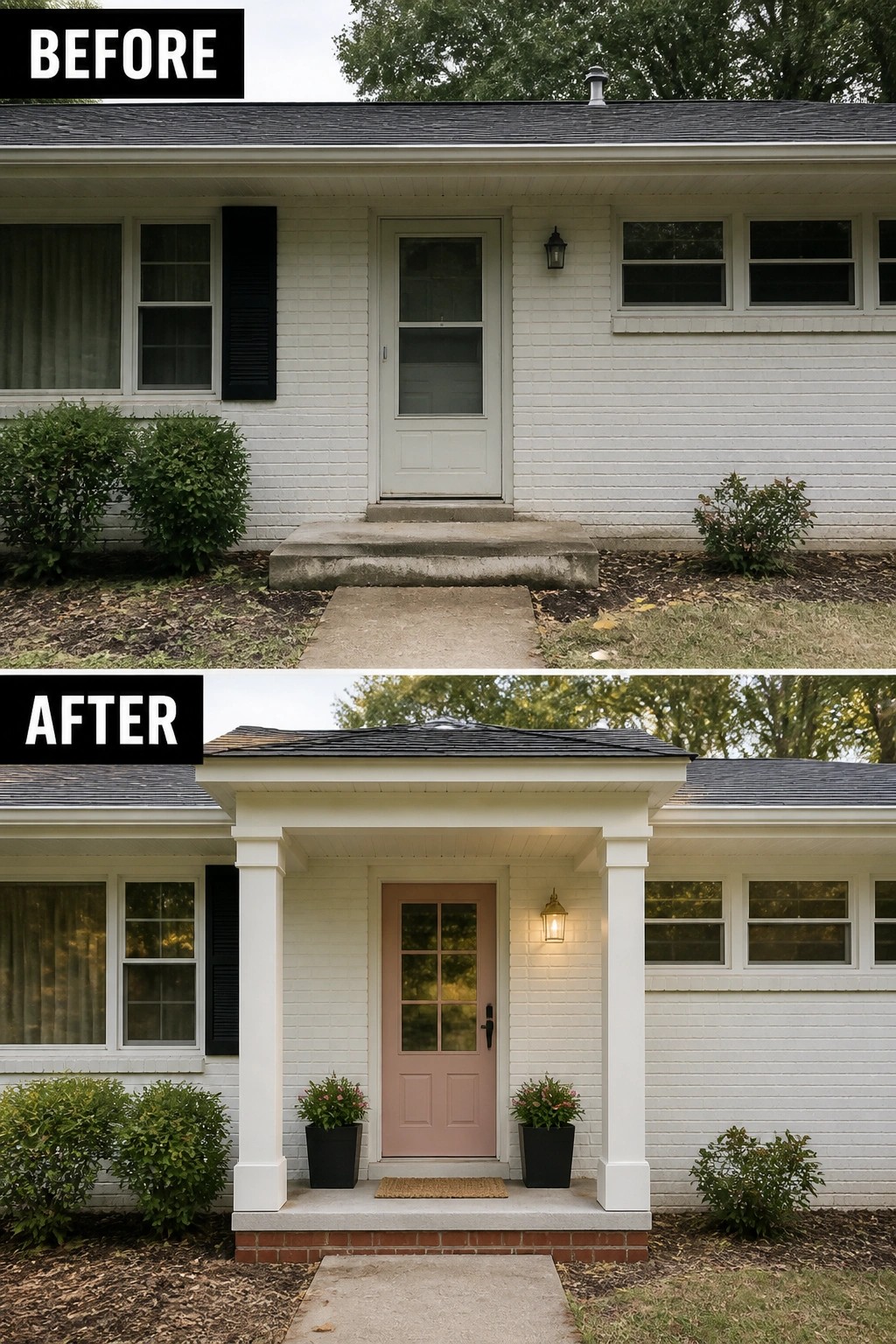
A narrow step and a blank door can feel forgotton on an otherwise tidy facade. Adding a small covered entry with square columns instantly defines the approach, while a new painted door, a single lantern, and matching planters create a clear landing that reads as an intentional front porch rather than just a stoop. Those two changes—structure plus simple styling—turn an ambiguous entry into a purposeful one.
You can copy this idea in stages to keep costs down. Start by defining the overhead with a modest roof or even a simple awning and sturdy posts, then pick one focal finish such as a painted door or an exterior light. Add two weatherproof planters and a small mat for scale, but leave room to move. This works best on single-story ranches and cottages where a compact, well-proportioned entry keeps the house feeling balanced without overbuilding.
Update A Plain Ranch Facade With Paint And Simple Trim
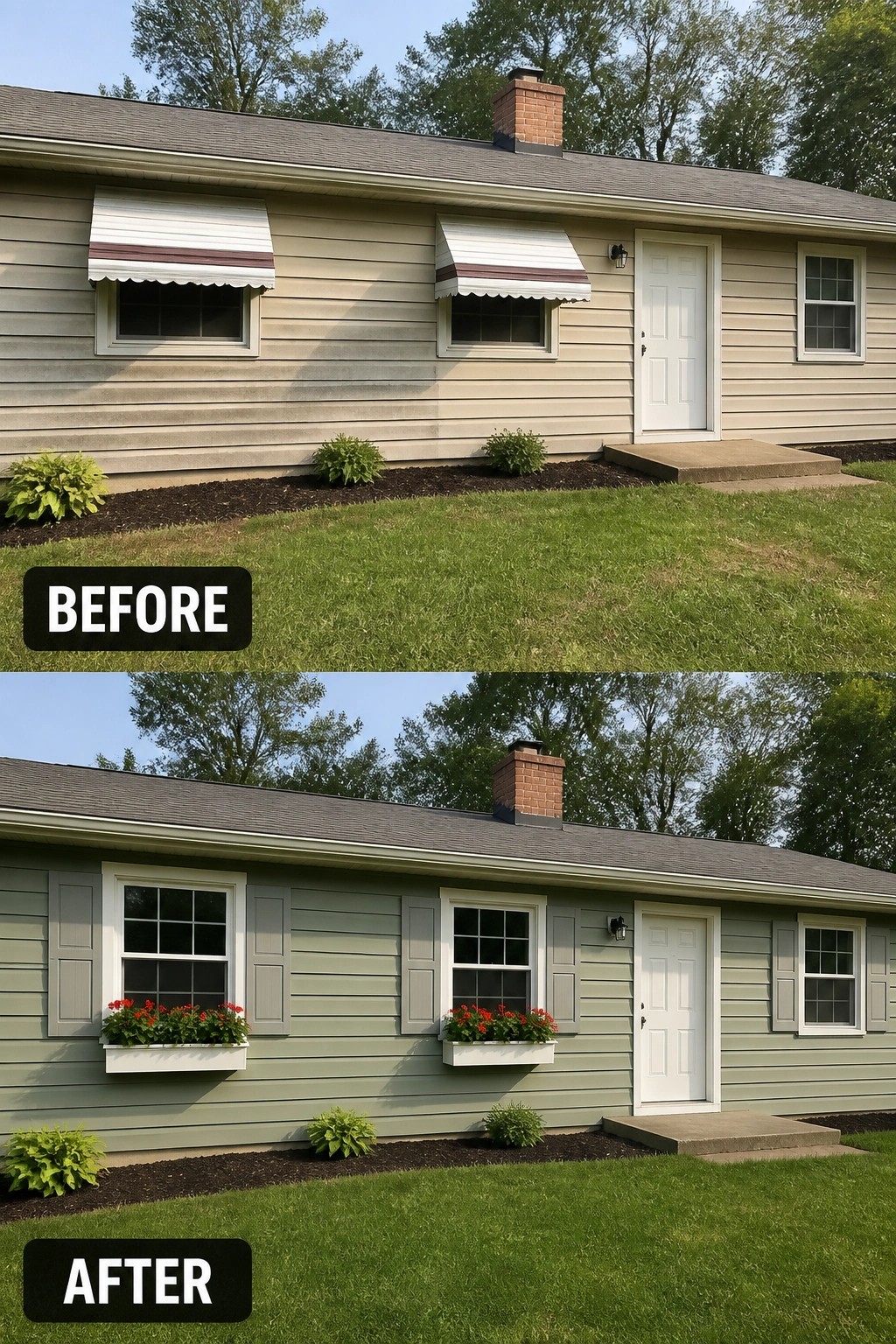
A fresh coat of soft, traditional paint plus a few classic details can change a dated 1950s ranch more than you might expect. In this example the old metal awnings were removed and the siding was repainted in a muted green, then framed with white trim, shutters, and window boxes—small moves that give the facade clearer proportion and an instant sense of care.
Start by cleaning the siding and deciding whether to remove or replace bulky elements like metal awnings. Choose one soft body color and a contrasting trim, add shutters sized to your windows, and install simple window boxes for seasonal flowers; use durable exterior paint and hardware so the look stays neat with minimal maintenance. Simple, not fussy.
Frame A Ranch Front Door With Matching Lanterns And Plantings
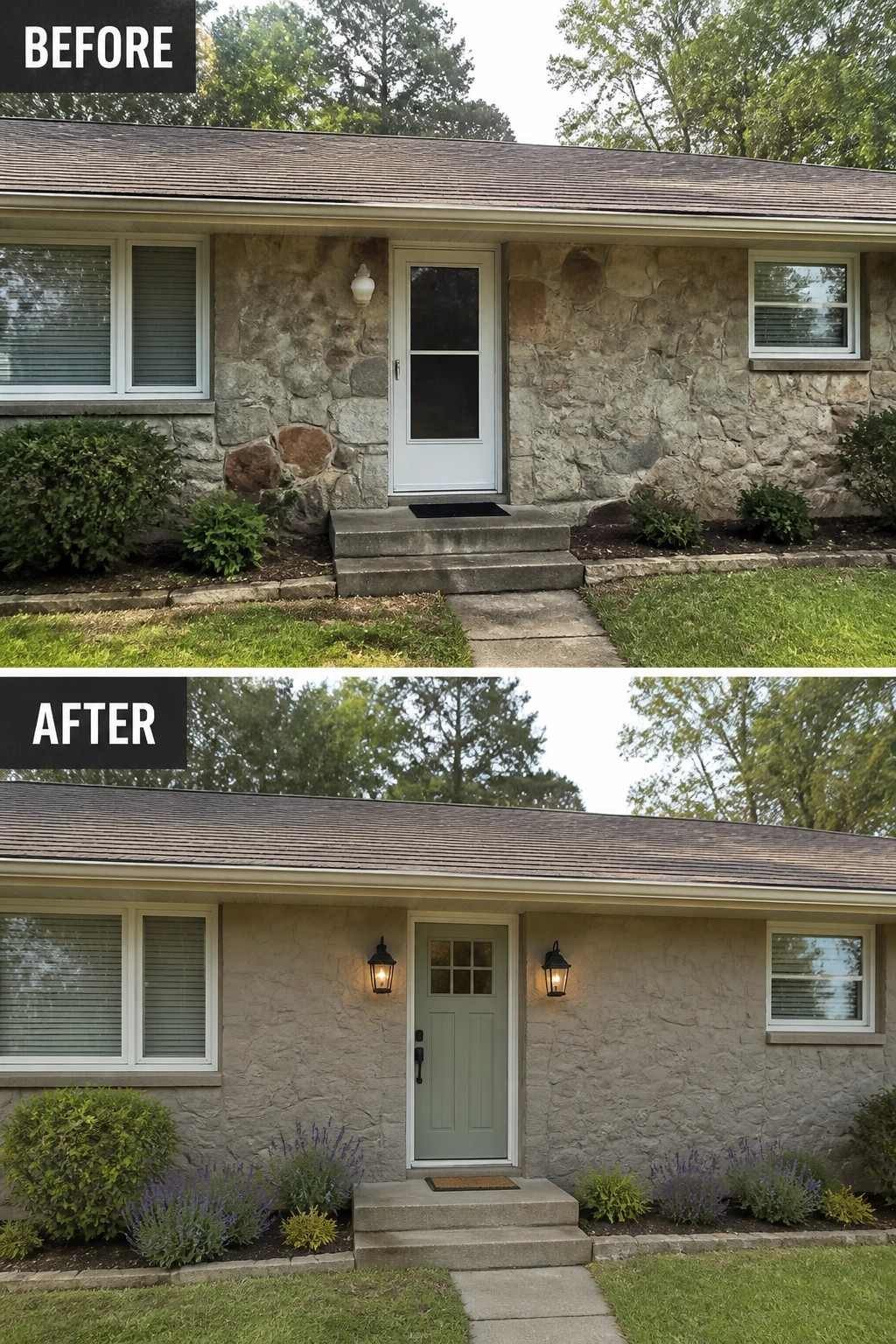
Small, focused changes at the front door can completely lift a simple ranch facade. In this example a plain storm door was replaced with a painted paneled door and flanked by two wall lanterns, while the planting bed was cleaned up and filled with low, repeat-color shrubs. That single focal point—the door and its lights—turns an anonymous entry into a purposeful front porch without major construction.
You can copy this on almost any modest one-story house: choose a door color that coordinates with your exterior tones, install matching lights on either side at eye level, and plant low, tidy shrubs or flowering perennials to frame the steps (keep scale in mind). Add a small doormat and leave the walkway clear so the entry reads as intentional rather than crowded.
Define Your Entry With A Stone Path
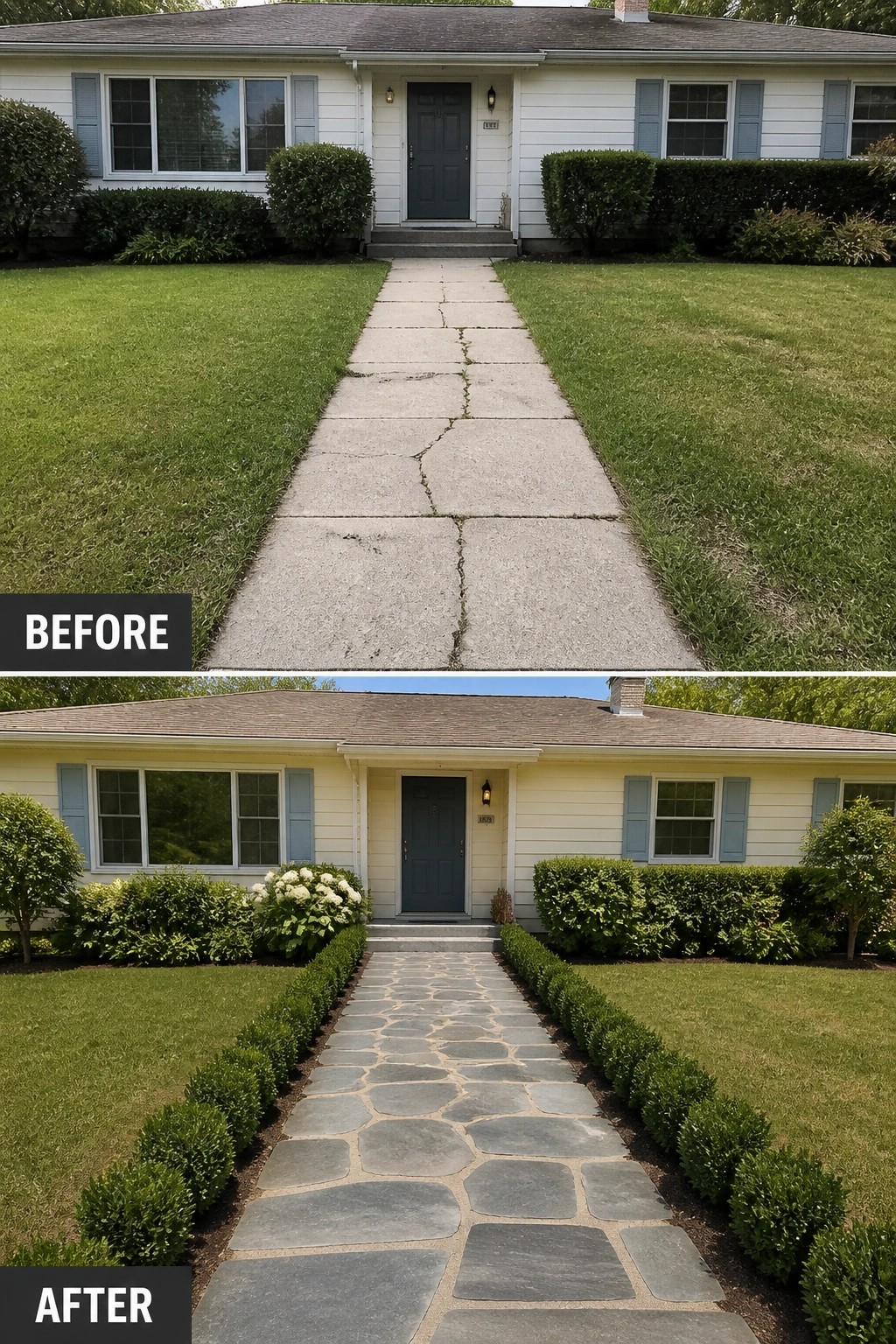
A cracked concrete walk can make an otherwise tidy ranch feel neglected. Swapping it for irregular stone pavers and low, clipped hedges creates a clear, classic approach that reads well with soft-traditional siding and shutters, and it gives the house a simple, intentional focal point.
To try this at home, pick flagstones that fit your scale and lay them on a compacted base for stability and drainage (professional base work is worth it). Plant low boxwood or similar edging to keep the path clean and mowing easy, and
Add A Low Raised Planter To Freshen A Ranch Facade
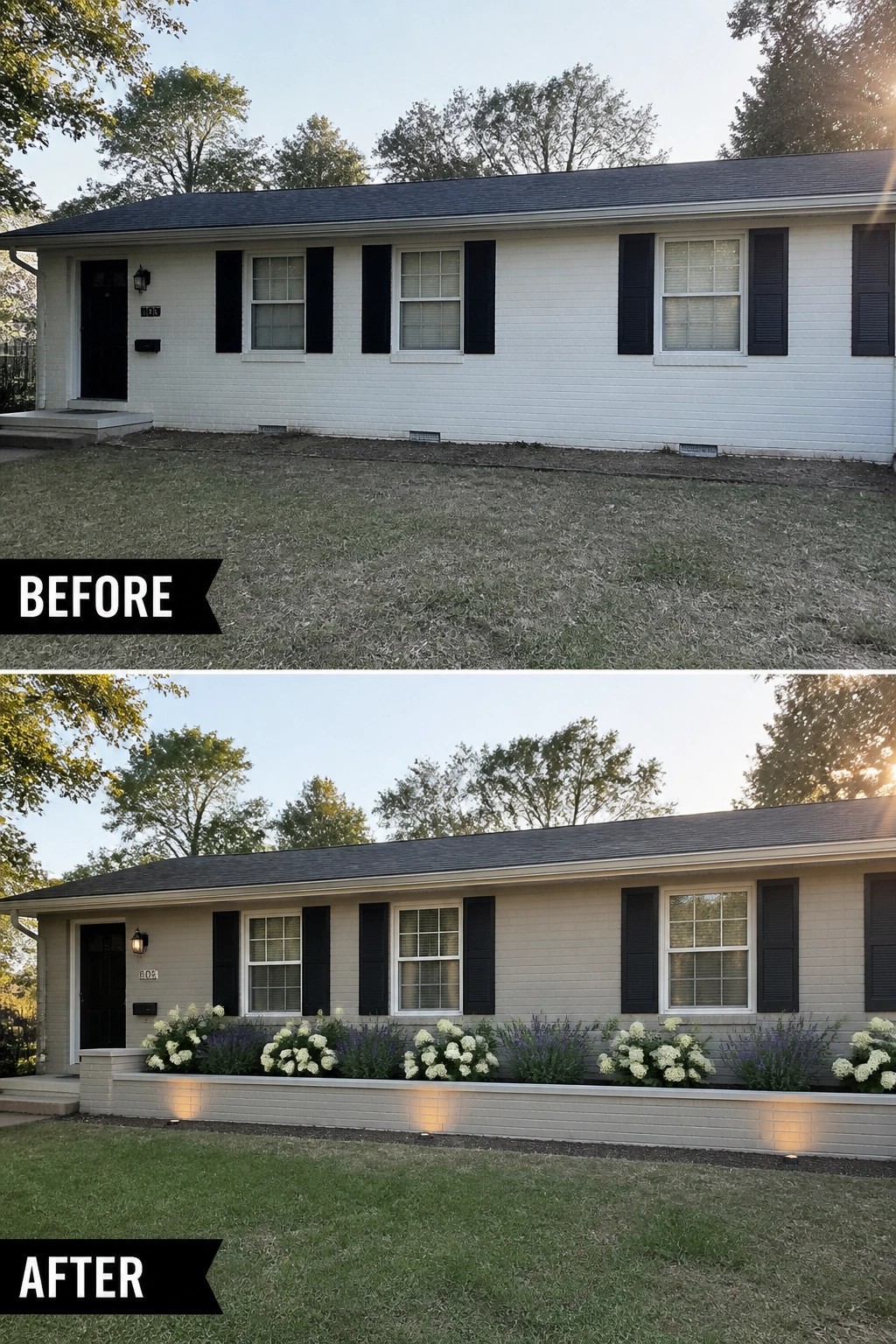
A single low planter bed running the length of the front wall is an easy way to give a long ranch house instant structure and charm. Replacing the once-empty strip with repeat masses of soft-colored perennials (think white hydrangeas and a row of lavender) and a few ground uplights creates rhythm across the facade without changing the roofline or windows. The result reads planned and finished instead of bare.
To copy this, keep the planter low so sightlines to the windows stay open and choose two or three reliable plants you can repeat for a cohesive look. Paint the planter to match or softly contrast the house, add simple low-voltage uplighting spaced evenly, and allow room for vents and window wells (don’t block access). Start with cleared soil and basic edging, then plant in groups for instant impact and easy maintenance.
Turn A Small Ranch Porch Into A Cozy Sitting Area
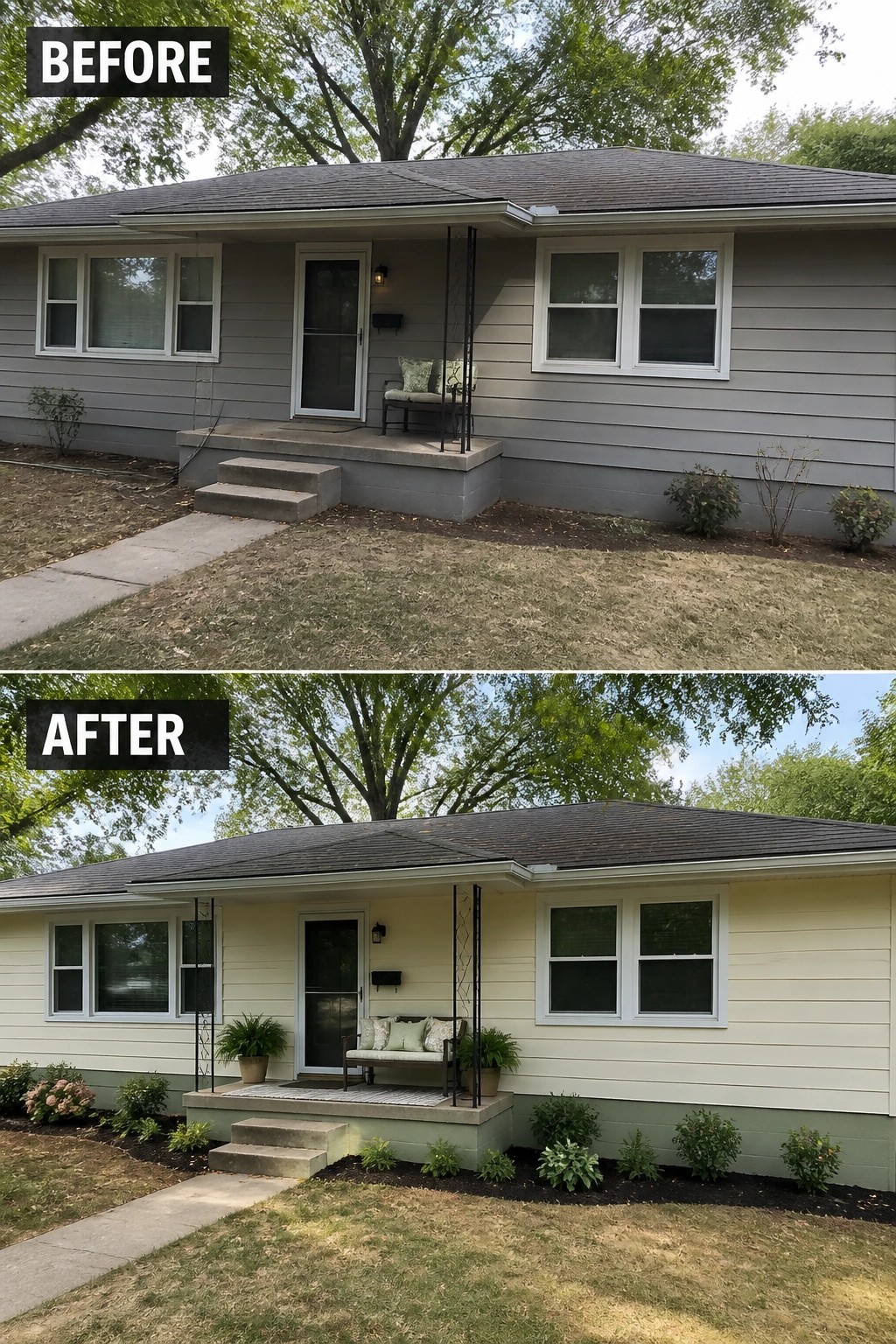
A small front porch can stop feeling like an afterthought when you give it a clear purpose: a tiny sitting area framed by fresh paint and plantings. In this example the facade lightened up and a simple bench, potted ferns, and a rug were added to create a welcoming spot, while a narrow band of new garden beds ties the porch into the yard. The result reads as an intentional entry instead of empty concrete.
Start with a cleanup and a single visible change, like a lighter paint tone for the siding or a coordinated paint for the foundation, then add one properly sized focal piece—a small bench or pair of chairs—and two matching planters. Keep circulation open so the path still works, pick weatherproof fabrics, and use repeat planting (low shrubs or perennials) along the foundation to give the look balance without overcrowding. Start small.
Upgrade Ranch Porch Steps With Wood Cladding And Railings
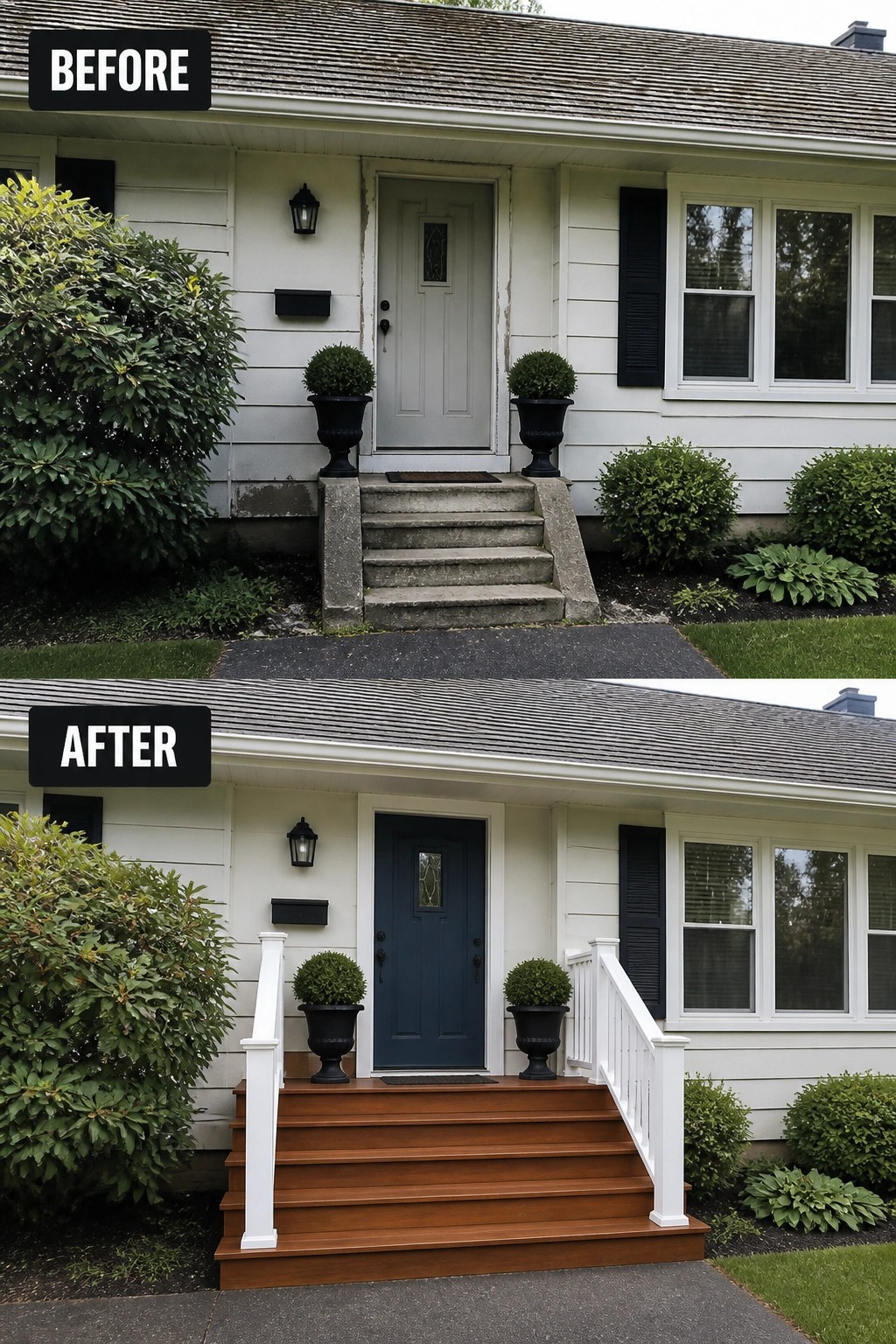
A narrow, uninviting entry becomes useful when you give it a clear landing and a focal point. Swapping chipped concrete steps for a proper set of wood-clad stairs with white railings and a deeper-toned front door (plus a pair of matching planters) instantly defines the porch as a purposeful place rather than just a way to the door.
Start with the basics: fix or replace the steps so they’re comfortable to use, then add a simple railing to frame the landing. Pick durable materials—pressure-treated wood or composite—and repeat one color from the house on the door or trim to tie things together. Finish with a pair of evergreen planters or a small doormat so the entry reads as intentional without blocking the path.
Add A Simple Picket Fence And Defined Garden Beds
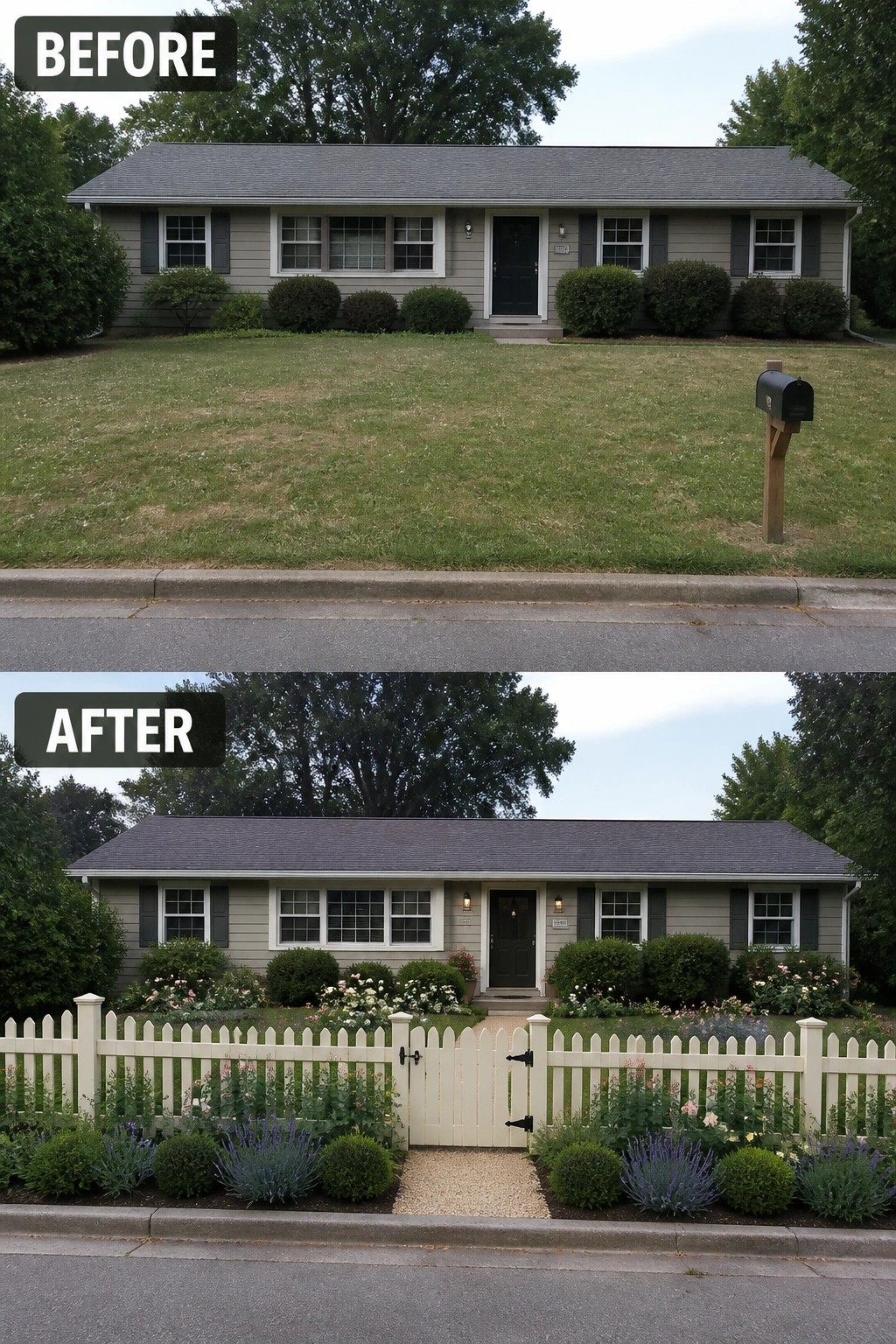
A low picket fence and neat planting beds give a plain ranch house an immediate sense of purpose. In the example shown a small white gate, a narrow gravel path, and tidy garden beds replace an open, unstructured lawn and make the entry feel intentional and welcoming.
Start by clearing the lawn edge and laying a simple path to the door to create a focal route. Use low, repeatable shrubs close to the house and a mix of perennials toward the curb so nothing overwhelms the facade; keep the fence set back a few feet and a neutral paint color so the house still reads as the main feature.
Add Trim And Shutters To Boost Curb Appeal
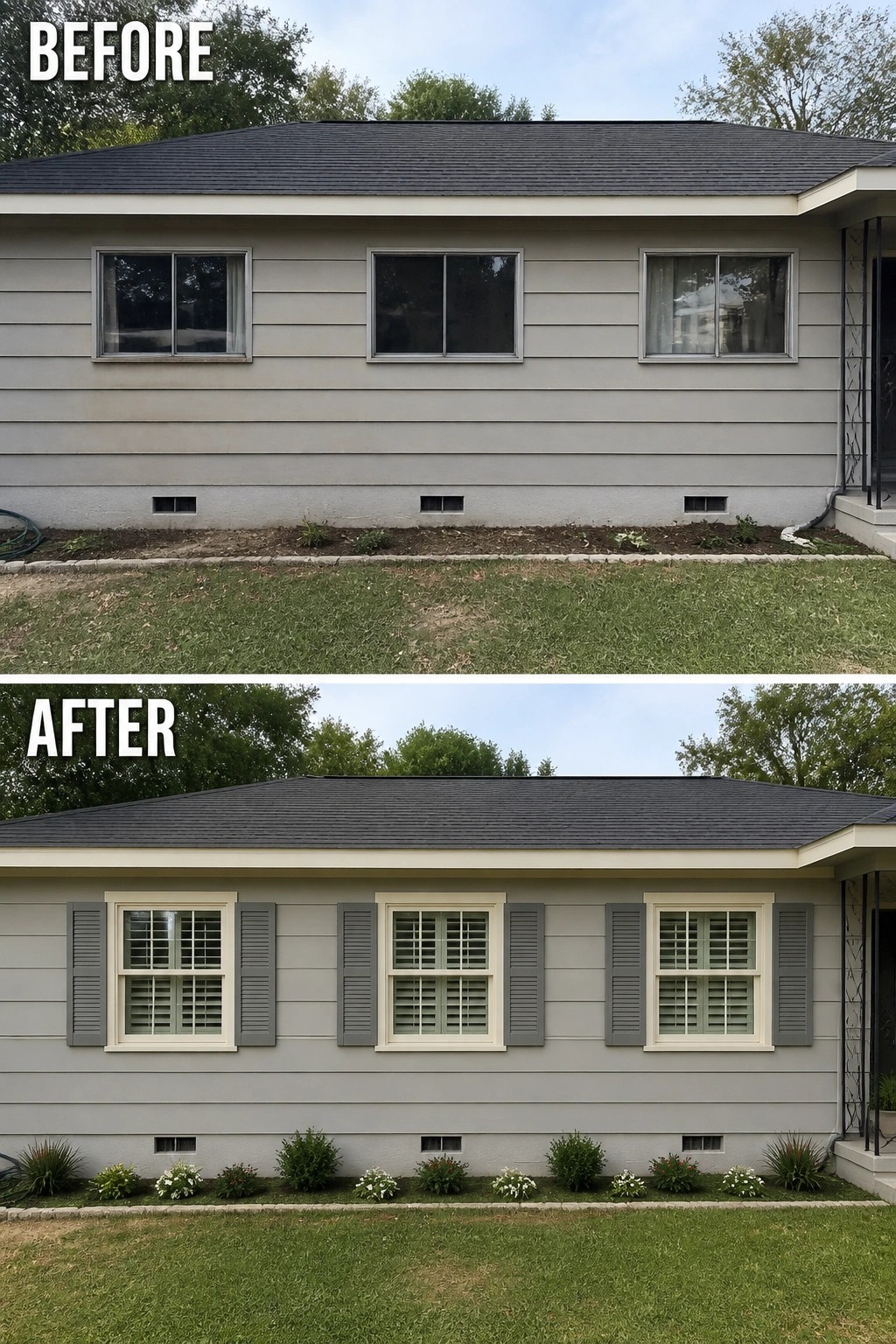
Framing plain windows with painted casings and a pair of shutters is an easy way to give a midcentury ranch a finished, period-appropriate look. In this example the simple addition of window trim, coordinated shutters, and a tidy planted border turns bland horizontal siding into a composed facade that reads intentional rather than neglected.
To try this at home, pick a trim color that contrasts softly with your siding and choose shutters sized to match the window proportions so they feel balanced. Start with one or two windows to test scale, and finish the look with a low, repeat planting line to anchor the elevation and hide foundation vents. Keep the installation appropriate for your siding type so trim sits flush and sheds water properly.
Give A Bare Carport A Purposeful, Polished Entry
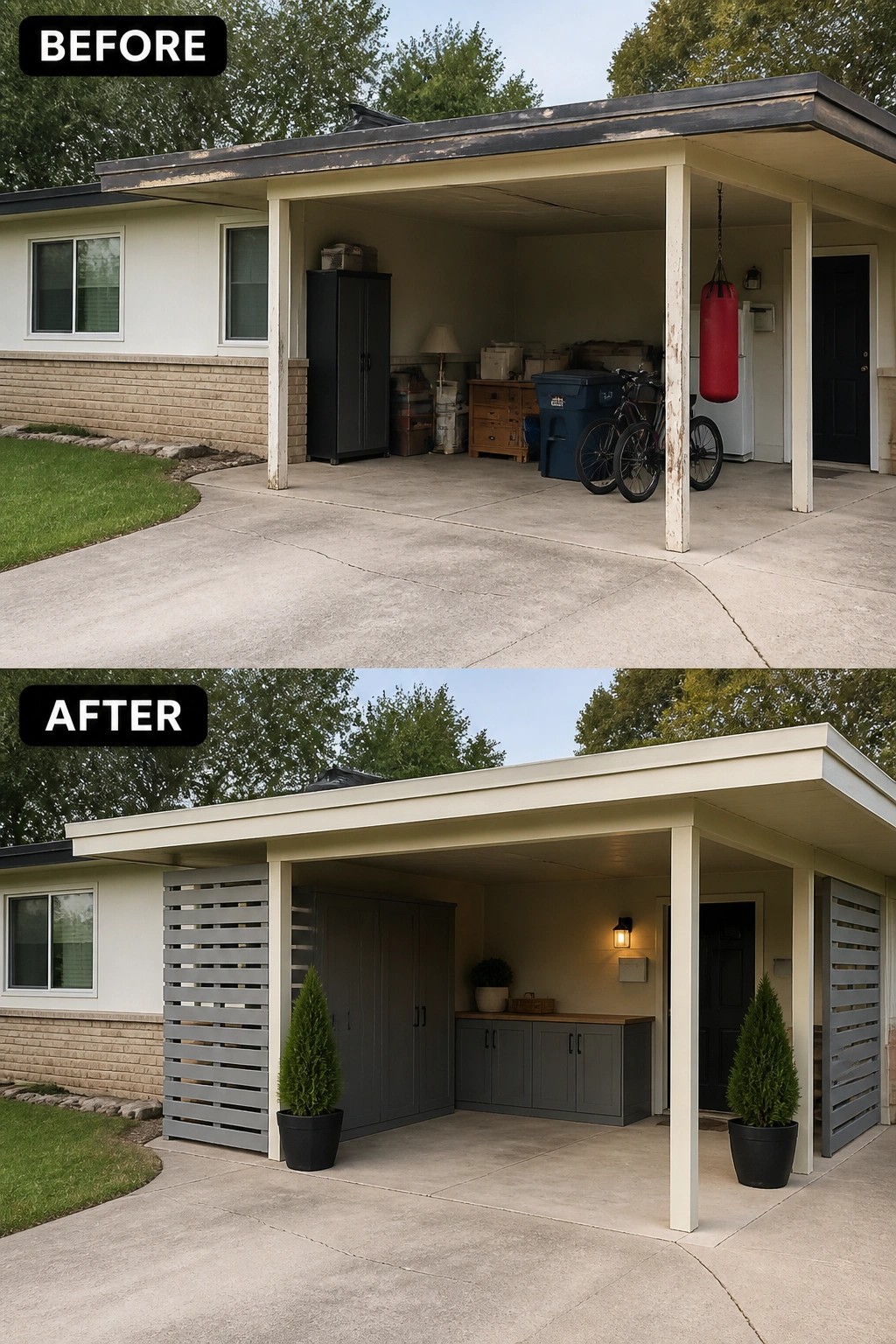
A covered carport or side porch can feel like wasted space when it is cluttered and unfinished. Tucking in simple built cabinetry and a matching slatted screen, then painting them to coordinate with the house, immediately turns that spot into a tidy entry zone. One or two planters and a practical wall light finish the idea without crowding the path.
Do the work in small steps: clear and sort what’s there first, then add weatherproof storage sized to leave a clear walking route. Pick a neutral paint for trim and storage so it reads as part of the house, and use repeating elements (two identical planters, a single light) to make the area feel intentional. This approach suits midcentury ranches especially well and keeps improvements affordable and low maintenance.
Finish A Raised Front Bed With Clean Edges And Simple Planting
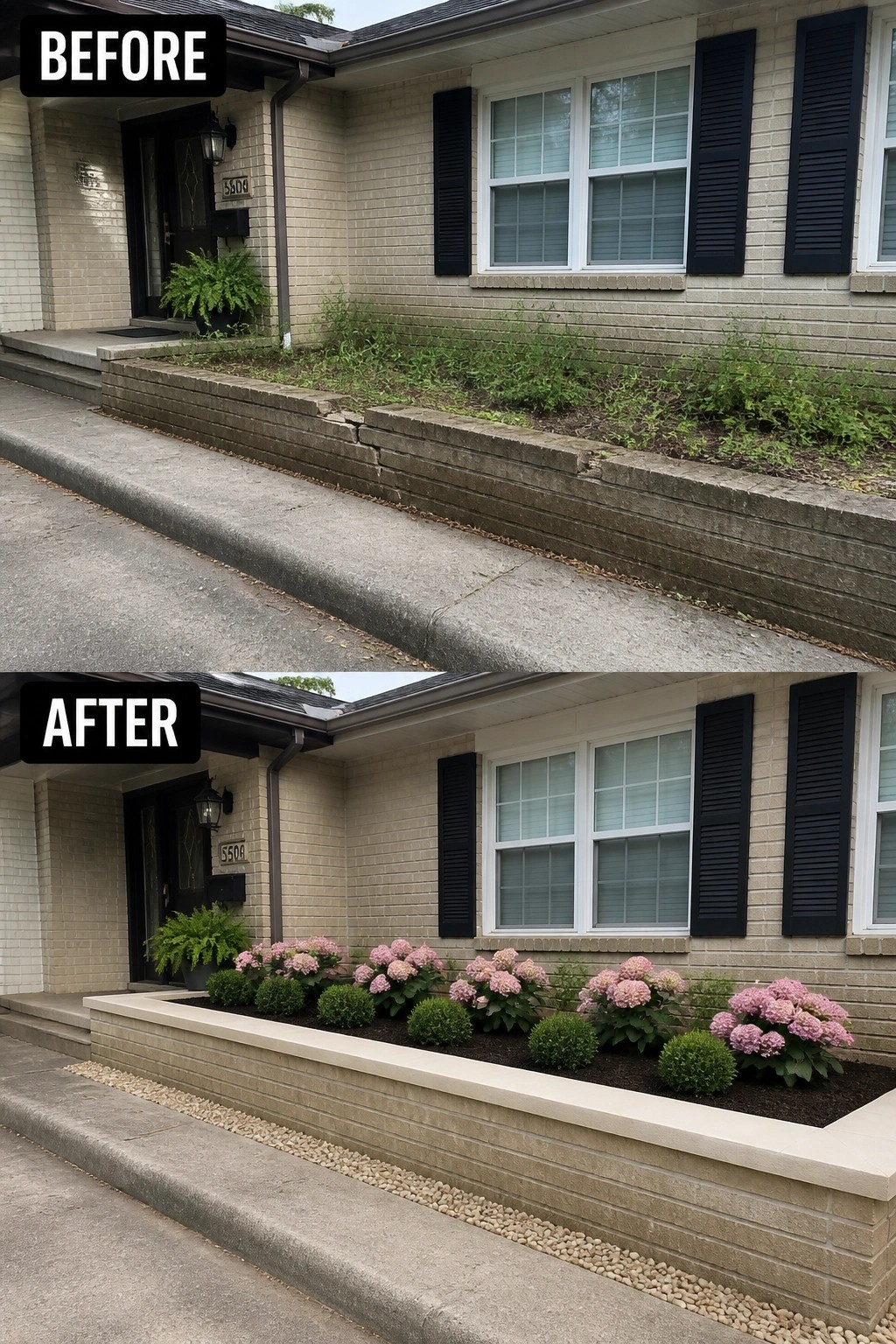
A tired, overgrown planter can suddenly look intentional when you give it a neat edge and a small, repeated planting scheme. In this makeover a cracked, weedy bed is repaired and capped with a clean stone coping, then planted with repeating round evergreens and pink hydrangeas for a calm, classic look. The clear horizontal line of the cap and the rhythm of two plant types make the whole facade feel cared for without fuss.
To copy the idea, start with cleanup: remove weeds, fix or add a low coping stone, and bring in fresh soil and dark mulch to set contrast. Choose one evergreen for structure and one flowering shrub for seasonal interest, space them evenly, and keep mature heights below the window sills so the house stays visible. Add a narrow gravel strip along the curb for drainage and low maintenance. Works especially well on midcentury ranches where simple repetition and crisp edges read as neat and intentional.
Finish An Open Ranch Porch Base With Lattice And Planting
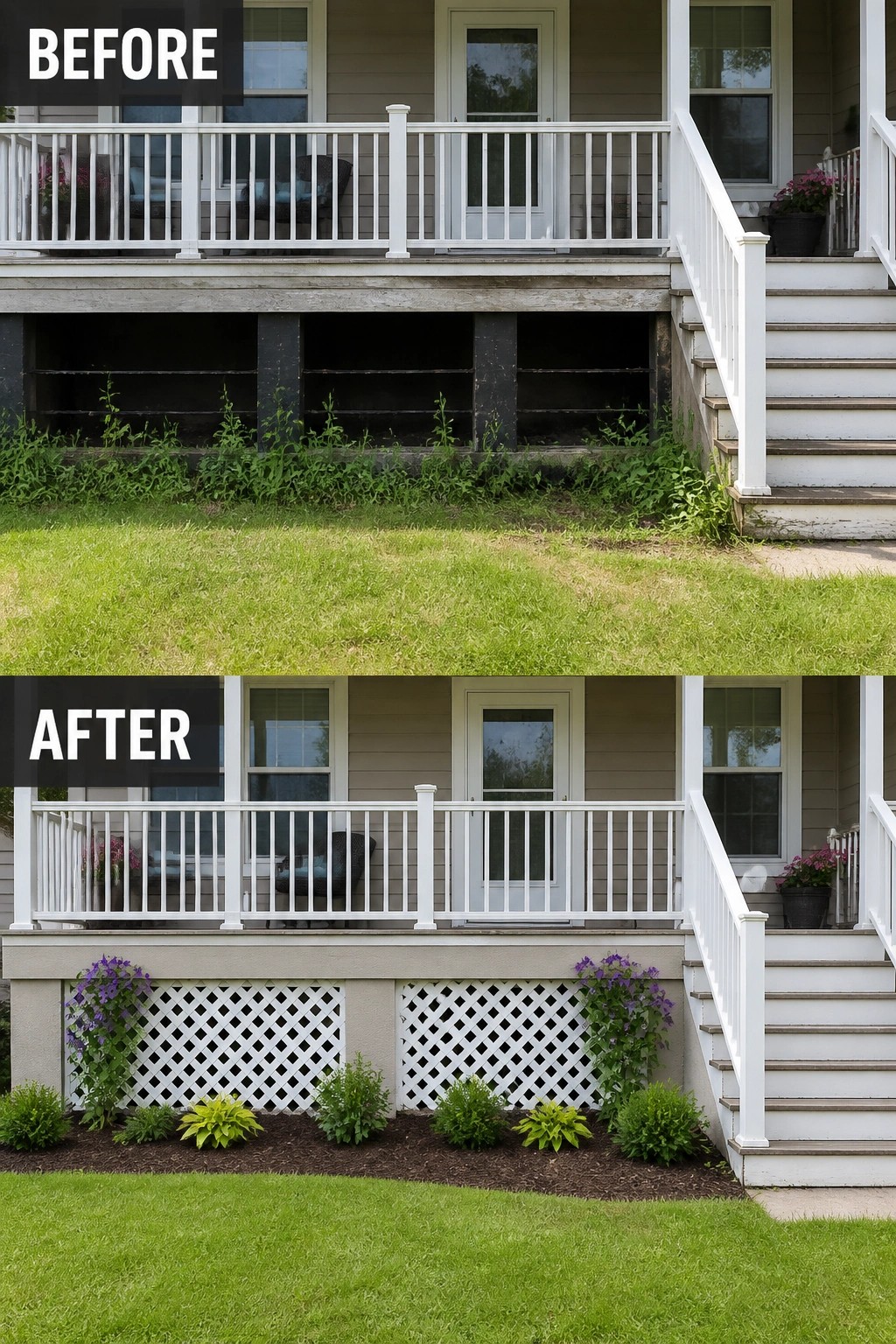
A simple way to tidy a 1950s ranch is to finish the porch base and frame it with planting. Swapping an open, weedy crawlspace for a painted lattice skirt and a narrow mulch bed with a few shrubs immediately makes the entry feel intentional — the porch stops looking like an unfinished platform and starts to read as part of the house.
Do it with practical choices: pick rot-resistant lattice or prefab panels painted to match the trim, leave an access panel for the crawlspace, and plant a small, low-maintenance bed (three to five repeat plants plus a climber
Create A Focused Ranch Entry With A Soft Green Door And Lanterns
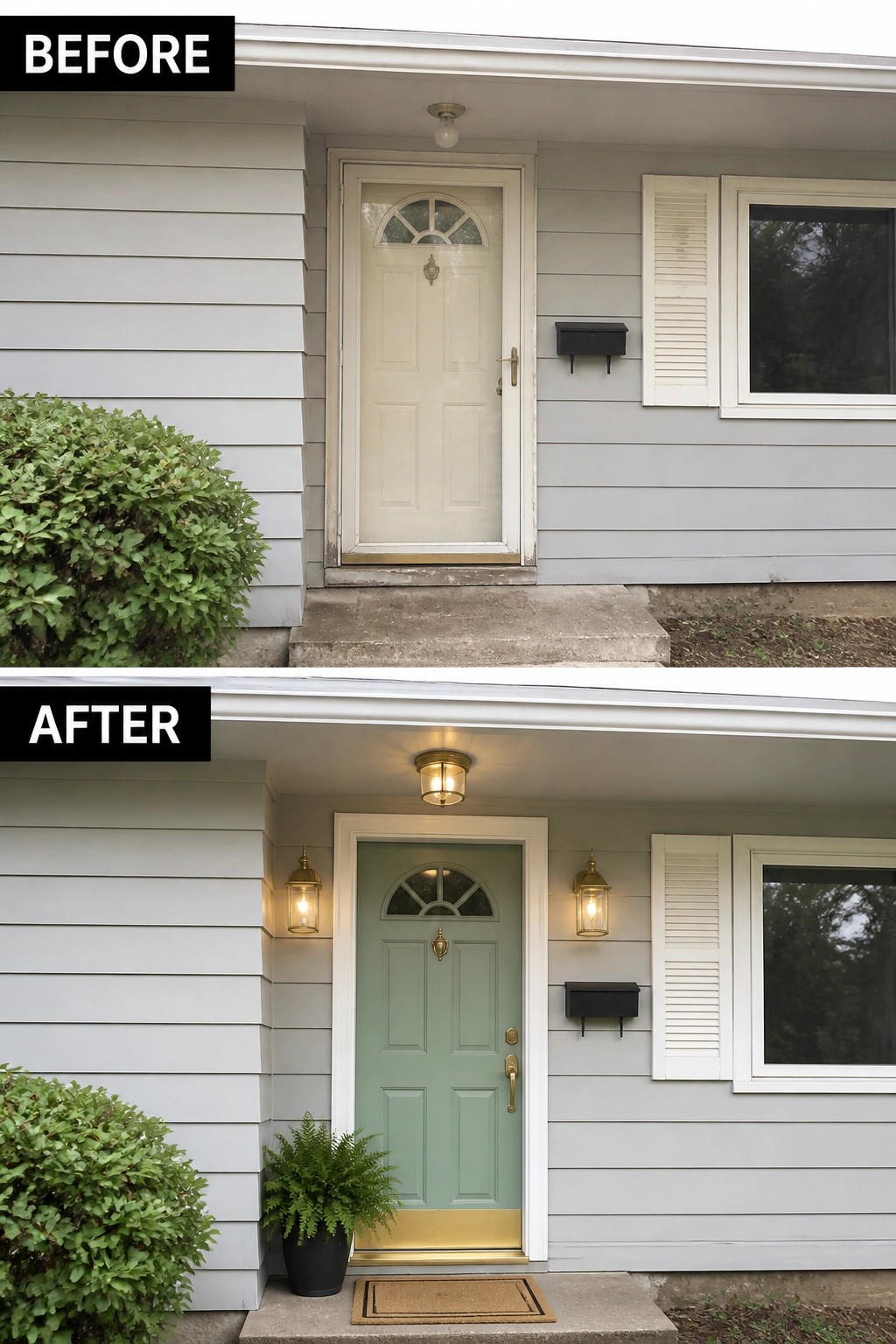
A focused entry update makes a small ranch porch feel deliberate instead of neglected. Pick one main change — here a soft green door color plus matching brass hardware and new lanterns — and add a single planter and a doormat to set the scene. That small cluster of decisions creates a clear focal point and signals the porch is meant to be used, not ignored.
Start by cleaning and repairing the threshold, then choose a door color that complements your siding and repeats in one or two accents (hardware, lights, or a planter). Keep scale in mind: small lanterns and a single pot suit a compact recessed entry, and choose weatherproof finishes so the styling lasts. Simple and practical.
Add A Low-Maintenance Plant Bed Along The House
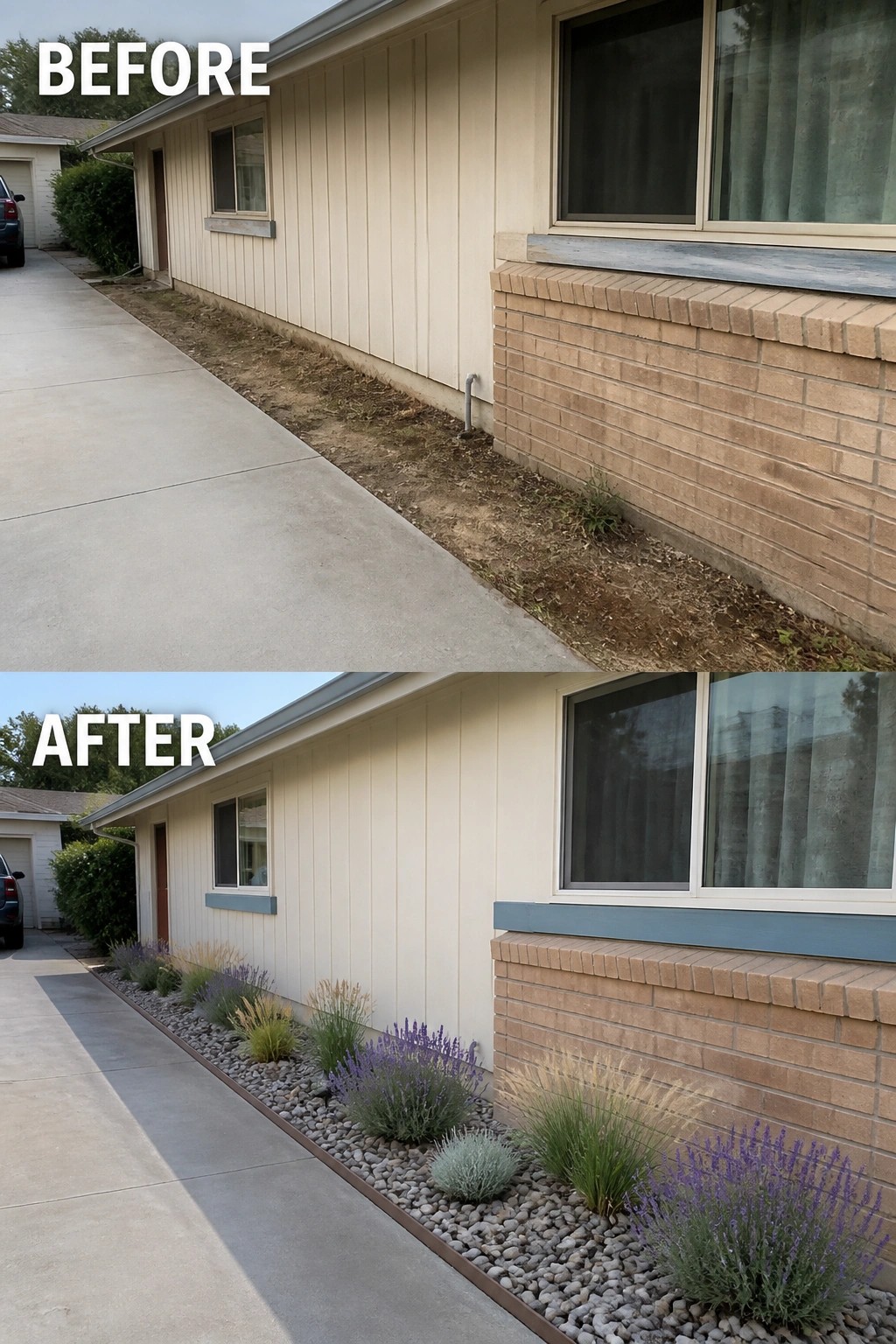
A thin, neglected strip along a ranch house can make the whole facade feel unfinished. Replacing the bare dirt with a narrow bed edged in metal and filled with river rock plus repeating clumps of lavender and ornamental grasses gives the front a neat, intentional look while staying very low maintenance.
To copy this, clear and level the strip, install a simple edge to keep gravel and soil separate, lay landscape fabric, then add washed river rock. Plant in small groups and repeat the same two or three species for a steady rhythm, choose drought-tolerant varieties, and run a drip line while the plants establish so watering stays minimal. Keep heights low under windows and leave a slim clearance next to the driveway for easy access.
Frequently Asked Questions
Q: How do I choose a soft traditional color palette that feels true to a 1950s ranch?
A: Start with a warm neutral for large surfaces and pick one or two muted accent hues for doors or an accent wall. Test paint patches on the house so you see them in morning and evening light. Keep trim a crisp, slightly warm white to tie everything together.
Q: I want a more functional kitchen but love vintage character—how do I balance both?
A: Keep original cabinet frames or built-in features when they’re solid, then swap doors or paint them and add modern, efficient appliances. Pick classic materials like subway tile or butcher block to keep that period feel while improving usability. Small changes like new hardware and under-cabinet lighting make a big difference.
Q: Will painting over original wood trim or paneling ruin the house’s charm?
A: You don’t have to paint everything; leave good-quality wood pieces natural and refinish them, and paint only tired or damaged trim to freshen the space (leave a mantel or staircase newel post natural if it’s handsome). Painted trim can look very period-correct when you pick a soft white that warms the room. Use proper primer and a satin finish so it lasts.
Q: What inexpensive updates will mimic the looks in the makeovers without a huge budget?
A: A fresh coat of paint, new light fixtures, and swapped cabinet hardware give an immediate lift. Add updated textiles and a few well-placed vintage finds to sell the style.