

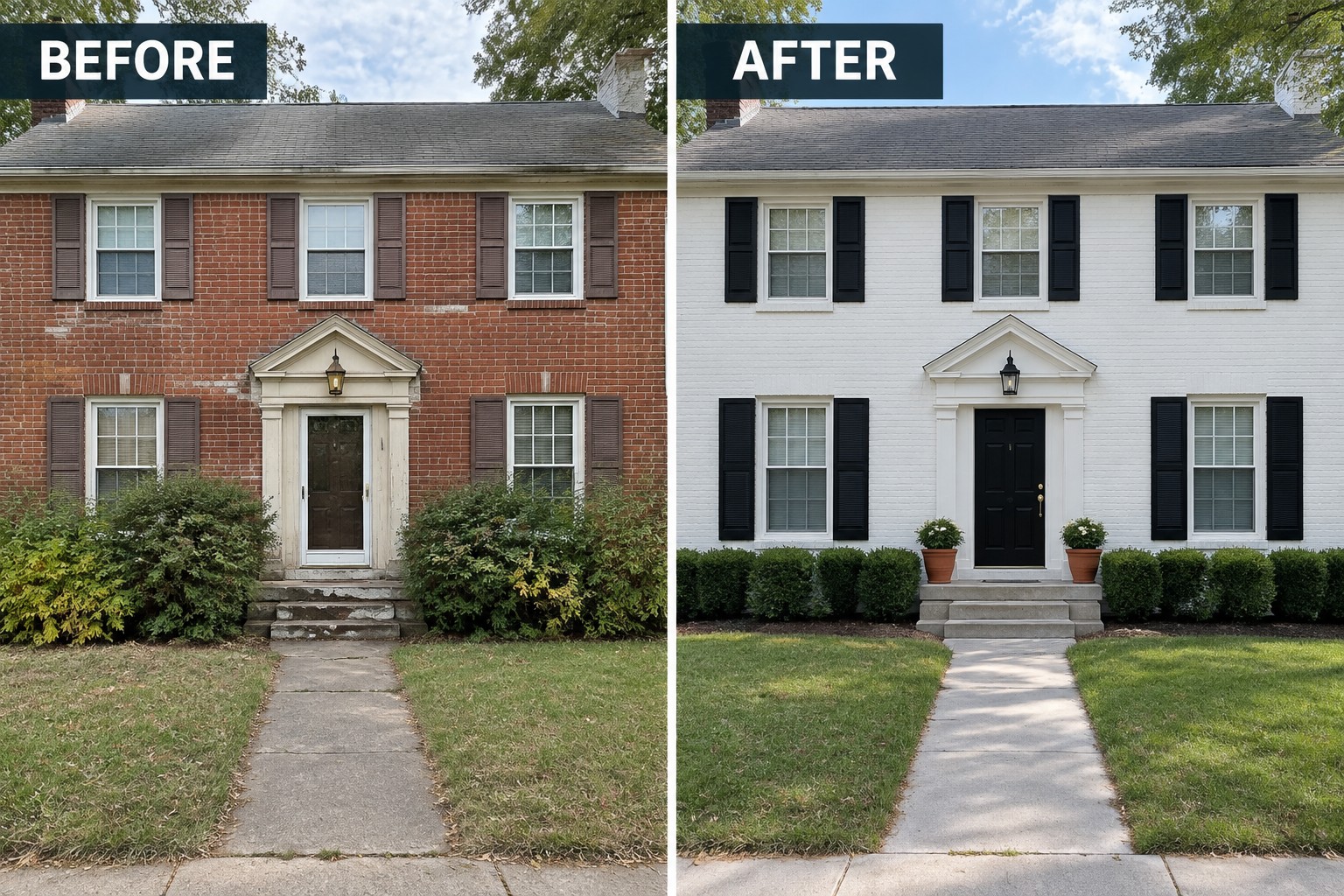
When the brick on a colonial facade starts looking tired it often pulls down the whole front of the house even if the structure is sound.
Adding paint in the right shade can lift those surfaces and help the windows and doors stand out more clearly.
The effect reaches the street right away.
I like seeing how some homeowners keep the original details intact while still getting that updated look.
A few of the approaches here seem worth trying if the brick needs attention but a full rebuild does not.
Paint Red Brick White For A Brighter Colonial Exterior
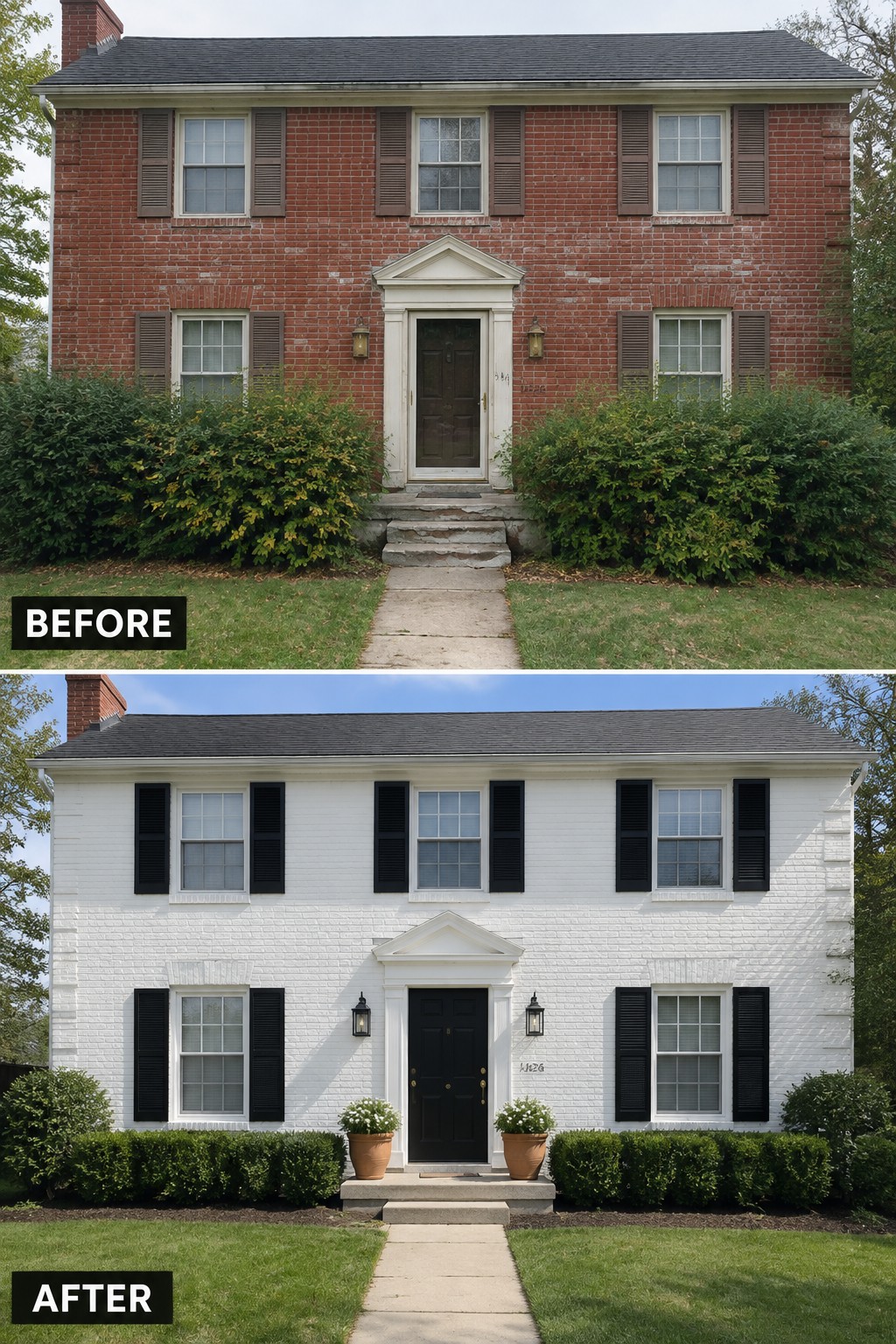
Painting the brick from red to white immediately lightens the whole house and gives it a cleaner colonial look. The shift to black shutters and a black door adds simple contrast that helps the entry stand out without adding extra trim or ornament.
This works best on brick homes where the structure is solid but the original color feels heavy or dated. Use a good masonry paint made for exterior brick, and make sure the surface is clean and dry before you start so the new color lasts.
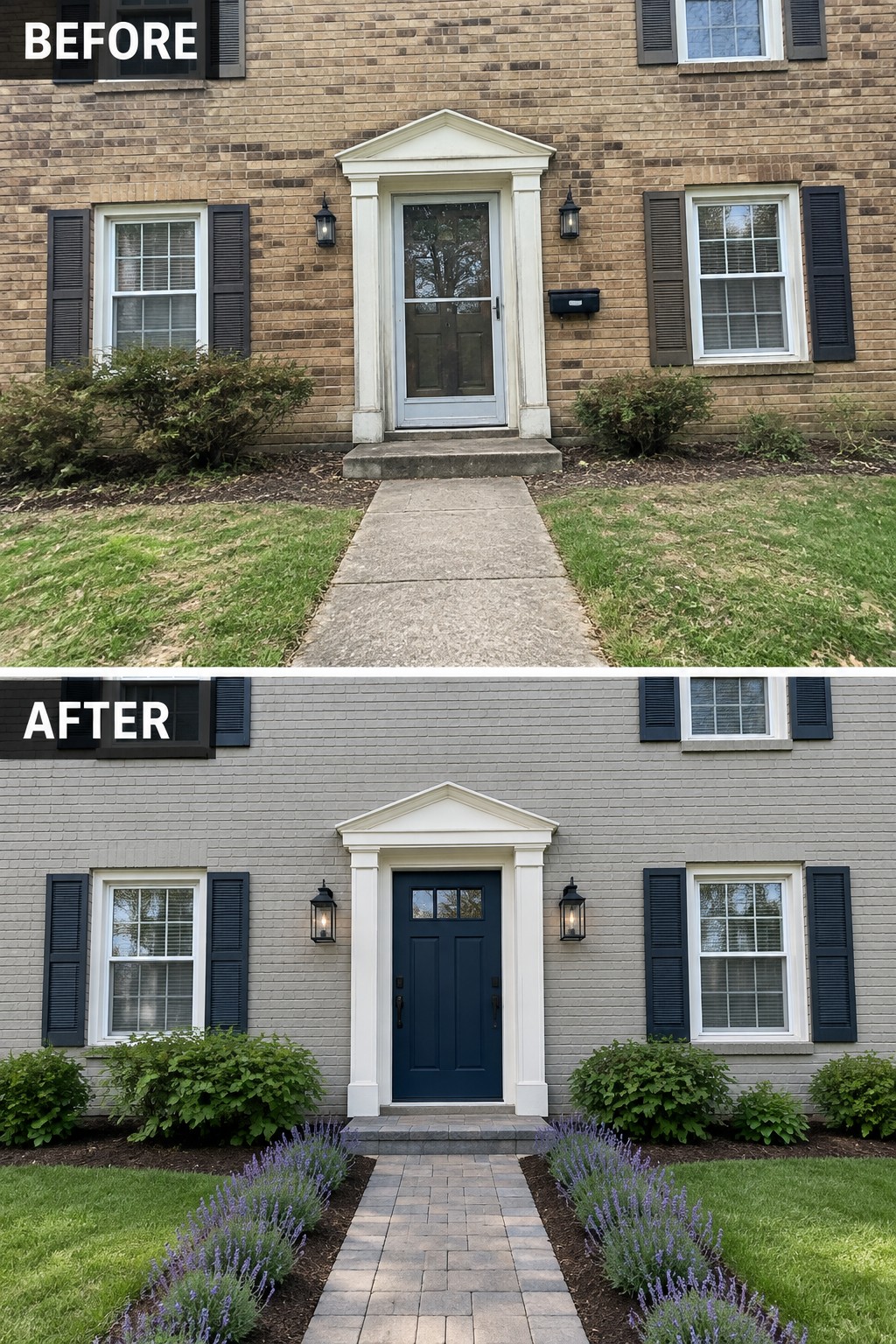
Painting the brick gave this colonial home a much cleaner look without changing its basic shape. The original brown brick felt heavy next to the white trim, while the new gray tone lightens the whole front and lets the navy door stand out.
This idea works best on brick homes where the structure is sound but the color has grown dated. Use exterior masonry paint, test a small section first, and keep the trim and shutters in their original white or a simple dark color so the new brick stays the main change.
Use Deep Gray Paint To Highlight Colonial Trim
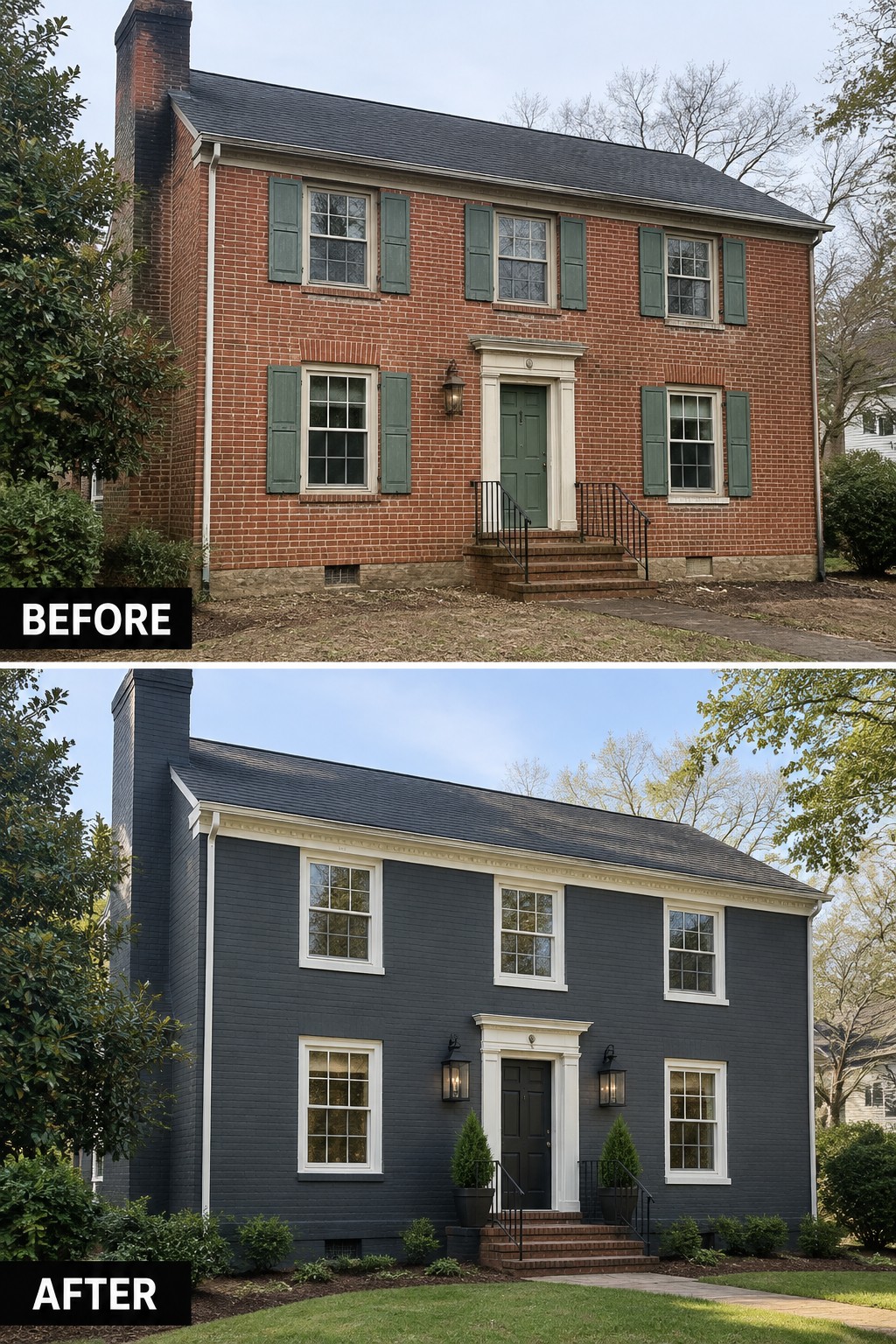
Painting brick can give a colonial home a cleaner, more current look while keeping its classic proportions intact. Here the original red brick was covered in a deep gray that makes the white trim stand out and pulls the whole front together without changing windows or doors.
This idea suits older brick colonials that feel dated but still have good bones. Choose a color that works with the roof and existing trim, test it on a small area first, and keep landscaping simple so the new color stays the main focus.
Revive Faded Brick With Off-White Paint And Black Accents
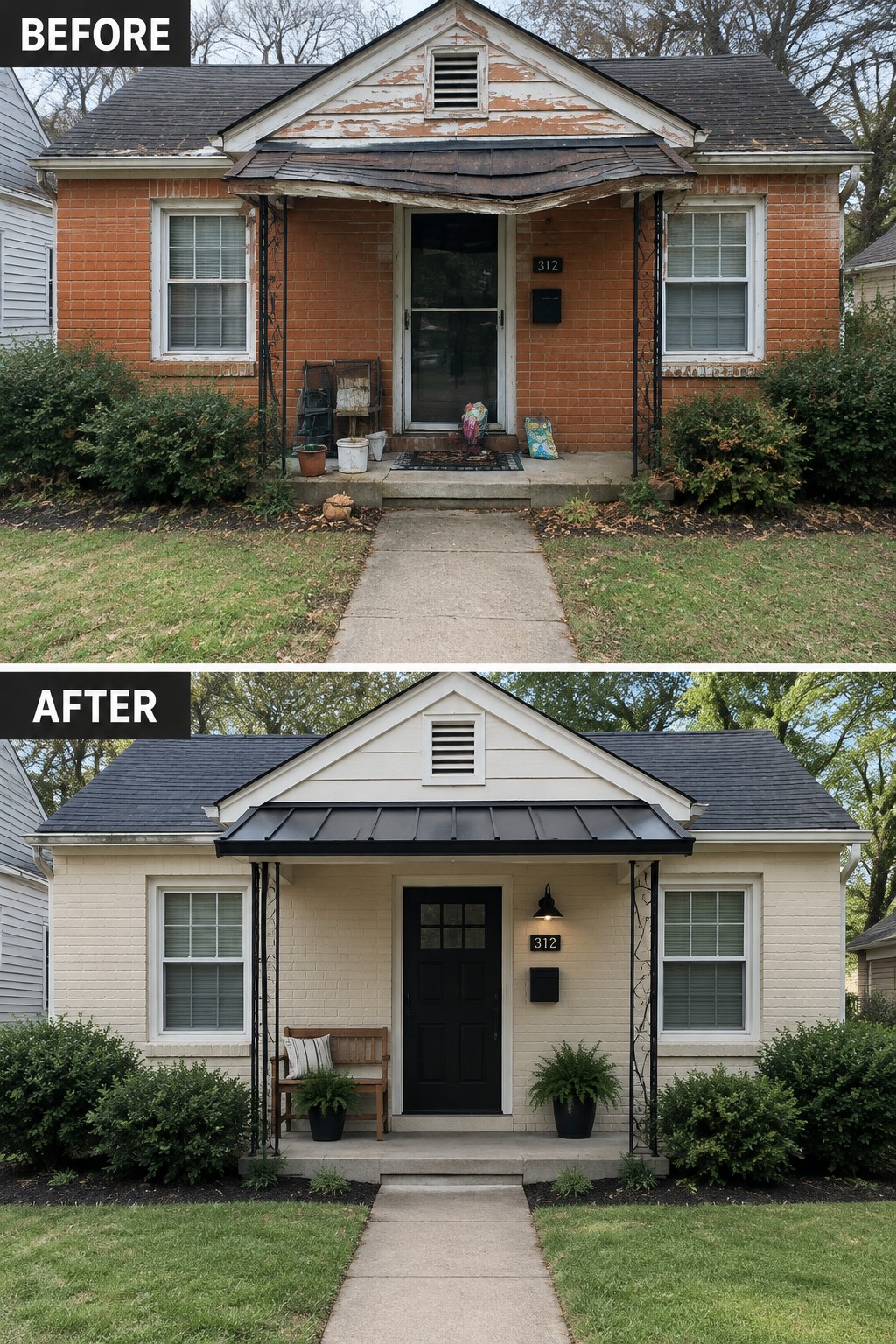
Painting the brick is one of the simplest ways to update an older colonial home without major construction. The before photo shows faded orange brick with peeling trim and a rusty porch roof that made the whole front look tired. Once the brick was painted a soft off-white and the trim was cleaned up, the house immediately felt lighter and more put together. The black door and new porch roof added contrast that helps the entry stand out.
This approach works especially well on brick colonials where the original color has faded or no longer fits the neighborhood. Start with a good masonry primer and exterior paint made for brick so it holds up over time. Keep the rest of the updates simple, like a fresh door color and a couple of planters, so the painted brick stays the main change.
Coordinate Painted Brick With Siding And Wood Shutters
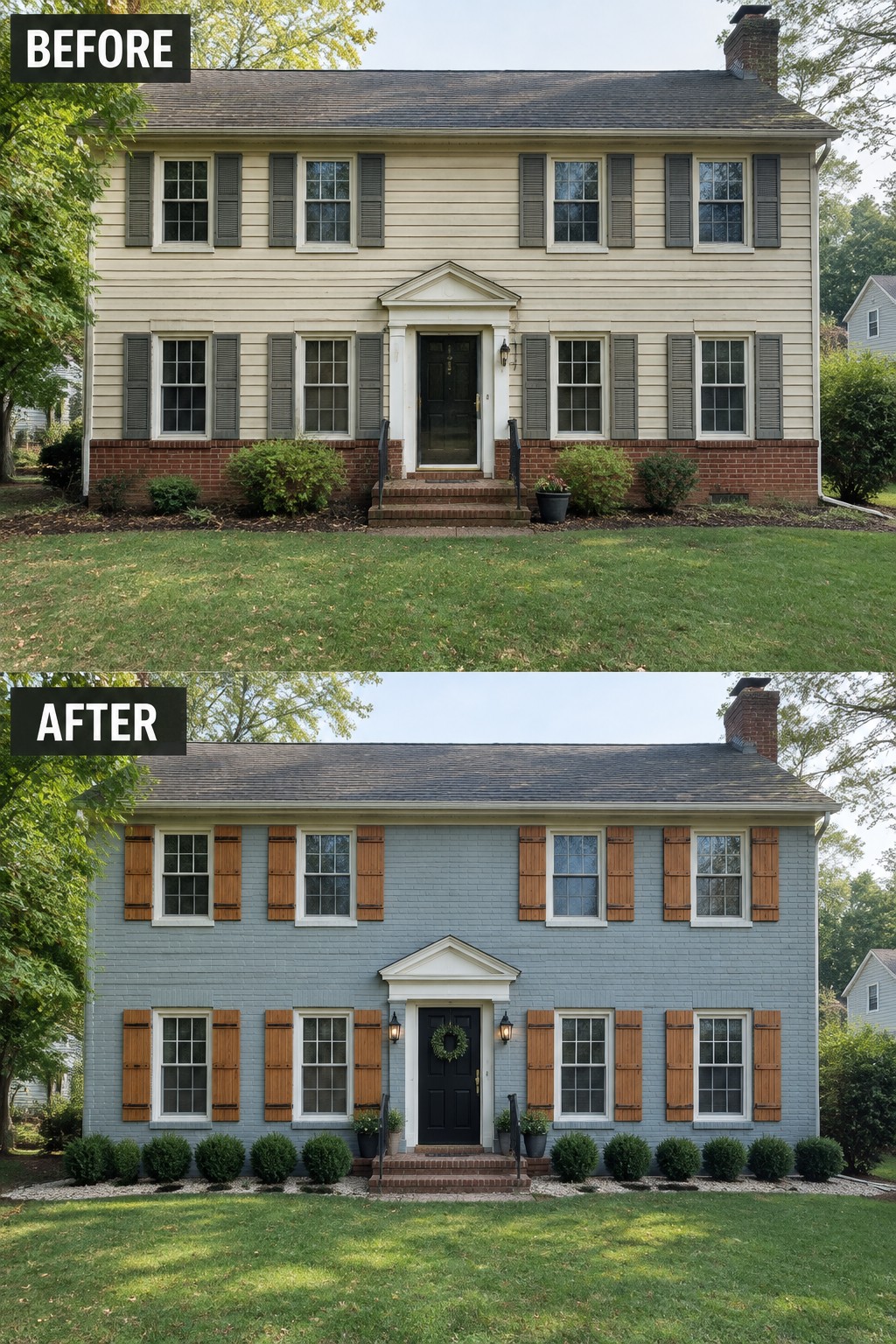
Painting the brick on an older colonial home can pull the whole exterior together without a full renovation. In this case, the red brick base was painted to match the new siding color, the shutters were swapped for a warmer wood tone, and the front door was changed to black. The result feels much more cohesive and current while still keeping the classic shape of the house.
This approach works especially well on colonials where the brick looks dated or clashes with the rest of the exterior. Start with a good exterior primer made for masonry, then choose a color that either blends with the siding or creates a quiet contrast. Keep the rest of the updates simple so the painted brick stays the main change.
Choose Warm Neutral Paint For A Cohesive Colonial Facade
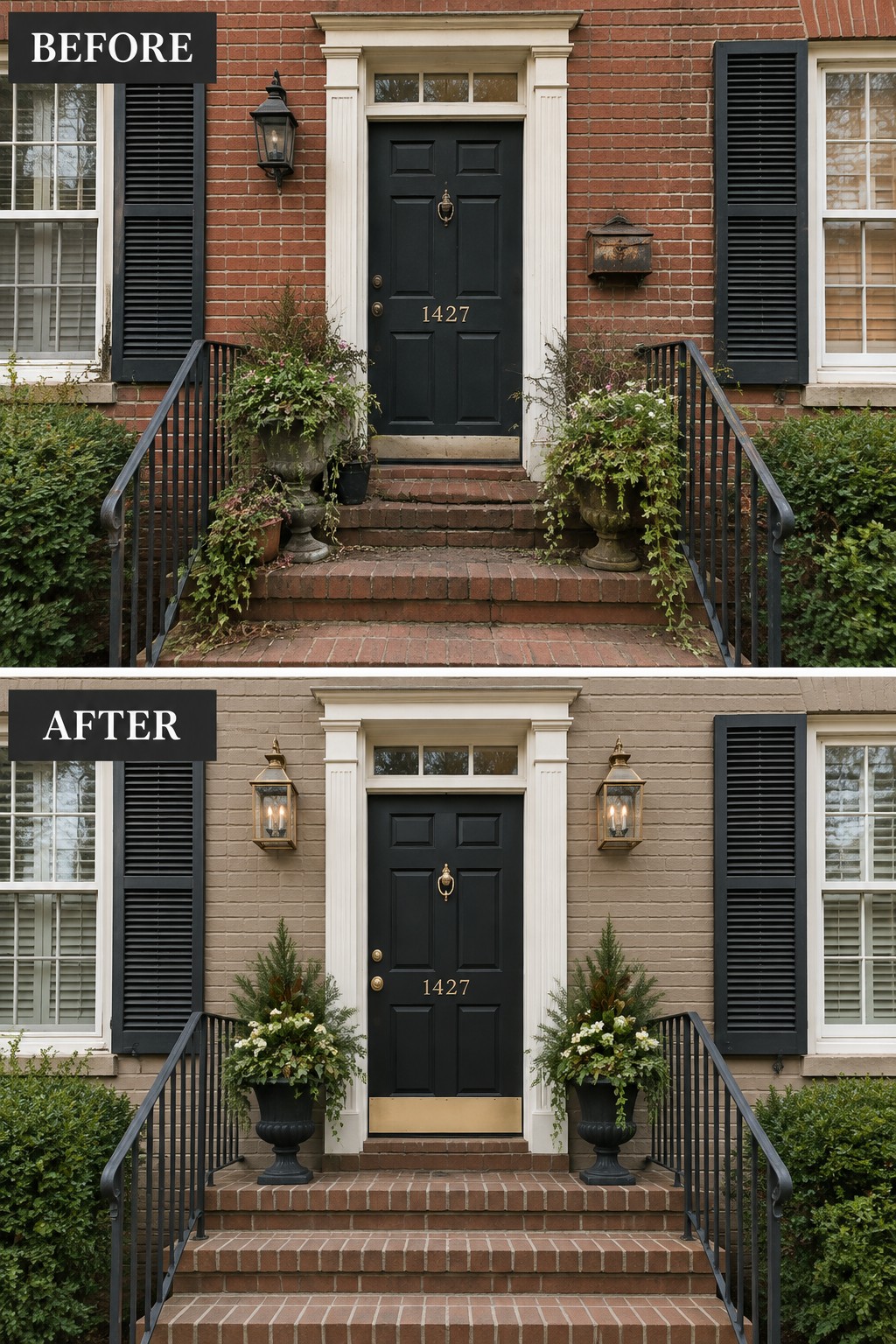
Painting the brick is one of the simplest ways to update an older colonial without changing the architecture. The red brick in the before photo feels heavy and dated next to the black door and shutters. Switching to a warm neutral tone lightens the whole facade, lets the white trim stand out, and gives the entry a cleaner, more current look while still keeping the classic colonial structure.
This approach works especially well on homes where the brick is still in good shape but the color no longer fits the rest of the exterior. Focus on a soft taupe or greige that complements the existing trim and roof. Pair the new color with updated lighting and simpler planters so the painted brick becomes the main change rather than fighting with too many other updates.
Give A Colonial Home A Bold Blue Brick Exterior
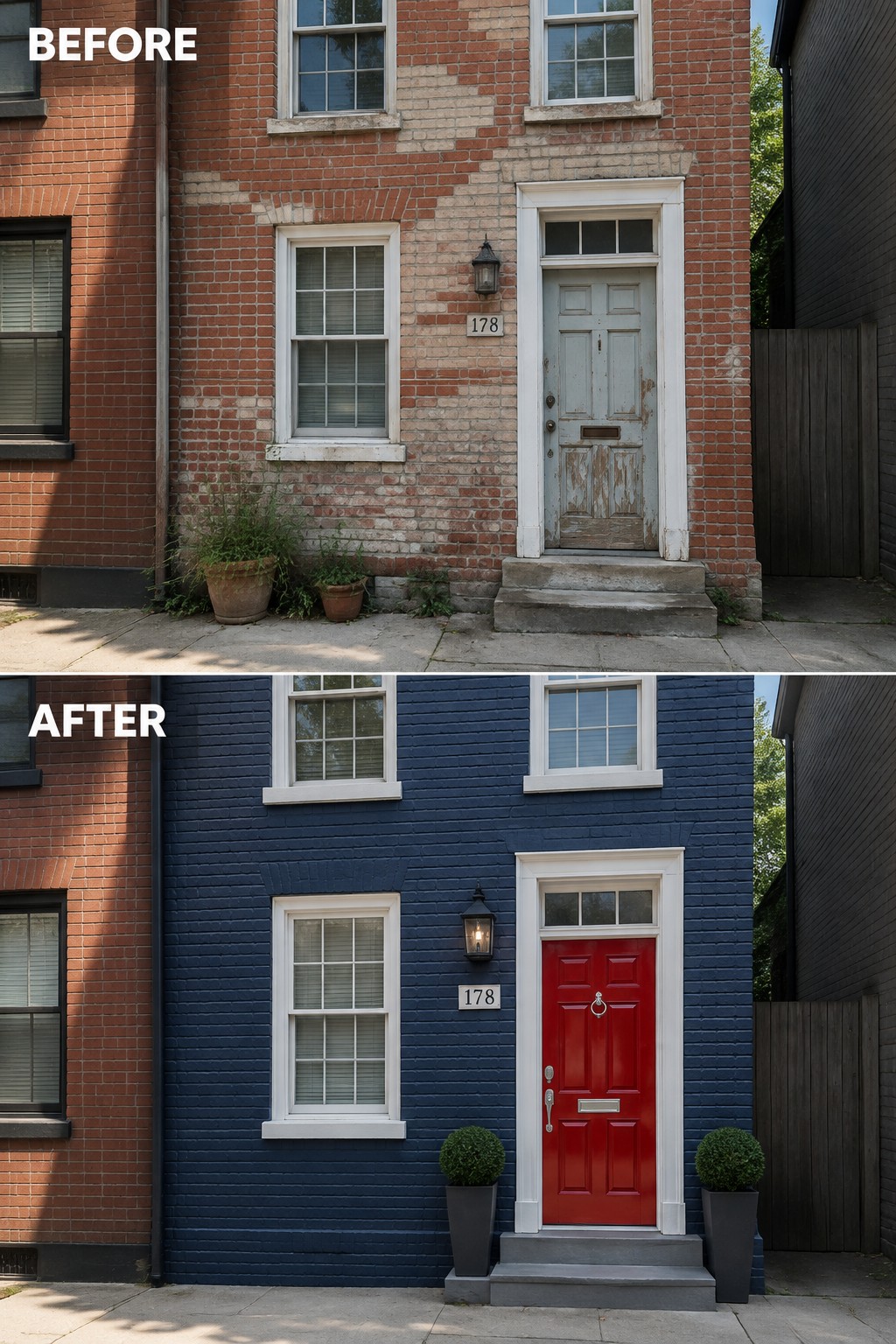
Painting the brick is one of the simplest ways to give an older colonial home a cleaner, more current look without changing the structure. In this case the patchy brick and faded door made the front feel tired. A solid coat of deep blue pulled everything together and let the bright red door stand out as the main focal point.
This approach works best on homes where the brick is in decent shape but just looks worn or mismatched. Pick a color that still feels traditional, update the door for contrast, and keep the trim white so the house does not lose its colonial character. Add a couple of planters by the steps if you want a bit more polish without crowding the entry.
Brighten Dark Colonial Brick With Crisp White Paint
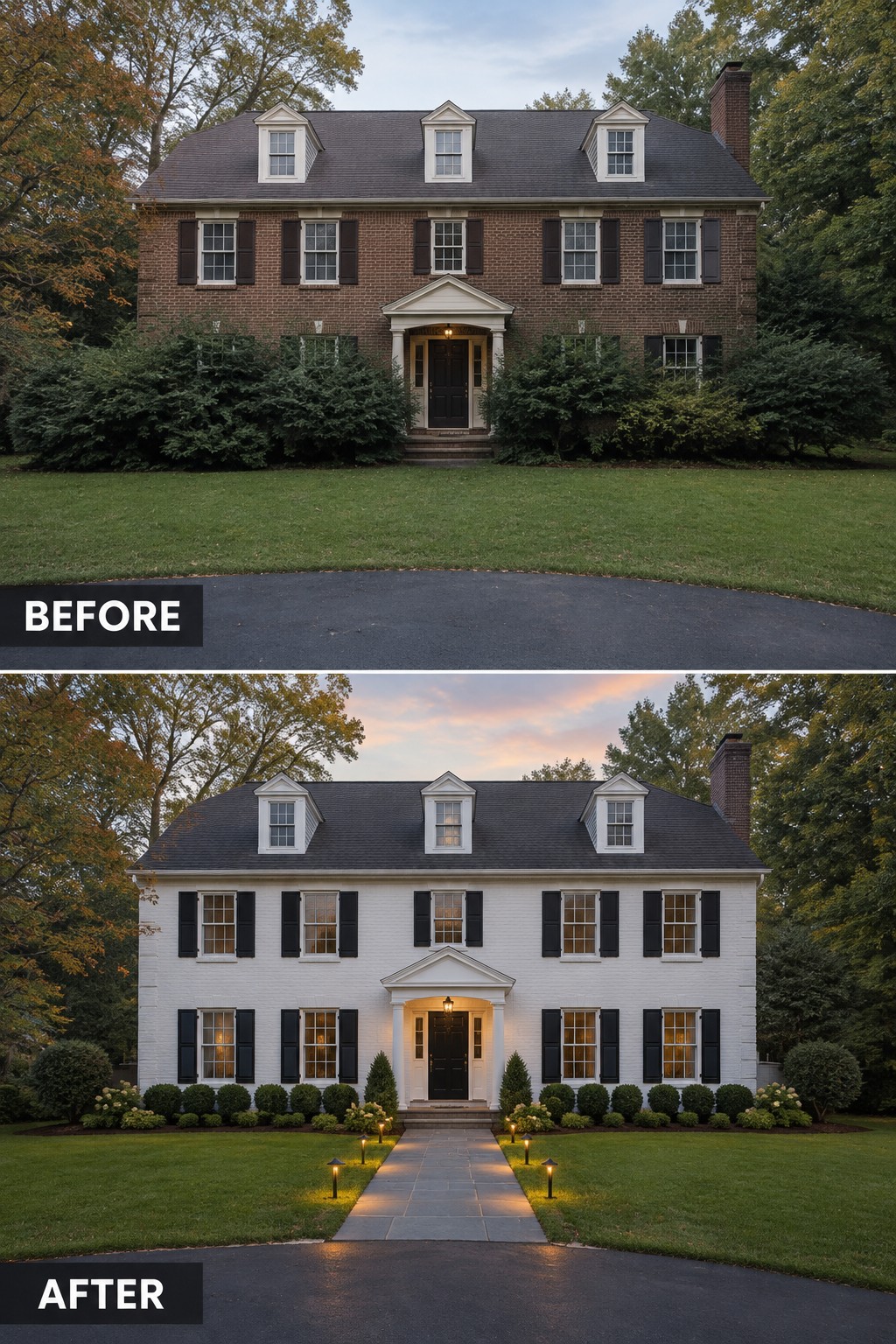
Painting brick is one of the simplest ways to change how a colonial house reads from the street. The dark brick made the home feel heavy and closed in. A coat of white paint lightens the whole facade and lets the trim and shutters stand out without any other big changes.
This works best on older brick homes that still have good structure but look dated. Stick with a crisp white rather than a cream or off-white, and keep the shutters dark so the windows stay defined. Adding a clean front path and a few low lights helps the entry feel finished without crowding the yard.
Update Weathered Red Brick With Light Gray Paint
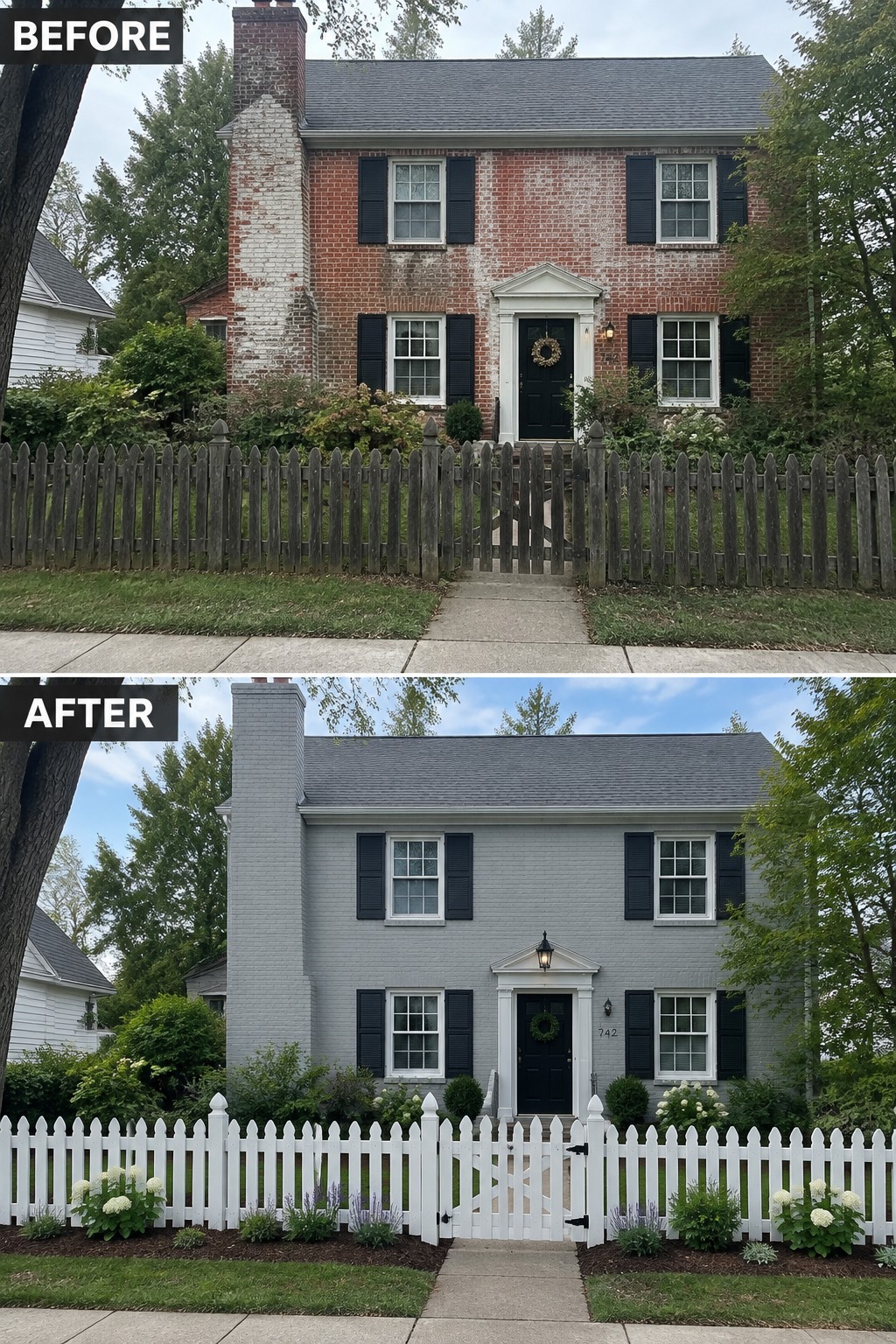
Painting the brick changed the whole feel of this colonial house. The weathered red brick looked tired and heavy, but covering it with a light gray gave the facade a cleaner, brighter appearance that still kept the traditional shape and details.
This idea works best on older brick homes where the original color has aged poorly. Pick a soft neutral that plays well with the shutters and trim, and keep other changes simple so the paint stays the main update.
Paint The Brick And Add A Portico
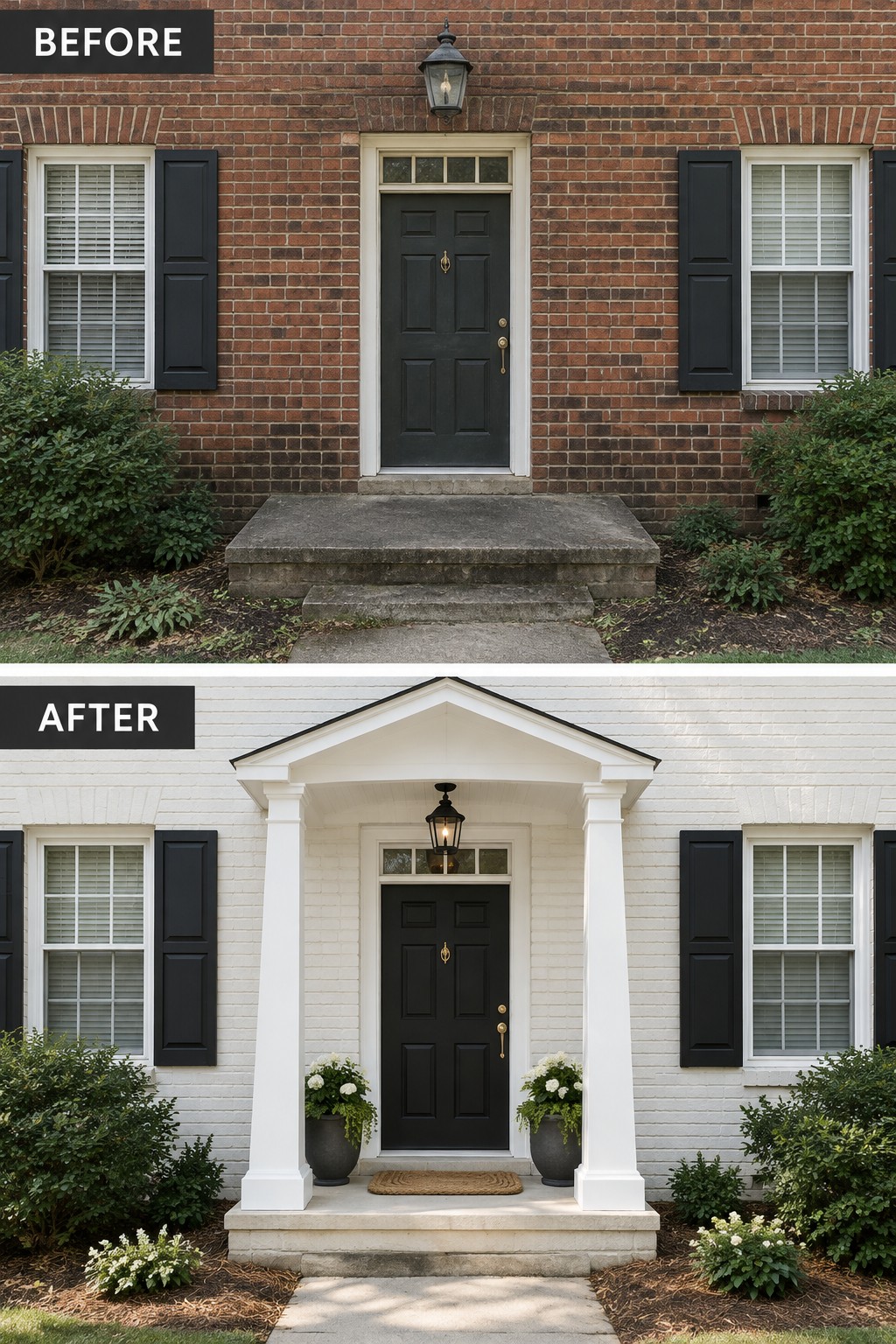
Painting the brick white made the whole front feel lighter and more current while the new portico gave the entry real presence. The dark door and shutters stayed, which helped the changes read as an update rather than a full replacement. The result is a cleaner colonial look without losing the original character of the house.
This approach works well on simple brick colonials that feel flat or dated. Start with the paint if the brick is in good shape, then add a modest portico sized to the door rather than the whole facade. Keep the rest of the trim and shutters in a contrasting dark color so the white brick and columns stand out without overwhelming the house.
Remove Ivy And Refresh Colonial Brick With Light Gray Paint
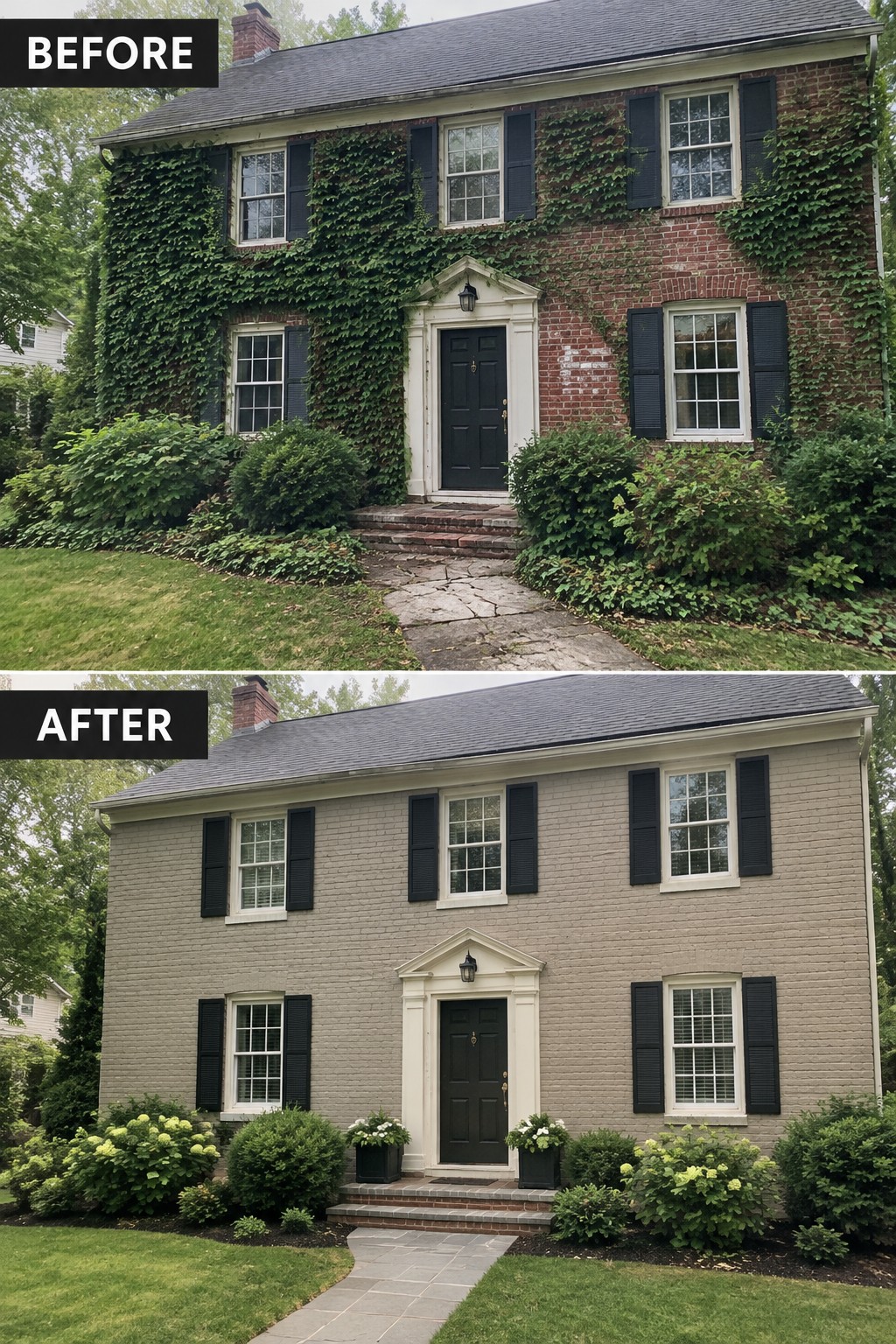
Painting the brick on an older colonial can make the whole house feel lighter and more current without changing the architecture. In this case the heavy ivy came down and the brick got a coat of light gray paint that lets the white trim and dark shutters stand out clearly.
The same approach works on many brick colonials where the original color feels dated or the surface has grown uneven. Start with a breathable masonry paint made for exterior brick, keep the trim and door color simple, and let the new surface do most of the work.
Paint The Brick And Strengthen The Entry With A Portico
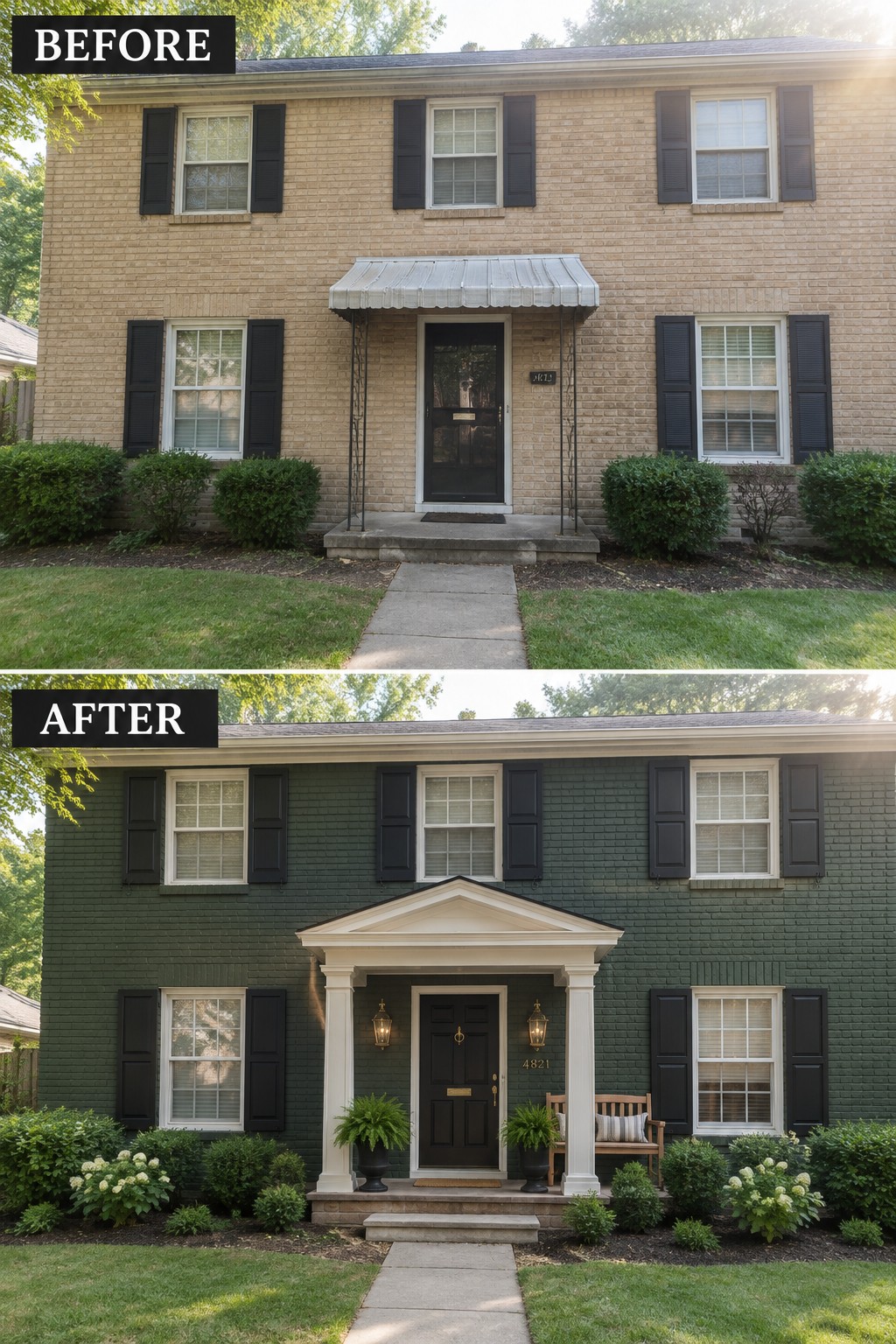
Painting the brick a deep green instantly gave this colonial house more weight and presence. The old metal awning over the door was replaced with a proper white portico supported by columns, which pulled the whole front together and made the entrance feel intentional instead of tacked on.
This approach works well on two-story brick colonials that look flat or dated. Start with the paint if you want the biggest shift for the least money, then add trim or a simple portico to give the entry real structure. Keep the scale of the new elements in proportion to the house so the result still feels balanced.
Create A Unified Look With Gray Brick And Matching Shutters
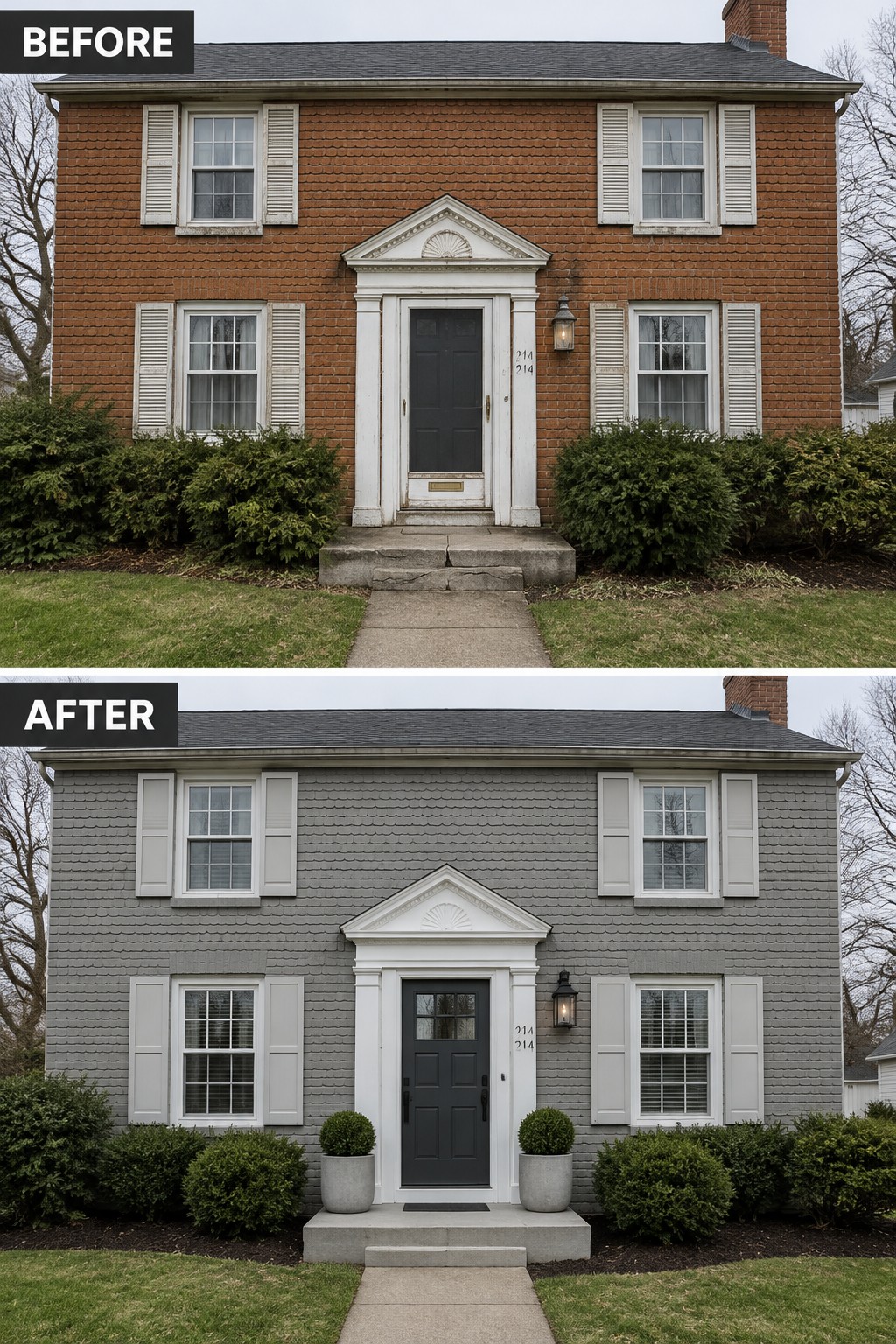
Painting the brick exterior gives an older colonial a much lighter and cleaner appearance without needing major structural changes. In this case the shift from red brick to a soft gray tone immediately makes the whole facade feel more current while keeping the classic trim and door details intact. The addition of matching gray shutters and a pair of simple planters on the steps helps tie the entry area together.
This approach works well on brick colonials that still have good bones but look dated. Start with a thorough cleaning and choose a breathable masonry paint so the walls can handle moisture. Keep the trim and door color simple so the new paint color stays the main focus.
Paint The Brick To Unify A Colonial Facade
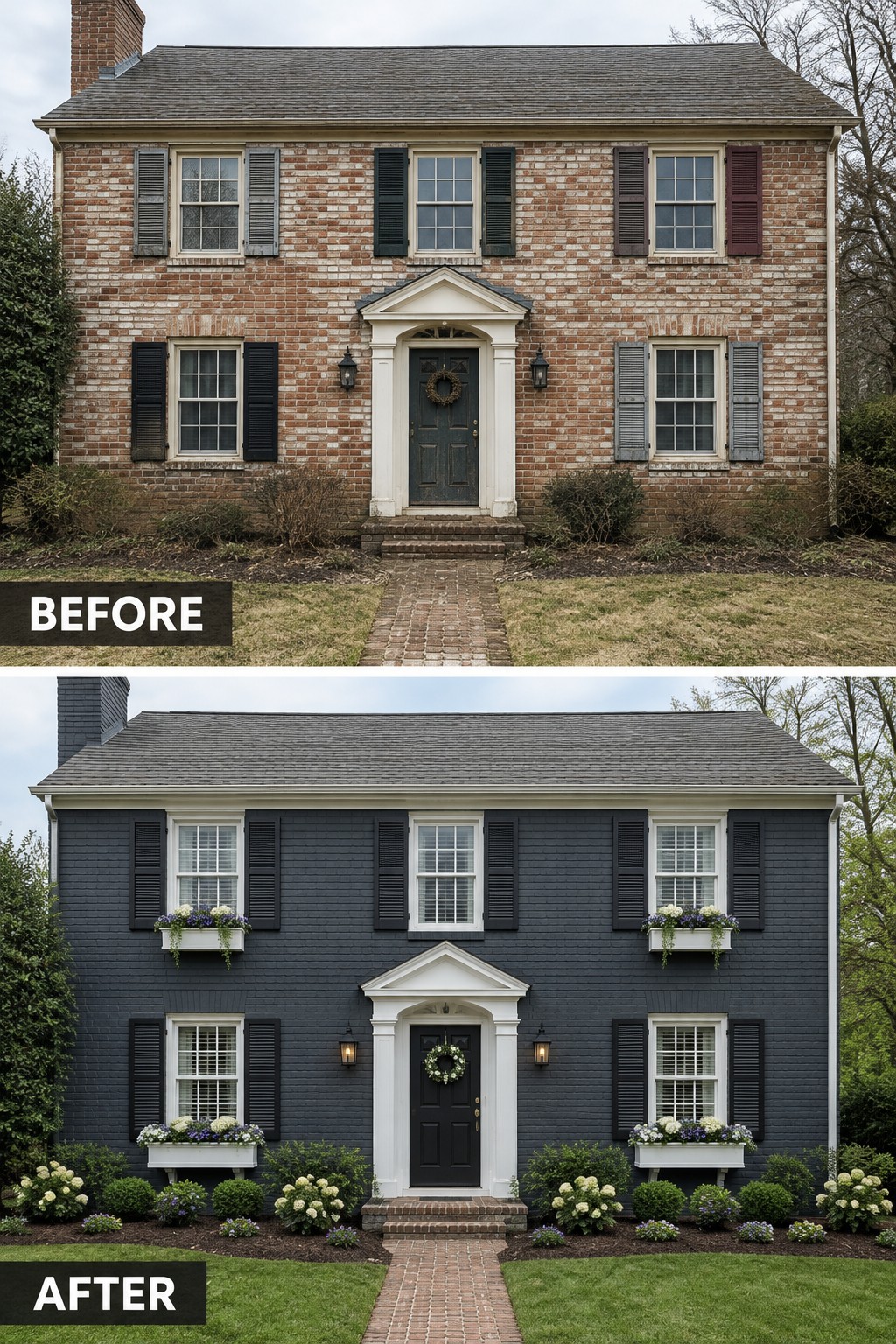
Many colonial homes with brick exteriors end up looking patchy over time because shutters fade at different rates and the brick itself shows wear. Painting the whole facade one solid color removes that visual clutter and gives the house a single, calm surface that makes the rest of the details read more clearly.
This works especially well on two-story colonials where the brick is the main material but no longer feels intentional. Pick one dark or mid-tone color for the brick, keep the trim and shutters in a contrasting shade, and add simple window boxes only after the paint is done. The result stays true to the original style while making the house look cared for rather than neglected.
Refresh A Colonial Garage With White Painted Brick
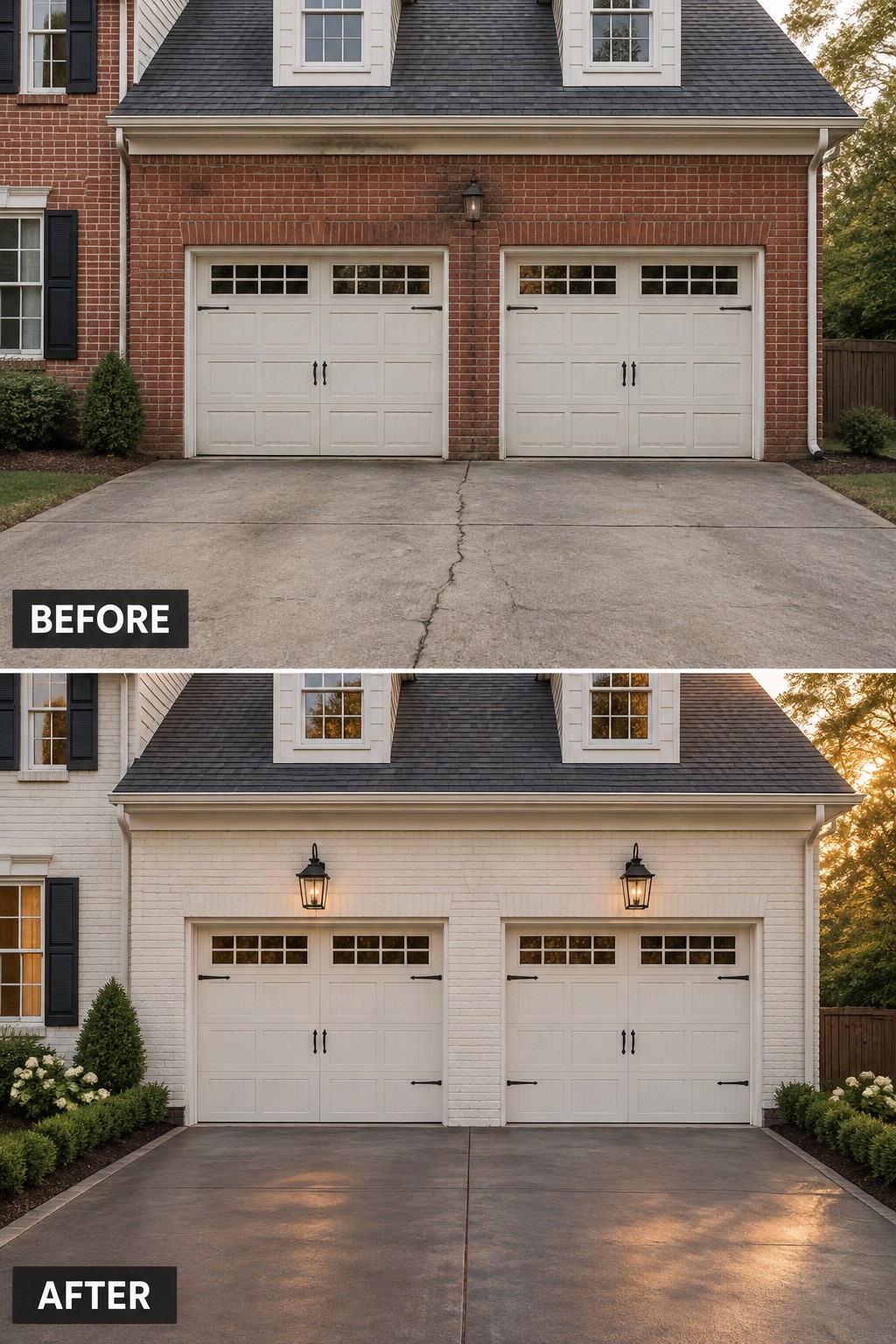
Painting the brick white gave this colonial home a much lighter and cleaner front. The original red brick felt heavy next to the white trim and garage doors, while the new finish brightens the whole facade and makes the two garage doors look more balanced.
This works well on older colonials where the brick has darkened or feels dated. Use a breathable paint made for exterior masonry, and add simple lanterns near the garage to finish the look without overdoing it.
Refresh A Tired Colonial Entry With Paint And Railings
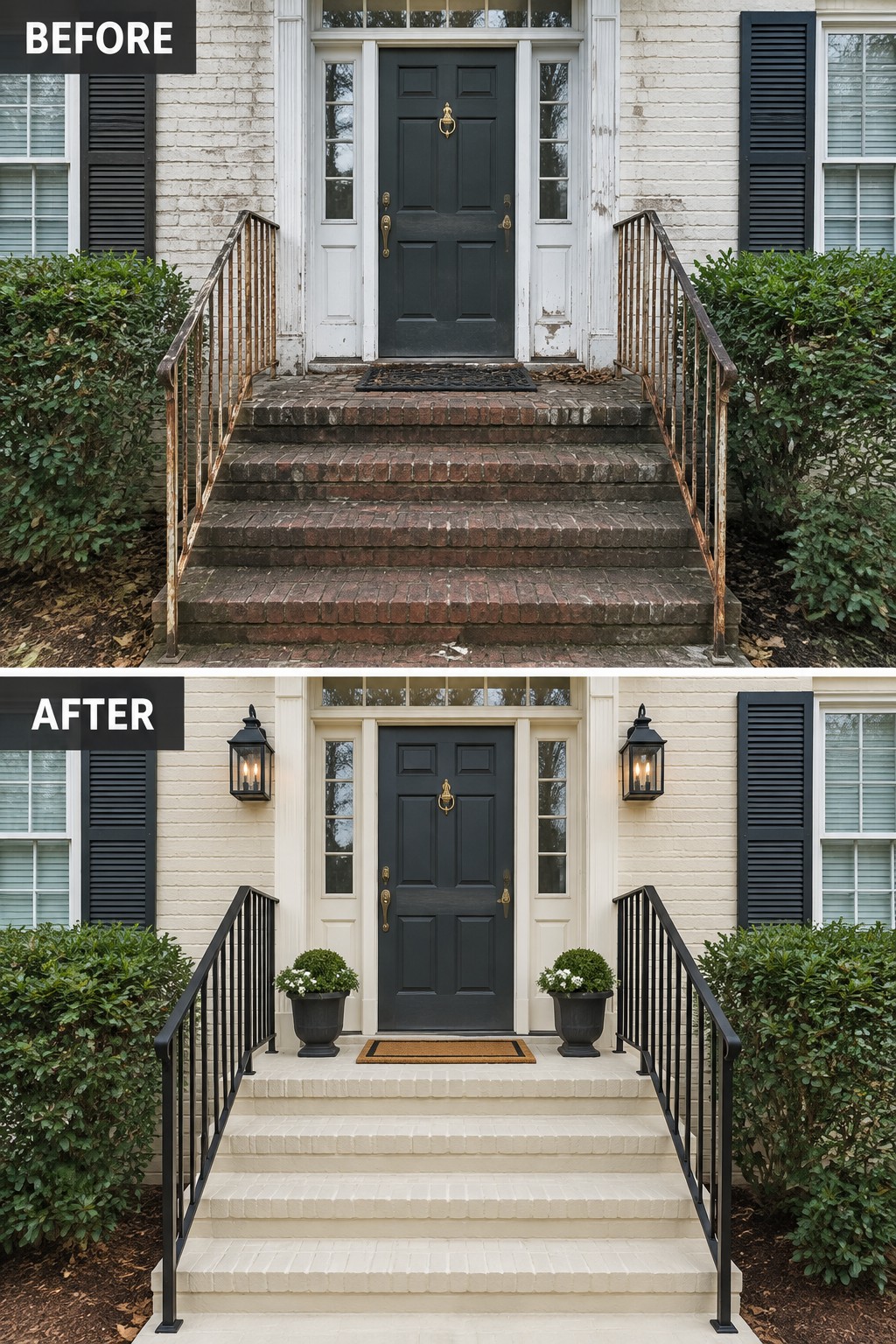
Many older homes have entries that lose their impact over time. The rusty railings and worn brick steps in the before photo make the whole front feel neglected. Switching to solid black railings, painting the trim and steps a clean off-white, and adding wall lanterns gives the facade a much sharper look.
This kind of update suits colonial homes where the door and steps sit front and center. Focus first on removing rust and choosing paint that works with your existing shutters and door hardware. Keep the planters and lighting simple so the entry stays easy to maintain year after year.
Soften A Traditional Colonial Exterior With Green Painted Brick
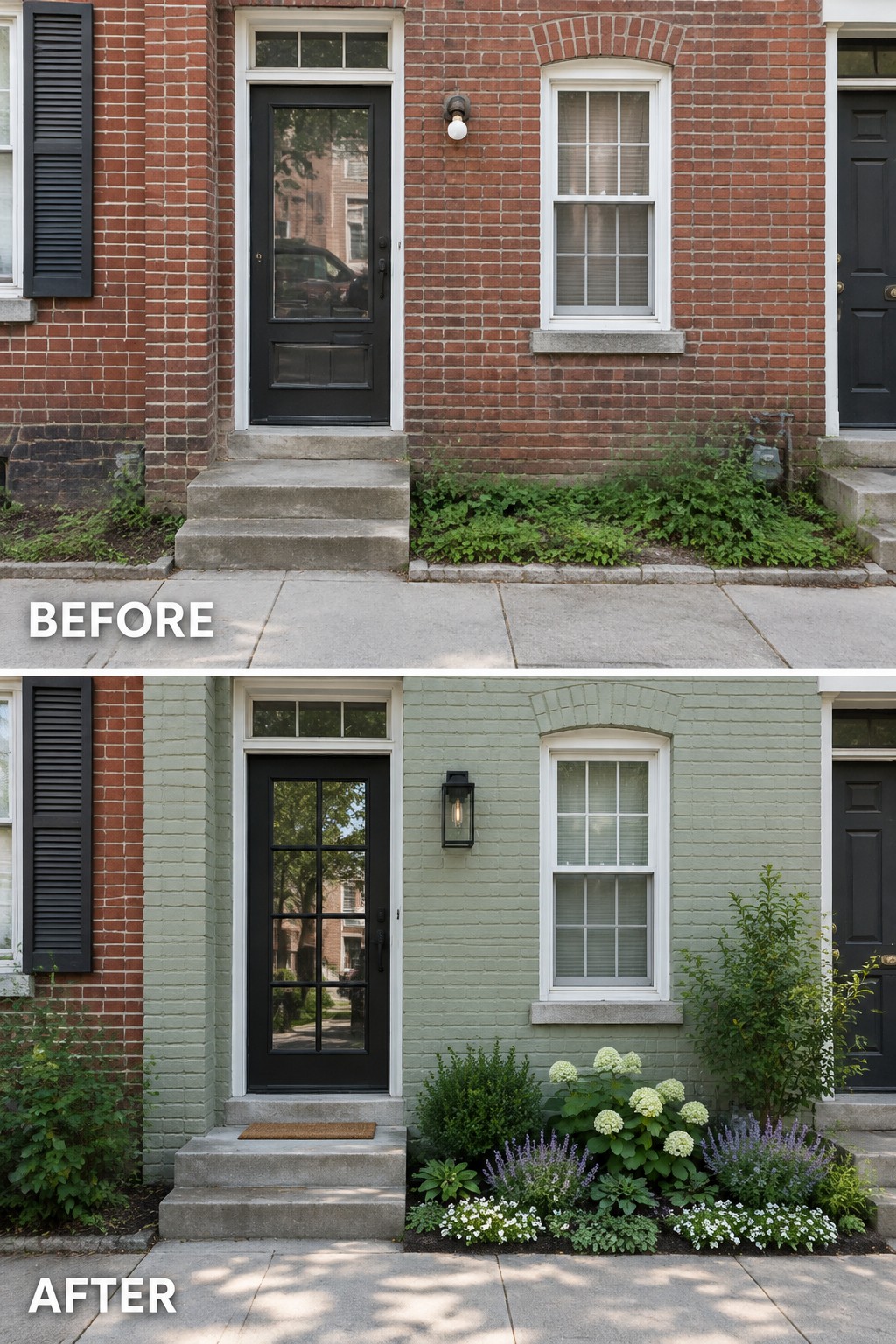
Painting the brick is one of the simplest ways to change how a colonial house feels from the street. In this case the red brick was covered in a soft green that lightens the whole front and makes the black door and white trim stand out more clearly. The shift removes the heavy look that often comes with older brick and gives the house a cleaner, more current appearance without touching the structure.
This approach works well on any colonial with plain brick that has started to feel dated. Keep the color light and choose one with enough warmth so the house does not look washed out. Pair the new paint with basic planting along the foundation to finish the update and keep the entry feeling welcoming.
Paint Brick To Lighten A Heavy Colonial Facade
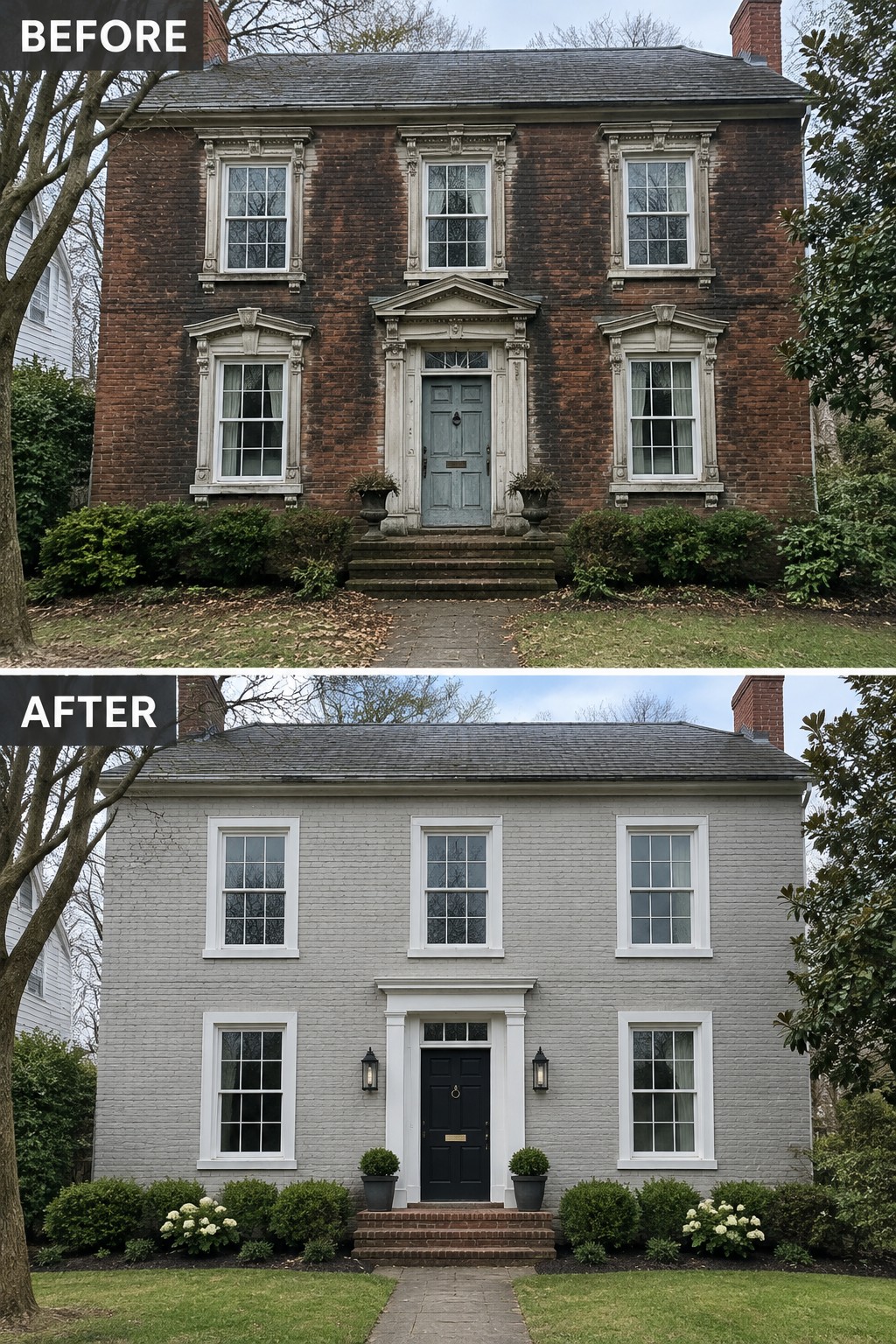
Painting the brick is one of the simplest ways to change how a colonial house feels from the street. The dark, weathered brick made the home look heavy and dated, while the light gray paint in the after photo opens everything up and lets the white trim stand out cleanly. Swapping the old blue door for a black one adds another layer of contrast without adding extra details.
This approach works well on older brick homes where the original color has aged poorly or feels too dark for the style. Keep the trim crisp and white, and test a few gray tones on a small section first since brick takes paint differently than wood. Many houses only need this one change to look current again.
Frequently Asked Questions
Q: What color works best on colonial brick without making the house look too modern?
A: Go for muted tones like soft gray or warm beige that match the original style. Look at photos of similar homes in your area for ideas. These shades keep the classic feel while freshening things up.
Q: How often will I need to repaint the facade?
A: Most masonry paints last five to seven years with good prep. Touch up small areas as soon as you notice wear. This keeps the whole surface looking even.
Q: Can I paint over brick that has been painted before?
A: Scrape off any loose layers first. A power washer helps remove buildup without damaging the brick. Then prime again to get a smooth new coat.