

The outside of a home often feels more welcoming once the entry area gains some clear balance.
Georgian Colonial designs rely on that symmetry to make the facade read as intentional rather than patched together over time.
Simple updates like refinishing the door or adjusting the sidelights can shift how the whole front looks.
I tend to start with the paint and hardware when testing ideas like these.
Many of the homes show how those choices add up without requiring a complete rebuild.
Paint Brick Georgian Colonials White For A Cleaner Look

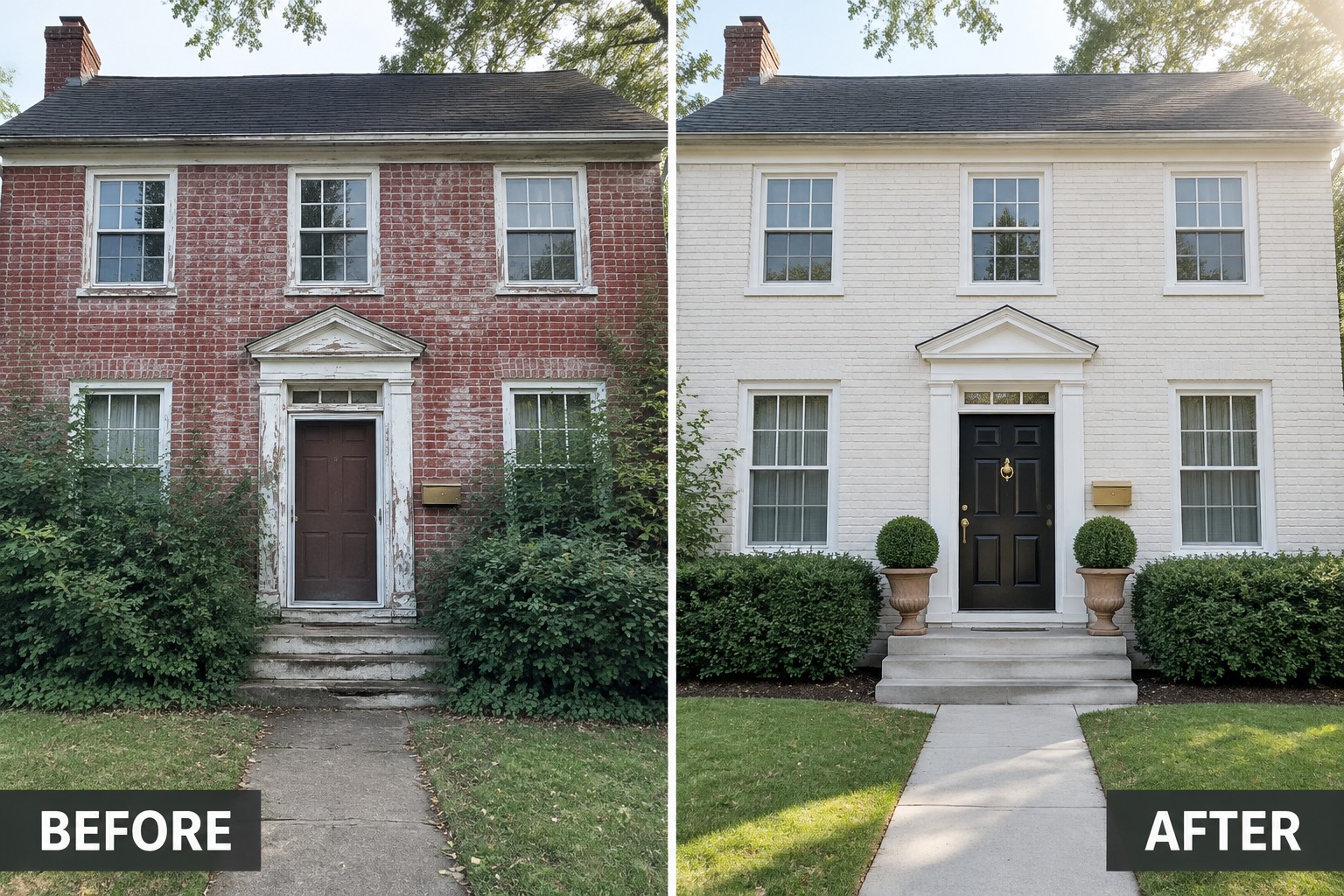
Painting the brick exterior is one of the simplest ways to give an older Georgian colonial a fresh start. The before photo shows a tired red brick facade with peeling trim around the door, while the after shows how a coat of white paint instantly brightens the whole house and makes the symmetrical window layout stand out. The new black door and matching urn planters on either side of the steps further emphasize the centered entry without adding clutter.
This approach works best on homes where the brick is still sound but the color feels heavy or dated. Keep the trim and window frames white for contrast, choose a durable exterior paint made for masonry, and use a pair of matching planters to reinforce the balanced Georgian style. Avoid overplanting the beds right away. Let the clean lines of the painted facade do most of the work.
Add A Pediment And Columns To Define The Entry

Many brick colonials start with a thin door surround that disappears against the repeating brick pattern. Swapping it for a proper pediment on columns creates a clear center point and restores the balanced look these homes were built around. The new base also lifts the door a step higher, which makes the whole front feel more grounded.
This change suits homes that already have even window placement and shutters. Match the trim color to the existing white and keep the door a deep shade so the eye stays on the new structure rather than jumping around. It is a bigger job than paint alone, but it gives lasting shape without touching the rest of the facade.
Frame The Entry With Columns And An Arch
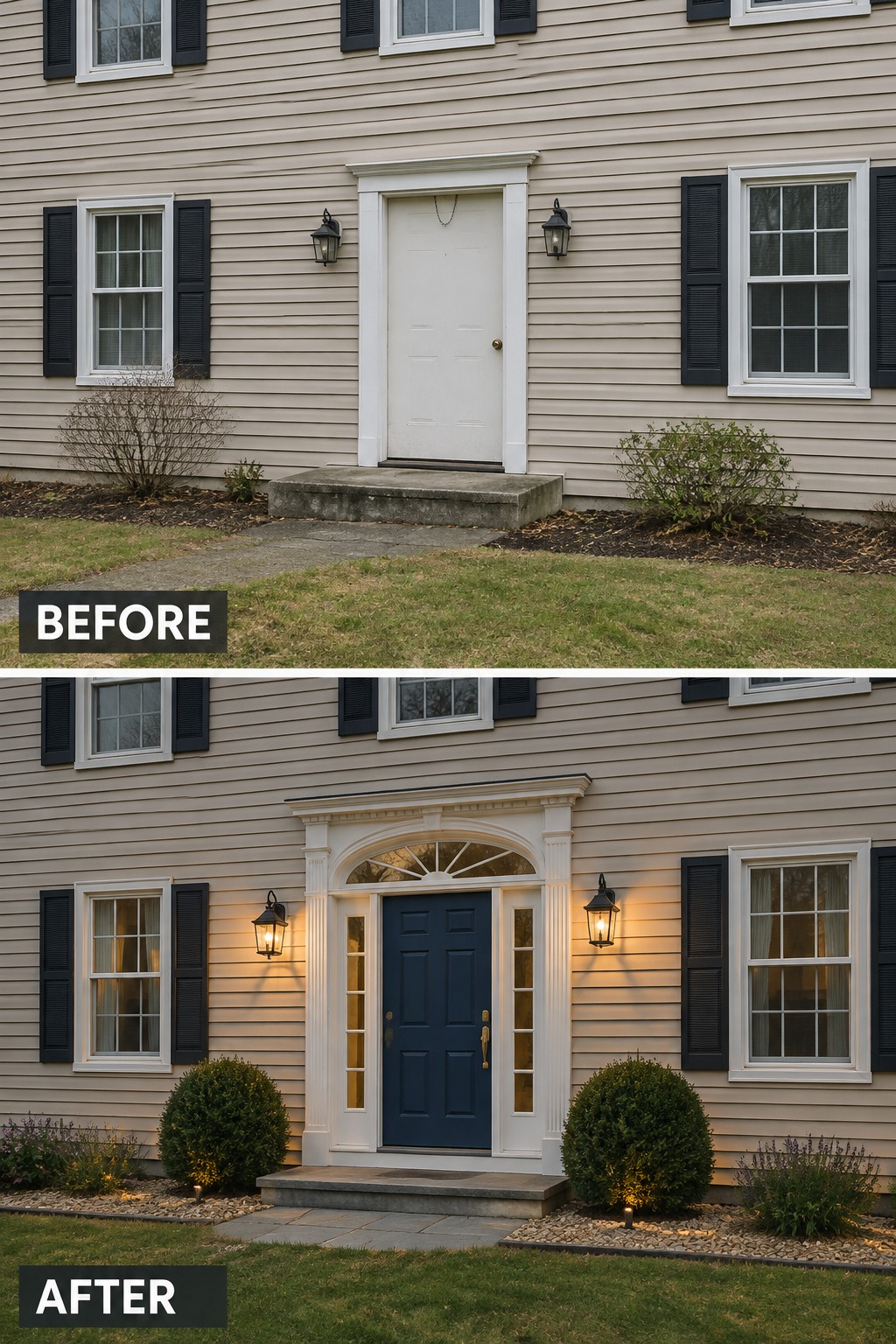
A plain white door on a simple concrete step can make the whole front of a house feel flat. Adding a full entry surround with columns and a curved arch above the door gives the facade a clear center point. Switching to a darker door color helps the new details stand out even more.
This kind of change suits Georgian or colonial homes that already have symmetrical windows. It works best when you keep the rest of the siding and shutters the same and let the entry do the work. Start with the door color and trim if a full surround feels like too much at once.
Coordinate Shutters And Door Color For A Stronger Entry

Many older homes lose their balance when shutters start to sag or get replaced one at a time. In this case, swapping the mismatched green shutters for a full set of black ones and painting the door black pulled the whole front together. The change made the center entrance feel intentional instead of like a collection of separate pieces.
This approach works well on symmetrical Georgian Colonials or any brick or stone house where the windows already line up. Pick one dark color for both the shutters and door so they read as a single decision. Then keep the planting simple, with low beds that frame the steps rather than compete with the architecture.
Add Defined Garden Beds To Frame The Entry

The before photo shows a front walk that feels lost between two large, shapeless shrubs. In the after photo the same entry now has a clear stone path bordered by low, rounded boxwood hedges that lead the eye straight to the door. The change makes the symmetrical facade feel more intentional without touching the house itself.
This approach works well on older homes that already have balanced windows and a centered door. Start by removing any plants that block the view of the entry, then lay out simple beds that follow the path on both sides. Low evergreens keep the look tidy year-round and leave room for a few small trees if you want a bit more height.
Add Window Boxes To Plain Windows
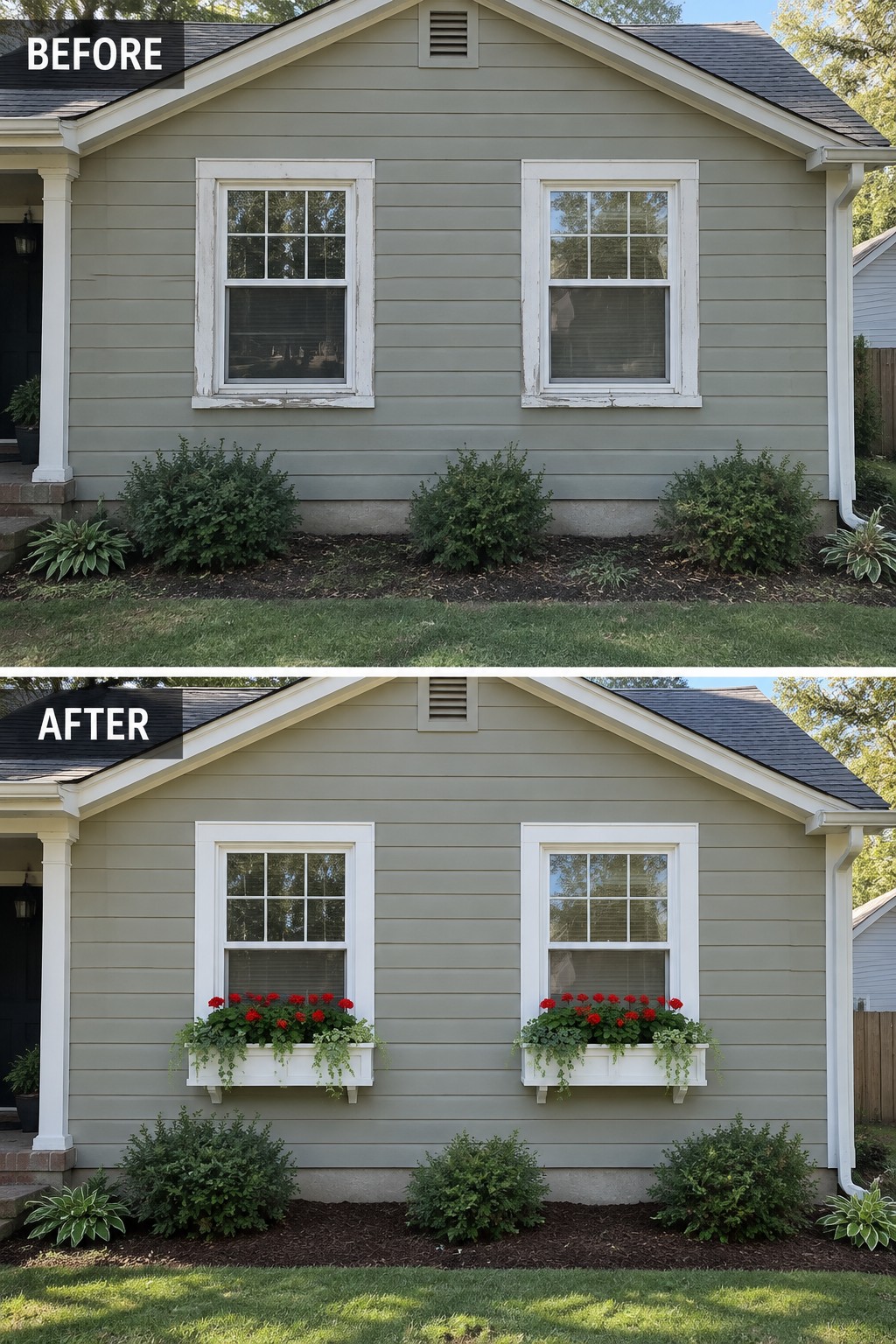
Window boxes are one of the simplest ways to add life to a plain house facade. In this case, two matching boxes filled with red flowers and trailing greenery were placed under the front windows. The change gives the windows more weight and makes the whole front of the house feel more finished without any major construction.
This idea works well on Georgian Colonial homes that already have good symmetry. Keep the boxes the same size and color, and choose plants that stay neat rather than sprawling too much. It is an easy project for most homeowners since the boxes attach directly below the windows and can be swapped out with the seasons.
Refresh A Tired Porch Entry With Paint And Lighting
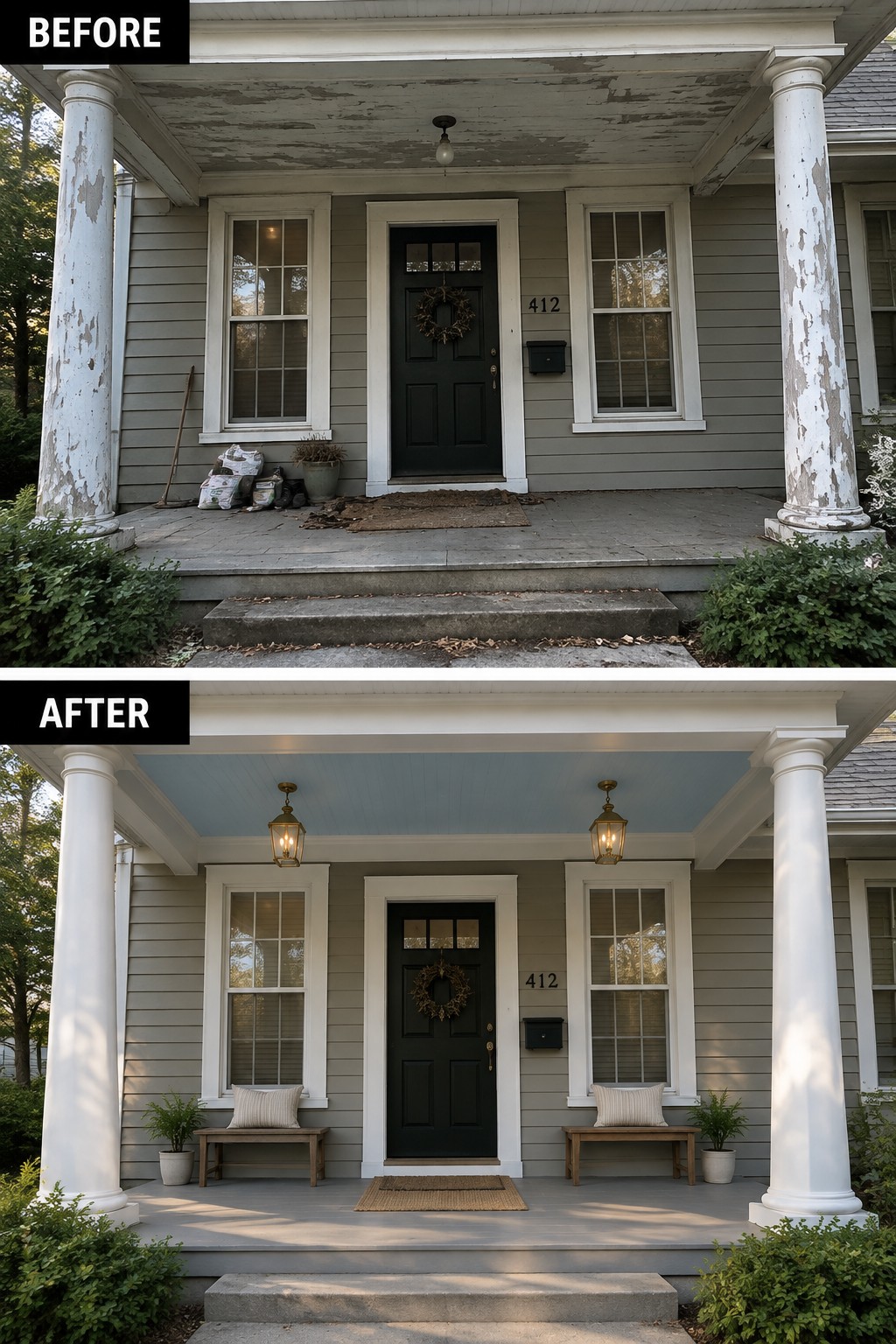
A worn front porch often drags down the whole look of an older home. In this case the fix started with scraping and repainting the peeling columns, then adding a soft blue ceiling and a pair of simple hanging lanterns. Those two changes alone made the entry feel brighter and more finished while keeping the original Georgian symmetry intact.
The same idea works on many classic homes that still have good bones. Begin with paint and one or two light fixtures, then add only what keeps the walkway clear and the proportions balanced. Matching benches and small planters on each side of the door give the porch purpose without crowding it.
Refresh The Front Entry With A New Door And Railings

The biggest shift in this makeover is the front door. The old dark door looked tired and faded, while the new wood door brings warmth and better proportions to the center of the house. New black railings and a cleaner set of steps also help the entry feel more solid and intentional.
This kind of update works especially well on symmetrical colonial homes. Focus first on the door itself, then match the railings and hardware in a simple dark finish. Rounded shrubs on either side keep the view balanced and prevent the planting from fighting with the architecture.
Add Formal Garden Beds To Frame The Entry

The front yard changed from a plain sloped lawn with a wandering path into a series of low boxwood beds that line up with the house. The new layout gives the central door a clearer sense of arrival without adding any new structures.
This idea suits Georgian Colonials and other symmetrical houses where the front walk sits in the middle. Keep the beds narrow enough to leave room to mow and choose evergreen hedges so the pattern stays visible in winter.
Add Lighting To Make The Entry Feel More Inviting
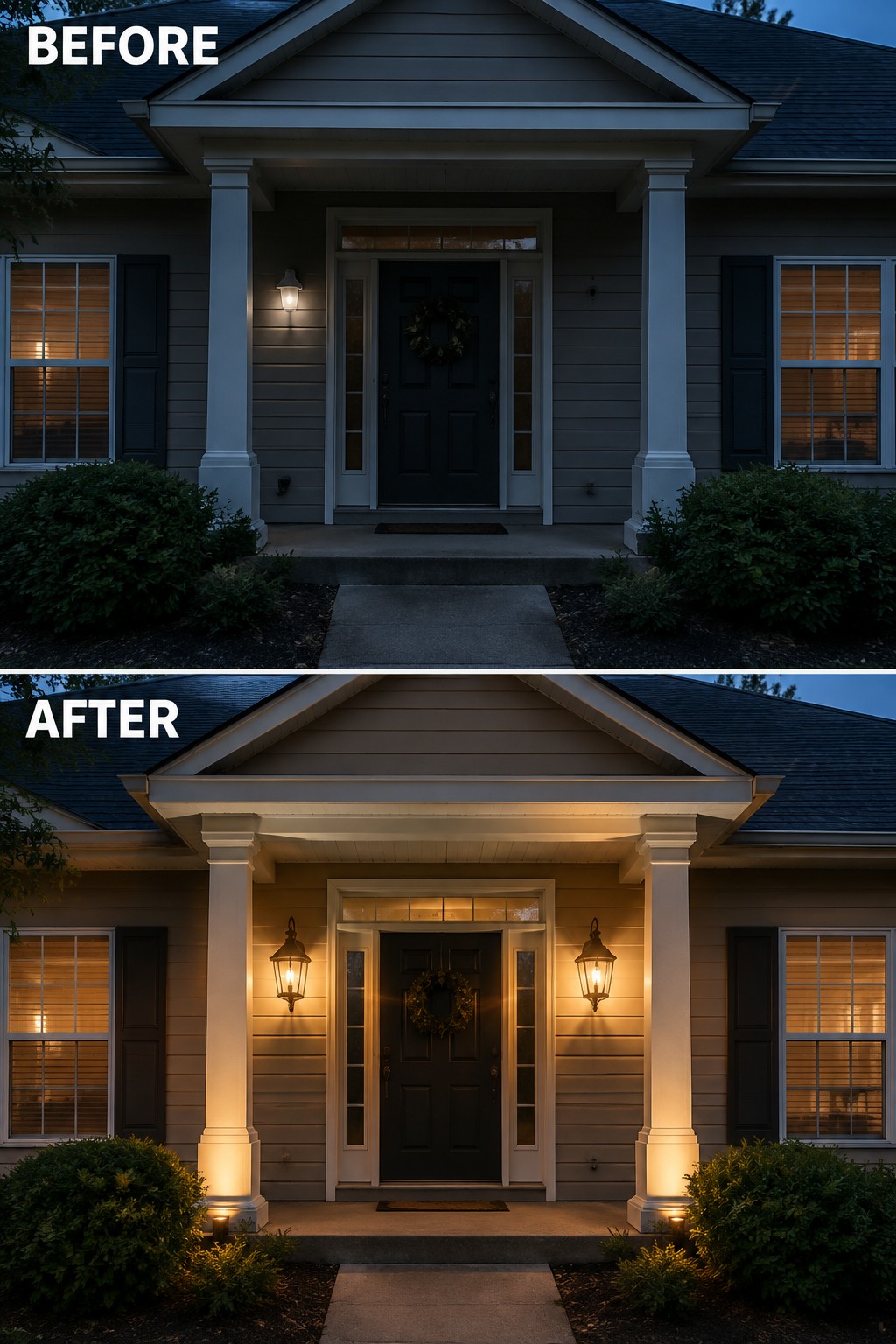
Many homes have basic wall sconces that do little once the sun goes down. In this case, swapping them for larger lanterns mounted on the columns, plus small uplights at the base, instantly gives the entry more presence and makes the whole front feel purposeful at night.
This approach works well on symmetrical Georgian style homes where the columns already create a strong frame. Place lights at eye level on the columns so they highlight the architecture without glare, and keep the fixtures simple so they match the trim color. Start with the lighting before adding more decor, since good illumination often makes everything else look finished.
Match The Garage Door To The Colonial Style

A plain garage door can make even a well-proportioned Georgian Colonial look off balance, especially when the door sits right next to the main entry. In this case, swapping the flat panel door for a carriage-style model with divided windows and black hardware, plus adding a matching pediment above it, brings the whole right side of the house back in line with the classical details on the left.
This approach works best on homes where the garage takes up a large part of the front elevation. Pick a door style that echoes the shape and trim of the front door, then add simple architectural pieces like a pediment or pilasters if the roofline needs help. The change stays modest in cost but makes the house read as more intentional from the street.
Balance The Entry With Matching Planters
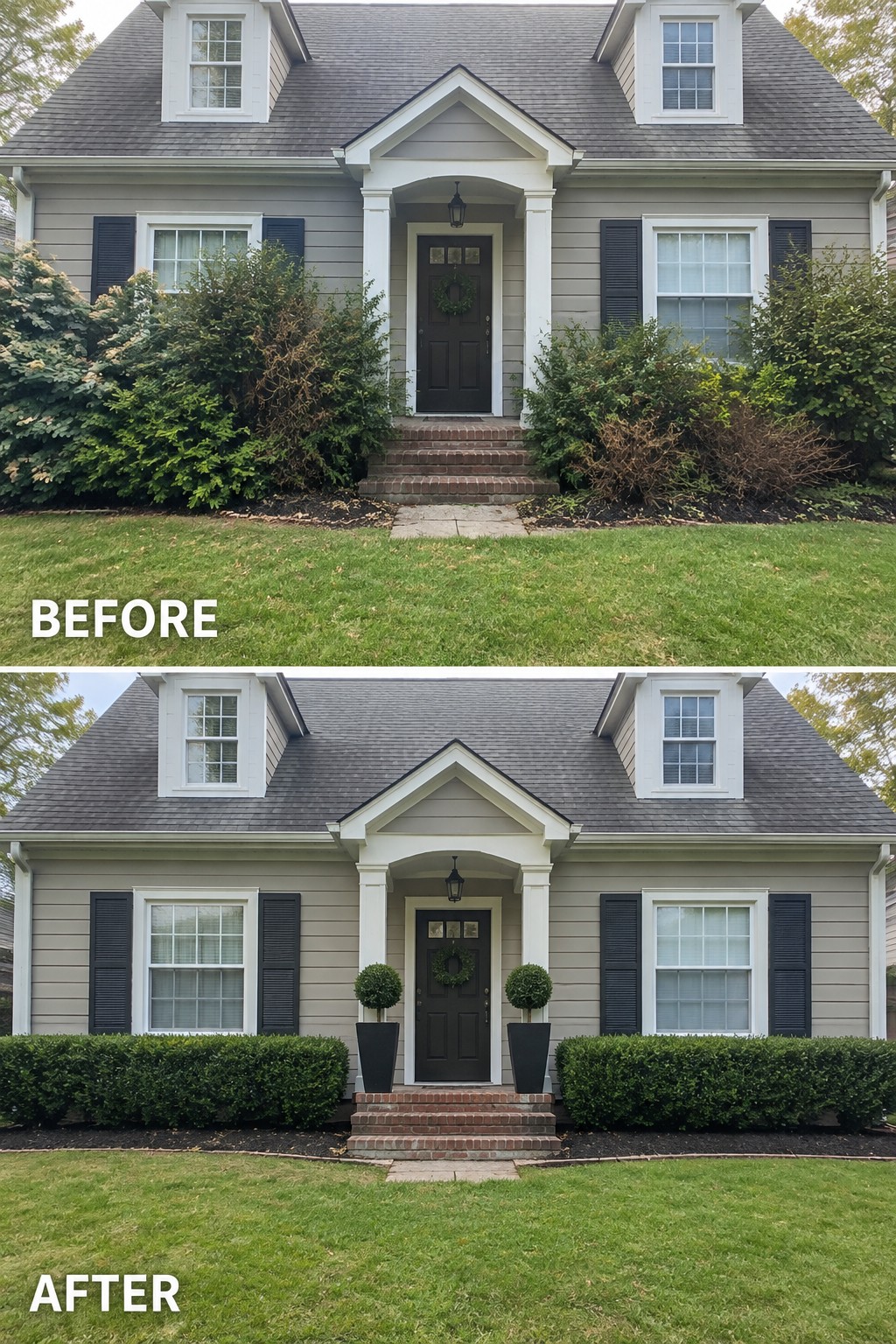
The before photo shows a front entry that feels lopsided because the shrubs on either side grew at different rates and heights. In the after photo, the fix is simple: a pair of matching potted topiaries placed evenly on the steps, plus low, trimmed hedges that run straight across both sides. The door now sits in the center of a balanced composition instead of getting lost between uneven greenery.
This approach works especially well on Georgian colonial homes where symmetry already exists in the windows and roofline. Start by clearing or reshaping whatever is growing unevenly, then add one matching pair of planters in the same color and size. Keep the scale modest so the pots do not block the steps or compete with the door itself.
Refresh The Exterior With Paint And Trim Updates

A faded exterior often makes a house look older than it really is. In this case, the before photo shows worn siding and tired trim that dull the clean lines of the Georgian Colonial facade. A fresh coat of paint on the siding and crisp white trim around the windows and door instantly sharpens the symmetry and makes the entry feel more welcoming.
This approach works best on homes that still have good bones but need surface renewal. Focus on one main color for the siding and a contrasting trim color to highlight the balanced window placement. It is a practical first step before considering larger changes like new roofing or landscaping.
Add Symmetrical Seating To Frame The Entry
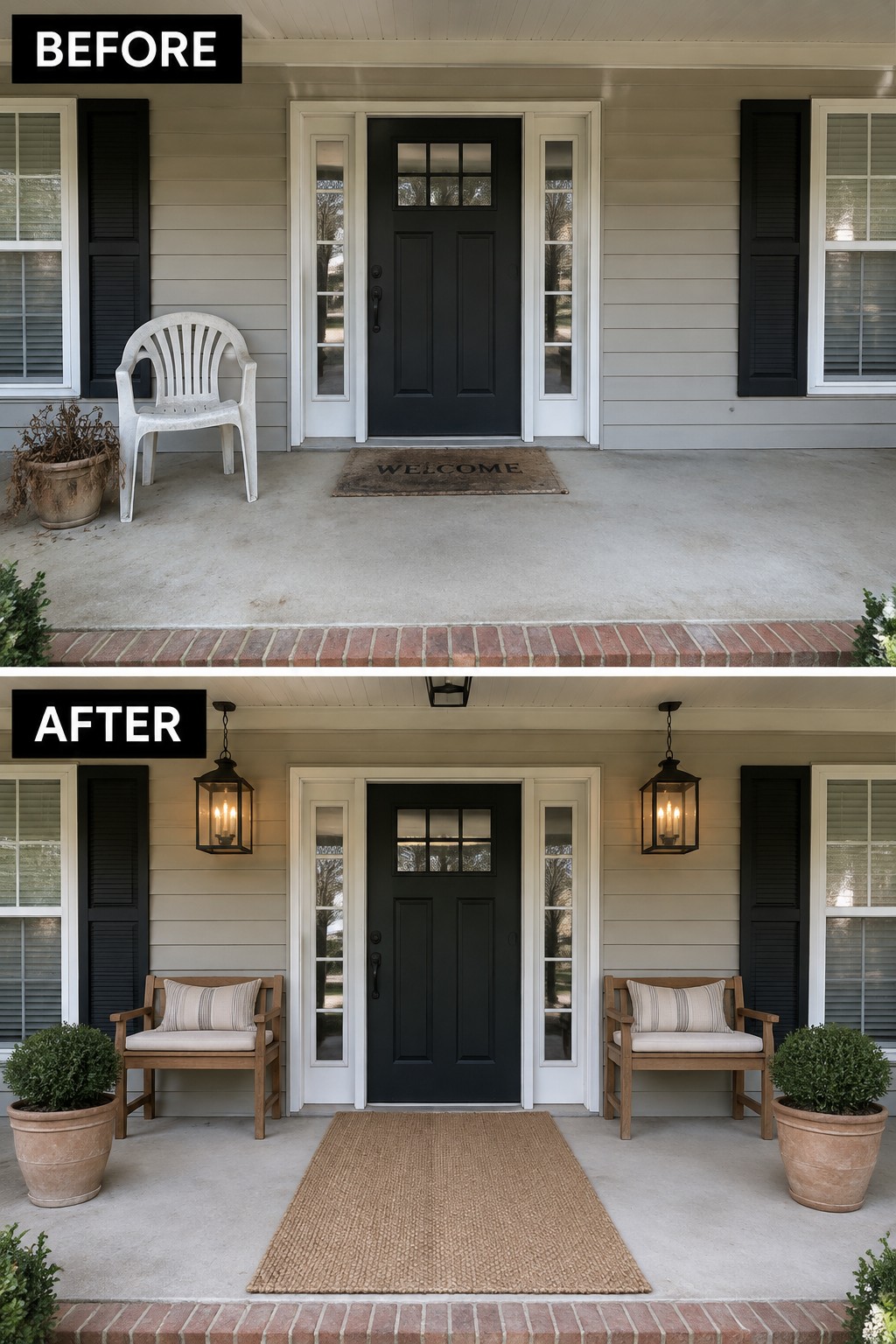
A single plastic chair left the porch feeling off balance and temporary. Replacing it with a pair of matching wooden benches and lanterns on either side of the door gives the entry a clear center and makes the whole front feel more settled.
This works best on homes with a centered door and simple siding. Keep the pieces the same size and color, leave enough walking room in the middle, and choose outdoor-grade materials that can stay out year round. The goal is order, not clutter.
Update Chimney Flashing To Match The Roof
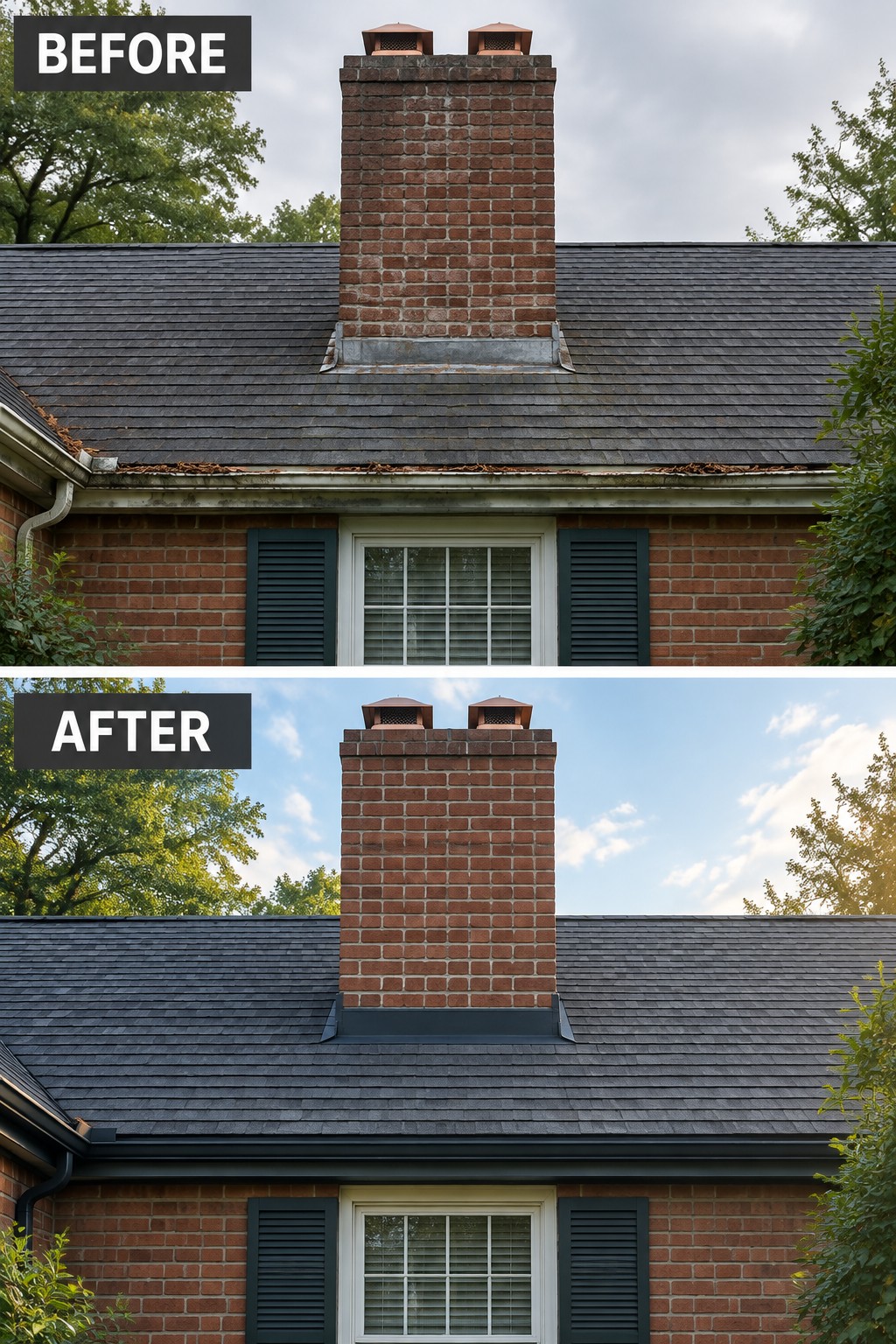
One of the simplest exterior fixes on older brick homes is updating the flashing around the chimney base. The light metal in the before image stood out sharply against the dark shingles and broke the clean roofline. Once changed to a dark finish in the after image, the chimney base sits much more quietly and the whole upper section of the house looks more finished.
This approach works well on Georgian Colonial homes where the roof already plays a strong role in the overall look. If your flashing shows age or a mismatched color, matching it to the shingles is a small job that can be done before any larger roof work. Just check that the material is rated for exterior use and that it tucks neatly under the shingles and against the brick.
Add Lanterns To Highlight The Entry
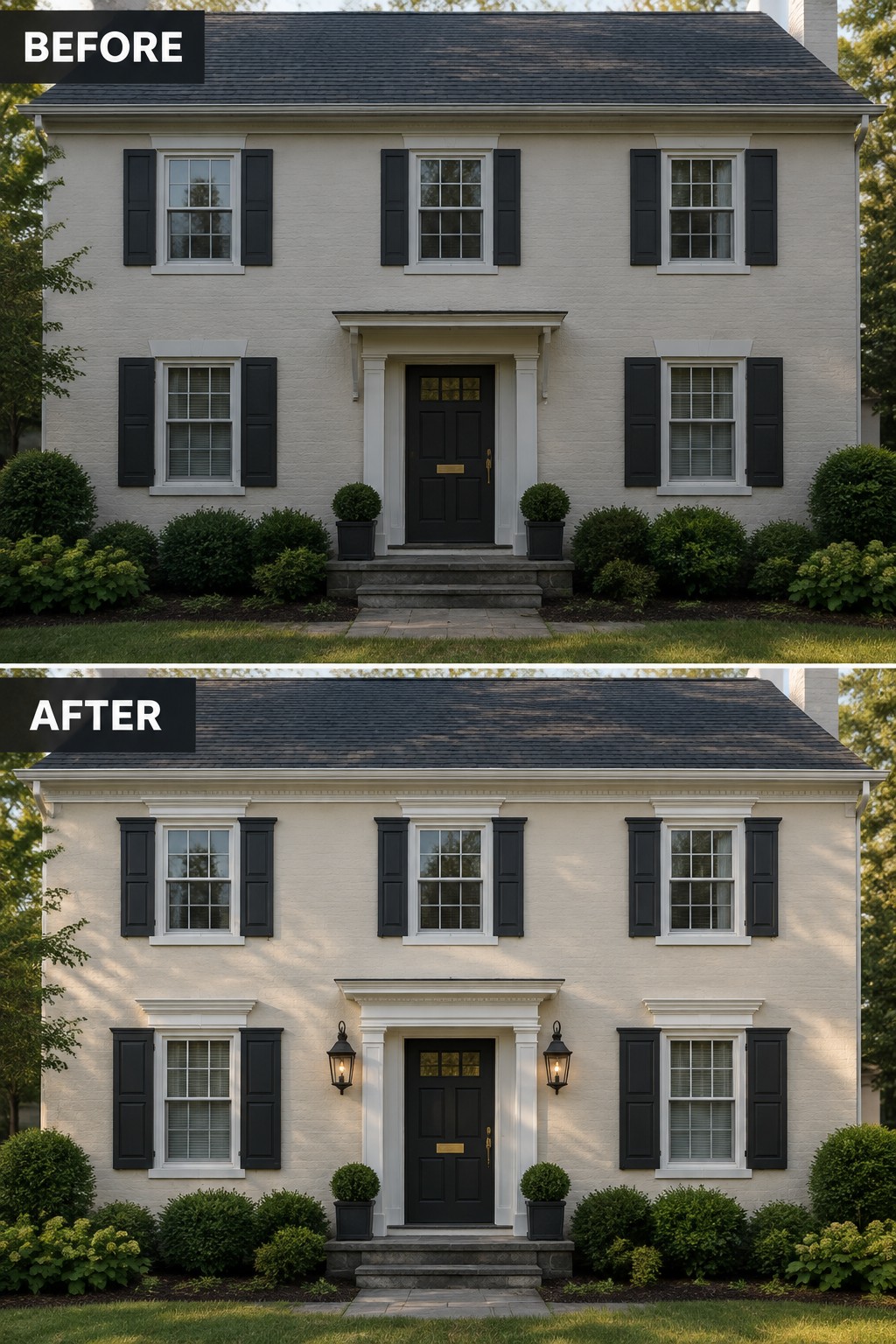
Many Georgian colonial homes already have good bones and a balanced layout. The main issue is often that the central door feels flat against the rest of the facade. Adding a pair of simple wall lanterns on either side of the door gives the entry a clear focal point without changing the paint or shutters.
This works especially well on symmetrical houses because the lanterns reinforce the center line. Keep the fixtures modest in size and match the finish to the door hardware. The change stays subtle but makes the house feel more finished from the street.
Define The Front Entry With Gravel And Pavers

A muddy walkway makes even a well-proportioned house feel unfinished. In this case, replacing the bare dirt with gravel and a few simple pavers gave the symmetrical doorway a clear, orderly approach. The low brick pillars on each side add just enough enclosure without crowding the facade.
This approach works well on Georgian Colonial homes or any house with balanced windows and a centered door. Start with a solid base layer under the gravel so it stays in place, then keep the paver layout simple and centered on the steps. The goal is to lead the eye straight to the entry rather than decorate every inch of the yard.
Use Lanterns And A Runner To Define The Front Steps
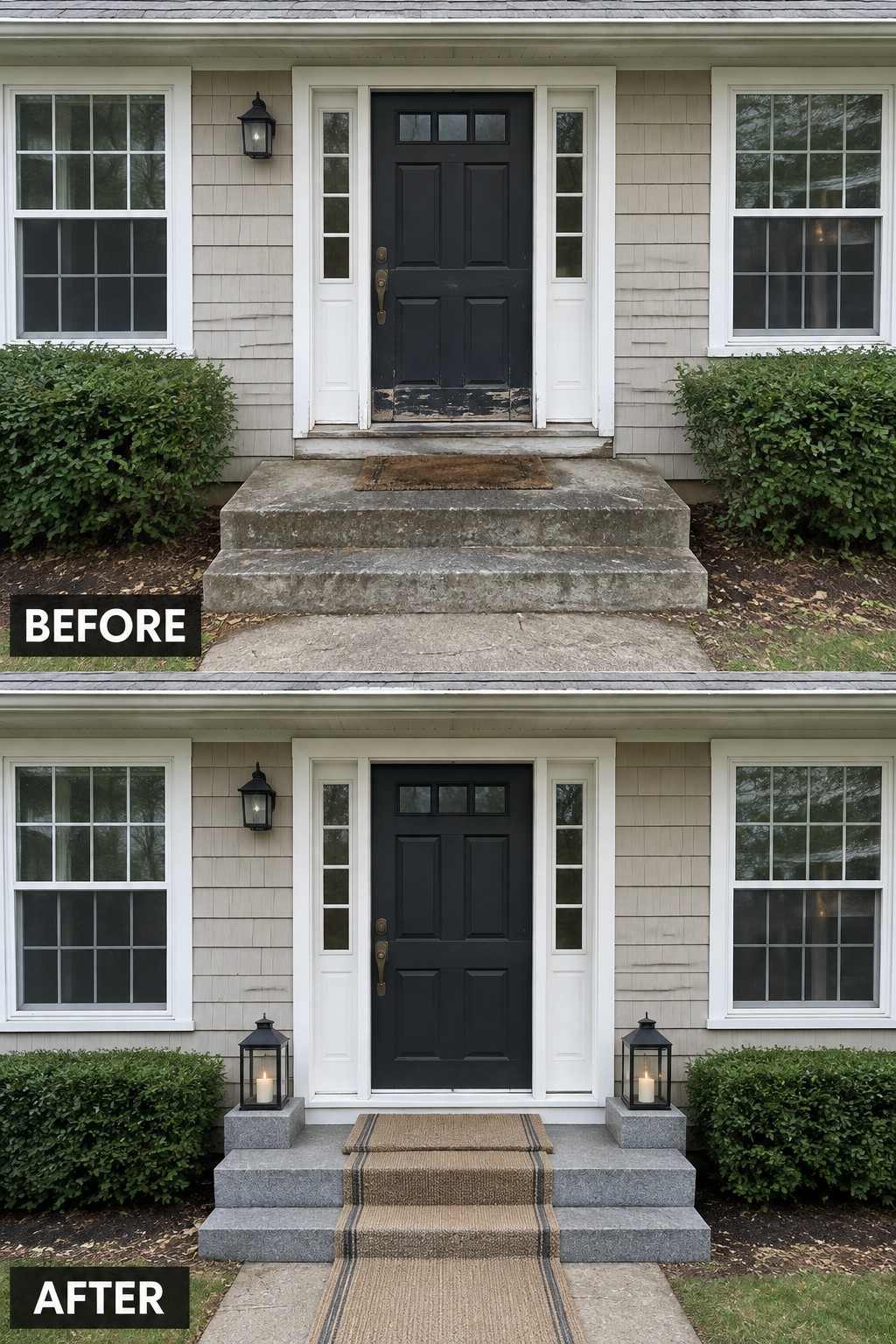
The main change here is how the entry went from a plain concrete approach to something that feels more finished. New stone facing on the steps, a long runner down the center, and a pair of lanterns placed at the base give the doorway a clear path and some presence without adding much clutter.
This idea works well on symmetrical homes where the front door already sits in the middle. Start by fixing the steps so they look solid, then add one runner to guide people forward and a pair of simple lanterns for light at night. Keep the lanterns low and the runner narrow enough that the walkway still feels open.
Refresh A Georgian Colonial With White Paint And A Dark Door
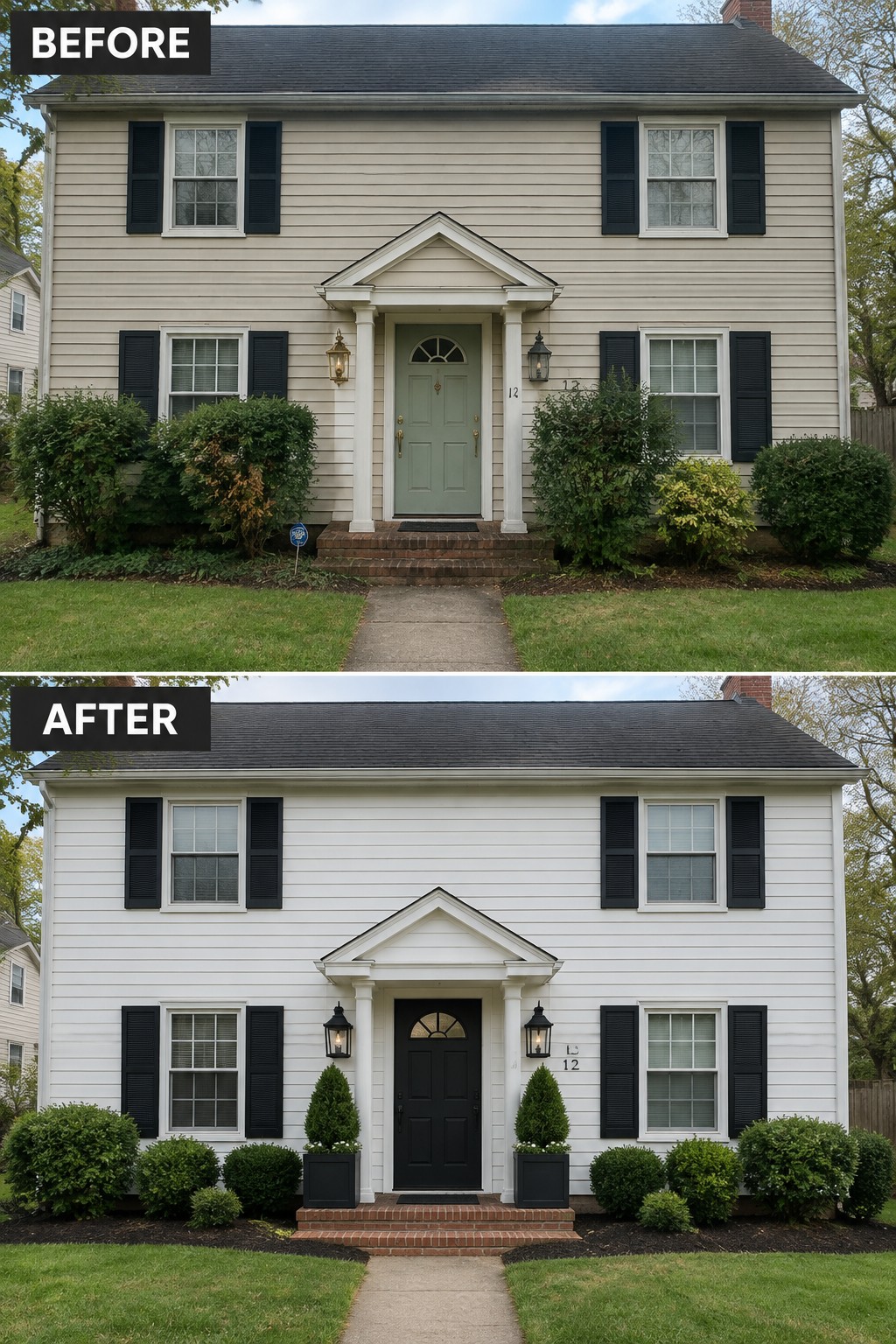
Many Georgian Colonials lose impact when the siding color turns dull or blends into the surroundings. Painting the house white and switching the front door to black sharpens the symmetrical layout and makes the entry the clear focal point without changing the original structure.
This works best on homes that already have balanced windows and a centered doorway. Start with the paint and door color if you want a noticeable improvement while keeping costs reasonable.
Frequently Asked Questions
Q: How do I pick shutters that keep the front perfectly balanced? A: Measure the windows on each side of the door and choose shutters in matching widths and styles. Hang them so the spacing from the entry stays even on both sides. This holds the symmetry the makeovers rely on.
Q: What if I want to update the lighting around the door? A: Mount matching sconces at the same height on either side of the entry. Keep the arms or shades simple so they frame the door without pulling focus away from the center. One pair is usually enough to finish the look.
Q: Can I change the siding color without messing up the overall balance? A: Go with a light neutral that lets the trim and door details pop instead of fighting them. Apply the new color to the whole front at once so no section stands out uneven.