

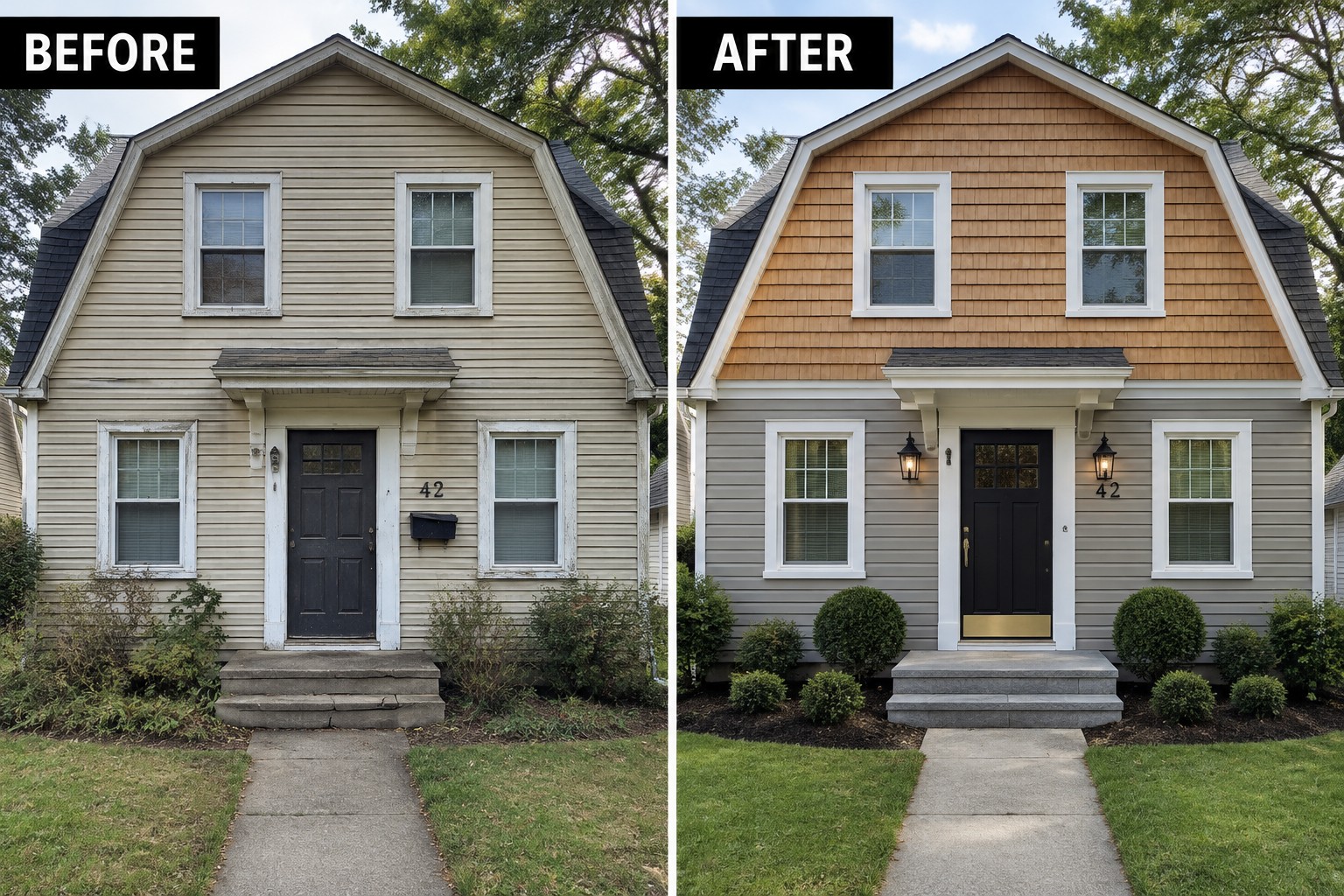
When the exterior of a house starts to look a little flat, paying attention to the roof details and how they connect to the walls can bring back some character.
I have found that updating the entry and choosing siding that complements the gambrel shape often makes the whole front feel more balanced.
Landscaping around the base helps too, though it works best when it does not fight the lines of the house.
Small changes like these tend to make a home seem more cared for without requiring major construction.
If I had a place with this style, I would start by seeing how new trim around the roof edges could tie the look together.
Use Two-Tone Siding To Define The Gambrel Roof
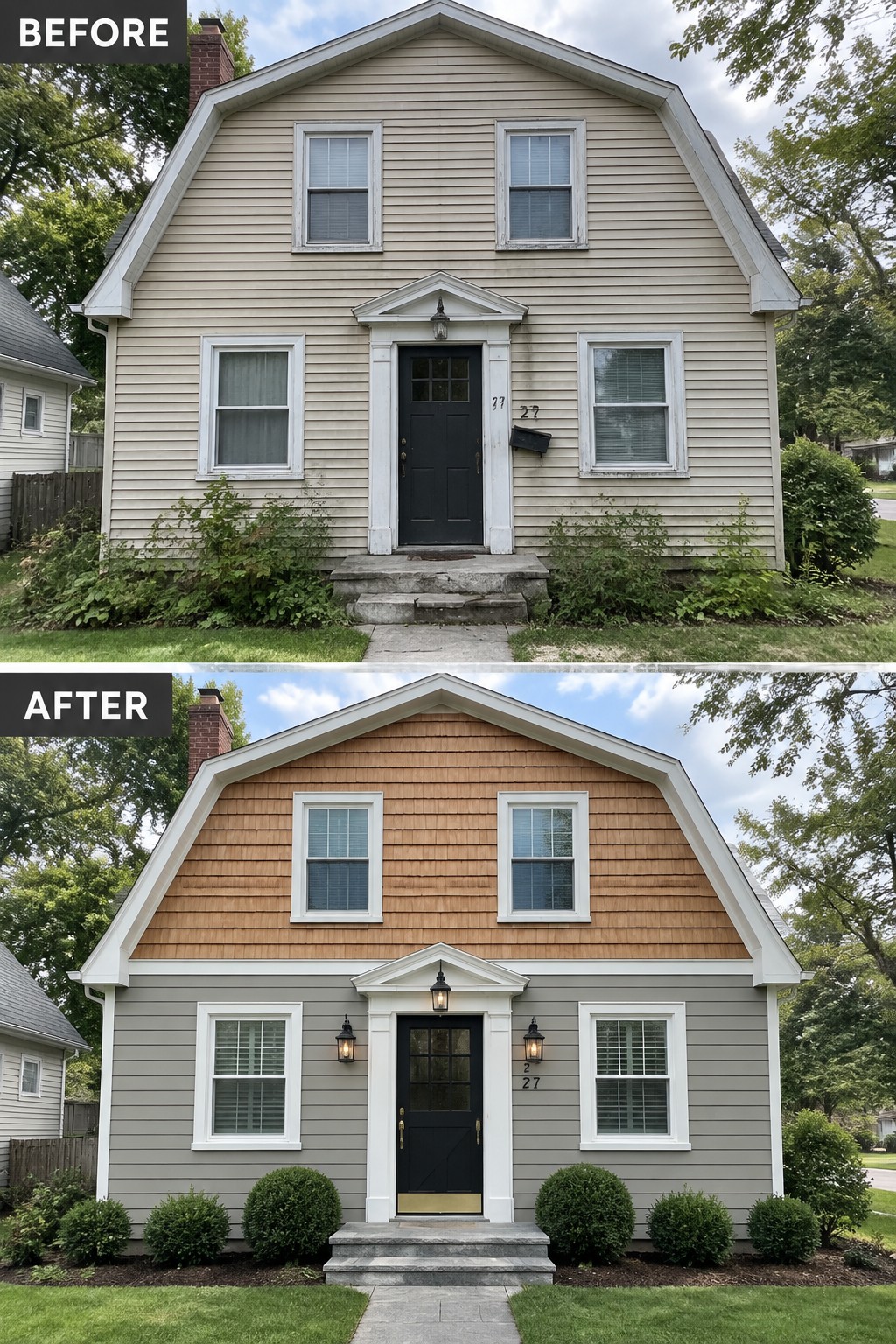
Gambrel roofs often lose impact when the whole house is covered in one siding material. Switching the upper section to wood shingles while painting the lower walls a solid gray gives the roof shape the separation it needs without any major structural changes.
This works best on Dutch Colonial homes where the roof is the main architectural feature. Keep the trim and entry details white so the two siding areas read as one house, and add low rounded shrubs along the base to frame the facade instead of letting the foundation disappear into the lawn.
Refresh A Dark Colonial With White Paint
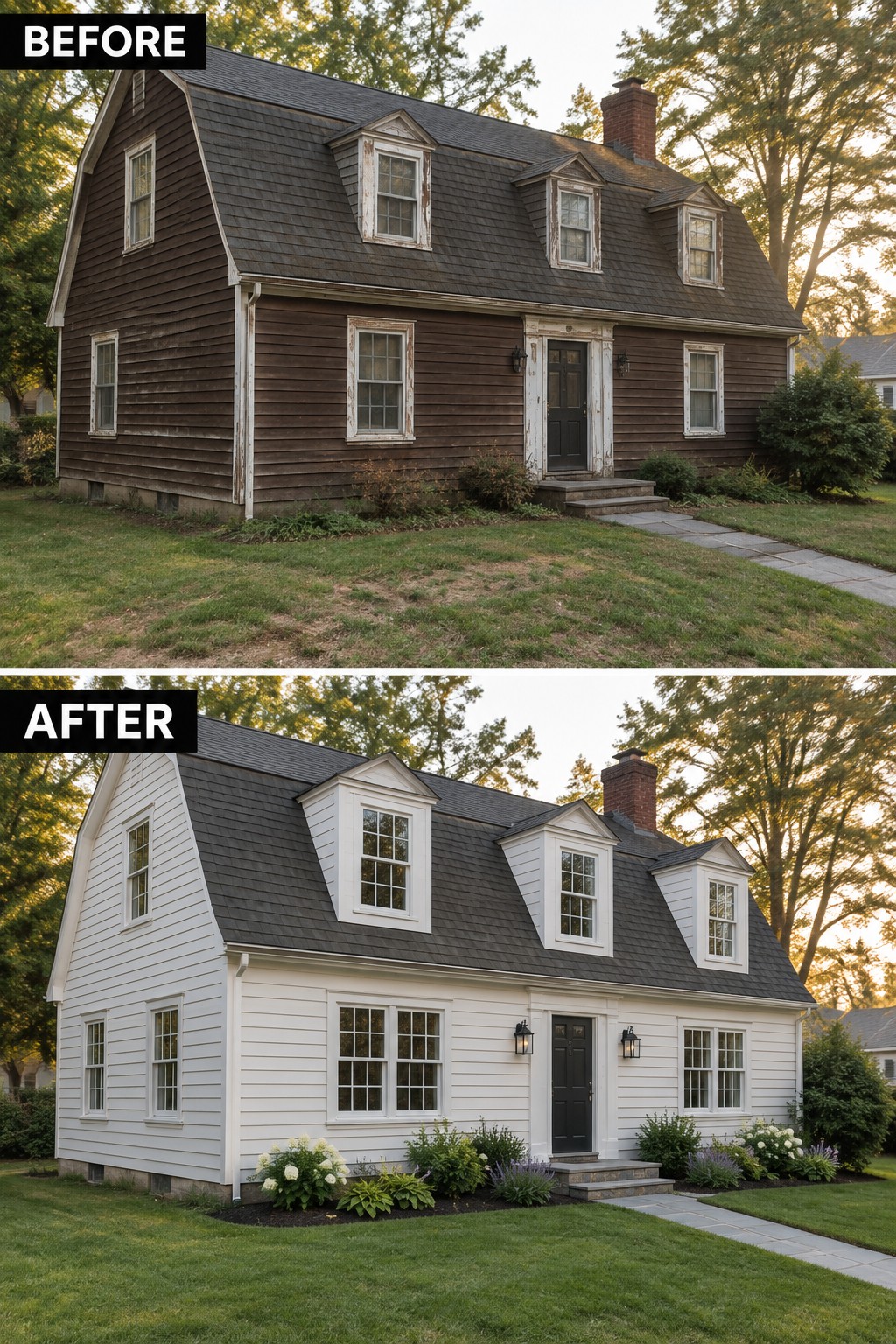
A dark brown exterior can make even a classic Dutch Colonial feel heavy and dated. Painting the siding white instantly lifts the whole house, letting the gambrel roof and dormer details stand out without changing the original architecture. The clean contrast with the black door and dark roof gives the facade a lighter, more welcoming presence.
This approach works especially well on older homes where the structure is sound but the color feels tired. Start with the siding, then freshen the trim and shutters in the same white or a crisp off-white. Keep plantings simple and low so the new color stays the focus.
Update Exterior Paint And Shutters For A Fresher Look

Many brick homes start to feel heavy after years of the same color. Painting the brick white and changing the shutters and door to black lightens the whole front and makes the shape of the house stand out more clearly.
This works especially well on Dutch Colonial homes because the gambrel roof already has strong lines. The new color helps those lines read better without needing bigger changes. Test paint on the actual wall first, since brick absorbs color differently than siding.
Add A Defined Porch To Refresh The Front Entry
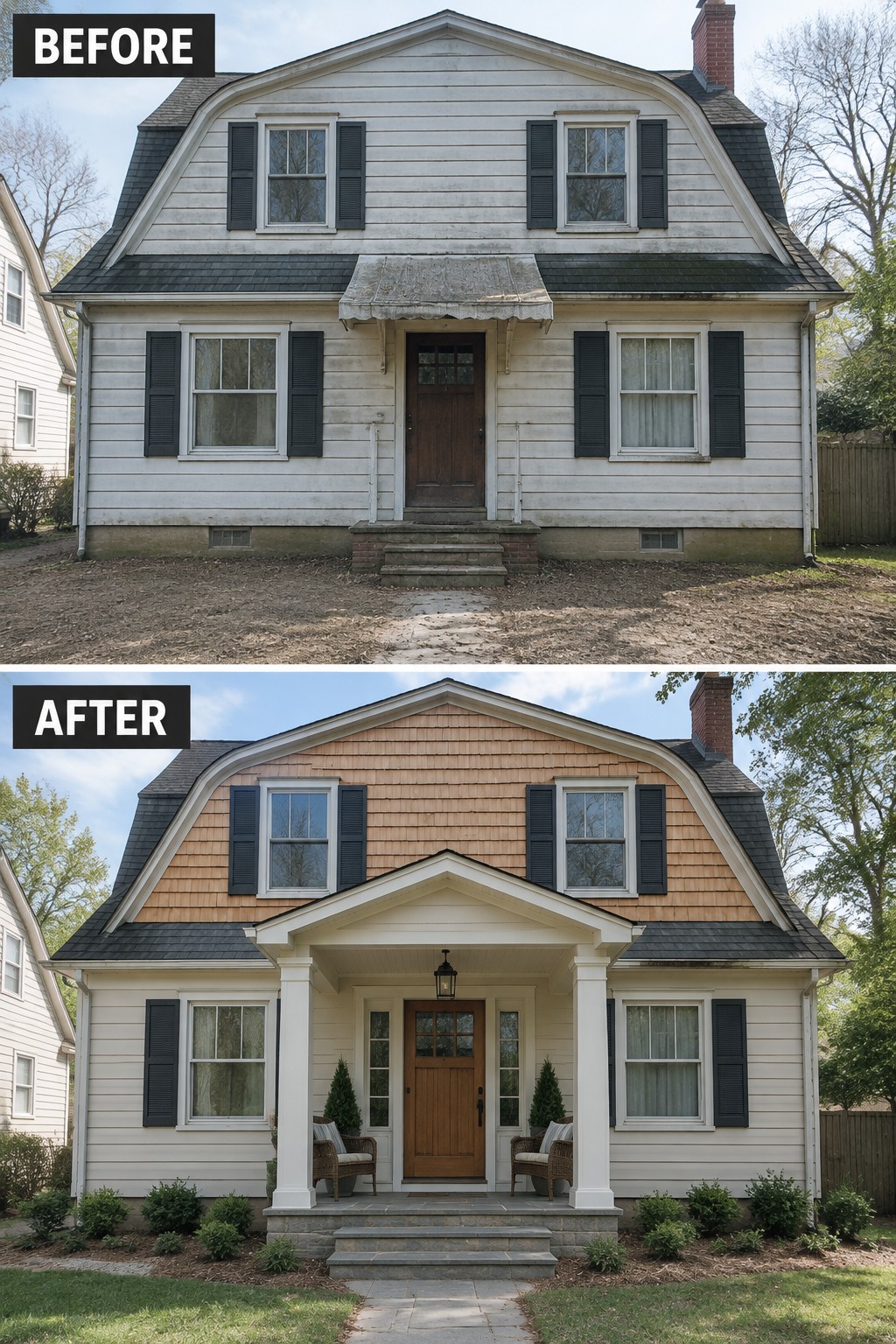
Many older homes with gambrel roofs end up with entries that feel flat and unfinished. A small overhang or basic steps rarely give the front the weight it needs. In this case the change came from adding a proper porch with columns and a gable roof detail that matches the house shape. That single addition, paired with updated siding on the upper level, makes the whole facade feel more complete and welcoming.
This approach works especially well on Dutch Colonial homes where the roof already creates strong lines. Focus first on the entry itself rather than repainting the entire house. Keep the porch depth practical so it still leaves room for movement, and choose materials that echo the roof shingles or trim color already on the house. The result reads as an intentional update instead of scattered fixes.
Refresh The Roof Shingles To Lift A Gambrel Exterior
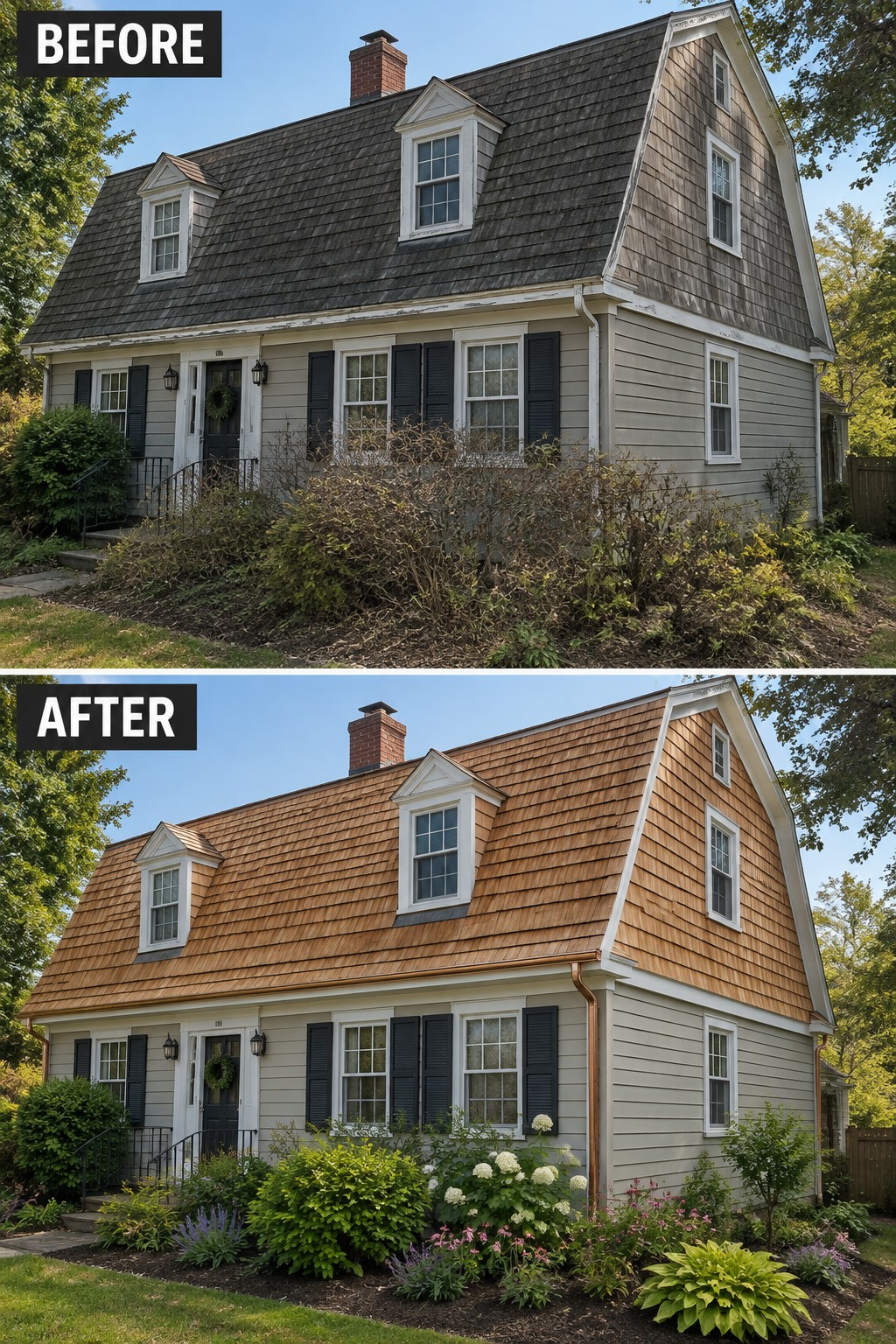
The roof often dominates the look of a Dutch Colonial, so changing it can shift the whole feel of the house. Here the old dark shingles were swapped for warmer cedar shakes that brighten the facade and make the gray siding read cleaner next to the fresh landscaping below.
This idea suits homes where the gambrel roof is the main architectural feature. Start with the roof if it is faded or mismatched, then clear and reshape the front beds so the new color has a tidy setting. Keep plantings simple and low so they frame the entry without hiding the roofline you just improved.
Add Window Boxes To Highlight The Roofline
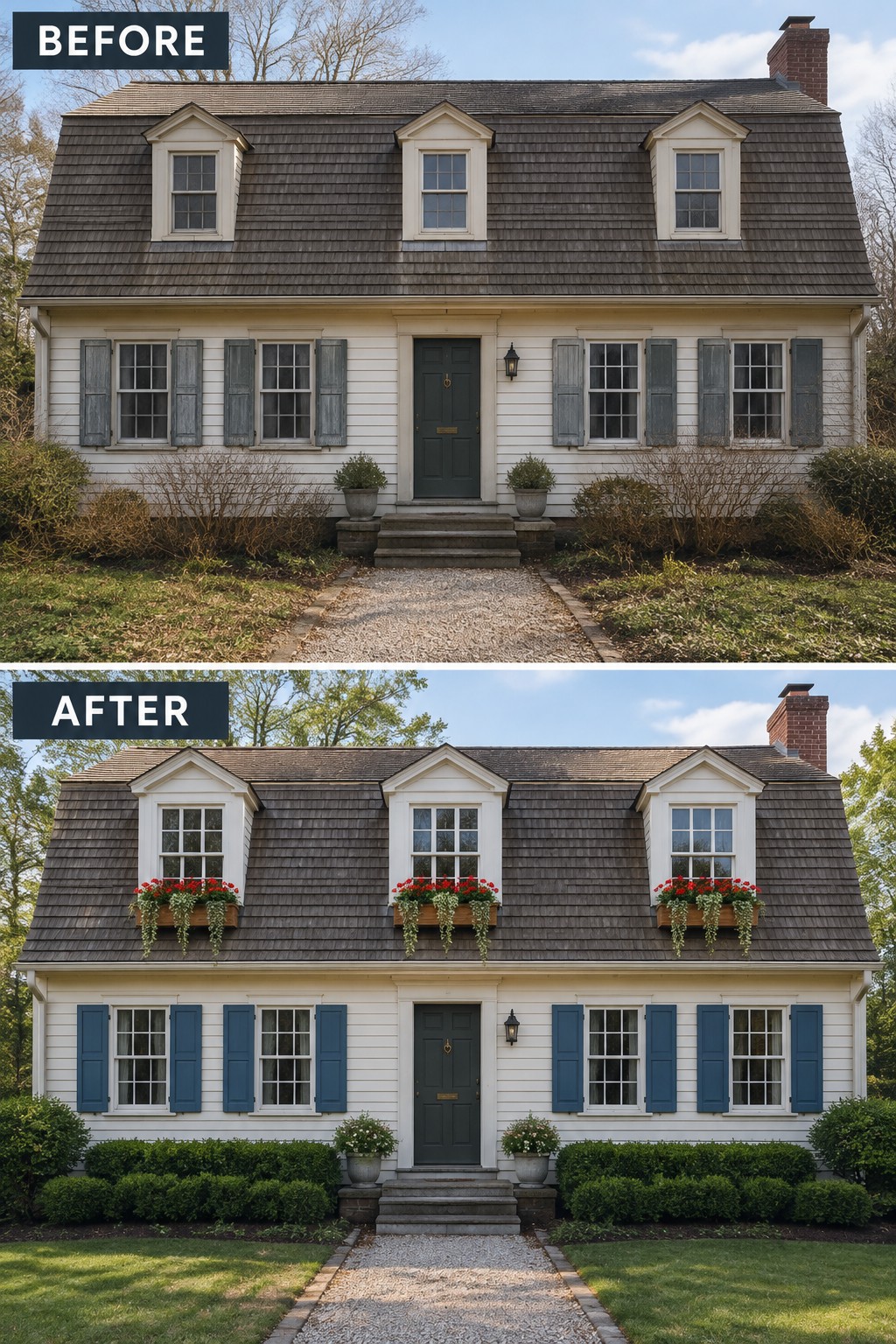
One easy way to make a Dutch Colonial exterior feel more complete is to add window boxes to the dormer windows. The before photo shows a roofline that reads a bit plain, while the after shows how simple boxes filled with red flowers bring attention to the gambrel shape without any major construction.
This idea works best on homes where the dormers sit right under the main roof edge. Match the box color to the trim, keep the planting low and full, and let the flowers soften the hard lines of the roof. It is a small change that makes the whole front feel more cared for.
Update The Garage Door And Trim For Better Curb Appeal

A plain garage door often dominates the front of a house and can make the whole exterior feel dated. In this case, swapping the old single-panel door for one with divided windows and simple hardware, then adding crisp white trim along the eaves and gables, immediately makes the gambrel roofline look sharper and more intentional. The change gives the house a cleaner outline without touching the roof or siding.
This approach works well on Dutch Colonial homes where the garage sits front and center. Focus first on the door style and trim color since those two elements cover the largest visual areas. Keep the updates simple so they complement the existing roof shape rather than compete with it.
Refresh A Faded Exterior With Paint And Defined Beds

The house looked tired with its weathered siding and plain front yard. A fresh coat of cream paint, dark door and shutters, and simple stone borders around the beds made the whole place feel brighter and more put together without changing the roofline or windows.
This kind of update suits older homes where the structure is still good but the finish has aged. Choose a paint color that works with the roof and trim, then add clear edges to the beds first so the planting looks intentional instead of scattered.
Add Shutters And Siding Contrast To Refresh The Facade
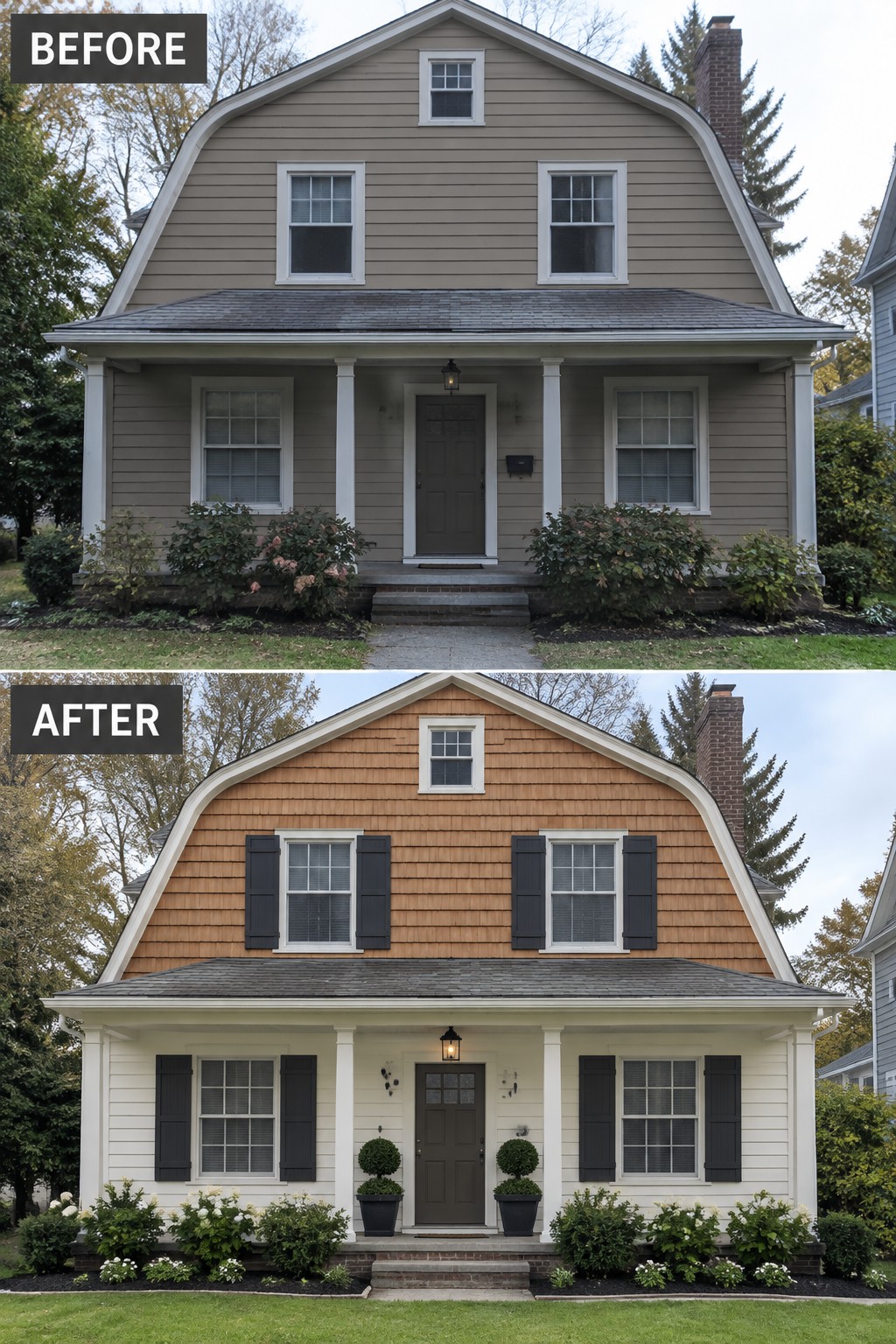
The main change here is the addition of black shutters on all the windows plus the switch to wood shingles on the upper gambrel section. The before version looked flat because the siding was the same material from top to bottom and the windows had no definition. Once the shutters were added and the top half changed to a warmer wood tone, the house gained clear visual breaks and more character.
This idea suits homes with large rooflines where the upper level can feel blank. Choose shutters in a dark color that contrasts with the main siding, and consider a material change on the gambrel if you want more impact than paint alone. Start with the shutters first if the budget is limited, since they give the quickest improvement on any facade that feels unfinished.
Give The Front Entry A Fresher Look With Paint And Planters
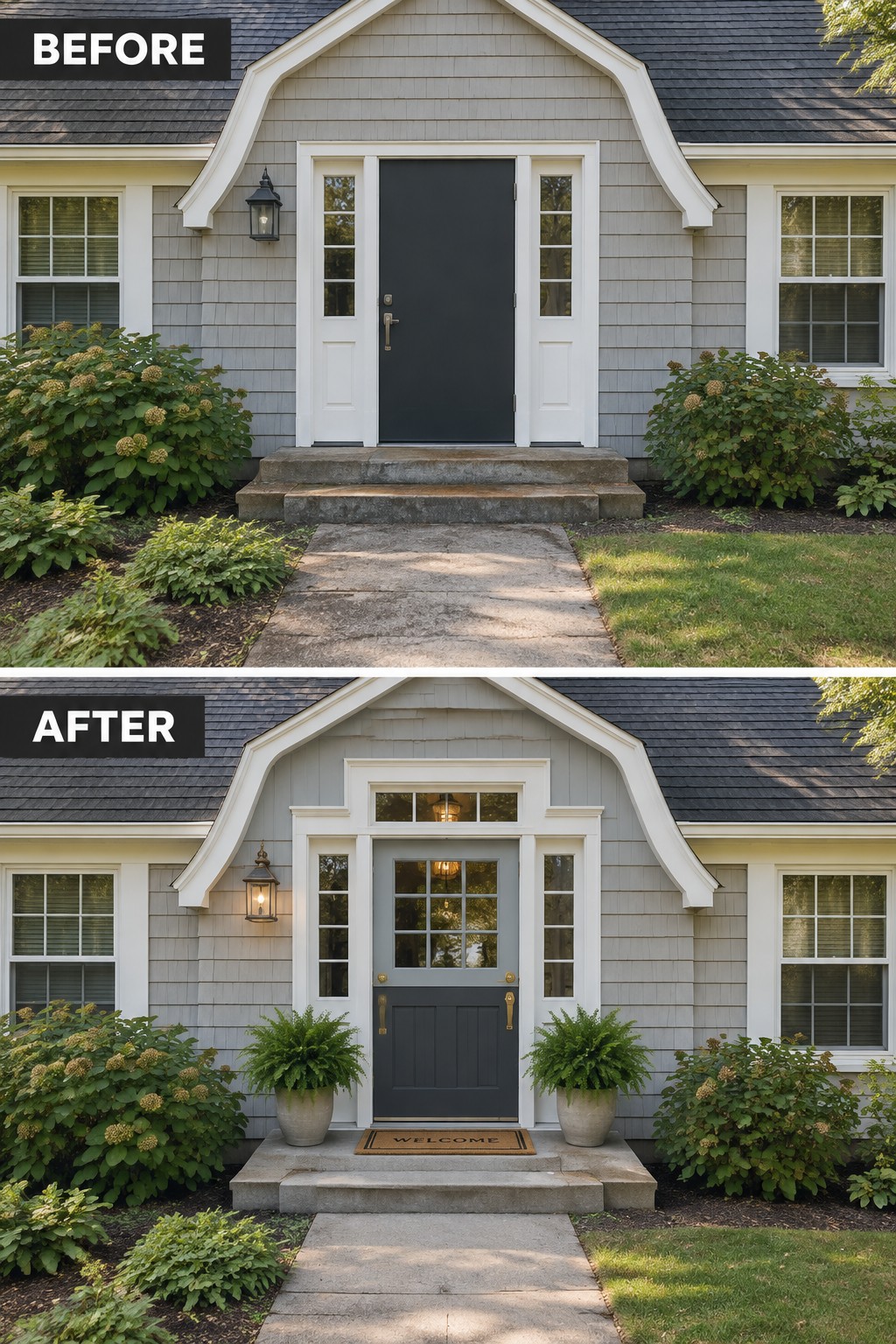
A dark front door can make an entry feel closed off even when the rest of the house is in good shape. Switching to a softer gray-blue and adding a simple transom window above the door opens up the whole facade without any major construction.
Placing two matching potted ferns on the steps and laying down a welcome mat adds just enough structure to make the entrance feel intentional. This kind of update works especially well on homes with classic rooflines where you want to keep the original character but still make the door area feel more welcoming.
Add Structure To An Overgrown Front Yard
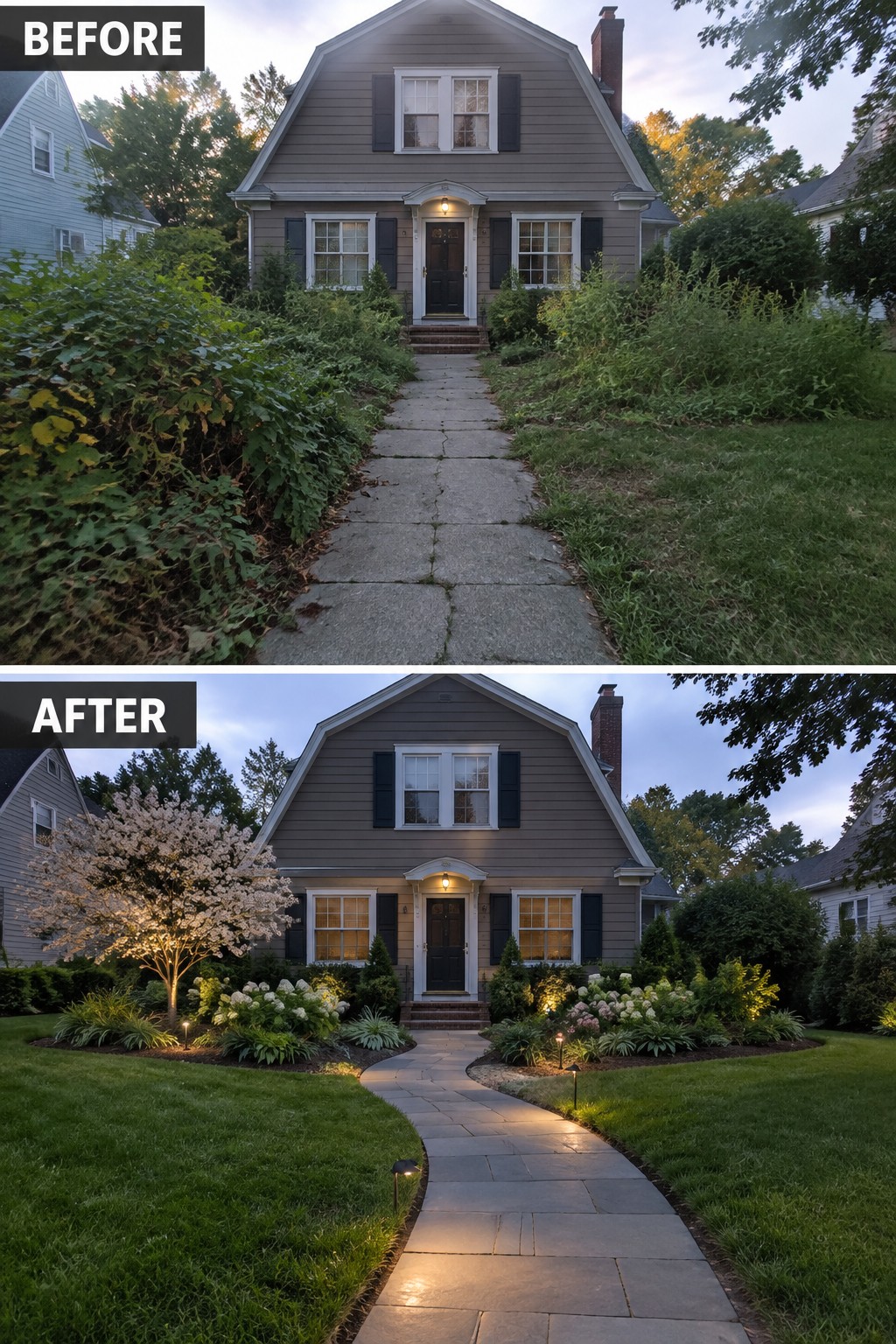
The main change here is clearing away the thick, messy shrubs that crowded the walkway and replacing them with clean lawn edges and planted beds that follow the path. Low lights along the stone walkway add another layer of order without feeling fussy. The result is a front yard that feels settled and easier to walk through.
This approach works well on older homes where the roofline and siding are already strong. Start by cutting back whatever blocks the view of the house, then shape the beds so they guide people toward the door. Keep the planting simple and repeat a few plants rather than filling every gap.
Add Exterior Lighting To Highlight The Roofline
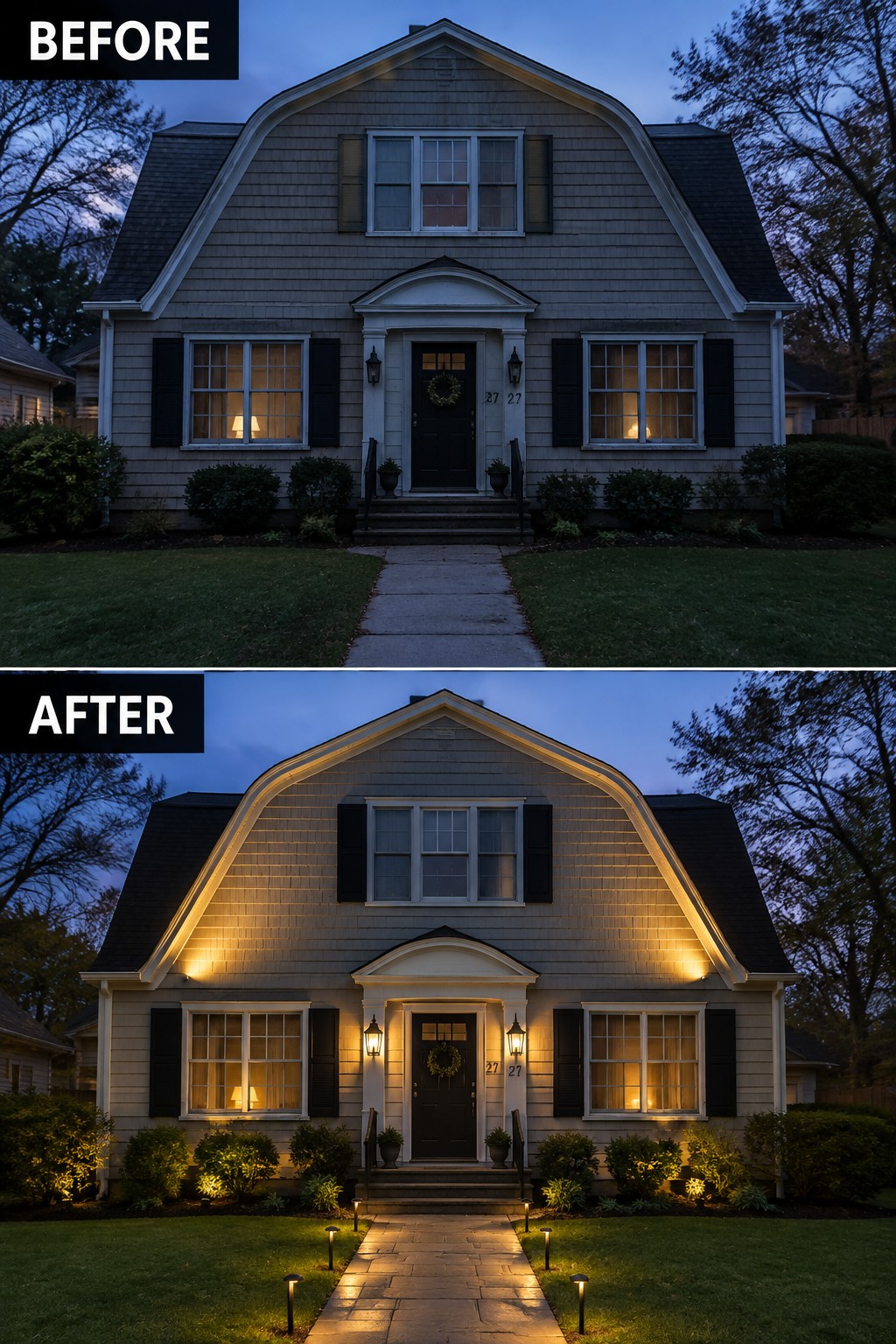
Many Dutch Colonials lose their shape after dark because the roofline blends into the sky. A few well-placed uplights along the eaves and gable edges can change that quickly. The before photo shows almost no light on the structure itself, while the after version uses warm fixtures to trace the gambrel curve and make the house feel present instead of flat.
This approach works best on homes that already have clean siding and classic trim. Keep the fixtures low and aimed upward so the light follows the roof edges rather than washing the whole wall. It is a simple first step that improves curb appeal without requiring paint, shutters, or major landscaping changes.
Update Exterior Shutters For A Stronger Look

Changing the shutter color from a soft gray to a deep green gives this Dutch Colonial much more definition against the gray shingles. The darker tone works with the white trim and black door, so the whole front feels more balanced and pulled together without any major construction.
This approach works especially well on homes with strong rooflines and multiple windows. Pick a shutter color that contrasts enough with the siding to stand out but still feels connected to the rest of the exterior. Start by testing a few samples on the actual house before committing, since light can shift how the color reads throughout the day.
Refresh A Worn Porch With Paint And Seating
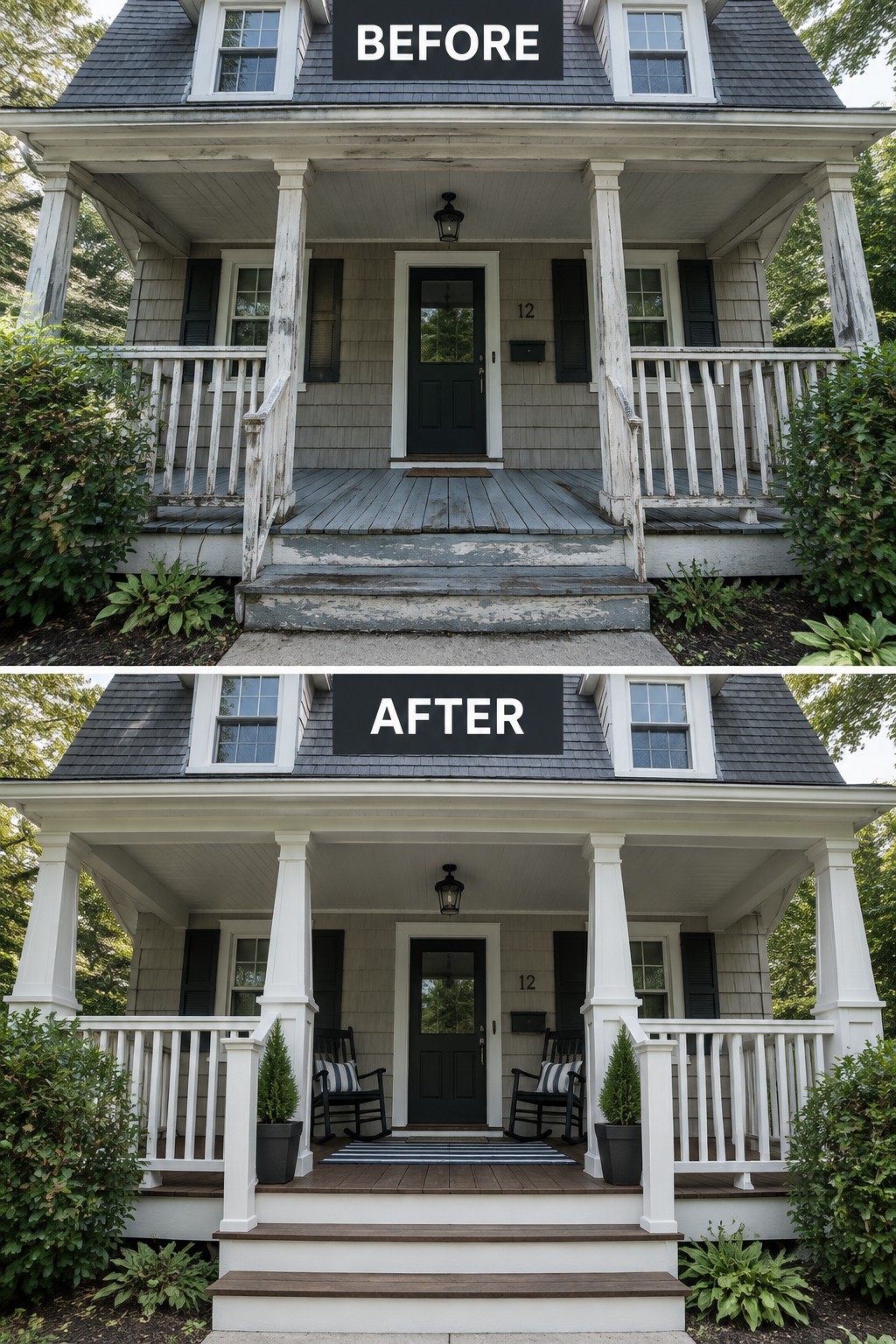
The before photo shows a porch that had faded badly, with peeling paint on the columns and railings plus a tired gray deck. Fresh white paint on the trim and new brown deck boards instantly made the entry look cared for. Adding two rocking chairs and a striped rug gave the space a clear reason to be used.
This approach works best on older homes where the porch structure is still solid but the finishes have worn down. Focus first on paint and decking if those are the weakest spots, then add just a couple of chairs and a rug to make the area feel purposeful. It suits Dutch Colonial and similar traditional houses where the front porch is meant to be part of the everyday look.
Refresh Dormers With Fresh Paint And Trim
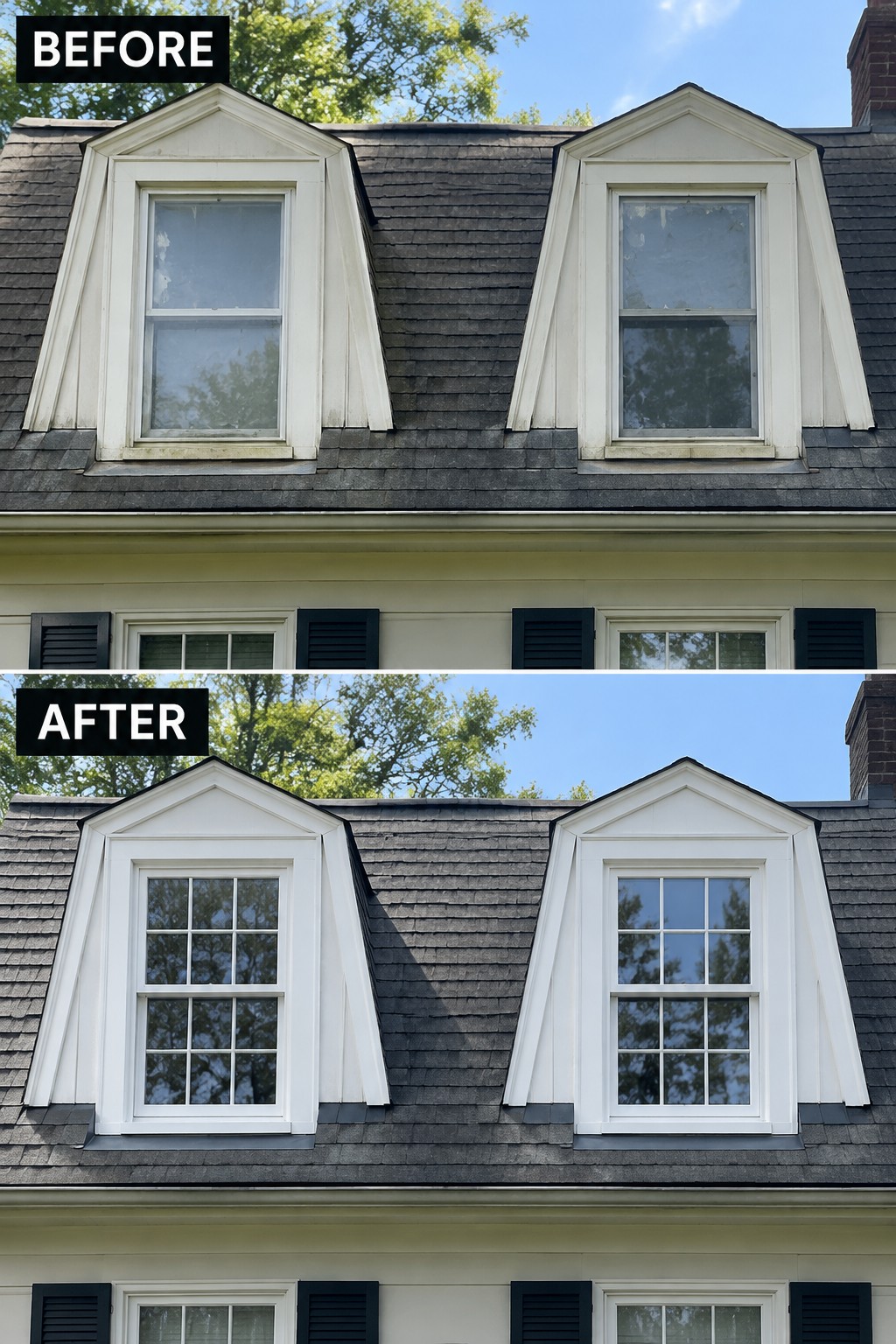
Many older Dutch Colonials have dormers that slowly lose their look through peeling paint and faded trim. A straightforward paint update on the trim, roof edges, and window frames can make the whole roofline feel cared for again. In this case the before photo shows worn white paint and cloudy glass while the after photo shows crisp white paint, clean divided-light windows, and a neat black edge along the roof.
This approach works well on homes where the structure is still sound but the finish has aged. Focus first on scraping, priming, and painting the trim in a durable exterior color that matches the house. Keep the window grids simple and consistent so the dormers read as a matched pair rather than two separate updates. The change stays modest in cost yet lifts curb appeal without touching the roof or siding.
Update The Trim To Highlight The Roofline
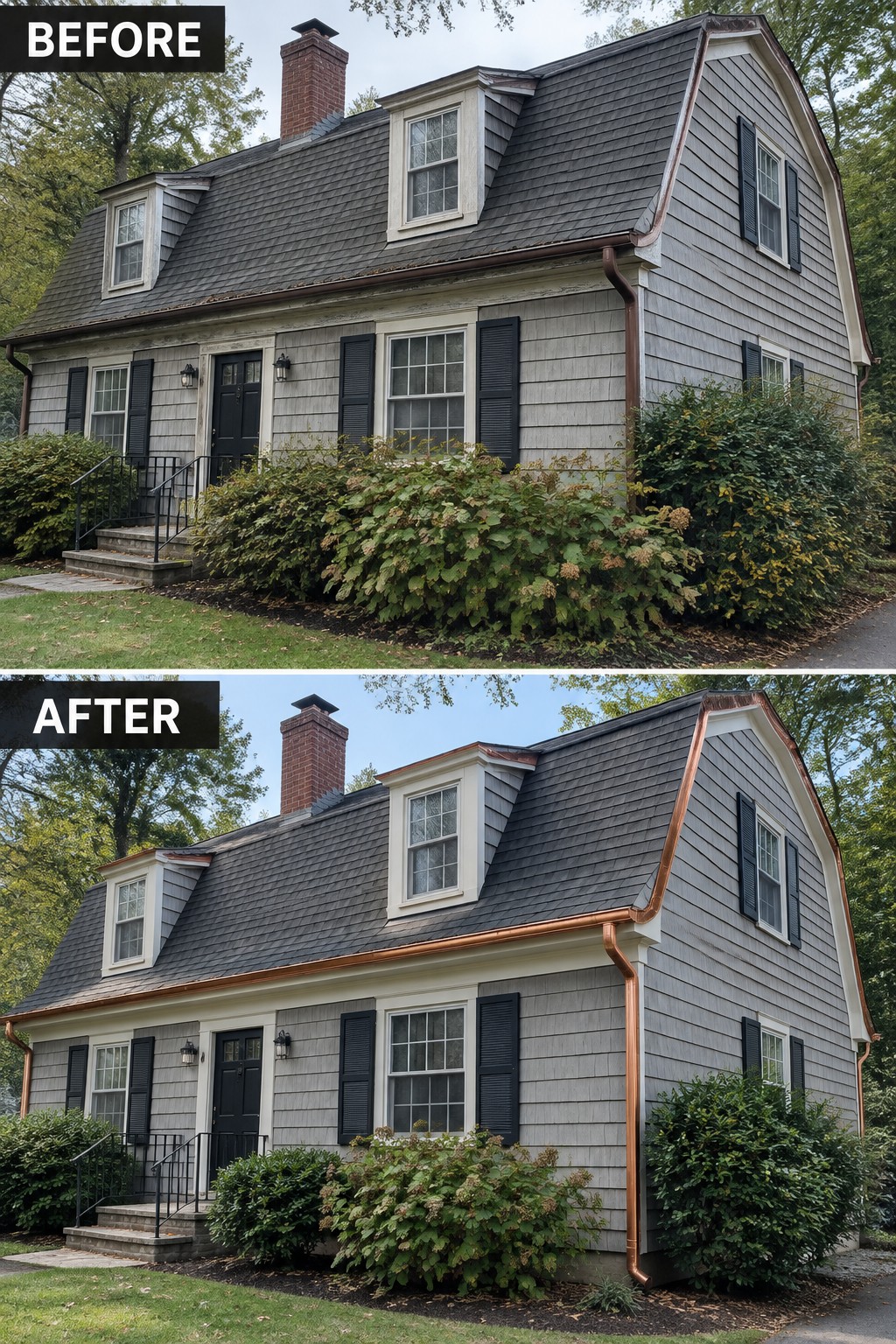
Many older homes lose impact when the trim fades into the siding or turns dingy. Here the main change was painting the eaves, gable edges, and window casings a clean off-white. That single step made the gambrel roofline and the copper gutters stand out instead of disappearing into the gray shingles.
This approach works well on Dutch Colonials and similar styles where the roof shape is the main feature. Keep the siding color as is and focus only on the trim. Test the new color on a small section first so it contrasts without clashing, and make sure the paint is rated for exterior use so it holds up to weather.
Add Shutters And Trim To Give A Plain Exterior More Structure
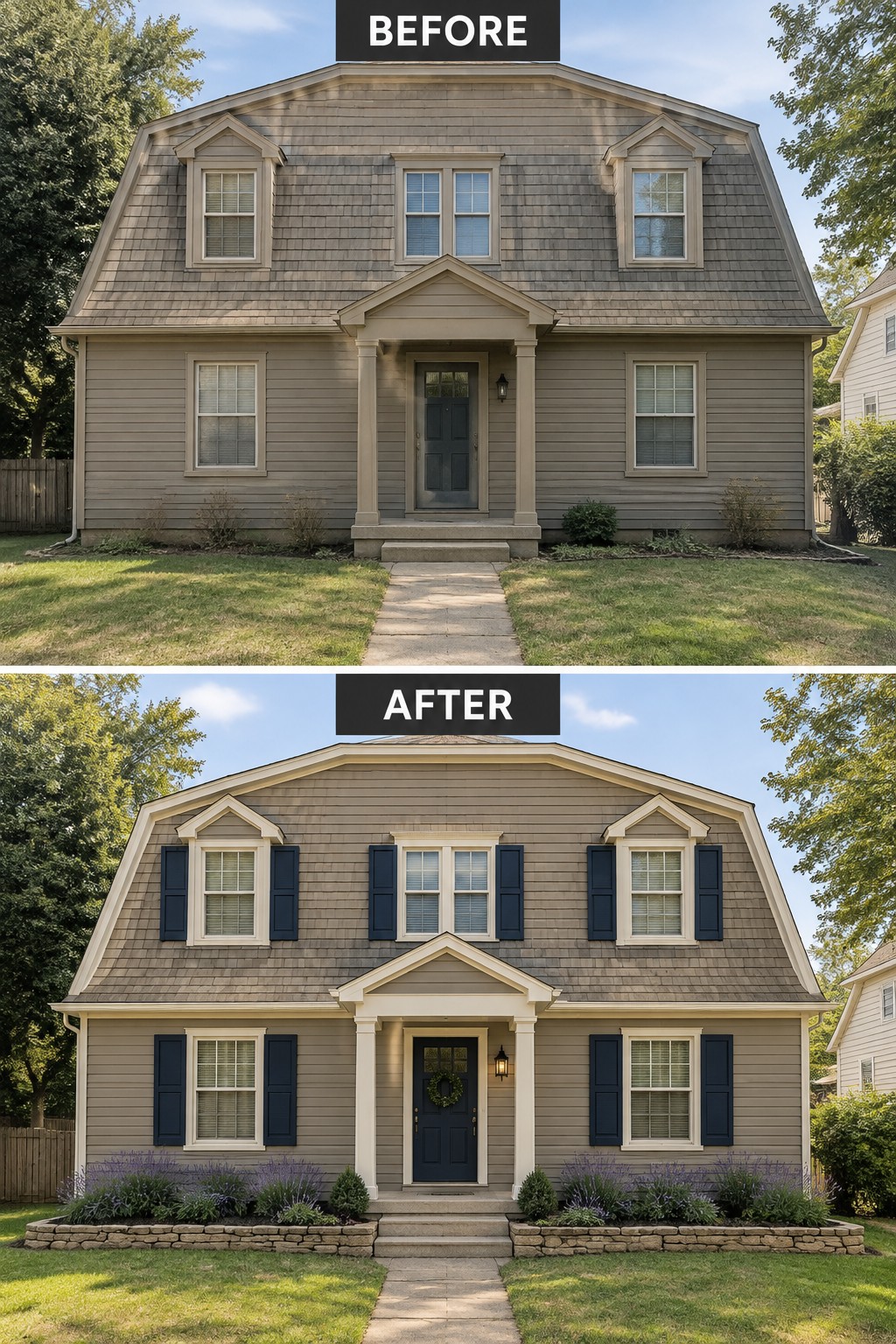
Many houses with gambrel roofs end up looking flat because the windows have no definition. Adding dark shutters and white trim around the openings creates clear frames that work with the roof shape and make the whole front feel more finished. The before version shows a simple facade with nothing breaking up the siding, while the after version uses the shutters to pull the eye to each window and tie the design together.
This approach suits Dutch Colonial homes or any older exterior that needs a quick refresh without big construction. Start with the main windows on the front, pick a shutter color that contrasts the siding, and keep the trim simple so it does not compete with the roofline. It is an easy change that improves curb appeal on its own or before adding more landscaping later.
Add Brick Piers To Frame The Front Entry
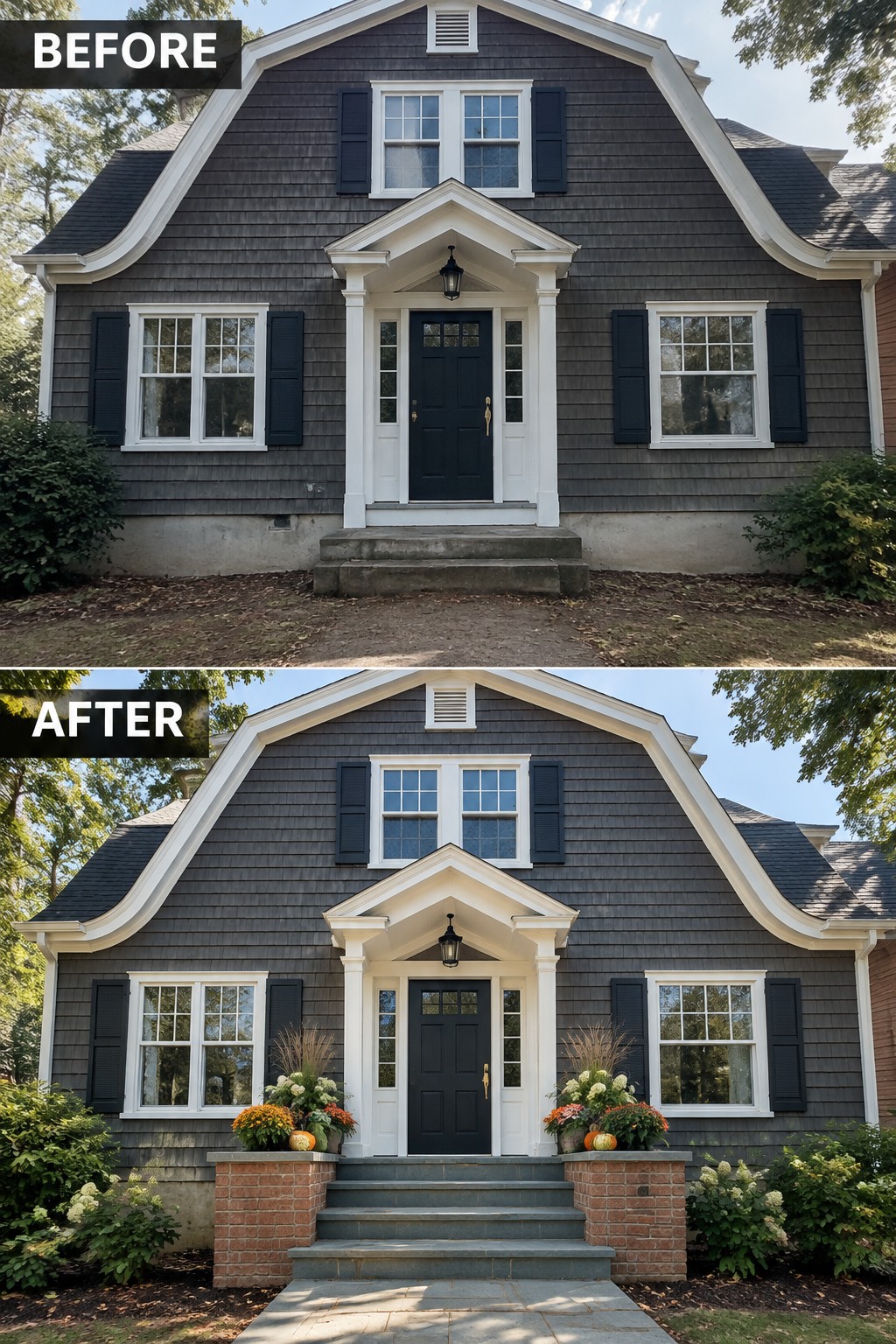
The main change here is the addition of low brick piers on either side of the steps, topped with matching planters. This simple structure gives the entry a clear shape and makes the whole front feel more balanced instead of just a set of stairs against the house.
This idea works well on Dutch Colonial homes or any house with a centered door and gambrel roof. Keep the piers low, use a material that matches the house, and place one planter on each side. The key is stopping before it feels crowded.
Add Columns To Strengthen A Simple Front Entry
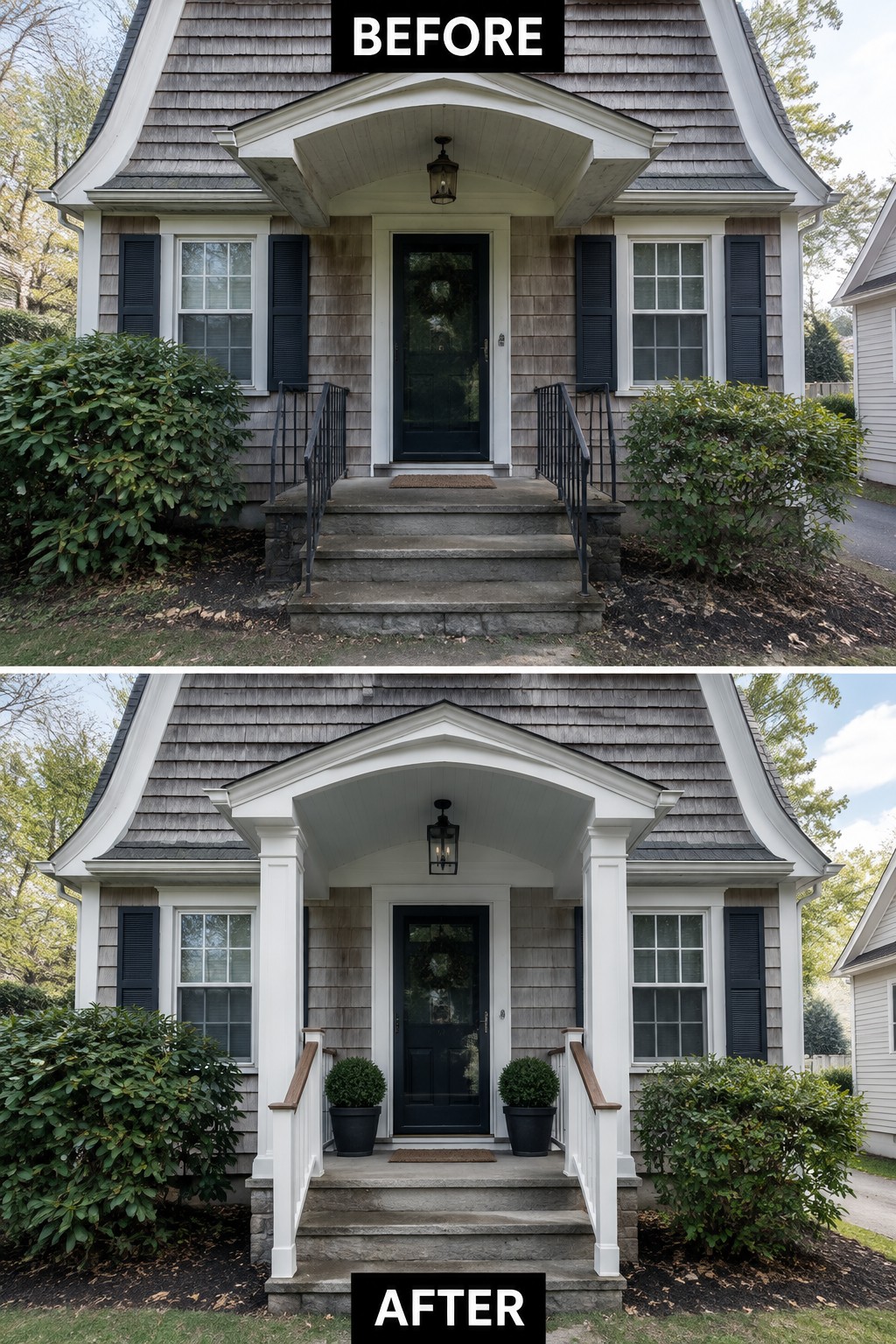
The before photo shows a front porch that felt a bit light and unfinished, with thin railings that did not quite match the scale of the house. Adding full white columns with wood caps on top and bottom gives the entry real presence. The new railings also feel more solid, and the change makes the whole facade look more balanced without any major construction.
This approach works well on older homes that already have a porch roof but need more visual weight at the front. Keep the column style simple and in proportion to the house. Paint them to match the trim so they read as part of the original architecture rather than an add-on.
Add A Small Balcony To The Upper Gable
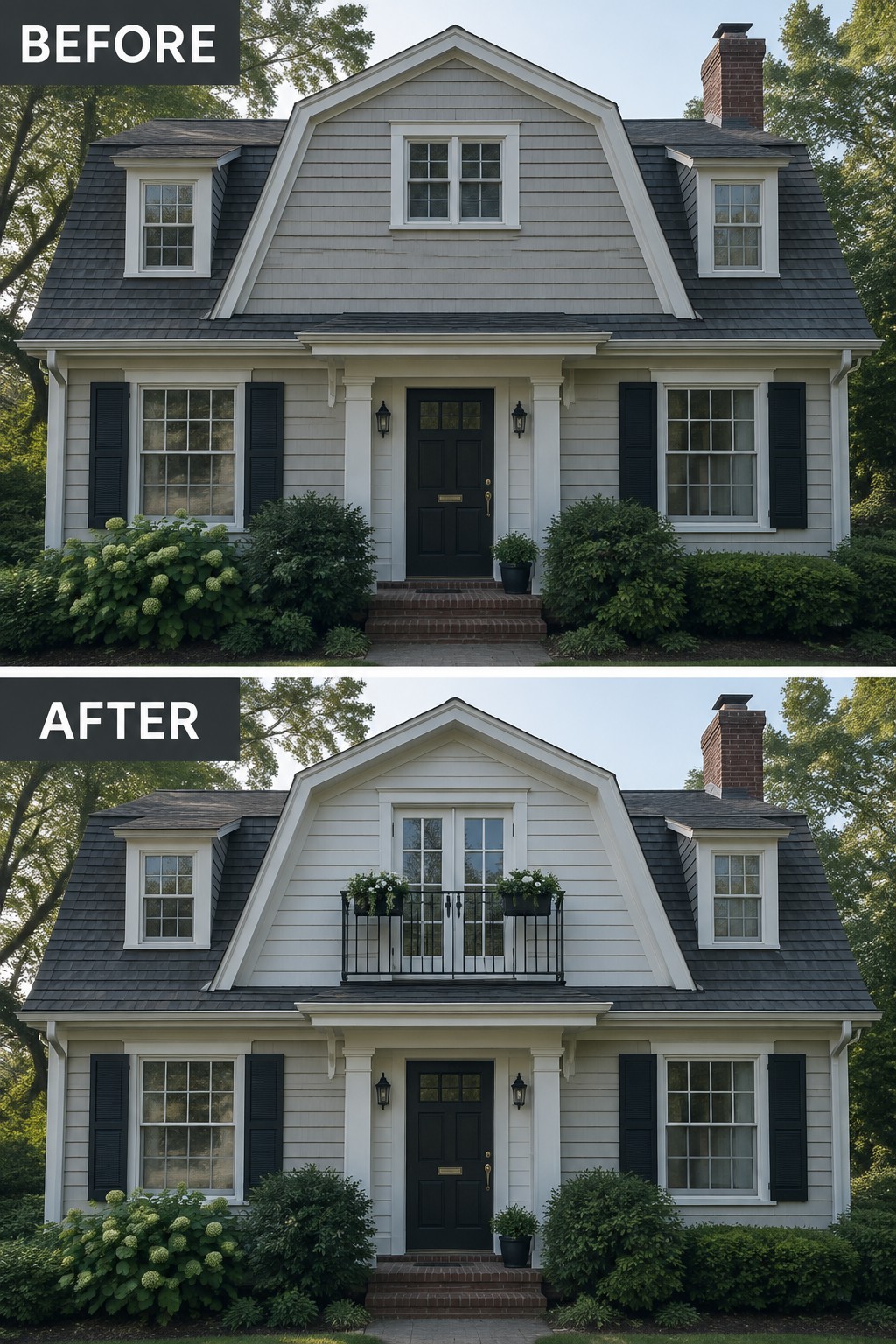
Many Dutch Colonial homes end up with a wide, flat gambrel that lacks a clear center point. Swapping the small upper window for French doors and adding a narrow balcony breaks up that broad roofline and gives the facade a stronger focal point. The simple railing and flower boxes keep the addition light while still drawing the eye upward.
This change works best on homes that already have a centered entry and balanced windows below. Keep the balcony shallow and match the railing to the existing trim so it feels like part of the original design rather than an add-on. It is a useful step when you want more presence on the front without a larger renovation.
Replace A Cracked Walkway With Pavers
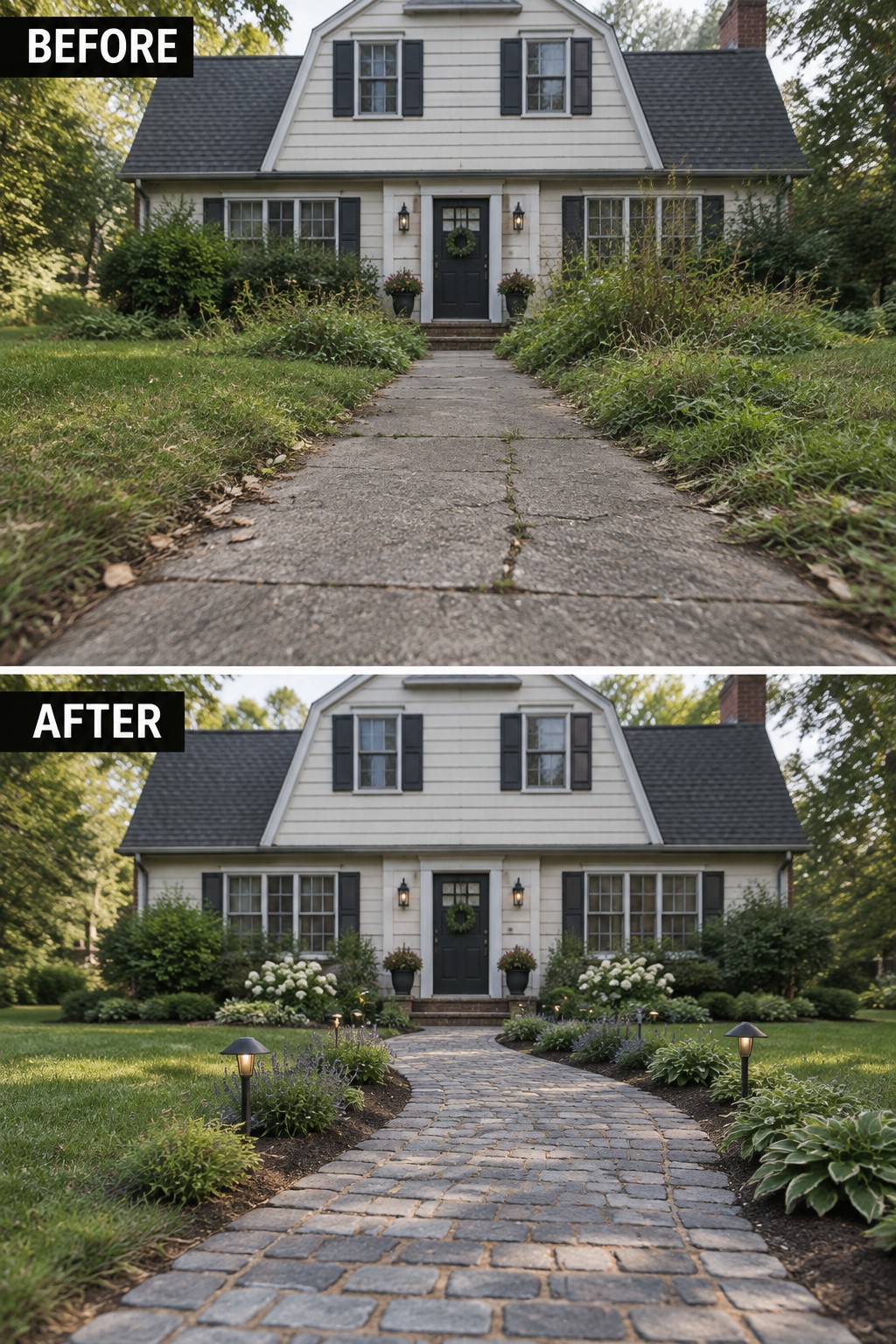
The old straight concrete path was cracked and plain, which made the front of the house feel a bit neglected even though the building itself was in good shape. Switching to a curved cobblestone walkway gave the entry a clear purpose and made the whole front yard feel more put together without any big changes to the house.
This idea works well on homes with a longer front approach, especially older styles like Dutch Colonials. Start with the path first, then add planting beds along the edges. Keep the curve gentle so it still feels natural, and choose pavers that match the roof or trim color so everything ties together.
Add Window Boxes To Soften A Plain Exterior
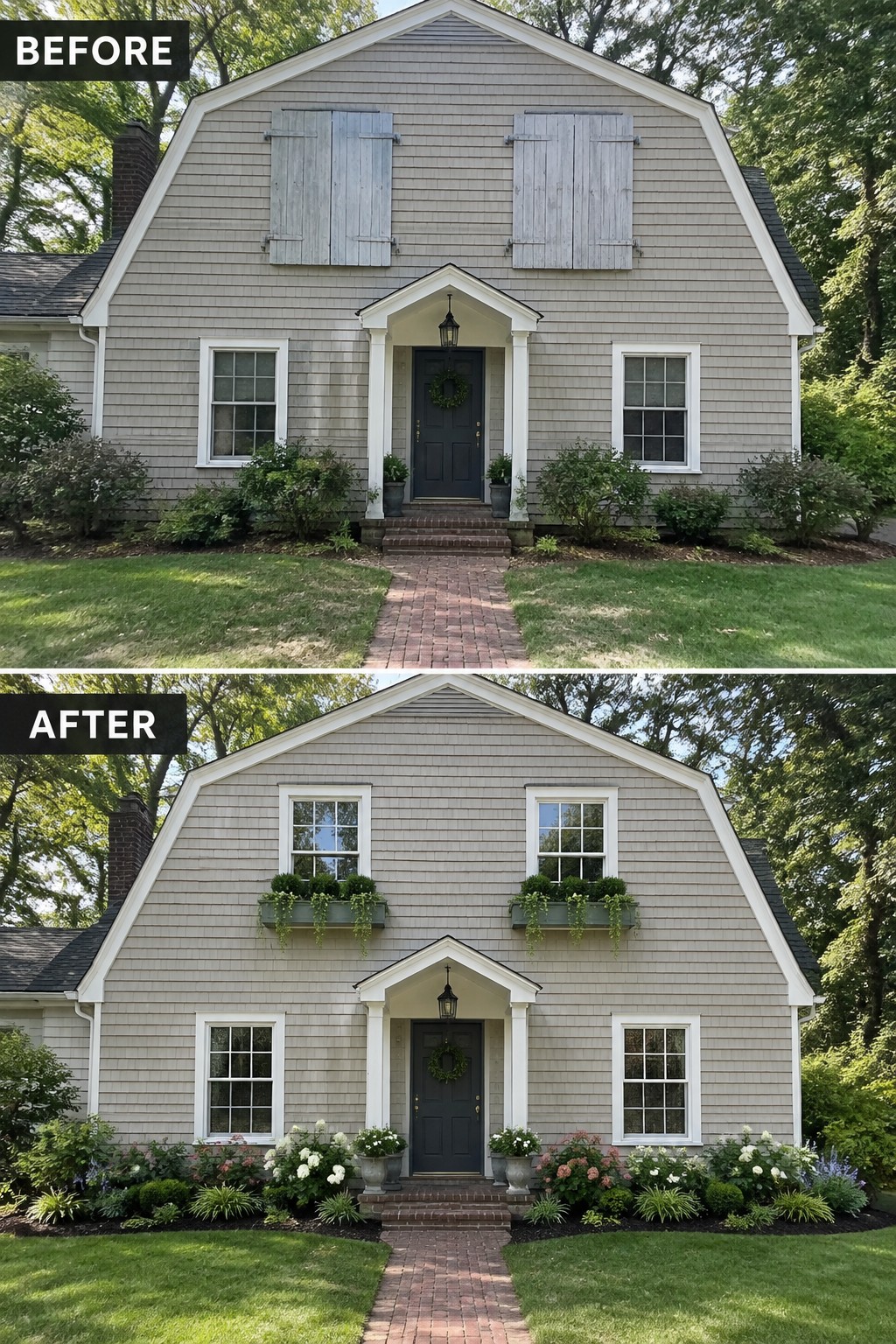
The before photo shows a house front that feels a bit flat despite the strong roof shape. Adding window boxes under the upper windows gives the facade a layer of greenery that breaks up the siding and ties the house to the garden beds below.
This works best on homes with evenly spaced windows where the boxes can sit centered without crowding the glass. Match the box color to your trim, keep the plants simple and trailing, and repeat the same planting style in the ground beds so the whole front reads as one planned space rather than separate pieces.
Add Matching Planters To Frame The Front Steps
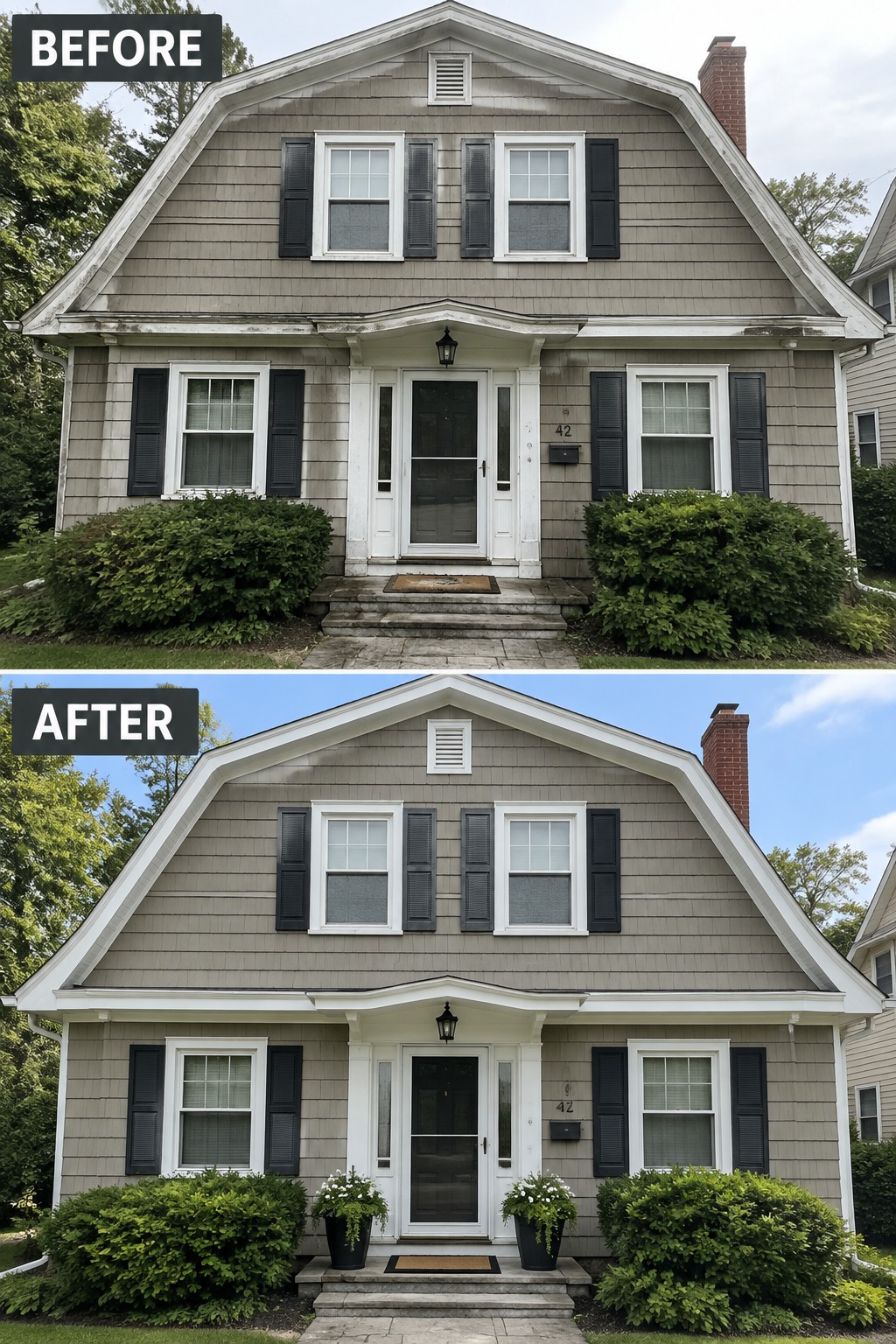
A pair of simple black planters placed on either side of the entry steps gives this Dutch Colonial house a finished look without any major construction. In the before photo the front felt a little bare, with the shrubs left to grow wild. Once the plants were added and the beds were tidied, the whole facade read as more cared for and easier to approach.
This works well on homes that already have a centered door and a small landing area. Choose pots in a color that repeats somewhere else on the house, such as the shutters or trim, and keep the planting low so it does not block the door swing. The change stays modest, yet it makes the entry feel intentional rather than forgotten.
Frequently Asked Questions
Q: How do I pick shingles that suit a gambrel roof without making the house look heavy? A: Go with a medium gray or weathered wood tone that sits between your siding and trim colors. This keeps the roofline details visible while the shape still feels balanced. Lay a few samples on the ground first to see how they read from the street.
Q: Can I swap in those eaves myself if the rest of the house is already updated? A: Yes. Order prebent metal or wood trim sections that match the curve and screw them along the rake edges. Work from a ladder on a calm day and seal the joints tight.
Q: Will snow pile up oddly on the lower gambrel slope? A: It slides off easier than on a steep single plane once you add the right underlayment. Keep gutters clear so meltwater does not back up against the lower wall.