


I’ve noticed that colonial homes often lose their edge when the windows and trim stay plain for years on end. Adding cedar shutters and wood accents tends to pull the whole front together in a way that feels more finished. The change registers quickly from the curb. I usually start by testing wood tones against the existing siding before committing to a full set of shutters. A few of these updates look like they could work even on homes where a bigger renovation is not in the plans.
Use Cedar Shutters And Natural Wood Accents On A Brick Colonial
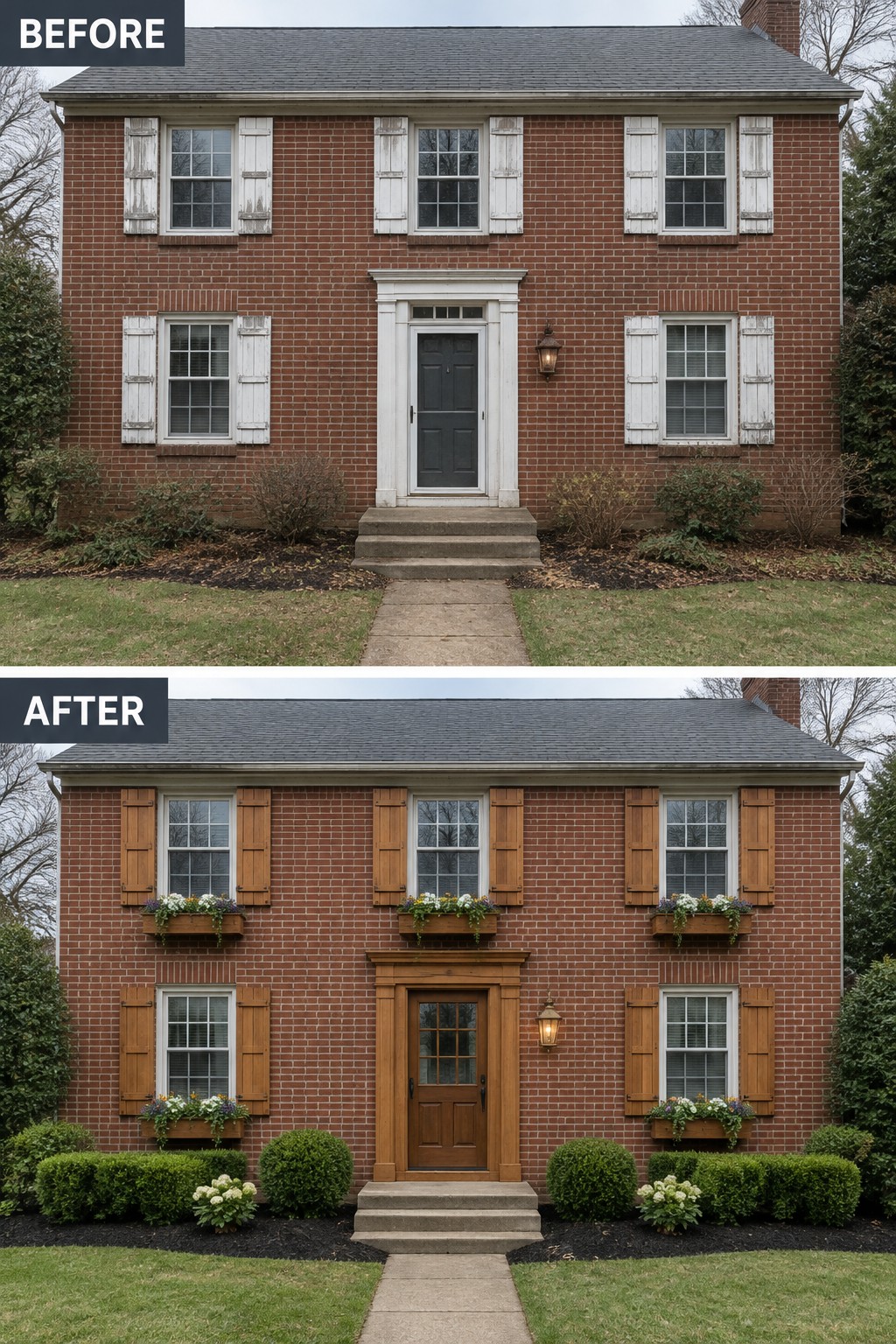
Many brick colonials end up looking a bit flat with white shutters and a dark door over time. Replacing the shutters with cedar and switching the door to natural wood immediately softens the brick and gives the front a warmer, more settled appearance.
This works best on homes that already have good structure but need a simple refresh rather than major construction. Start with the shutters and door since those two changes create the most noticeable shift, then add window boxes if you want a bit more color and life without overdoing it.
Wrap Porch Columns In Wood To Update A Colonial Exterior
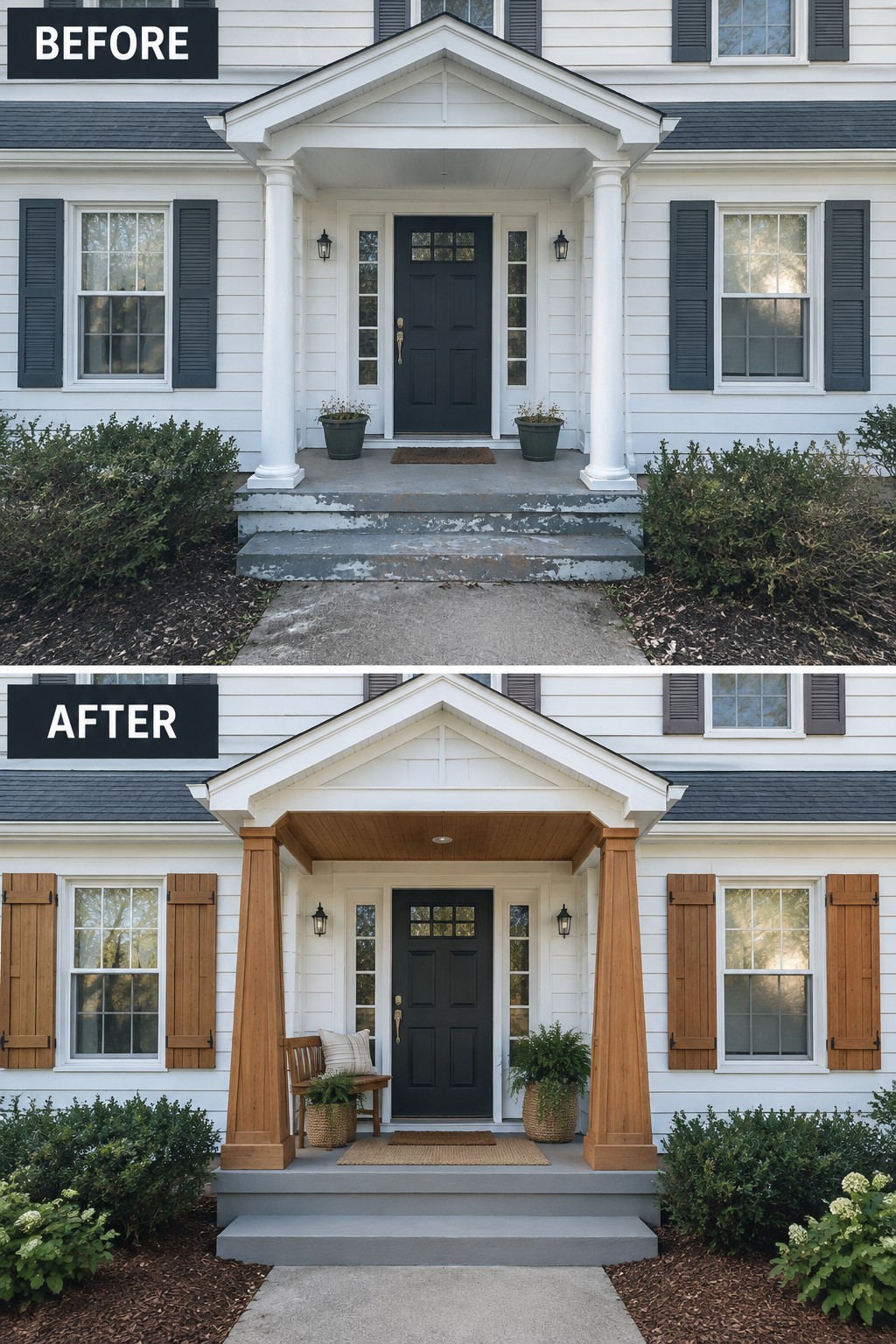
Many older colonial homes have plain white columns that can make the entry feel flat. Wrapping those columns in natural wood, along with switching to wood shutters, adds warmth and brings the whole front together without a full repaint or rebuild. The change shows up right away in how the entry reads from the street.
This approach works well on homes with simple trim and a centered door. Start with the columns since they are the biggest visual anchor, then match the shutters to keep the materials consistent. It suits two-story colonials with front porches and gives you a finished look before you add planters or seating.
Refresh A Colonial Exterior With Cedar Shutters And Wood Accents
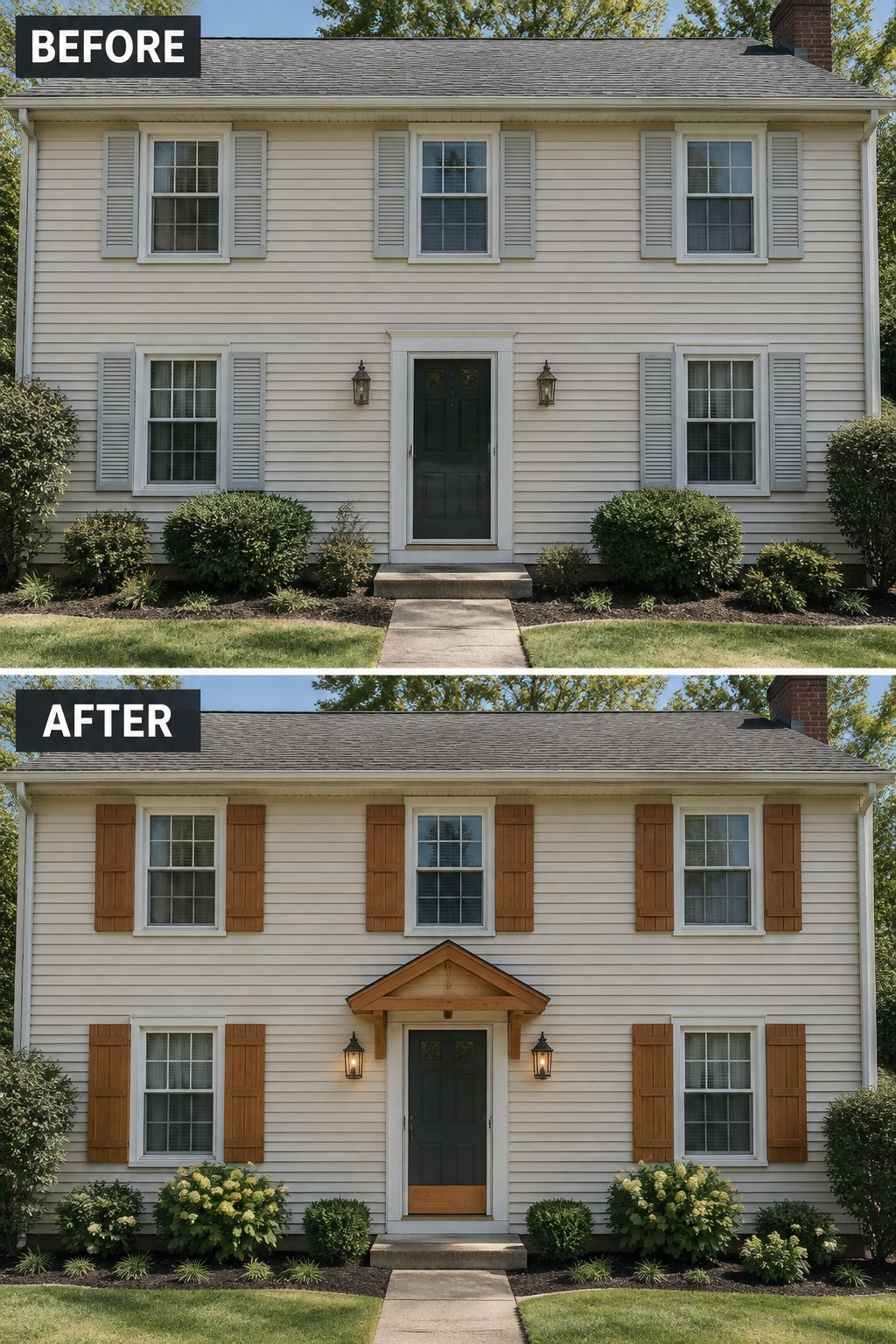
Colonial homes often look plain when the shutters and entry details all match the siding color. Changing to cedar shutters in a natural wood tone and adding a simple wood pediment over the door gives the facade structure and warmth right away.
This idea suits two-story colonials with a centered front door. Start with the shutters and entry woodwork before touching paint or landscaping, and keep the wood tone consistent across both. It reads as a deliberate update rather than random changes.
Add Cedar Shutters And Natural Wood Accents To A Colonial Exterior
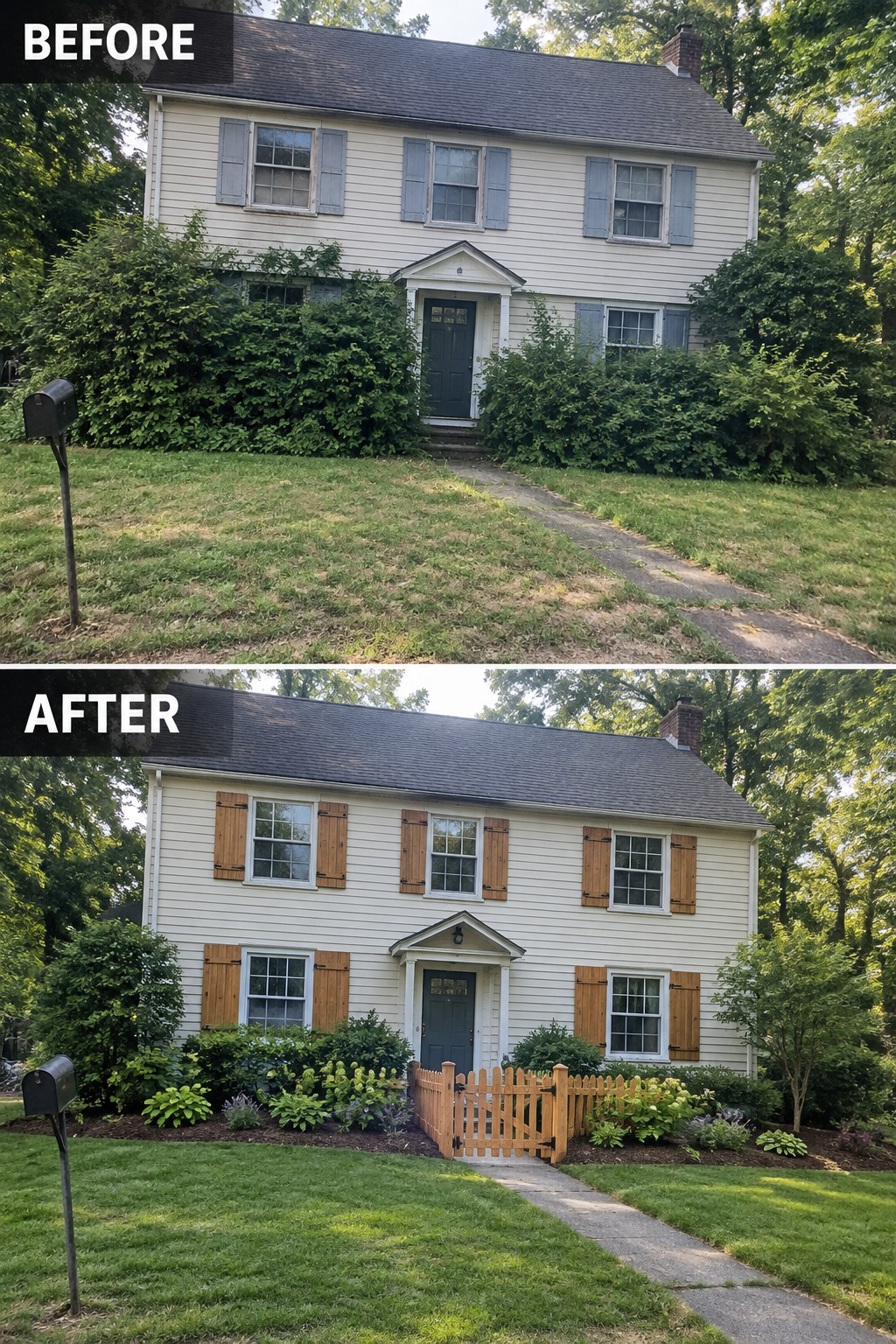
Many older colonials end up with shutters that no longer match the house once the paint fades or the bushes grow too big. Switching to cedar shutters and adding a low wood fence or gate gives the front a warmer, more finished look while keeping the original lines of the house intact. The wood tones also help bridge the gap between the siding and the garden beds.
This works best on homes that already have decent structure but need one or two natural materials to feel updated. Keep the rest of the exterior simple, focus the wood accents near the entry, and plant low shrubs that will not hide the new shutters.
Add Cedar Shutters And Wood Trim To Warm Up A Colonial Exterior
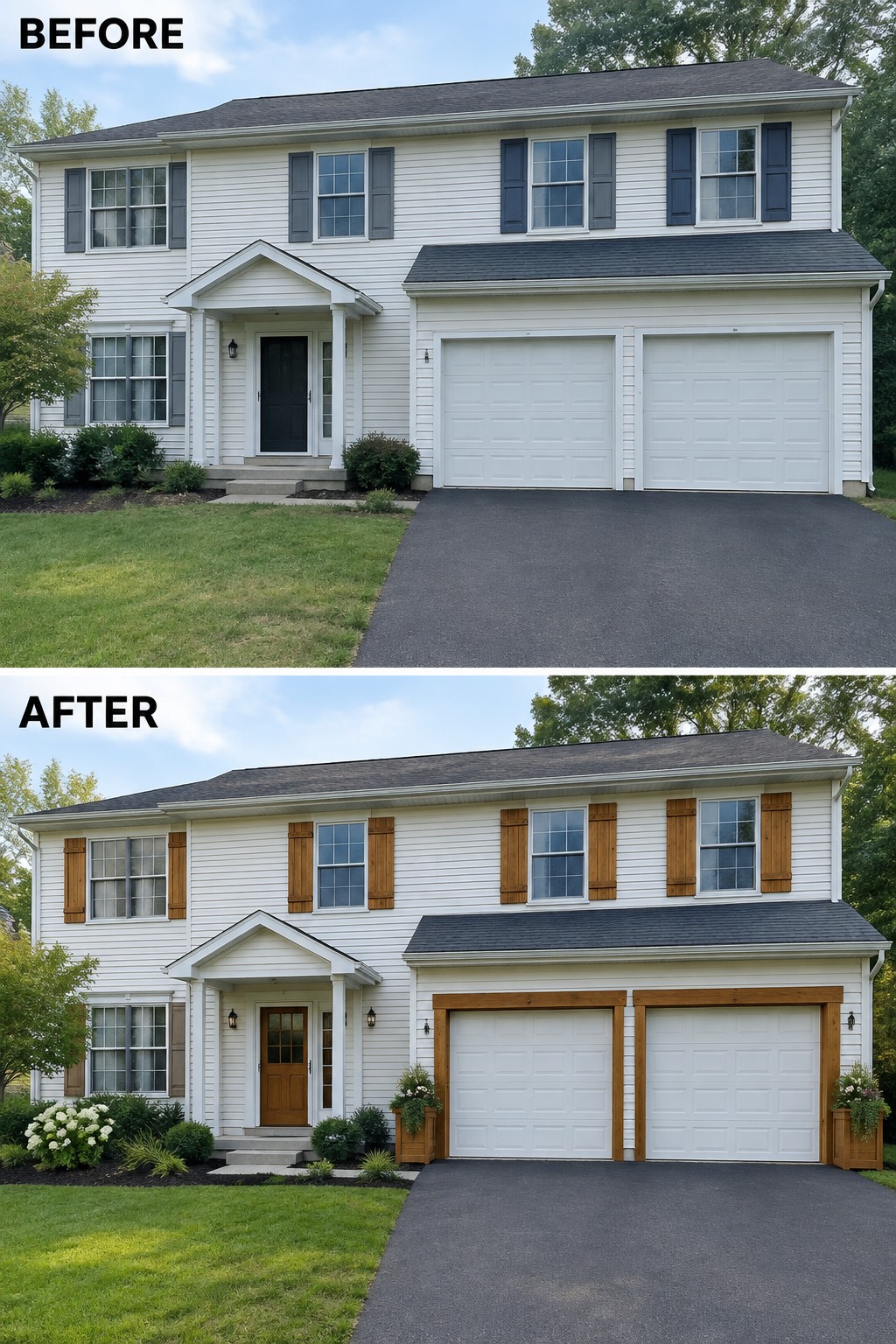
Swapping dark shutters for cedar ones and adding matching wood trim around the garage doors gives this house a much more finished look. The brown front door helps tie everything together and softens the white siding without changing the overall shape or roofline.
This idea works best on two-story colonials that already have good proportions but feel a little flat. Start with the shutters and garage trim if you want a noticeable change without a full repaint. Keep the wood tones consistent and add just a couple of planters near the entry so the front does not get crowded.
Add Cedar Shutters And Wood Accents To Refresh A Colonial Exterior
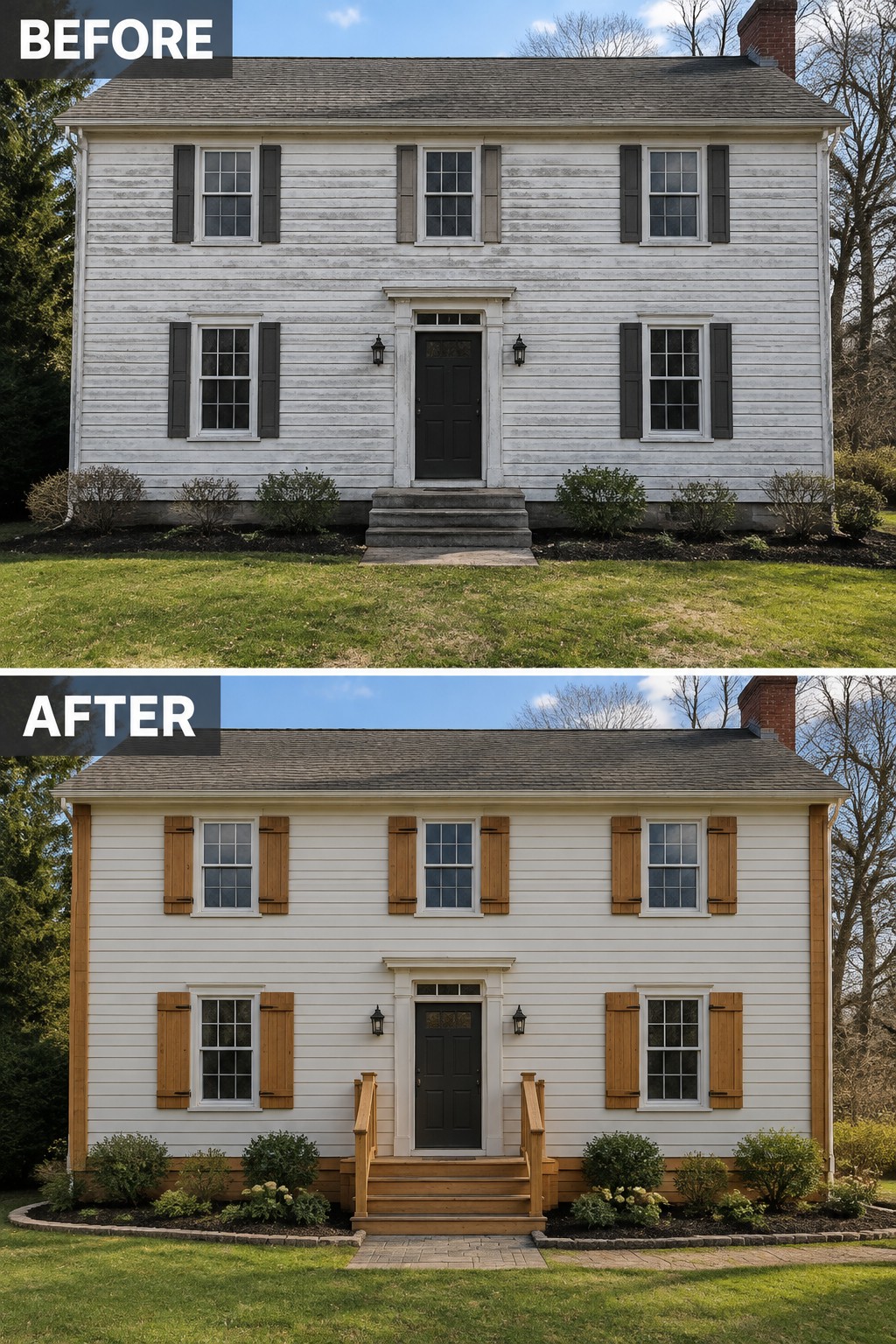
Switching the shutters from a flat dark tone to warm cedar, along with adding wood trim on the corners and around the door, gives the house a much more finished look. The wood railings on the front steps also help connect the entry to the rest of the facade in a simple way.
This idea works best on colonial homes that already have a solid shape but need a little life in the details. Replace the shutters first, then add matching wood trim where it makes sense. It is an easy way to improve curb appeal without starting a big renovation project.
Add Cedar Shutters And Wood Railings To Warm Up A Colonial Entry

The before photo shows a standard colonial front with black shutters and metal railings on plain concrete steps. Switching the shutters to cedar and replacing the railings and steps with natural wood gives the whole entry a softer, more finished look without changing the house structure.
This approach works well on colonial homes where the original trim feels too stark. Start with the shutters and railings if you want a noticeable change on a smaller budget. Keep the wood tone consistent so the updates read as one clear improvement rather than scattered pieces.
Update Colonial Shutters With Cedar Accents
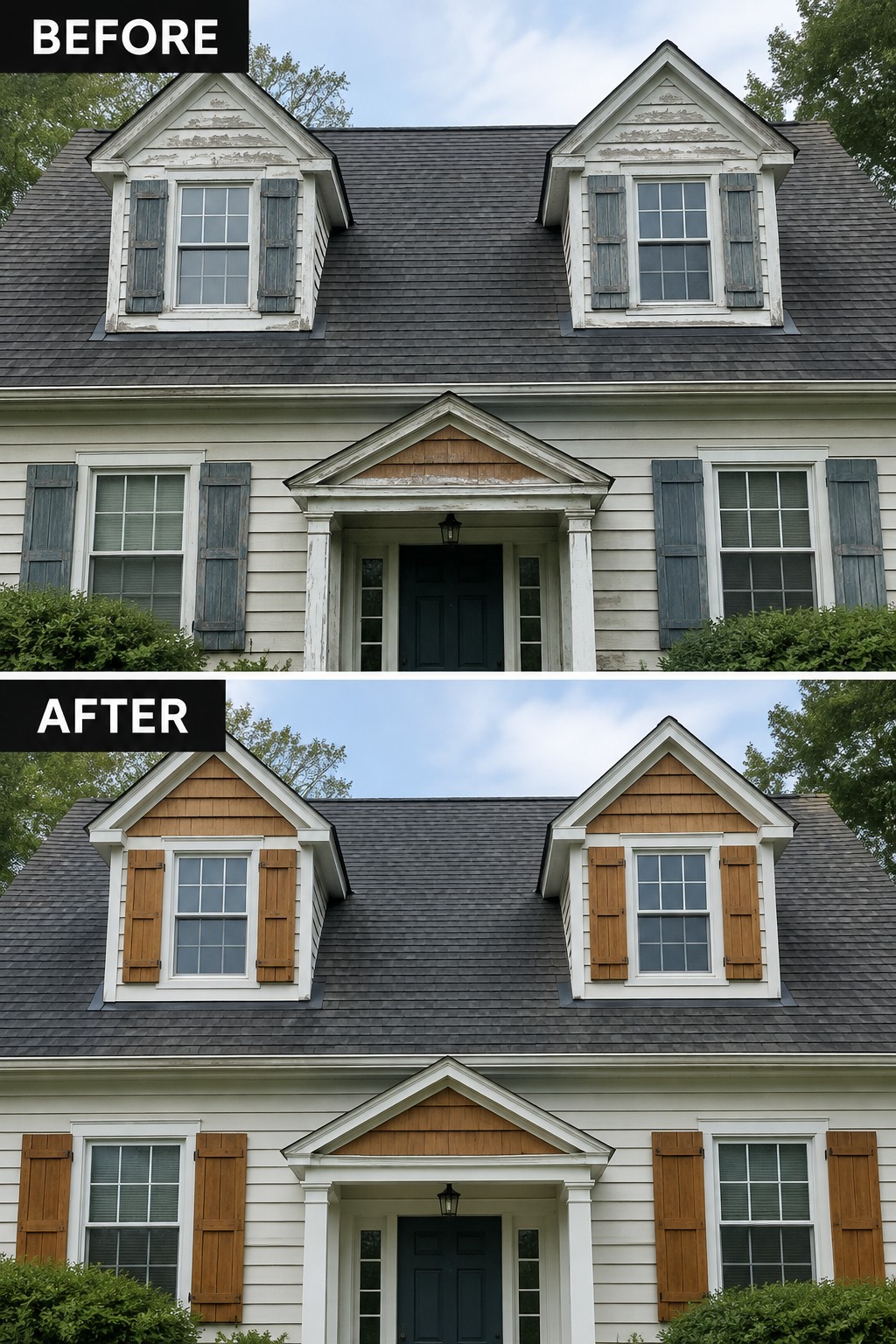
The main change here is swapping out the old gray shutters and peeling gable siding for cedar wood accents in a warm brown tone. This simple swap gives the whole front a cleaner, more cohesive look without needing a full exterior repaint or new siding.
This approach works well on colonial homes where the shutters and upper gables are the first things people notice. Focus on those high-visibility spots first, match the wood tone to any existing trim, and keep the rest of the color scheme simple so the natural material stands out.
Replace Dark Shutters With Cedar To Warm Up A Colonial Exterior
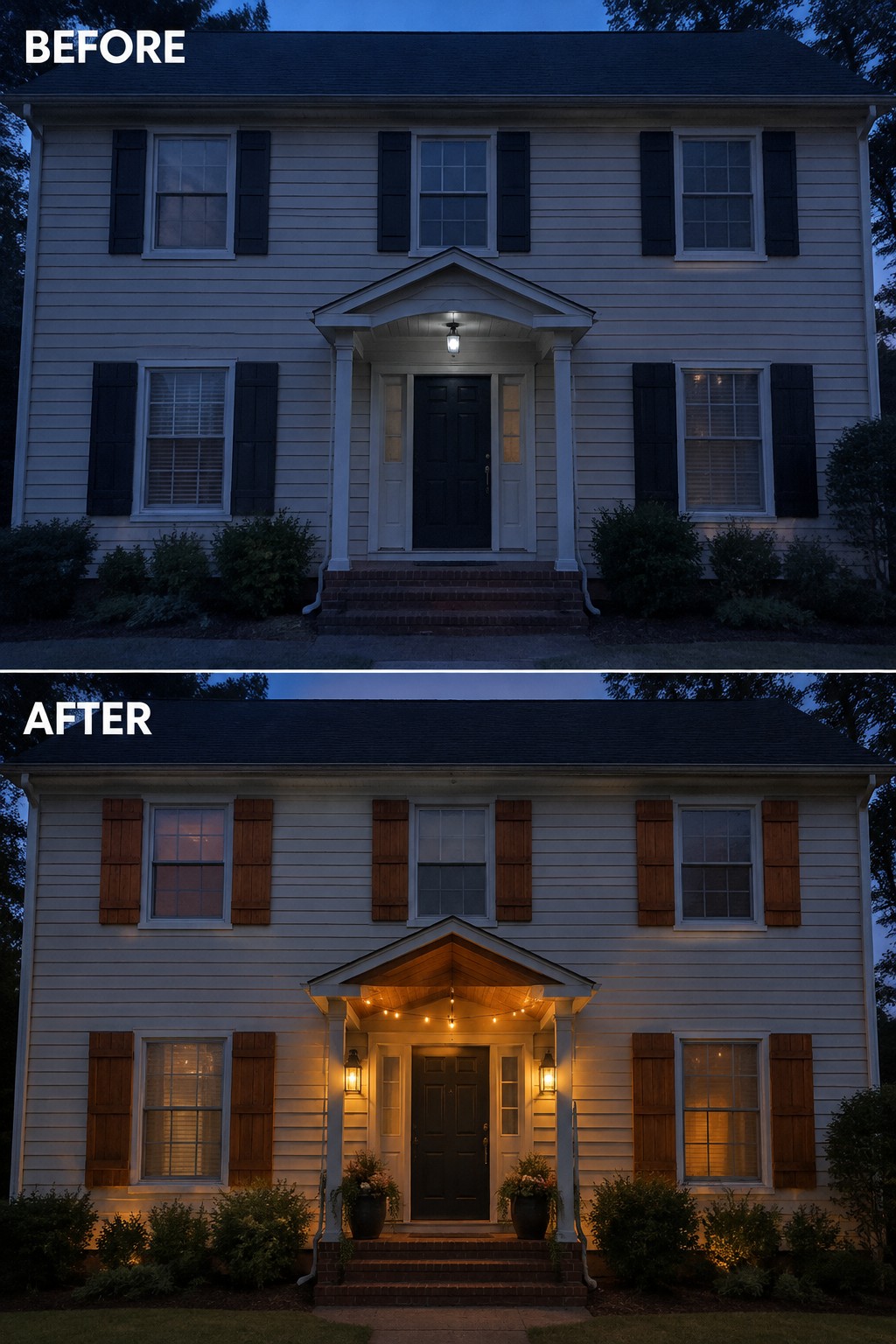
Many colonial homes end up looking flat when the shutters are a stark black that fights the siding. Switching them out for cedar brings a natural tone that softens the whole front and makes the house feel more settled. In this case the black shutters gave way to wood ones, the small portico got a wood ceiling, and a few simple lights were added around the door. Those two changes alone shifted the house from plain to welcoming.
Cedar shutters work especially well on homes with light siding because the wood adds contrast without needing a full paint job. If your entry feels bare, start with the shutters, then add one or two lanterns and a pair of planters on the steps. Keep the rest of the landscaping simple so the wood stays the main feature.
Add Cedar Shutters And Window Boxes To Refresh The Facade
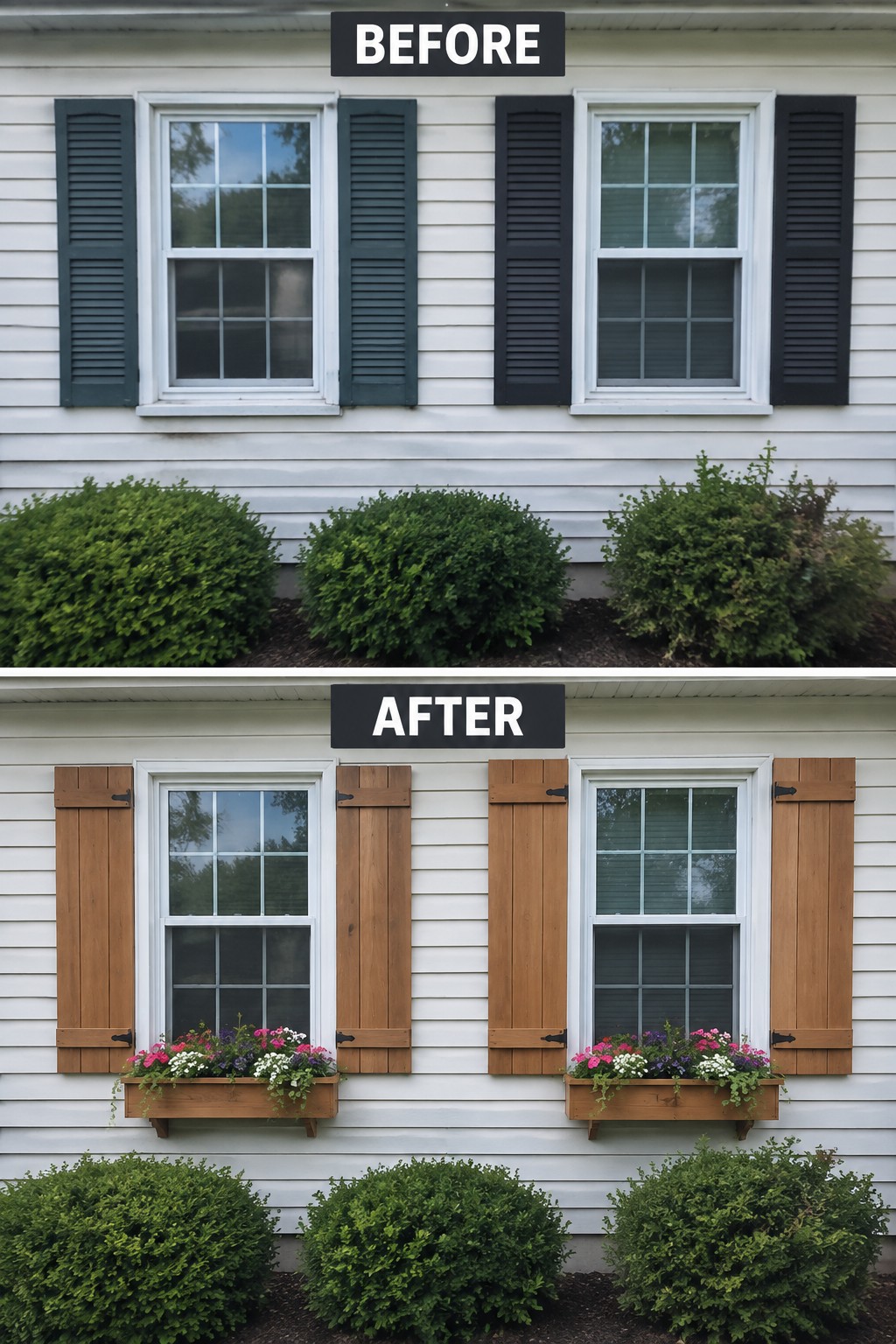
Swapping mismatched dark shutters for cedar ones makes an immediate difference on a colonial exterior. The natural wood tone warms up the white siding and gives the windows a more finished look. Adding simple window boxes with flowers below the sills brings the whole front down to a human scale without any major construction.
This approach works especially well on older colonials where the original shutters have faded or the colors no longer match the house. Keep the boxes narrow so they do not crowd the walkway, and choose a cedar finish that will weather to gray if you prefer less maintenance. Start here before tackling paint or landscaping if your budget is limited.
Refresh A Colonial Exterior With Cedar Shutters And Wood Trim
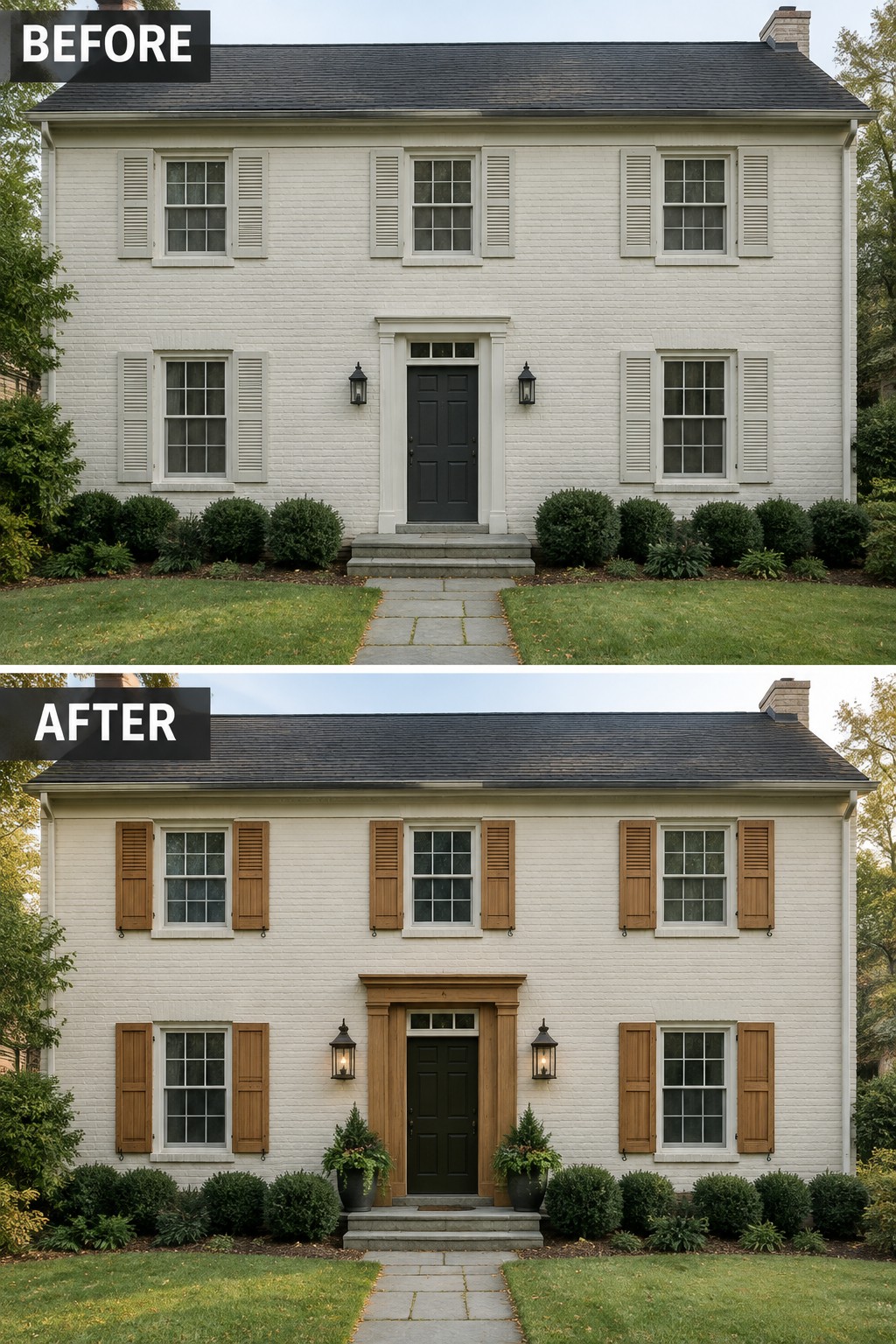
Switching from painted shutters to cedar ones and adding natural wood around the entry gives the house a warmer, more finished look. The before version feels flat because everything blends together in white. The after version stands out because the wood adds contrast and texture across the front.
This idea suits colonial homes that already have a simple brick or siding exterior. Start with the shutters since they cover the most space, then add wood trim around the door to tie everything together. Keep the main paint color light so the wood reads clearly. It is a straightforward update that works on many older homes without needing bigger changes.
Refresh A Colonial Exterior With Cedar Shutters And Wood Accents
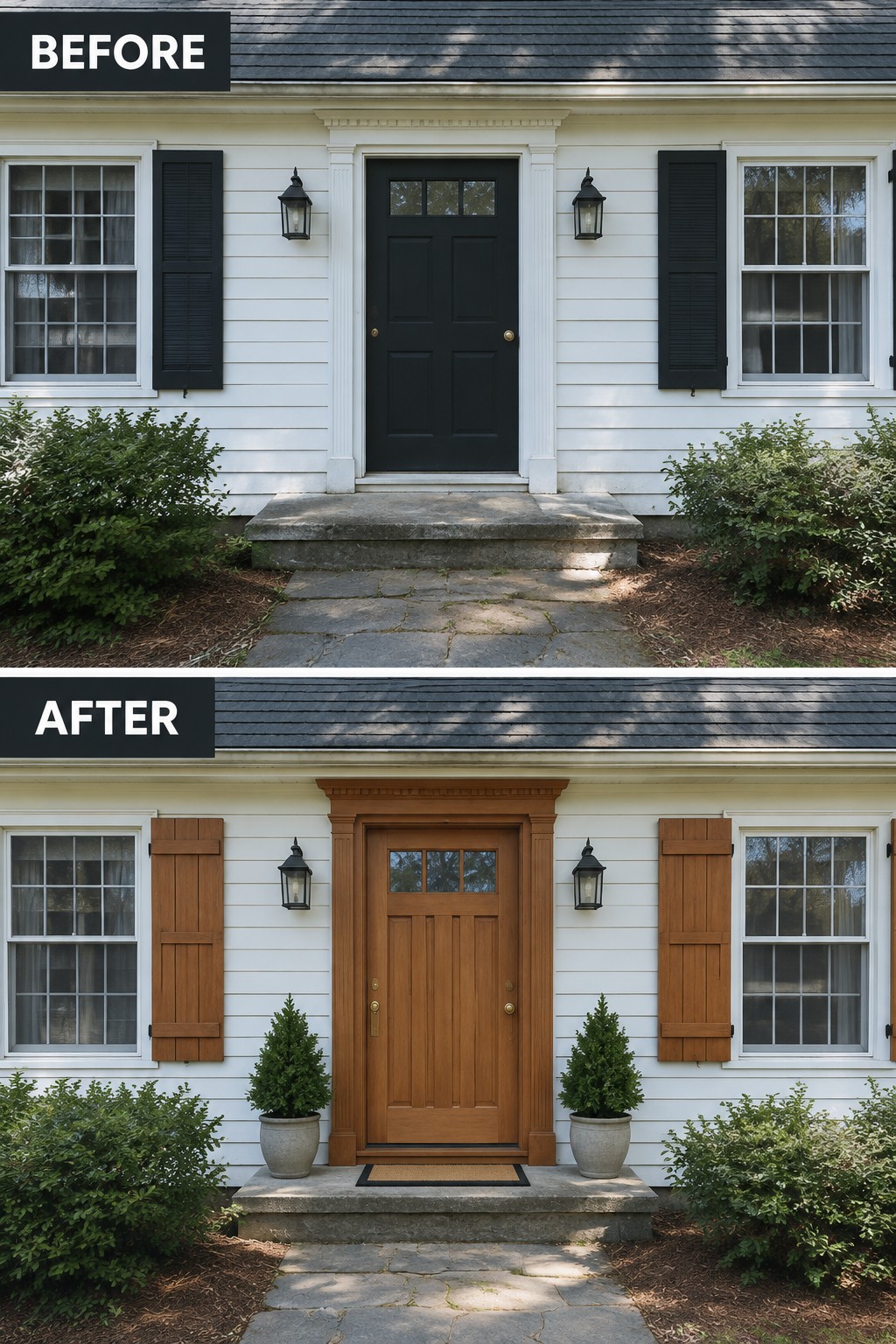
Switching the shutters and front door from solid black to natural cedar tones makes the whole facade feel warmer and more connected to the house. The wood trim around the door adds another layer that ties everything together without needing a full repaint or new siding. Adding two simple potted evergreens on the steps gives the entry a finished look that was missing before.
This approach works especially well on colonial homes that already have good bones but feel a little flat on the front. Start with the shutters and door if you want the biggest impact for the least amount of work. Keep the rest of the exterior light and let the wood do the talking.
Refresh A Colonial Porch With Cedar Shutters And Wood Accents
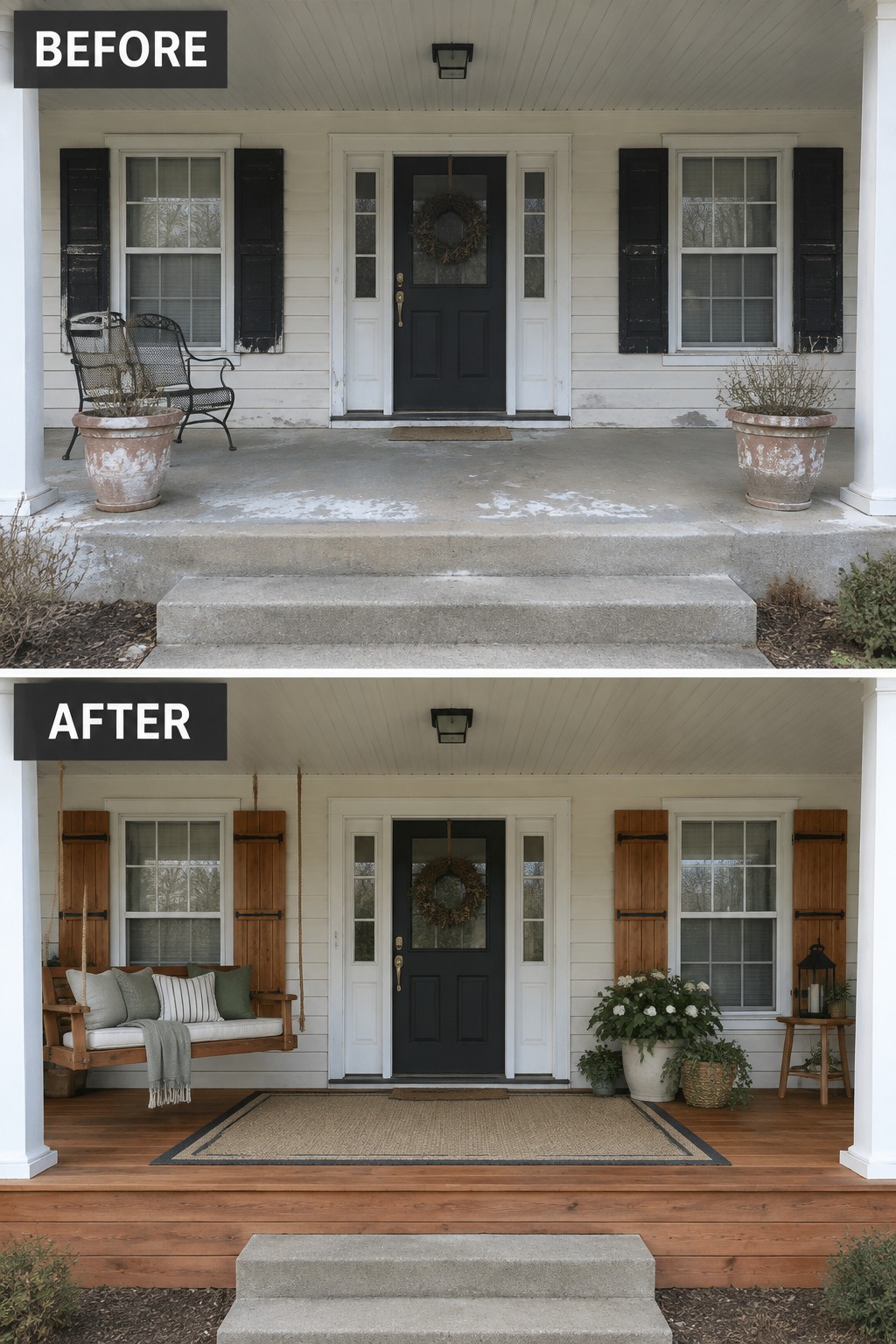
The before photo shows a plain concrete porch with dark shutters and a couple of mismatched chairs. The after version adds cedar shutters, wood decking over the concrete, and a simple hanging swing. These changes bring natural texture that softens the white siding and makes the entry feel more connected to the rest of the house.
This idea works well on older colonials where the lines are already good but the front looks flat. Start with the shutters, since they give the quickest shift, then add one wood piece like a swing or bench. Keep the rest of the space open so the wood stands out without crowding the porch.
Add Natural Wood Accents To A Colonial Exterior
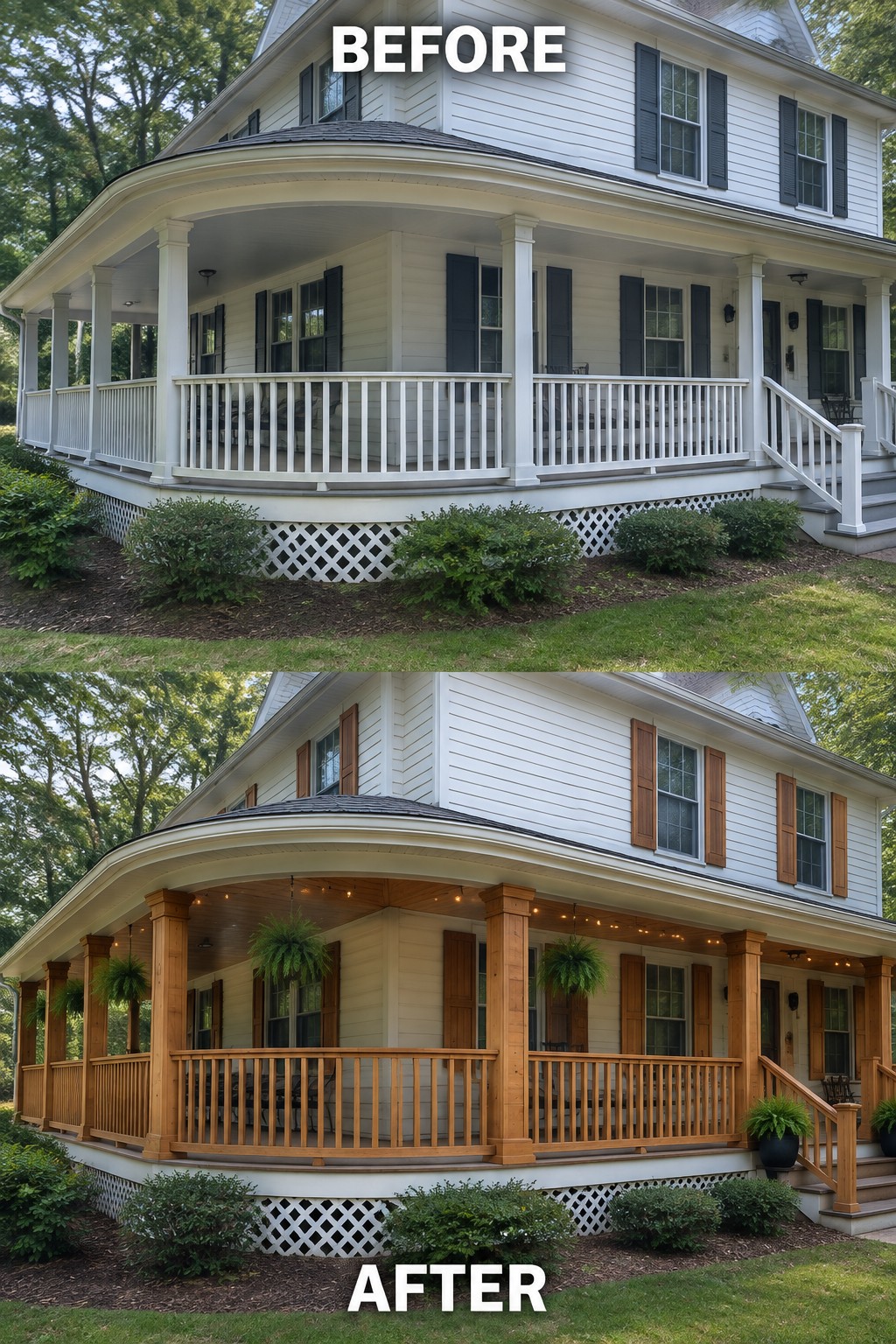
Many colonial homes with all-white trim end up looking flat. Switching the porch columns, railings, and shutters to natural cedar adds warmth and makes the house feel more grounded. The change stands out right away against the white siding without altering the overall shape.
This works best on homes that already have a strong porch structure. Start with the railings and shutters since those areas show the most. Use cedar that has been treated for outdoor use, and keep the rest of the trim white so the wood reads as an accent rather than a full repaint.
Add Cedar Shutters And A Pergola To Refresh A Colonial Entry
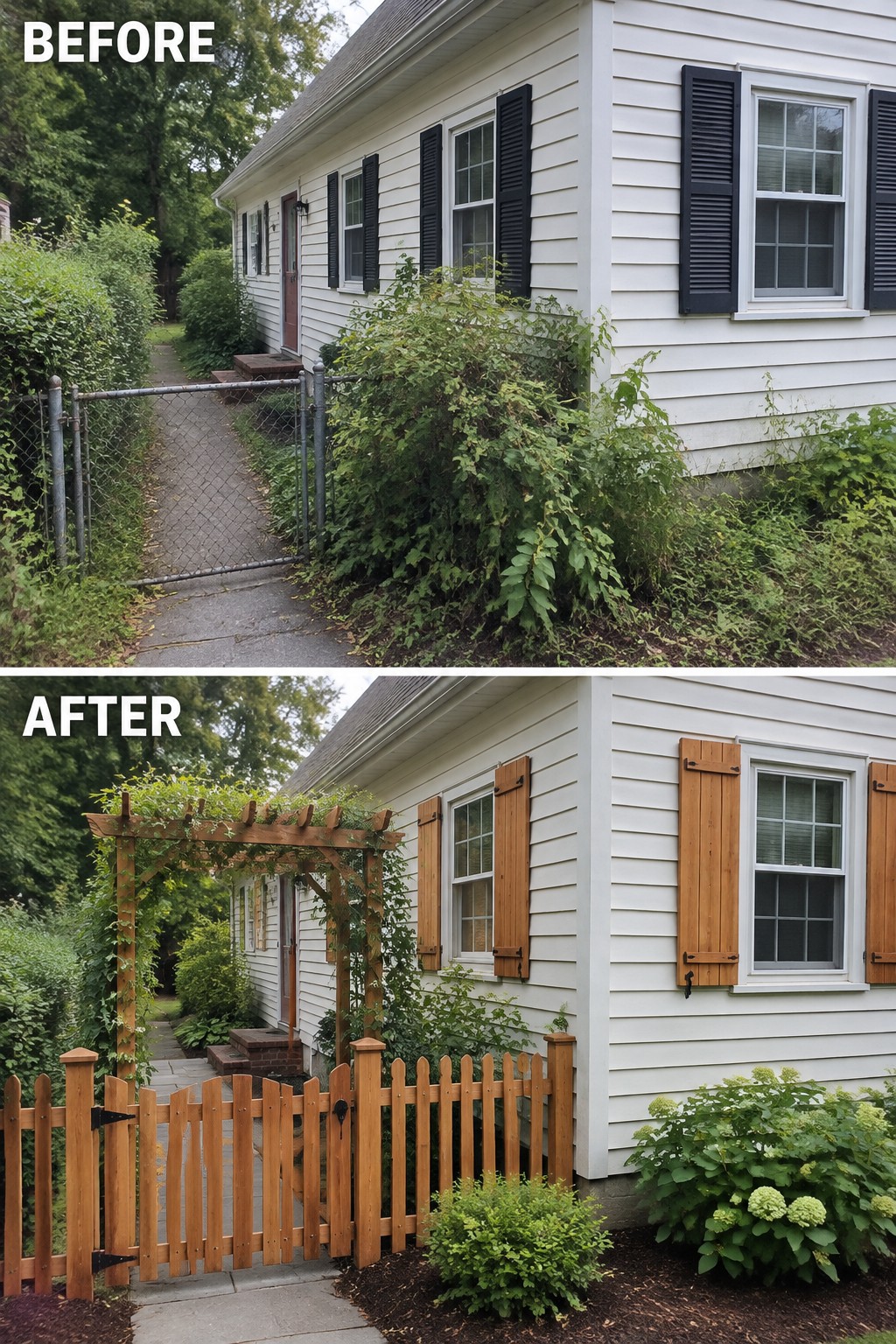
Many colonial homes end up looking flat when the shutters feel too dark and the front path has no real frame. Swapping the black shutters for cedar ones and adding a simple pergola over the walkway instantly warms up the facade and gives the entry a clear purpose. The change turns a side path that felt hidden into the main approach to the house.
This idea works well on older colonials where the siding is already light and you want to add contrast without painting the whole house. Start with the shutters since they are a quick swap, then add one wood structure like a pergola or arbor to mark the entrance. Keep the planting low so the new wood details stay visible from the street.
Refresh A Brick Exterior With Cedar Shutters And A Wood Planter
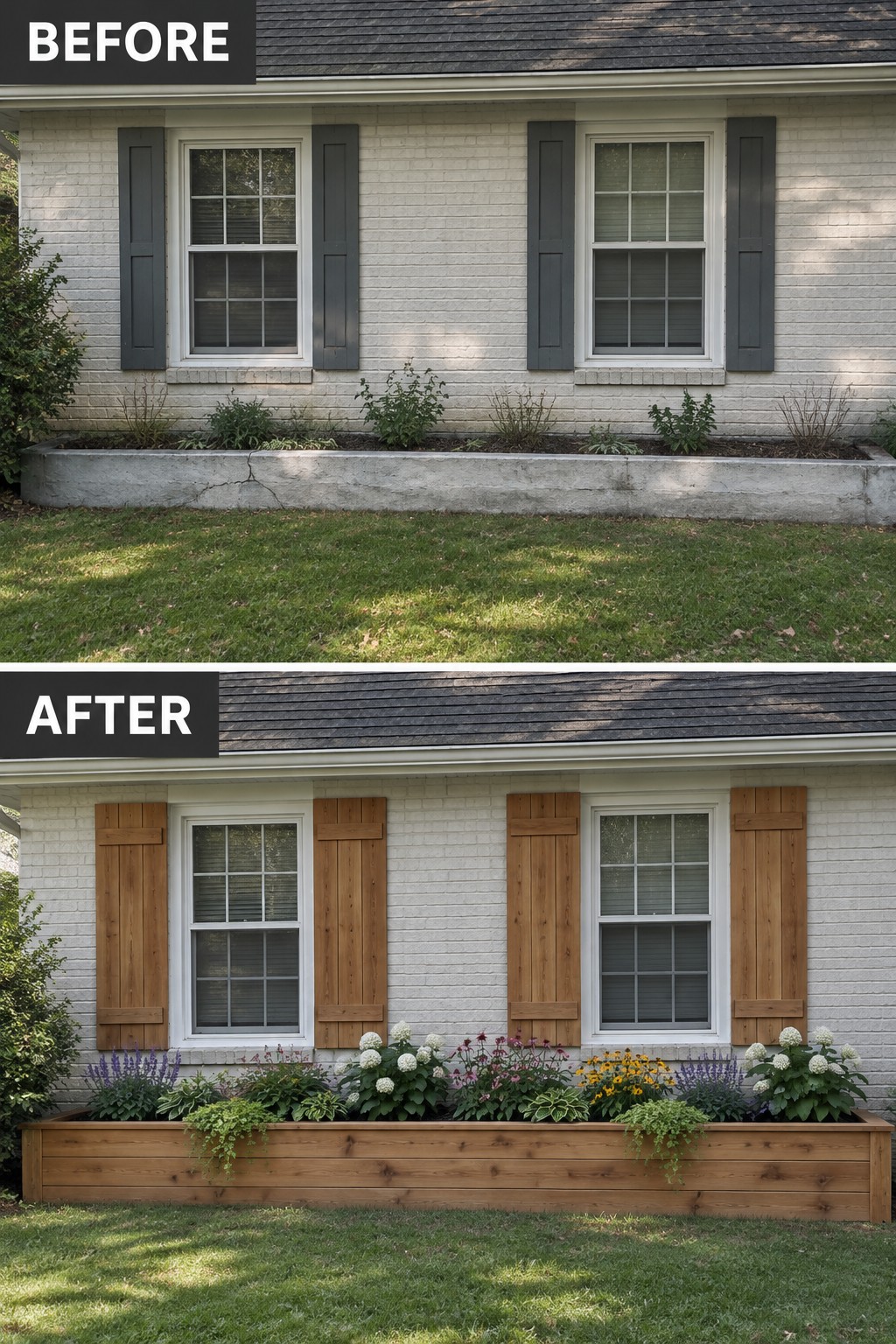
Many colonial homes sit on a clean brick base but still feel a little plain when the shutters are painted and the front planter is just concrete. Swapping in cedar shutters and a matching wood planter box adds natural grain that warms up the facade and makes the windows feel more anchored.
This idea suits homes where you want to keep the existing brick or siding but need one material to pull everything together. Match the planter to the shutters so the changes read as one decision instead of several small ones, and keep the planting simple so the wood stays the main feature.
Replace Thin Porch Posts With Solid Wood Columns
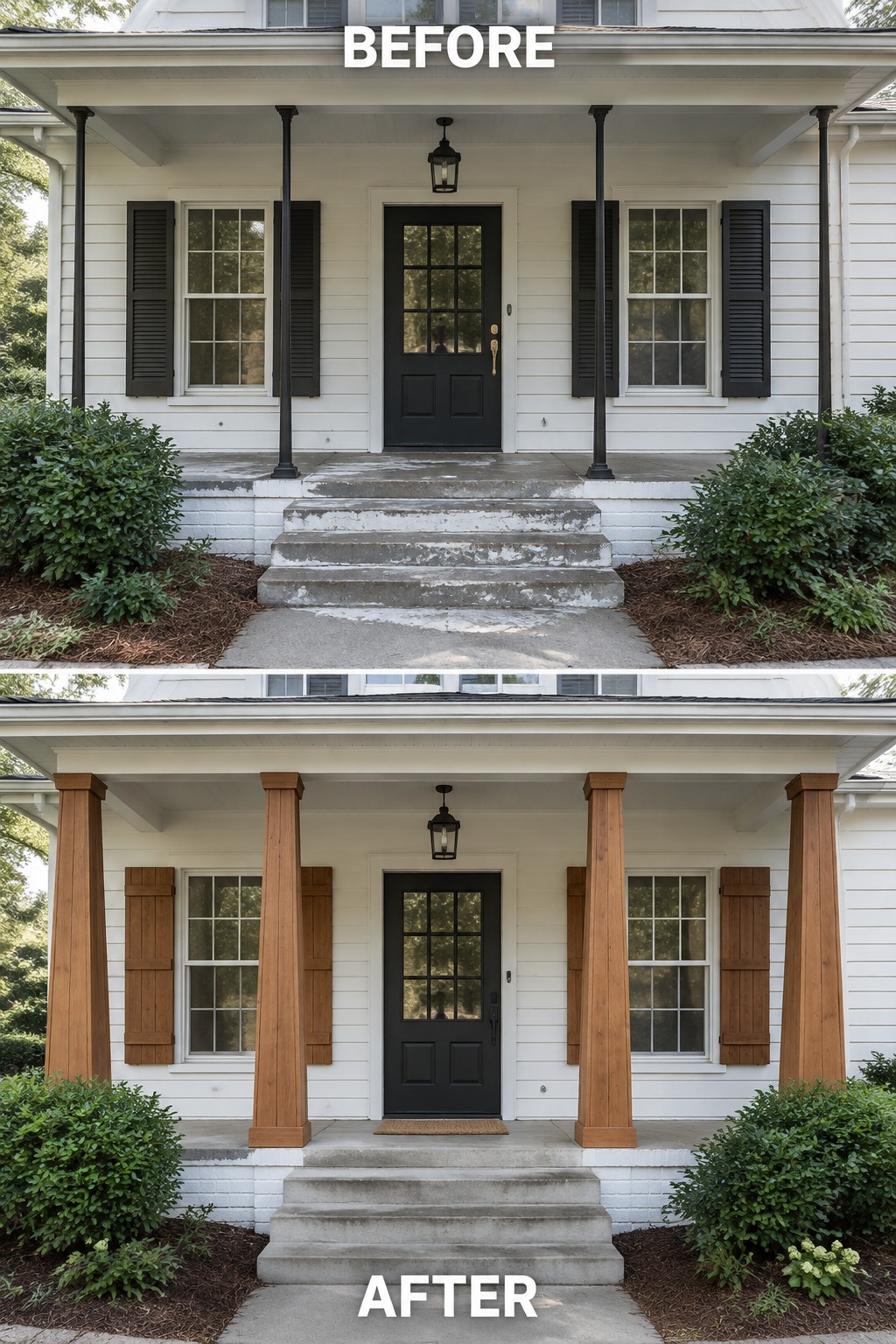
The before photo shows a colonial porch held up by narrow black posts that feel too light for the house. In the after, those posts have been replaced with thick wood columns that match the new wood shutters. The change gives the whole front a sturdier, more grounded look without any other major construction.
This approach works well on colonial homes where the porch needs more visual weight. Start by measuring your existing posts and choosing columns that are at least twice as wide. Keep the wood tone consistent with any shutters or trim you plan to update so the materials read as one deliberate choice rather than scattered accents.
Add Cedar Shutters And A Wood Portico To Warm Up A Colonial Entry
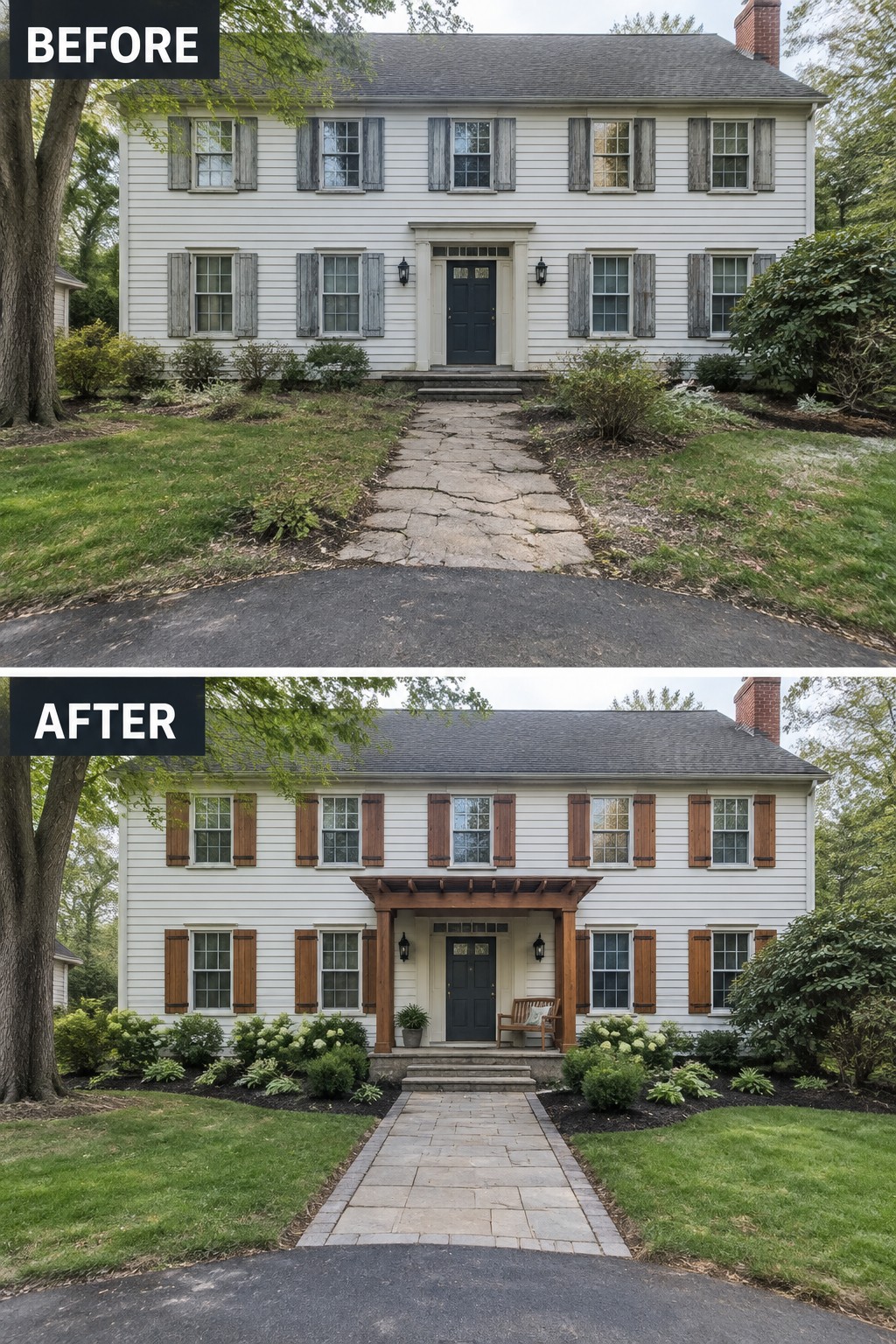
Many colonial homes end up with shutters that feel flat or dated against white siding. Swapping them for cedar and adding a simple wood portico over the door gives the facade more depth and a clearer sense of welcome without a full repaint or major renovation.
This approach works especially well on two-story colonials where the entry can get lost in the middle of the facade. Start with the shutters if you want a smaller first step, then add the portico later. Keep the wood tone natural so it reads as an accent rather than competing with the siding.
Add Cedar Shutters And Wood Accents To A Colonial Exterior
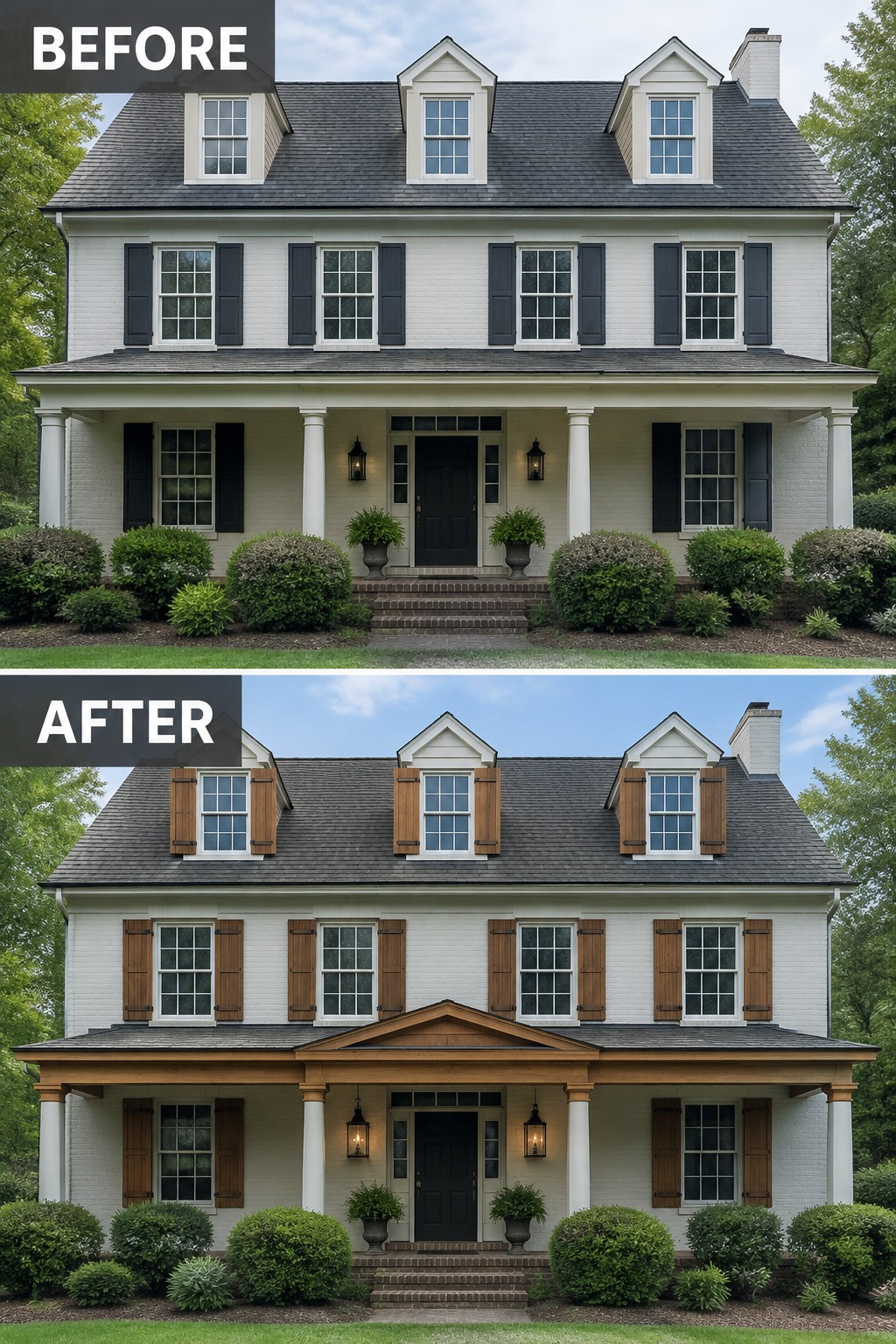
Switching from dark shutters to cedar ones immediately softens the white facade and gives the house a warmer feel. The addition of matching wood trim on the porch ceiling and gable also helps tie the entry together so it no longer looks flat.
This approach works well on colonials that already have solid structure but need a bit more character. Focus first on the shutters since they create the biggest shift, then add wood details only where they can be seen from the street. Keep the wood tones close so the update reads as intentional rather than piecemeal.
Refresh Colonial Exteriors With Cedar Shutters And Wood Accents
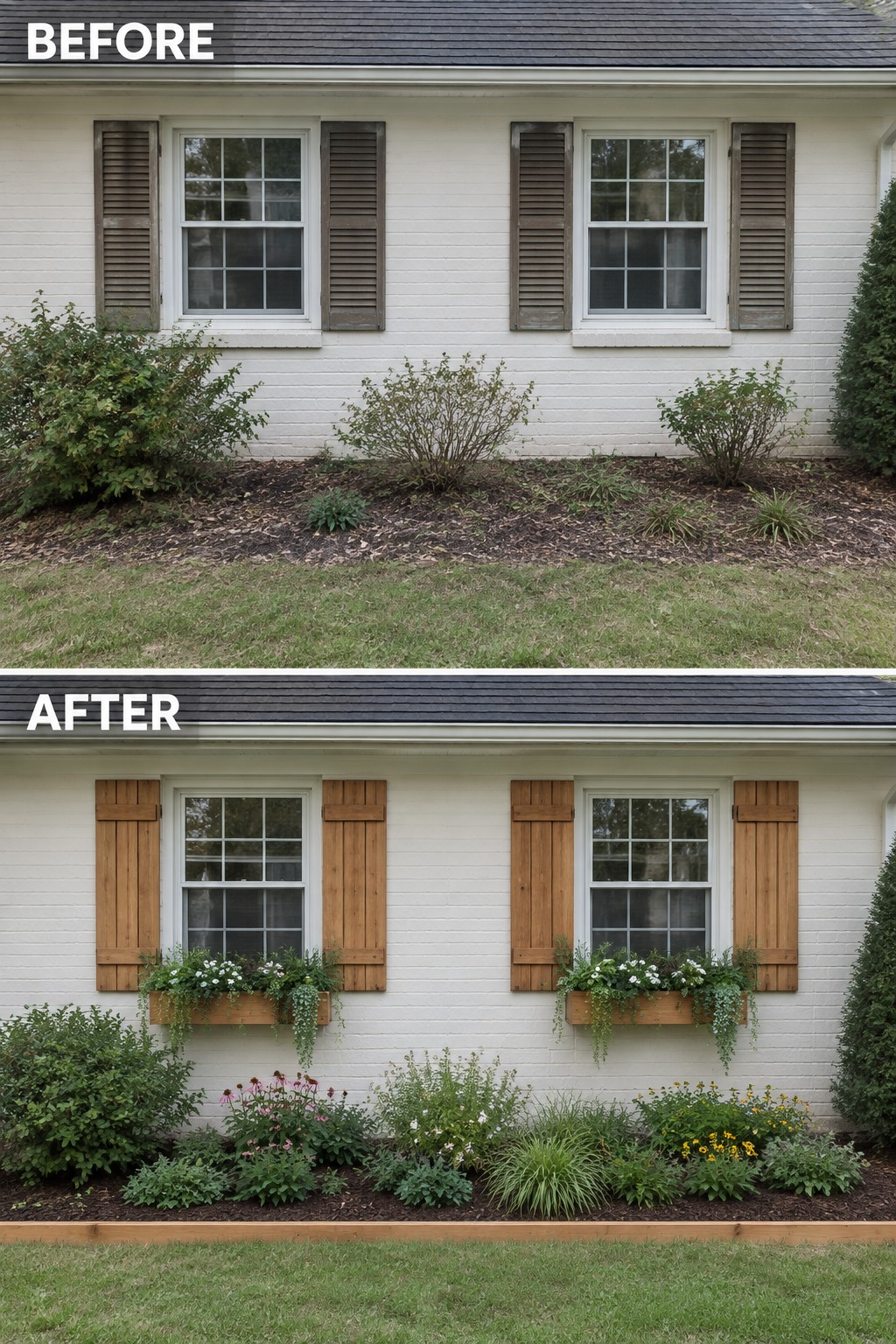
Switching out old, faded shutters for warm cedar ones and adding matching window boxes instantly makes the front of the house feel more finished. The natural wood softens the white brick and gives the windows a clear purpose instead of letting them sit flat against the wall.
This works especially well on colonial homes where the windows are evenly spaced and the roofline is simple. Replace the shutters first, then add boxes in the same wood tone. Keep the planting below low and structured so the wood details can show up without competing with tall shrubs.
Frame The Entry With Cedar Shutters And Wood Trim
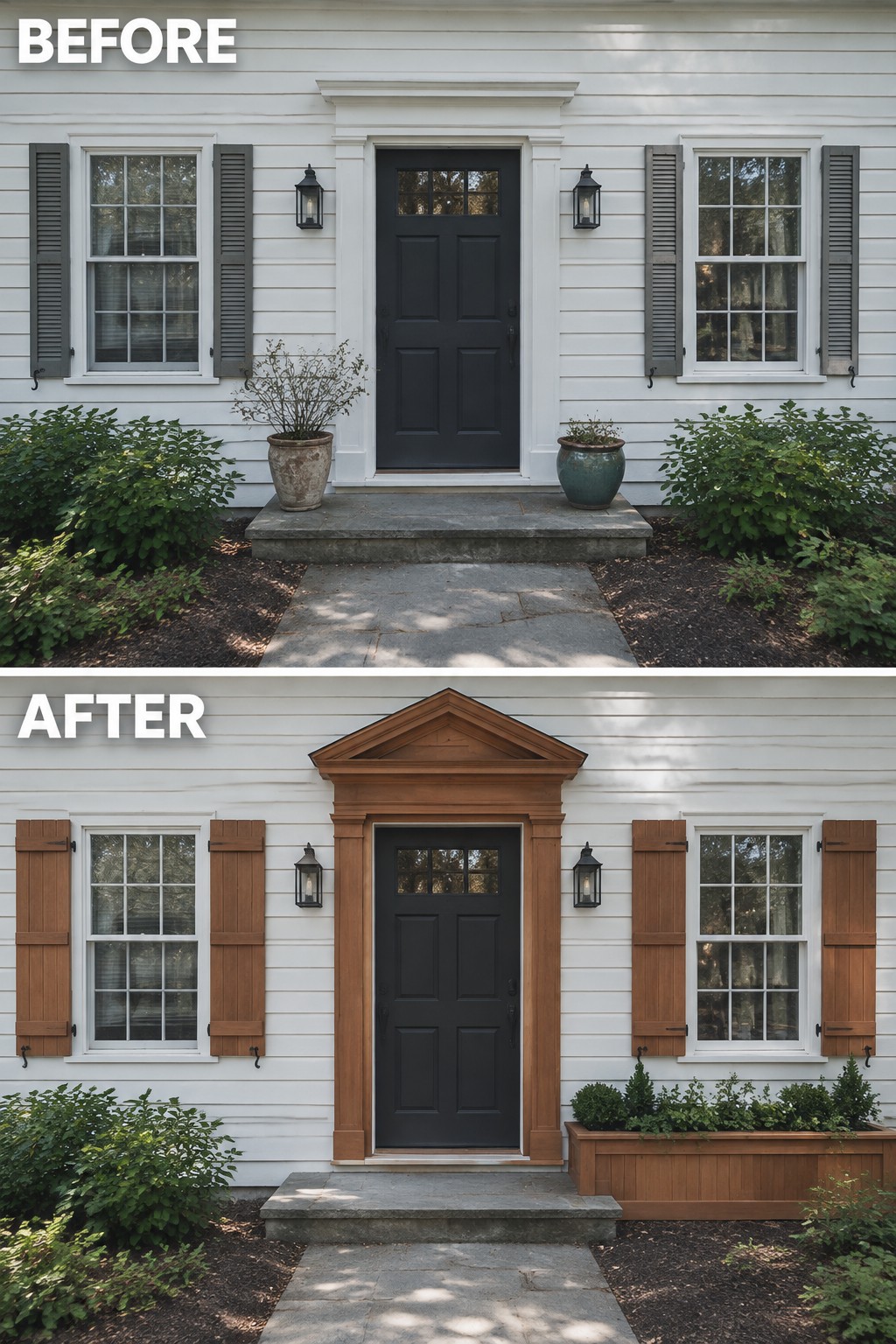
The main change here is adding a full wood surround and pediment around the front door, then switching the shutters to a matching cedar tone and adding a long planter box at the base. This gives the entry real weight and pulls the whole front of the house together instead of leaving the door sitting flat against the siding.
This approach works especially well on simple colonial homes with white siding and black doors. Focus on the door surround first if you can only do one thing, then match the shutter material and finish to it. The planter helps too, but the trim is what actually changes how the entry reads from the street.
Frequently Asked Questions
Q: How do cedar shutters hold up against rain and snow? A: Cedar handles moisture better than most woods right from the start. Seal them once a year to prevent any cracking or fading. That routine keeps them looking sharp through the seasons.
Q: Should the wood accents match the shutters exactly in color? A: Close tones work better than an exact match. Pick accents a shade or two lighter or darker for some depth. This approach highlights both without clashing.
Q: Can I install these myself or do I need a pro? A: Basic shutter swaps often go fine with basic tools. For bigger wood beams or trim though, a carpenter saves time and mistakes.
Q: What maintenance do the natural wood pieces need over time? A: Wipe them down a few times a year. Reapply sealant when the wood starts to look dry.