

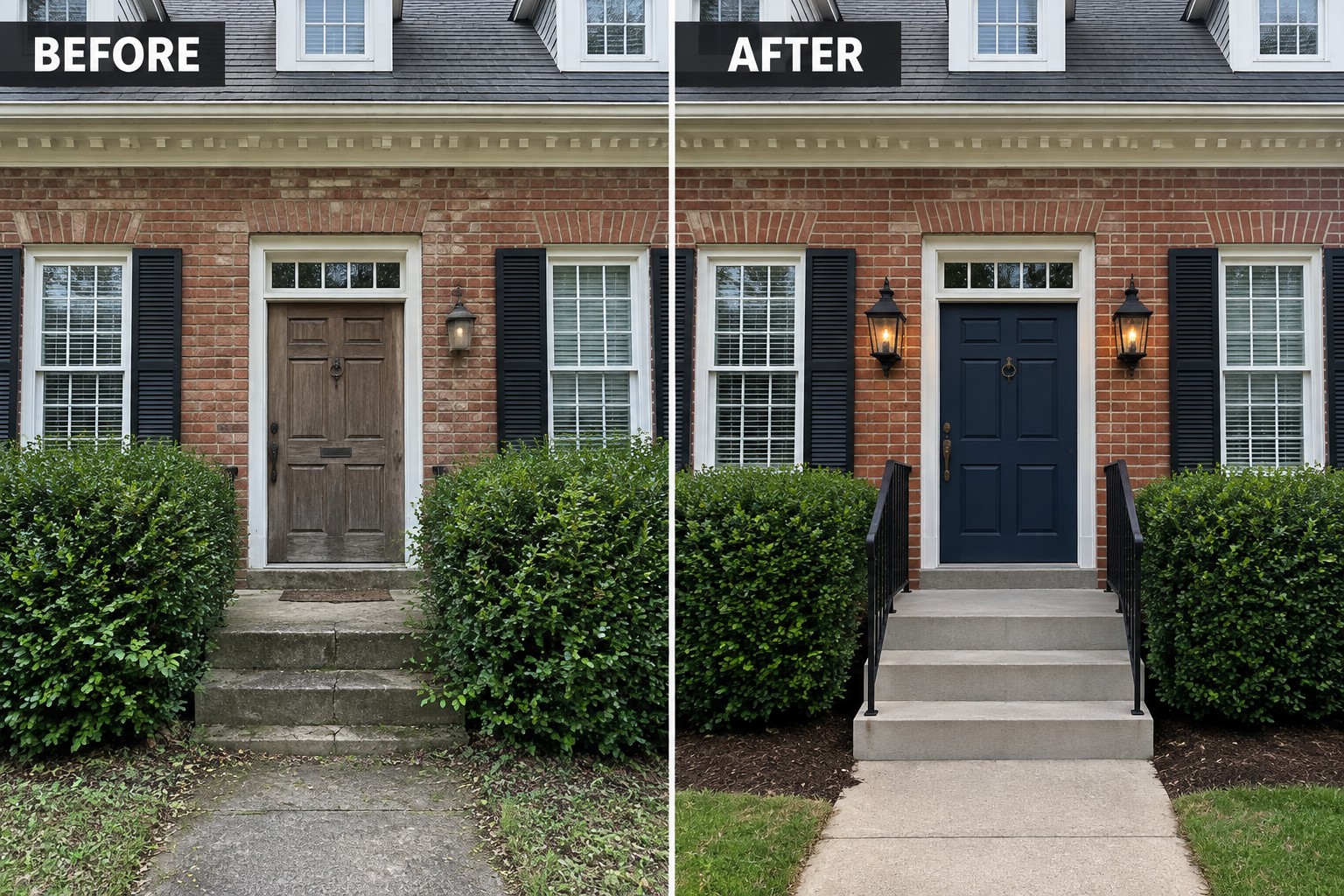
I have always noticed how the right lighting can make a colonial home’s front look more balanced without needing major changes to the siding or trim.
Traditional lanterns often bring a sense of history that fits the architecture while improving the way the entry area feels in the evening.
It is one of those details that quietly lifts the whole facade.
Adding lanterns along the porch or beside the door tends to highlight the clean lines of colonial design in a way that feels intentional rather than added on later.
In my own experience testing a few styles on paper first helped me see which ones would actually suit the scale of the house before committing to the purchase.
Frame The Front Door With Matching Lanterns
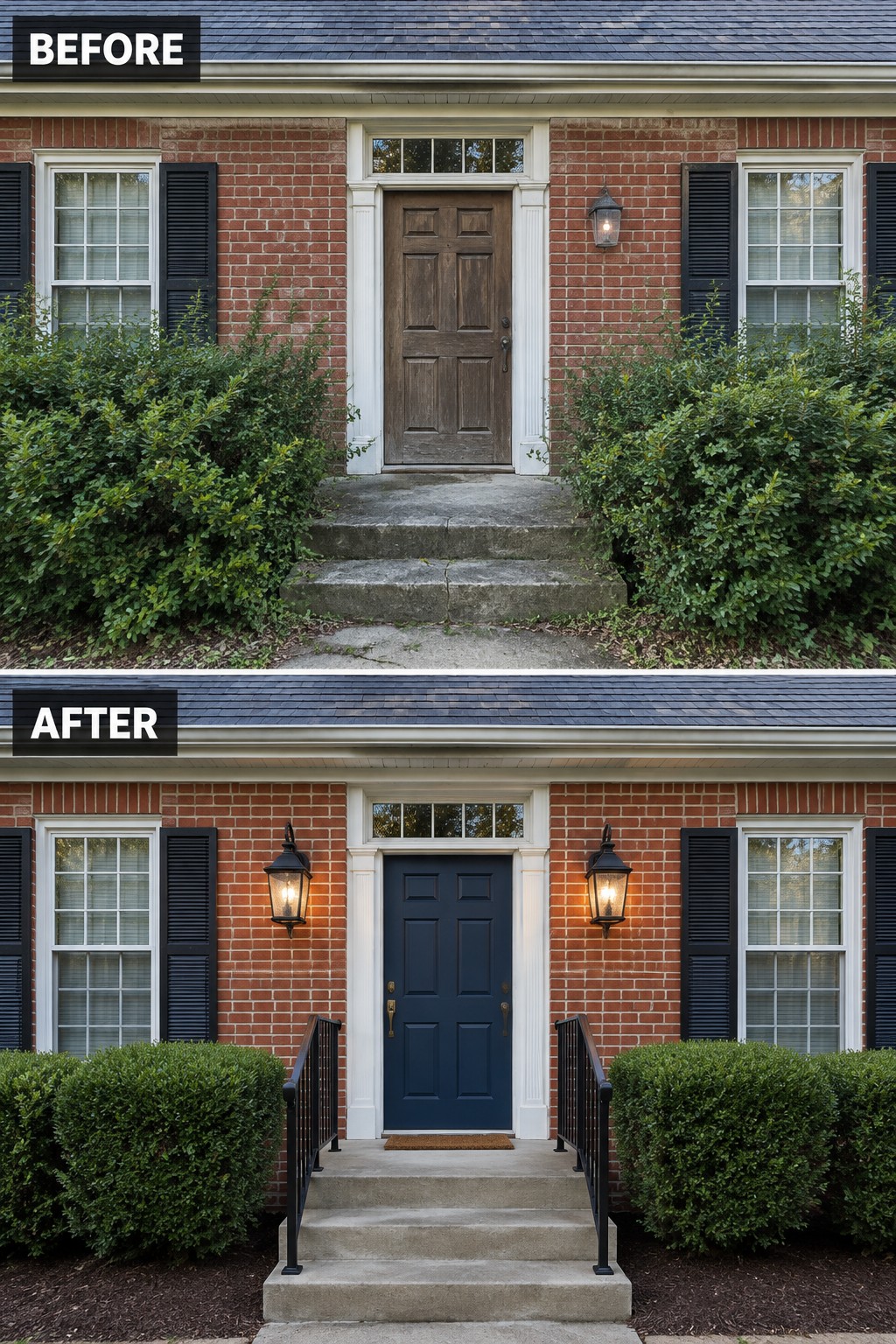
A single small light above the door left the entry looking a bit flat and unbalanced. Adding a pair of traditional lanterns on either side created a clear focal point and made the whole front feel more finished without any major construction.
This idea works especially well on colonial homes where symmetry already exists. Match the finish of the lanterns to your shutters, railings, or door hardware, and hang them at a height that lines up with the top of the door. Keep the rest of the lighting simple so the pair can do the work.
Add Lantern Lighting To Define A Colonial Entry
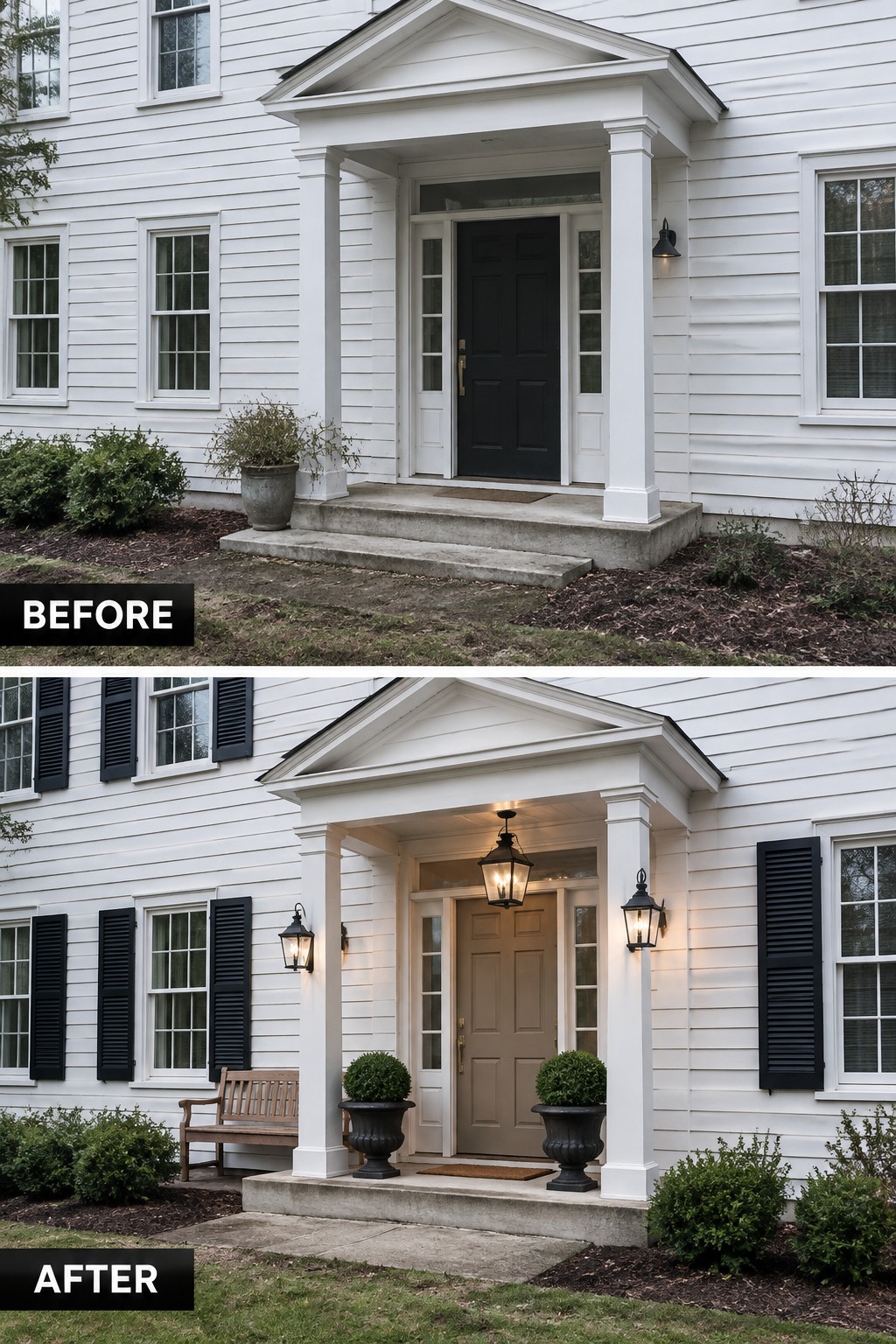
The before photo shows a plain front door with almost no lighting around it. Adding a hanging lantern under the portico and two wall lanterns on the columns gives the entry clear focus and makes the house feel more finished at night.
This works best on colonial homes that already have a centered door and simple trim. Keep the lanterns traditional in shape and scale so they match the architecture instead of competing with it. Start with one or two fixtures and add more only if the entry still feels flat once the first lights are in place.
Add Traditional Lanterns To Update A Colonial Exterior
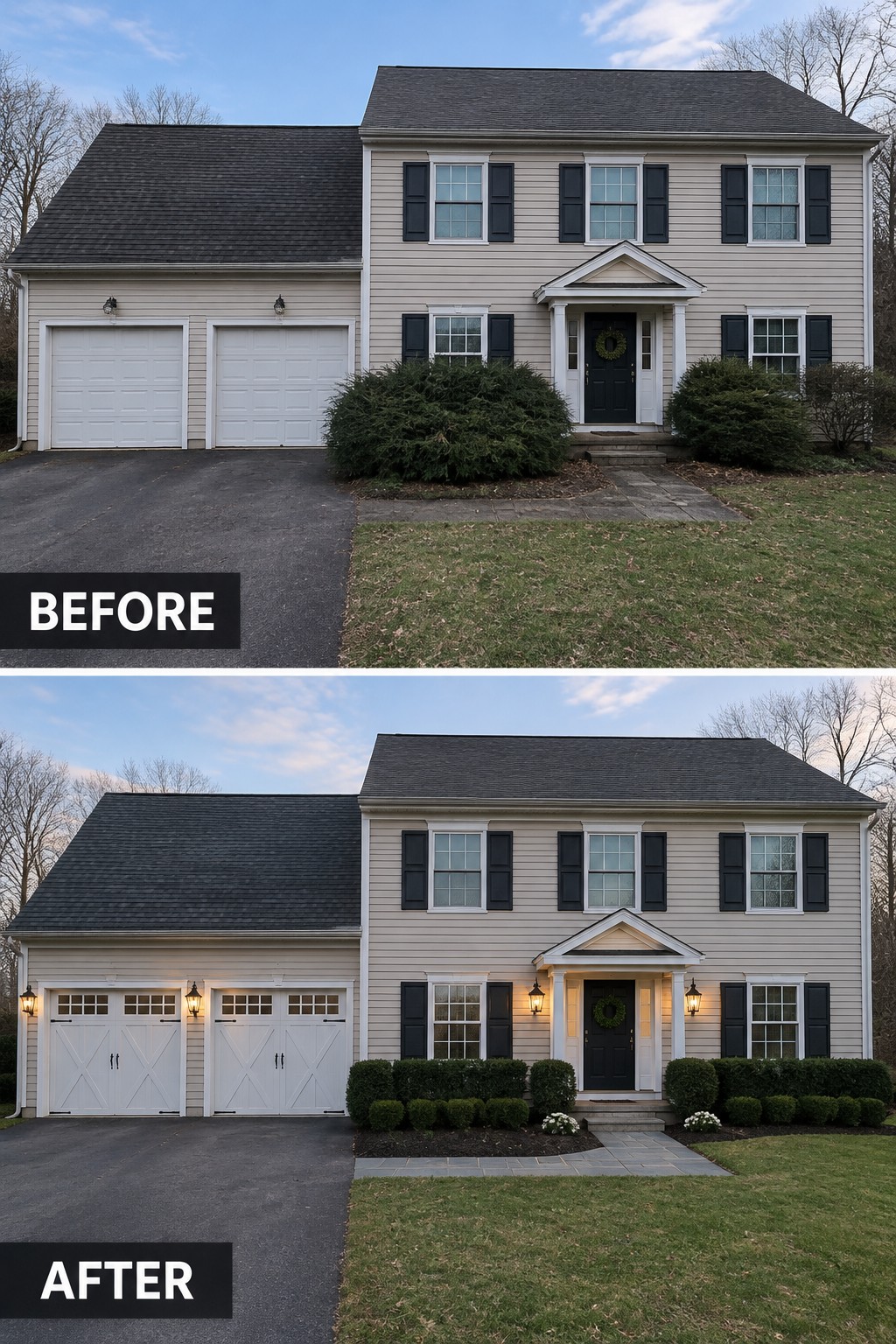
The biggest shift in this exterior comes from adding classic black lantern lights on either side of the garage and front entry. The before version looked flat and a little unfinished at night, while the after version feels more balanced and welcoming without any major structural changes.
Lanterns work well on colonial homes because they match the architecture and give the facade a finished look. Place them at the same height near main doors and garage bays, and keep the size in proportion to your windows and trim. Start with lighting before you move on to paint or shutters.
Add Traditional Lanterns To Light A Colonial Entry
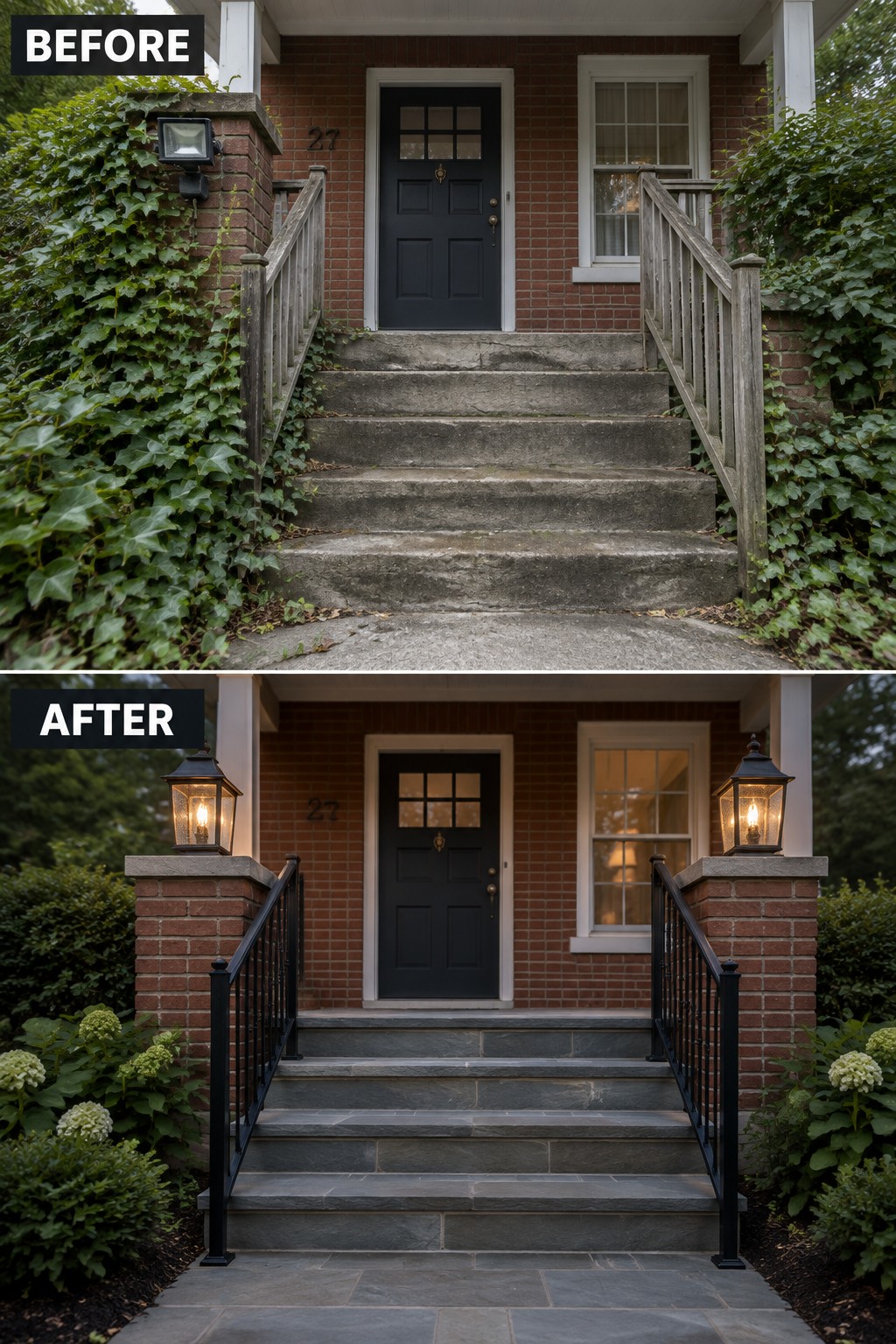
Colonial homes often have straightforward entries that can look flat once the sun goes down. Placing a pair of traditional lanterns on the brick posts beside the door brings both better light and a clearer sense of the house style.
This works best on brick or painted wood facades where the lanterns can sit at a comfortable height without crowding the door. Choose simple black or dark metal frames with warm bulbs, and keep any other changes, like railings or steps, in a matching dark finish so the lanterns stay the main feature.
Add Traditional Lanterns To A Colonial Porch
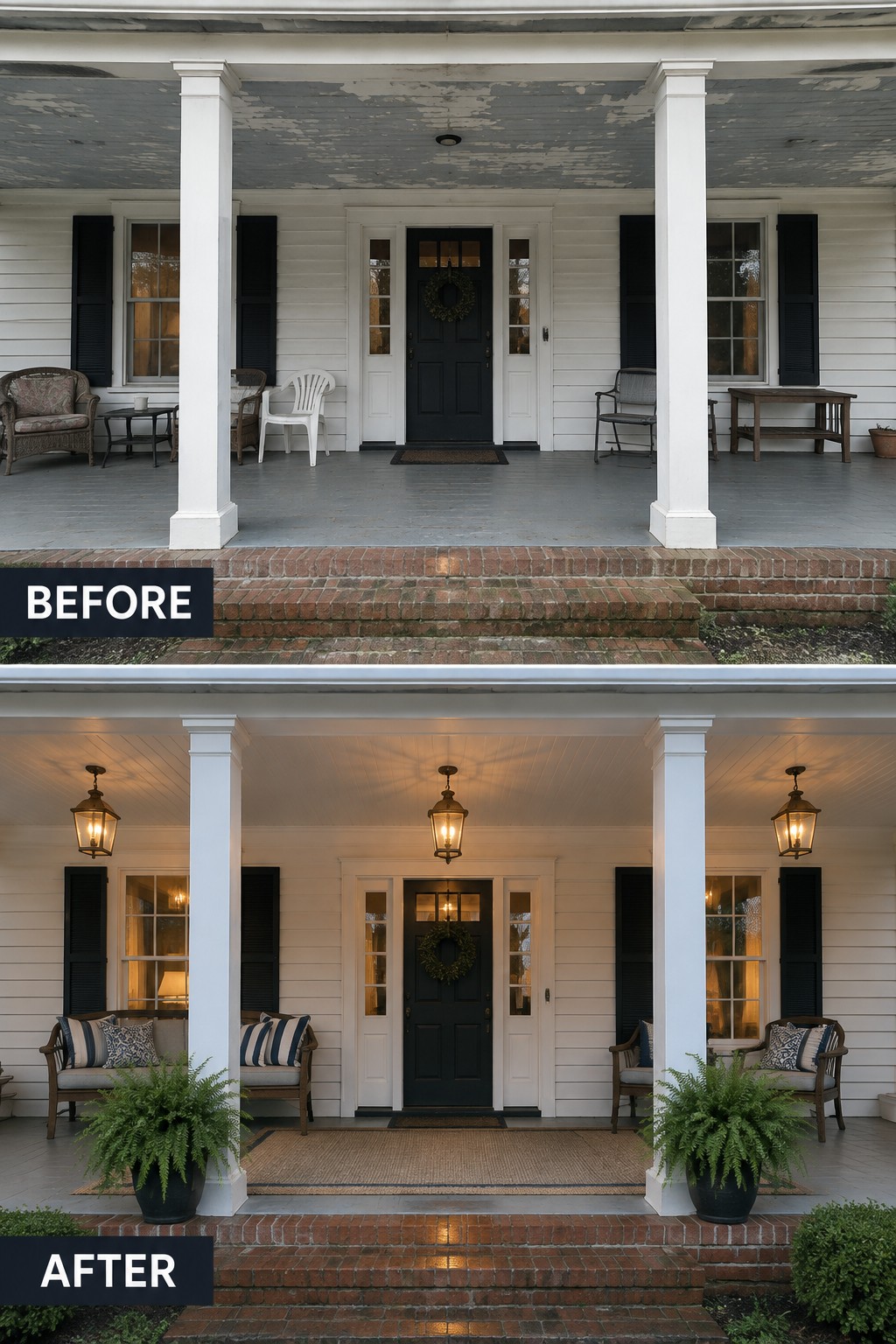
The main change here is the addition of three traditional lanterns hung along the porch ceiling. In the before photo the space had no evening lighting at all, so it felt flat and unused after sunset. The lanterns give the entry a clear purpose and make the whole front feel more finished without any major construction.
This idea works best on homes with simple columned porches where you want to improve curb appeal without changing the architecture. Place one lantern on each outer column and one above the door so the light spreads evenly across the steps and seating. Keep the fixtures modest in scale and choose warm bulbs. Once the lighting is in place, you can add just a few pieces of furniture and plants without crowding the space.
Add Traditional Lanterns To Frame The Front Entry
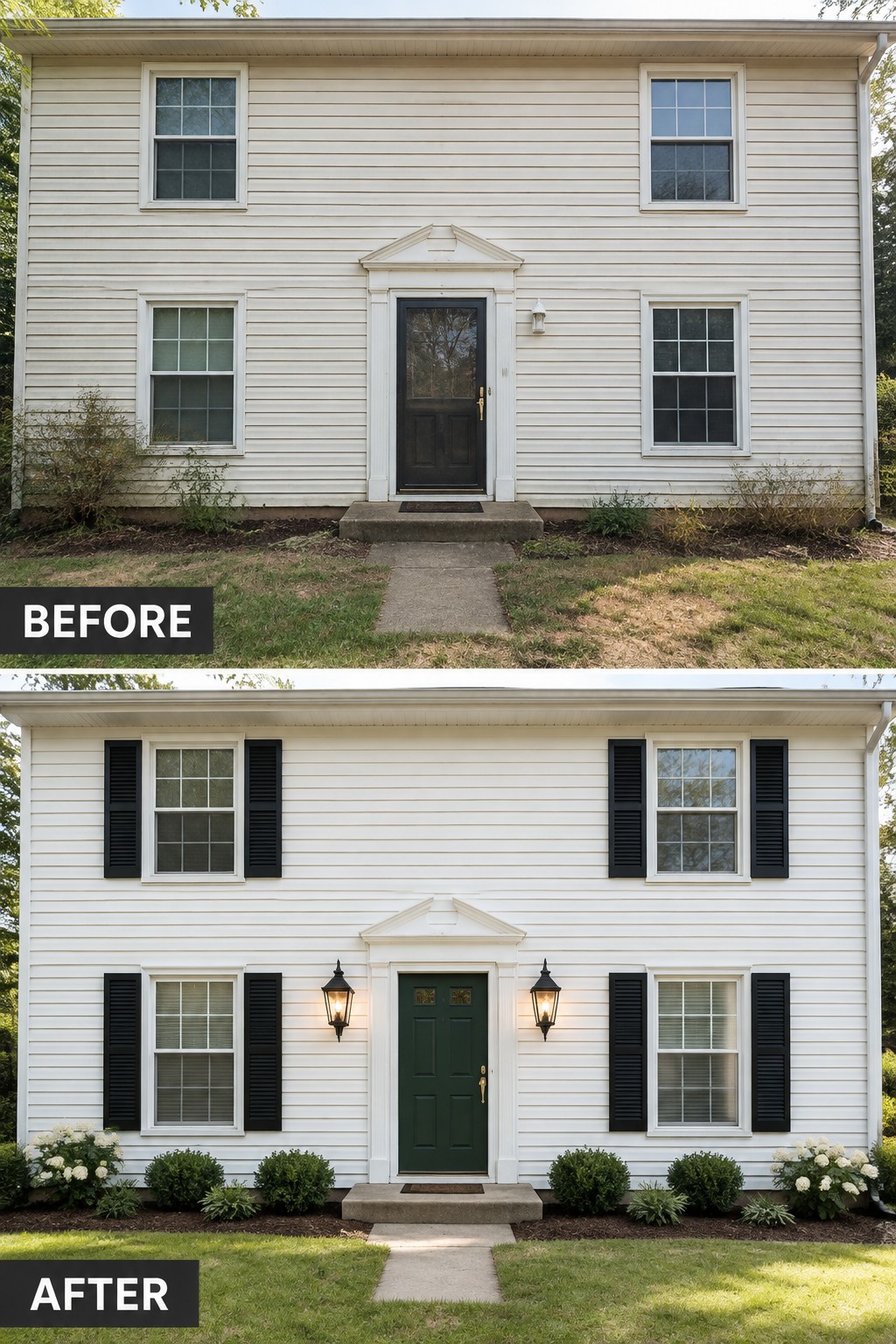
A plain colonial facade often needs just one clear focal point at the door. Adding a pair of traditional lantern sconces on either side gives the entry weight and makes the house feel more finished at night. The change is simple but noticeable because the lanterns match the scale of the door and tie the whole front together.
This idea works best on symmetrical homes where the architecture is already balanced. Mount the lanterns at a comfortable height so they light the steps without glare, and keep the style classic rather than ornate. Once the lanterns are in place, the rest of the exterior can stay understated.
Frame The Entry With Matching Traditional Lanterns
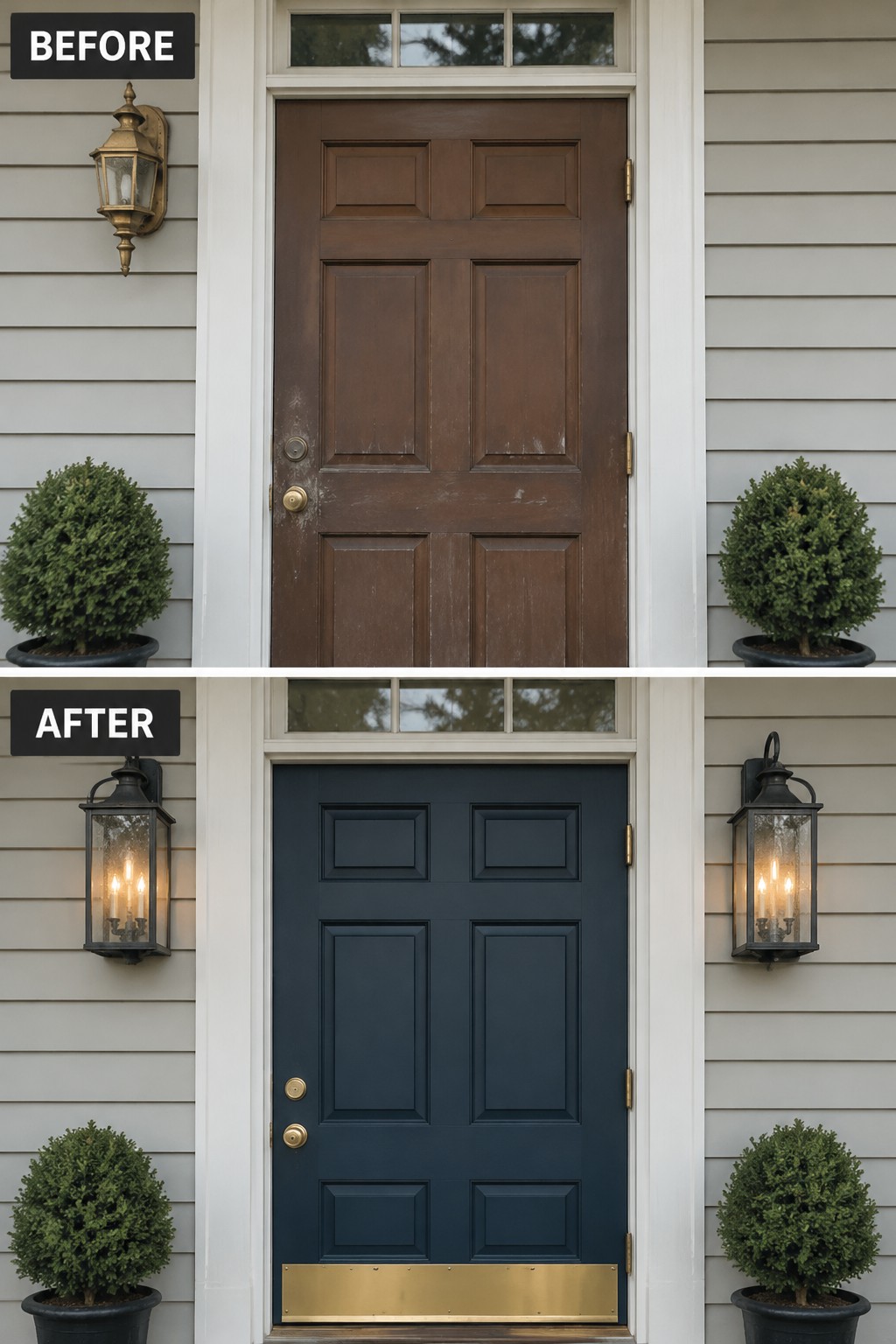
A single lantern on one side of the door left the entry looking off balance. Replacing it with a matching pair of traditional lanterns on either side of the door, along with a darker paint color on the door itself, gives the facade a much more finished and symmetrical look.
This idea works well on colonial homes because the style relies on clear lines and even placement. Keep the lanterns at the same height, choose glass-front styles with warm bulbs, and match the metal finish to your door hardware. It is a straightforward change that improves curb appeal without needing bigger renovations.
Add Traditional Lanterns To A Colonial Entry
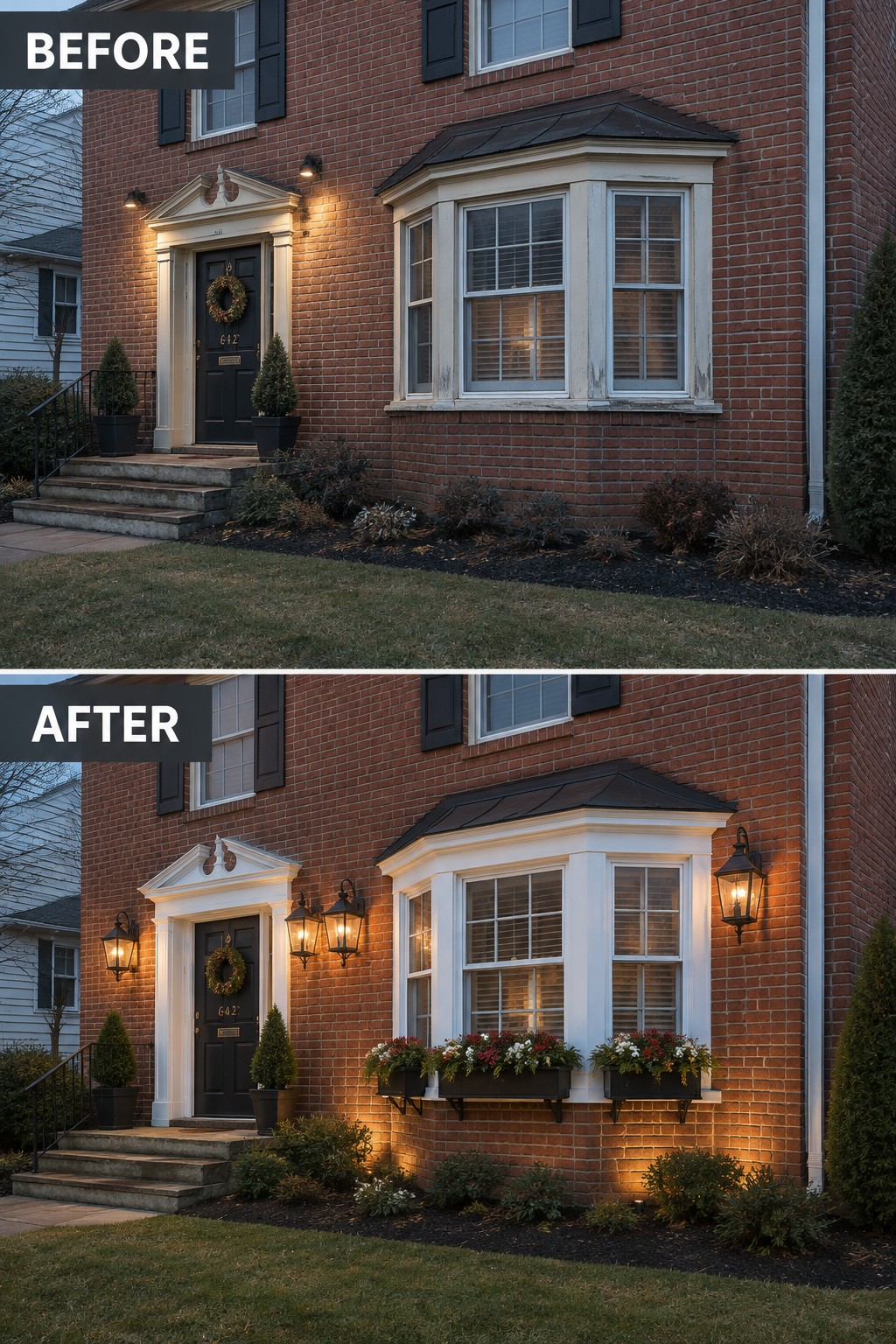
The shift from small wall lights to several traditional lanterns changes how the front of this brick colonial reads. The new lanterns sit beside the door and next to the bay window, giving the entrance a clearer shape and making the house feel more finished at dusk.
This idea suits colonial homes because the style of the lanterns matches the architecture without needing major changes. Place two or three lights at similar heights, keep the finishes consistent with your hardware, and let the rest of the facade stay simple so the lighting stands out on its own.
Add Traditional Lanterns To Highlight The Entry
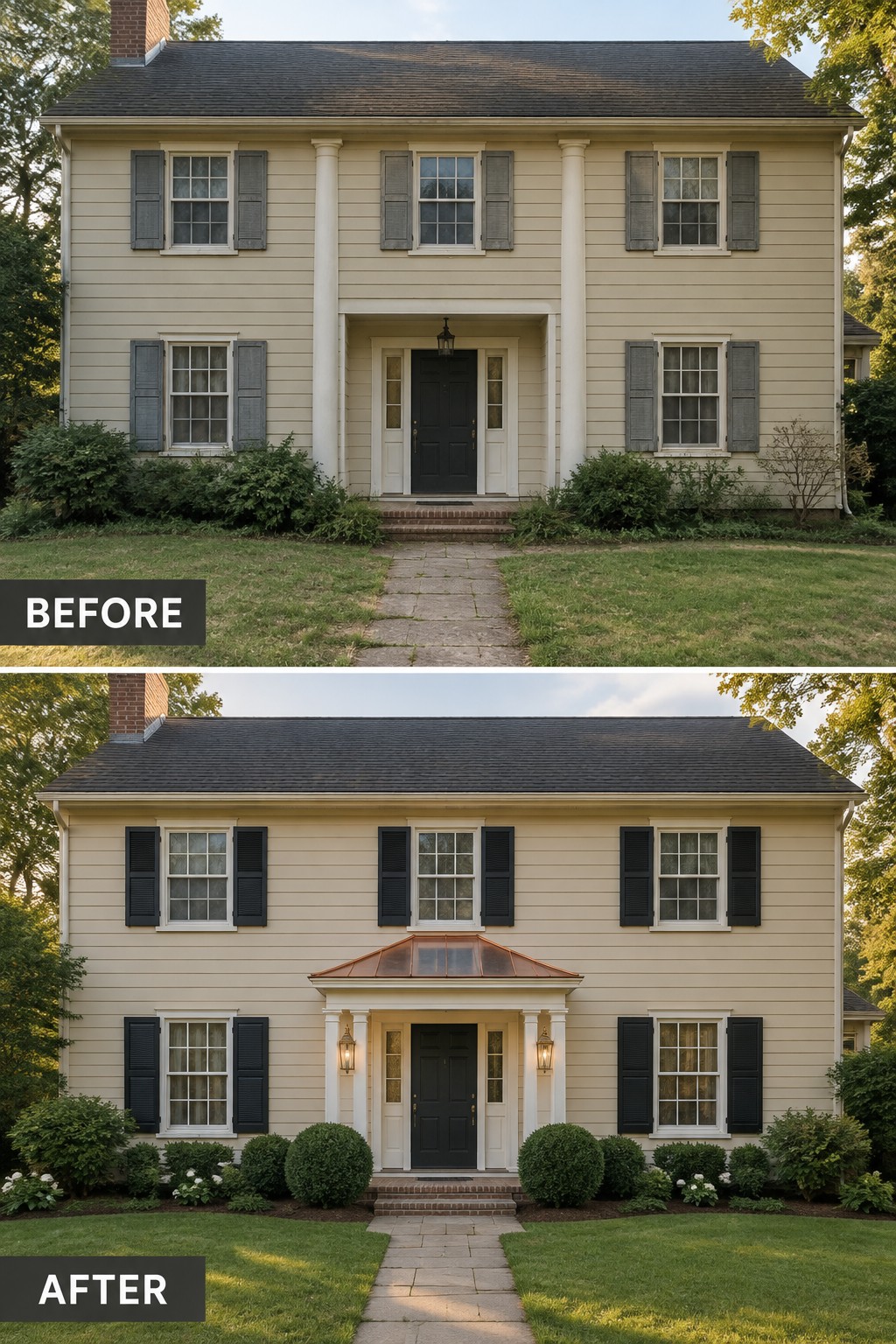
Many colonial houses already have good bones but the front door can still feel flat. Adding a modest portico with a copper roof and placing matching lanterns on both sides gives the entry a clear focal point and makes the whole facade feel more complete. The change turns an open doorway into a sheltered, well-lit entrance that stands out without overpowering the house.
This idea works best on symmetrical colonial exteriors where the center door needs a little extra weight. Choose lanterns in a simple traditional shape and keep the roof material consistent with other metal details on the house. Do the lighting and structure first, then adjust the planting so the entry remains the main feature.
Add Lantern Lighting To The Front Walkway
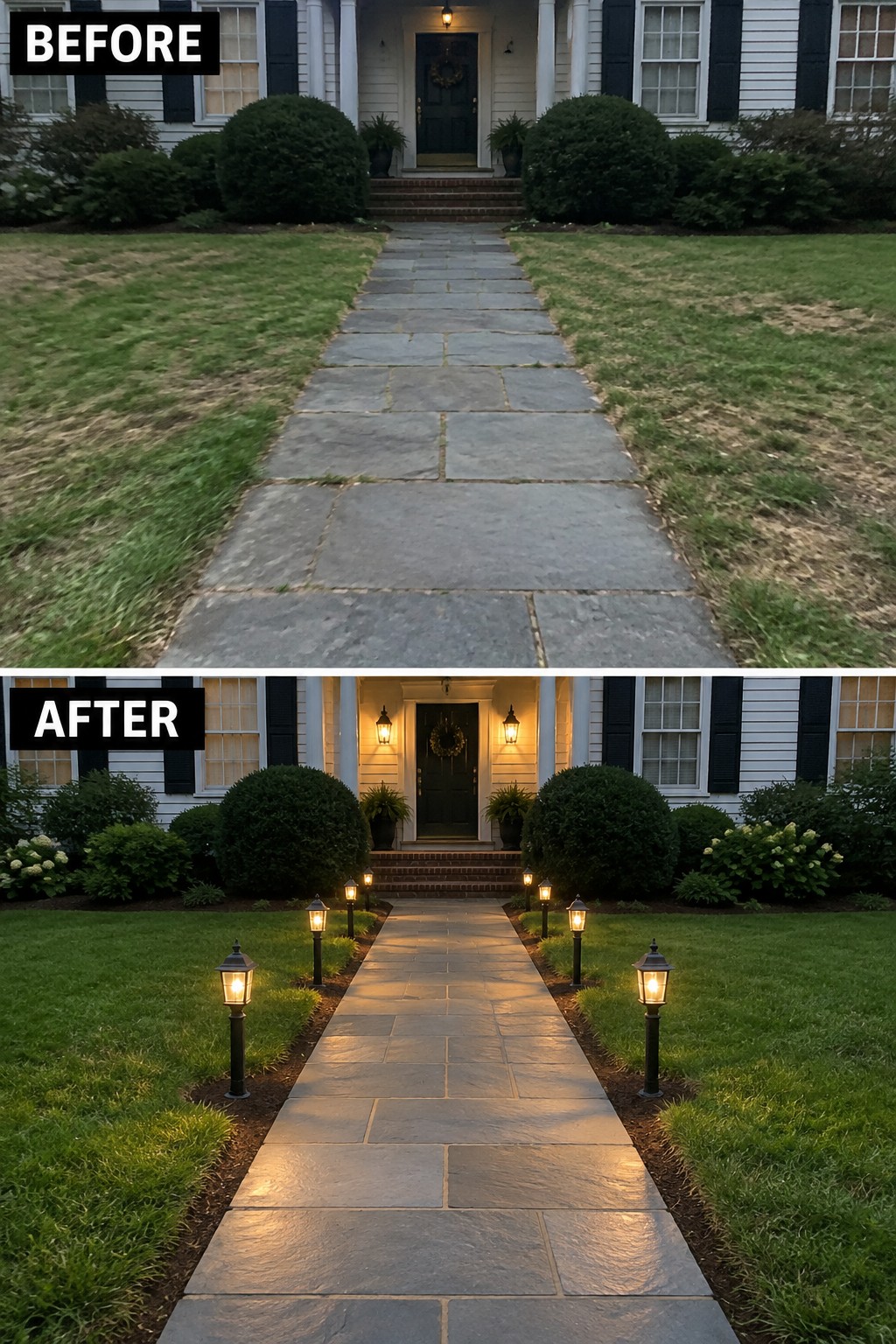
Placing a row of traditional lanterns along both sides of a stone path gives the entry a clear sense of order. In the before photo the walkway sat flat and unlit between the grass. In the after photo the lights create a steady line that guides visitors and makes the front of the house feel more complete at night.
This idea suits colonial homes that already have simple, classic details. Keep the lanterns in a matching dark finish, space them evenly, and let the path remain the main feature instead of adding extra plantings or decor right beside it. The result feels polished without requiring a full renovation.
Add Lantern Lighting To Update A Colonial Porch
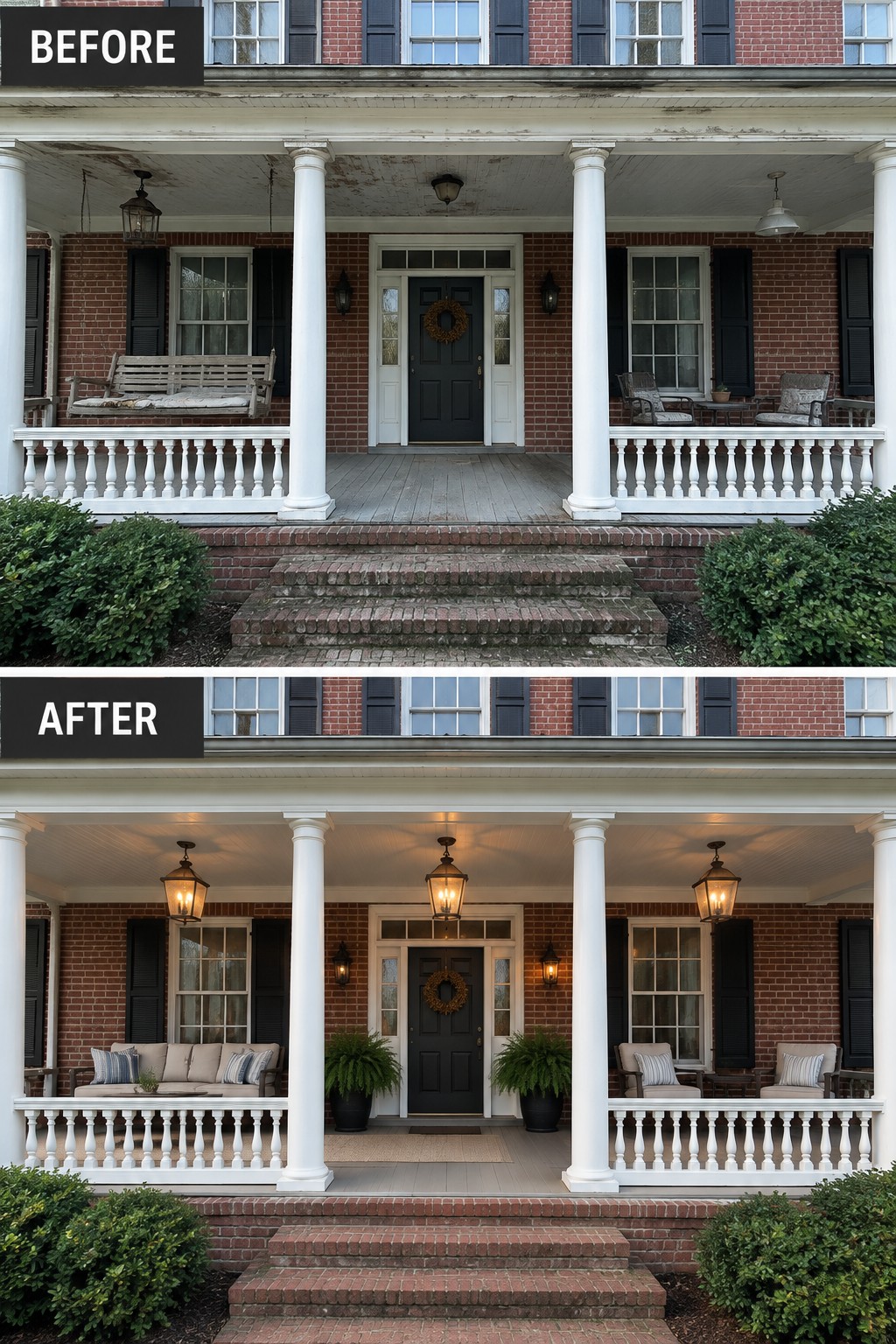
The biggest shift here comes from replacing the old hanging lights with proper traditional lanterns. They give the entry a warmer evening presence and make the whole porch feel more intentional without needing a full rebuild.
This approach works best on homes with existing columns and trim, where the lanterns can echo the architecture. Hang them at eye level or slightly above, keep the number to two or three, and let the rest of the porch stay fairly simple so the lights remain the main feature.
Add Lantern Lighting To Frame A Colonial Entry
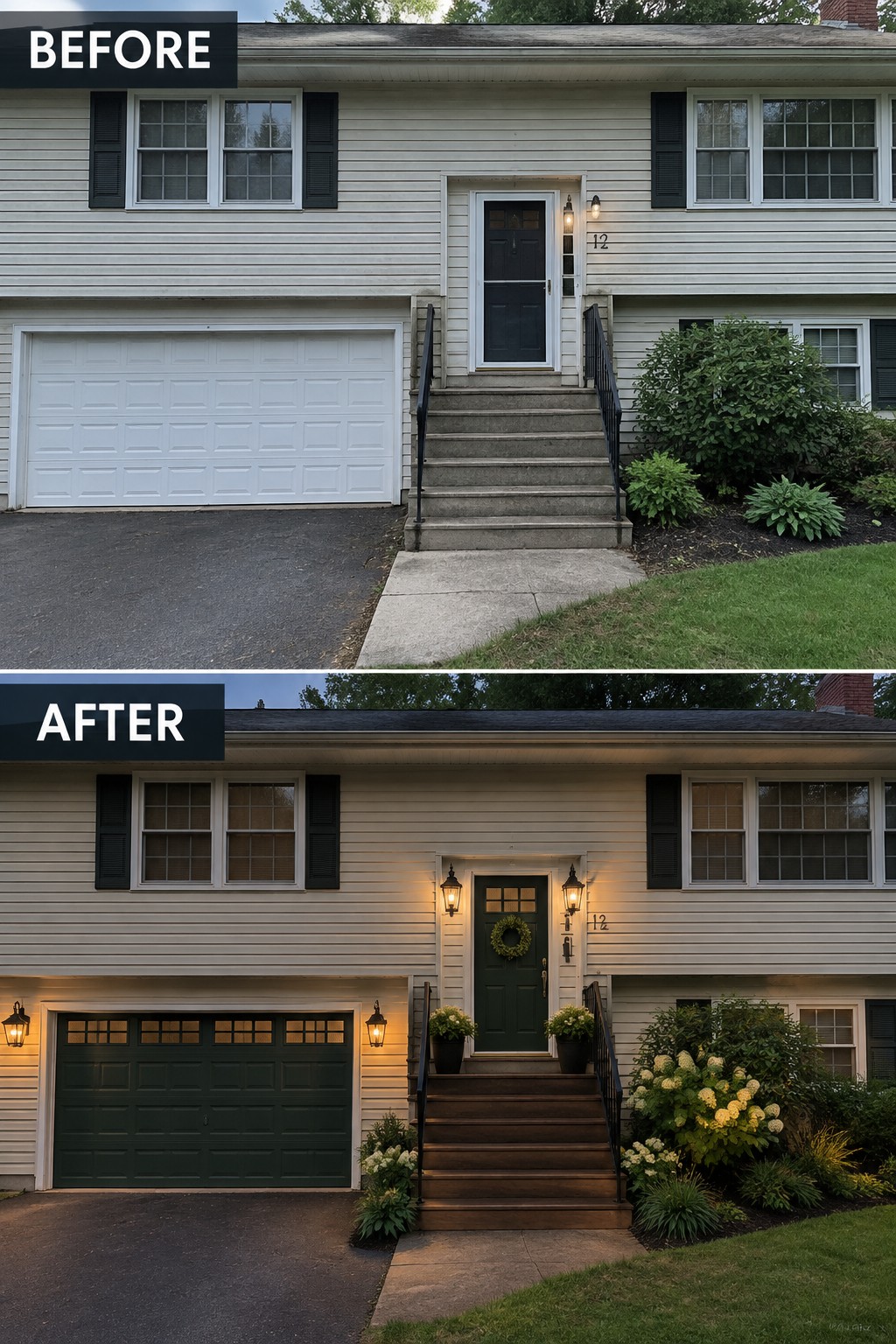
The main shift here comes from replacing small, basic fixtures with traditional lanterns placed on both sides of the front door. This simple swap gives the entry more weight and makes the house feel more finished, especially on a colonial facade where symmetry matters. The same idea shows up near the garage, where a matching lantern helps tie the whole front together instead of leaving one side dark.
This works well on homes with clear entry points and simple siding. Start by picking lanterns that sit at eye level or just above the door, then use warm bulbs so the light feels soft at night. Keep the rest of the front fairly clean so the lanterns stay the main feature rather than competing with too many other changes.
Add Lantern Lighting To Frame The Entry
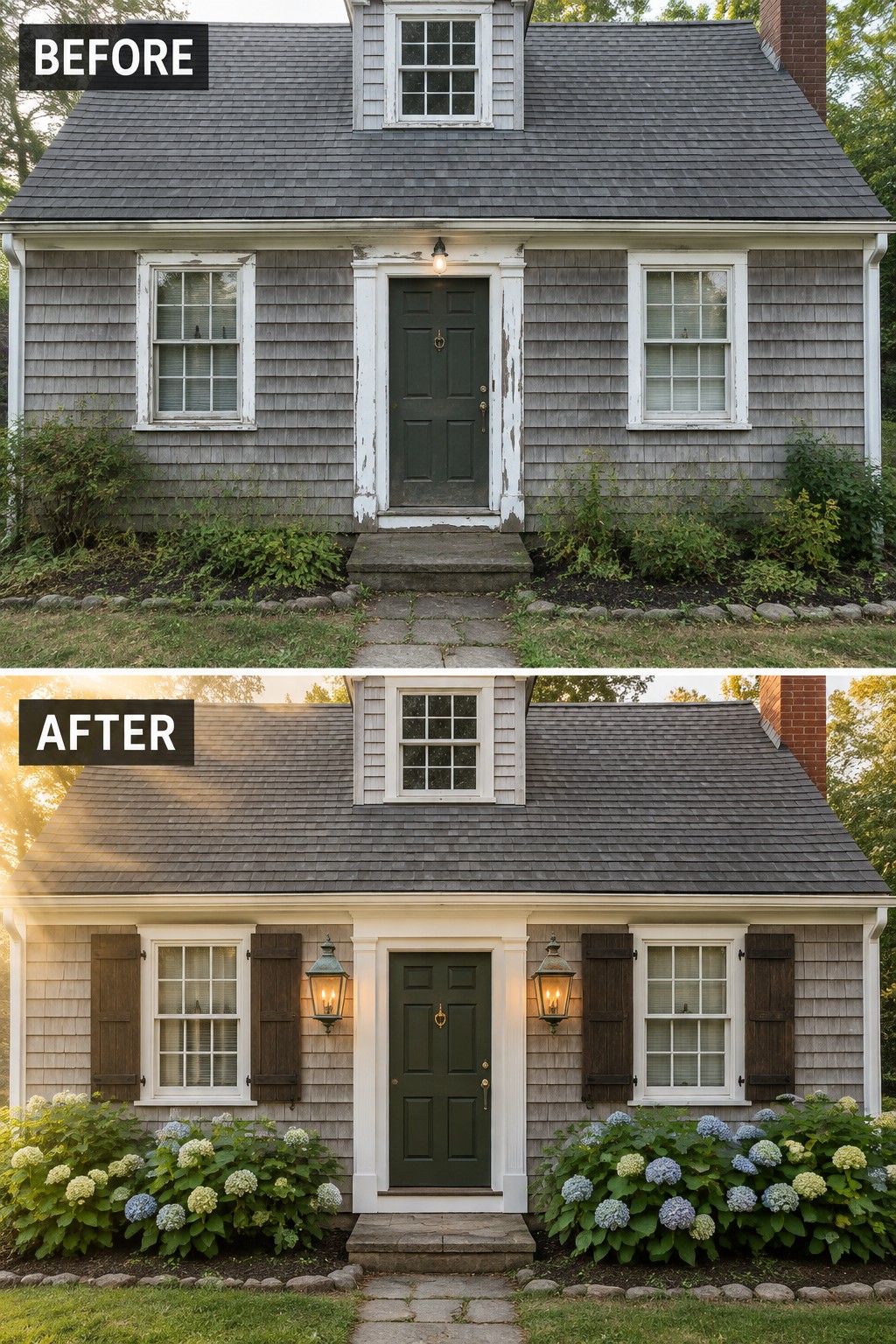
A single bulb over the door often leaves a colonial facade feeling flat. Replacing it with a pair of traditional lanterns on either side gives the entry real presence and helps the whole front feel more finished. The lanterns also cast a warmer light across the steps and walk, which makes the house look cared for even at dusk.
This works best on homes with symmetrical windows and white trim. Mount the lanterns at roughly eye level so they light the door without shining into the windows. Choose a simple, timeworn finish that matches your door hardware, and keep the planting low so the lights stay the main feature.
Add Traditional Lantern Lighting To A Side Walkway
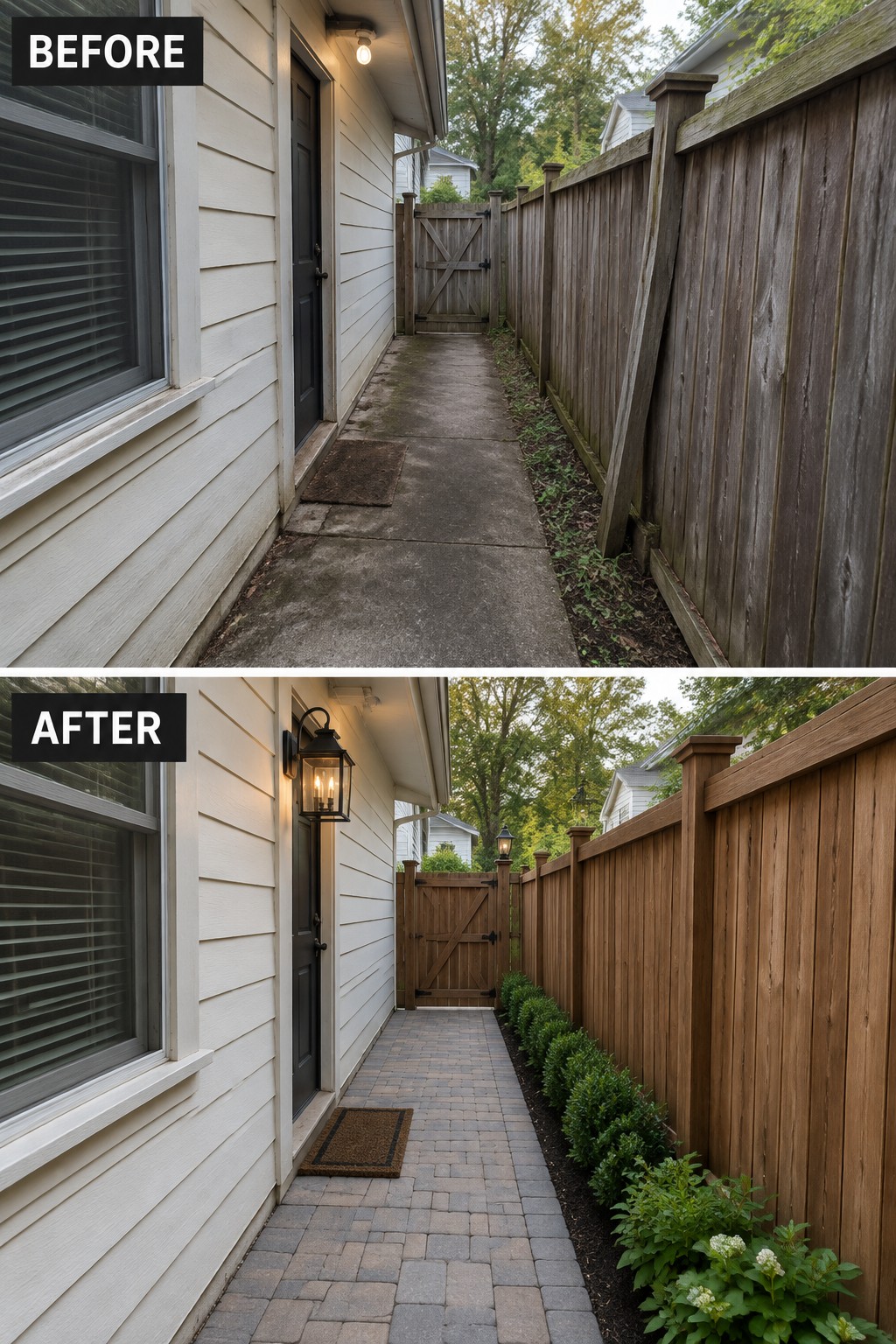
A narrow side path often gets ignored, but simple lighting changes can make it feel like part of the house instead of just leftover space. The before photo shows a plain concrete walkway with almost no light at night. Adding a few traditional lanterns on the wall and near the gate gives the area clear purpose and makes it safer and more inviting after dark.
This idea works especially well on colonial homes where you want to keep the look classic. Mount one lantern by the door, add another farther down the wall, and consider a small post lantern near the gate. The key is spacing them so the light actually reaches the path without creating glare. Keep the fixtures simple and match the finish to your other exterior hardware.
Use Lantern Lighting To Warm Up A Colonial Porch
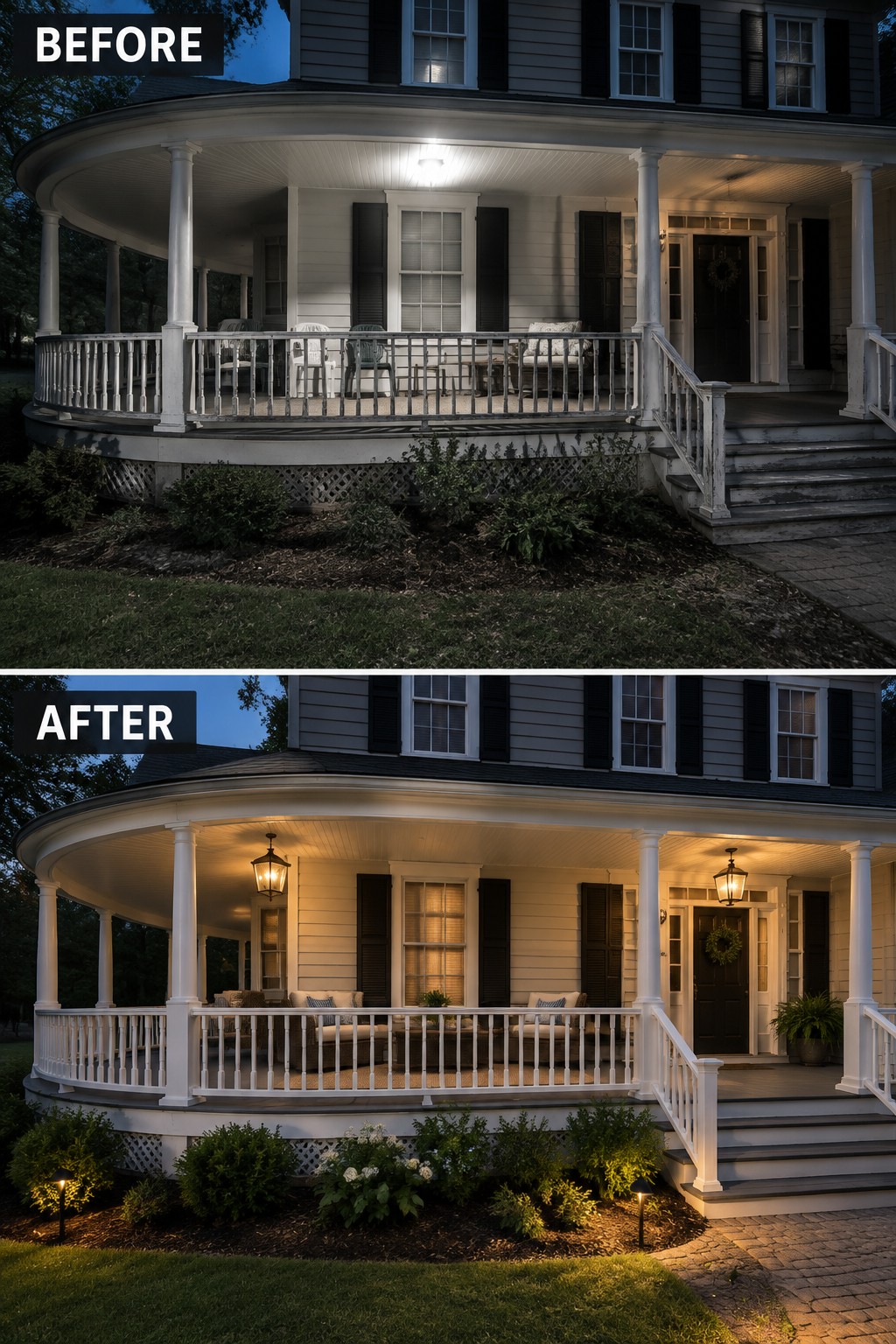
The before photo shows one bright overhead light that leaves the porch looking flat and a bit cold at night. Switching to a pair of traditional lanterns changes the feel right away because the light now comes from the sides and sits at a lower height that matches the scale of the house.
This idea suits colonial exteriors especially well since the lanterns echo the trim and shutters without adding anything modern. Keep the fixtures simple in shape and finish, add one or two low lights along the planting beds, and make sure the porch itself stays clear so the light has room to spread.
Add Lantern Lighting To Warm A Colonial Entry
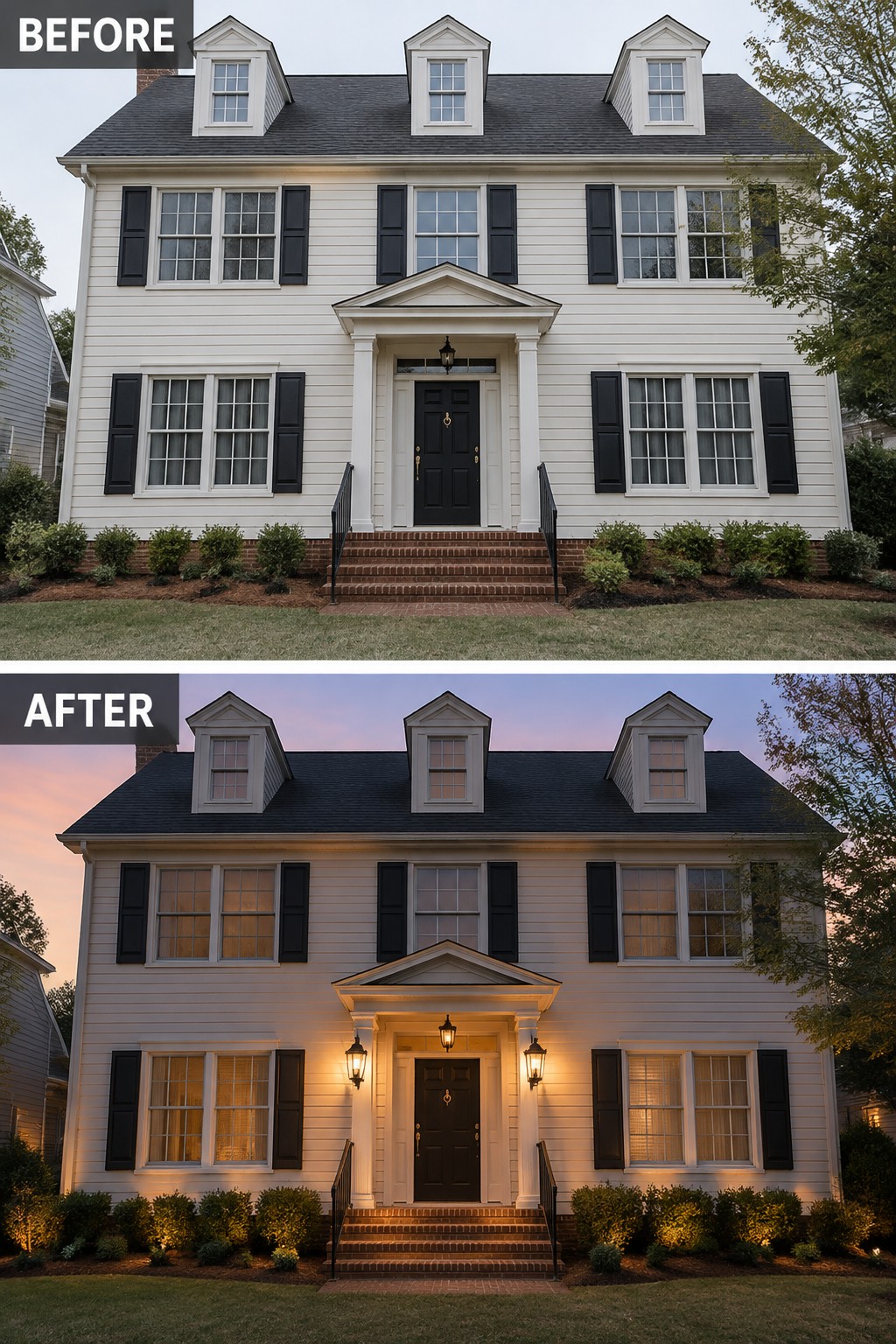
The before photo shows a clean Colonial facade that feels a bit flat once the light fades. In the after, a pair of traditional lanterns flanking the door and a few low lights tucked into the shrubs give the entry a gentle glow that makes the house feel lived in after dark.
This works especially well on symmetrical homes with a centered door. Keep the lanterns simple and black so they match the shutters, and choose warm bulbs that sit at about door-handle height. The same idea can work on many older homes as long as you avoid over-lighting the whole yard.
Add Lanterns To Frame The Front Entry
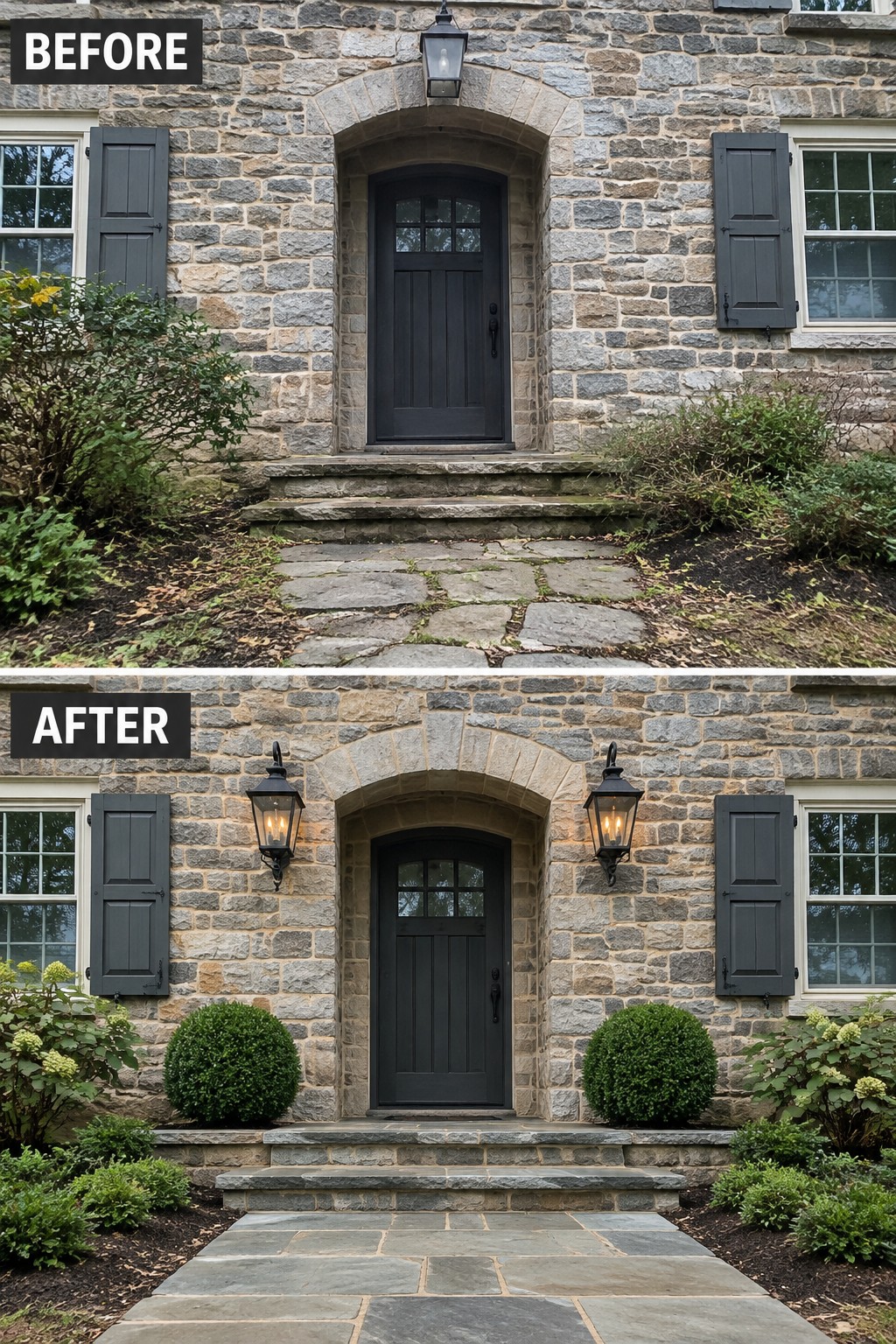
A centered door on a stone house often needs something on either side to feel complete. Adding a matching pair of lanterns gives the entry a clear focal point and makes the whole facade look more balanced without any major construction.
This works especially well on colonial homes where the architecture is already strong. Keep the lanterns simple in style and scale so they highlight the door rather than overwhelm the stone. The same idea can be used on any house with a centered entry and enough wall space on both sides.
Add Traditional Lanterns Beside The Front Door
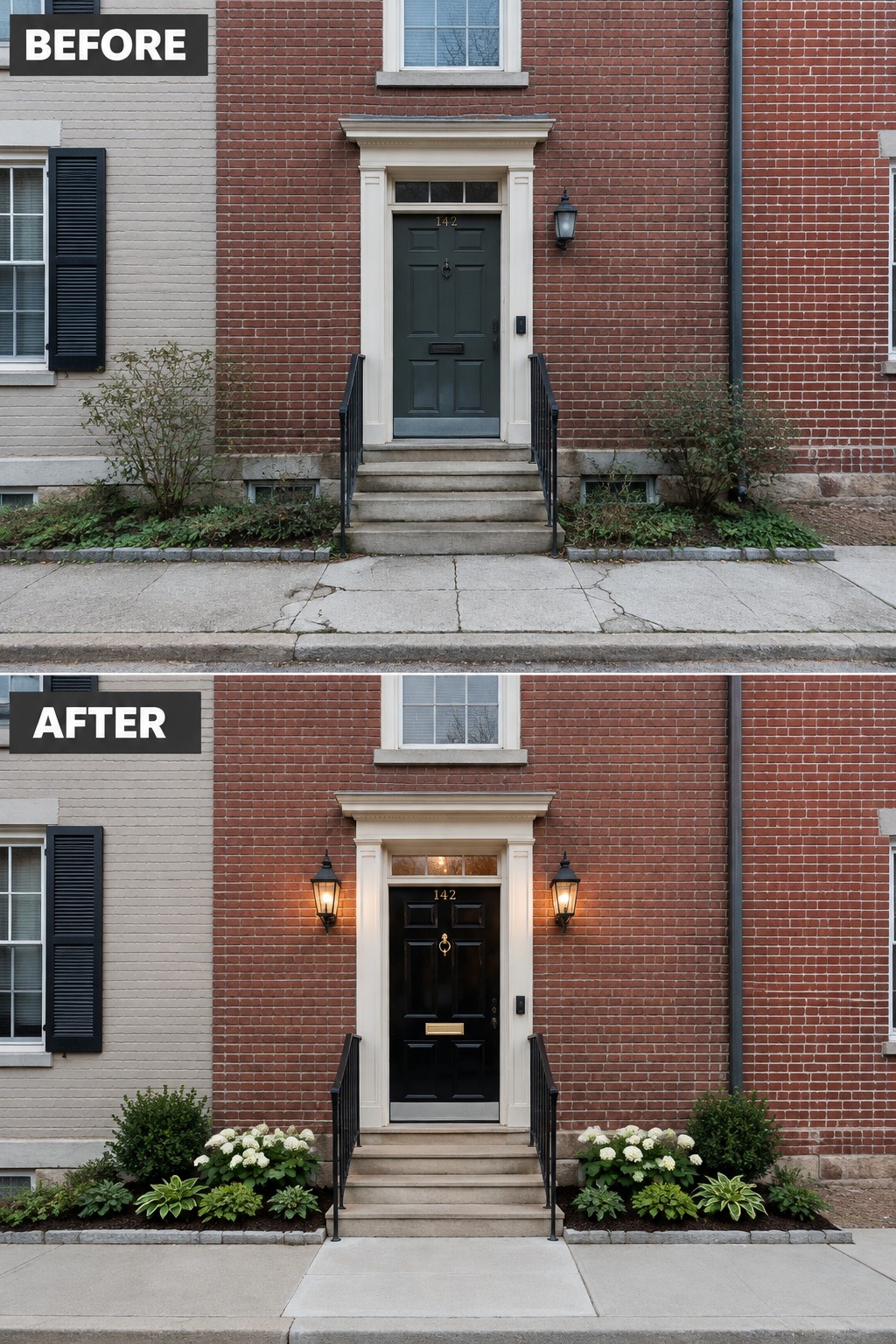
The main change here is the addition of two matching lanterns mounted on either side of the door. The before version had only a single small light, which left the entry looking flat and a bit forgotten. The new lanterns give off a warm glow that reaches the steps and makes the whole front feel more welcoming without adding clutter.
This works especially well on colonial homes because the simple shape of the lanterns fits the architecture. Place them at about the same height as the top of the door so the light falls where people walk. Keep other changes minimal so the lanterns stay the focus.
Frequently Asked Questions
Q: Where should I hang lanterns to highlight a colonial entry without making it look busy? A: Place one on each side of the front door at about eye level. This draws attention to the door frame and lights the steps at the same time. Keep any others spaced farther apart along the porch.
Q: How do I pick lantern sizes that suit a two-story colonial without guessing wrong? A: Match the height to your door and first-floor windows. Medium sizes usually sit right on most homes of this style. Hold one up against the siding during the day to check the proportions before you commit.
Q: Can I switch to electric lanterns for less daily work? A: Electric versions work well and cut down on hassle. They give steady light without the upkeep of real flames.