

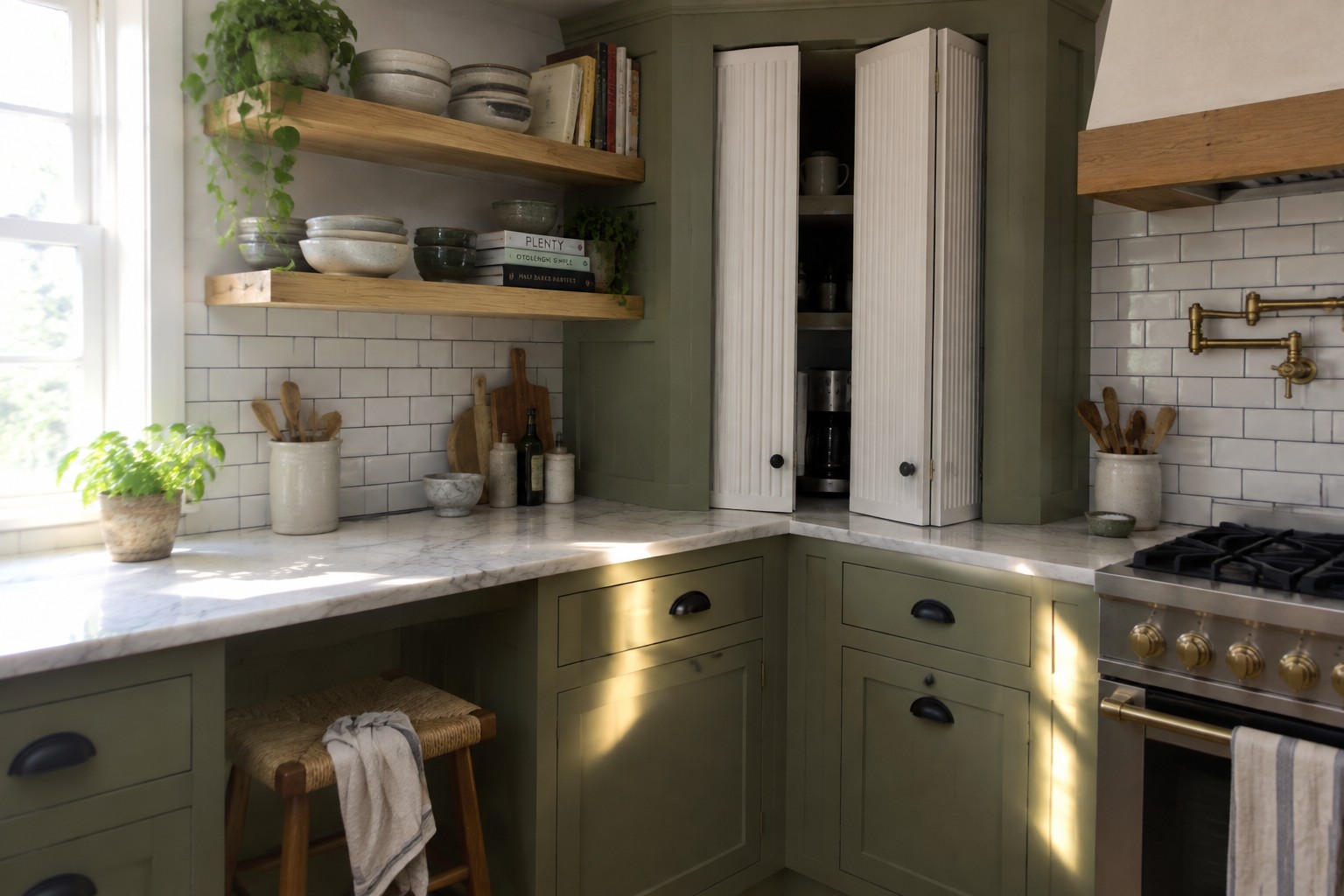
Corner cabinets can make a room feel more finished, but awkward doors or hard-to-reach shelves can turn that corner into wasted space.
I find bi-fold doors especially useful in kitchens and dining areas, where a wide opening makes it easier to see and reach what is stored inside without blocking nearby walkways.
The best designs also fit the room’s proportions, so the cabinet feels like part of the layout rather than an afterthought.
Some ideas keep things simple with clean lines, while others use color, glass, or open shelving to give the corner more presence.
I’d save the options that suit your room’s storage needs and test their door clearance before settling on a style.
Make Corner Storage Easier to Reach

Bi-fold doors can make a corner cabinet more useful by folding back to open up the space inside. That is handy for storing dishes or small appliances that might otherwise get pushed out of reach.
They work well in an L-shaped kitchen, especially when the cabinet sits beside a counter or cooking area. Check that the folded doors have enough room to open without bumping into nearby drawers or appliances.
Make A Corner Cabinet Useful
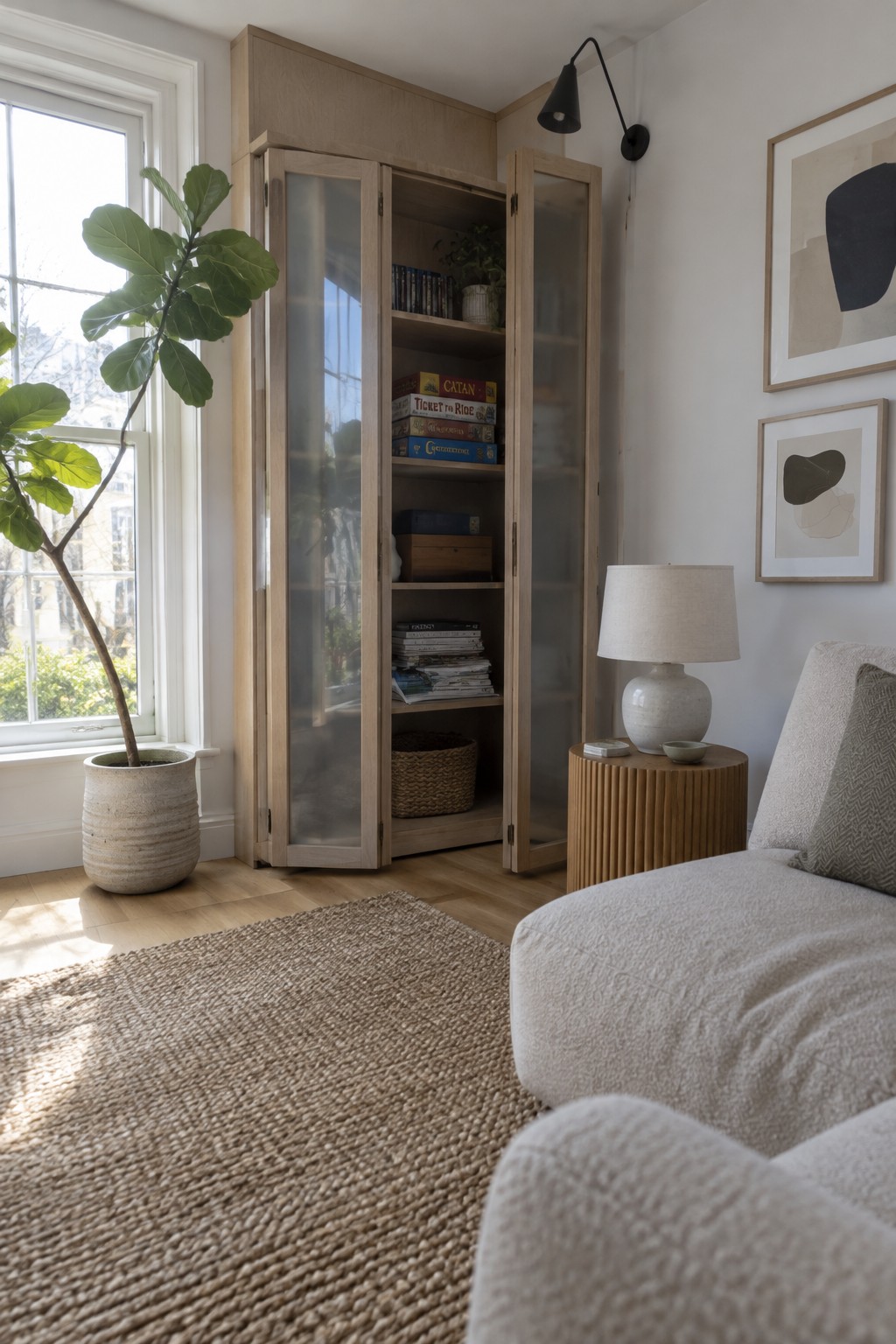
A corner cabinet can turn an awkward spot into practical storage without taking up much floor space. Bi-fold doors fold back neatly, making it easier to reach books, games, or other things tucked inside.
This approach works well in a living room where a standard cabinet might block a walkway. Choose shelves that suit what you plan to store, and leave enough room for both doors to open comfortably.
Make Corner Storage Feel Like Part Of The Room

A corner cabinet can be useful without looking like an afterthought. A low wooden cabinet with louvered doors keeps everyday items tucked away, while its simple lines suit a dining area or another room that needs extra storage.
Choose a cabinet that fits the corner without blocking walkways or crowding nearby furniture. Bi-fold doors are especially handy where there isn’t much room for standard doors to swing open.
Make Use Of An Awkward Bathroom Corner
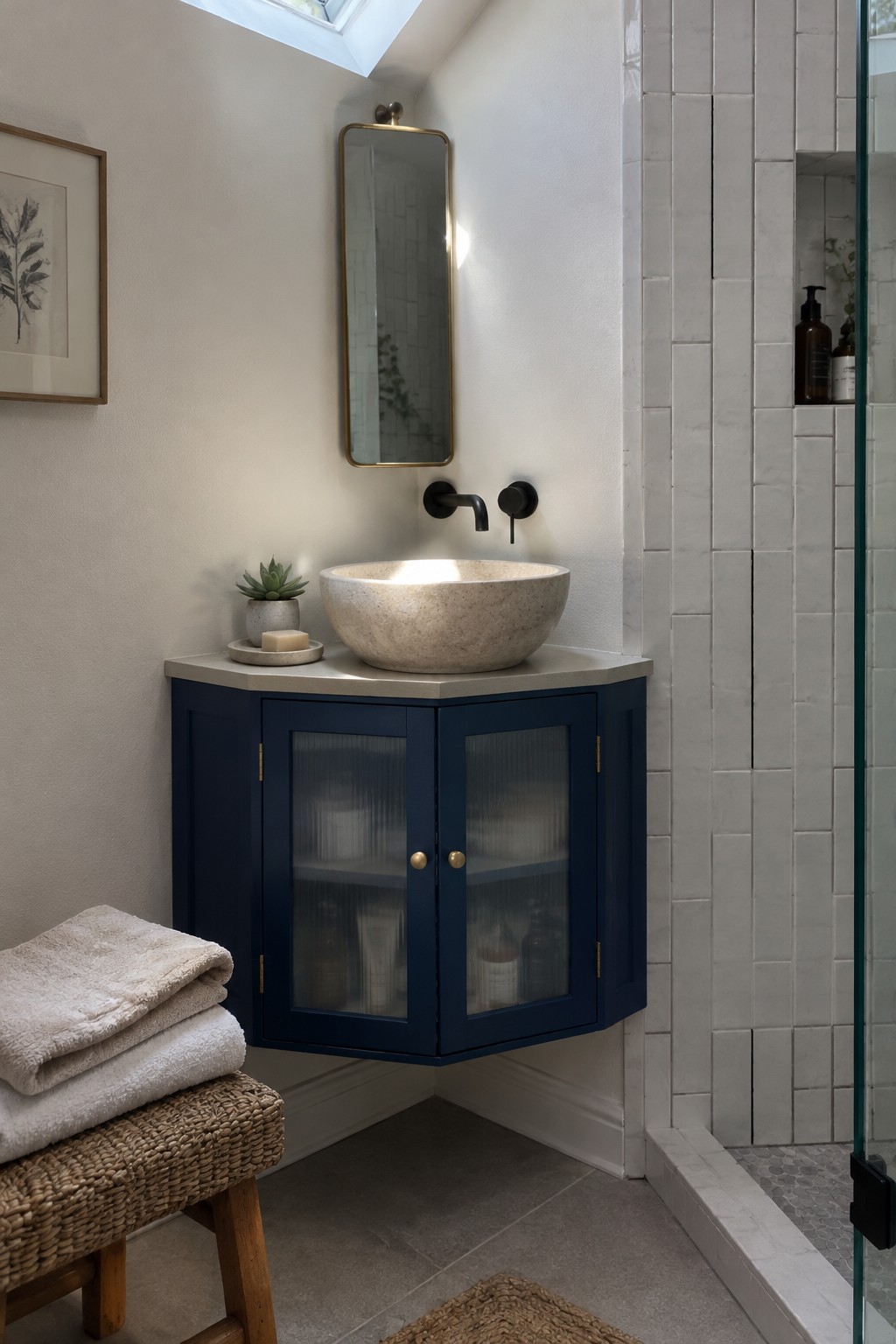
A corner cabinet can give a small bathroom useful storage without taking up as much floor space as a straight vanity. Bi-fold doors are a good choice when there isn’t much room for cabinet doors to swing open.
This setup works well in a compact bathroom, especially when the cabinet can be fitted neatly into an unused corner. Choose doors that open fully enough to reach everyday items, and keep the countertop fairly clear.
Use a Tall Cabinet For Entryway Storage
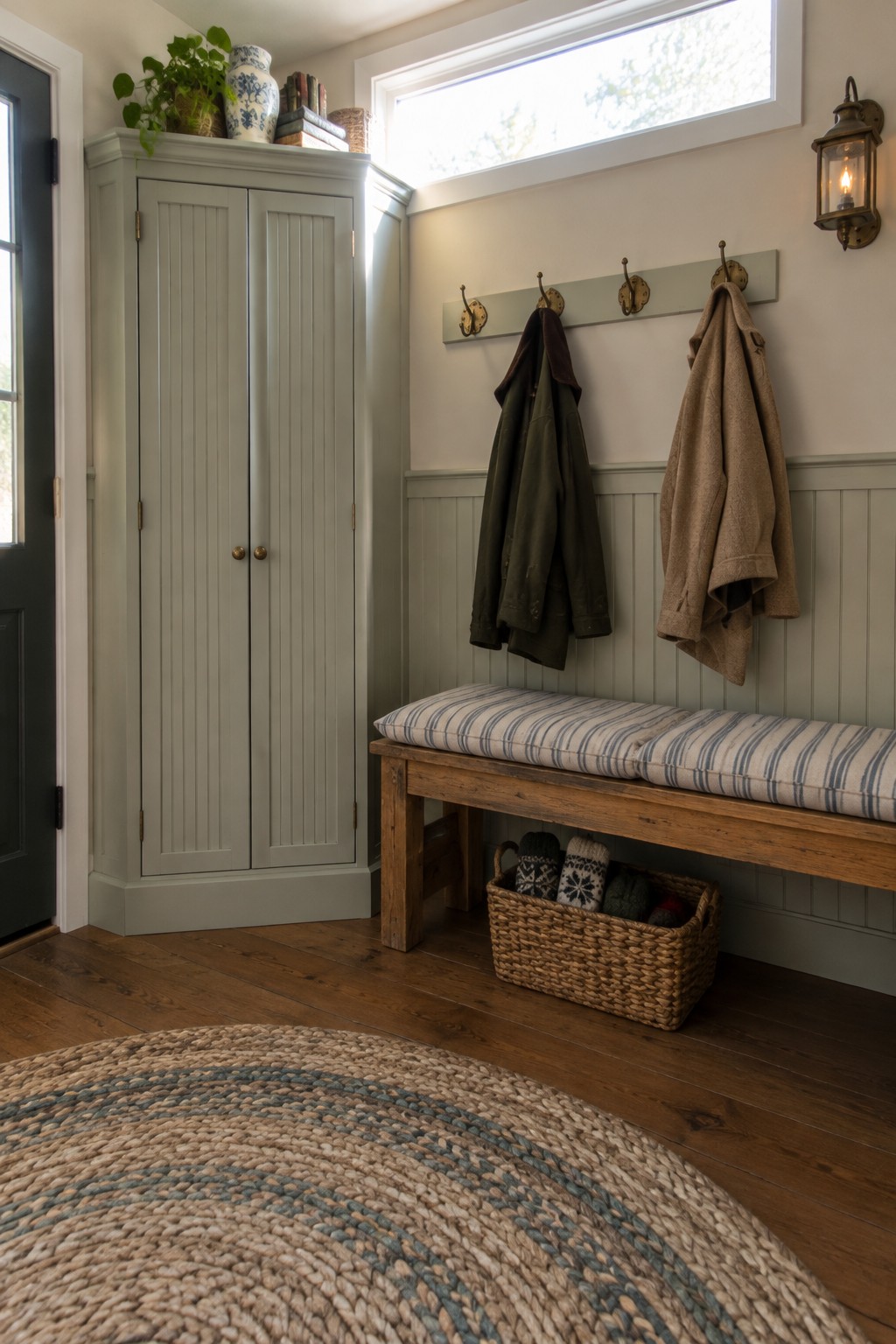
A tall corner cabinet can make an entryway more useful without taking up much wall space. The paneled doors keep everyday storage tucked away, while the narrow footprint leaves room for a bench nearby.
This kind of cabinet suits a small mudroom or an awkward corner near the front door. Use it for coats, shoes, or household odds and ends, and make sure the doors can open fully without hitting nearby furniture.
Turn A Closet Nook Into a Home Office

A built-in desk can make an unused closet corner useful without taking up extra floor space. Here, the deep blue cabinetry gives the work area a defined place, while the desk fits neatly into the opening.
This idea works well in a spare room, hallway nook, or other spot where a full office would feel too large. Bi-fold doors can close over the desk when it is not in use, so keep the setup compact enough to tuck away easily.
Use a Corner Cabinet for Laundry Storage
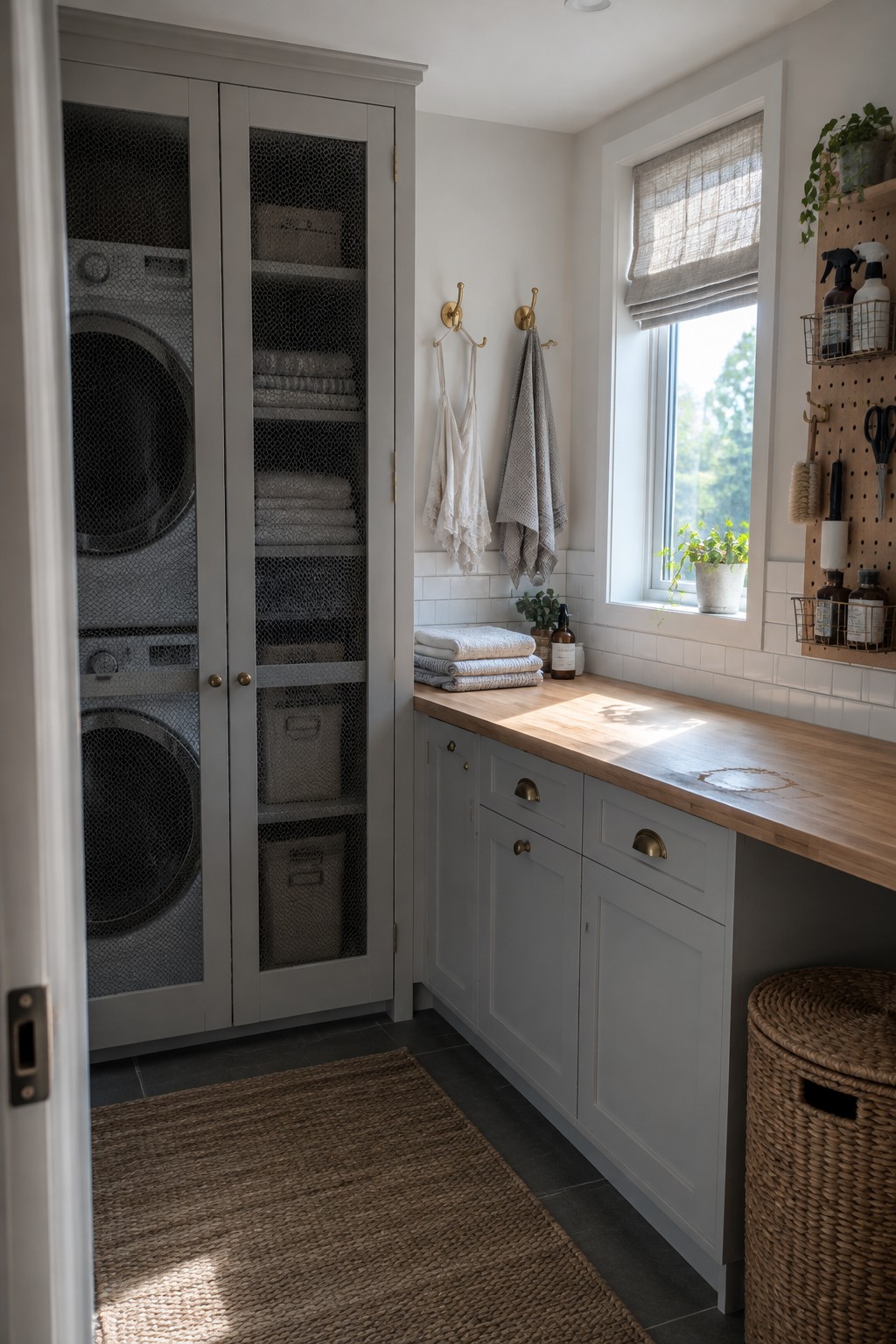
A tall cabinet can keep laundry supplies and clean towels in one easy-to-reach spot. In a compact laundry room, using an awkward corner for storage helps leave more of the counter free for folding.
Adjust the shelves to fit baskets, linens, or detergent, and keep everyday items at a comfortable height. If the cabinet doors open into a narrow walkway, bi-fold doors can make access easier without taking up as much room.
Use Bi-Fold Doors in a Tight Corner
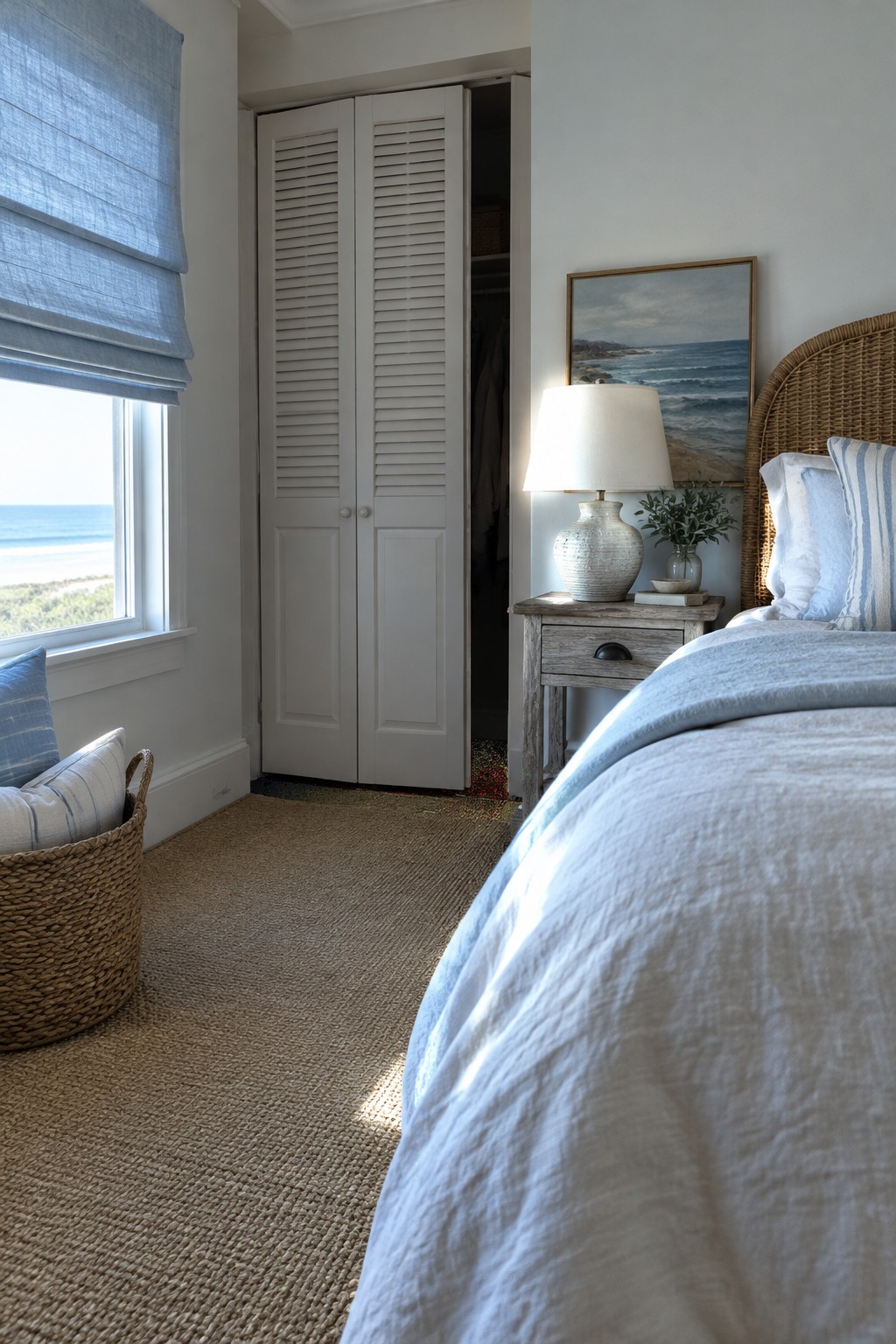
Bi-fold doors can make corner storage easier to use when there isn’t much room for a pair of doors to swing outward. The narrow louvered doors on this closet fold back, leaving more of the floor area clear.
This approach can work in a bedroom or hallway where space is tight. Check that the folded doors have room to sit open, and keep the shelves inside simple enough to reach.
Use a Tall Cabinet For Entryway Storage
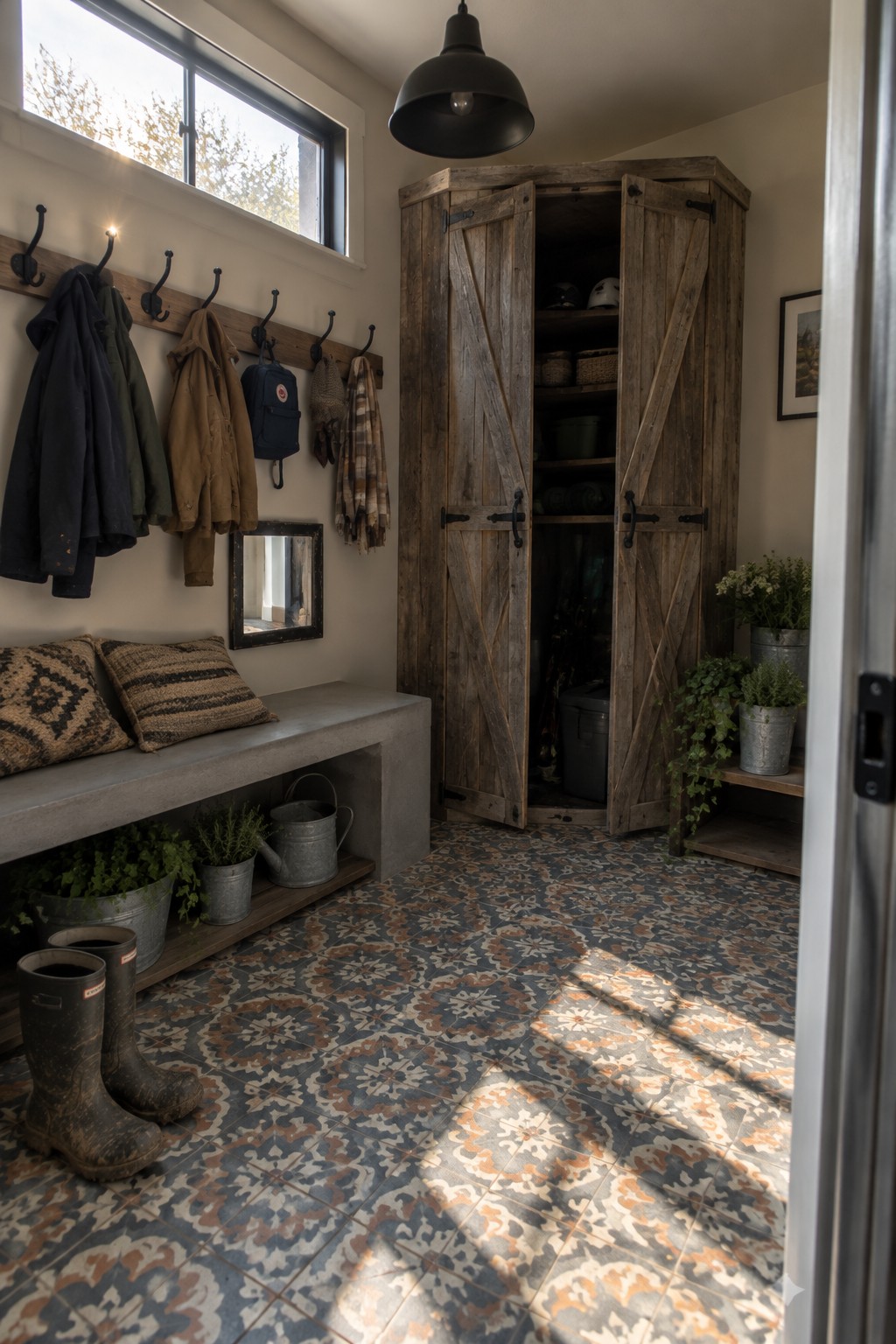
A tall cabinet can make an entryway more useful by keeping everyday gear in one place. Bi-fold doors are a good choice when there isn’t much room for wide doors to swing open, and a rustic wood finish can suit a casual, lived-in home.
Use adjustable shelves to store items such as shoes, hats, and bags, with the things you reach for most kept near the middle. Check that the doors can fold open without blocking the walkway.
Use Tall Cabinetry In A Small Kitchen
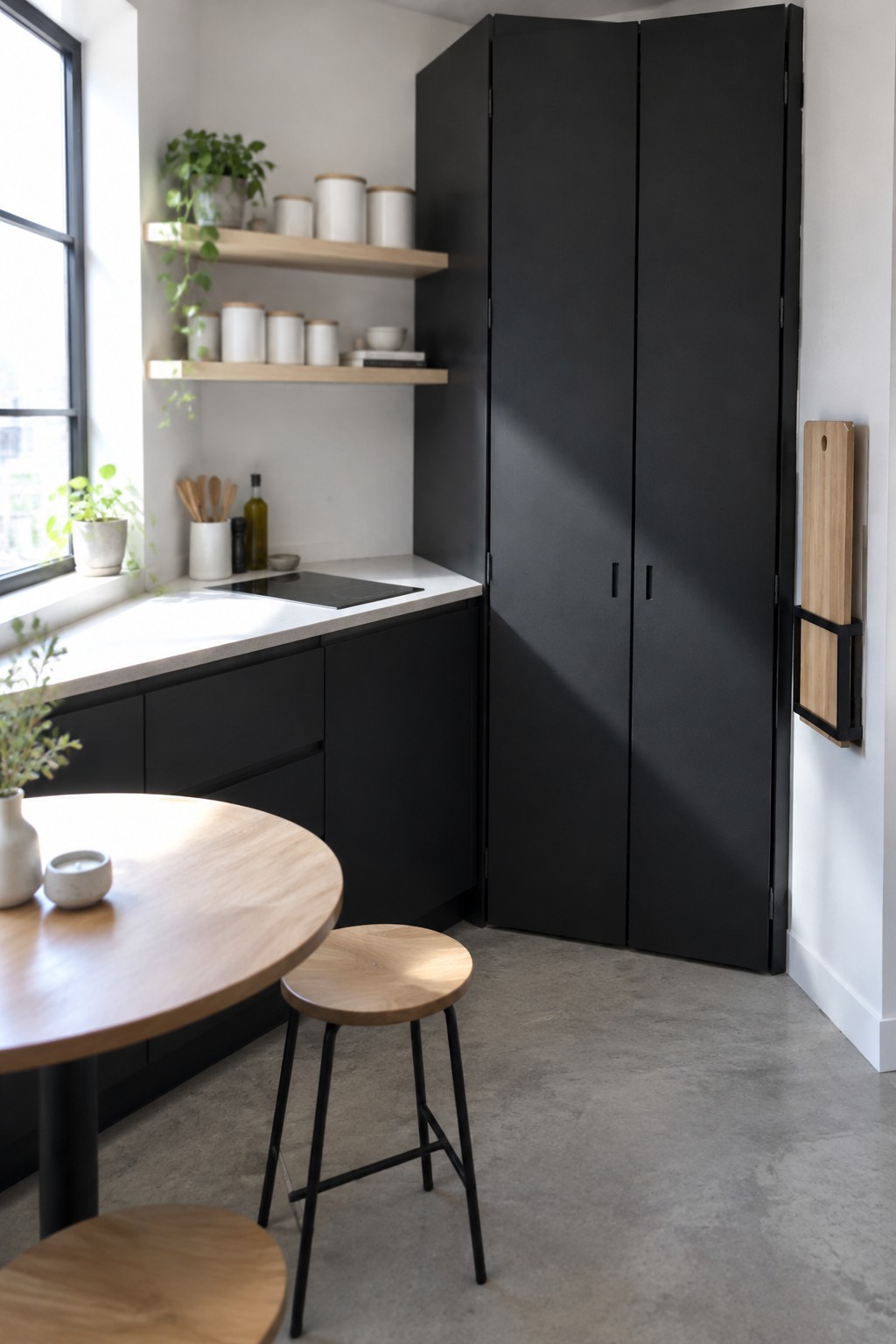
A tall cabinet can make a compact kitchen more useful by keeping everyday supplies in one place without spreading storage across the room. The floor-to-ceiling doors here give the corner a clear purpose, while the dark finish keeps the cabinet looking like part of the kitchen.
This approach works well in a narrow kitchen where floor space is limited. Measure carefully before adding a tall unit, and make sure the doors can open without hitting nearby counters or seating.
Use a Corner Vanity Cabinet In A Small Bathroom
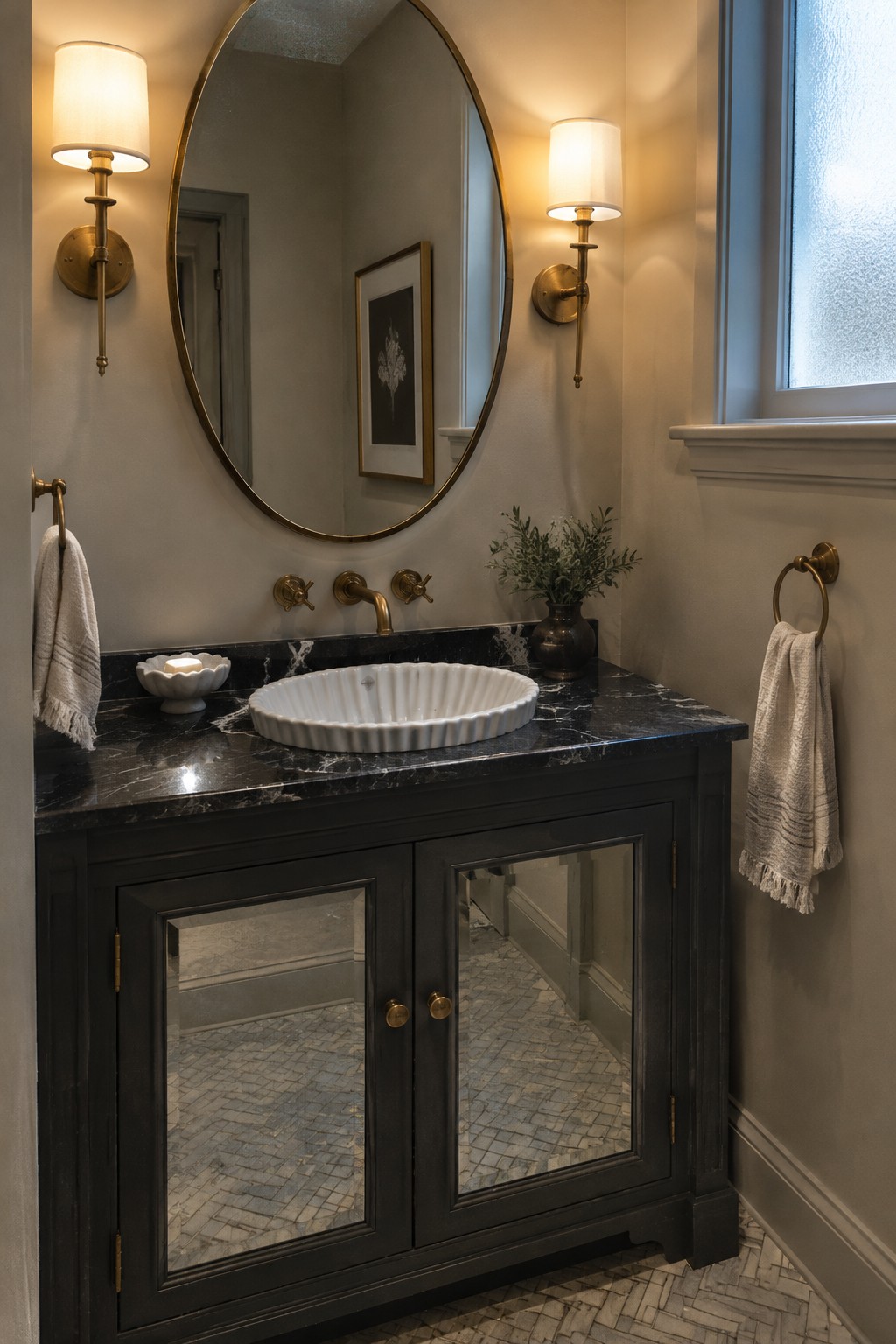
A corner vanity can make a small bathroom more useful without taking up as much open floor space. A dark cabinet with mirrored doors gives everyday storage a clear place while keeping the room practical.
This approach works well in a powder room or a bathroom with limited wall space. Choose doors that open easily in the available clearance, and keep the countertop simple so it stays easy to use.
Use Bi-Fold Doors for a Nursery Closet
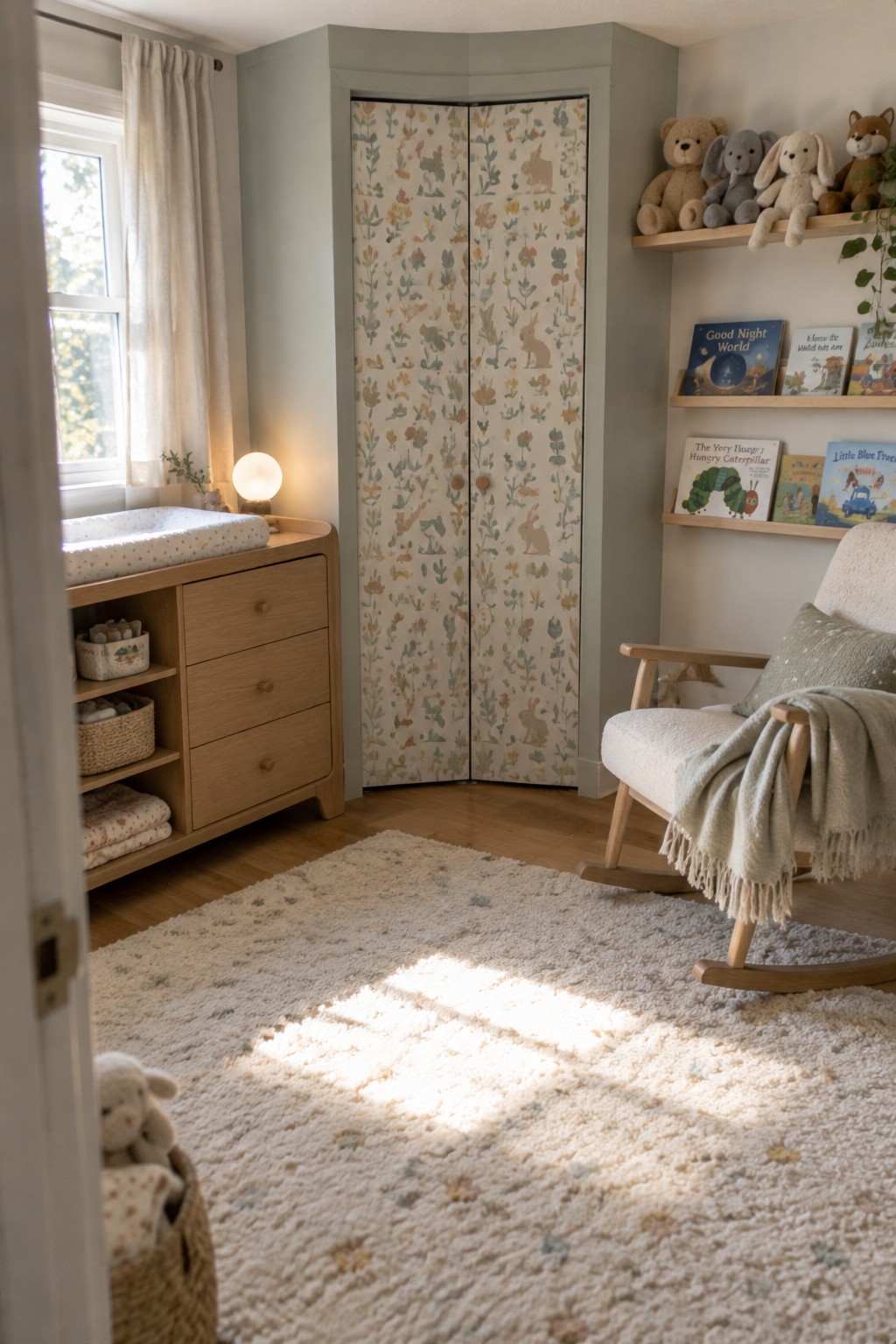
Bi-fold doors are useful in a nursery where a regular swinging door could get in the way. They fold back neatly, making a tucked-away closet easier to access without taking up much floor space.
A floral finish can help closet doors blend into the room rather than look like a plain storage wall. This approach suits a small bedroom or nursery, especially where the closet sits close to furniture.
Use A Corner Cabinet For Living Room Storage
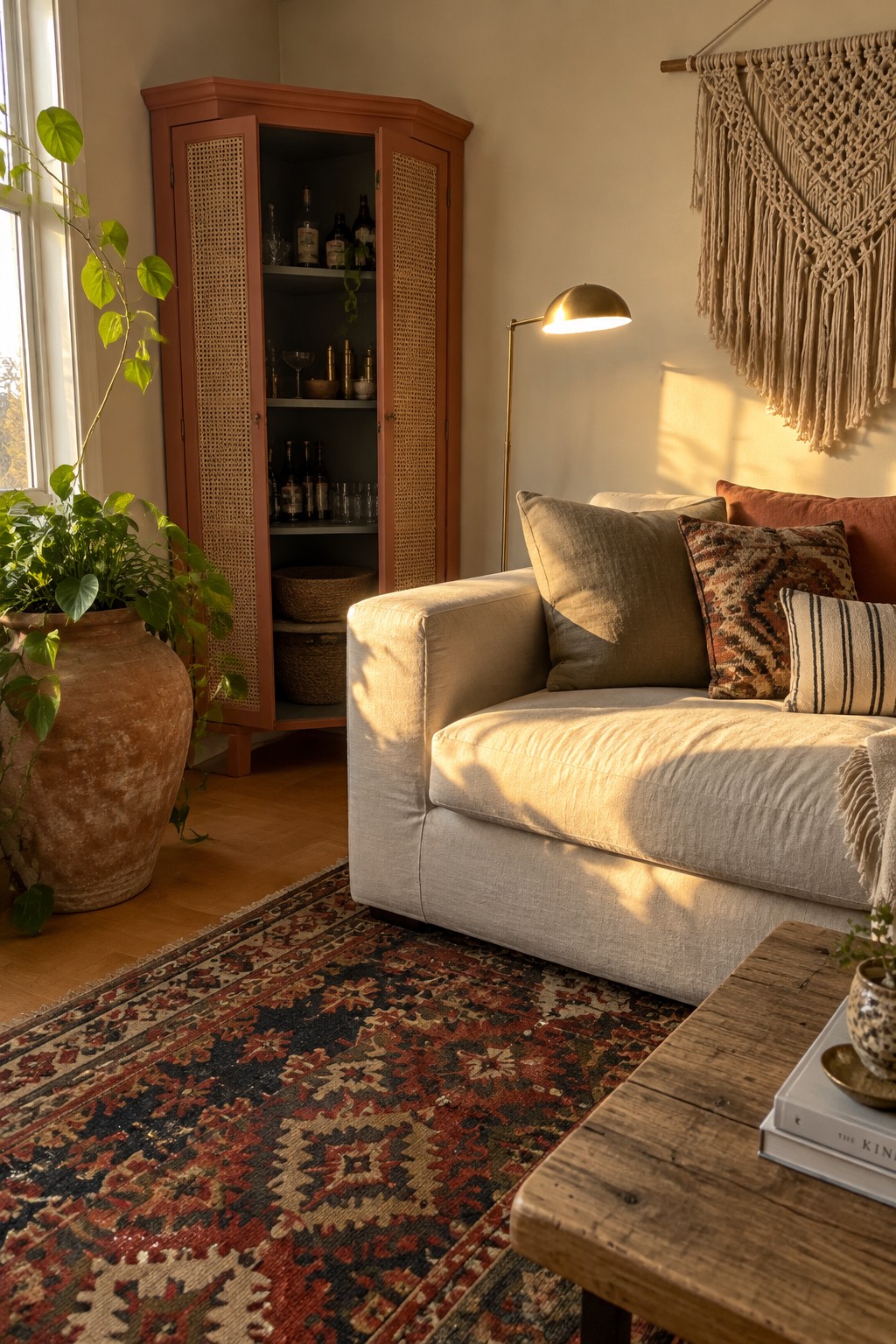
A tall corner cabinet can make a small living room more useful without taking up much wall space. Bi-fold doors are especially handy where a standard door might swing into the sofa or walkway.
Use adjustable shelves for books, glassware, or everyday odds and ends, and keep the cabinet’s depth modest so the room still feels open. A warm wood finish and woven door panels can help a storage piece feel at home beside softer furnishings.
Make Entryway Storage Work Harder
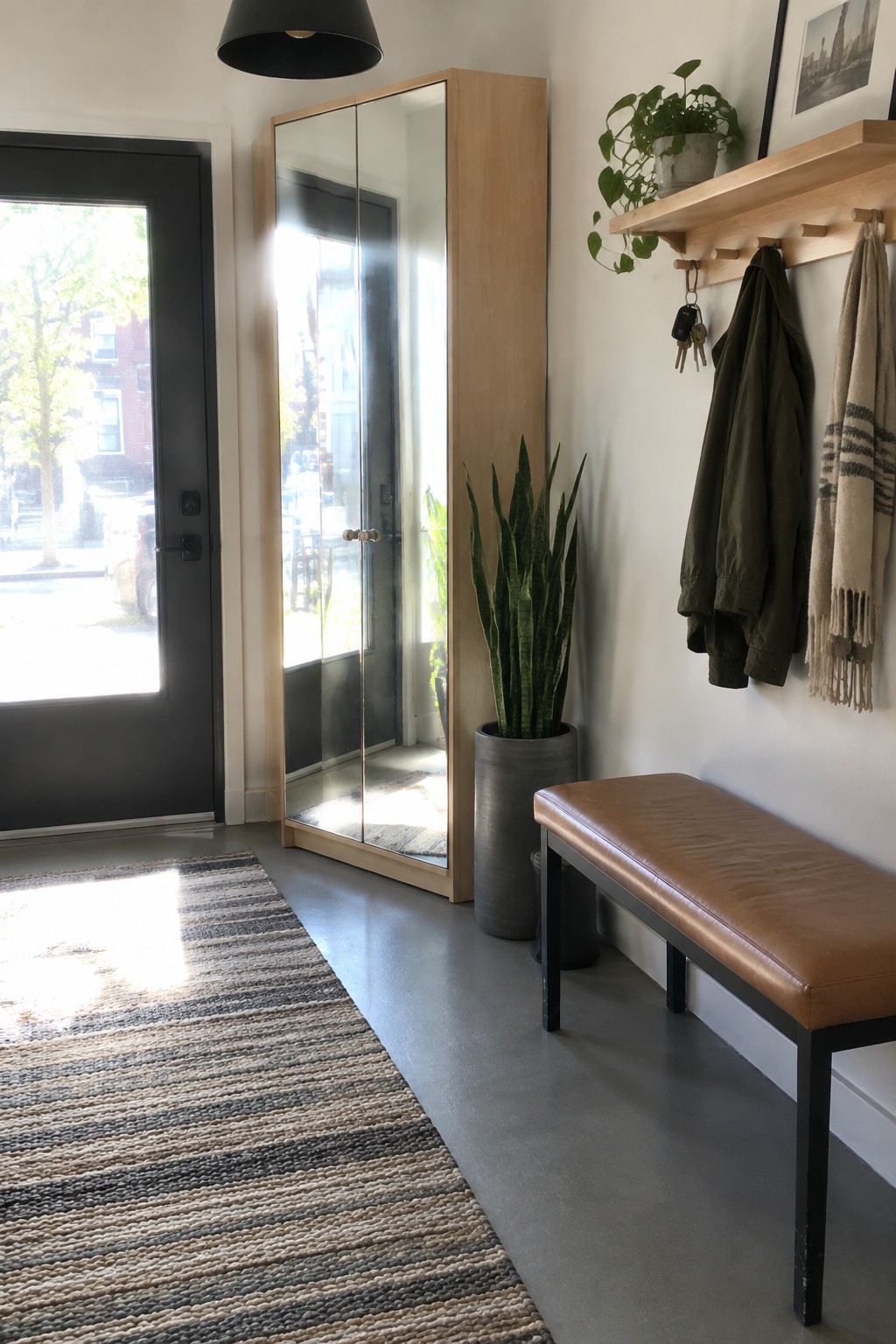
A tall cabinet near the front door gives everyday items a place to go without taking up much floor space. Mirrored doors are especially handy in an entry, where they can serve as a last-minute check before heading out.
This approach suits a narrow hall or small apartment entry. Choose a cabinet that fits the available depth, and keep frequently used items easy to reach so storage stays practical.
Use a Corner Cabinet to Display Everyday Dishes
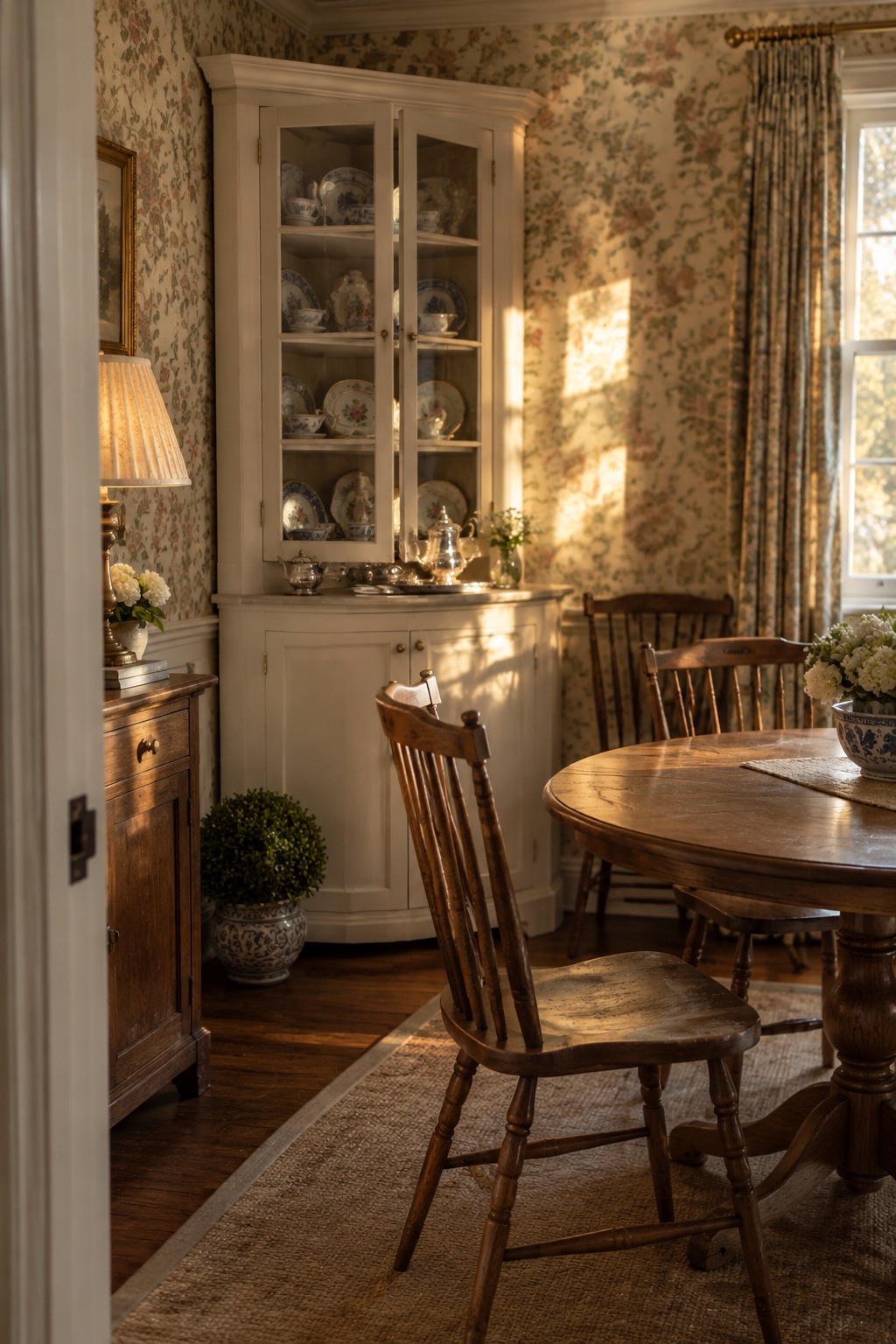
A corner cabinet can make a dining room’s awkward corner useful without taking up much floor space. Glass doors let you see the dishes inside, so the cabinet works for storage and display at the same time.
This idea suits a traditional dining room, especially when you want serving pieces close to the table. Choose adjustable shelves for dishes of different sizes, and keep the pieces you use most within easy reach. A light-colored cabinet can also sit comfortably against patterned walls.
Use Slatted Doors to Conceal Bedroom Storage
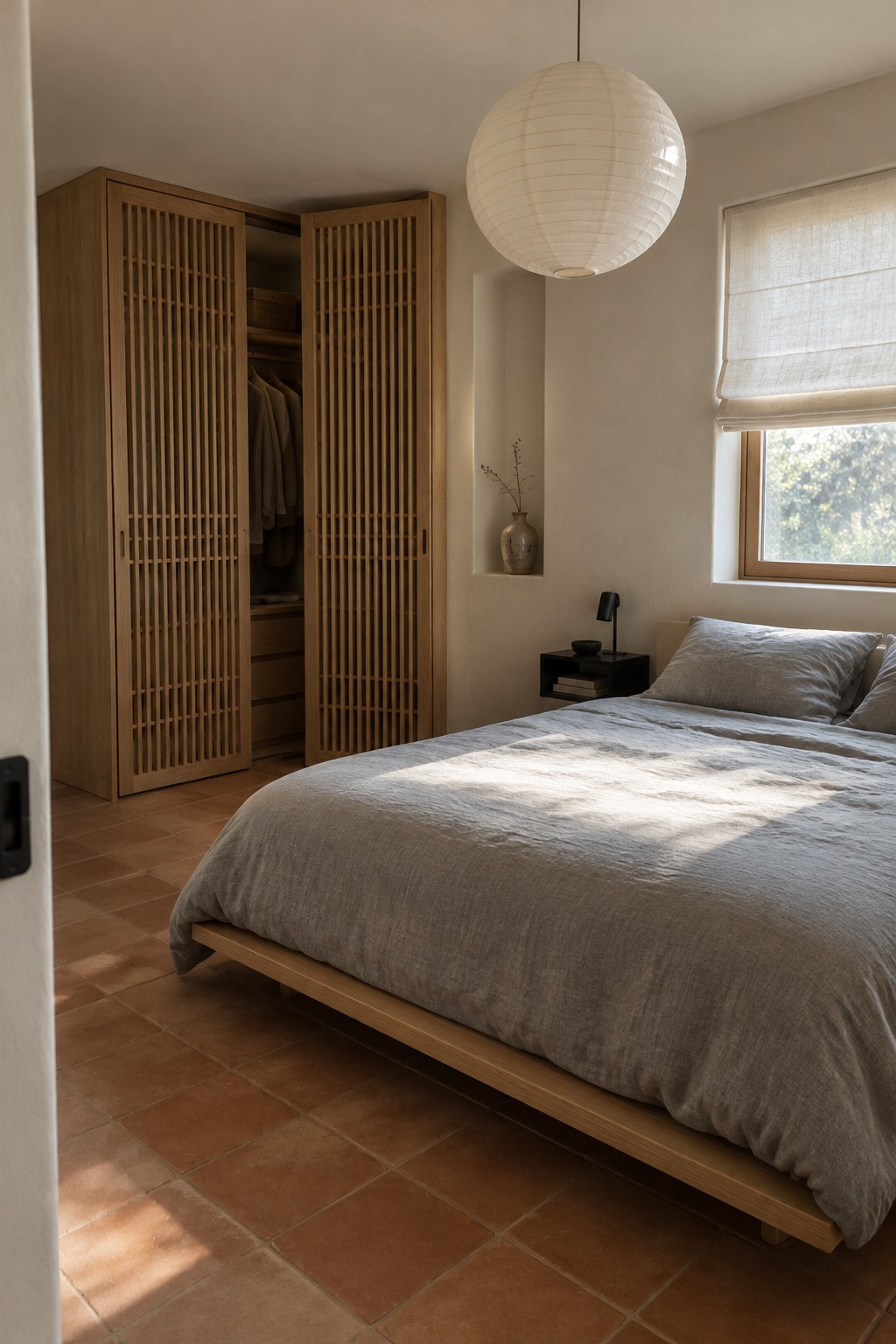
Bi-fold doors make a corner wardrobe easier to open without needing the clear floor space that wide swing doors take up. Slatted wood doors also let the cabinet feel lighter than a solid, full-height wardrobe.
This approach works well in a bedroom where storage needs to fit into an awkward corner. Keep the shelves and hanging space organized inside, and make sure the doors can fold back without bumping into the bed or nearby furniture.
Use A Corner Cabinet For A Coffee Station
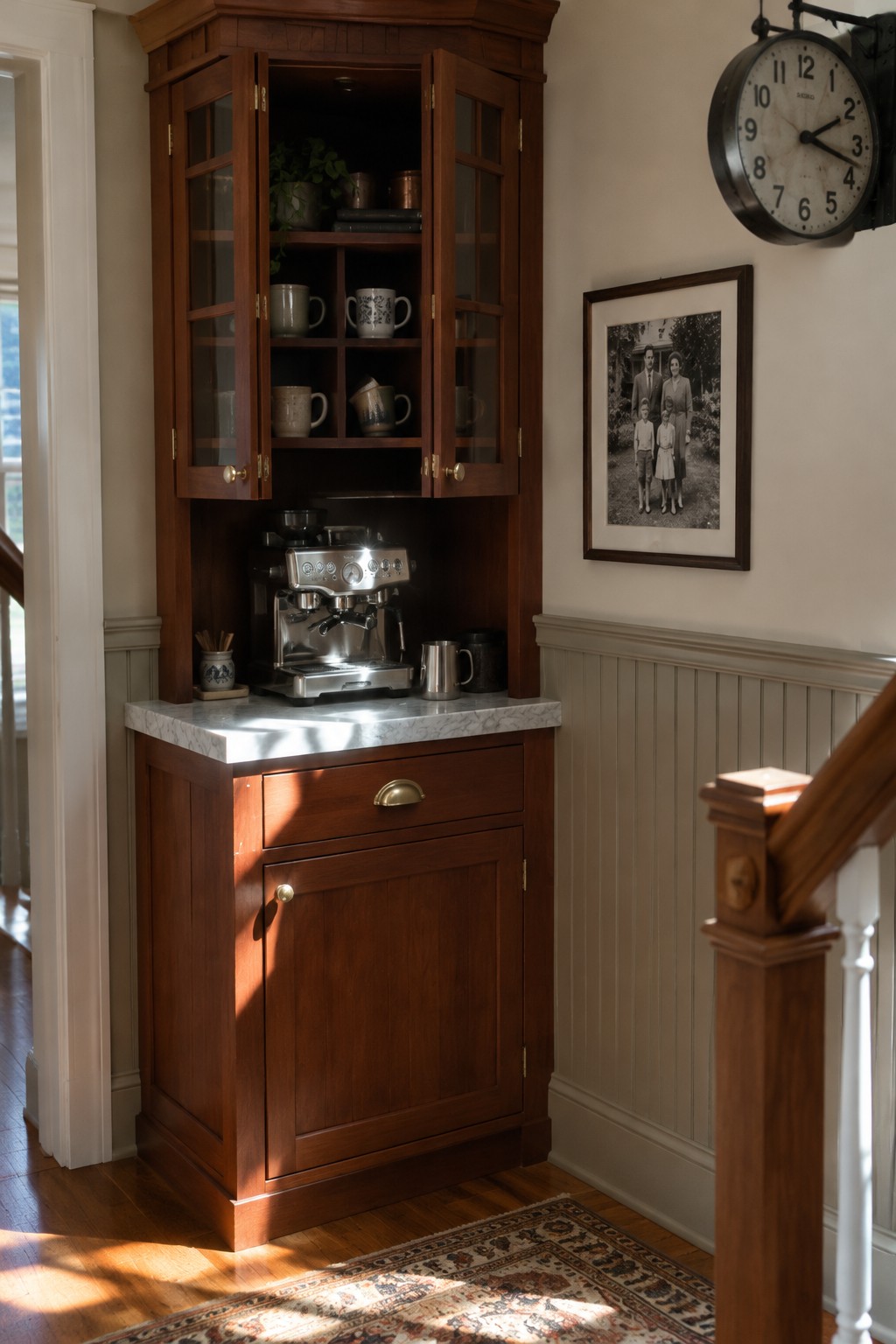
A corner cabinet can give a coffee setup a proper home without taking up much floor space. Here, the built-in shelves hold cups above the counter, while the espresso machine stays ready to use.
This kind of arrangement works well in a kitchen corner or a nook near the stairs. Bi-fold doors can fold back out of the way when the cabinet is open, and close to hide the equipment when it is not in use.
Use Tall Cabinets to Make Bathroom Corners Useful
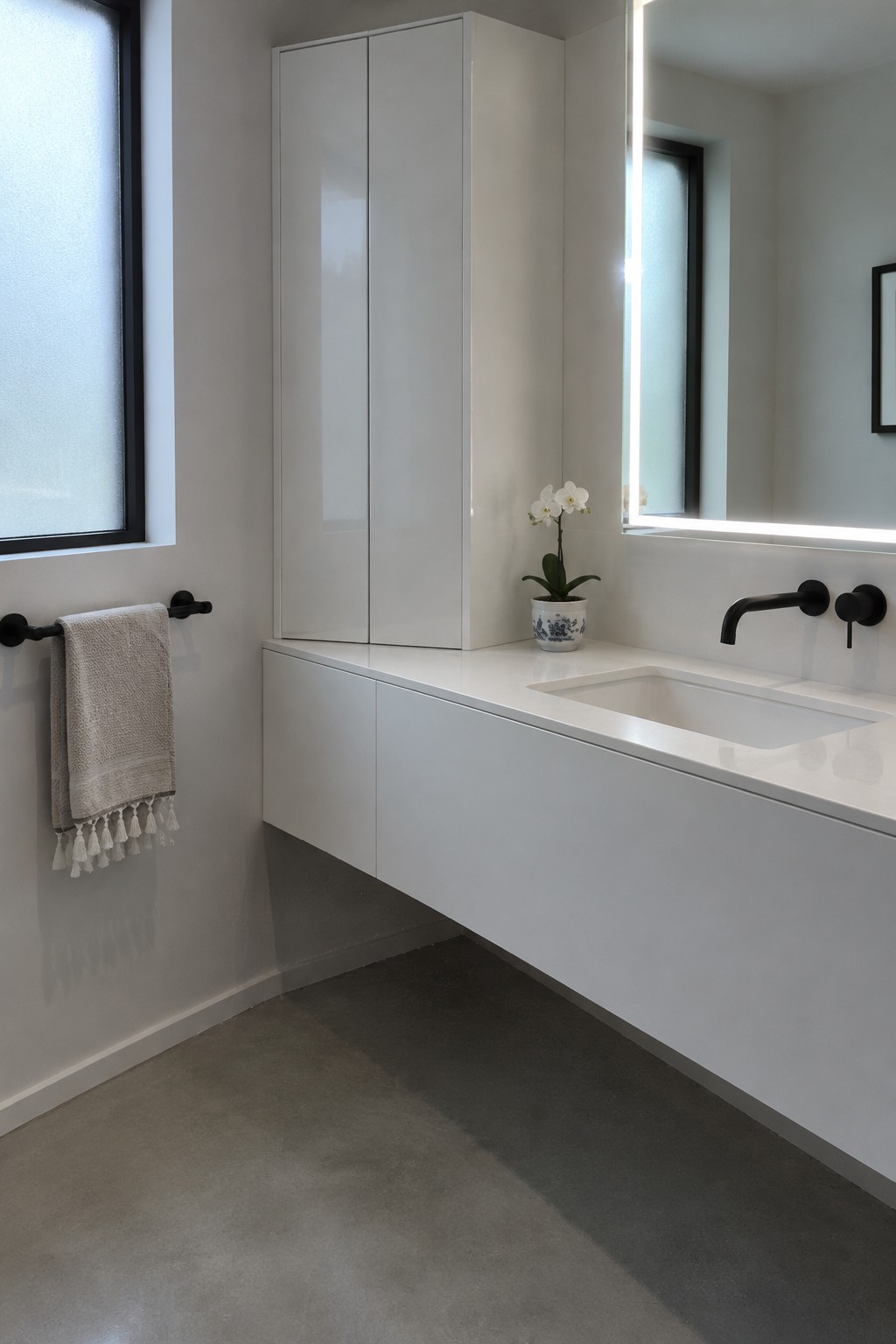
A tall built-in cabinet can turn an awkward bathroom corner into practical storage without taking up extra floor space. Its simple, flat-front doors keep the area looking neat, which suits a small bathroom especially well.
If you’re planning a similar setup, measure carefully so the cabinet doesn’t crowd the vanity or block a window. Bi-fold doors can be useful in a tight corner because they need less clearance when opened.
Add a Built-In Bar to an Unused Corner
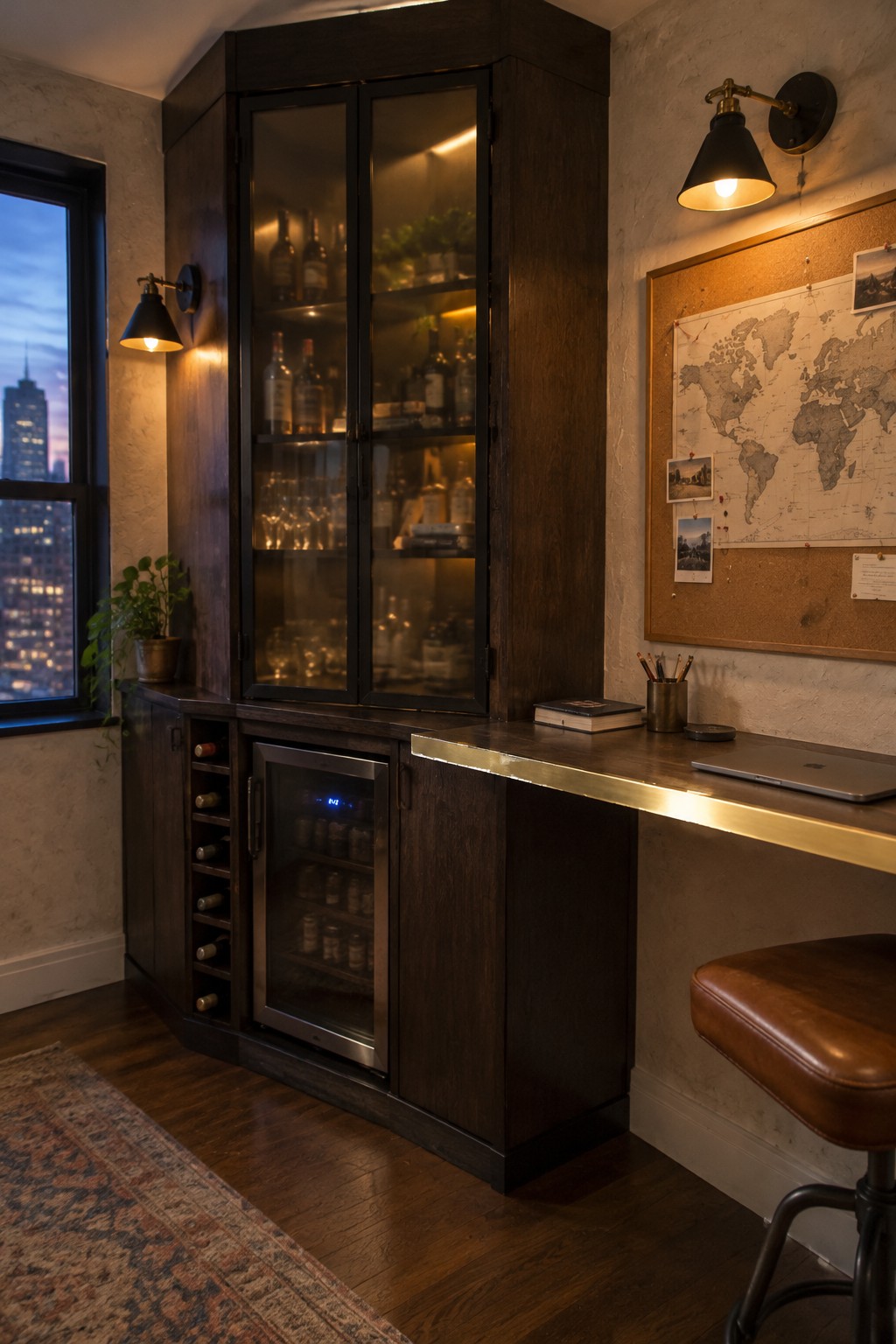
A tall corner cabinet can turn a small, awkward area into useful bar storage. Glass-front doors keep bottles and glassware easy to find, while a wine fridge below makes the setup practical without taking up much floor space.
This idea works well in a dining area or home office where a full bar would feel too large. Measure carefully before adding appliances, and leave enough clear counter space for setting down a drink.
Frequently Asked Questions
Q: Are bi-fold doors a good choice for a corner cabinet I use every day?
A: Yes, especially if the doors fold neatly out of the way and the shelves are easy to reach. Add pull-out trays or a lazy Susan so pots and pantry items don’t get lost in the back.
Q: How much room do bi-fold cabinet doors need to open?
A: They need less swing space than a pair of standard doors, but the folded panels still project into the room. Check that they won’t bump into an island, nearby drawers, or a walkway.
Q: Can I add bi-fold doors to an existing corner cabinet?
A: Often, but the cabinet opening and hinges need to suit the door panels. Measure the opening carefully, and check the cabinet frame for damage before buying new doors.
Q: What should I store in a bi-fold corner cabinet?
A: Keep bulky or frequently used items on the easiest-to-reach shelves. Small bins can help corral packets, lids, and other bits that tend to disappear into the corner.