

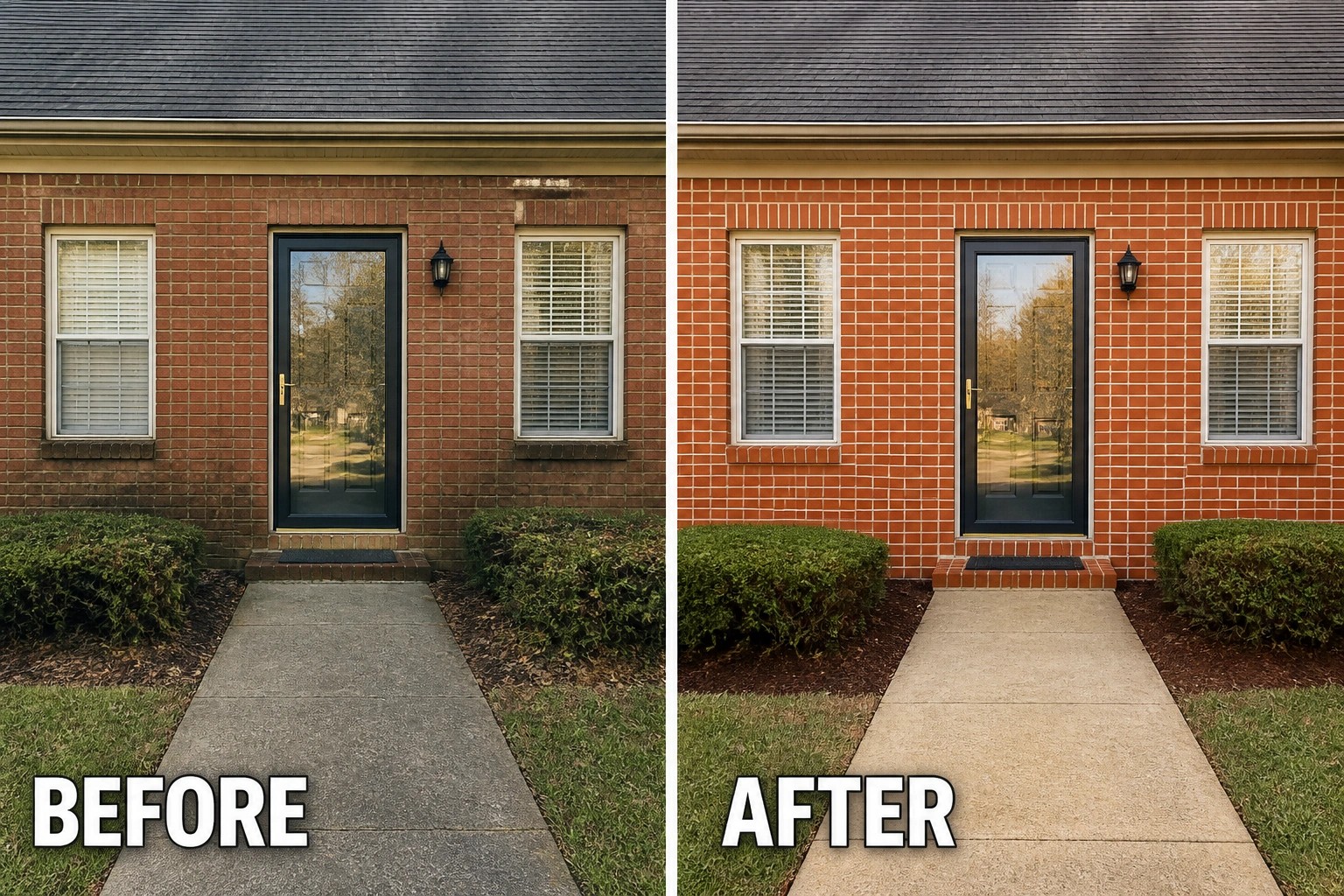
Keeping a brick home’s exterior looking cared for does not require a major renovation, and practical updates can noticeably reduce ongoing work while helping the facade read as intentional.
Addressing trim and gutters, repairing mortar, refining the entry, and choosing low-maintenance plantings are the kinds of moves that make a house feel held-together rather than forgotten.
I often test a paint color or swap out old hardware on one side first to see how modest fixes affect curb appeal before committing to bigger steps.
Small changes go a long way.
Some suggestions are simple upkeep routines and others are material or detail choices that hold up over time, and I hope you can save or try a few that fit your schedule and budget.
Clean And Simplify The Front Entry
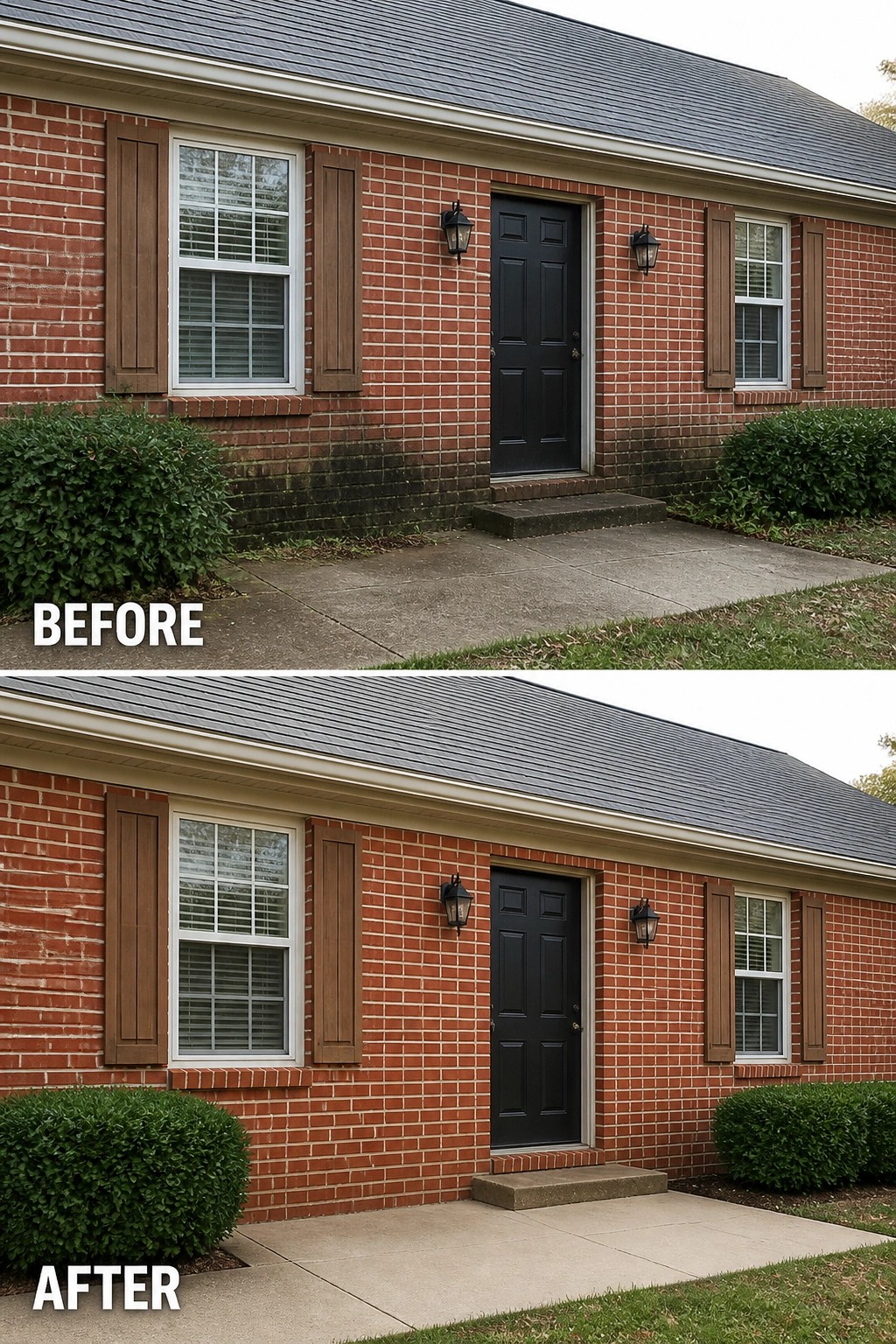
A simple clean-and-tidy approach can make a brick house feel cared for without a big remodel. In this example, washing the lower brick to remove grime and trimming back overgrown shrubs instantly refreshed the facade and removed places where dirt and moisture collect.
Do the cleanup first (a power-wash or soft wash on a test patch), then protect the masonry with a breathable sealer to slow future staining. Replace or reshape foundation plantings with low-maintenance, narrow shrubs and keep a clear gap between plants and the wall to reduce moisture issues. Small changes like these cut ongoing upkeep and keep the entry looking neat with very little effort.
Repoint Worn Brick Joints To Cut Exterior Maintenance
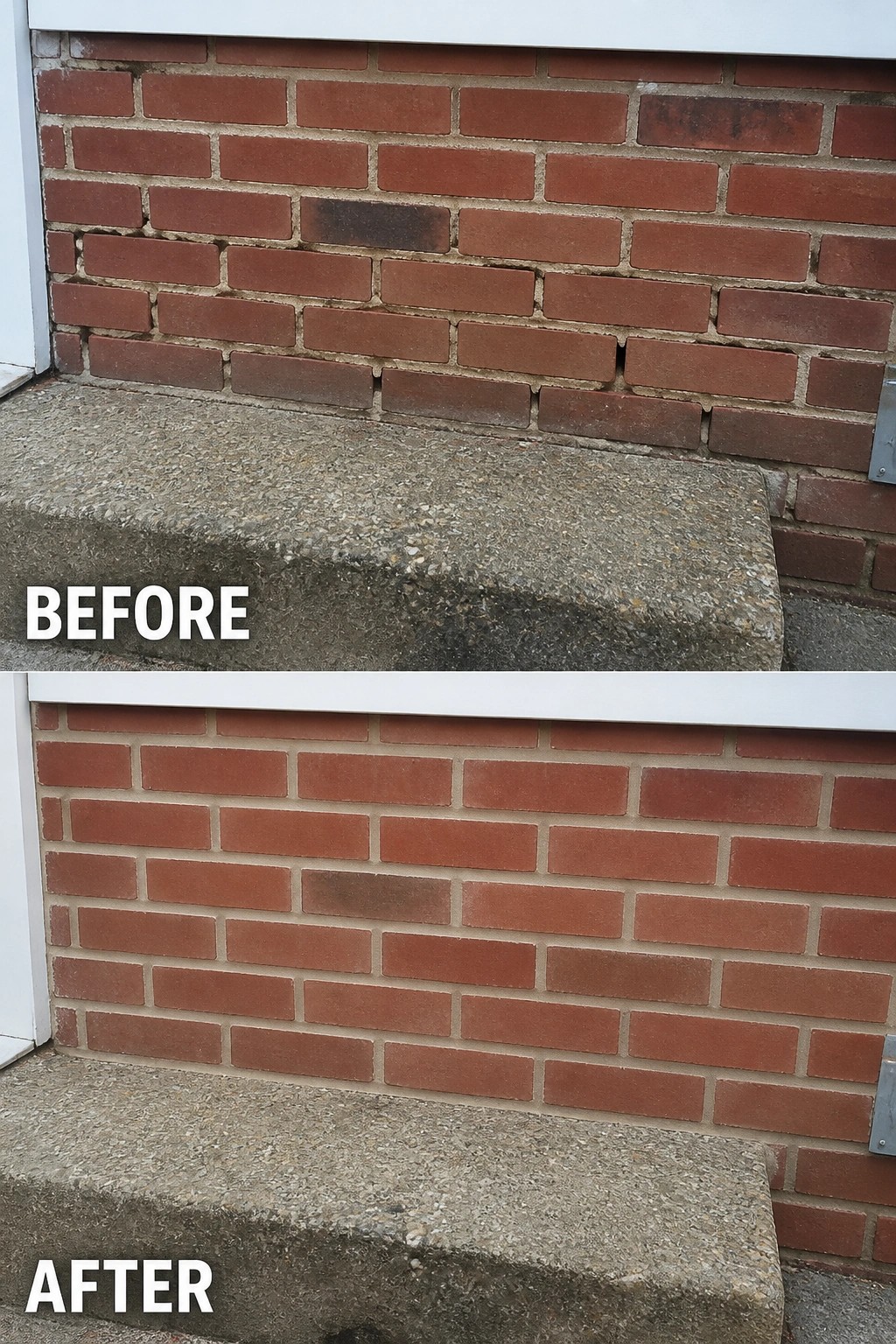
A neat tuckpointing job is one of the simplest ways to stop small brick problems from becoming big ones. In the photo the mortar had eroded and left gaps between bricks; after repointing the joints look uniform and snug. Tight, well-matched mortar keeps water out, holds loose bricks in place, and reduces the need for frequent touchups.
Start by removing loose mortar and cleaning the joints, then fill with new mortar that matches the original in color and softness (not hard Portland cement on older bricks). For small patches you can do the work yourself, but call a mason if bricks are shifting or large areas need repair. This works best on foundations, stoops, and low exterior walls where moisture and splashback cause the most wear.
Give A Bare Porch A Clear Purpose
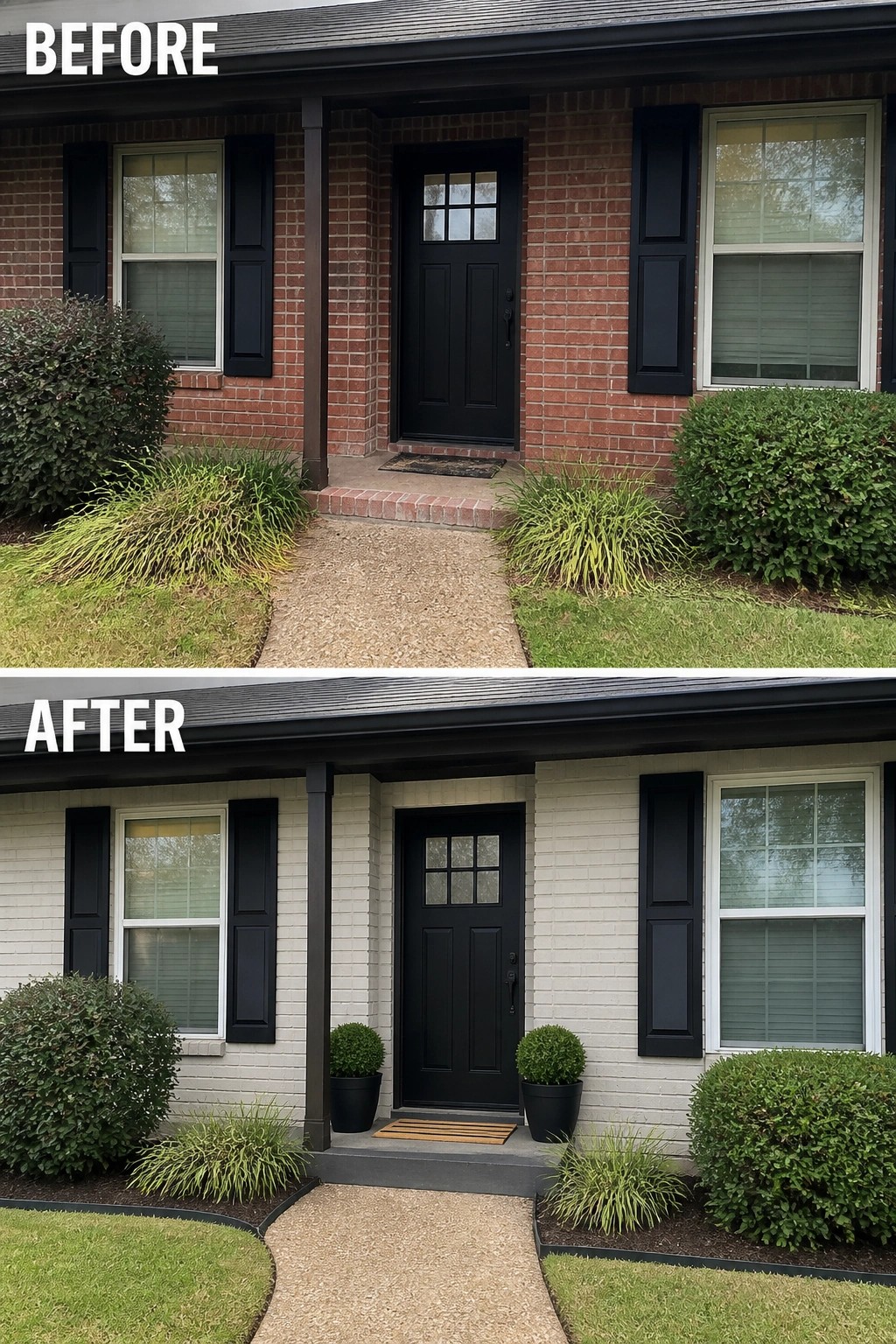
A simple entry update can make an older brick house feel cared for without a major renovation. In this example the owners brightened the facade by painting the brick a soft neutral and then framed the doorway with matching dark planters and a small mat. The result is a clear focal point: the front door becomes the purpose of the porch rather than a leftover step.
You can do this on a modest budget. Use a breathable masonry paint or a limewash designed for brick, test a small area first, and pick two identical, low-maintenance potted shrubs to create symmetry. Add a durable outdoor mat and tidy the beds with edging or mulch so you cut down on weeding and trimming—small changes that keep the entry looking put-together and easy to manage.
Update Gable Siding With Low-Maintenance Paint And Trim
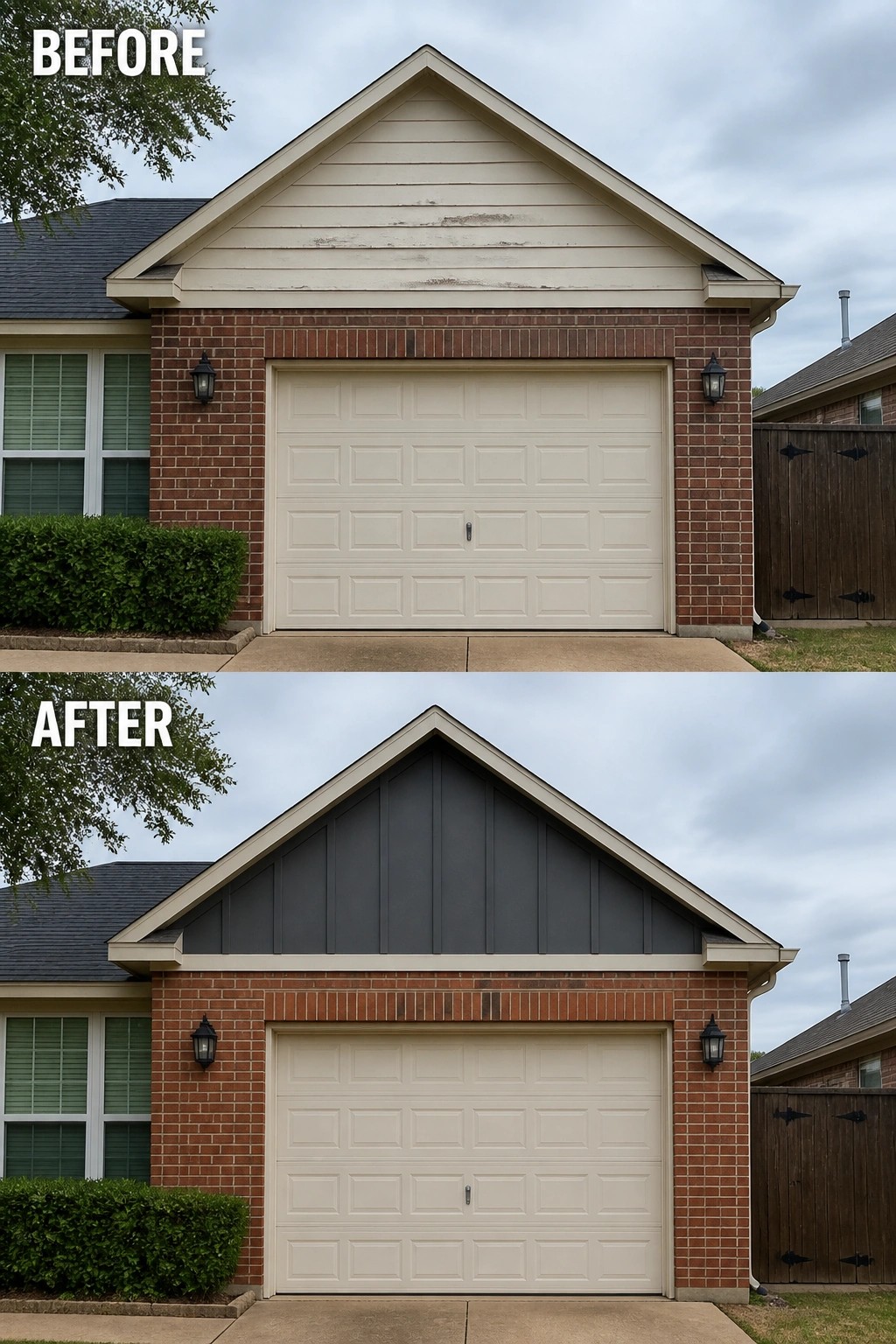
Freshening just the upper gable with a darker paint and simple vertical trim is an easy way to modernize a brick facade without a full overhaul. In this example the worn beige horizontal siding is swapped for a dark, vertical-look finish that hides age and runoff stains while giving the front a cleaner, more intentional profile. It changes the eye line of the house without touching the brick or garage door, so the effect feels like an upgrade rather than a rebuild.
To use this idea, start by power-washing and repairing any rotted boards, then either paint the existing siding in a durable exterior formula or install low-maintenance vertical panels for longer-term ease. Pick a dark, neutral hue that complements your brick and keep trim or fixtures a lighter tone so the look stays balanced. Works best on homes with a small gable or single-story fronts where you want a fresh curb appeal boost without major expense.
Update Your Front Door With Durable Paint And Hardware
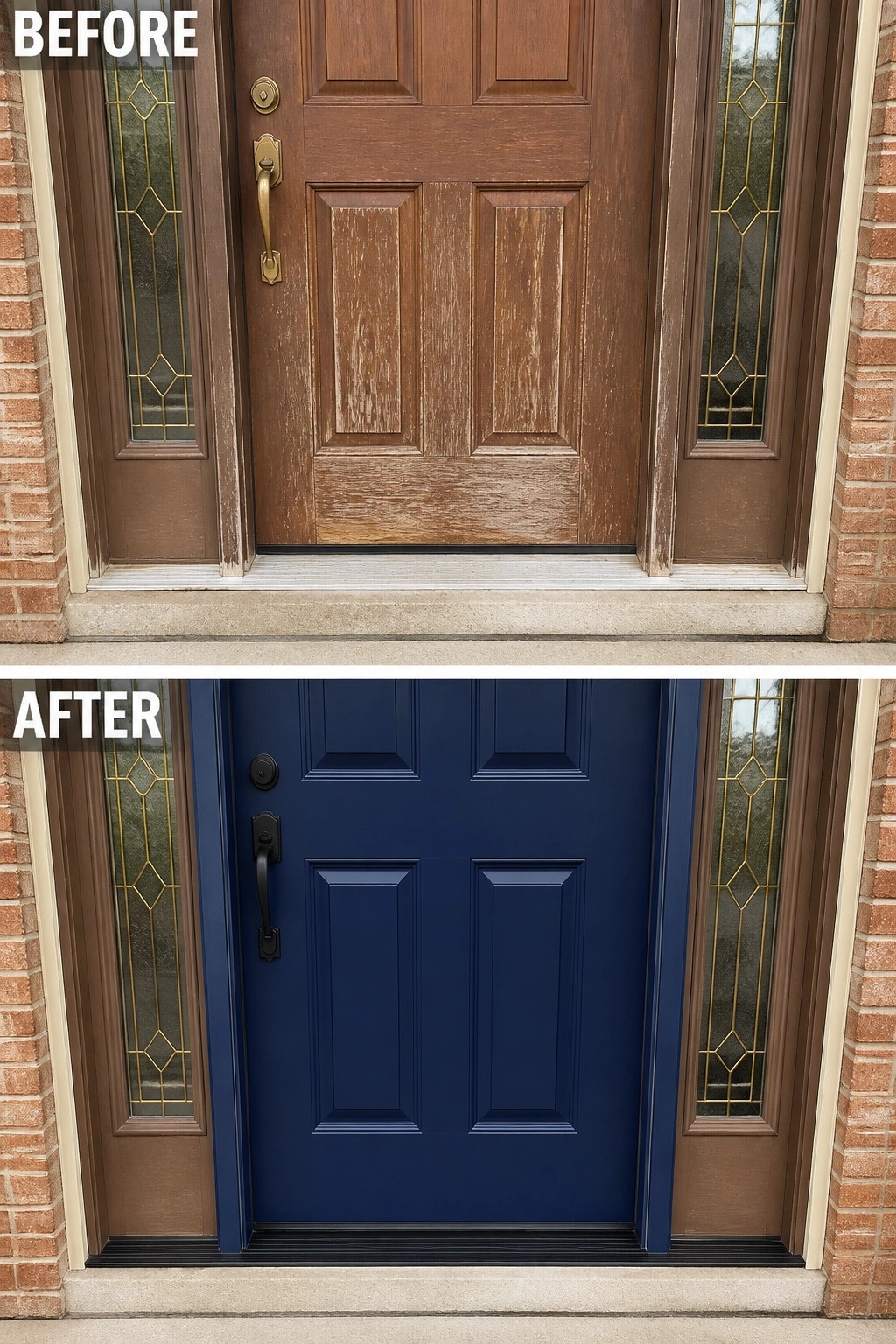
A fresh, weatherproof coat of paint and new exterior hardware are an easy way to refresh a tired entry without major work. In the photo the old, peeling wood finish is replaced by a deep blue paint and dark, powder-coated handle, which immediately looks cleaner and will stand up to the elements much longer than bare wood.
Do the prep work once—clean, sand any loose finish, and prime—then use a high-quality exterior acrylic or enamel for best durability. Pick a darker or saturated color to hide future scuffs, and choose powder-coated or stainless steel hardware and a weatherproof threshold so upkeep is minimal. This approach works well on brick or siding homes and is an affordable, long-lasting way to boost curb appeal.
Give A Bare Porch A Clear Purpose
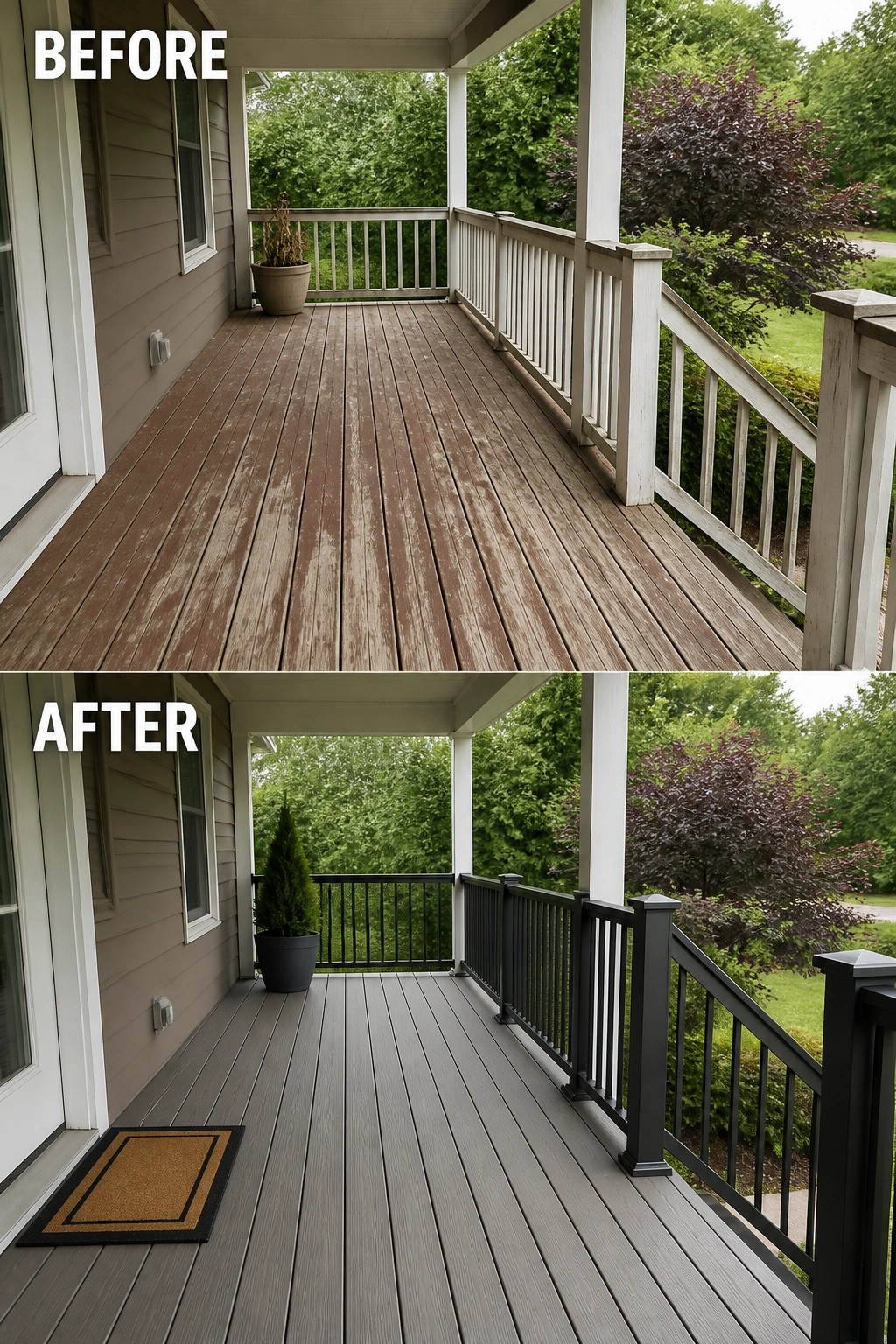
A porch stops being wasted space once you give it a durable, low-maintenance base and one clear purpose. Swapping worn boards for composite decking and updating the railing creates a neat, weatherproof platform that actually encourages you to use the space instead of fixing it. Add a single focal accent, like a potted evergreen or a simple mat, to make the intent obvious without overcrowding.
This works well on older homes where upkeep is the pain point—think wood porches that need constant sanding or sealing. Choose long-lasting materials (composite boards, powder-coated metal railings) in a neutral color, keep furniture and decor scaled to the porch size, and plan for easy cleaning so the space stays useful with minimal effort.
Replace Patchy Grass With Artificial Turf
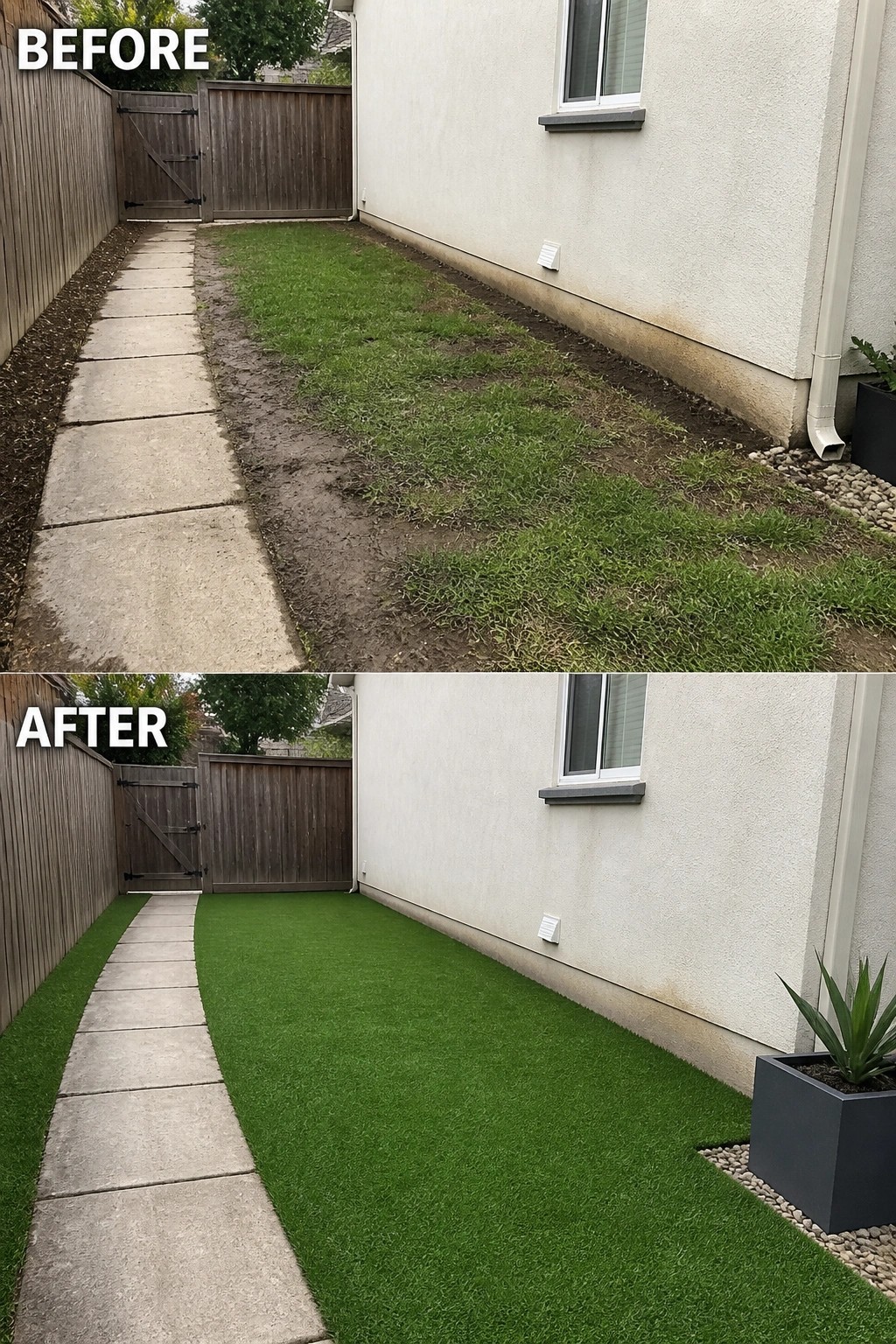
Swapping a struggling strip of lawn for artificial turf is one of the simplest ways to cut yard chores and keep a neat look year-round. In a narrow side yard a tidy turf patch immediately hides bare soil and mud, keeps the adjacent path clean, and gives the whole side of the house a finished appearance without mowing or spot seeding.
Do the prep work once and you’ll save time later: clear and level the area, install a compacted aggregate base for drainage, and secure clean edging where the turf meets the path. Choose a UV-stable product rated for foot traffic (and pets if needed), roll it out carefully, and brush the fibers occasionally to keep them upright—minimal care, predictable results.
Replace Mulch With Gravel And Drought-Tolerant Plants
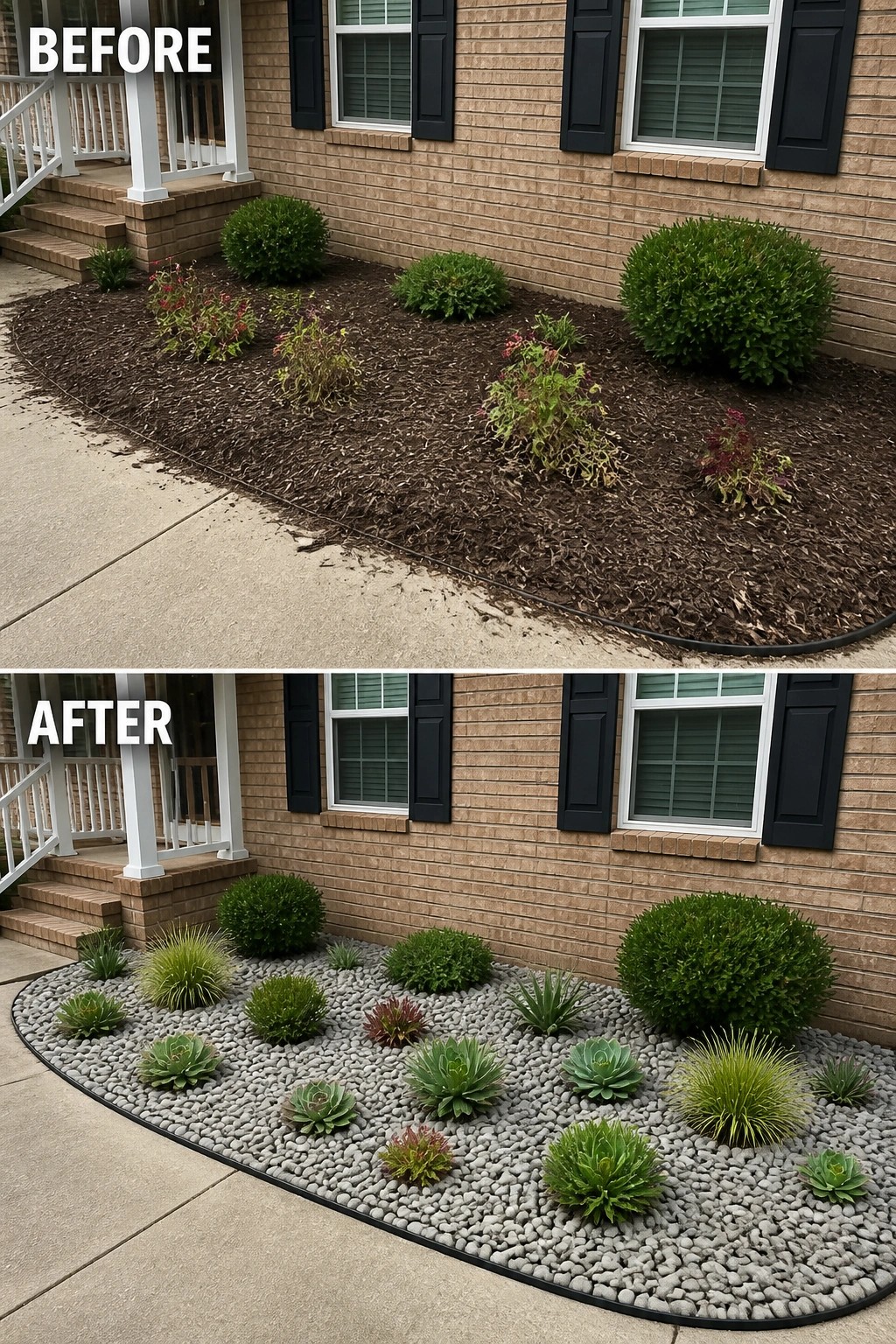
Swapping messy dark mulch for a neat layer of river rock and a few drought-tolerant plants is an easy way to cut seasonal upkeep and sharpen your curb appeal. In this example the bed went from loose mulch and tired annuals to pale pebble stone with succulents and ornamental grasses, which means less watering, no annual mulch refresh, and a cleaner edge along the walkway.
To try it yourself, start by removing old mulch and weeds, lay a permeable weed barrier, install flexible edging, then spread 2–3 inches of decorative gravel and plant drought-tolerant species into drilled holes. This approach works especially well on brick homes and narrow foundation beds; just leave space around existing shrubs so roots can breathe, choose stone color suited to your climate (lighter stones reflect heat), and consider a simple drip line for the first season while plants establish.
Replace Cracked Concrete With Interlocking Pavers
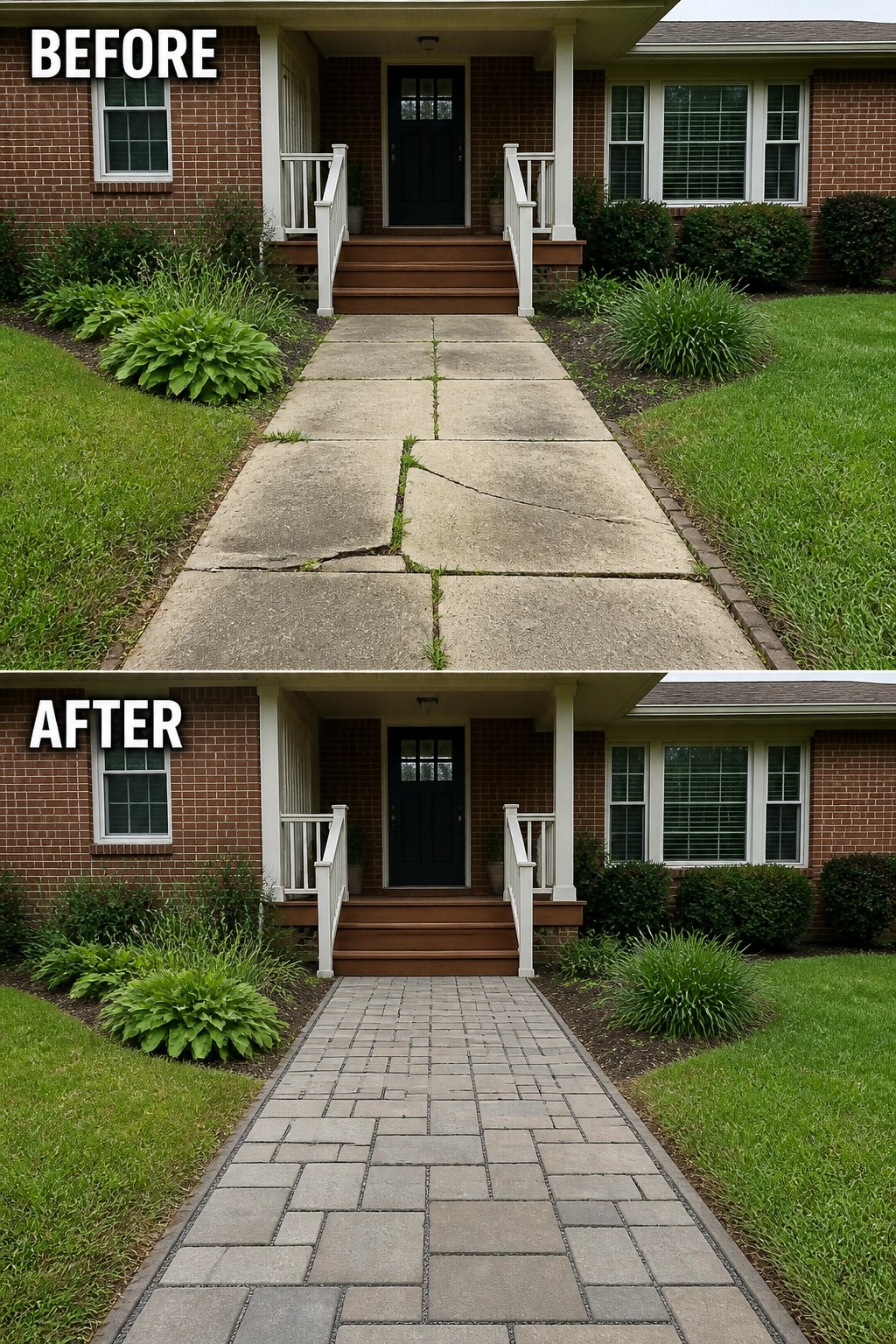
Swapping an old, cracked concrete path for interlocking pavers is one of the easiest ways to tidy up a front entry and cut future upkeep. In this example a worn slab walkway becomes a neat, patterned paver run with a clean edge, which looks intentional and is far easier to maintain: individual pavers can be lifted and reset, joints can be filled to limit weeds, and a proper base improves drainage so the path stays flat.
This works best on narrow approaches and classic brick facades where a simple pattern and muted colors keep the look cohesive. For a durable job, compact a gravel base, set a sand bedding layer, install a solid edge restraint, and use polymeric or permeable joint material to reduce weeds; seal only if you want a darker tone or extra stain resistance. Small sections are doable as a DIY weekend project, but for ideal compaction and slope hire a pro if the walk crosses uneven ground.
Make Gutters Low-Maintenance With Gutter Guards
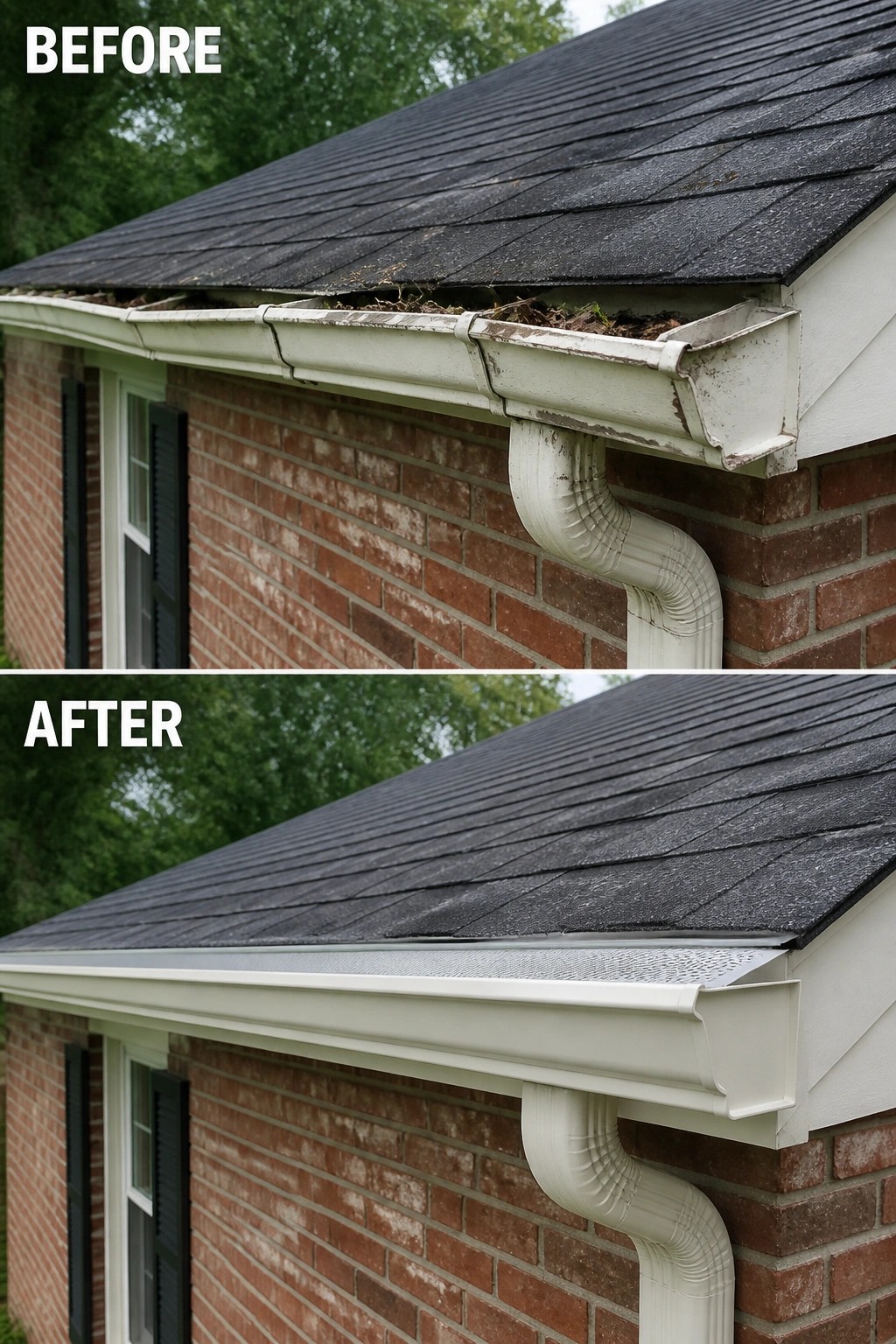
Clogged, sagging gutters are one of the simplest exterior headaches to fix and the payoff is immediate: swap out old, debris-filled troughs for properly pitched, rust-resistant gutters with a mesh or perforated guard and you cut the frequency of cleanings. In the photo you can see the difference — a gutter full of leaves replaced by a neat run of protected gutter — and that small upgrade keeps water flowing away from the brick and fascia with far less effort.
To copy it, start by clearing and inspecting the existing gutters so you know whether you need new hangers or full replacement before adding guards. Choose a durable material (aluminum is a good middle ground) and a guard type that fits your tree cover (fine mesh for pine needles, perforated covers for leaves). Make sure the pitch and downspout size are correct and plan a quick check twice a year; less work, not zero work, but much easier to maintain.
Replace Weathered Wood With A Low-Maintenance Vinyl Fence
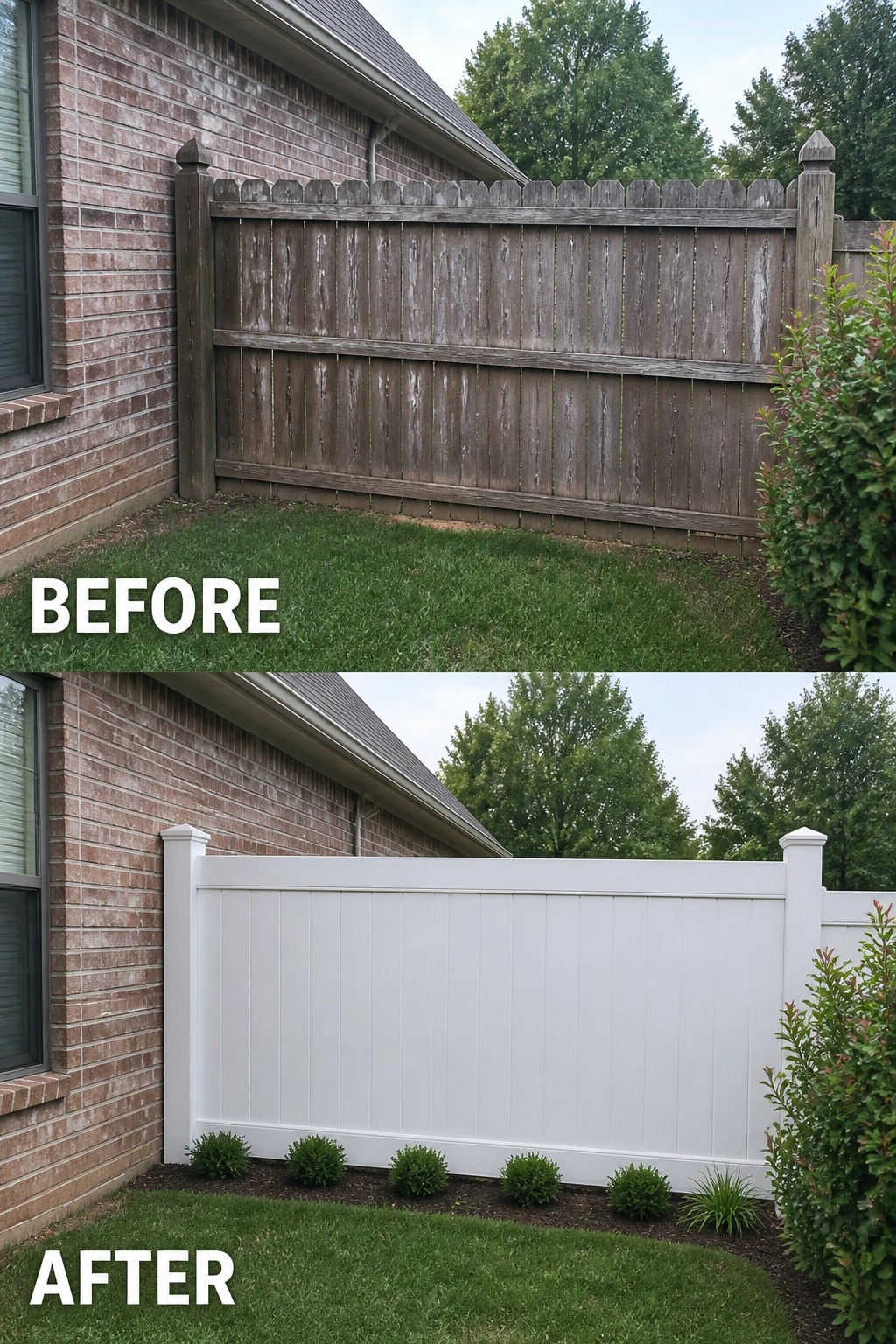
A tired wooden privacy fence can age a brick house and demand constant sanding, staining, and repairs. Swapping it for a white vinyl privacy panel instantly tidies the façade and cuts routine work — no sealing or repainting, and a quick rinse with soap and water is usually enough; a narrow planted strip at the base softens the hard edge without adding much maintenance.
This works best where privacy and easy upkeep matter, like side yards or small back gardens. Pick a neutral vinyl color that complements your brick, use capped posts for a finished look, allow a short gap at the bottom for drainage, and choose low-care shrubs or ornamental grasses in mulch so the area stays neat with minimal effort.
Give A Bare Porch A Clear Purpose With Planters
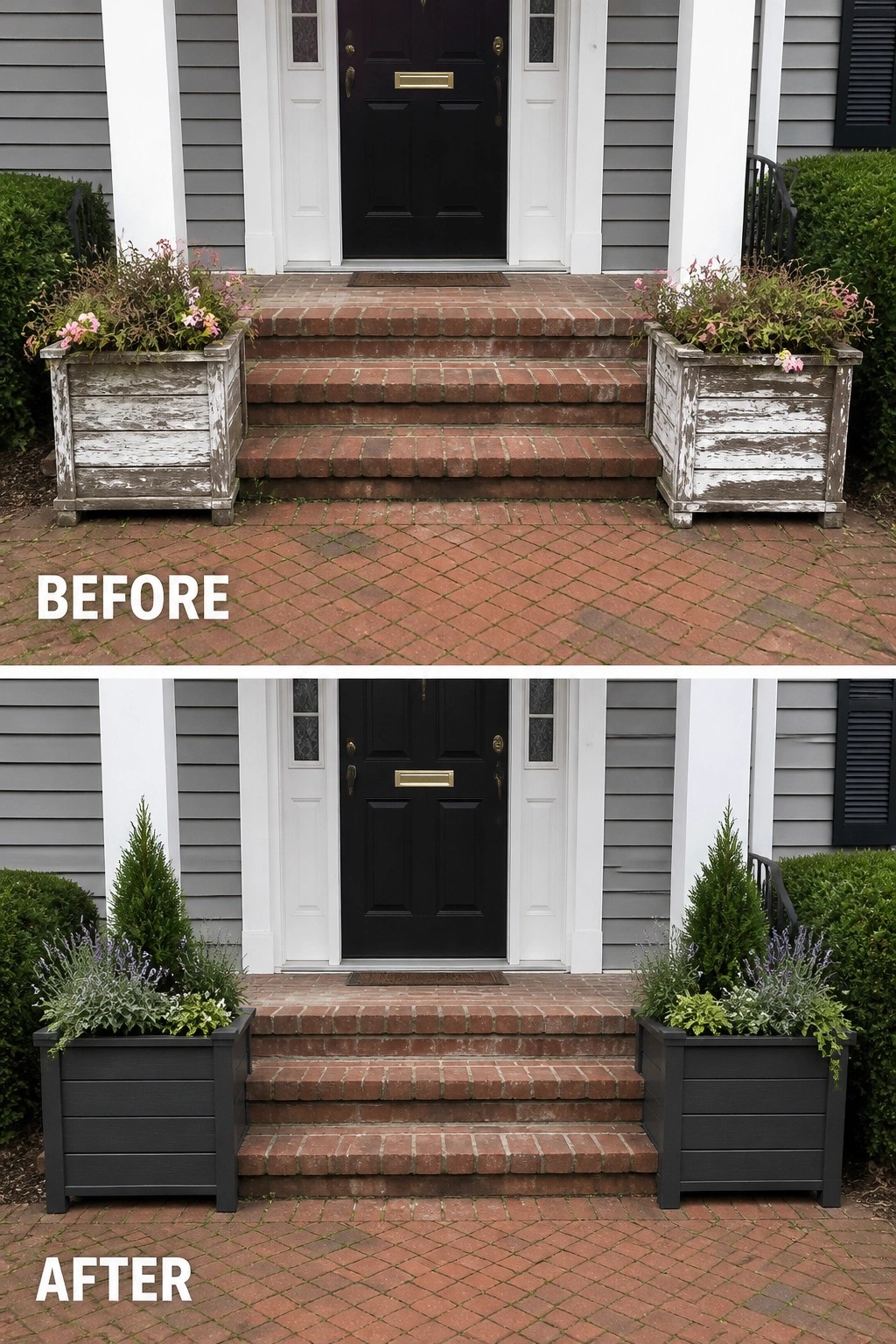
Swap out tired containers for a pair of well-scaled, weatherproof planters and you turn an anonymous entry into a framed, usable porch. In the photo the old peeling boxes are replaced by clean, dark planters planted with upright evergreens and low-maintenance fillers, which immediately defines the doorway and stays neat without constant care.
To copy this, pick planter sizes that sit comfortably beside the steps and choose a tall, structural evergreen in the center with hardy perennials or trailing groundcover around it (easy to replace seasonally). Use durable materials or paintable composite boxes, make sure they have drainage, and repeat a color or texture that ties back to the door or trim so the look reads intentional rather than cluttered.
Swap Old Wooden Railings For Low‑Maintenance Metal Balusters

A worn, peeling wood railing is a common hassle on older porches, and one of the simplest fixes is to replace it with a powder-coated metal baluster system. In the image the flaky painted wood is swapped for slim black metal rails and a single planter, which both cleans up the look and removes the need for constant scraping and repainting.
This works well on covered porches or small decks where you want a neat, durable guardrail that won’t rot or flake. Choose powder-coated aluminum or galvanized steel for long life, confirm local code for height and baluster spacing, and consider surface-mounted brackets if you want minimal carpentry. Keep the styling simple — one or two planters or a matched finish on hardware — and enjoy a porch that needs much less work.
Use Simple Lighting To Make The Front Entry Welcoming
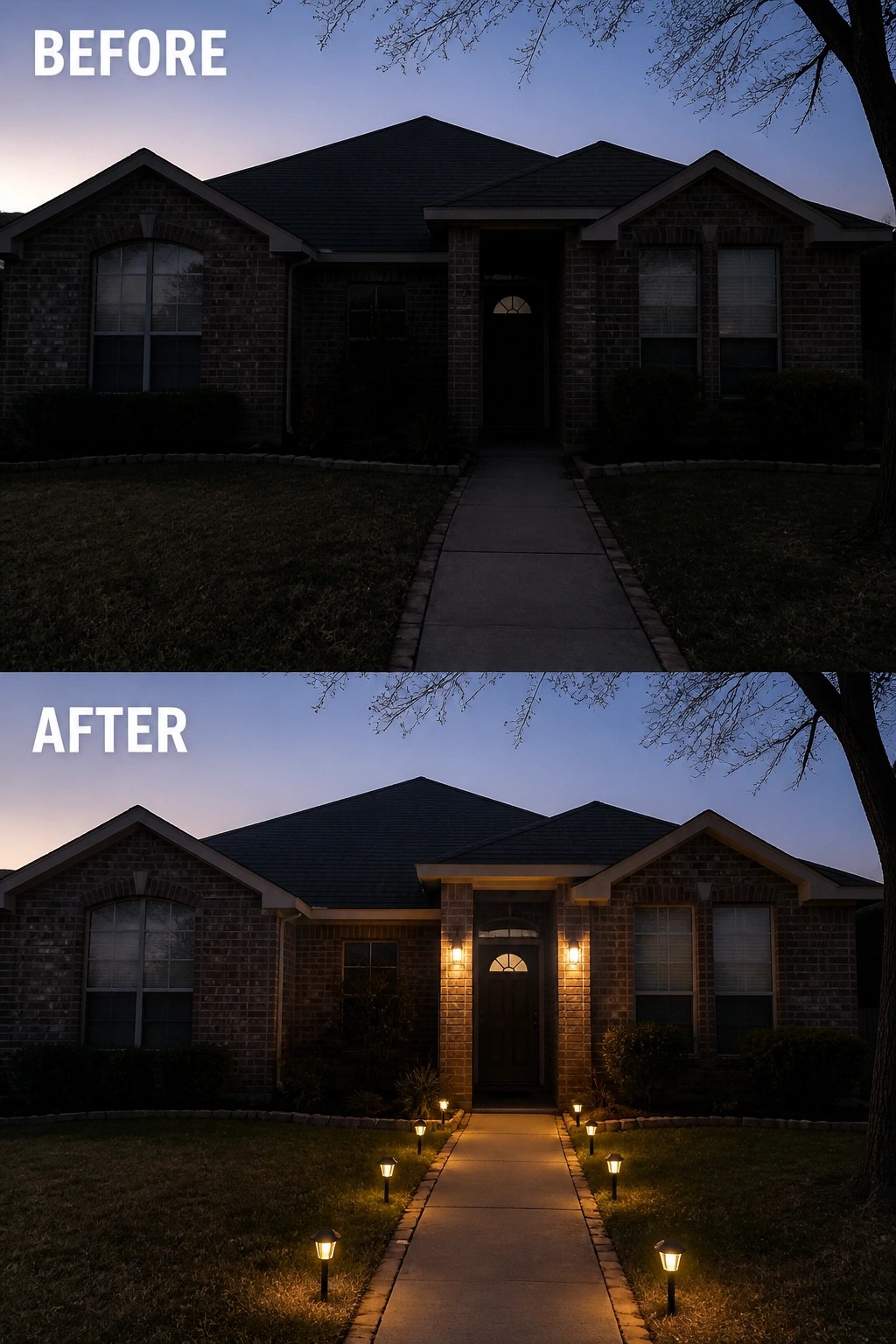
A few well-placed lights can change a dark, uninviting front into a clear, usable entry. Adding low pathway stakes and a pair of sconces by the door defines the walk, highlights the entrance, and gives instant curb appeal with minimal upkeep.
Choose solar or low-voltage path lights spaced about 6 to 8 feet apart and add weatherproof wall lights at the door. Pick fixtures with durable finishes and use a photocell or timer so they switch on automatically (solar lights are low-maintenance). This approach works especially well on brick houses where fixtures mount easily and routine cleaning is simple.
Replace Annual Bedding With Low-Maintenance Perennials
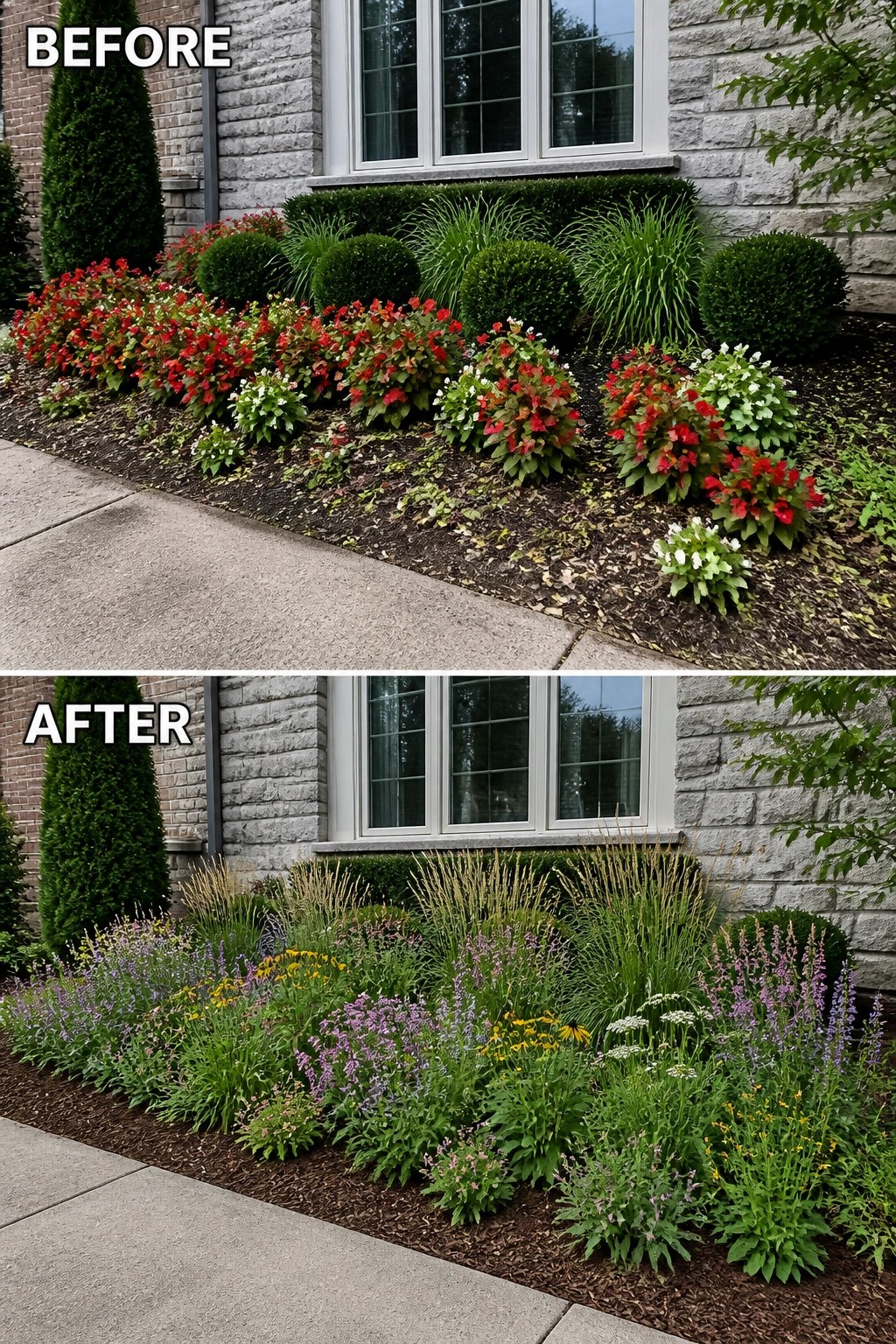
Swapping a row of seasonal bedding plants for a mix of clumping ornamental grasses and perennial flowering plants is one of the simplest ways to cut upkeep and keep a front bed looking intentional year after year. In the before photo the border is all low red annuals; in the after it’s a layered mix of grasses and pollinator-friendly perennials with fresh mulch, which reduces weekly tasks like deadheading and replanting.
To copy this, remove the annuals, amend the soil if needed, and plant taller grasses at the back with repeated groups of mid-height perennials in front for rhythm. Top everything with 2 to 3 inches of mulch to suppress weeds and retain moisture, choose mostly native or drought-tolerant varieties, and plan bloom times so something is in flower most of the season. This works especially well for narrow beds in front of brick houses where you want a neat, low-care look that still feels full and seasonal.
Define Garden Beds With Mulch For Easier Upkeep
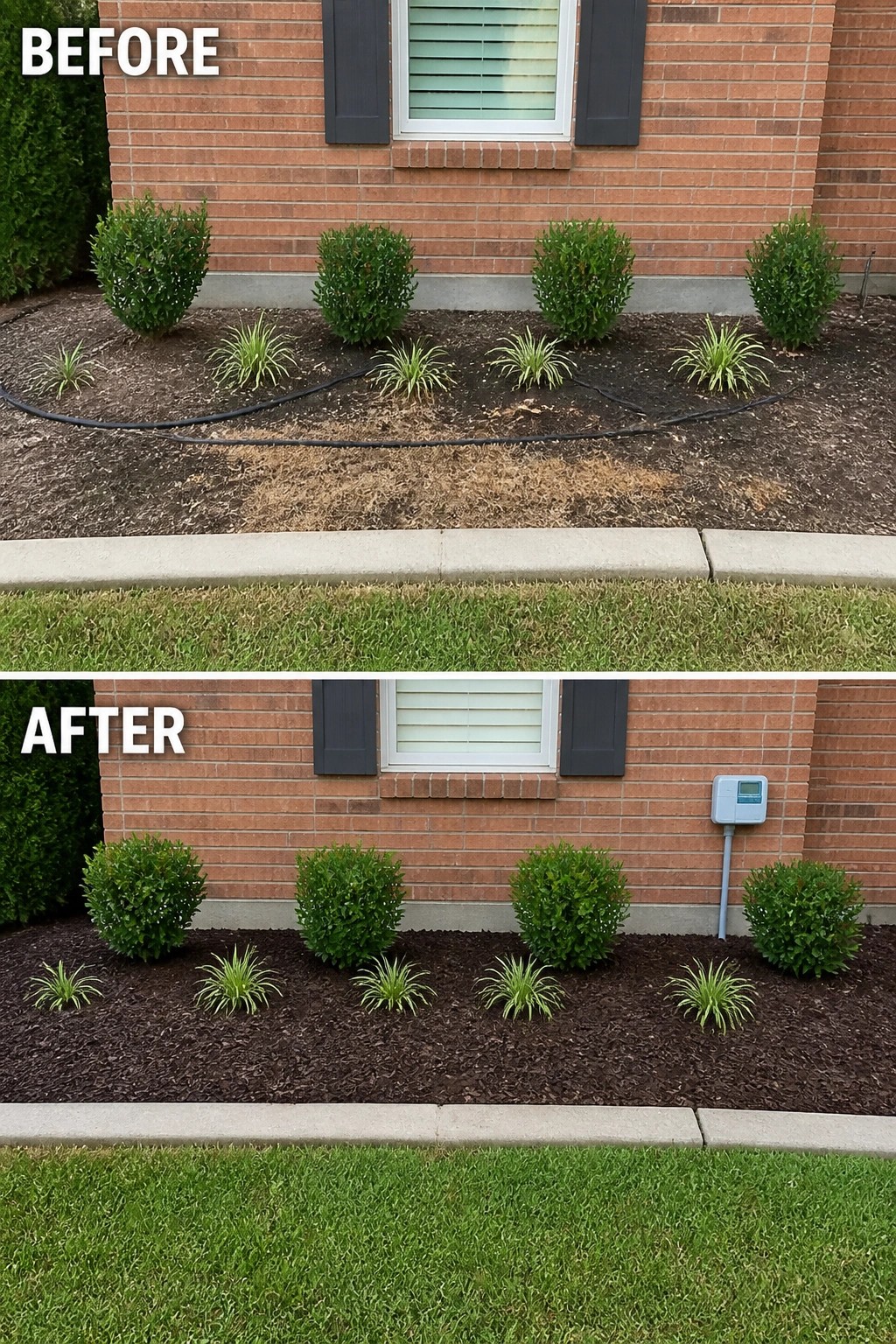
A ragged foundation planting can look tidy and nearly maintenance-free when you simplify the bed and add a clean layer of mulch. In this example the messy, exposed drip tubing was hidden and a fresh dark mulch was spread around evenly spaced shrubs and grasses, which immediately makes the whole strip read as deliberate rather than neglected. Mulch cuts down on weeds, keeps soil moisture steady, and gives lasting curb appeal with very little effort.
To copy this, start with a quick cleanup: pull weeds, trim plants, and edge the bed so the border is clear. Tuck drip lines behind the plants or under the mulch, then add 2 to 3 inches of shredded bark or hardwood mulch, keeping it pulled slightly away from the bases of shrubs. Choose a small palette of low-care plants (evergreen shrubs and a repeating ornamental grass work well) so you only replenish mulch and trim once or twice a year. Simple, repeatable planting plus a good mulch layer makes exterior upkeep much easier.
Refinish Worn Steps With Low-Maintenance Stone Veneer
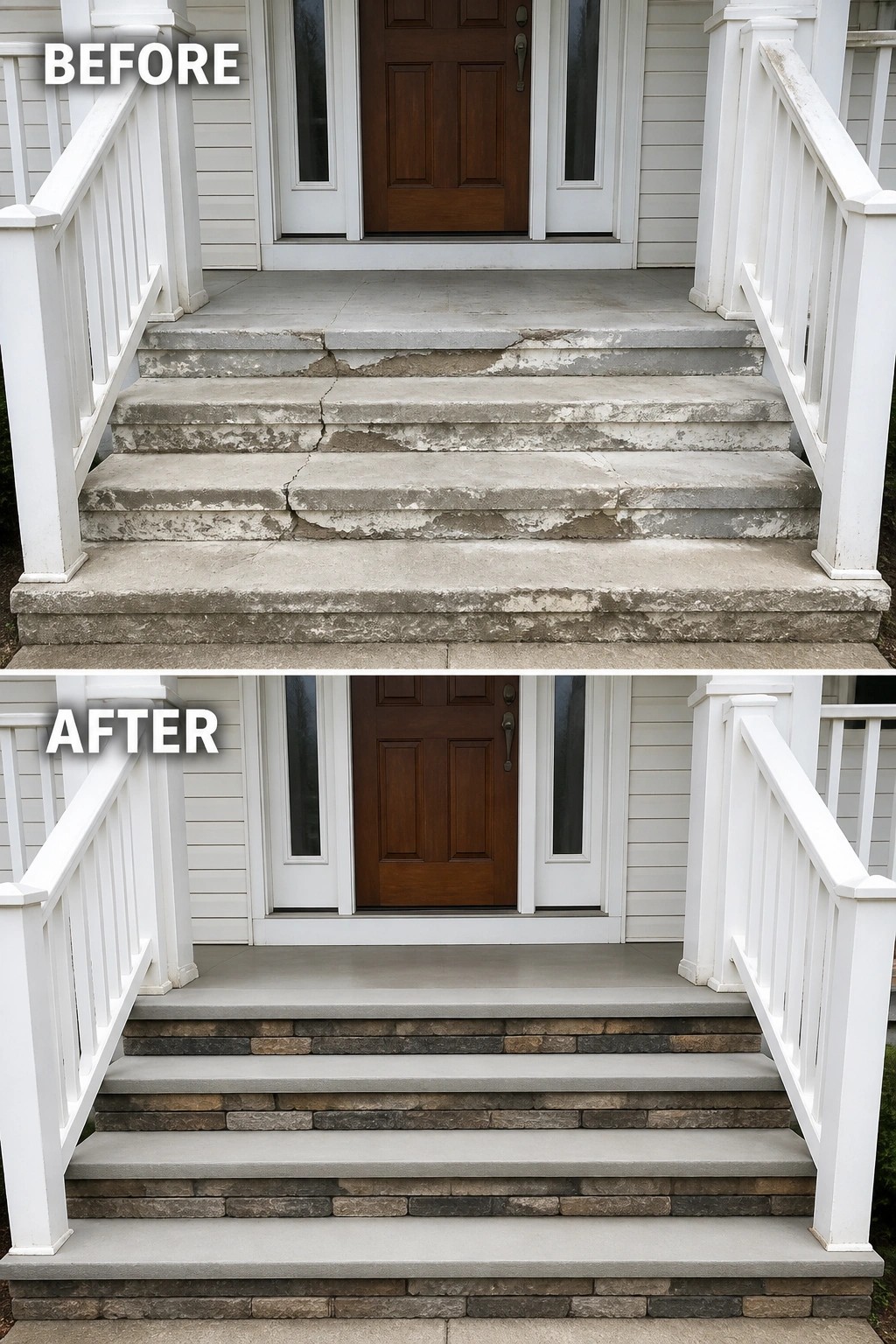
If your concrete steps are cracked, flaking, or just tired, a quick way to tidy the entry is to replace the worn treads and cover the risers with stone veneer. The idea is simple: swap or resurface the walking surfaces for a slip-resistant finish, and face the vertical parts with manufactured or natural stone to hide damage and cut down on future repairs.
This works well on older brick or siding homes because it reads like an intentional material change instead of a patch job. For the best results choose frost-resistant veneer, add proper flashing and drainage, and pick treads with a textured, non-slip finish. It’s a practical upgrade that reduces painting and patching, and it makes the front entry look finished without a full rebuild.
Use Stone Veneer To Mask Dirty Brick
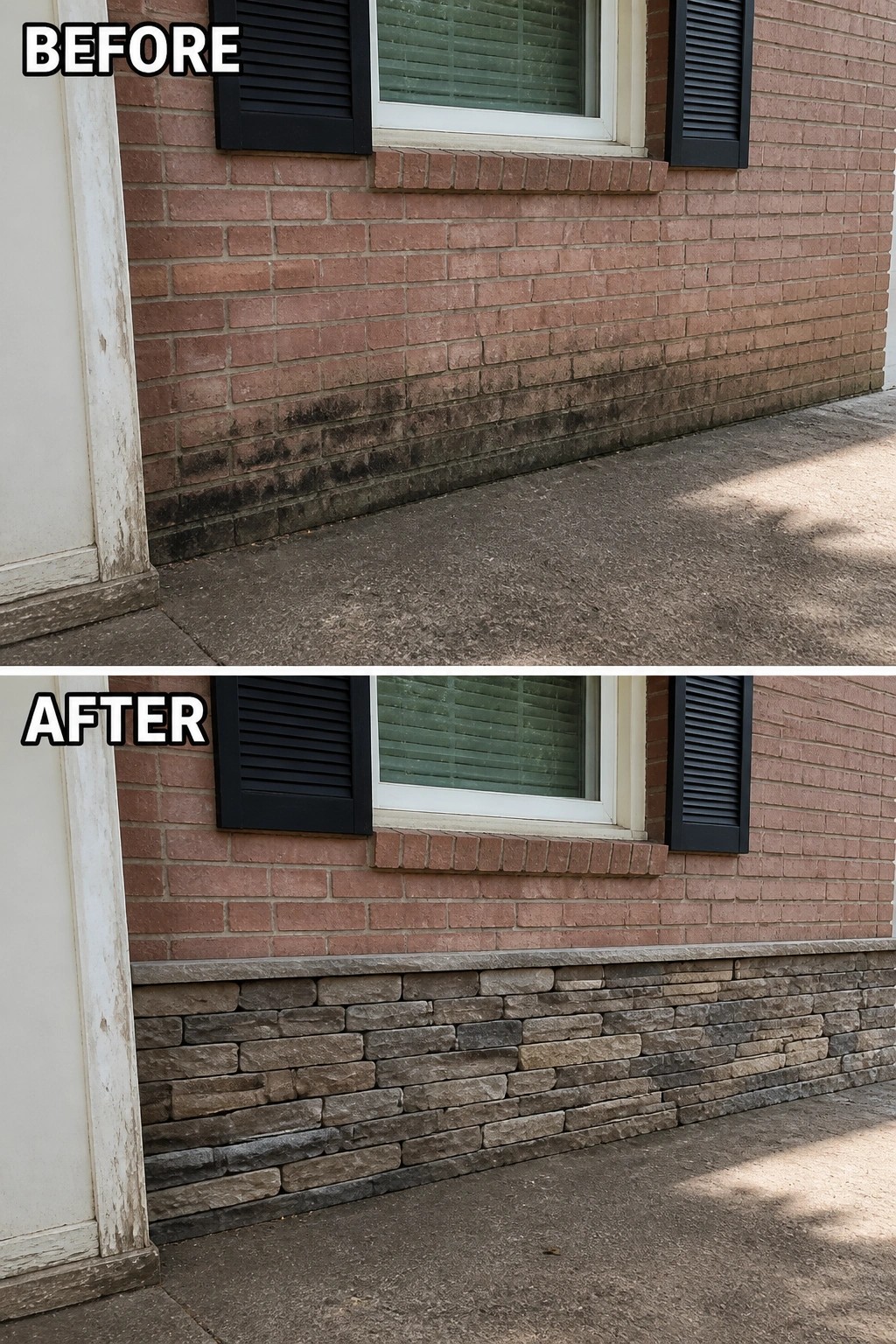
A stone veneer base is a practical way to hide low-level staining and give an older brick wall some instant curb appeal. In this example the lower courses were covered with a stacked stone and capped with a thin ledge, which hides the black algae lines and gives a harder-to-stain surface you can rinse off instead of scrubbing brick mortar.
Start by cleaning and checking for any moisture problems, then add the veneer over a proper weather barrier and flashing so water is directed away from the wall. Keep the stone to a sensible height (knee to window-sill level usually looks right), match tones to your brick and trim, and choose manufactured veneer if you want a lighter, lower-cost option that’s easier to maintain.
Add A Low-Maintenance Metal Awning To Your Entry
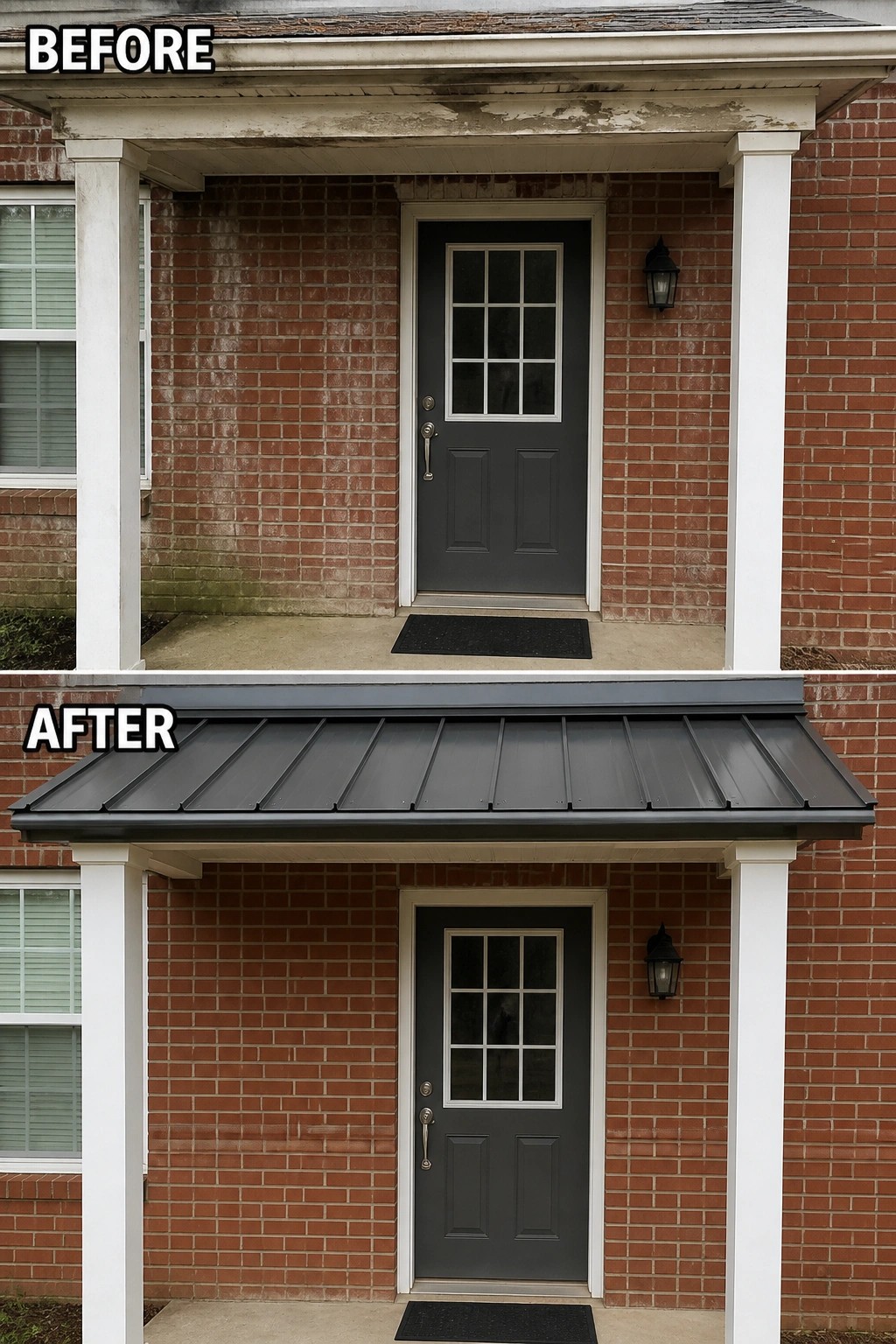
A simple metal awning over a small porch is an easy, practical upgrade that cuts long-term upkeep. Replacing a rotted wooden overhang with a standing‑seam metal canopy stops water damage, prevents staining on the brick, and removes the need for frequent scraping and repainting. You can see the idea in the swap from a worn soffit to a low-profile metal roof and fresh trim.
This works best on compact porches and brick facades where you want protection without fuss. Pick a metal finish that complements your door or trim, confirm there is proper flashing and slope for runoff, and size the canopy so it does not dominate the facade. It’s a good choice for busy households or rental properties because it dramatically lowers future maintenance needs.
Replace Lawn With Paver Strips And Planting Bands
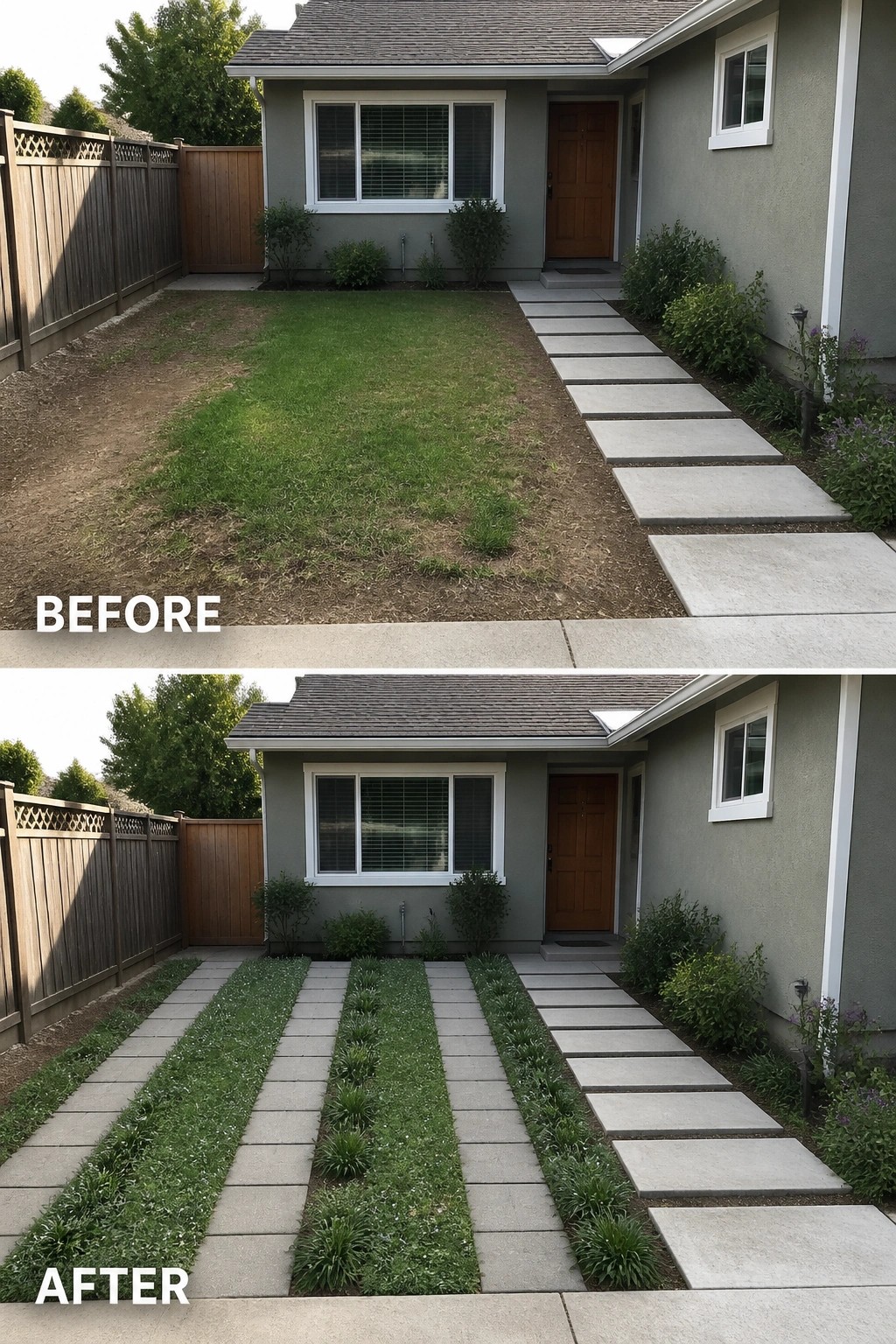
Swapping a struggling patch of grass for alternating concrete paver strips and narrow planted bands is an easy way to cut mowing and tidy up a front yard. In the before photo the lawn looks patchy; the after shows parallel pavers with low green plantings between them. The result is a clean, structured entry that keeps some living greenery without the upkeep of a full lawn.
To copy this idea, lay pavers on a compacted base with even gaps for planting, and choose low-growing, drought-tolerant groundcovers or clumping grasses for the strips. Space the slabs so you can still mow or edge the remaining grass easily and consider drip lines or a simple hand-water routine for new plants until established. It works especially well on narrow front yards or modern facades—practical, tidy, and far less work than a large lawn.
Give A Bare Porch A Clear Purpose
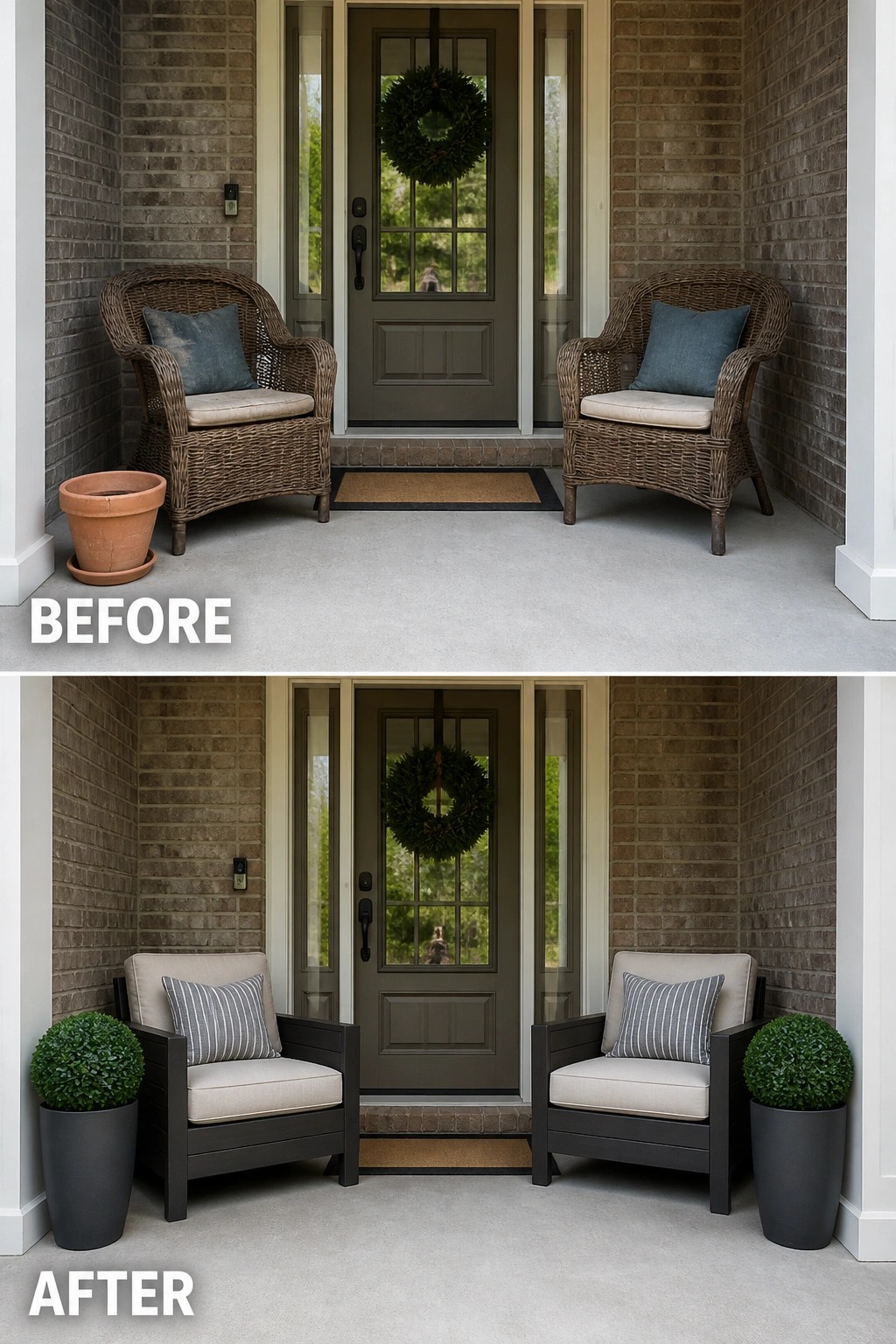
A small porch doesn’t need a lot to feel finished — pick a clear function and style and stick with it. Swapping bulky wicker for two compact, weatherproof armchairs and adding matching planters and simple cushions defines the entry as a sitting spot instead of just a passage. The result reads tidy and intentional, which makes upkeep easier and keeps the space usable.
When you try this at home, choose furniture scaled to your porch so there’s room to open the door and move around, and pick outdoor fabrics that resist mildew and fading. Use a pair of identical planters with evergreen balls or low-maintenance shrubs to give year-round structure, repeat one or two colors for cohesion, and keep accessories minimal so cleaning is quick. Simple, effective.
Frequently Asked Questions
Q: Can I use a pressure washer on my brick exterior?
A: Yes, but use low pressure and a wide spray tip and keep the wand several feet from the wall so you don’t erode mortar or push water behind the brick. Start with a small test area and use a gentle masonry cleaner for stubborn stains rather than cranking up the pressure.
Q: Will painting my brick really make exterior upkeep easier?
A: Painting hides stains and evens out color, which reduces the need for scrubbing, but painted brick can need touch-ups every few years and may trap moisture if the wrong paint is used (choose a breathable masonry paint). If you like the look, plan for occasional repainting rather than a one-and-done fix.
Q: How do I stop mulch and plants from staining or holding moisture against the foundation?
A: Keep mulch and planting beds a few inches back from the brick, slope the soil away from the house, and use gravel or a narrow strip of pavers right next to the wall to reduce contact. Trim shrubs so air can circulate and the brick can dry after rain.
Q: How often should I check the mortar and do tuckpointing?
A: Inspect the mortar once a year and look for crumbling, gaps, or loose bricks, and address small patches as soon as you see them to prevent bigger problems. Most houses need more extensive tuckpointing around every seven to ten years, but tackling minor repairs early will keep the job smaller and cheaper.