

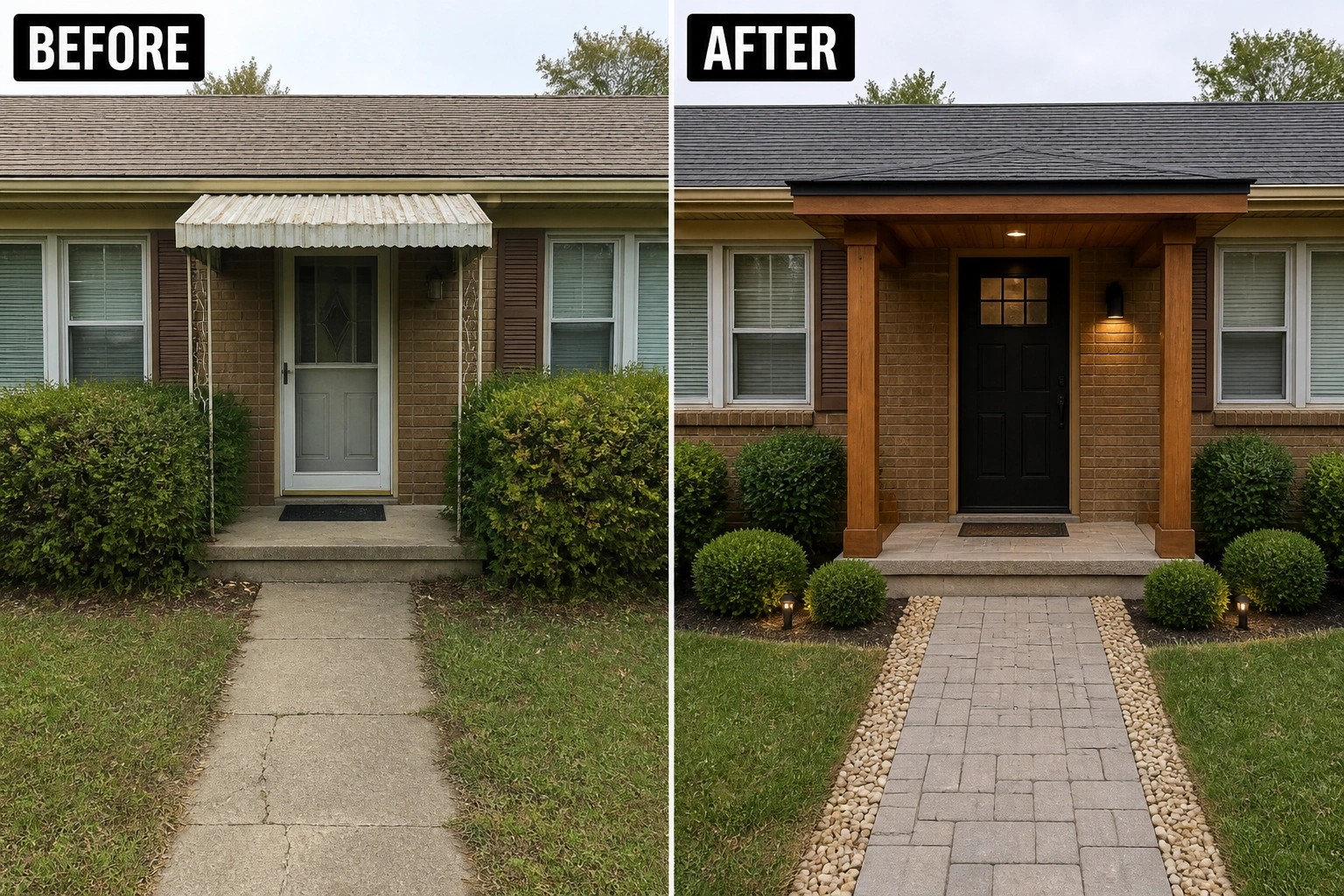
I often find that modest changes to a 70s ranch’s exterior can make the house feel more cared for without stripping away its original character.
Updating trim, swapping light fixtures, choosing a fresh entry door color, and tightening up planting are the sorts of small choices that improve curb appeal and read as intentional rather than tacked on.
You can do a lot on a budget.
For brown brick facades I favor moves that work with the warm tones, such as natural wood accents, mid-tone paints, and layered plantings, and I usually test paint or a sample board on one wall before committing to a larger change.
Many of these ideas are easy to pin, adapt, or try in stages so the house feels more deliberate and less overlooked.
Give A Bare Porch A Clear Purpose
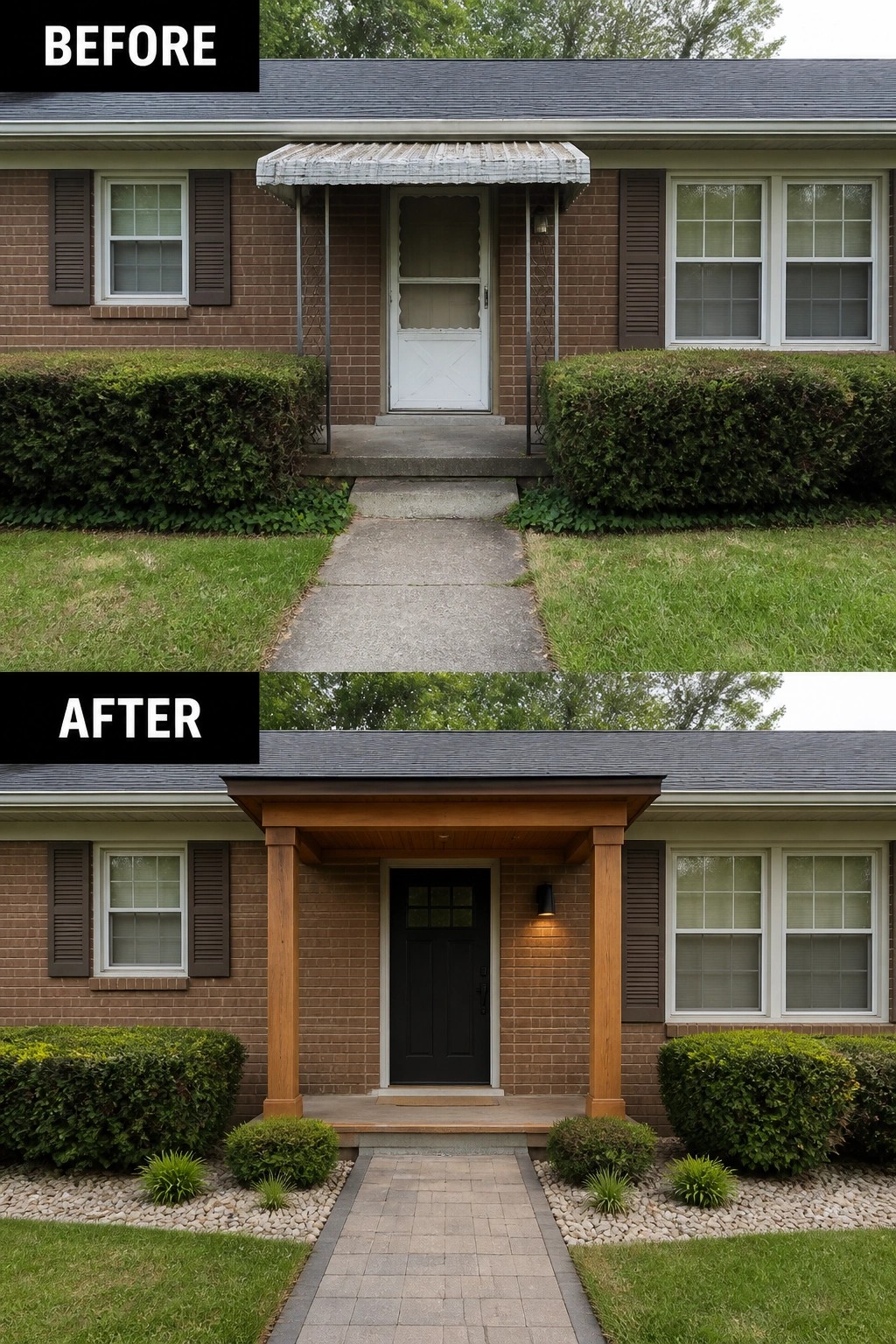
A small, focused porch rebuild can turn an anonymous entry into a deliberate focal point. Here a tired metal awning was swapped for a simple wood-covered porch and a new dark door, while a neat paver path and trimmed planting frame the approach — the house instantly reads as cared for and welcoming.
To recreate this, match the porch scale to your roofline and keep materials that complement the brick, like warm wood posts and a contrasting door color. Use a paved walkway to lead visitors, add one practical light by the door, and choose low-maintenance shrubs or rock mulch for a tidy border. Keep the change modest so the addition feels like it belongs, and confirm footing and permits before you start.
Refresh Brown Brick With Paint, Dark Trim, And Minimal Planting
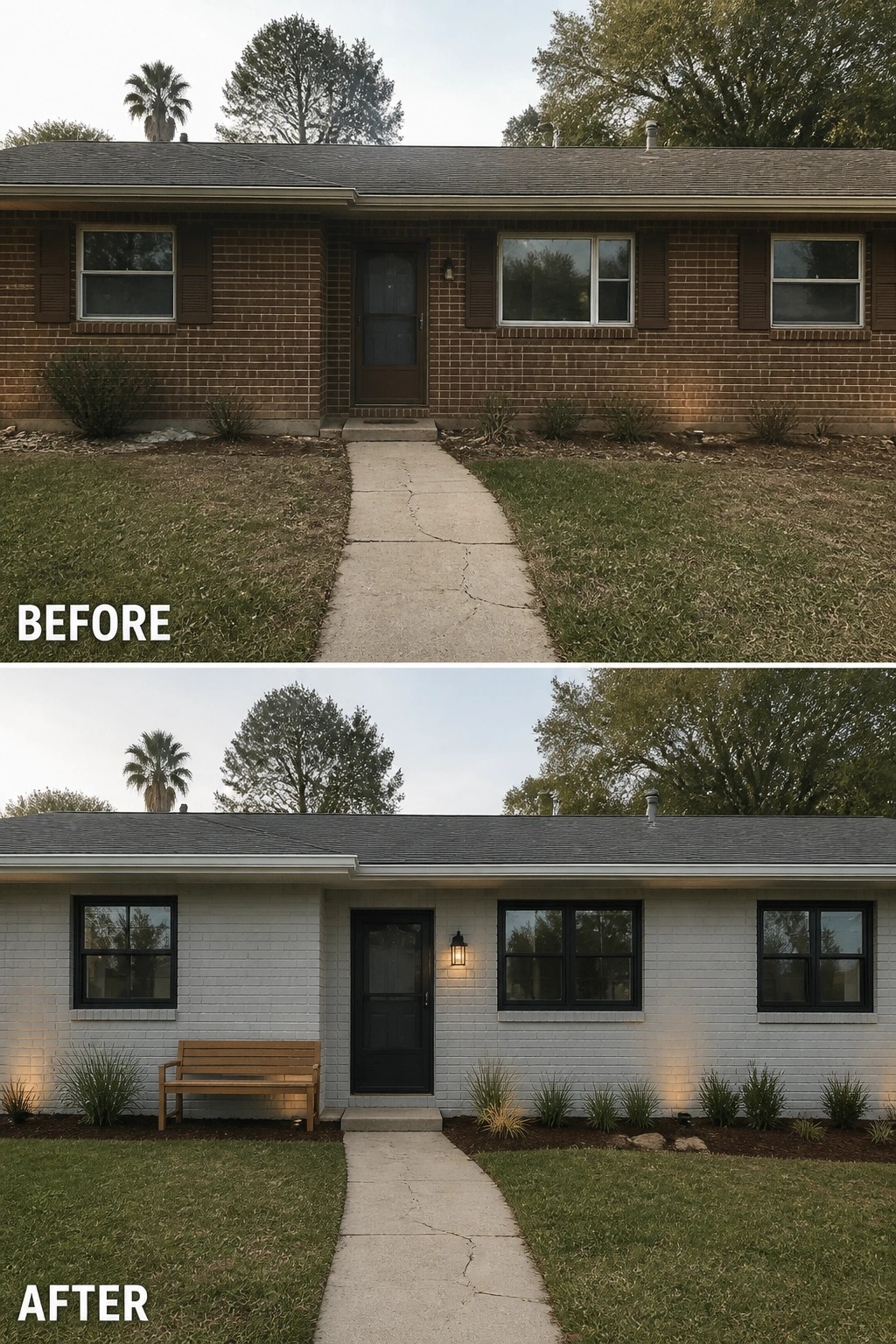
Painting the brick a light, neutral tone and swapping in dark window and door trim is an easy way to modernize a 70s ranch without rebuilding. In this example the heavy brown brick is softened with pale paint while black windows and a new lantern give the entry crisp definition; a simple bench, low shrubs, and a few uplights complete the look. The result reads contemporary and tidy rather than fussy.
To copy the idea, start small: clean the brick, do a paint test patch, and choose a high-quality masonry paint in a warm gray or off-white. Pair it with a near-black for windows and the front door to create instant contrast, and keep landscaping low and repeated (ornamental grasses and small shrubs) so the facade reads cohesive. Add one exterior light and a couple of ground lights to show the new texture at night—small, focused changes that make the whole front feel refreshed.
Replace A Plain Garage Door With A Warm Wood‑Look Door
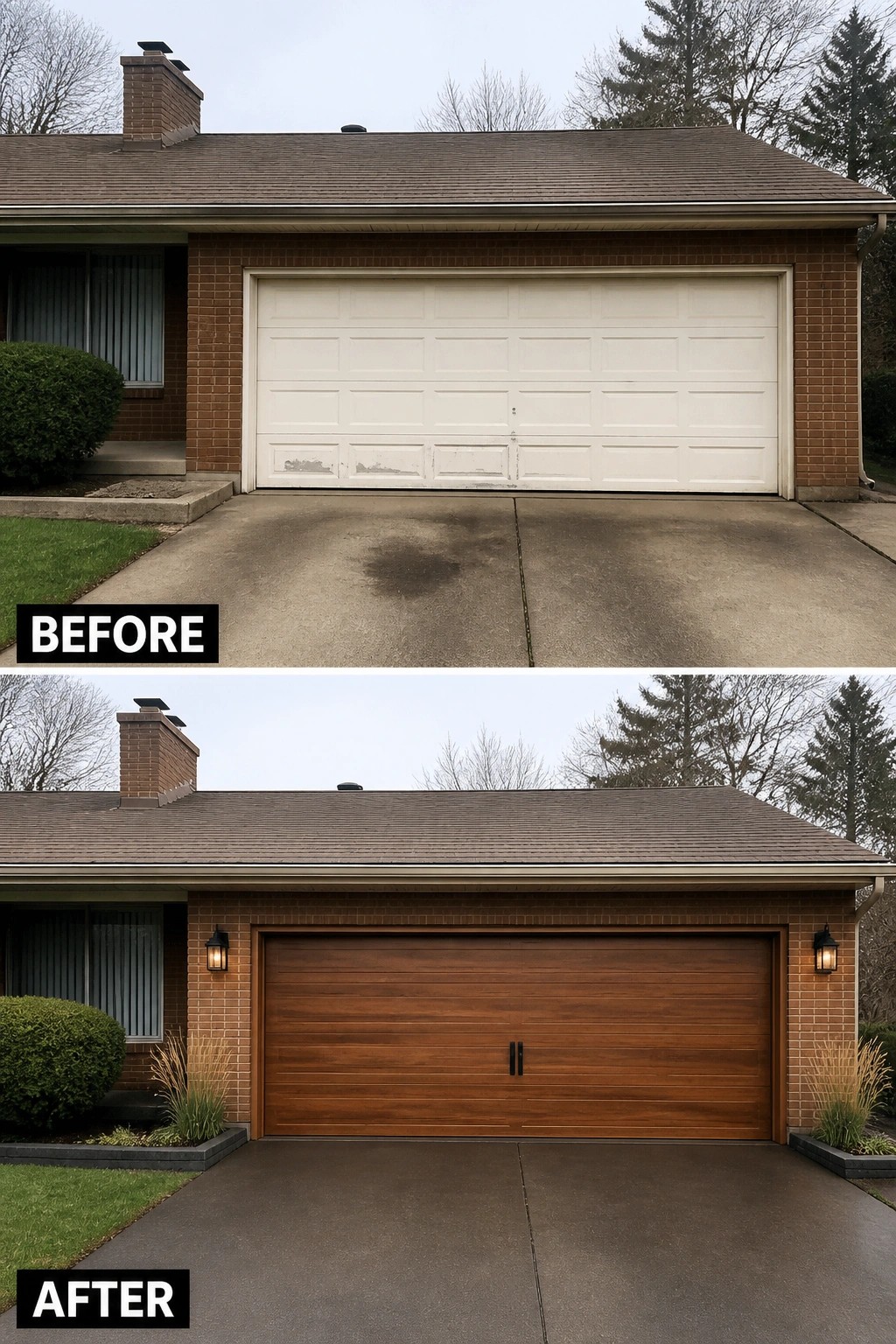
Swapping an old, plain garage door for a wood‑look panel door is an easy, high-impact way to refresh a 70s ranch with brown brick. In this example the dull white door is replaced by horizontal wood-toned panels with simple black hardware and flanking lanterns, which ties the garage into the house and gives the front a more cohesive, updated look.
To use this idea, choose a wood tone that complements your brick and pick a low‑maintenance material if you do not want ongoing upkeep (stained steel or composite can look very close to real wood). Keep the styling simple—matching hardware and a pair of exterior lights make the upgrade read intentional—and add a narrow planting bed or planters at the edges to soften the edges without crowding the driveway.
Define A Ranch Entry With Tapered Columns And Stone Bases
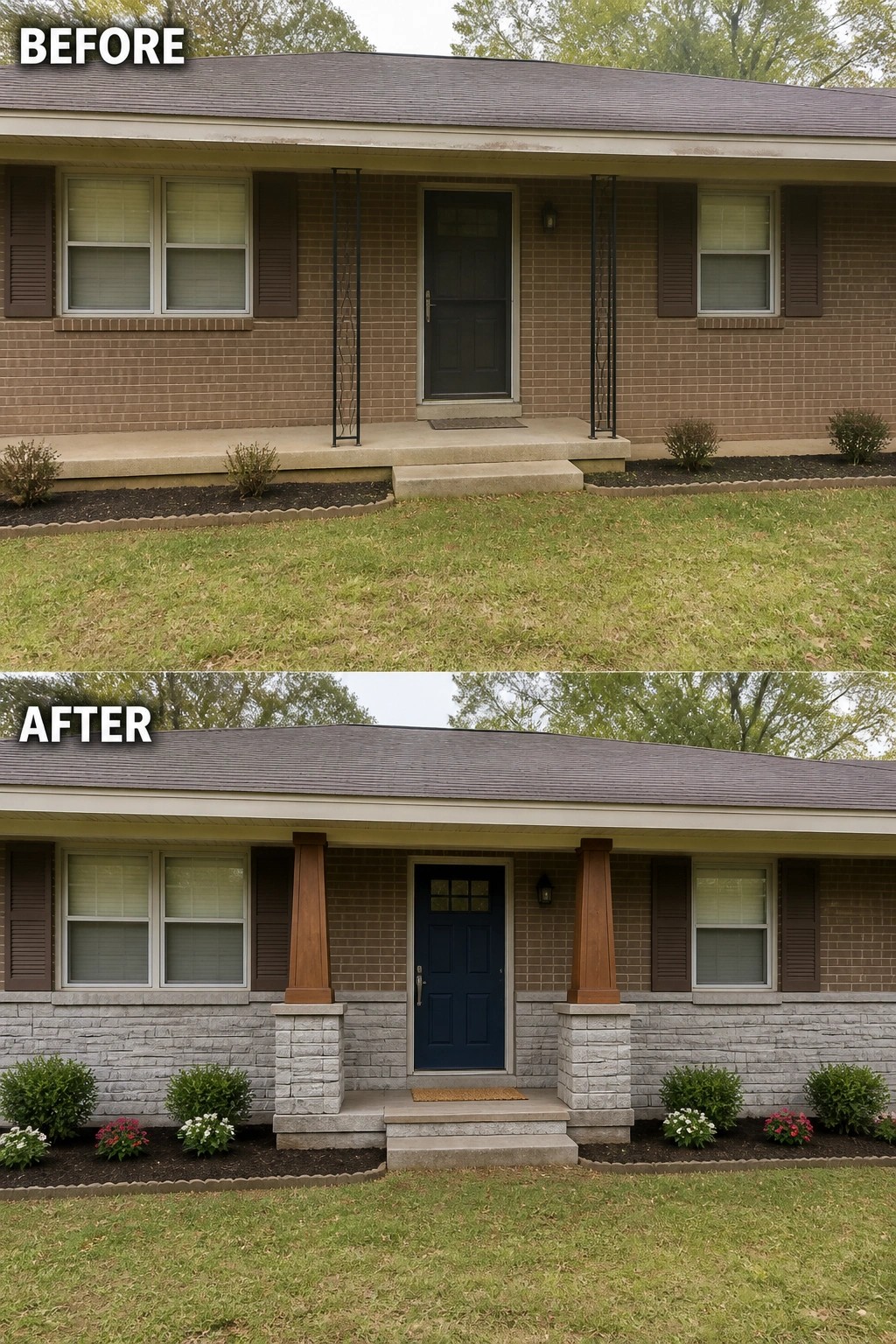
Swapping fragile iron posts and a plain concrete skirt for sturdy tapered columns on short stone bases instantly defines the entry and makes the porch feel intentional. That simple architectural change creates a visual landing point, so the front door reads as the focal spot instead of a recessed hole in a brown brick wall.
Use this idea on any low-slung ranch by choosing column size that matches the roof overhang and a stone or masonry color that complements the brick. Start small. Add a fresh paint color for the door, one or two symmetrical plantings, and a doormat to finish the look without overcrowding the approach.
Use Dark Window Frames And Simple Foundation Planting To Modernize Brick
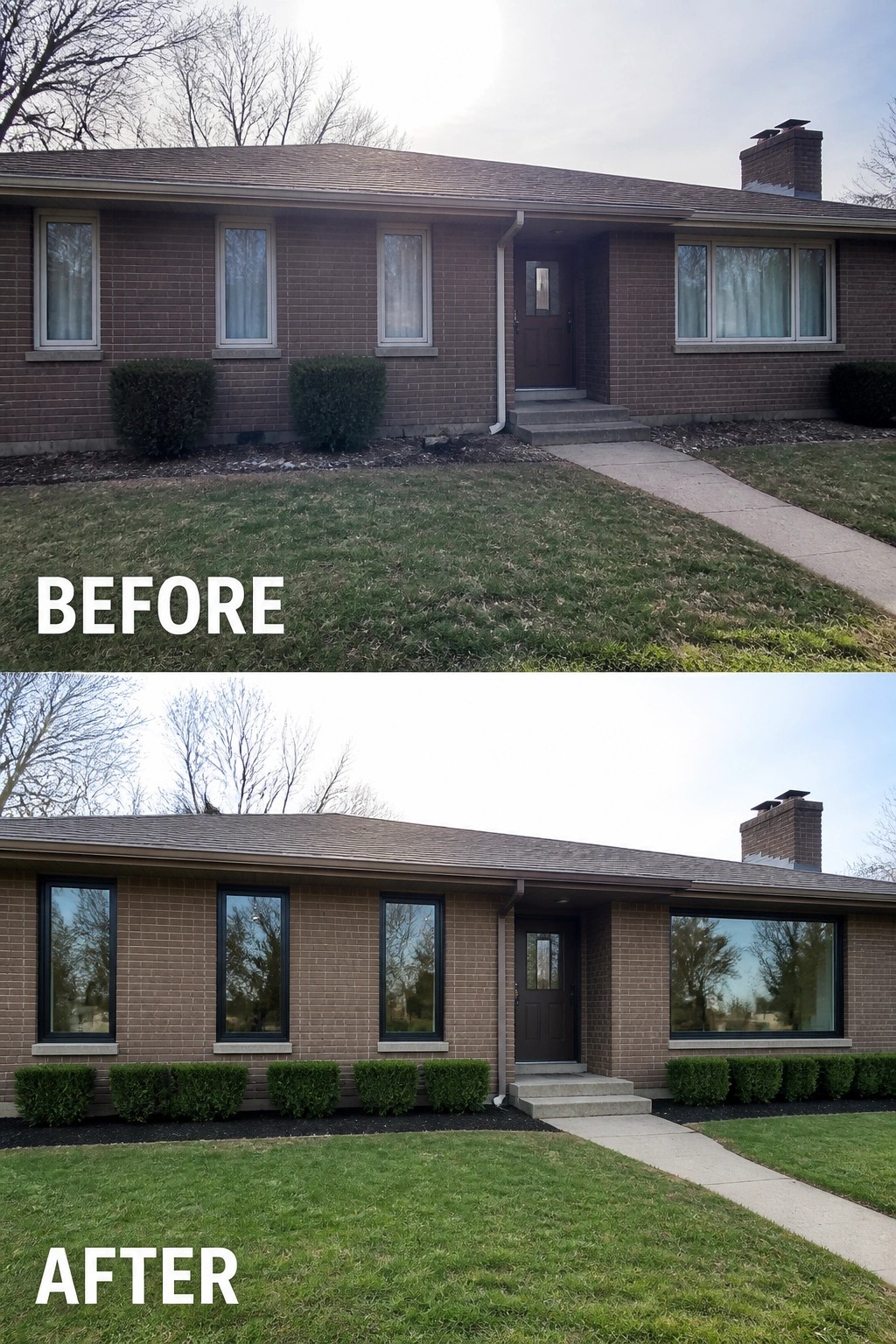
A quick way to freshen a 1970s brown brick facade is to introduce slim, dark window frames and a clean band of low shrubs. The darker frames create crisp contrast against the brick so the house reads more contemporary, while a tidy row of evergreen hedges and fresh mulch gives the base of the house a finished, intentional look rather than an overgrown or neglected one.
To do this on your own home, choose aluminum or fiberglass frames in a dark bronze or black and match them to the front door if possible. Plant low-growing evergreens like boxwood or yew at even spacing so they won’t block windows as they mature, and use dark mulch or stone to make the brick and trim pop. It’s a relatively low-cost update that works well for single-story ranches and keeps sightlines and walkway access clear.
Brighten A Flat Brick Ranch Entry With A Fresh Door And Planters
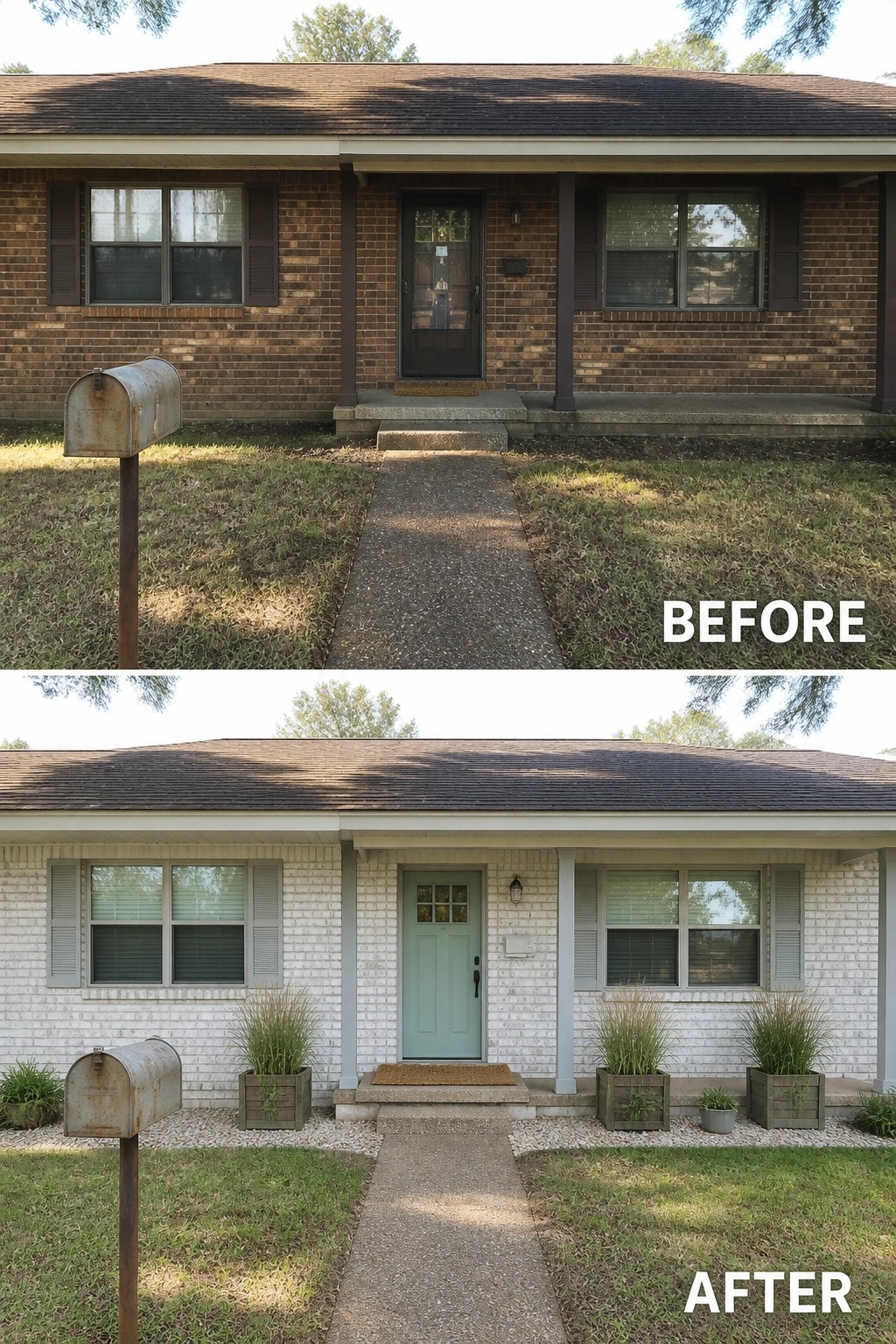
A simple way to update a flat brick ranch is to make the entry read as a distinct, intentional space. In this example the owners brightened the brick, added a fresh-colored front door and flanked the steps with matching planters and a gravel bed. Painting the facade lighter and choosing a contrasting door instantly creates a focal point so the porch feels like an actual front entry instead of just a walkway.
To copy this, start small: clean the brick, test a lightwash or paint on a hidden patch, and pick a door color that complements the brick and shutter tone. Add two equal planters to frame the steps and use low-maintenance plants so it stays tidy. Finish with a narrow gravel border or mulch to separate the planting area from the lawn and keep the path clear. Low cost, big change.
Turn A Screened-In Porch Into A Comfortable Outdoor Room
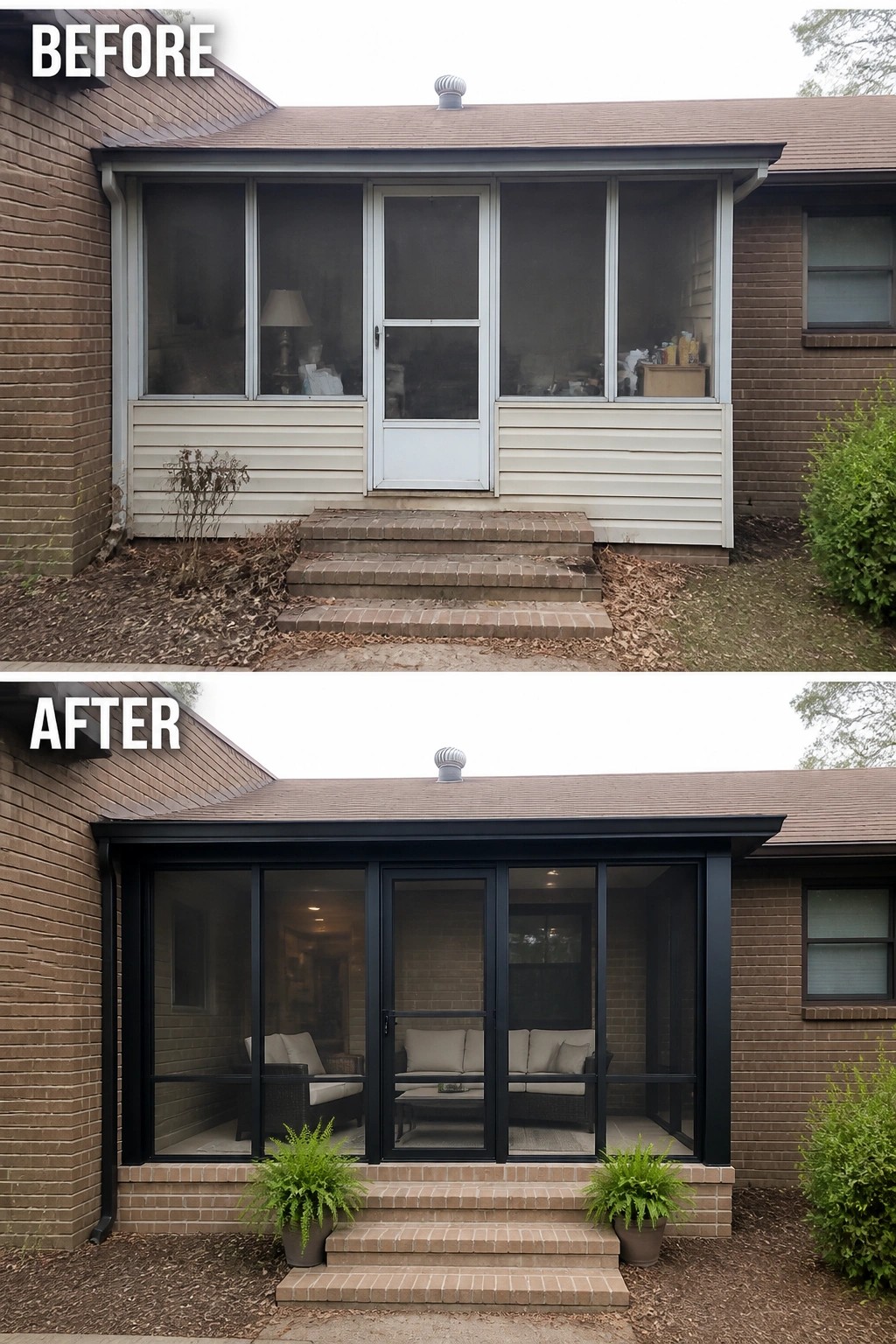
Turning an unloved screened-in entry into a real outdoor room is mostly about purpose and a few focused updates. Swap dated pale framing and low panels for a cleaner, darker frame to make the enclosure read as intentional, then add comfortable, weather-ready seating and a small table so the space becomes a place to sit instead of a place to store things.
To copy this at home, start by clearing clutter and deciding what you want the porch to do—sit, dine, or both. Make one visible structural change (new trim color or slimmer screen frames) to lift the look, choose compact outdoor furniture that leaves a clear path, and add two symmetrical planters or a rug to finish the scene. It works well on brick ranches and other modest facades where a simple update can make the porch feel like an extension of the living space.
Create A Welcoming Ranch Entry With A Solid Door And Matching Lanterns
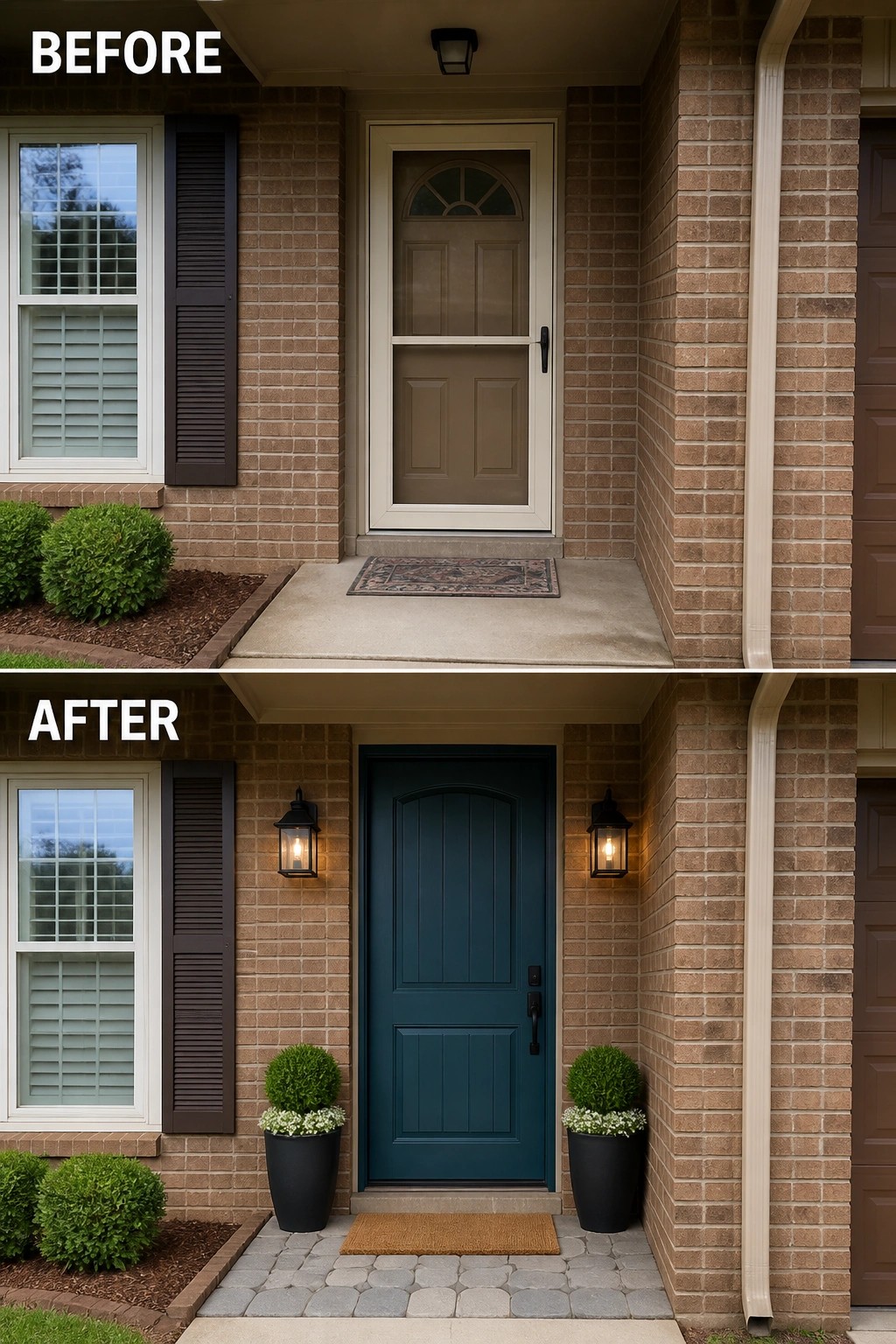
A few focused updates can turn an anonymous entry into a clear, purposeful front porch. In this example the plain screen door and bare concrete step were replaced by a painted solid door plus matching wall lanterns and paired planters, which instantly read as a deliberate front entrance rather than just a walk-up. The change works because it establishes a single focal point and repeats simple elements for cohesion.
You can copy this on any brown brick ranch by choosing one standout door color and repeating two supporting elements such as black hardware and lanterns or a pair of planters. Keep the scale right for your porch (tall pots on narrow stoops, low benches on wider porches), use weatherproof finishes, and define the landing with a small rug or pavers so the entry reads as a purposeful place. Start small.
Use Lighting To Make A Plain Facade Feel Welcoming
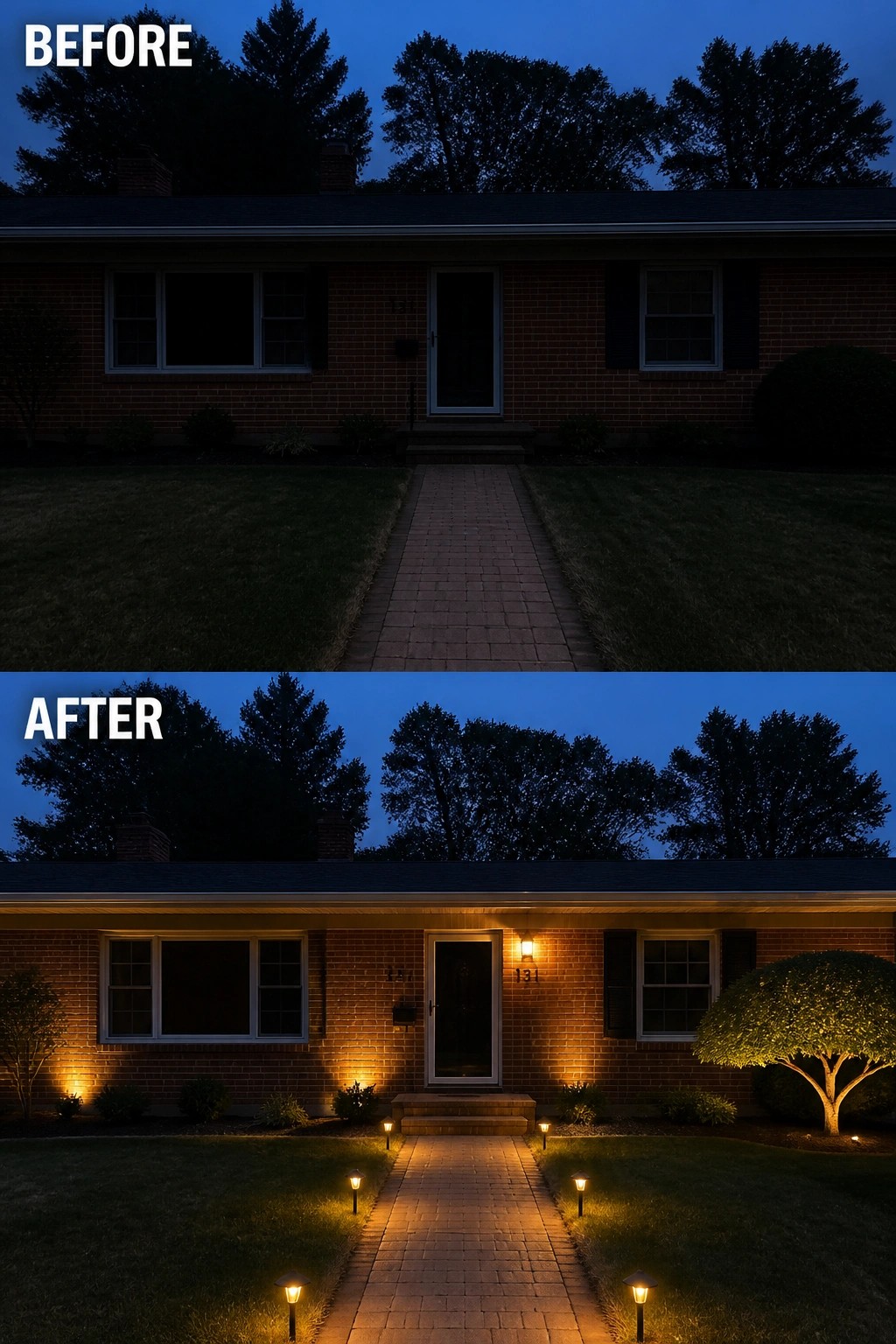
A row of low-cost lights can change a bland, dark ranch into a clear, inviting entry. In this example the walkway and brick were highlighted with a few pathway lights and subtle uplights, plus a porch sconce by the door, so the house reads as purposeful instead of anonymous at night.
Do it by starting with the path: install low path lights spaced so each fixture lights the next step, and pick warm color temperatures around 2700 to 3000 K. Add a couple of low-profile uplights at the base of the brick to show texture, and one shielded fixture at the door for safety and scale. Use dusk-to-dawn controls or a simple timer, choose fixtures that match the house lines, and avoid flooding the yard with too many lights—keep it simple and layered.
Use A Curved Walkway To Frame The Entry
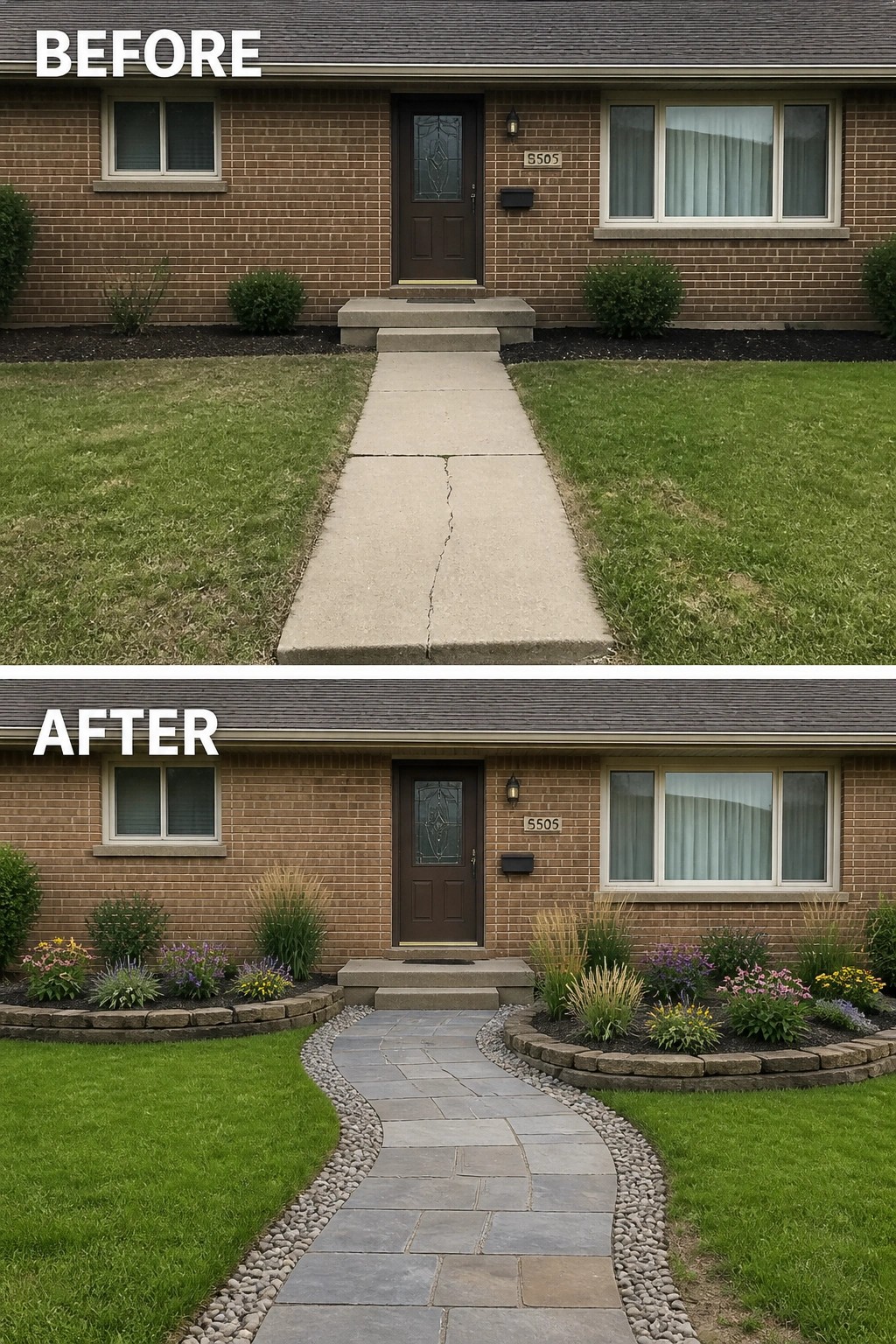
Swapping a tired straight concrete path for a gently curving paver walkway instantly changes how the front yard reads. Replacing the cracked slab with a paved meander edged by river rock and flanking the entry with low stone planting beds and ornamental grasses turns a utilitarian route into a composed approach that complements the brown brick.
To copy the idea, sketch the curve on the lawn first so you can tweak the sweep, then choose pavers that sit well with your brick color and a simple pebble or stone edge to keep the line crisp. Add low retaining walls or raised beds to hold soil, pick hardy perennials and grasses for year-round shape,
Add A Wood Accent Band And Update The Entry
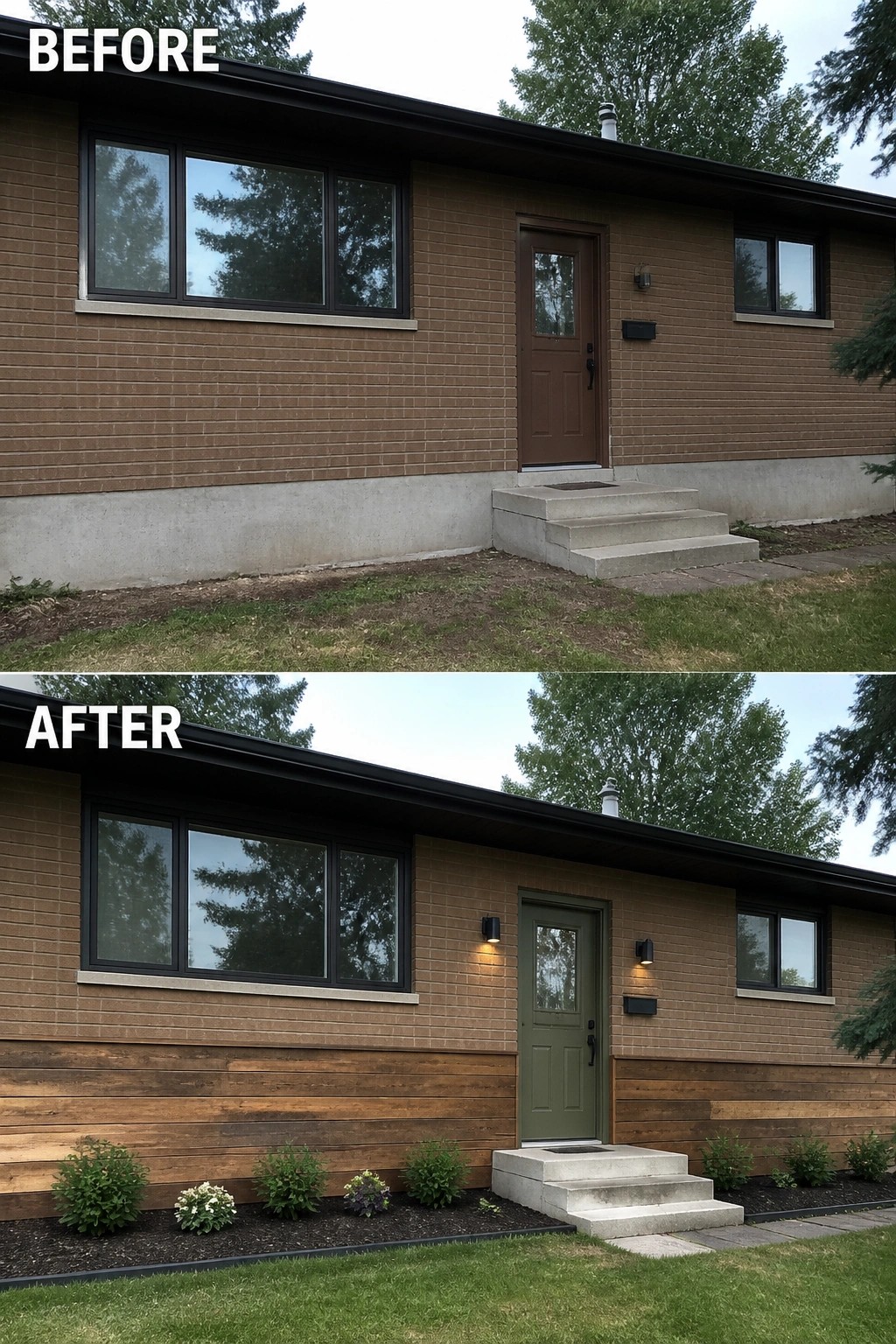
A horizontal band of natural wood across the lower facade, plus a freshly painted front door and a pair of simple wall lights, is an easy way to break up an expanse of 1970s brown brick and give the house a more intentional look. The wood introduces a new material line that reads modern against the brick, while the colored door and matching black hardware create a clear focal point without a big remodel.
You can copy this on most ranches: choose rot-resistant boards (cedar or clear-treated pine), keep the band low and proportional to the wall, and flash behind the siding so moisture won’t get trapped. Paint the door in a complementary but distinct hue, add two small sconces for balance, and plant a narrow mulch bed with low shrubs to anchor the change. It’s a modest update that feels finished and practical.
Upgrade A Small Ranch Porch With Wood Columns And Simple Styling
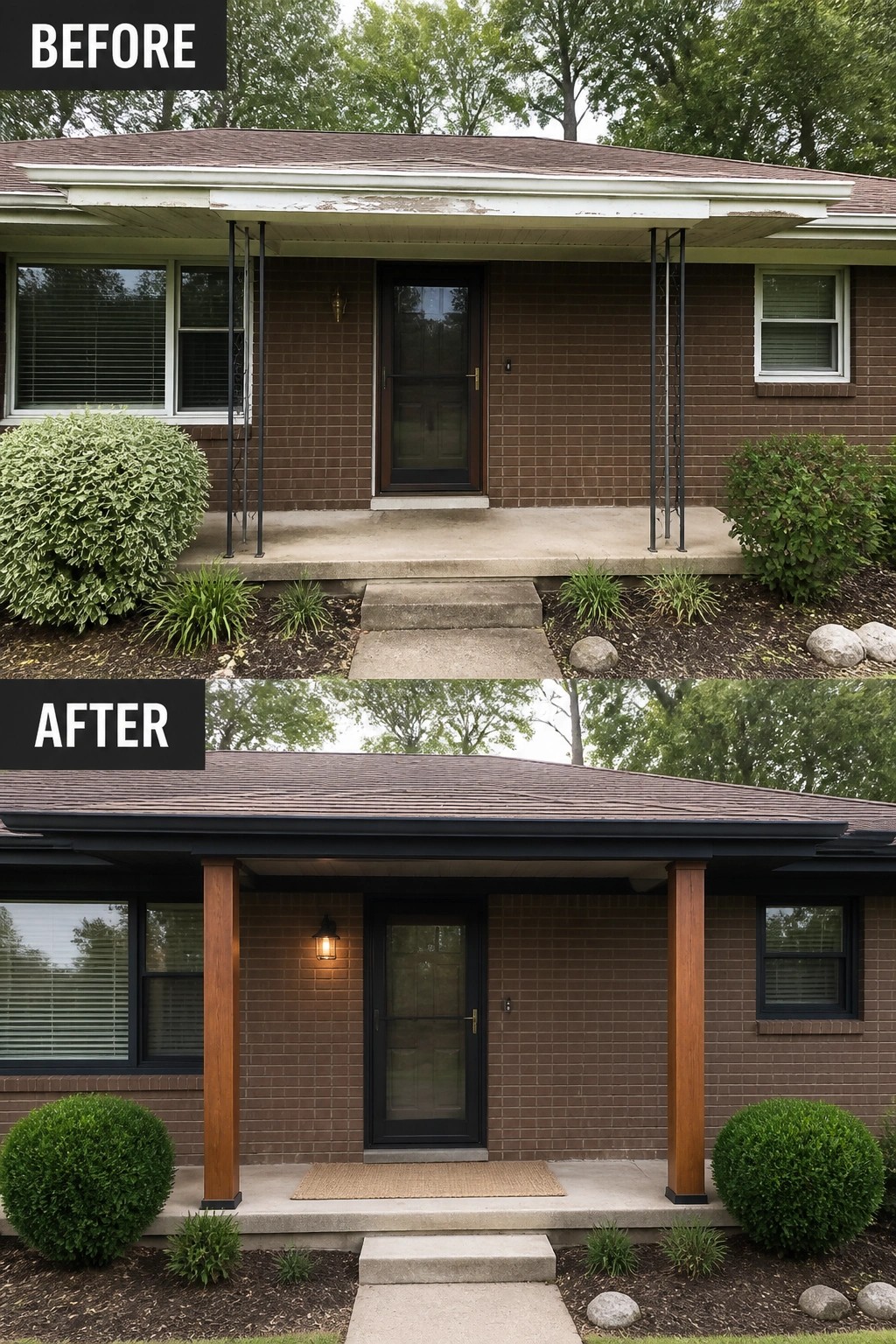
A tiny, undefined porch suddenly reads as an intentional entry when you give it simple architectural and styling cues. Swapping thin metal posts for properly sized wood columns, adding a single exterior lantern, and placing a small mat or symmetrical plantings tells visitors this is a front door you use. Those few changes make the porch read as a real outdoor room instead of just a stoop.
Do it where a porch roof already exists and the house needs a clearer focal point. Choose column proportions that match the roof line (scale matters), use rot-resistant materials or properly sealed wood, and pick an outdoor-rated light placed at eye level. Keep plantings low and tidy so the entry stays visible, and leave enough clearance on the step for easy access.
Frame A Neglected Ranch Entry With Long Planters And A Defined Walkway
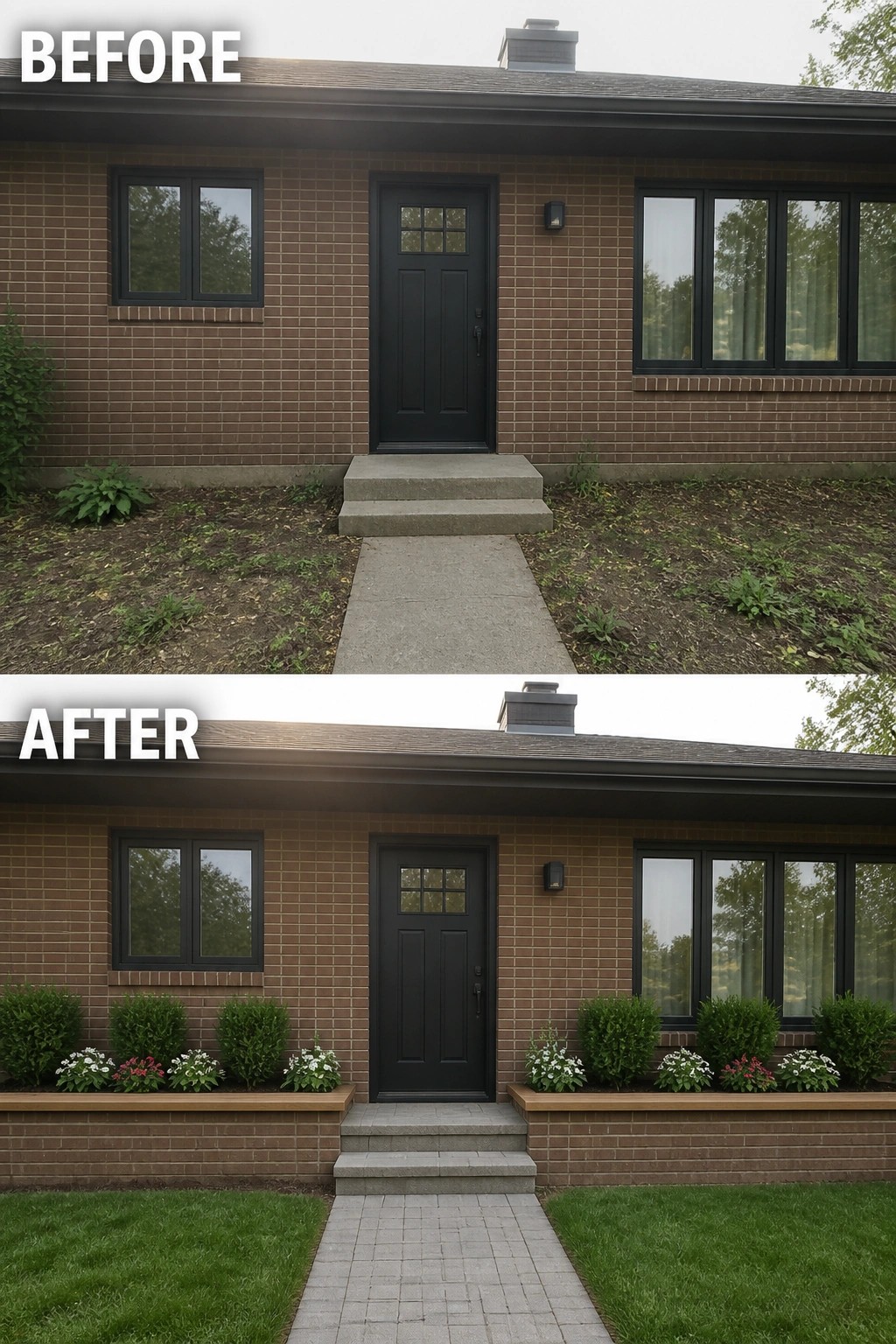
Turn a neglected strip in front of a ranch into a deliberate entry by adding long, low planters and a defined walkway. Replacing bare dirt with raised beds and a paved path (plus a few compact shrubs and seasonal flowers) immediately frames the door and makes the whole facade read as intentional instead of forgotten.
Start with cleanup and a simple layout: run long shallow planters along the house to echo its horizontal lines, plant small evergreens for year-round shape and tuck low seasonal blooms in front (three shrubs across is usually enough). Use pavers or brick for a straight path that matches the house materials, keep the walking route at least three feet wide, and choose plants that stay neat so the entry stays welcoming with minimal upkeep.
Use Dark Trim And Soffit Lighting To Modernize A Brown Brick Facade
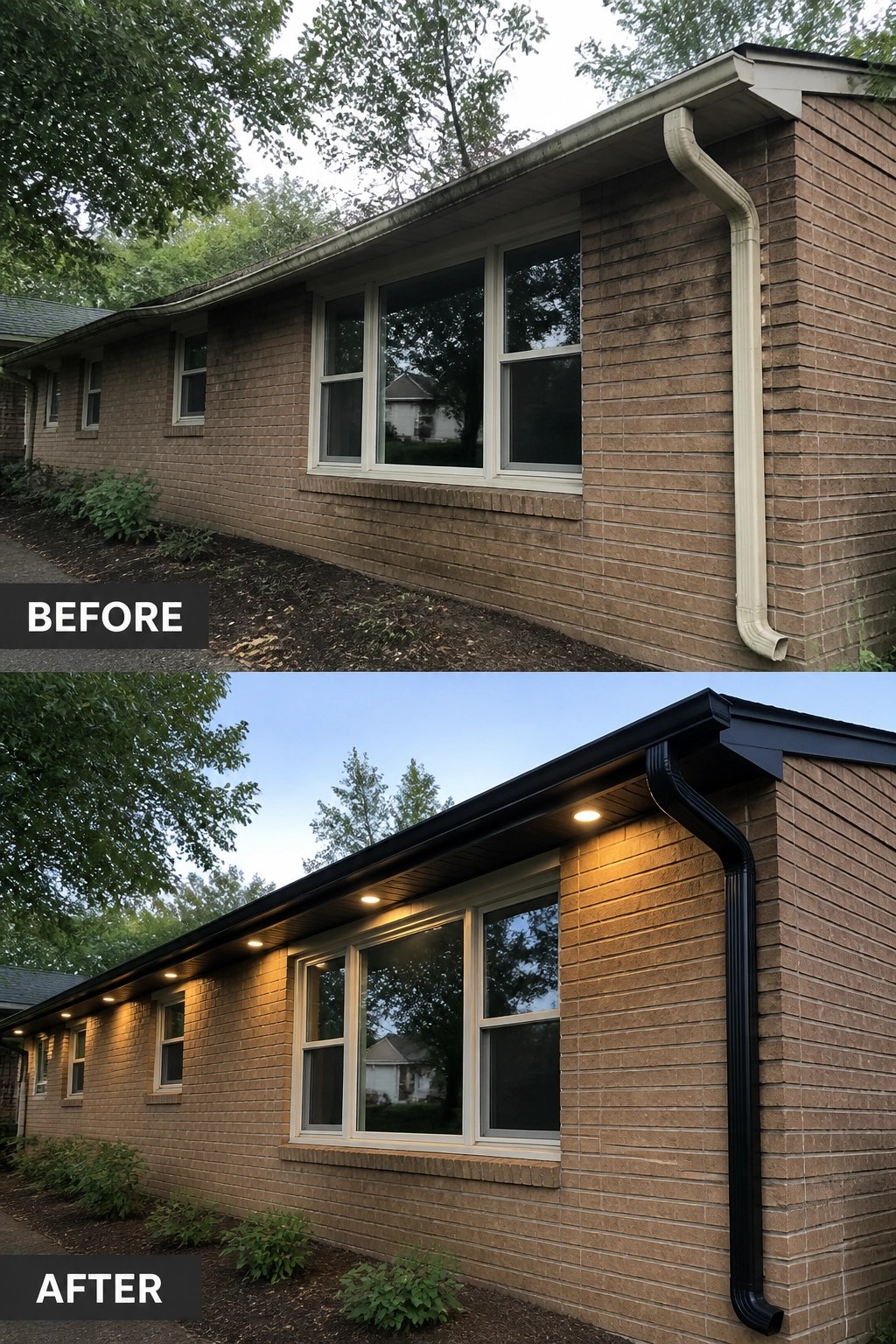
A simple but high-impact update is to switch out pale gutters and trim for a dark, consistent finish and add recessed soffit lights along the eaves. In this makeover the new black gutters and under-eave downlights give the long, low ranch a crisper edge and lift the whole elevation without changing the brick itself.
To try this, pick a durable dark metal or painted finish for gutters, fascia, and downspouts so the brick reads as a backdrop rather than the only feature. Add exterior-rated recessed LEDs spaced evenly along the soffit to wash the wall and highlight windows (warm-white LEDs look nicest on brick). This works especially well on one-story ranches with shallow eaves; just plan for proper ventilation and hire a pro for the electrical and gutter installation.
Update A Plain Brick Facade With Simple Trim And Planters
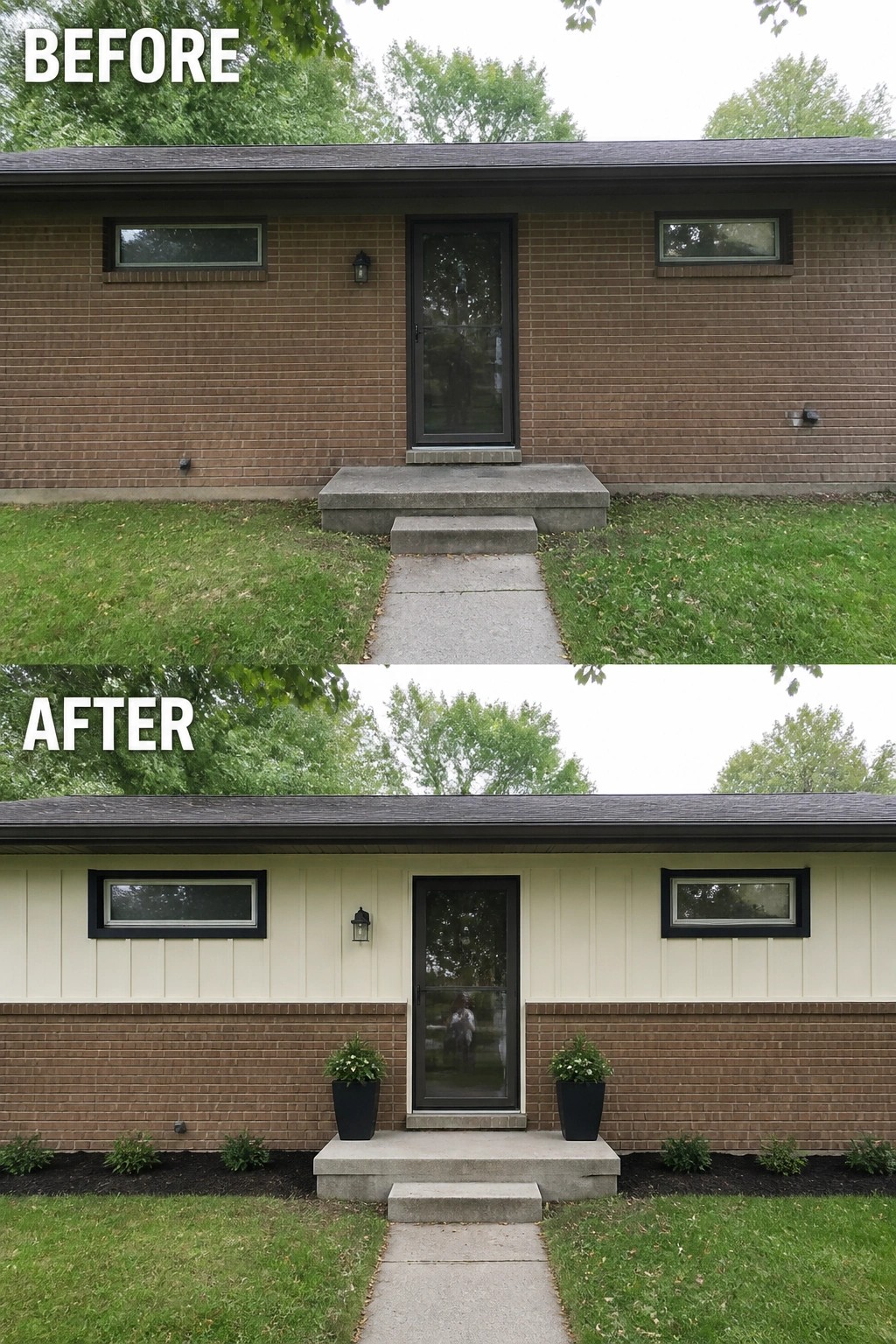
A long band of undifferentiated brown brick can feel heavy on a low ranch. Painting or installing a light-colored vertical siding panel above the brick and framing the narrow windows and door in a darker trim instantly breaks that monotony and gives the house a cleaner, more modern profile. Add a pair of matching planters and a slim planting bed to anchor the entry and the whole front reads as intentional rather than plain.
Keep the approach straightforward. Leave the lower brick alone for texture, then pick one neutral for the upper band and one contrasting color for window and door trim so the eye has a clear focal point. Use simple, same-height planters on either side of the steps and plant low shrubs in a mulched strip to define the base of the wall. Works especially well on single-story 70s ranches where you want a noticeable update without a full remodel. Simple but effective.
Add A Gravel Planting Strip To Define The Driveway
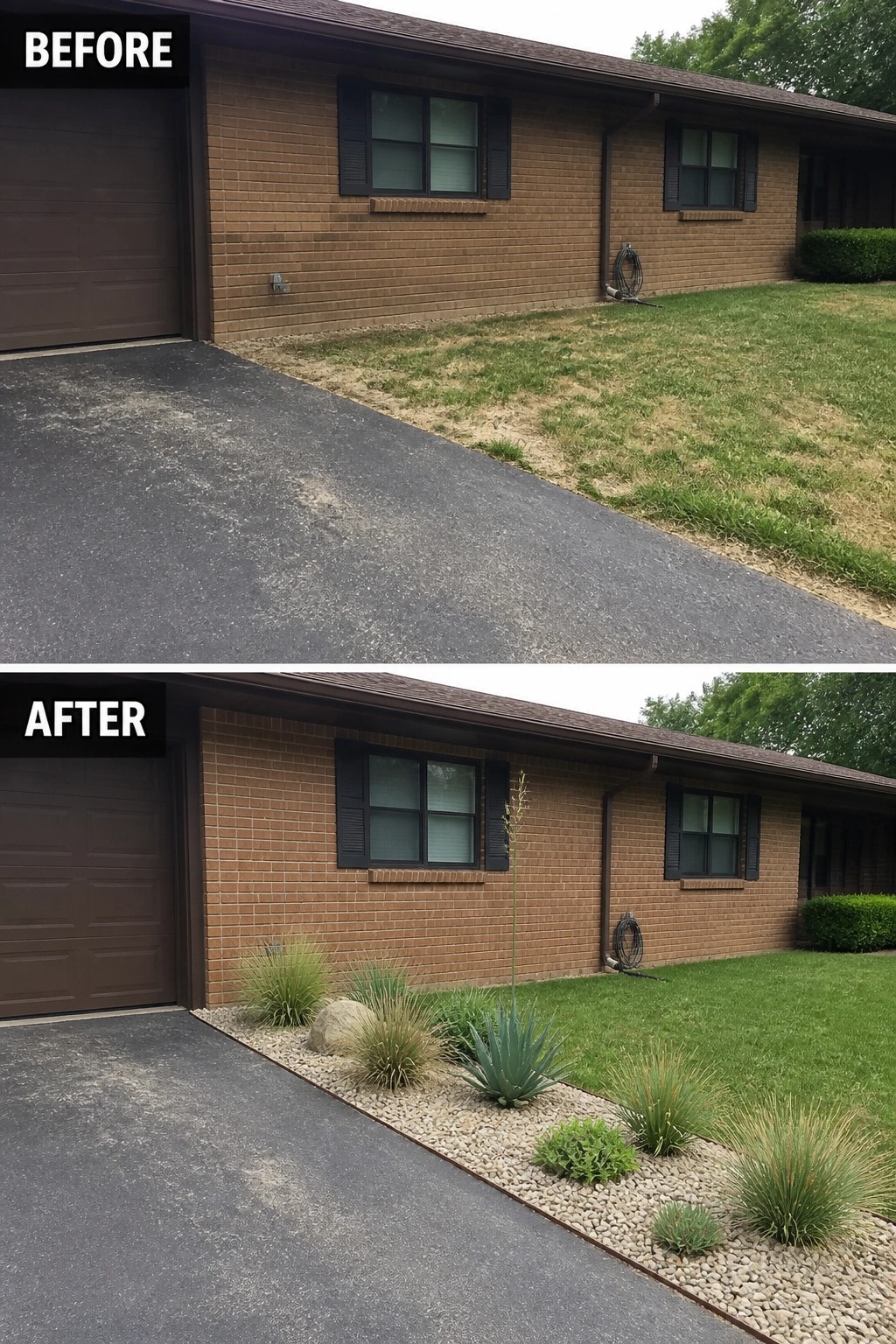
A narrow strip of gravel and bold, drought-tolerant plants can turn a ragged edge of lawn into a neat curb-appeal feature. In this example a weedy band beside the driveway was replaced with a low rock bed, metal edging, a boulder, and a few architectural plants (agave and ornamental grasses), which instantly gives the facade a cleaner, more intentional look.
This idea works best on modest ranch facades where you want low upkeep but clear structure. Prep the area with weed barrier and a shallow border, choose three repeatable plant types for rhythm, and use small crushed stone to keep everything tidy. Keep plant scale in check so you still have room to mow and trim, and pick species suited to your hardiness zone for the least maintenance.
Create A Covered Outdoor Walkway
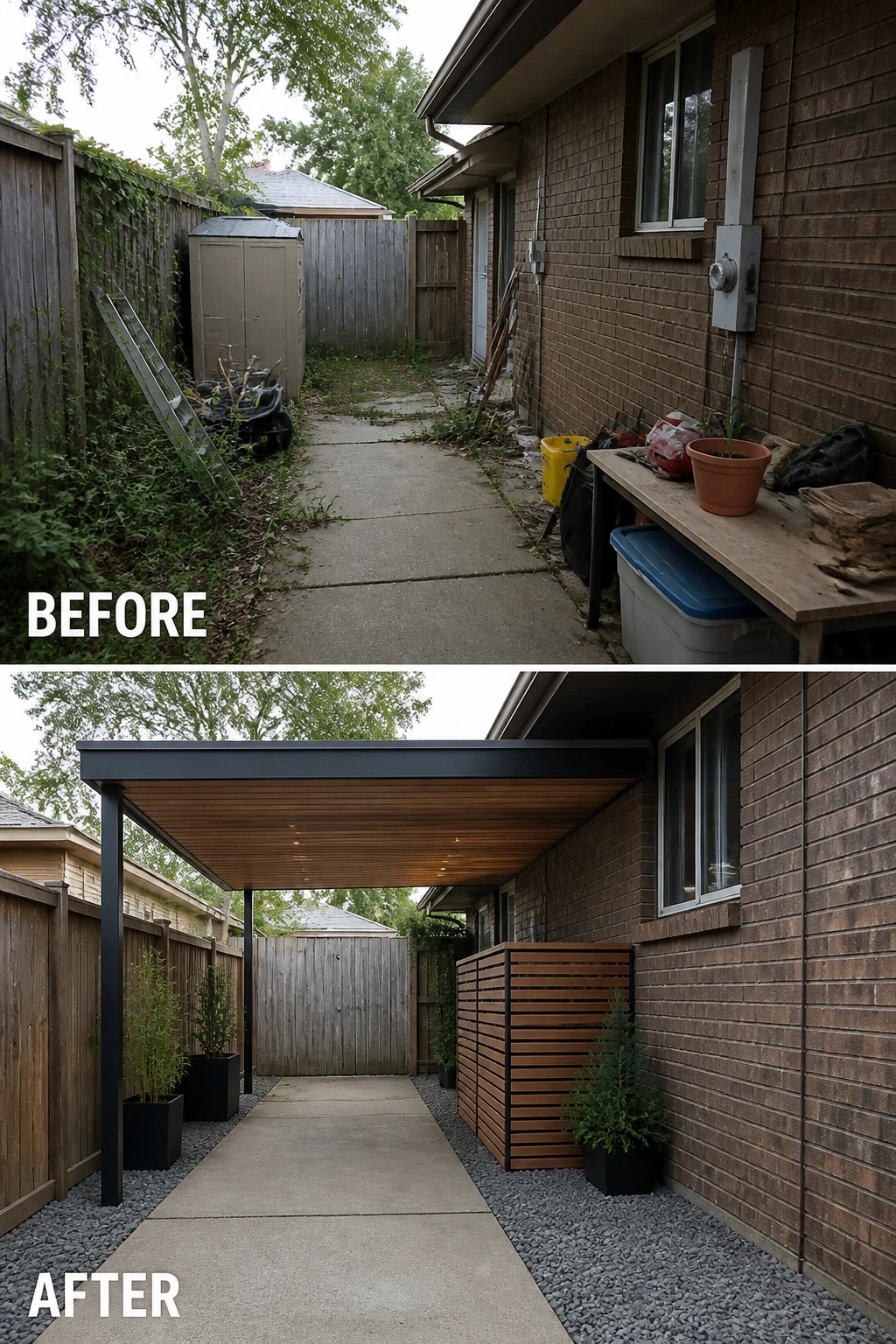
A narrow side yard can easily feel like wasted space. Adding a slim metal-framed canopy with a warm wood ceiling and a vertical slatted screen gives it purpose — the roof protects the path and the screen hides utilities or bins while giving a finished look. This simple change turns a cluttered service area into a tidy, sheltered corridor you can actually use.
To copy it, start by clearing and leveling the path, then pick a low-profile roof that matches the house lines so it does not overwhelm the facade. Keep the walking width generous, use gravel or pea stone along the edges for clean drainage, and use one solid material like wood slats to conceal meters or storage instead of trying to hide everything with plants. Simple lighting in the canopy makes the space usable at night and helps it feel intentional. Simple, practical, and neat.
Give A Bare Porch A Clear Purpose With Color And Planters
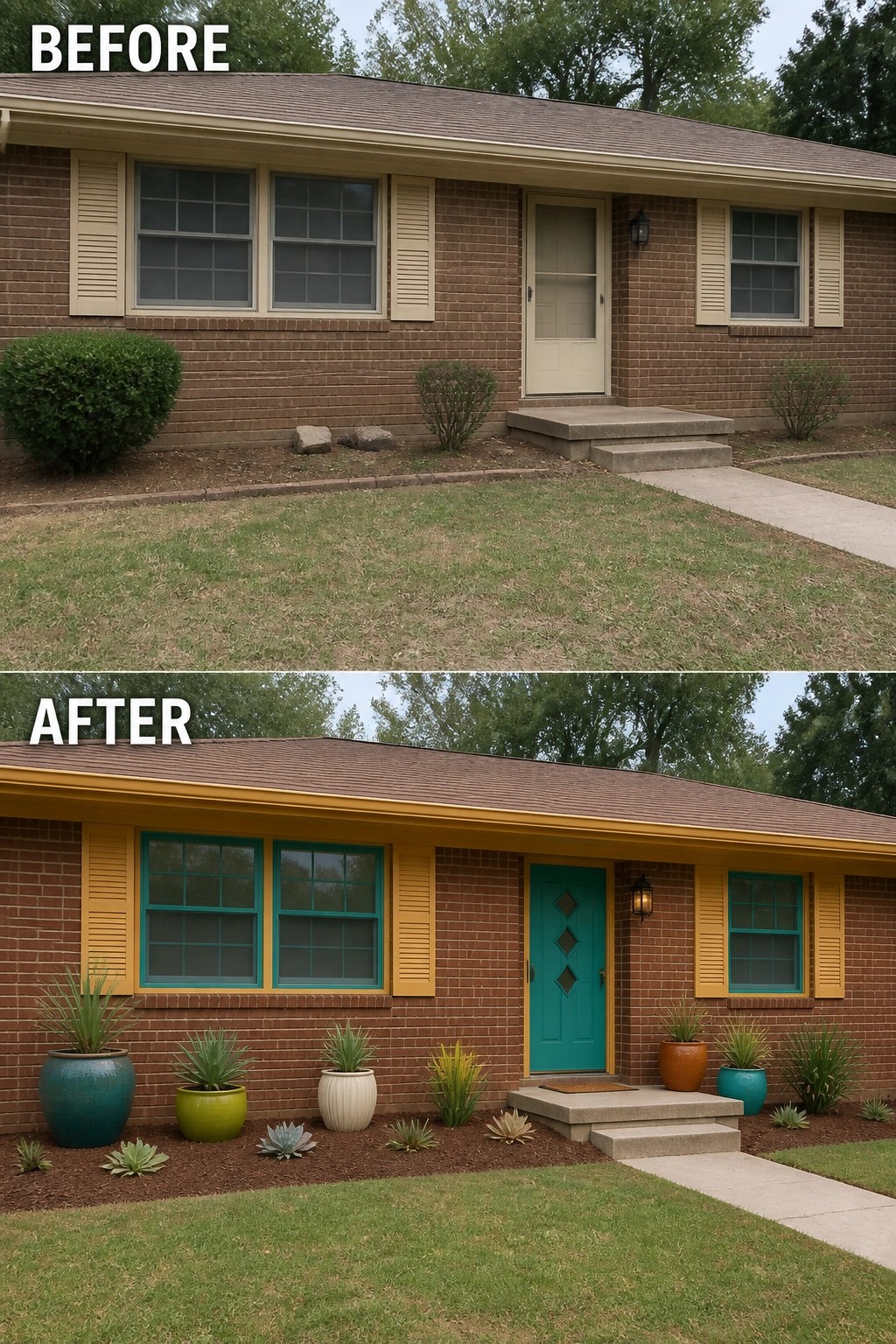
A fresh, colorful front door and a handful of well-placed planters can take a plain brick ranch from anonymous to welcoming without major construction. In this example a bold door color and matching trim are paired with a mulched planting bed and large pots to make the entry feel intentional and styled rather than empty.
To copy this idea, start by choosing one accent color that contrasts the brick and use it on the door and a trim detail for a cohesive look. Add three to five containers in different sizes and stick to low-maintenance, weatherproof plants (succulents, ornamental grasses, agave) so the display stays tidy. Finish with a clean edge and fresh mulch so the porch reads as a purposeful arrival point, and keep the scale small so the walkway stays clear.
Hide An Unsightly Utility With A Slatted Screen
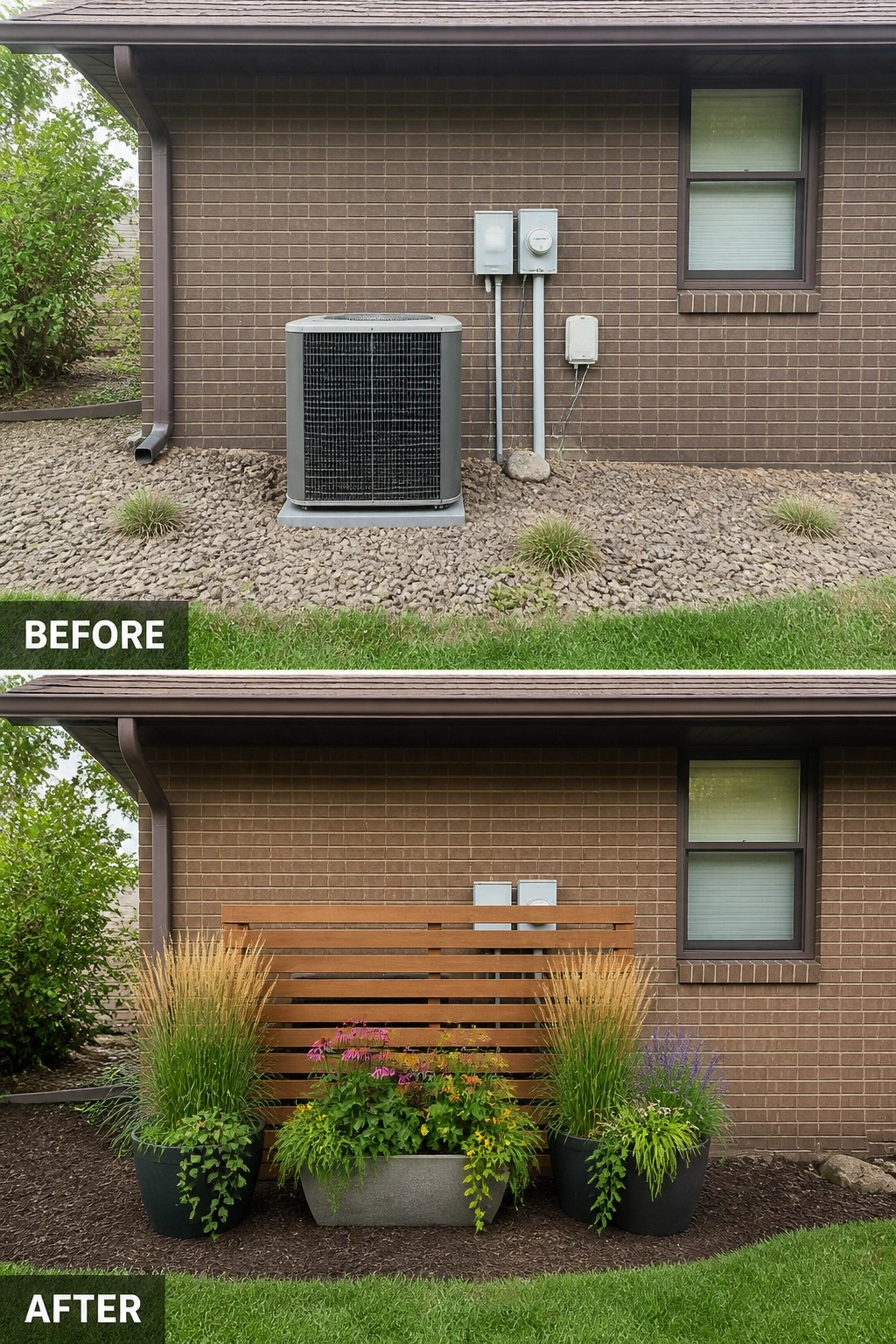
A horizontal wooden slatted screen plus a few large containers can turn an exposed air conditioner and meter wall into a deliberate design feature. Rather than trying to disguise the entire area, the screen provides a tidy backdrop while tall grasses and flowering pots soften the look and give the facade a finished, layered feel.
Measure and plan for service access and airflow so the unit still functions properly—leave a removable panel or make the screen freestanding. Use rot-resistant wood or composite and a stain that complements brown brick, and pick hardy containers and plants (ornamental grasses, coneflowers, hardy perennials) that tolerate heat and partial shade. It’s a simple, low-effort upgrade that suits single-story ranch facades and improves curb appeal quickly.
Add Defined Planting Beds To Frame The Walkway
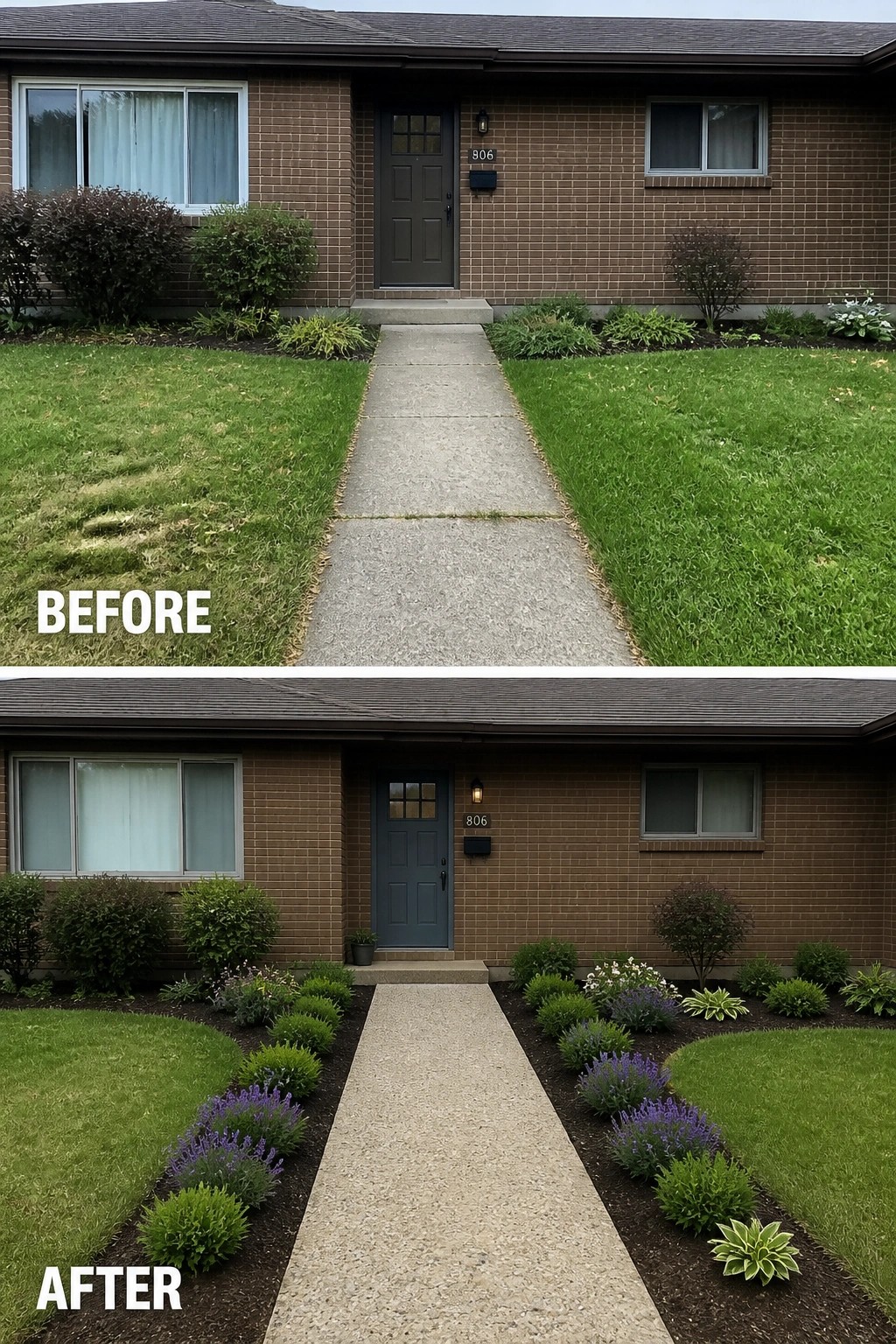
A clean strip of mulched planting beds along the path instantly sharpens a bland front yard. In this makeover the patchy grass edges were removed and replaced with crisp, dark mulch beds planted with repeated low shrubs and flowering spikes, which give rhythm and scale to the narrow walkway. Simple, but effective.
To copy it, start by trimming back or removing the turf that directly borders the sidewalk and install a clear edge (metal, plastic, or a shallow trench). Choose two or three low-maintenance plants to repeat on both sides for a unified look, pick mulch to contrast with the brown brick, and keep spacing roomy so each plant can mature without crowding the path. This approach works especially well on single-story ranches where low, neat planting keeps the facade visible and easy to maintain.
Frequently Asked Questions
Q: Can I paint my brown brick without ruining the texture or causing moisture problems?
A: Yes, you can paint brick safely if you prep it right and use a breathable masonry paint. Clean the surface, fix loose mortar, and test a small area first so you’re happy with the color and finish before doing the whole facade.
Q: I want a modern look but don’t want to lose the ranch character. What should I change?
A: Keep the low, horizontal lines and simple roof shape, then update elements like the front door, windows, and lighting to cleaner, more contemporary styles. Swap out gaudy trim and add crisp, minimal details that read as modern while respecting the original silhouette.
Q: I’m on a tight budget—where should I focus to get the most impact?
A: Replace or repaint the front and garage doors and refresh the trim and shutters for the biggest visual return. Add simple landscaping and a new porch light and the whole house starts to feel updated without a full remodel.
Q: How do I pick trim and roof colors that work with different shades of brown brick?
A: Look at the undertone of your brick—reds lean warm while greys lean cool—and pick trim that either complements or provides a clean contrast. Grab samples and view them at different times of day so you can see how the colors change in sunlight and shadow.