

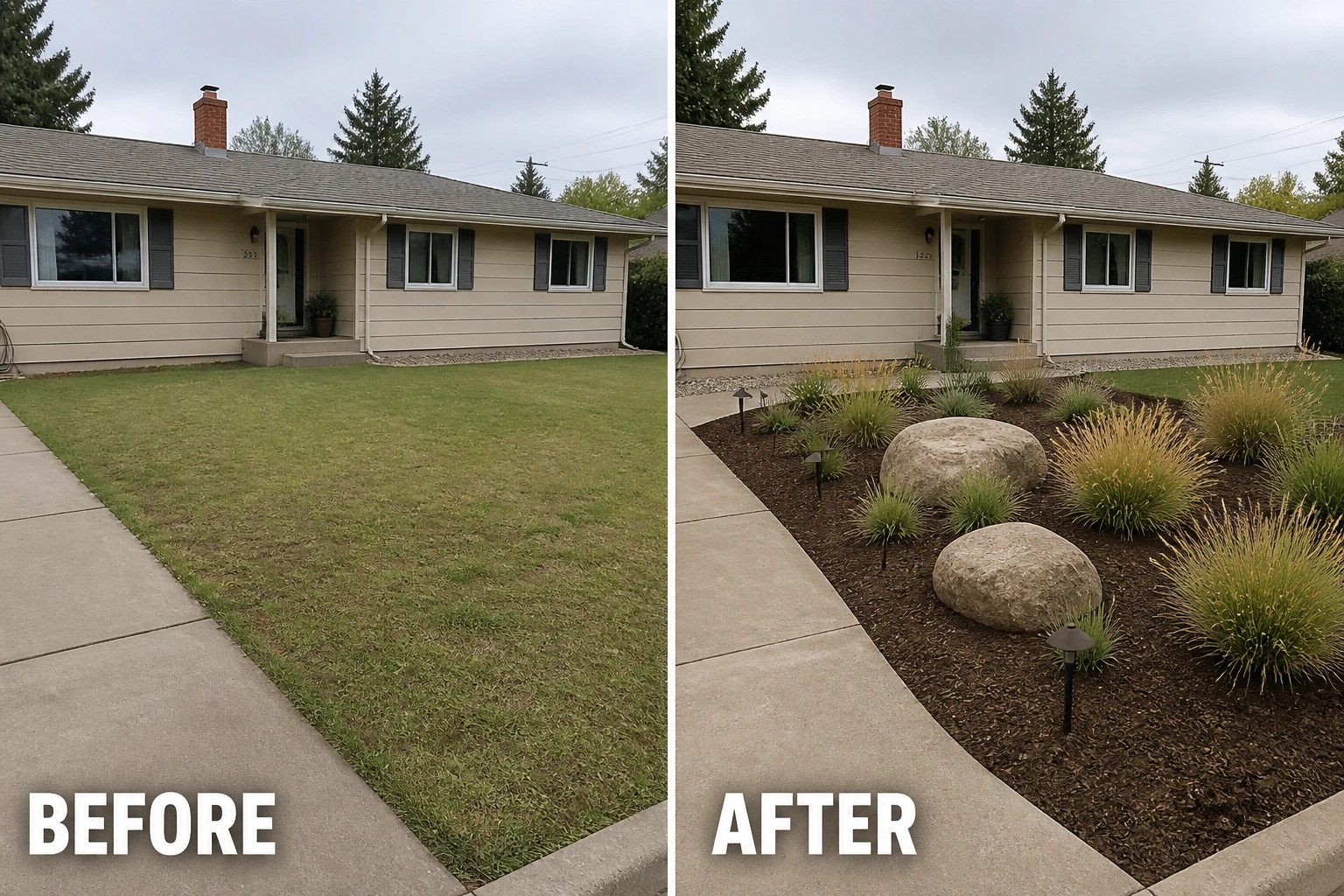
Wide, plain ranch front yards can feel aimless when grass stretches to the road with no structure, so I like to start by thinking about edges, paths, and planting layers that give the façade a clearer frame.
A space usually looks underwhelming because plantings are too sparse, entry points are vague, or the scale isn’t adjusted to the house, and addressing those basics makes the whole yard read better.
Small, practical moves matter.
I often try a simple gravel path or a pair of low shrubs first to see how they guide the eye, and I keep changes reversible so they feel worth testing in a real home.
Over time the layers of lawn shaping, defined beds, and a few well-placed materials add up to a calmer, more cared-for frontage you can adapt to suit your place.
Create Defined Garden Beds To Break Up A Wide Lawn
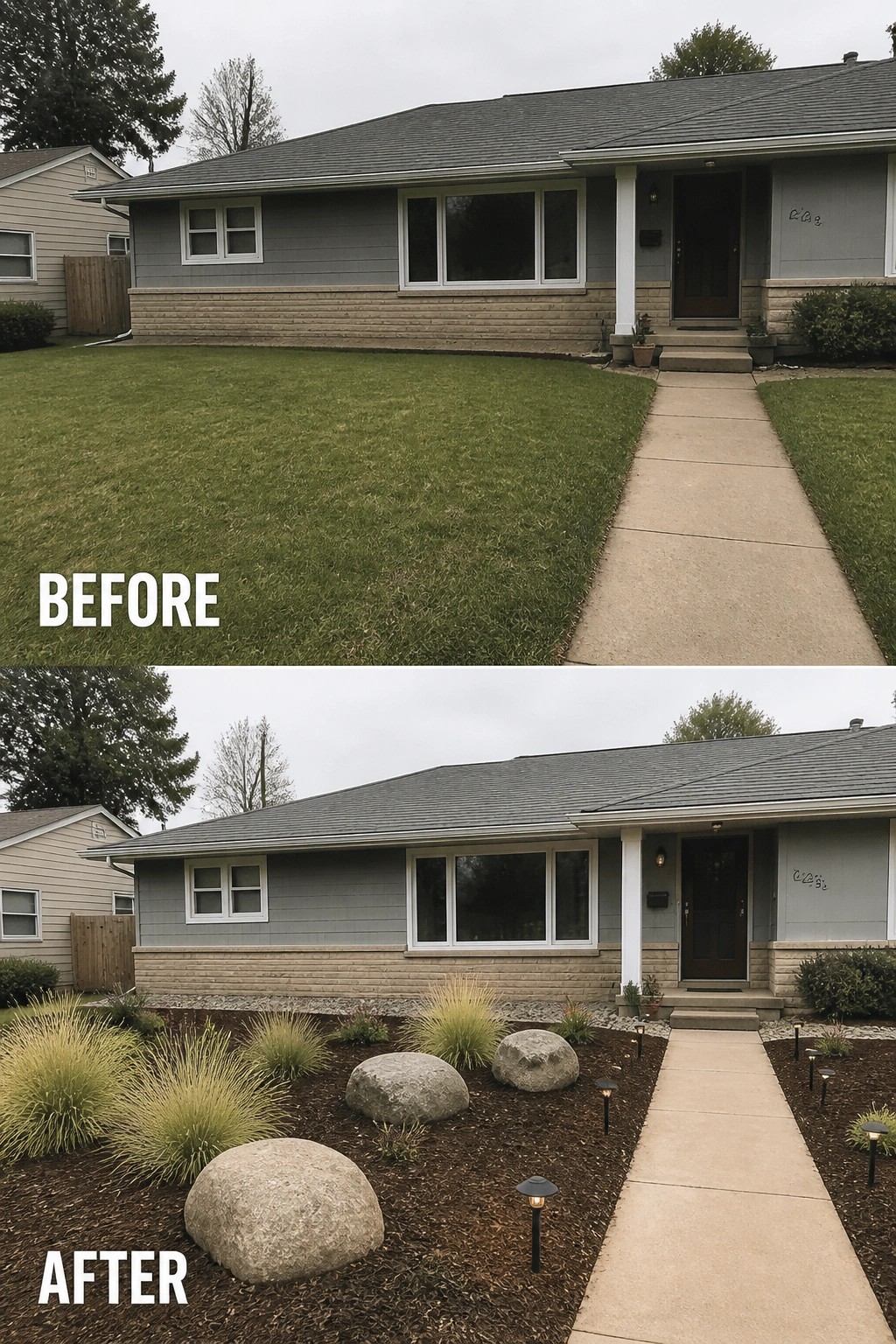
A simple way to stop a broad, flat front yard from looking boring is to carve out low, mulched garden beds and add a few large focal stones. Replacing a strip of turf with a clean bed and a couple of boulders gives the facade instant structure and visual anchors without a lot of ongoing work.
To do it, mark a bed edge along the walkway, remove the grass, and lay down mulch over a weed barrier if you like. Place three or so large rocks at natural intervals, plant repeatable clumps of ornamental grasses or dwarf shrubs for texture, and keep the spacing generous so the bed still reads calm and uncluttered. This works especially well on single‑story ranch houses—just scale the stones and plants to the house so the yard feels balanced, not crowded.
Add A Curved Paver Path To Break Up A Wide Front Yard
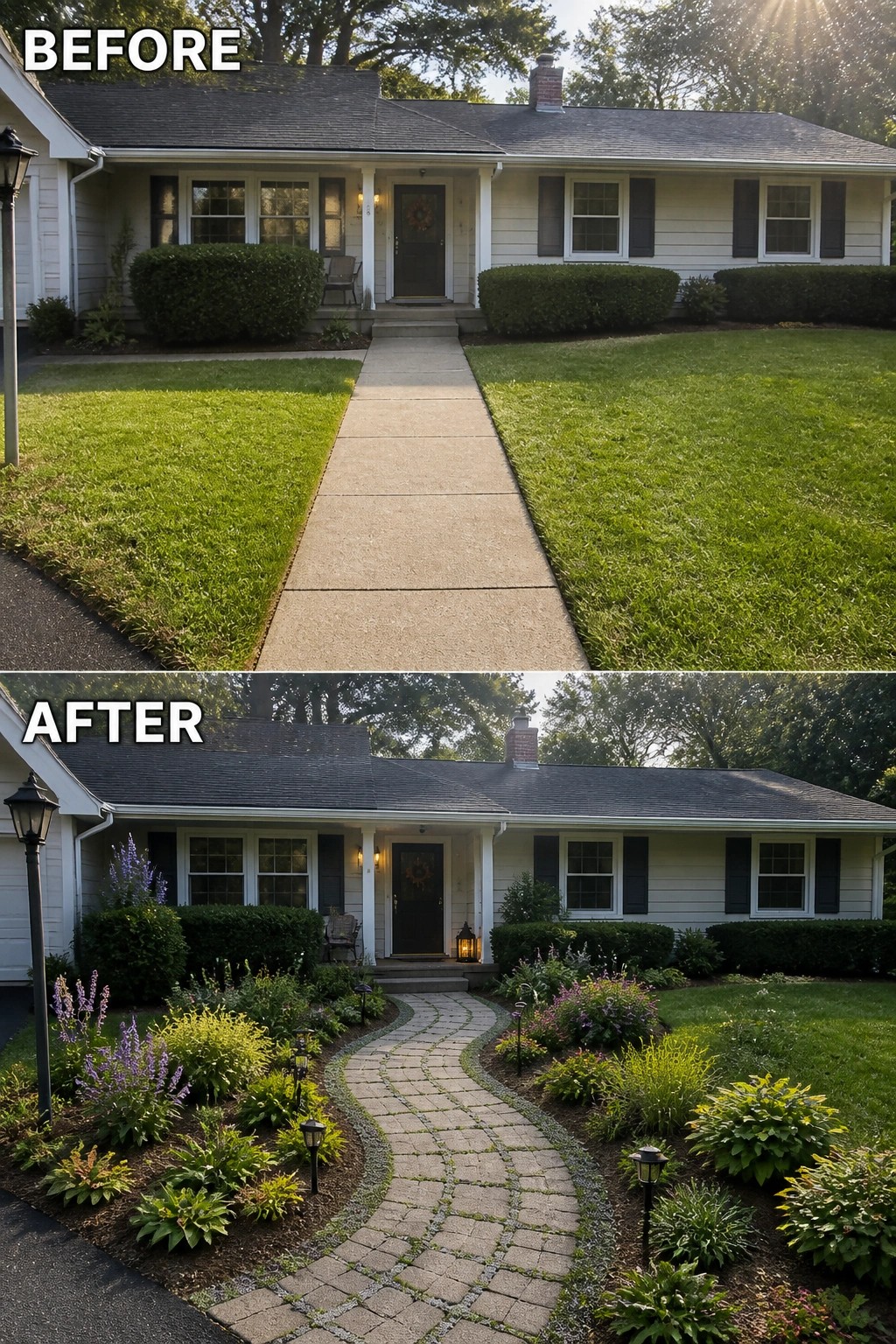
Replacing a straight concrete run with a gently curving paver path and flanking garden beds is a simple way to give a wide, flat lawn instant structure and personality. The curve leads the eye and the footsteps, creating a sense of arrival and breaking the horizontal monotony of a ranch facade without touching the house itself.
Start by laying a hose to play with shapes until you find a natural curve. Keep the path a comfortable 3 to 4 feet wide, use a stable compacted base under permeable pavers, and edge it
Update A Plain Ranch With Paint And Shutters
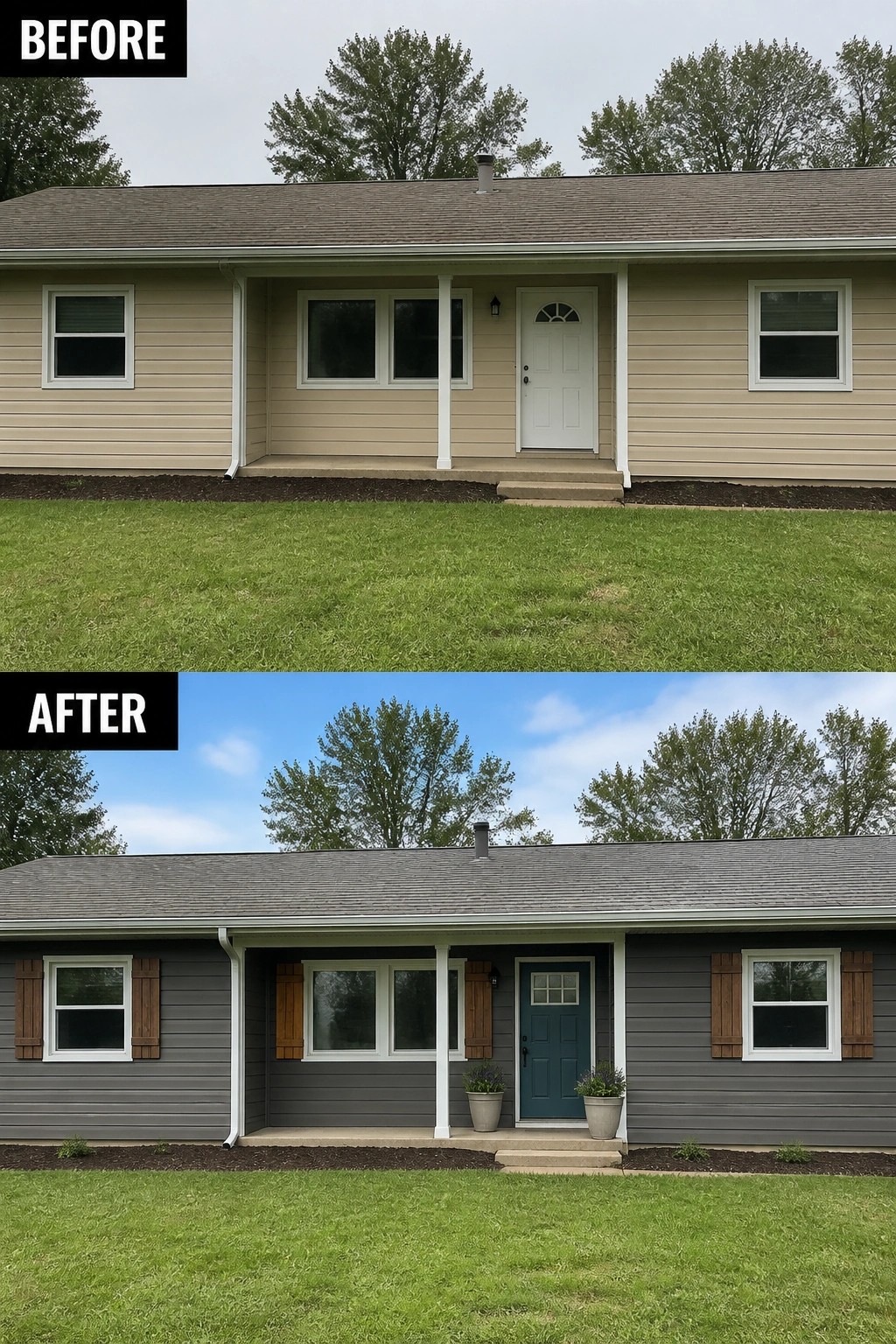
A fresh exterior paint color paired with simple shutters and a boldly colored front door is an easy way to give a flat, wide ranch facade instant personality. Swapping the light beige for a deeper gray and adding wooden shutters plus a contrasting door turns the entry into a clear focal point without changing the house footprint.
To copy this, pick a two- or three-color palette: main siding, white trim, and one accent for the door or shutters. Keep shutter size proportional to the windows and use durable exterior paint or stain so the color lasts. Add a couple of matching planters at the steps to reinforce the entry, and test paint samples on a small area first (try samples on the siding first) so you can see the tones at different times of day.
Add Defined Garden Beds To Break Up A Wide Lawn
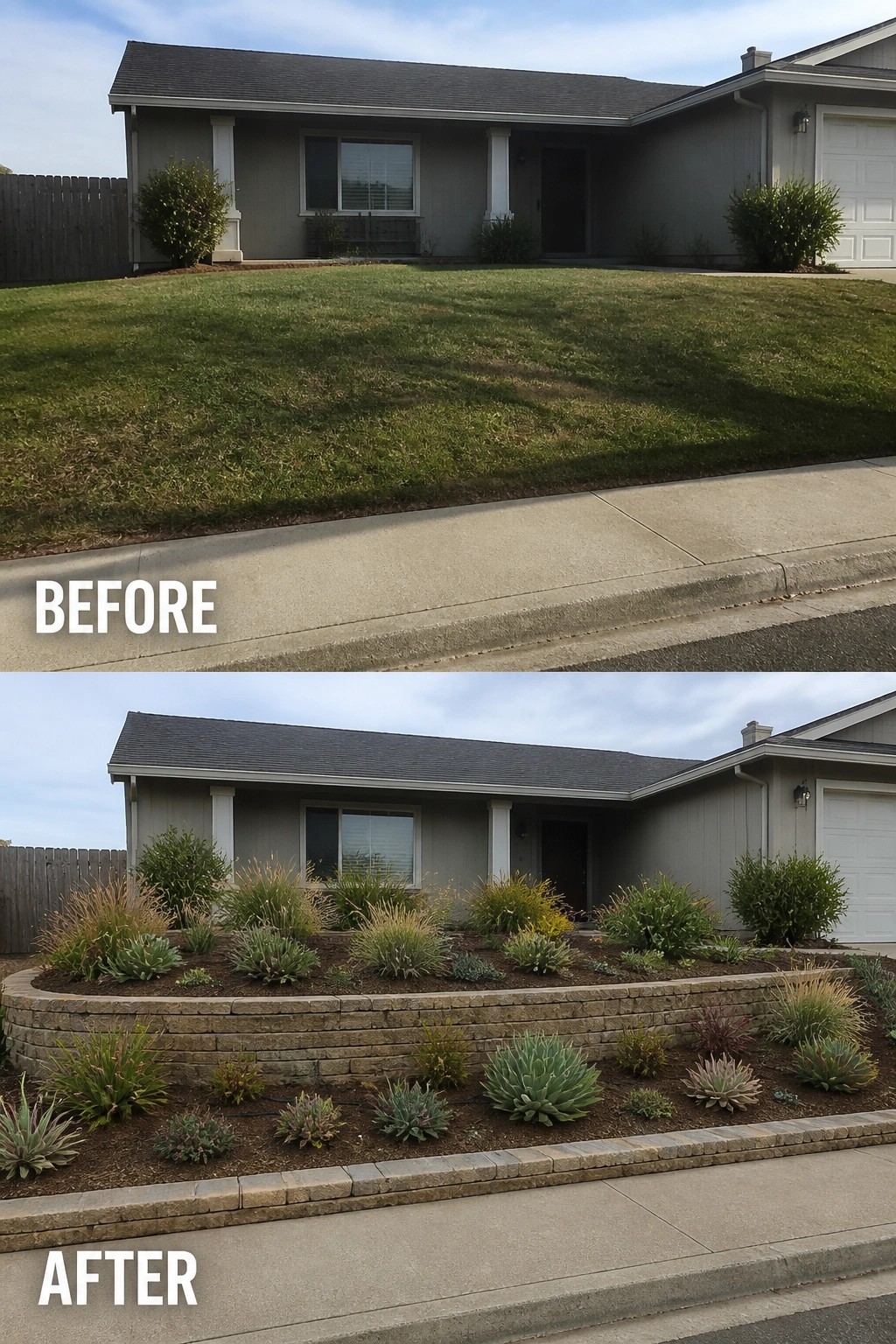
Carving a wide, plain lawn into defined garden beds instantly gives a ranch-style front yard more shape and purpose. In this example a simple low stone retaining wall replaces the unbroken grass, creating tiered beds filled with mulch and drought-tolerant grasses and succulents — it reduces mowing and gives the facade a clear, architectural edge.
To copy the idea, start with one low wall or edging that matches your house scale and use repeating plant groups for a tidy, cohesive look. Choose low-water, low-maintenance species, add mulch or gravel, and install drip irrigation so the beds stay tidy (and need less work). Keep sightlines to the entry clear and leave enough space for routine upkeep.
Create Defined Garden Beds With Low Hedges
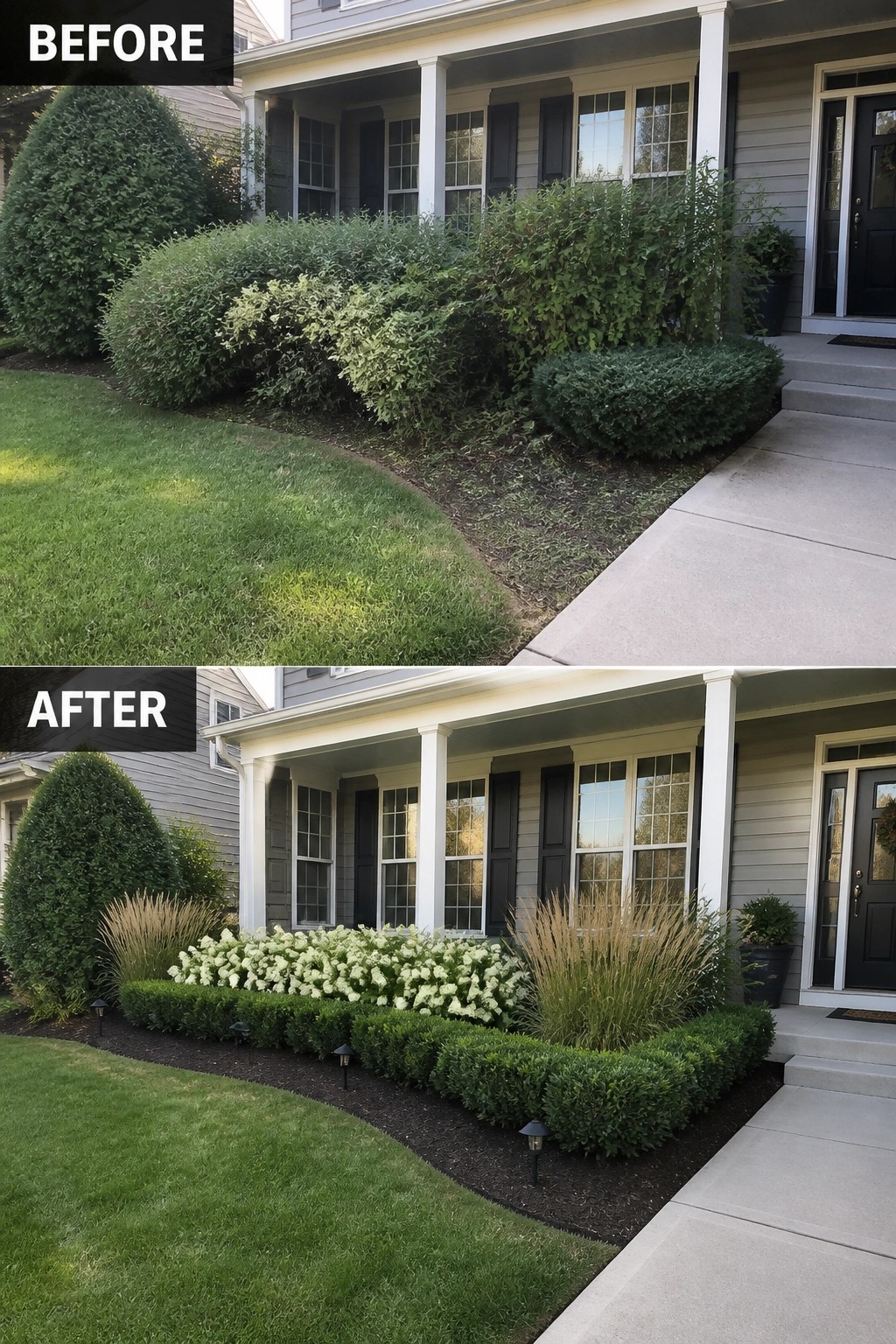
Cleaning up an overgrown foundation planting and replacing it with a simple, structured bed instantly tightens a wide ranch yard. In this example the messy shrubs gave way to a clipped low hedge and a band of massed white perennials with taller grasses at the ends, which gives the porch a clear foreground and a neat edge to the lawn. That focused repeat of shapes and heights makes the whole front feel intentional rather than cluttered.
To use this at your place, start by removing the largest, overgrown shrubs and clear the bed down to soil. Plant a low evergreen hedge for a permanent border, add a single massed perennial for seasonal color, and anchor the ends with taller architectural plants so the bed reads across the front of the house. Finish with dark mulch and a few low lights so the shape is visible year-round, and pick plants you can actually maintain—less variety, more repetition keeps it easy.
Create A Defined Mailbox Flower Bed
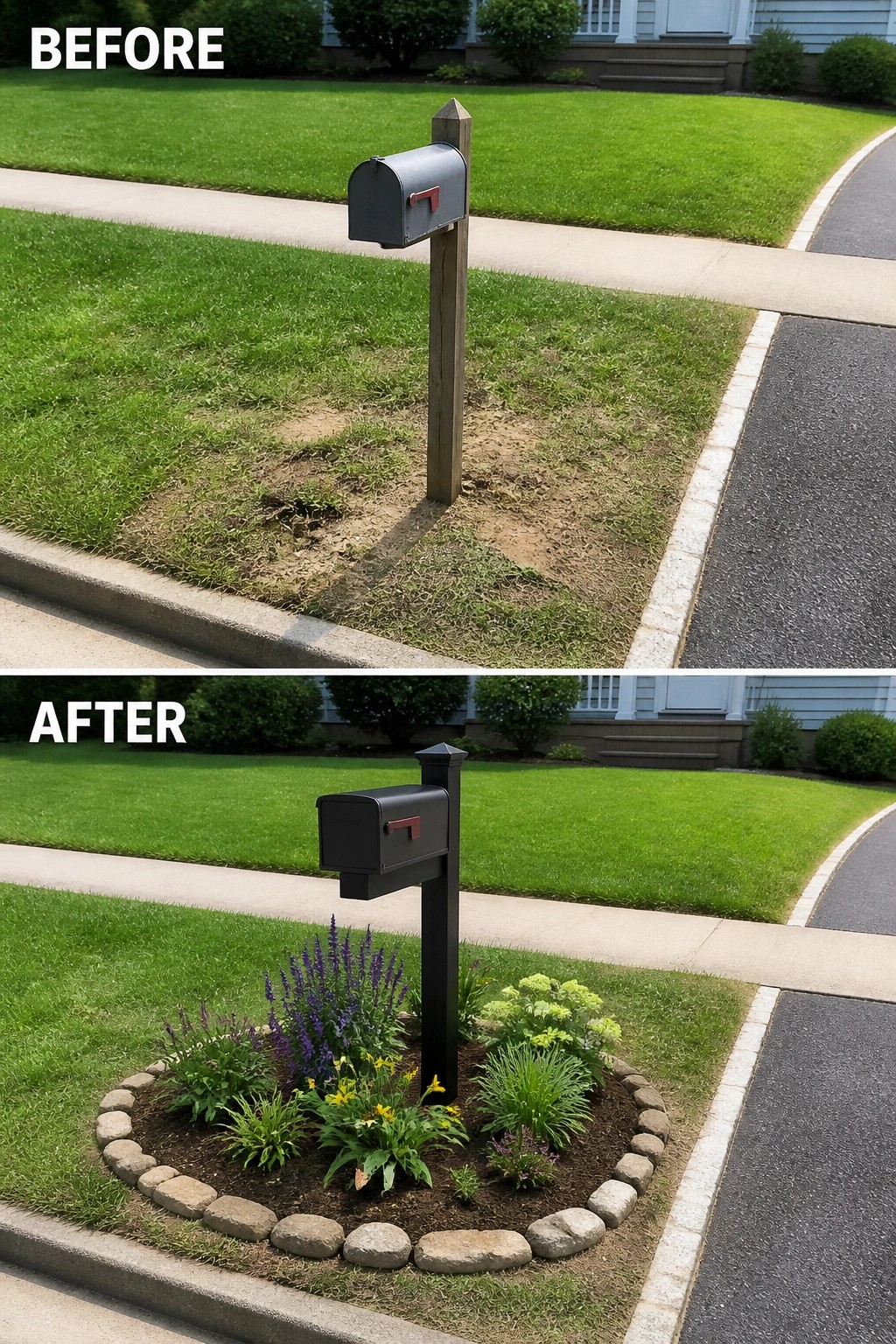
A small, well-edged planting bed around a mailbox turns an overlooked patch of dirt into a neat curb-appeal feature. In this example a plain post and bare soil become a stone-ringed bed filled with low perennials and fresh mulch, giving the mailbox a clear, cared-for focal point without a big project.
Keep the idea simple: pick a modest radius so the bed feels intentional (about 3 to 4 feet across works for most yards), lay a tidy edge of stone or pavers, improve the soil, then plant a few repeating perennials for season-long color. Choose lower plants near the mailbox access, group three or five of each variety for impact, and add mulch to cut weeds and keep the bed looking finished with minimal maintenance.
Define The Driveway With A Narrow Planted Border
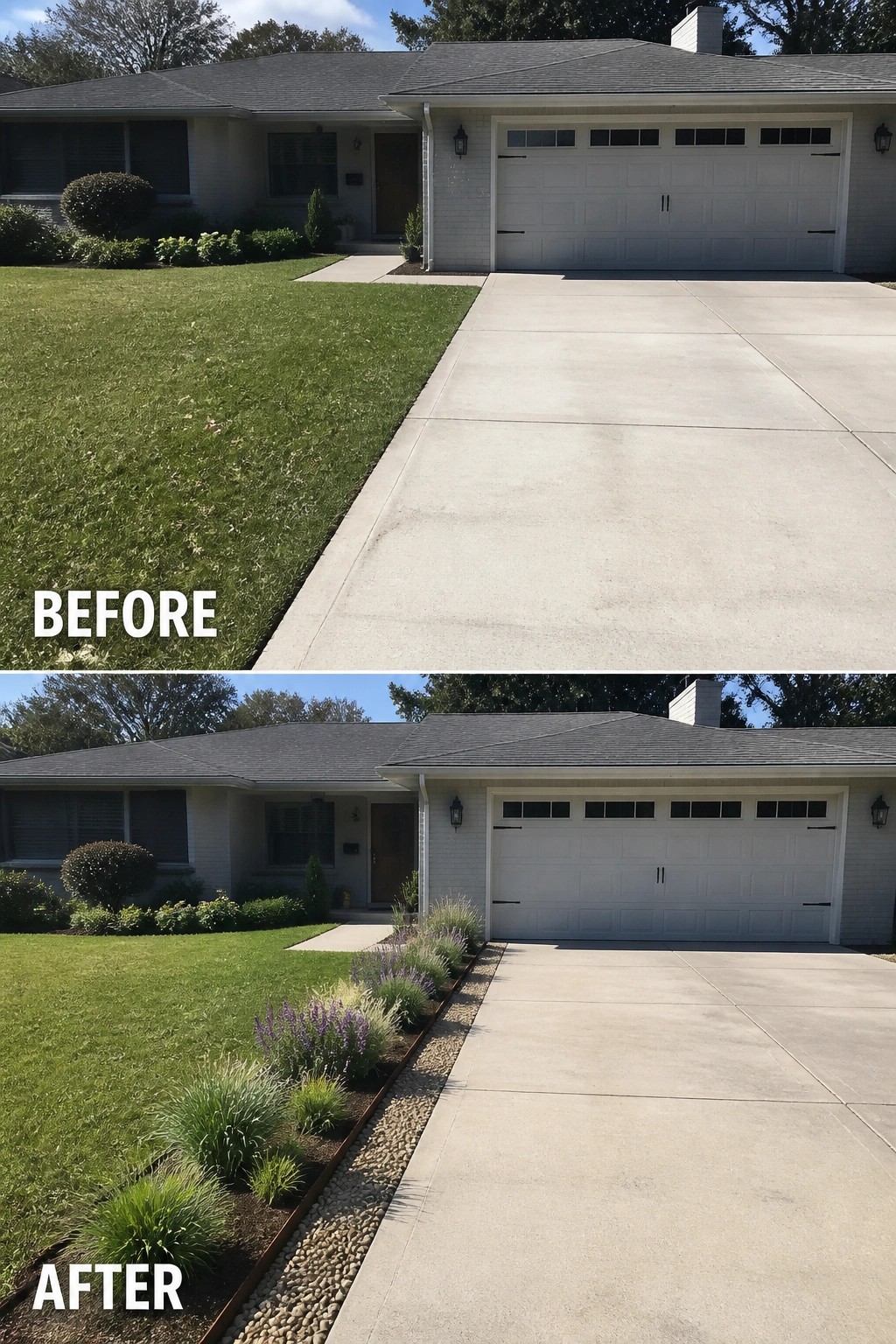
A slim, planted bed along the driveway edge is a quick way to lift a wide, plain front yard. Instead of a bare lawn meeting concrete, add a neat strip of low ornamental grasses and a few purple-flowering perennials with metal edging and a band of pebbles. The contrast gives the house a finished look, softens the hard edge of the driveway, and adds seasonal interest without taking up much space.
This approach works best on single-story ranch fronts where you want a tidy line and low maintenance. Keep the bed shallow so mowing and snow removal stay easy, choose tough, sun-loving plants and space them in small drifts, and install a simple steel edge with gravel behind it to keep turf out. Small effort, clear result. Easy to keep up.
Use Curved Flower Beds To Break Up A Wide Lawn
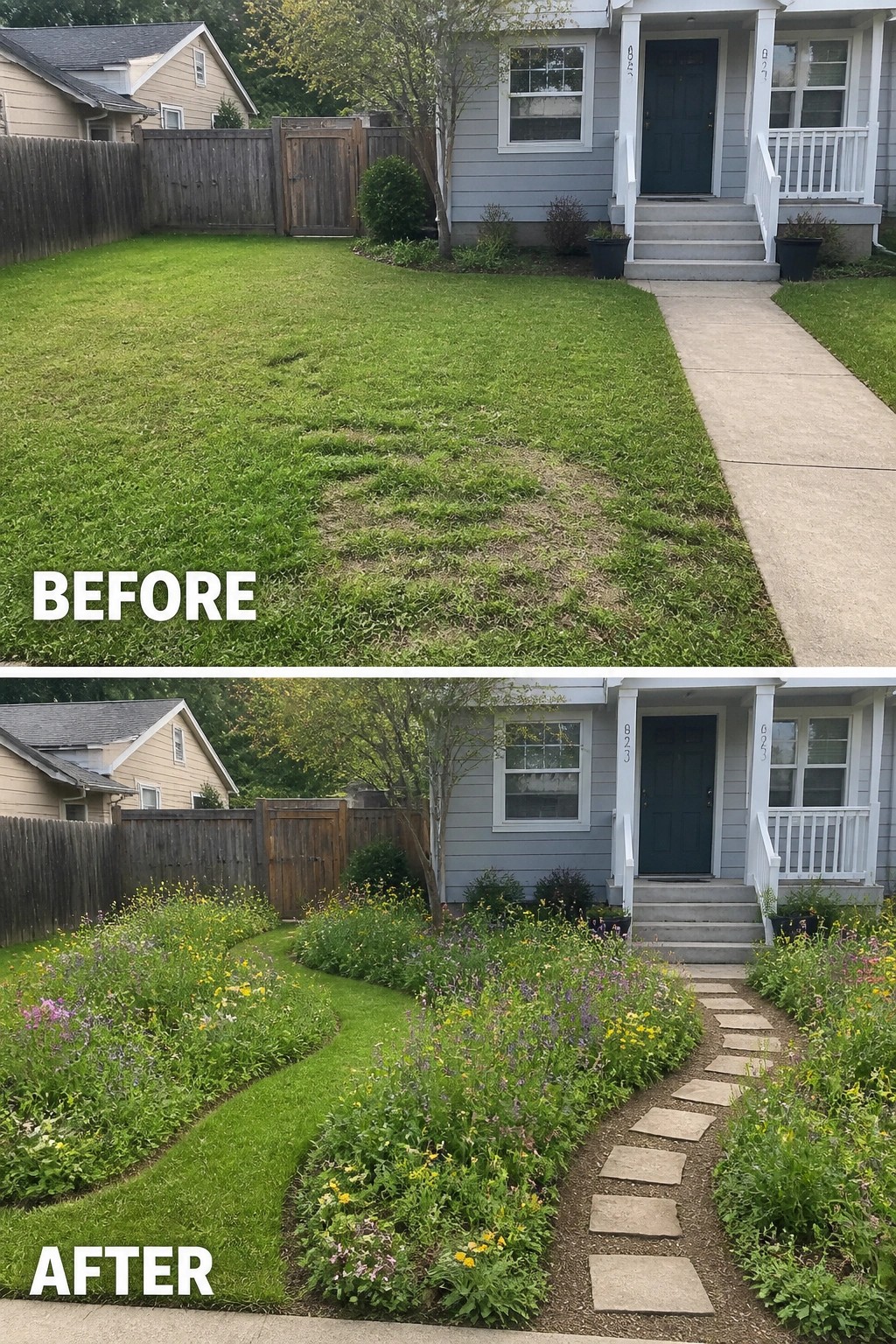
A long, flat expanse of turf can feel boring and make a house seem distant from the street. Carving in simple, flowing garden beds and a narrow meandering path turns that blank space into a welcoming approach while keeping plenty of lawn. In this example a plain front yard becomes two curved planting ribbons edged by a central stepping-stone route that leads the eye to the porch.
To copy this, lay a garden hose to test curves before you cut turf, then edge and remove sod or use sheet mulch to establish beds. Plant repeatable groups of low-maintenance perennials and native wildflowers for color and pollinators (native perennials are easiest). Keep the path wide enough to walk comfortably, set stones on compacted soil or gravel, and leave a mowing strip so maintenance stays simple. This idea suits ranch-style, wide-front yards where you want movement and color without heavy hardscaping.
Update Your Garage Door For Instant Curb Appeal
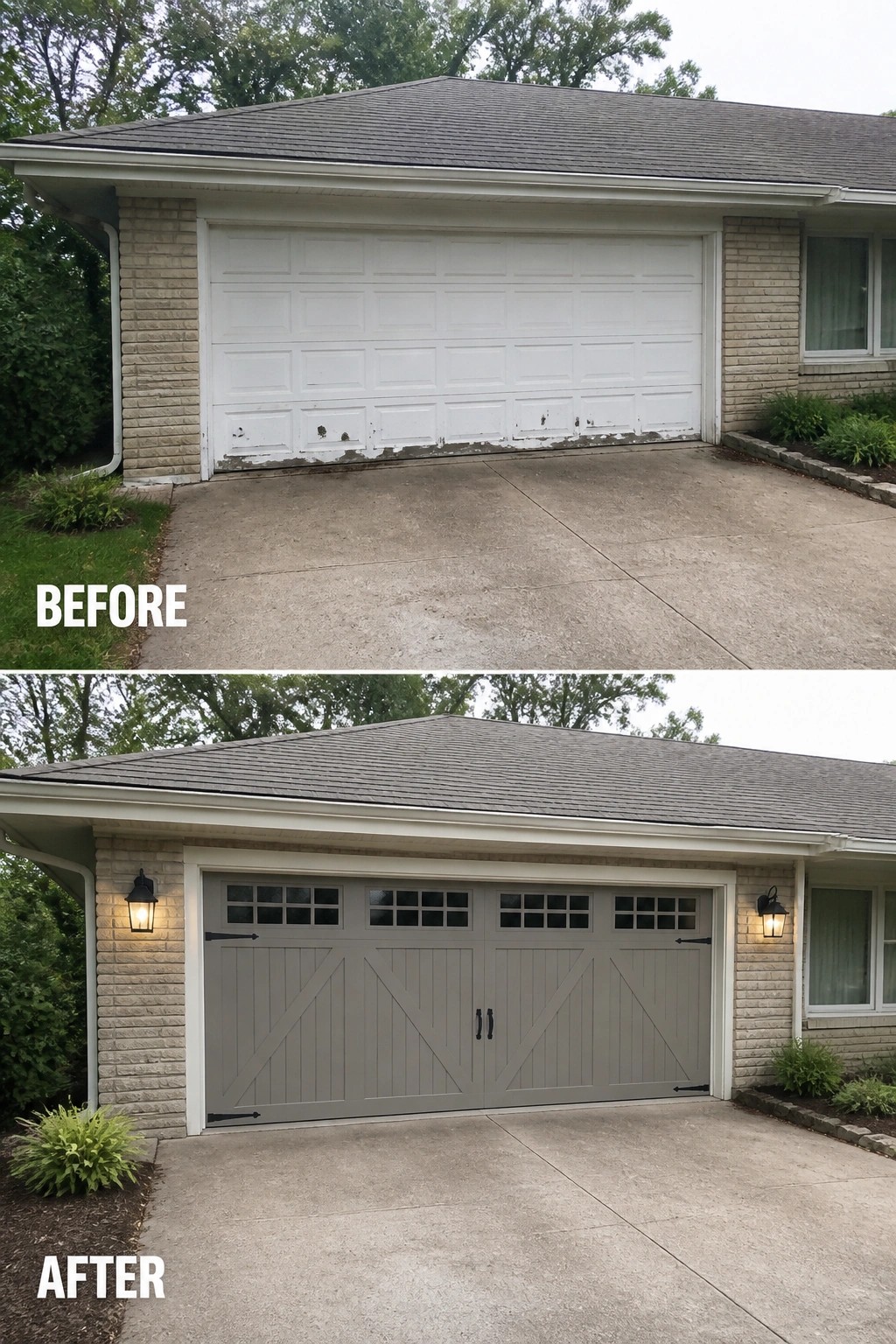
A garage door is one of the biggest visual elements on a ranch-style facade, so swapping a plain, worn door for a carriage-style option with windows and simple hardware immediately lifts the look. In this example the old white panel door is replaced with a muted gray door that includes top windows and black strap hinges, turning a bland face into a neat, intentional focal point.
You can copy this idea in stages: paint or refinish the existing door if replacement is out of budget, then add faux hardware and a row of windows or a new light kit to sell the look. Choose a color that ties to your brick or trim, add matching wall lanterns for balance, and pick weatherproof hardware so the update lasts—small moves, big impact.
Use Window Boxes And Shutters To Break Up A Wide Facade
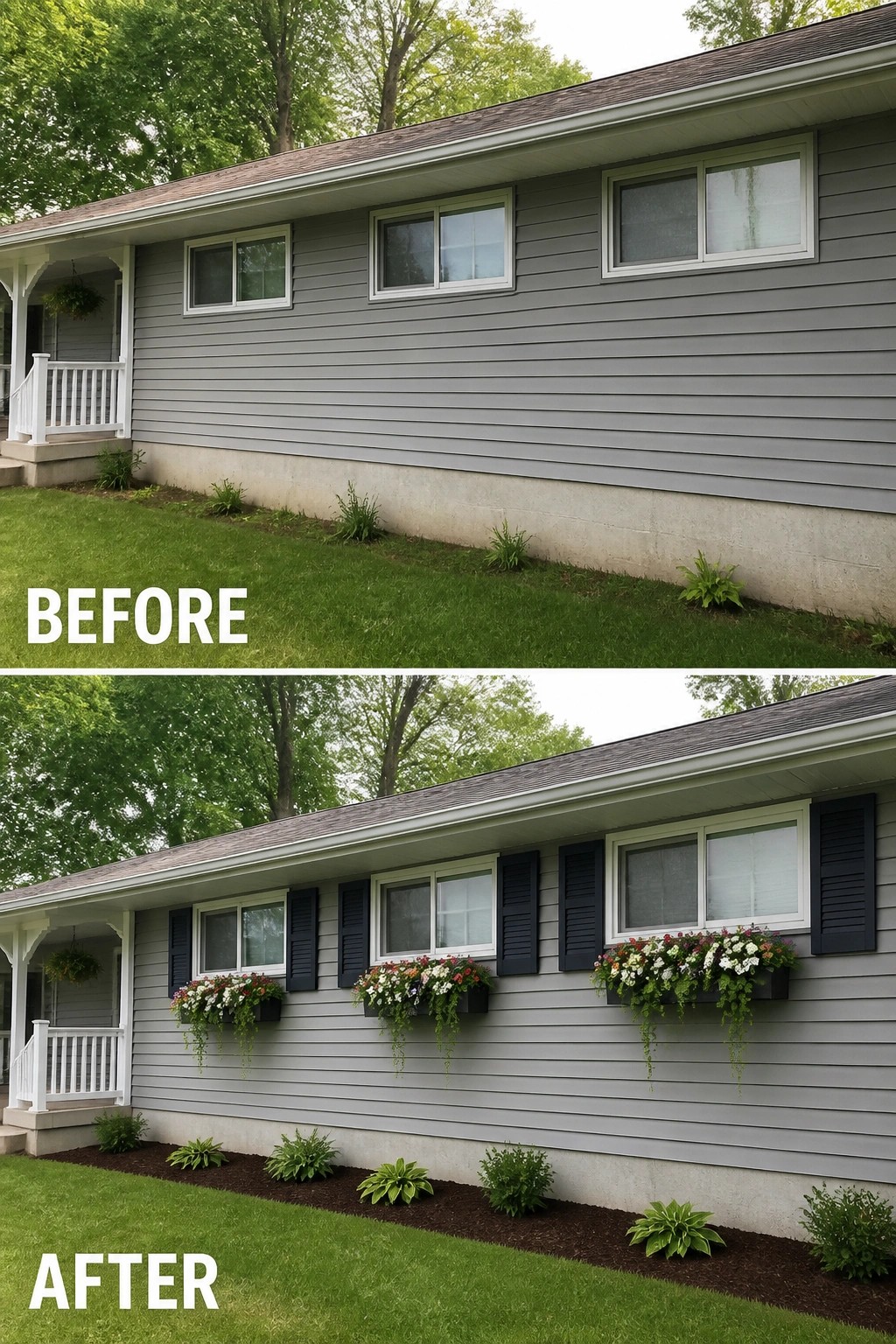
A row of identical windows on a low, wide ranch can read flat and anonymous. Adding coordinated shutters and window boxes gives the wall rhythm and a human scale — you get vertical accents at each window and seasonal color without a large renovation. In this example the plain siding is updated simply by installing dark shutters and matching flower boxes filled with trailing annuals, plus a narrow mulched bed to ground the wall.
To copy it, pick shutters sized to each window (about two-thirds the window width works well) and repeat the same color for a tidy, cohesive look. Choose low-maintenance, trailing plants for the boxes and durable perennials or small shrubs in the bed so the base stays neat between plantings. Start small and keep spacing consistent so the additions read like planned detail rather than decoration tacked on.
Use Landscape Lighting To Define The Entry
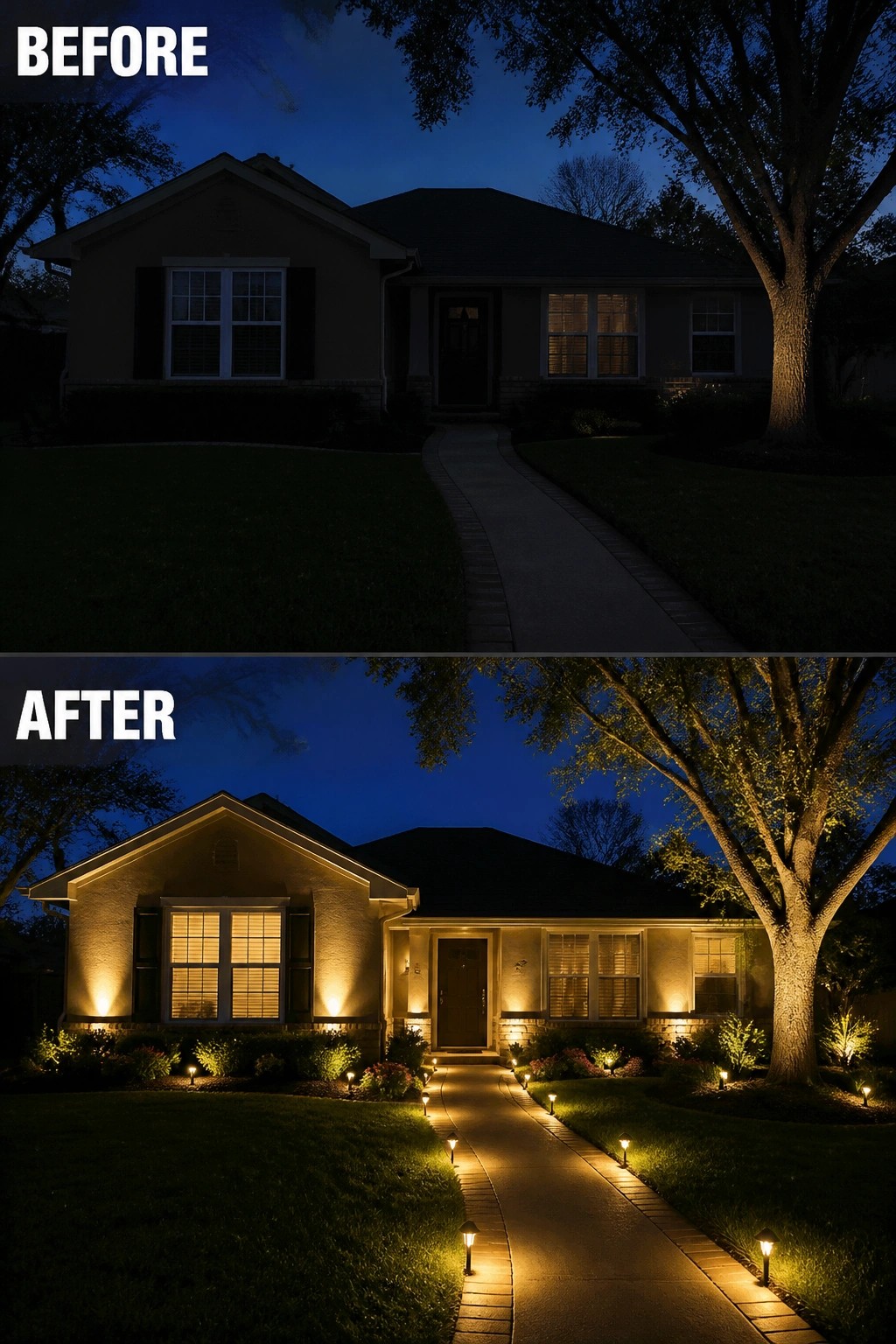
A straightforward strip of low-profile lights along the walkway and a few uplights on the house and tree will change a wide, plain ranch façade from anonymous to intentional. In the example a dark front yard becomes a clear, usable approach simply by adding evenly spaced path lights and warm uplighting at the porch and a specimen tree.
Start by laying out the path lights first so guests can find the door, then add two or three uplights to highlight the porch and a key tree or planting bed. Pick 2700–3000K LED fixtures, aim lights low to avoid glare, space path lights about 6 to 8 feet apart, and use a timer or photocell so the system runs automatically. This works especially well on single-story, wide-front homes where lighting can create a focused entry without major landscaping changes.
Create A Narrow Rain Garden Along The House
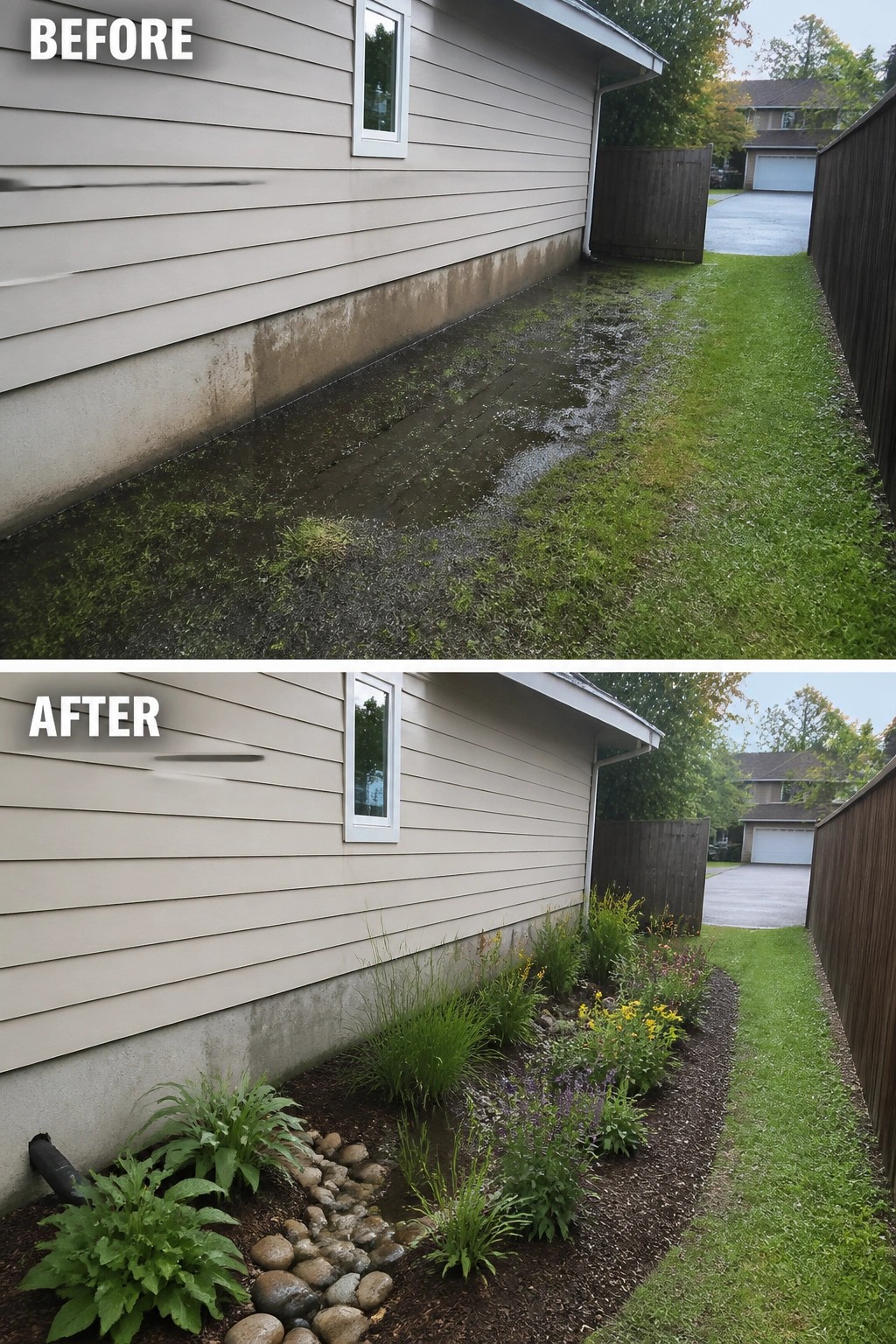
A slim, planted rain garden is an easy way to turn a muddy, waterlogged side strip into intentional landscaping. Instead of leaving runoff to puddle against the foundation, install a shallow swale lined with river rock that feeds into a mulched bed of moisture‑tolerant perennials and ornamental grasses. The result hides wet ground, soaks up stormwater, and gives a plain ranch yard a neat, purposeful edge.
To try this yourself, start by grading a slight route away from the foundation and redirecting the downspout toward a rock channel that slows flow. Plant natives that tolerate both wet and dry spells and cover the bed with mulch to reduce erosion and weeds. Keep the bed narrow so it fits tight walkways, leave a few inches between plants and the house, and expect to tweak plants the first couple seasons as the new drainage settles. Works well on long, plain front yards and narrow side strips.
Create A Defined Planting Bed Along A Plain Fence
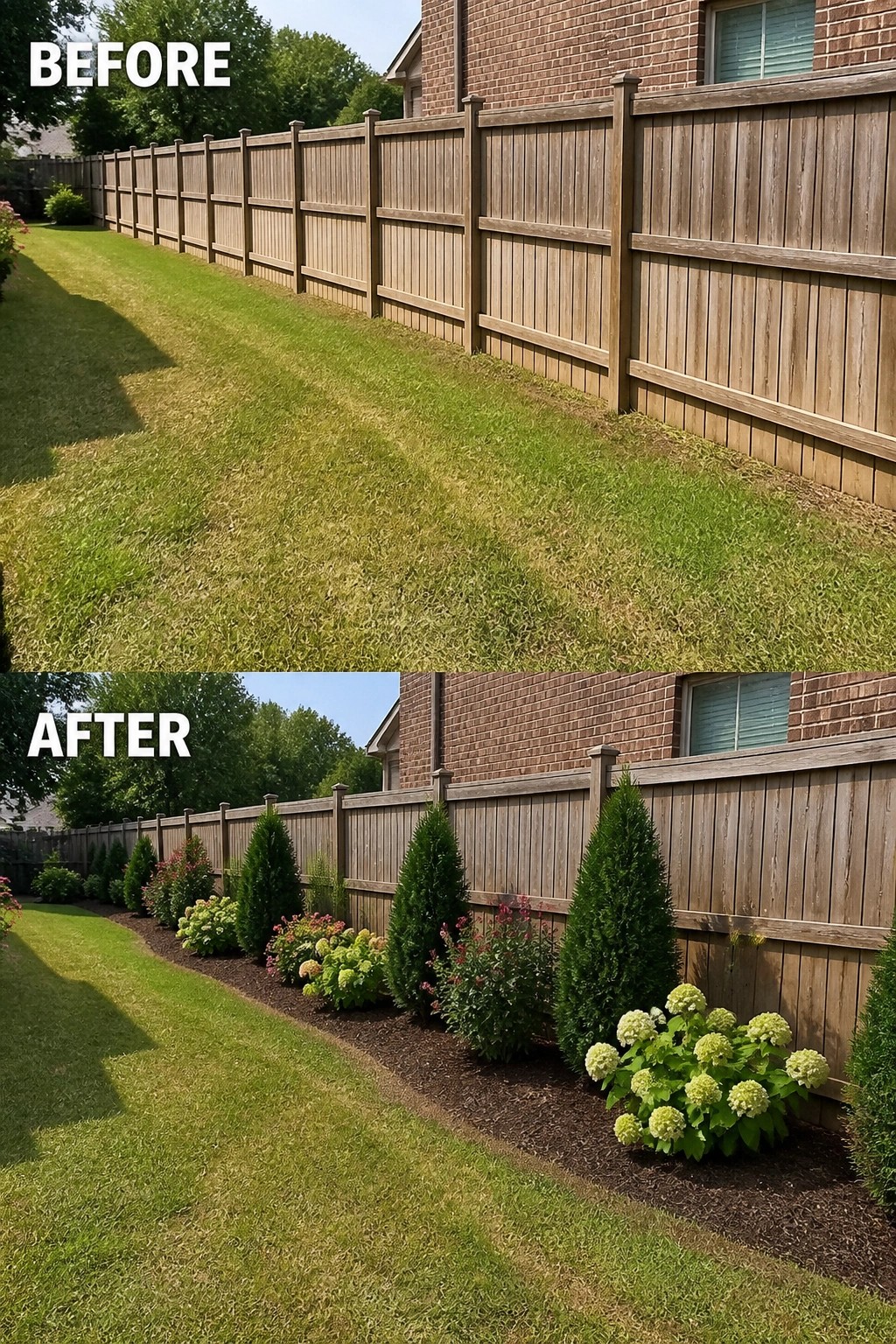
A narrow, mulched planting bed planted with a simple repeat of shrubs and perennials can turn a wide, featureless lawn into a composed side yard. In this example the plain grass next to the fence was replaced with a tidy bed of evergreen columnals and flowering shrubs set in dark mulch, which gives instant structure, rhythm, and a bit of privacy without crowding the space.
To copy this, mark a clean edge, remove turf, and lay a shallow trench or edging so the bed reads as a deliberate element. Pick two or three reliable plants to repeat at regular spacing (tall evergreens for vertical punctuation and lower flowering shrubs in front), add 2–3 inches of mulch, and leave a mowing gap so upkeep stays easy. Choose plant sizes that will suit the fence height and local light, water well the first season, and you’ll have a low-fuss, high-impact border. Simple and effective.
Create A Defined Curbside Garden Bed
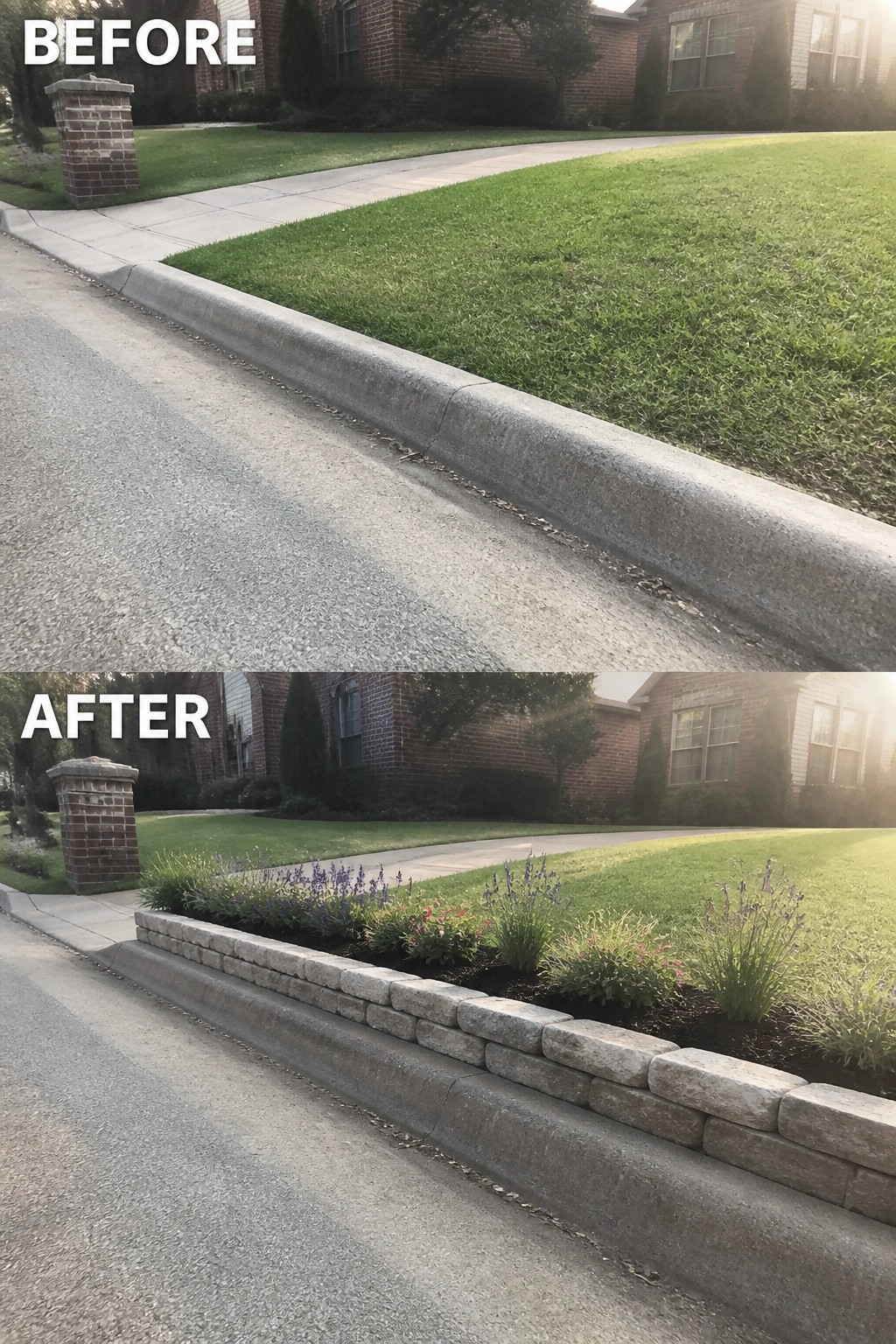
A narrow, low stone wall and planted bed can turn a wide, plain lawn from forgettable to finished. In this example a simple two-course stacked stone edge replaces an abrupt grass slope and gives a tidy strip for small perennials and ornamental grasses. The hard edge frames the yard, protects soil from the street, and gives you a place for repeated plantings that read nicely from the road.
To copy it, keep the bed shallow and the wall low so you do not block sightlines or make mowing awkward. Set the first course on a leveled base, add good topsoil, then plant a few durable perennials and tufted grasses in a repeating pattern; finish with mulch to keep weeds down. Simple and practical.
Give A Bare Porch A Clear Purpose
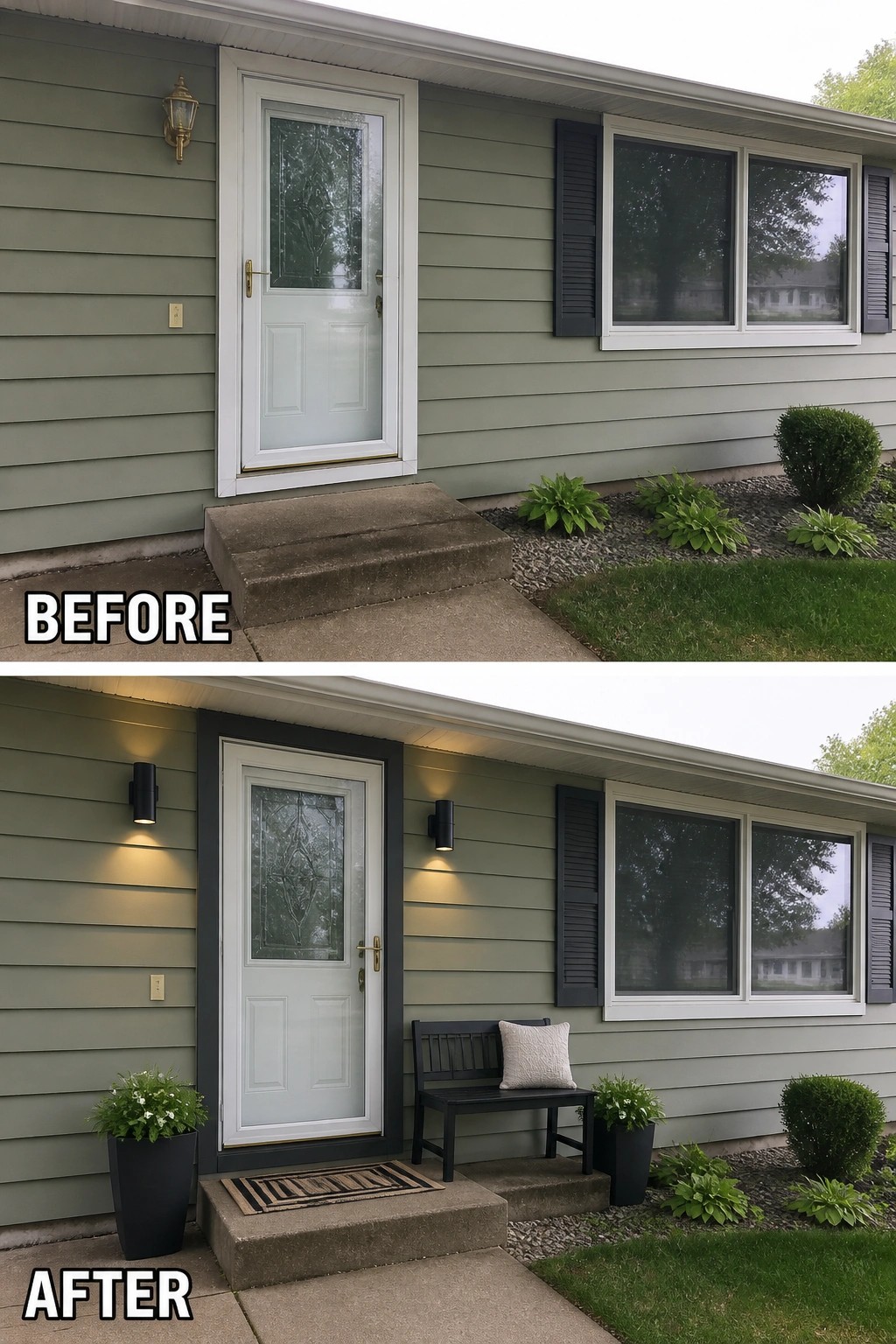
A tiny, undecorated entry can feel like wasted space. Frame the door with darker trim, add a pair of simple wall sconces, and place one small bench and matching planters to make the step read as a real porch rather than just a threshold. One or two well-chosen elements define the spot and make it useful without needing a full remodel.
For a DIY version start with cleanup and paint the door surround a contrasting color to create a focal point. Mount lighting at eye level so the area feels welcoming and safe, pick a narrow bench that won’t block the path, and use tall, identical planters to balance the composition. Keep everything weatherproof and leave enough room for the door to open easily—small, practical choices are all you need.
Replace A Plain Lawn With Defined Gravel Beds
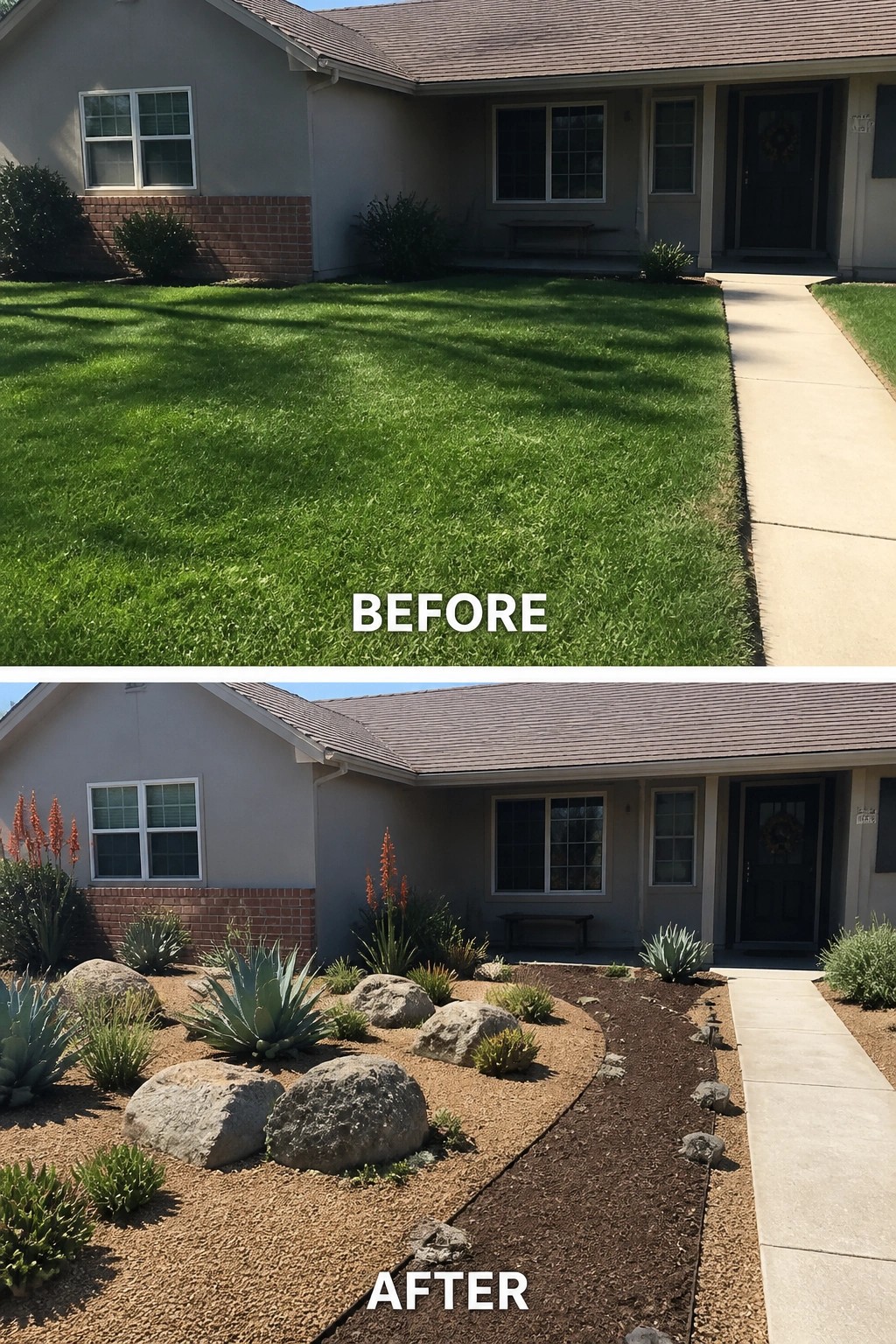
Swapping a big stretch of turf for shaped gravel beds instantly gives a wide ranch yard structure and purpose. The idea here is simple: carve neat bed edges, lay a gravel or decomposed granite groundcover, and use a few large rocks and drought-tolerant succulents as focal points — it reads tidy and intentional while cutting down on water, mowing, and upkeep.
If you want to try this, start by mapping the bed lines so they flow with the walkway and house, then install a clean edging and a weed barrier if desired. Group plants in small clusters, choose species suited to your climate, size boulders to match the home’s scale, and keep the sidewalk edge clear so the yard still feels open and accessible.
Create Defined Garden Beds To Frame The Walkway
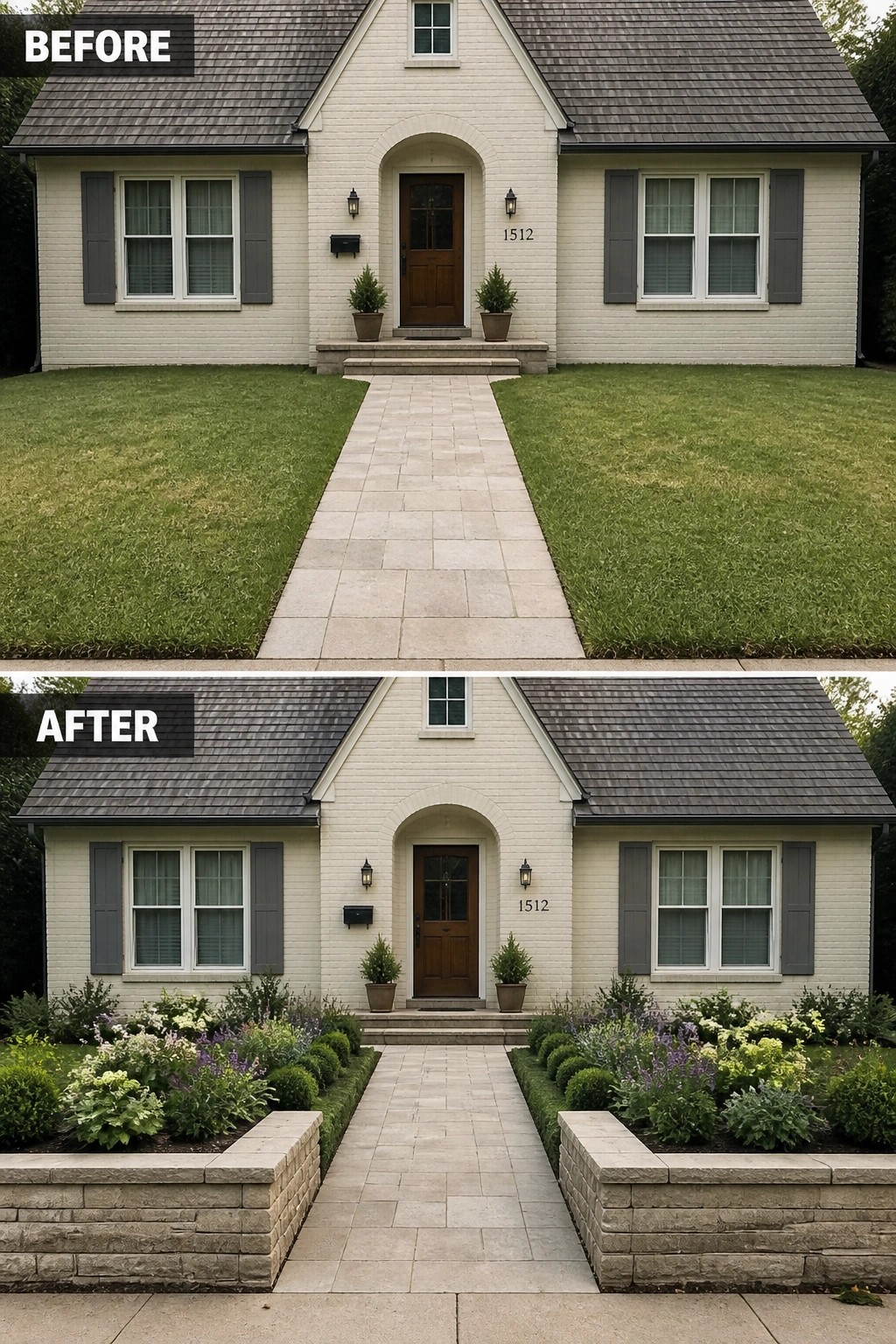
A plain wide lawn is easy to maintain but it leaves the entry feeling undecided. Framing the central path with low stone beds and a repeat of small shrubs and perennials gives the front yard a clear edge and purpose. In the photo the empty grass strip becomes a purposeful approach when flanked by low retaining walls, round boxwoods, and mixed flowering plants.
To copy it, run narrow raised beds along each side of the walk and keep them low so the house remains visible. Use a single repeated shrub for rhythm, add a few seasonal perennials for color, and finish with mulch and drip irrigation for easy care. This works especially well on ranch or bungalow facades with long walkways—just leave plenty of room to move and keep the planting scale in balance with the house.
Create A Layered Perennial Bed And A Simple Stepping Path
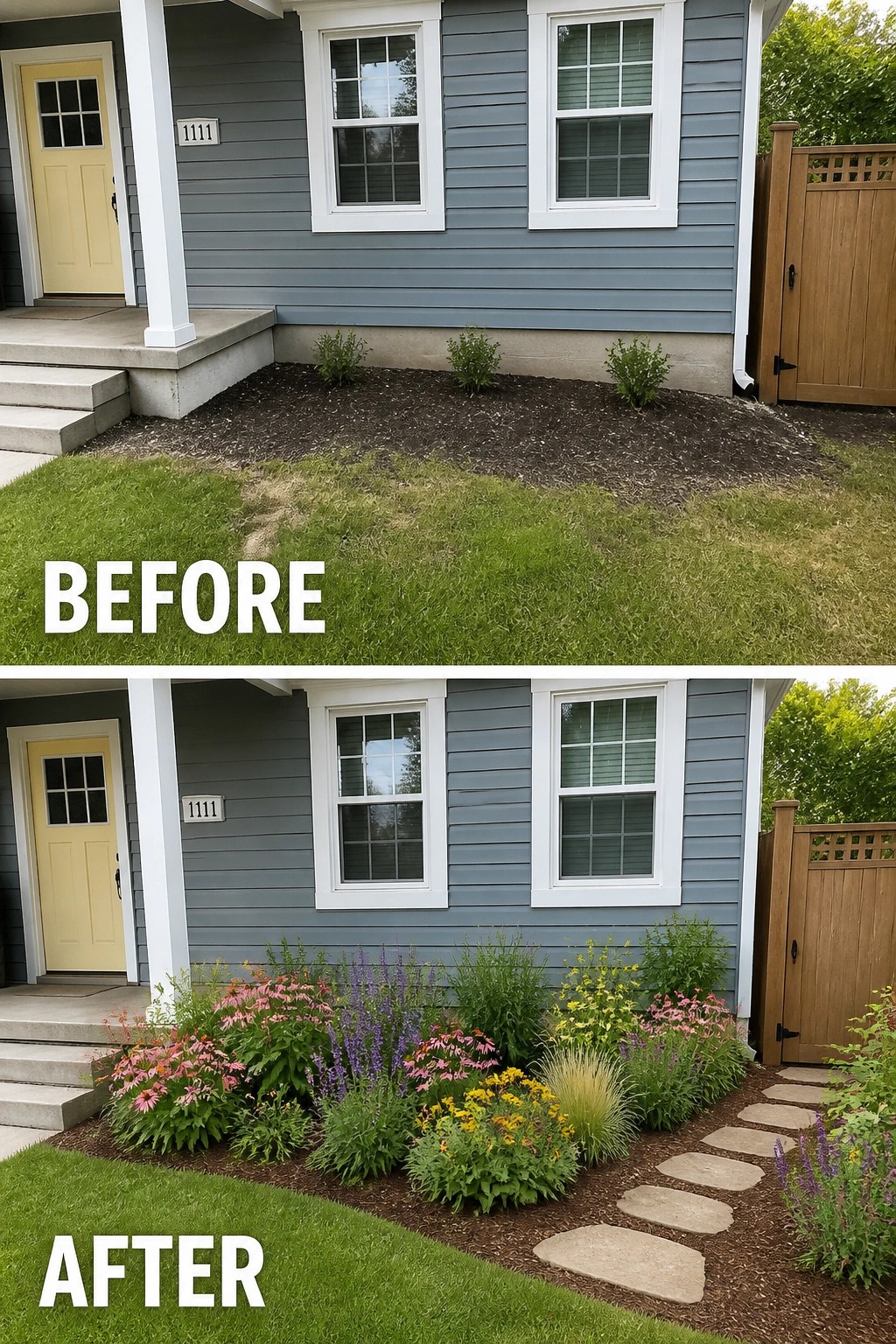
A plain strip of soil can become the defining feature of a wide ranch front by adding a layered perennial border and a modest stepping-stone path. In the example one bare bed was filled with groups of flowering perennials, ornamental grass, fresh mulch, and a line of irregular stones — the result is color, texture, and a clear edge that breaks up the long facade without crowding the yard.
To copy this, choose 3–5 hardy perennials you like and repeat them in small drifts for cohesion, put the tallest toward the back near the house, and tuck grasses or lower bloomers at the front. Lay a casual stepping path to guide the eye and provide access, finish with a clean mulch edge, and water well the first season; it works especially well on single-story, wide-front homes where you want impact without heavy maintenance. Easy and practical.
Use Pavers To Define A Clear Entry
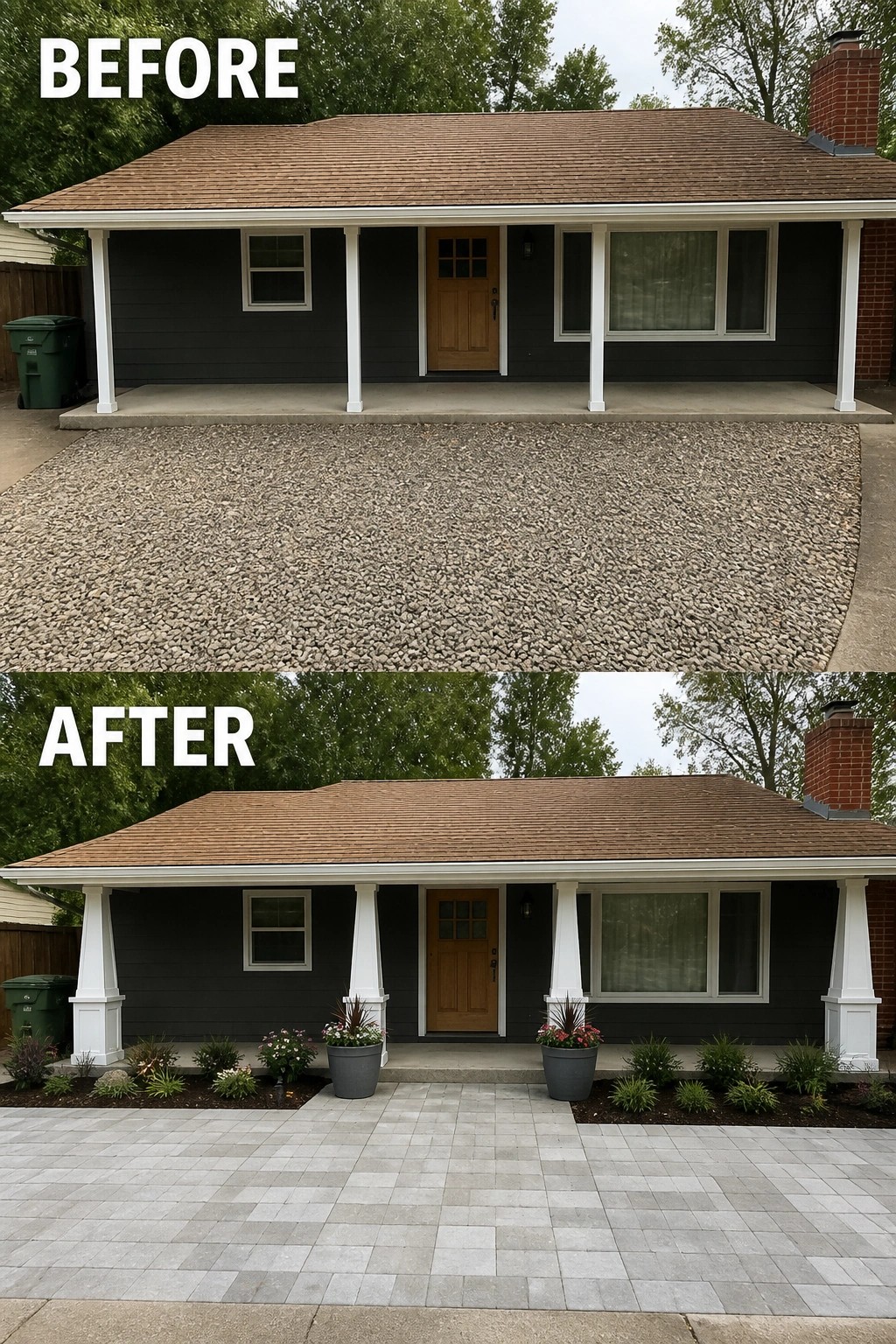
Replacing a broad, unstructured gravel front with a laid paver field instantly gives a ranch house a sense of purpose and polish. Swapping the loose rock for light gray pavers and then adding low planting beds and a couple of matching planters at the porch creates a defined approach and makes the entry feel intentional instead of accidental.
This idea works best on wide, plain front yards where you need form without big construction. Pick a simple, subtle paver pattern and a neutral tone that complements the house, add a narrow planting strip or pots to soften the edges, and include a proper edge restraint so the surface stays tidy. Keep the scale low so the house still reads as one story, and consider permeable pavers or a retaining edge for drainage and long-term maintenance.
Frequently Asked Questions
Q: How can I add interest to a wide, plain ranch yard without heavy landscaping?
A: Break the space into small scenes by planting in clusters rather than spreading everything evenly across the lawn. Add a simple focal point like a single specimen tree, a bench, or a wide pathway to draw the eye, and use a few low-cost lights to make those elements read at night. Those moves give depth without a big budget or lots of upkeep.
Q: What low-maintenance plants work well for ranch-style yards in hot, sunny areas?
A: Choose drought-tolerant, native grasses and shrubs that handle heat and need only occasional pruning, like sages, yuccas, or clumping ornamental grasses (they handle long dry spells). Mix in a couple of long-blooming perennials for seasonal color and a few tough groundcovers to cut down on weeding. Group plants by water needs so irrigation stays simple.
Q: Should I use gravel or grass to fill large open areas?
A: Use both. Keep ribbons or patches of lawn where you want a soft feel and place gravel or decomposed granite in high-traffic zones and around planting beds to reduce mowing and create visual contrast.
Q: How can I make the front door area stand out on a wide frontage?
A: Give the entry its own little stage: a clear path, two matching pots or low shrubs to frame the door, and a fresh, contrasting paint color on the door or trim. Add a warm porch light and one comfortable chair or a small rug to make the entry feel intentional and welcoming.